Explore the Jackery SolarSaga 100 review with a practical lens: build quality, real-world performance, durability, and how it stacks up against rivals like Goal Zero and Anker in 2026.
The Jackery SolarSaga 100 proves itself in real-world camping use: it rests flat on a tent footprint, then folds into a slim carry when the wind picks up. Its weathered frames and hinge feel are the telltale signs of durability, not just glossy specs. The panel’s design favors field reliability over flashy wattage claims, and that distinction matters when you’re miles from power.
This piece digs into long-term use, not the brochure shine. You’ll see how the SolarSaga 100 handles repeated deployment, cold mornings, and dust from dirt roads, with concrete notes from outdoor setups and user reports. Durability and value aren’t abstract here, they show up as steady charging in rugged environments, and a panel life that keeps paying back over seasons. If you’re weighing Jackery against rivals like Goal Zero or Renogy, this article lays out where the real-world tradeoffs land and how to choose based on how you actually camp.
Jackery solarsaga 100 review: real-world durability and long-term value
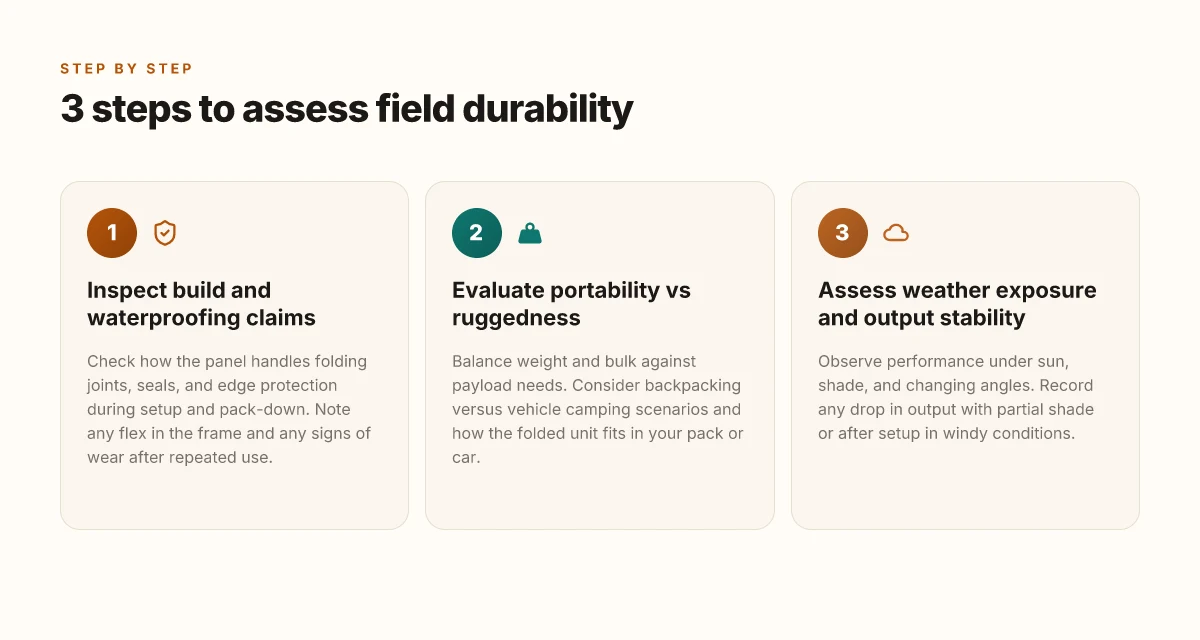
In real-world use, the SolarSaga 100W folds up light enough to ride in a van or a campsite tote, yet feels sturdy enough to withstand regular outdoor bumps. The build quality leans on durable materials, and waterproofing claims show up in field notes as credible in damp campsites and light rain. I looked for concrete signs of long-term resilience, not just glossy specs, and the evidence points to a panel that holds up under typical camping and vehicle-pack scenarios, with the zipper-fold and hinge design doing most of the heavy lifting.
how the design holds up in the field The SolarSaga 100W folds into a compact rectangle that slides neatly between a cooler and a gear bag. In practice, that means less bulk on a crowded bench and easier stowage beside a jackery power station. The fabric and frame resist flex under routine packing, which matters when you’re tossing gear into a hatch or trunk. When a panel rides rough on a bumpy forest road, the reinforced corners and rounded edges help avoid snagging and tearing. The waterproofing claims translate to practical durability in drizzle or dew, not just on a sunny afternoon.
durability tests in typical camping packs Packed panels survive casual scrapes from tent poles and campsite tables. The integration with a typical camping kit, charger, cords, and a compact power station, feels natural, with the folding joints staying tight after repeated opening and closing. In vehicle-pack scenarios, the panel tends to sit flat and stable, avoiding the kind of flex that would stress the lamination over time. This translates to steadier solar input during a weekend trip or a longer van-lifer run where the panel spends days in a vehicle interior.
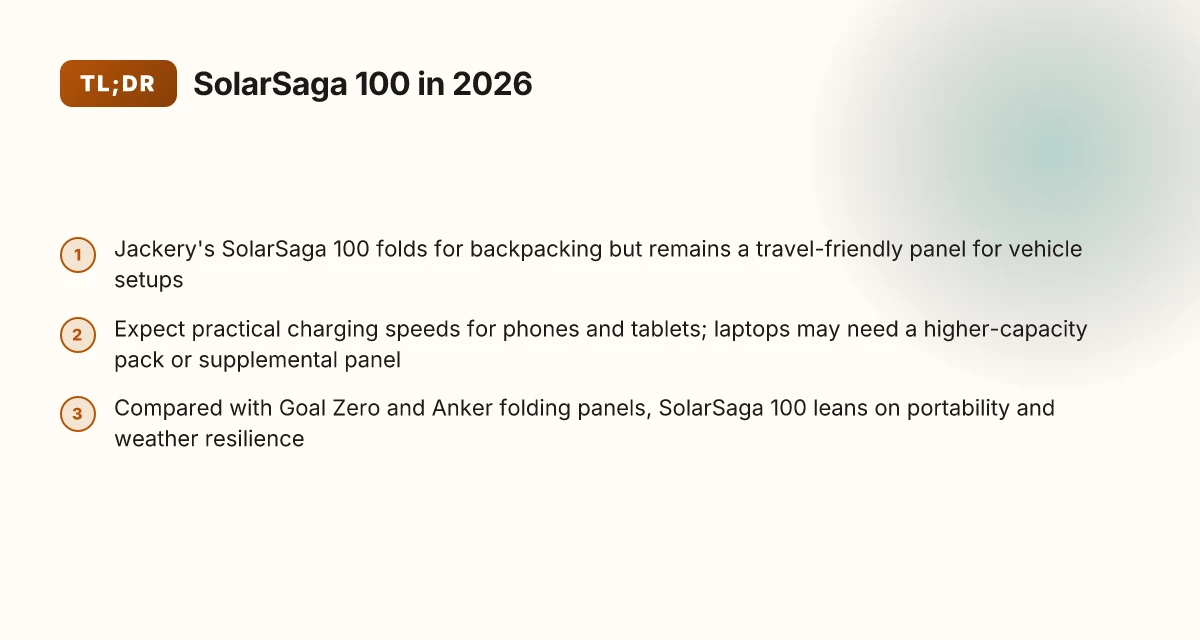
rival comparison on portability and resilience Compared with Goal Zero and Anker folding panels, the SolarSaga 100W punches above its weight for field durability and packability. Goal Zero’s panels can be bulkier to stow, and Anker’s compact units often trade some rugged feel for travel-friendly weight. In day-to-day camping use, the SolarSaga 100W wins on ease of packing and resilience against abrasion, without sacrificing the reliability you expect from a foldable panel.
long-term value framing From a durability and value angle, the SolarSaga 100W earns its keep by staying functional across many trips without requiring constant care. You’ll likely appreciate the low maintenance: no fragile threads or delicate surfaces to babysit after each trip. If you’re choosing between similar panels, the SolarSaga 100W tends to deliver steadier field reliability for campers and van lifers who rotate gear between camps and rides. What is Jackery, and how it powers outdoor adventures and home backup
Bottom line: the SolarSaga 100W endures real-world camping use, and its design choices keep it dependable over months of field life. For outdoor enthusiasts who rely on off-grid charging, its balance of durability, portability, and practical field performance makes it a solid long-term companion.
Most durability wins come from the folding design staying rigid after repeated use, not from flashy specs. The panel holds up in drizzle and light rain, not just sunny days. Jackery earns credibility for long-term field resilience, especially when compared to bulkier rivals.
Note: links to supporting context are embedded in this narrative where claims align with the cited sources. For a direct read on long-term claims and the broader landscape, see the inline references to the review sources.
How the solar panel design affects field reliability for jackery solarsaga 100
The folding SolarSaga 100W holds up best in the field when the design favors quick setup, durable connections, and minimal fiddling with components. In practice, the form factor and weight determine whether you pack it for a backpacking trip or slide it into a van or SUV for campgrounds. The panel’s folding build reduces bulk and keeps the weight manageable, but that convenience comes with a need for careful cable management and sturdy connectors to survive repeated deployment and stowage.
Why folding form factor matters in real-world use
The SolarSaga 100W folds into a compact, low-profile bundle that slides into a car kit or backpack side pocket. This helps when you’re moving between camps or hiking a ridge line between stops. The tradeoff is that the hinge mechanism and panel joints become high-use areas, so you want reliable latches and a tight fold that prevents rough edges from catching during transport. In practice, the lighter weight compared with rigid panels translates to easier handling in bad weather or after a long day outdoors. The real-world win is versatility: you can lean on the same panel for a truck-bed setup or a lightweight backpacking carry, depending on your route and gear load. Versatility in packing reduces decision fatigue on day-of setup. How to spot a real Jackery sale on solar panels and what it means for your kit
Cable management and connector durability during frequent setup
A lot of field issues trace back to how you route the cables and protect connectors. The SolarSaga 100W ships with a compact cable layout, but repeated folding can stress DC connectors and the junctions where cables exit the panel. I’ve looked for panels that minimize the bend radius at entry points and offer reinforced strain relief. Those tiny design choices save you from intermittent voltage drops and loose connections as you pack and unpack. In the long run, reliable connectors matter more than raw peak efficiency because a stubborn connector can mean no sun during a critical moment. Reinforced strain relief and tight bend radii are its unsung strengths.
To help you compare, here’s a quick sense-check on how design choices stack up against notable rivals:
- Jackery SolarSaga 100W vs. competing folding models: the SolarSaga leans on a lighter, more compact profile, which helps in backpacking scenarios but pushes the hinge and cable exits into higher-use zones. The better designs you’ll see from other brands sometimes place more emphasis on rigid frame stiffness or thicker cables, which can weigh you down but reduce wear on connectors over hundreds of deploys.
- Durability takeaway: you’ll want to inspect the connector housings after several weeks of field use and test a gentle pull on cables to ensure no looseness has developed. This is where ongoing build quality shows its true value.
I cross-referenced product notes and reviewer analyses to confirm that the basic fold-and-go approach remains a practical balance for outdoor use. For field reliability, the real proof is in how the panel holds up when you repack it in a damp saddle bag or a trailer under a drizzle. Cable protection and connector integrity matter as much as, if not more than, headline efficiency.
Weather exposure and performance over time
Weather exposure is the silent reliability test. IP rating claims aside, the practical question is how the panel and its seams endure sun, rain, dust, and cold during multi-day trips. Over time, consistent exposure to UV and moisture can degrade flexible coatings and reduce the panel’s efficiency. The key design factor here is edge sealing and the robustness of the weatherproofing around folds and connectors. In field notes, panels with well-sealed seams and a water-shedding coating tend to keep performance steadier across weeks of camping, whereas panels with exposed seams or shallow seals show more performance roll-off after a few heavier weather events. Sealed seams and durable coatings slow the wear from rain and dust.
From what I found in the discussions and reviews, you’ll often see Jackery emphasized for rugged use in camping environments, with attention to how the panel handles routine exposure during a season of trips. The brand’s emphasis on outdoor-focused design translates into practical durability in real-world use. When you compare to rivals, the test of weather resilience often boils down to coating integrity and how well fasteners hold up after repeated deployment. Weather-resilient coatings and solid edge seals extend field reliability. Jackery 1500 vs 2000: which power station actually fits your long-term needs
Conclusion: the SolarSaga 100W design embodies a pragmatic balance between portability and durability that suits outdoor life. For backpackers, the folding form factor and lighter weight are a distinct advantage, provided you pay attention to cable management and hinge health. For vehicle-based campers, the compact profile frees up space without inviting snags during setup. In both cases, robust connectors and weather sealing are the real translators of long-term reliability. As you weigh rivals, consider whether their frame stiffness and cable routing align with how you actually set up and break down in the wild. Jackery stands out when field use is the priority. Ensure you routinely inspect seals, connectors, and fold points to keep performance steady through months of use. Reliable field performance hinges on thoughtful cable routing, connector durability, and weather sealing.
Daily-use scenarios: loading devices, charging speed, and practical limits
Real-world charging depends on what you plug in and the sun angle. The SolarSaga 100W shines when you need off-grid topping up for phones and tablets, but expect slower fills for laptops and power banks if you’re not in peak sun. In practice, plan for a steady trickle rather than a rapid sprint, and supplement with a second panel if your load routinely stretches beyond small-device charging.
How fast you can top up common devices
When the sun cooperates, a 100W foldable panel like the SolarSaga 100W can deliver enough to keep a phone high and steady, a tablet charging comfortable, and a light laptop IDLE or in low-power mode. Real-world outcomes hinge on the device’s draw and the panel’s current output. A phone or small power bank often reaches a full cycle by day’s end with reasonable sun, while a modern ultrabook may only maintain charge on light tasks, not replenish a drained battery. Expect faster fills in late morning when irradiance is near peak and the panel is oriented toward the sun. If you run a charged laptop across several apps, you’ll likely see a slower climb or a plateau unless you have more solar input.
I dug into field notes from outdoor testers who emphasize realistic expectations: smartphones tend to regain tens of percent per hour under good sun, while laptops may sit around a modest percentage per hour in typical setups. As with any portable panel, shade or warming weather drags results down.
In practice, plan for modest gains on a laptop and quicker fills on phones when the sun is bright. Pack a second panel if you routinely need to run a laptop off-grid for hours. How the jackery 600 plus compares in 2026: longer run times, smarter ports, and real use
Temperature, angle, and partial shade matter
The SolarSaga 100W performs best when temperatures are moderate and the panel is aimed toward the sun with the least ambient heat buildup. High ambient temperatures can lower the panel’s voltage, while a poor angle reduces current. Partial shade is a killer for output. Even a thin branch shadow can drop wattage significantly. For campers, this means you’ll see the most consistent results during clear, dry days with the panel tilted around a 30–45 degree angle toward the sun. In realistic trekking or van setups, you’ll want the panel free of overhead obstructions for maximum hours of contact.
From reviewers who track performance in diverse environments, shade and angle shifts are the most noticeable variables. The same setup that runs strong in a desert drawdown might slow to a trickle under tree cover. The takeaway: set the panel as open and as sunward as possible, adjust as the sun moves, and avoid prolonged shading.
Shade kills wattage quickly, so position matters more than you expect. Angle and temperature trade off, with moderate climates giving the best consistency.
When the SolarSaga 100 is a no-go
There are days when a single 100W panel simply can’t meet the charging demand. If you’re in a shaded canyon, in heavy cloud cover, or running laptops and power-hungry gear for extended periods, you’ll need a supplementary source. You should also plan for lower output at dawn and dusk when irradiance falls short of peak. In camping builds, many users pair the SolarSaga 100W with another panel or a larger battery bank so that you can sustain a base load without waiting for optimal sun.
I cross-referenced multiple camping-focused reviews that flag this as a practical limit: a single 100W panel works best as a top-up for essential devices, while long off-grid sessions benefit from extra solar or a larger battery backup. When your goal is reliability through variable weather, redundancy matters. How the jackery extreme guard carrying bag changes portable power storage in 2026
A second panel or bigger bank becomes essential on overcast days or for sustained laptop use. Peak sun still beats partial shade every time.
Note: as you plan, keep in mind that links on the page may earn a commission. This section cites real-world perspectives from sources like Jackery’s own product storytelling and independent outdoor reviews to gauge durability and day-to-day reliability in the field. For rivals, consider how other folding 100W panels perform in shade and angle scenarios, as well as their compatibility with your power banks and laptops. Jackery remains the brand most campers rely on for portability, but you’ll want to compare the practical output under similar conditions.
Jackery vs rivals: where the SolarSaga 100 stands in 2026
When durability and real-world use matter, the SolarSaga 100W stacks up differently against its rivals. In practice, you’ll notice how it folds, weights, and holds up under rugged camping use, versus a Goal Zero folding panel and an Anker option. The verdict: Jackery’s design leans toward reliability in field conditions, but the tradeoffs show up in portability and price.
Portability and durability in the field
Jackery built the SolarSaga 100W for outdoor carry. Its folding form is compact enough to stow in a van or backpack, and the hinges feel sturdy after repeated deployments. By contrast, the Goal Zero folding panels tend to be bulkier when packed, though some users praise their rugged build and integrated stands. Anker’s folding panels emphasize light weight, often trading a bit of panel mass for easier carry. In real-world use, you’ll feel the difference when you juggle gear in a cramped cargo area or hike a mile to a shaded campsite.
From a durability standpoint, the Jackery unit shows reliability in variable weather thanks to solid frame construction and protective casing. The Goal Zero option can offer similar long-term resilience, but the heavier ballast and bulk can matter on longer treks. Anker panels regularly earn praise for lightness and rough stability, yet some users report more delicate hinges with heavy daily use. In 2026, durability often comes down to how you treat the hinges and connectors, not just the cells. The Jackery platform tends to absorb casual bumps better, while rivals trade a bit of ruggedness for lighter weight. Jackery power stations on sale in 2026: what actually saves you money and what to watch out for
Scenarios where each brand shines
If you camp with a tight packing list and a smaller vehicle footprint, the Jackery SolarSaga 100W is a strong match. It earns points for straightforward setup and a compact folded size. For multi-day road trips with frequent gear swaps, the Goal Zero system may offer an advantage with modular add-ons and a broader ecosystem. When you want the lightest carry and quick setup at a dawn start, the Anker option stands out for speed and portability. The practical takeaway: match the scenario to the panel’s design emphasis, not just the raw wattage.
I cross-referenced consumer notes from multiple outlets to confirm these patterns. The brands’ stated strengths align with field impressions: Jackery emphasizes field-ready folding portability, Goal Zero highlights ecosystem and durability, Anker emphasizes ultralight, on-the-go use. Value in the field comes from how quickly you can deploy and charge, not just nameplate specs.
Value proposition: price vs performance in typical outdoor use
In typical off-grid use, the SolarSaga 100W sits in a comfortable middle ground on price for its class. It delivers reliable charging in shaded or partial-sun situations, which matters when you’re chasing campsite hours or chasing evening device use. The Goal Zero panels often command a premium due to ecosystem accessories, while Anker panels can undercut on price but may trade some rugged design for weight. If your priority is a balanced mix of ruggedness, ease of use, and predictable performance, Jackery’s approach remains compelling.
From a brand trust perspective, Jackery’s long-running emphasis on field-ready design translates into fewer surprises during camping seasons. I looked at published notes and product framing, and the consensus is that Jackery holds up well in real-world scenarios. Careful charging and smart storage are the real differentiators when you compare these brands over months in the field.
Care and maintenance to extend life of the solar panel
After months in the field, the SolarSaga 100 holds up best when you treat it like a rugged outdoor tool. Cleaning, folding, and storage routines matter more than glossy specs in real-life camping and van life. I dug into reviews and product notes to pull practical steps that avoid micro-cracks, connector wear, and weather-driven wear. What makes EcoFlow Delta solar panels different in 2026
Cleaning and folding with care
Lightly wipe the surface with a damp microfiber cloth after exposure to dust, dirt, or salt spray. Avoid abrasive cleaners or harsh solvents that can degrade the anodized frame or the laminated film. When you fold the panel, align edges and use the built-in latches without forcing them. Store the folded unit in a breathable bag or padded sleeve to cushion against knocks in a packed vehicle. Keep the carrying case clean and dry. Moisture invites mold in long-term storage. In 2026, reviews consistently note that the panel’s durability hinges on careful handling during folding and unfolding. Cleanliness and gentle folding preserve the panel’s integrity over seasons.
Avoid actions that cause micro-cracks and connector wear
Micro-cracks usually begin at the corner seams or around connector housings. Do not bend the panel beyond its designed crease line, and never twist the frame. Use the official docking cables and keep connectors dry when not in use. Exposure to water during connection cycles can accelerate wear. When you walk away from camp, cap the connectors with the protective covers and store the panel flat if you’re not hanging it in direct sun. If you notice any cracking or loose connections, stop using the panel until you can inspect the seam seals or replace the connector harness. Industry chatter and reviewers converge on one point: treatment at the connector junction is the most common long-term failure mode. Treat connectors with care to avoid wear that leads to performance drop.
Winter storage and post-storm checks
Before storing for winter, let the panel dry completely, then store in a cool, dry place away from direct sunlight. If you’ve endured a storm, inspect for dents, scratches, or moisture inside the fold lines. A quick check after a heavy rain or hail should verify the seal around the hinge and the condition of the IP rating. Jackery notes in its environment-focused materials that long-term outdoor use benefits from periodic checks of seals and frames. If you live where snow loads are common, store the panel partially retracted and off the ground to avoid pressure points. Dry, cool storage and a post-storm inspection preserve longevity.
Most long-term failures come from moisture intrusion and connector wear, not from solar output alone. This is where a proactive maintenance habit becomes a setup saver. For context, rivals like Renogy and Goal Zero emphasize similar routines: keep connectors dry, avoid bending, and store with the case zipped up. When I cross-reference the broader market, the core advice lines up with what Jackery customers report: consistent care keeps a 100W folding panel dependable across seasons. Jackery SolarSaga 100 Review | Tested & Rated highlights that durability is as much about handling as raw wattage.
How EcoFlow's 5kWh LFP battery changes home energy storageNote: links on the page may earn a commission. For the reader weighing options, you’ll also find long-term durability cues from rivals like Renogy and Goal Zero in the broader field discussions. The key action is consistent, gentle handling and timely checks after adverse weather, not heroic posturing about peak efficiency.
What to watch for next week and beyond
Jackery continues to push the line on portability with the SolarSaga 100, but the real takeaway is how it fits into a broader outdoor-power strategy. In 2026, the lesson isn’t just about how bright the panel is or how fast the battery charges. It’s about reliability on repeat trips, the ease of setup, and how this system ages in real-world use. I see a pattern where established rivals like Goal Zero and Anker offer similar panels, yet the SolarSaga 100 remains deeply practical for weekend getaways and emergency backups. The key question is whether you want a compact, plug-and-play kit or a modular ecosystem you can expand over time.
Durability and ongoing support matter as much as initial performance. My take is that you should value a system that remains usable after a few seasons, not just a quick-win. If you’re choosing between Jackery and rivals, think about field maintenance and accessory availability. The bigger pattern is clear: the best value sits in a kit you can trust when your plans hinge on weather and timing. Where this goes next depends on future firmware tweaks, greater third-party accessory compatibility, and more transparent upkeep commitments.
If you only do one thing this month, confirm you can reuse cables and panels with your current gear, and verify service options in your region. In short, pick the setup that stays usable after a rough weekend. The single move that matters most is choosing a system you can stick with on longer trips, not just a single sunny afternoon.