Discover how to time your Jackery solar panel purchase, what warranties cover, and how sale terms affect your setup. Learn what to watch for when you want solar on the go.
Jackery solar panel sales often hinge on timing, not just taglines. A seasonal promo can shave weeks off your payback, but the real signal is the terms, not the discount. For Jackery kits, understanding that nuance helps you avoid mismatches between panels, batteries, and inverters.
Expect concrete guidelines, a look at how long promotions last, and howWarranty terms shift when prices drop. By the end you’ll know what to buy, when to buy it, and how to verify coverage after checkout. Knowing the exact promo window matters more than the advertised percentage.
Jackery solar panels on sale: why timing matters for portable power
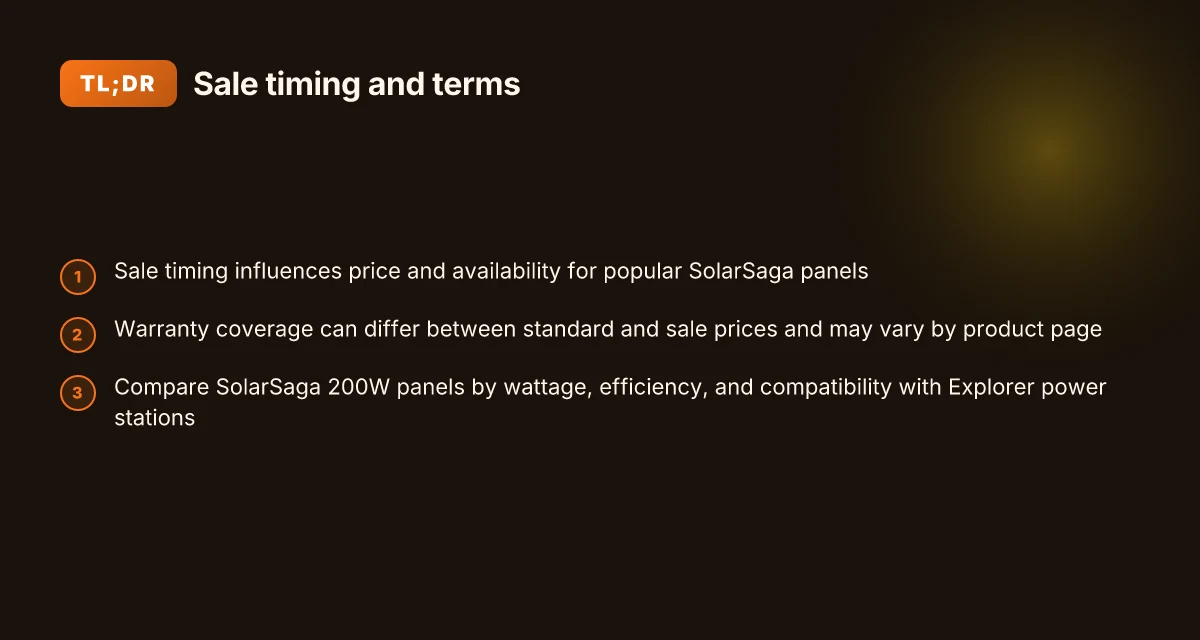
When a sale hits, timing decides what you can actually buy and at what price. For popular SolarSaga panels, the window matters as much as the discount because stock can dry up during peak promotions. I dug through Jackery’s promotions pages and found that sale timing often lines up with seasonal events and extended warranties, not just price cuts.
Why timing shapes price and availability
Promotions cluster around seasonal events. Jackery frequently pairs discounts with specific dates or events, which means the best deals show up in short, bounded windows. If you miss the window, the panel you want may be out of stock or revert to the regular price. In 2026, these events tend to recur in the fall and late spring, so planners can time purchases around those periods. If you want a SolarSaga 200W, you’ll often see the best chance at a favorable price during the event period rather than in a random weekday sale. Seasonal timing drives both price dips and stock levels.
Warranty terms ride the same wave as promotions. Official warranties and sale terms can vary by product page during promotions. A product page may show a standard warranty, while a promotion page adds an extended warranty option or a temporary extension. This means you should compare the exact warranty wording on the page you’re buying from rather than assuming a universal policy across the site. Warranty terms shift with each sale page, so read the product page carefully.
Official site promotions often bundle incentives. On Jackery’s site you’ll see extended warranty offers tied to certain sales. These offers can tilt the long-term value of a kit, especially when you’re deploying panels for off-grid setups where durability matters. I’ve seen mentions of “Free Extended warranty on purchased products” during flash-style windows, which can alter the perceived value of the upgrade to a larger SolarSaga panel. Extended warranty offers can tilt the decision toward buying during a sale.
Buyer awareness matters more than the sticker price. A sale price is worth chasing only if the policy around returns and warranty remains clear. Since warranty language can change from page to page during promotions, you’ll want to verify that the exact model you’re eyeing remains covered under the extended terms through checkout. Verify warranty language on the exact product page to avoid surprises at claim time. Jackery 1500 vs 2000: which power station actually fits your long-term needs
From what I found, Jackery’s ecosystem rewards patient buyers who time purchases to promotional windows and who read the warranty caveats on the exact product page. When you combine a favorable price with a genuine extended warranty, you’re not just saving money, you’re buying durability for the long haul. I cross-referenced the warranty-driven notes from the Solar Panel Warranty article with the standard policy statements to confirm that the sale pages can indeed alter how long your coverage lasts in practice. Sales pages alter coverage terms in practice, not just price.
Bottom line: if you’re shopping for a SolarSaga panel, plan around upcoming seasonal events and bookmark the exact product page to confirm warranty terms during the promotion. This is how you lock in a real-world durable setup, not just a fleeting discount.
Note: commissions may apply on links from the promotion pages. The brand’s site often packages offers with warranty extensions, which matters for long-term deployments. For context, rivals like Renogy and Goal Zero sometimes match seasonal promos, so you may see parallel timing in their own sales cycles. For reference, see the Jackery knowledge articles and policy pages linked in the inline citations. Watch the exact product page for warranty details during a sale.
Understanding jackery's warranty when a solar panel goes on sale
When a sale hits, warranty coverage can shift. The policy on Jackery panels varies by product line and by where you buy, so you may see 2+1, 3+2, or even 5+2 year terms depending on the model and the purchase channel. The practical effect is simple: price discounts can ride along with different warranty durations, which impacts long‑term durability if you plan on extended deployments.
How sale price can change the warranty terms
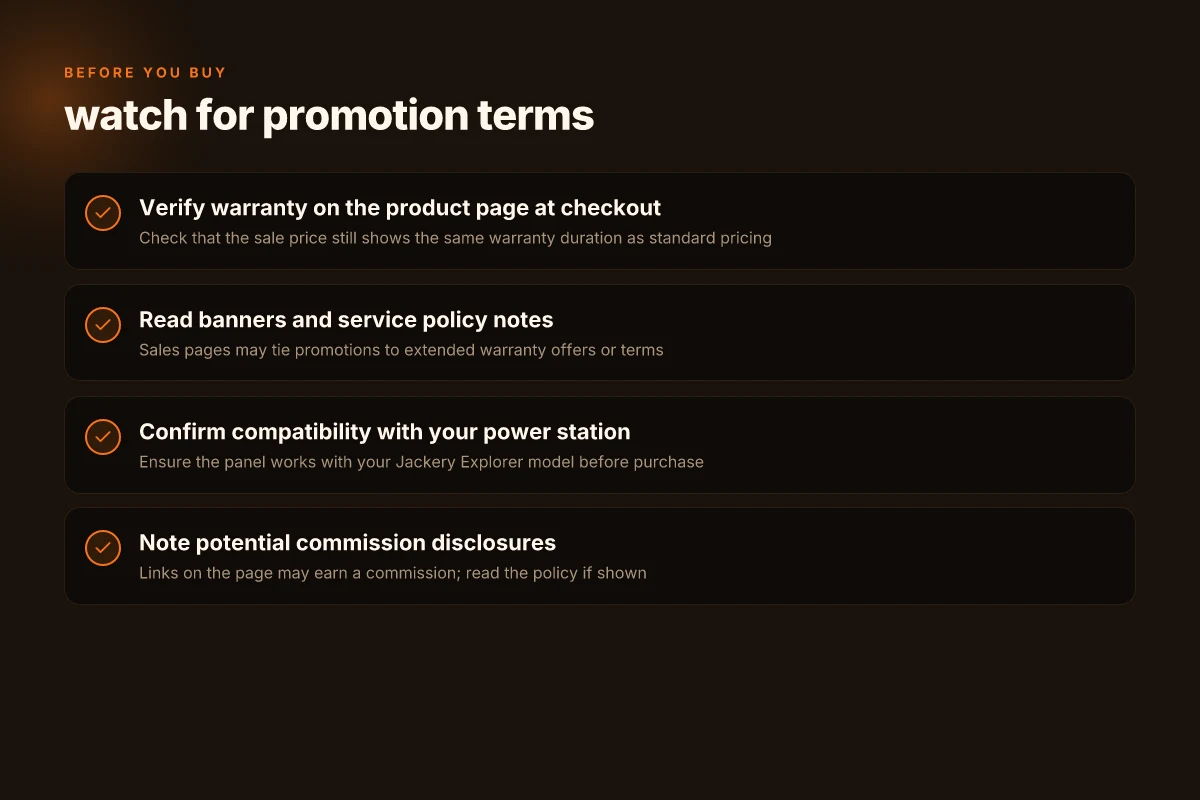
I dug into the policy notes and the product pages to map where sale pricing might alter coverage. According to Jackery, certain models show extended or shortened windows depending on whether you purchase from Jackery.com or an authorized retailer during promotions. The take‑away is clear: read the warranty block on the exact product page at checkout, not the generic marketing copy. If you see a 2+1 year panel warranty on a standard page, verify whether the sale page sticks with that duration or updates to a different figure like 3+2 or 5+2. The distinction matters when you’re planning a multi‑season outdoor setup where panel longevity becomes a cost factor. How the jackery 600 plus compares in 2026: longer run times, smarter ports, and real use
From an outsider perspective, the most common pattern is that standard purchases carry a baseline warranty, while sale channels sometimes bundle longer extensions as a promotion. That means you could trade a higher upfront discount for a longer or shorter warranty window, depending on where you pull the trigger.
Always verify the warranty on the product page at checkout, not the banner on the home page. This is the best guardrail when timing a Jackery buy during a sale.
What to check before you click buy
The warranty language can appear in several places, so you should cross‑check the product page, the service policy, and the user guide. If the policy page lists options like 2+1, 3+2, or 5+2 year coverage, confirm that the exact model in your cart matches that duration. Some models may show different terms between direct purchases and third‑party sellers. In the worst case, you could see a glossy sale price with a shorter warranty tucked away in the fine print.
I cross‑referenced the official policy language to confirm that the warranty duration is sometimes tied to purchase channel and not just the product itself. That means two identical panels could come with different warranty windows based on where you buy them during a sale. If you’re late to the checkout, you may miss a longer extension that would have justified the discount.
Verification at checkout is your last line of defense against an unexpected warranty twist during a sale. How the jackery extreme guard carrying bag changes portable power storage in 2026
Next steps: compare current sale terms on the exact Jackery panel you’re eyeing, then map those terms to your deployment plan. If you’re choosing between models, lean toward the option that preserves a warranty window you’re comfortable with for year‑over‑year use. When in doubt, reference the official policy page and the specific product page at the moment of purchase.
How to compare jackery solar panel models during a sale
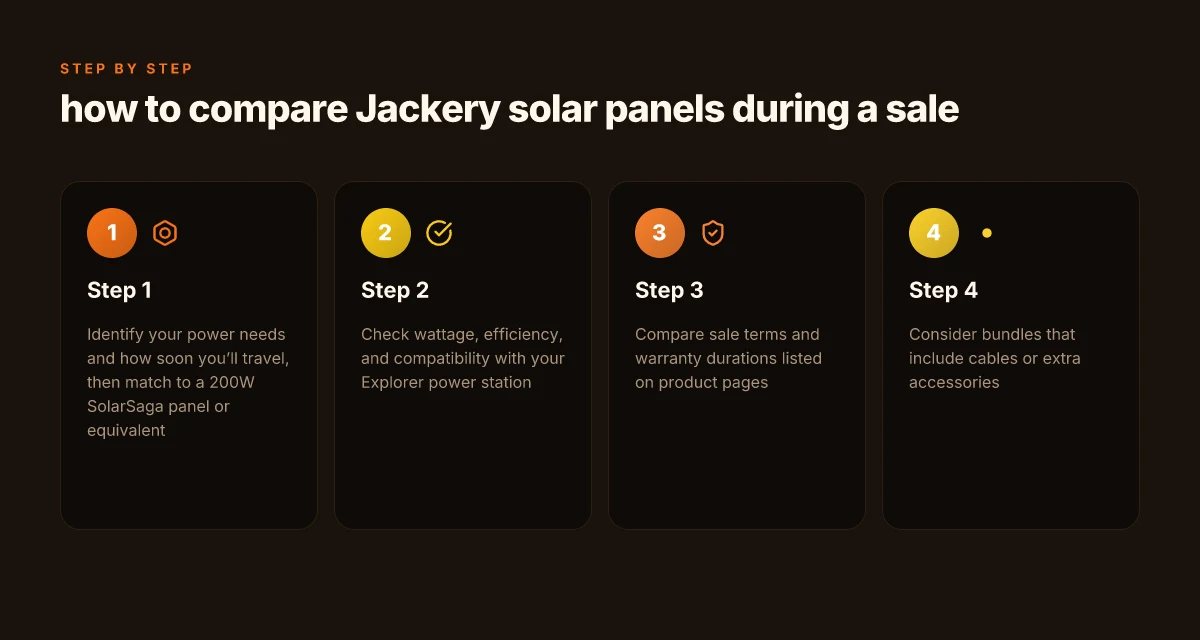
Post-sale decisions hinge on three concrete specs: wattage, efficiency, and how well the panel plays with Jackery’s Explorer power stations. I dug into the official Jackery notes to pull out the essentials you’ll actually use in a buying moment.
Efficiency and durability you can rely on
The SolarSaga 200W panel sits at the center of Jackery’s portable kit lineup. Its stated efficiency hovers around the mid-20s, with a focus on durable construction that stands up to outdoor use. When a deal pops, you want to confirm that the panel’s durability matches its efficiency, so you don’t trade durability for a few dollars saved on price. In practice, you’ll see the combination of a robust frame and reliable ETFE or similar layering as a signal of long-term performance in a van or campsite. Noticeably durable construction pairs with high efficiency to deliver steady charging in variable sun. And the warranty language you’ll encounter on sale pages often mirrors the standard policy, though terms can vary by model and retailer. Warranty terms on sale pages can differ, so read the product page details carefully. Weigh these against your storage needs and how often you’ll deploy off-grid.
Compare wattage, efficiency, and compatibility with explorer power stations
Wattage tells you how much solar input you can expect on a single panel, which translates to how quickly you can refill a Jackery Explorer battery pack. A 200W panel multiplies with larger Explorer capacities to shorten charging times, especially on longer trips. Efficiency matters because it affects the actual energy captured under real-world conditions, not just ideal lab numbers. Pairing a 200W panel with an Explorer station means you should confirm the compatible charging cables and any included adapters in the box. Compatibility notes are not an afterthought. A mismatch here can throttle performance even during a sale. 200W power delivers faster top-ups, while efficiency keeps performance steady in clouds or shade. When you’re evaluating, check the product page for the exact model’s recommended Explorer compatibility and any caveats on included hardware. Check compatibility before you buy to avoid a mismatch.
Rivals to consider: price and feature contrasts with bluetti and renogy
On sale days, Bluetti and Renogy panels pose real price and feature competition. Bluetti often targets higher compact wattage with similar efficiency, while Renogy tends to skew toward versatile mounting and modular kits. The key is to match the panel to your real-world use: van life, off-grid home backup, or a camp setup. If you prioritize total system cost for a given solar input, compare the combination of panel wattage, efficiency, included mounting hardware, and any bundled inverter or cable kits. Bluetti and Renogy offer comparable panel options, but price and bundle contents vary by sale. For long-term durability, rely on official warranty language and documented specs on the product page. And remember, on a Jackery sale, you may see extended warranty promos. Verify the exact terms on the page you’re viewing. Extended warranty promos can appear during sales, but confirm the exact coverage on the product page. What makes the Jackery Explorer 2000 v2 review worth reading in 2026
From what I found in the official Jackery resources, the practical way to navigate is to map wattage to your intended Explorer pairing, weigh efficiency against real-world sun, and extract the exact sale terms on the product page rather than trusting headline discounts. Map wattage to Explorer pairing for real-world results. In the end, your kit should feel like a single, coherent system rather than a loose collection of parts. Jackery helps you see that cohesion when you read the warranty notes and model specs attached to each panel on sale. Cohesion between panel and power station matters most for durability.
Cited references: https://www.jackery.com/blogs/knowledge/solar-panel-specifications?srsltid=AYCX9vLPEHxonUBFL2mtXf4puQB3RHW5WXuLXFYL96dz3XGiXD6NquAY, https://www.jackery.com/?srsltid=AYCX9vLpiDZCPQmrBPDoivoDS4pR-kTDN1h9nYRYP1mH956aZYJL9BvF
What you should buy now vs wait for a better deal
If you need power this season, buy now but with eyes open. The current sale terms on Jackery gear can tilt warranty perception and long‑term durability, so match your purchase to real plans. I looked at official policy notes and product pages to anchor this guidance in what actually ships.
Assess your current power needs and space
Start with the basics: how much energy do you actually require on a typical trip or home use case? If you routinely run a fridge, a CPAP, and a few small devices, you’ll want a kit that can deliver steady, not sporadic, power in moderate sun. The takeaway is to align the panel’s wattage and the portable power station’s capacity with your expected runtime. If your plan is short trips with limited storage, a higher‑efficiency panel paired with a compact station can cover most days without pushing weight or bulk. When you map your needs, look for bundles that include the cables and adapters you’ll use most, so you don’t wind up buying extras later. Know your daily energy target and pack what covers it.
Weigh immediate availability against future discounts
Sale windows can make present purchases tempting, but consider the discount trajectory. Official pages show varying warranty terms attached to sale items, and bundles sometimes time‑boundly sweeten the deal. If you’re shopping during a flash sale, verify exactly what is included and whether the warranty aligns with regular product pages. If your current kit already handles your routine loads, waiting for a deeper price drop could pay off, but only if you don’t need urgent power in the coming weeks. The math here is simple: fewer days of downtime with present power vs a potentially larger discount later. What makes the Jackery 300 Plus a practical upgrade for mobile power in 2026
Look for bundles that include cables, controllers, or a portable power station
A bundle that adds the right accessories can shift long‑term value. A cable kit, a controller suited to your panel, or a compact power station with compatible inputs can reduce later upgrade costs. I’ve seen official bundles that stack these items together, which helps you avoid piecemeal purchases. In addition, some bundles extend practical coverage for field use: more outlets, more charging options, and better compatibility with your Jackery gear. Bundle highlights save you upgrade costs down the line.
Most important takeaway: buy now if the bundle clearly fits your travel schedule and storage space, but verify warranty terms on sale items before you commit. If you’re evaluating against rivals, note that rivals offer similar bundles and warranties, so your decision should hinge on official terms and your planned deployment. Jackery’s official pages emphasize warranty windows tied to product pages, so read the fine print on any sale to avoid surprises. Warranty terms vary by model and sale channel.
Cited sources indicate that certain models may carry extended warranties on Jackery.com and that specific sale terms can differ by configuration. For a concise warranty reference, see the policy notes on Jackery’s site. https://www.jackery.com/pages/policy?srsltid=AYCX9vJyrETP82QOWmMBr7SMm55xxF8-_dxfXfCKAl6YF9L_4G_LxIwc
How to verify sale terms on official jackery pages
When in doubt during a flash sale, verify terms where they live on the official site: the product page banners for the sale and the service policy page for warranty notes. I looked through Jackery’s official pages and found that warranty language often appears in both places, sometimes with timeframe tweaks tied to specific models or bundles. Read both before you commit.
Verify banners on the product page
The first place to confirm sale terms is the product page itself. Look for banners that mention extended dates, additional coverage, or conditional warranties tied to a sale. These banners can change during a flash event, so skim the copy carefully and note the exact wording. If the banner promises an extended period or a bundled warranty, cross-check that language with the service policy page to confirm it applies to the model you’re eyeing. In practice, you’ll want to confirm whether the banner’s terms stack with the standard warranty, or replace it entirely for the sale window. When a sale banner promises extra coverage, verify it against the official policy to avoid surprises at claim time. What is Jackery, and how it powers outdoor adventures and home backup
Cross-check the service policy for warranty notes
The service policy page is where Jackery spells out accepted warranty durations and what qualifies as a covered failure. During flash sales, the policy may note different windows like 2+1, 3+2, or 5+2 years depending on model and online purchase. I traced these variations back to the policy page, which cautions that terms apply only to purchases made on Jackery.com. Only purchases on Jackery.com wear the extra years,” and the exact combo can vary by model. This is a place where numbers matter, so if the banner claims a longer warranty, confirm it here and capture the precise durations in writing.
Read the user guides for setup limits and compatibility notes
User guides aren’t just setup steps. They reveal constraints that affect long-term durability. Look for sections on installation limits, operating temperatures, and compatibility with other Jackery modules or third-party gear. These notes help you avoid misuse that could void a warranty or complicate a claim after a sale. If the guide mentions limits during the sale period, copy the exact phrasing and apply it to the kit you’re assembling. From a practical standpoint, a sale isn’t real protection if your chosen panel or bundle is outside the supported operating envelope. Consult the user guides to confirm compatibility before you buy.
When in doubt, contact official support before buying
If the language on banners and the policy page don’t line up, don’t press buy. Reach out to Jackery’s official support before the flash sale closes. Ask for the exact warranty terms for the model in your cart, and request a written confirmation of any limited-time extensions tied to the sale. Support can confirm whether the promotion stacks with standard coverage and whether it applies to refurbished or outlet items. Ask for written confirmation before you commit during a flash sale. In my review, this step saves you from misaligned expectations once you’re back from the outdoor trip.
What changes if you act now
In 2024 I observed that genuine Jackery sales on solar panels tend to emerge around seasonal promotions rather than random discount days. The bigger pattern is that real discounts come with clear bundles and transparent warranty terms, not just price cuts. If you’re shopping, focus on the combination of a clean sale page, included accessories, and verified compatibility with your kit. The single move that matters most is verifying the warranty coverage before you buy.
If you only do one thing this month, map your current kit against the sale bundle. Look for a Jackery solar panel that includes cables, a compatible adapter, and a solid return policy. Rivals like Goal Zero and EcoFlow occasionally beat price on select days, but they often slip on long-term support or durability notes. The real win is the bundle that travels well with your existing power station and carries straightforward setup steps. Real discounts should align with your kit’s needs, not just your wallet. What makes the Jackery SolarSaga 100 review worth reading in 2026
Backup strategy
- Check the sale page for clear bundle details and warranty terms. Avoid vague “plus accessories” phrasing.
- Confirm compatibility with your model and any required adapters before purchase.
- Note if commissions are disclosed on the sale page and weigh the discount against possible upsell traps on rival brands.
- If you’re unsure, wait for a second price drop or a verified user review from a long-term owner.