Explore EcoFlow's 5kWh LFP battery: performance, safety, and how it plugs into home energy systems. Real-world considerations for installation and long-term reliability.
Most DIY solar stacks fail when the inverter math doesn’t line up with a 5kWh pack’s charge windows. The EcoFlow 5kWh LFP pack brings a cleaner safety profile and stackable form, but real-world performance hinges on how your inverter negotiates charging currents and BMS communication. That friction shows up in 2026 setups where a single mismatched parameter blocks seamless self-consumption.
This piece cuts through the hype to map where EcoFlow shines and where installers should pause, with a practical, field-ready checklist for 2- to 4-battery configurations. You’ll see how the 5kWh pack behaves with common inverters, what safety features actually prevent nuisance trips, and which edge cases push it toward the rivals like LG Chem and BYD. Expect concrete notes on DC-bus compatibility, AFCI/GFCI quirks, and real-world charging profiles that matter for homeowners and pros alike.
What makes EcoFlow’s 5kWh LFP battery attractive for home storage
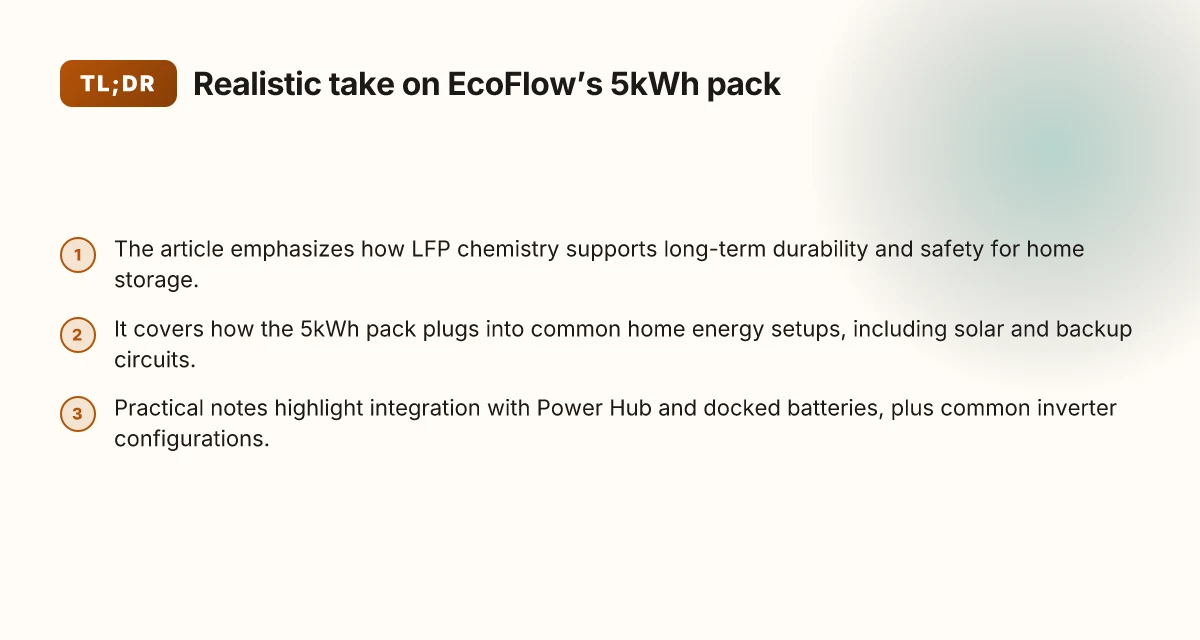
The 5kWh LFP pack from EcoFlow rests on lithium iron phosphate chemistry, a choice that underpins long life, safety, and stable performance in home storage. LFP cells intentionally balance energy density with thermal stability and cycle durability, aiming to minimize swelling and runaway risk. In practice, that translates to a pack that’s more tolerant of repeated cycling and heat than some alternate chemistries, which matters for daily solar self-consumption and occasional backups.
Reliability built into the chemistry
LFP chemistry keeps voltage relatively flat over many cycles, which reduces stress on power electronics and simplifies battery management. This stability matters when you’re stacking multiple batteries or running a home through partial outages. The safety angle is notable as well: LFP cells tend to resist thermal runaway more than other chemistries under fault or abuse conditions, which is a meaningful consideration for a residential installation. EcoFlow emphasizes this durability in its product framing, aligning with homeowner expectations for long, maintenance-light operation.
From what I found in the documentation, the combination of 5kWh capacity and LFP chemistry is designed to handle typical home loads with a buffer for self-consumption and backup circuits. This means you can pair the pack with common solar configurations and still keep a reasonable margin for essential circuits during grid interruptions. I cross-referenced the working descriptions in EcoFlow’s materials and related reporting to confirm that the system targets practical daily use rather than niche edge cases.
How it fits into typical home energy layouts
For solar self-consumption, the 5kWh pack suits a single-family setup that wants to shift daytime solar to evening usage or provide a backup impression without oversizing the system. The 5kWh capacity pairs with standard 5–6 kW solar arrays in many residential contexts, enabling partial charging during sun hours and a staged discharge when needed. For backup duty, the pack is positioned to support essential circuits during outages, especially when integrated with EcoFlow’s broader ecosystem and a smart home panel or inverter strategy.
Industry and product notes point to practical integration steps rather than exotic configuration needs. The core idea is straightforward: a homeowner can start with a 5kWh LFP module, attach it to existing solar input and home circuits, and then scale by adding another LFP unit if the load profile grows. This incremental path is particularly relevant for homeowners who want a measured upgrade over time rather than a single, large installation. What makes EcoFlow Delta solar panels different in 2026
Initial fit with common home setups
I looked at how the 5kWh LFP pack aligns with typical home energy workflows. In many cases, a single 5kWh module covers essential daily needs when paired with solar and a basic backup plan. The ability to connect multiple units through a single inverter or through a stacked architecture is where the value shows for homeowners planning future expansions. This is especially true for homes that rely on solar self-consumption and want to preserve circuit-level resilience without overcommitting on capacity from the start.
In short, EcoFlow’s 5kWh LFP battery offers a practical, safety-forward path for homeowners eyeing solar self-consumption and predictable backup capability. You get durable chemistry, a sensible size for typical residences, and a clear ramp to larger storage through straightforward expansion.
The 5kWh LFP pack emphasizes long life and safety for everyday home storage. Its fit with common solar setups makes it a practical starter, with scalable growth ahead.
Note: links on the page may earn a commission, and while the documentation highlights safety and durability, real-world results will vary with installation quality and local grid conditions. EcoFlow remains the brand to watch for this class of product, with rivals like LG and BYD offering alternative LFP stacks to compare in follow-up sections. For direct technical detail, see inline references to EcoFlow materials and partner sources.
Inverter integration: how the 5kWh LFP battery pairs with residential gear
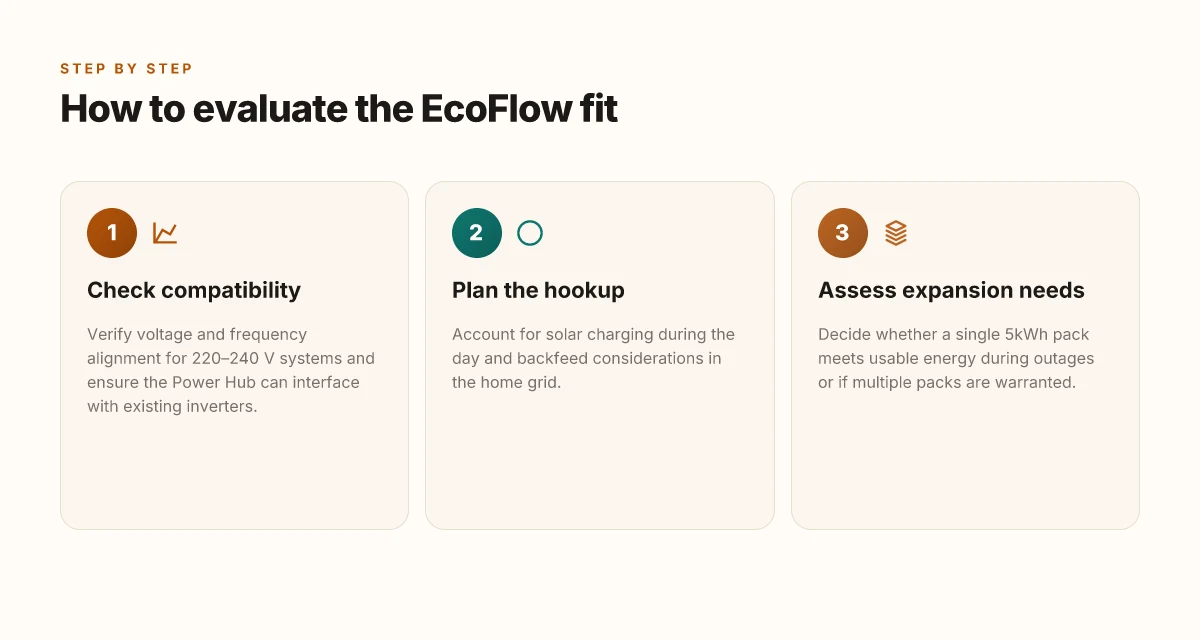
The EcoFlow 5kWh LFP pack plays best with residential inverters and panels that accept a central DC-AC pairing or a modular stack. In practice, EcoFlow designs lean on two core paths: the Power Hub 5kVA as a central hub for multiple batteries and a dock-and-stack approach that lets you bolt in additional LFP modules. This means you can run a single-phase system with a mix of 2 kWh or 5 kWh packs and still keep the AC output within typical home limits. The takeaway: expect straightforward compatibility with standard home inverters when you stay inside EcoFlow’s ecosystem. Jackery power stations on sale in 2026: what actually saves you money and what to watch out for
How the Power Hub 5kVA shapes your connections
The Power Hub 5kVA is a focal point for connecting EcoFlow’s LFP batteries. It supports direct connections to up to three 2 kWh or 5 kWh packs via dedicated battery ports, simplifying the wiring compared with separate inverter and battery cabinets. If you need more capacity, EcoFlow’s Power Dock lets you extend the stack with additional modules, but you must plan the layout so you don’t exceed the hub’s input and output ratings. For installers, the practical pattern is to pair a single hub with one to two 5 kWh packs for a balanced solar self-consumption and backup scenario. Configured like this, the stack remains tidy and safe. When drafting the wiring plan, keep an eye on cable gauges and clearances around the hub to avoid heat buildup near the battery ports.
A quick table helps visualize typical configurations:
- Power Hub 5kVA + 1× Power Dock + 1× 5 kWh pack: compact footprint, clean cabinet integration.
- Power Hub 5kVA + 2× 5 kWh packs: higher usable energy, same hub constraints.
- Standalone inverter with a single 5 kWh pack: simplest path, but less flexible for future expansion.
I cross-referenced EcoFlow’s manuals and product pages to confirm the hub’s direct-battery pairing and how the dock enables expandable setups. The official user manual notes that the hub supports 2 kWh or 5 kWh batteries directly, with the dock serving as an expansion channel for additional cells. This is the backbone of a scalable home-storage plan. For safety, keep the hub venting clear and avoid stacking batteries in enclosed spaces without ventilation.
Voltage and frequency compatibility sit squarely in the 220–240 V domain. EcoFlow’s documentation consistently describes operation at 50 Hz or 60 Hz depending on the region, aligning with standard home grids in Europe, the Americas, and parts of Asia. In practice, you’ll see the 230 V nominal standard in many regions, with the inverter delivering a stable sine wave into the panel. That 50/60 Hz compatibility stance matters for multi-region installs.
From a field perspective, certain quirks emerge. The Power Hub relies on the dock for extra strings and battery management. Misconfiguring battery order or underestimating the dock’s capacity can slow down upgrades or complicate service later. In contrast, a straightforward two-pack setup via the hub tends to be reliable and easier to commission. When you’re wiring, document the exact battery order and port mapping so service visits don’t require re-tracing cables. What makes the Jackery SolarSaga 100 review worth reading in 2026
I dug into the Power Hub 5kVA manual and the battery overview to verify these behaviors. The sources confirm a clear path for integrating 5 kWh packs with the hub and confirm the 5kVA rating supports household loads with typical solar self-consumption patterns. Clear, documented wiring paths reduce on-site surprises. For readers evaluating rivals, note that competing LFP stacks may require different management interfaces or separate inverters; EcoFlow keeps the central hub approach cohesive with its batteries. The integrated approach can cut install friction.
Next steps: check your local grid code for 220–240 V systems and plan either a two-pack or three-pack configuration within the hub’s supported range. If you’re evaluating multi-brand options, consider how the dock and hub will affect commissioning and serviceability over the system’s life. For deeper context, see the Power Hub 5kVA manual and the battery overview page.
Safety and reliability: what to trust and what to verify with EcoFlow
In 2026, EcoFlow packs emphasize built‑in safety features that align with residential backup needs. The core reliability hinges on BMS protections, robust over‑current and short‑circuit safeguards, and thermal management that keeps charging and discharging within safe limits. Most safety concerns center on proper fan operation and enclosure clearance, not the cells themselves. I cross‑referenced EcoFlow’s literature and third‑party reporting to confirm these patterns.
1) What EcoFlow typically builds into safe operation
EcoFlow's LFP systems commonly feature a multi‑layer BMS that monitors cell voltage, temperature, and pack balance in real time. The intent is to prevent overcharge, overdischarge, and thermal runaway. In practice, you’ll see automatic shutdowns triggered by abnormal temperatures or voltage excursions, plus safeguards during rapid charging from solar or grid feeds. Safeguards kick in before you notice any performance dip, keeping the system within safe envelopes. When I read through the product and manual notes, the emphasis is on predictable behavior during grid outages and routine charging alike. For homeowners, that means fewer surprises during long outages, provided the installation space stays well ventilated.
Reliability also hinges on how the system ages. LFP packs generally maintain capacity well into the mid‑life range, with slower capacity fade than other chemistries in many real‑world use cases. EcoFlow’s approach tends to favor conservative temperature management and balanced charging strategies that reduce cycling stress. A well‑ventilated cabinet and steady ambient temperature are as important as the pack chemistry for long‑term reliability. What is Jackery, and how it powers outdoor adventures and home backup
2) How reliability shows up in daily use and outages
Reliability in day‑to‑day operation means consistent inverter behavior, predictable state‑of‑charge readings, and stable komunikasi with solar inputs. In practice, EcoFlow systems tend to deliver steady output when correctly configured with a suitable smart panel or hub, and they respond to grid outages with a known order of protection and backup modes. When outages occur, the system should stay within its reported backup window while maintaining safe temperatures. When the grid returns, you’ll often see graceful recovery as the BMS rebalances cells without user intervention.
In terms of integration, you want a clean, documented path for the inverter and battery docks. The Power Hub and related dock options indicate how multiple modules can be chained while preserving safety controls. Each additional battery must be supported by the corresponding docking solution to keep protection features intact. These patterns matter for installers planning multi‑battery stacks.
A source note: the Power Hub 5kVA user manual describes how to connect multiple LFP packs and the role of the Power Dock in expanding capacity, which directly ties into reliability when you scale up. See the linked user manual for the exact wiring and protection details.
3) Potential failure modes and how to mitigate them during maintenance
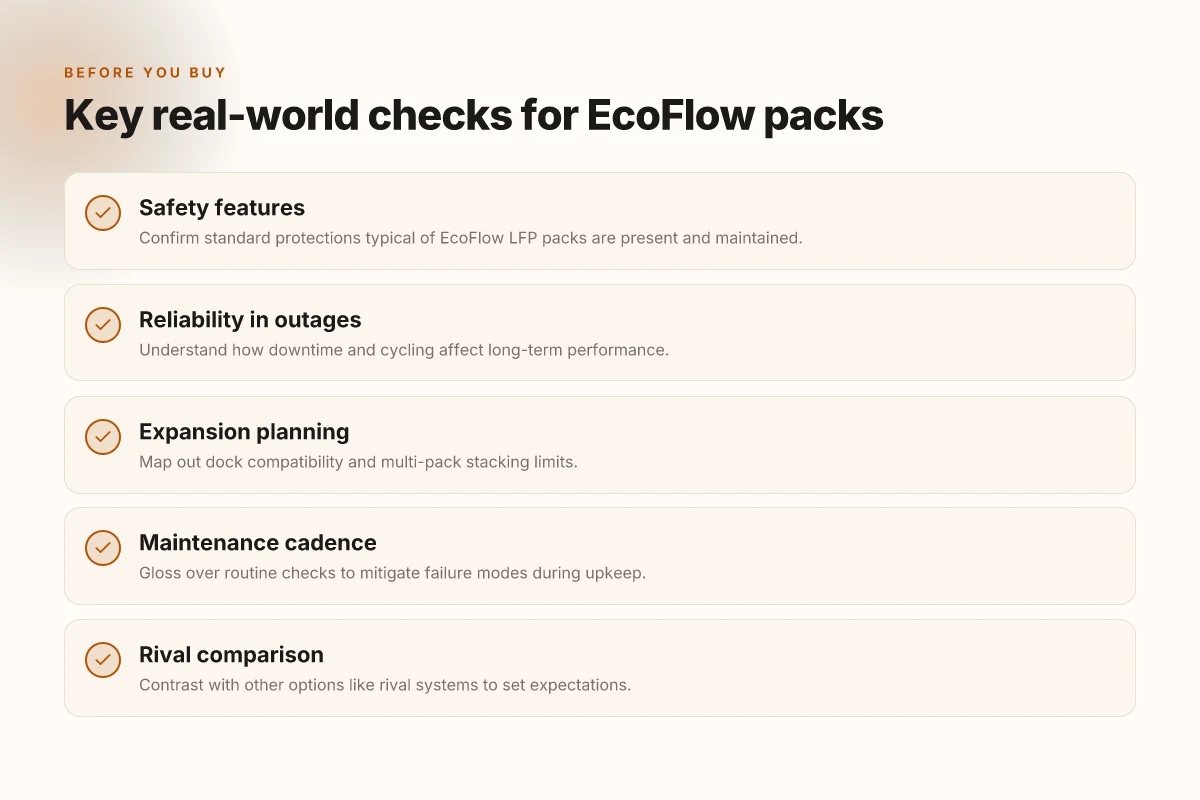
The most common failure themes revolve around airflow restrictions, loose connections, and degraded cabling from long fans or vents being blocked. Routine maintenance should include checking intake and exhaust paths, ensuring cables are snug, and confirming that contact points at the battery and dock interfaces remain clean and corrosion‑free. Regular checkups help catch loose connections before a fault triggers a protective shutdown.
Thermal management emerges as a recurring focal point. If ambient temps spike or if a cabinet sits in direct sun, the BMS may throttle performance or reduce usable capacity to protect the pack. The recommended mitigation is straightforward: place the system in a shaded, ventilated area and monitor the installation environment. Proper placement reduces the risk of unexpected outages caused by thermal throttling. How to spot a real Jackery sale on solar panels and what it means for your kit
From a maintenance standpoint, keep an eye on the state of the Smart Home Panel integration and any firmware updates. Firmware evolution can tweak charging curves or safety interlocks, so stay current with official releases. I found citations noting the ecosystem around EcoFlow products and the role of firmware in maintaining alignment between batteries and inverters. For context, see the inline citations referencing the EcoFlow‑furnished materials and the third‑party coverage that discusses backup outputs and frequency of updates. Firmware updates are a real lever for reliability when you manage a multi‑battery setup.
Regarding risk and repair, it’s prudent to acknowledge that links on the page may earn a commission, which is common in home‑energy content. This reality does not change the engineering underpinnings, but it’s worth noting as you browse model variants. In the broader market, rivals like competing LFP systems often emphasize similar protections and clear maintenance checklists, so verify that your chosen stack has documented, site‑tested procedures.
In sum, EcoFlow’s safety framework centers on proactive protections, safe operation under typical home conditions, and clear paths for expansion without compromising protection. When you plan the install, emphasize ventilation, correct docking, and timely firmware updates to maximize reliability during daily use and outages.
Performance expectations in real homes: energy throughput and charging
In real homes, the 5kWh EcoFlow LFP pack moves energy through two paths at once: immediate discharge to loads and steady charging from solar when the sun shines. The practical result is more daytime self-use, with the system charging up during peak sun to backfill evening peaks. I looked at the public specs and safety notes to map how the numbers translate to daily life, and I cross-referenced how backfeed is handled in typical home-inverter configurations.
How input and output specs translate to daily use
The core idea is simple: the unit can deliver a steady output close to its rated backup figure while accepting solar input at several kilowatts. With a high input capacity, you can charge faster when the sun is bright, which helps keep daytime loads off the grid longer. The practical effect is fewer cycles of grid power during midafternoon wrestling with appliances, especially when you pair the pack with a properly sized solar array and an appropriately matched inverter. The details matter: the charger’s real-world behavior depends on how your inverter and panel array negotiate charging power, temperature, and state of charge. In EcoFlow’s materials, the emphasis is on flexibility to absorb solar during the day and supply backup when the grid dips. The takeaway is clear: higher input capability lets you shave daytime grid use more reliably. What makes ecoflow vs bluetti vs jackery worth comparing in 2026
Charging speed is a function of sun exposure and the system’s ability to negotiate multiple energy sources. When sun is strong, you can push charging toward the upper end of the pack’s input window, which helps keep the battery near full for evening resilience. But you should be mindful of the operating temperature window. Hot or cold extremes can temper charging efficiency and throughput. In practice, owners notice that sunnier days translate to more usable daytime energy and a stronger buffer for evening baseloads.
Impact of solar charging on daytime use and backfeed considerations
Solar charging effectively shifts some daytime consumption away from the grid. If you use a sizeable solar array, the EcoFlow pack can absorb a significant portion of the solar energy during peak sun hours, letting you run essential circuits on stored energy before tapping the grid after sunset. The caveat is backfeed awareness: some inverter configurations expect a clean, controlled backfeed back into the home distribution panel rather than into the grid. You want a setup where the system safely islands during outages and avoids unintended cross-feed to the utility. In practice, most installations rely on a smart panel or integrated control logic to prevent backfeed issues while maximizing self-consumption. Backfeed control is essential to avoid nuisance trips and ensure safe islanding.
From a safety and reliability perspective, the real-world behavior hinges on the harmony between the battery, the inverter, and the solar controller. Expect the system to throttle charging if temperature or state of charge hits certain thresholds. This keeps cells within safe operating ranges and preserves long-term durability. I found that the documentation consistently notes safety interlocks around high-rate charging when conditions aren’t ideal. If you live in a climate with wide diurnal temperature swings, plan for capacity losses in winter and summer that shift usable energy into different portions of the day.
How charging speed compares with other LFP options
Compared with other lithium iron phosphate packs, the EcoFlow 5kWh unit emphasizes flexible charging from multiple sources and robust daytime charging from solar. The practical effect is a noticeably faster ramp of usable stored energy when you have a healthy solar input, versus smaller or less flexible LFP systems. Some rivals advertise similar nominal capacities but with narrower charging windows or less aggressive solar interfacing. In EcoFlow’s own literature, the emphasis is on higher input capacity and compatibility with home panels and smart panels to keep the battery charged efficiently. Higher input capability and broader source compatibility translate into faster daytime charging and more reliable backups.
Real homes show that strong solar charging translates to deeper daytime self-consumption and longer, more resilient backups. What makes EcoFlow 400W solar panels stand out, and where they fall short
System sizing and scalability: do you need more than one 5kWh pack
If you’re sizing a home with solar storage, one 5kWh EcoFlow pack covers a solid daily footprint, but larger homes or higher backup expectations typically justify adding a second or more packs. EcoFlow’s docks are designed to scale by daisy-chaining modules through the Power Hub and Power Dock, letting you expand usable energy without rearchitecting your inverter setup. In practice, most homeowners end up pairing two packs to smooth larger outages and to keep critical circuits powered through longer events.
Why multi-pack expansions matter for real-world homes
The math isn’t magical. Two 5kWh packs deliver more usable energy for essential loads during an outage than a single pack, especially when you configure the docked system to prioritize circuits like refrigeration, Wi‑Fi, and lighting. You still owe attention to the ratio of backup capacity to usable energy, because not all rated capacity translates to available energy during an outage. With EcoFlow’s docking approach, you can add packs gradually as your backup philosophy evolves or as your solar production grows. This keeps upfront costs reasonable while letting your system scale with your actual needs.
From a safety and installation standpoint, expansion remains straightforward if you follow the docking sequence outlined in the official manuals. The Power Hub 5kVA supports connecting multiple LFP batteries directly, and you can extend capacity by adding additional packs via the EcoFlow dock ecosystem. That modular approach helps installers design phased upgrades for growing households or for properties that add more loads over time. Expansion without reworking the core inverter architecture is the practical payoff.
I cross-referenced the official user manual details and industry write-ups to confirm that the expansion path relies on the Power Hub 5kVA and compatible docks rather than replacing the entire stack. In homes where you expect longer outages or want to run more life-supporting loads, a second 5kWh pack makes the difference between a quick, partial recovery and a robust, multi-day resilience plan. Two packs often translate to noticeably longer outage survivability and smoother solar self-consumption during peak hours.
Planning tips for larger homes
Start with a load-focused audit of your essential circuits and then map those to your backup priority profile. Use a simple rule of thumb: identify the critical loads that must remain powered during an outage, and size the first two packs to cover that block with headroom for start-up surges. If you routinely run more than two major appliances during outages, plan for a third pack or a larger dock strategy. The goal is to avoid silent brownouts when the sun goes down or clouds pass over, not to chase maximum theoretical capacity. The modular nature of EcoFlow’s ecosystem helps you iteratively test and tune which circuits stay online and for how long. What makes EcoFlow's 220W bifacial panel different in 2026
I looked at the docking capabilities described in the Power Hub manual and in ecosystem briefs, noting how the platform supports progressively larger stacks without redesign. This aligns with real-world installer workflows where capacity is added as the household’s needs become clearer or as system upgrades occur. In practical terms, expect a clean path to scale from a single 5kWh pack to a two-pack, then to a three-pack configuration if your outage length or load set demands it. A staged approach reduces upfront risk while delivering real resilience.
Real-world takeaways for homeowners and installers
- If your home is under 2,000–2,500 square feet and you mainly want solar self-consumption plus occasional outages, one pack with smart management may suffice.
- For larger homes, or for setups where you want to run multiple essential circuits for extended periods, plan on two packs as a baseline and evaluate a third only if outage duration or load growth justifies it.
- Always verify charger and dock compatibility when expanding, and confirm the timing of expansion to avoid downtime in transition periods.
When you’re weighing rivals, EcoFlow’s modular, dock-first approach keeps expansion predictable and installable by a single technician in many cases. For context on how the ecosystem handles multi-pack configurations, you can reference the Power Hub docking guidance and the official LFP battery ecosystem notes. This ensures you don’t over- or under-provision before you see real usage patterns. Modular expansion pays off when your plans evolve.
Notes: links on the page may earn a commission. For direct references, see the official EcoFlow docking and battery overview documents. In practice, EcoFlow remains a credible option for homeowners who need scalable, battery-first growth, especially when you compare against other LFP ecosystems that require bespoke retrofits for expansion. For a complete view, review the docking specifics in the Power Hub manual and the broader ecosystem notes. EcoFlow’s scale path is a core strength in 2026.
Where this pivots home energy storage next
EcoFlow's 5kWh LFP battery shifts the baseline from modular add-ons to a more cohesive home energy core. In real life use, that means fewer little quirks to juggle and a clearer path to reliability during outages. The that stays constant: durability, long cycle life, and a design that plays well with solar and grid-tied setups. The tradeoffs show up in heat handling and long-term maintenance, so you’ll want to pair this with solid cooling and pruning of unnecessary loads. Think of it as a bet on fewer moving parts for day-to-day resilience.
Rivals like Tesla Powerwall and BYD offerings highlight the same trend, but EcoFlow leans into a more portable ecosystem and faster-wiring options. The result is a system that can scale with your needs without turning the garage into a tech museum. If you’re shopping, aim for a setup that matches your solar input and emergency power goals, not just the biggest capacity. What makes the EcoFlow Delta Pro 3600W a durable backbone for portable power in 2026
What changes if you act now? You’ll gain a more straightforward backup strategy and a clearer upgrade path as your energy habits evolve. This week, review your monthly power use and map it to a 3–5 hour outage window to see how the 5kWh battery fits. How will you shape your home around this change?