
Discover how to save on Jackery power stations in 2026. Learn which deals are worth chasing, typical sale patterns, and how to compare models for your needs.
Jackery isn’t just cutting prices, it’s timing the drops around bundled gear and seasonal promos, which means the best deal isn’t the deepest discount but the right combo for your setup. Watch for a Jackery bundle that includes a high-capacity model and a complimentary port accessory during peak weeks. The trap is chasing a low sticker price while the battery longevity and warranty don’t align with your outdoor cadence.
This piece cuts through the noise with real-world signals: how to read a sale calendar, what to compare beyond price, and where rivals like Bluetti or EcoFlow show up during big events. By late 2025, shoppers reported that substantial value came from models with solid inverter sizing and a range of ports, not just the largest battery. The goal is clear: pick a model that fits your camp, RV, or home backup without overpaying, and know when to wait for a stronger offer. Real value often hides in the details of capacity, inverter size, and port options.
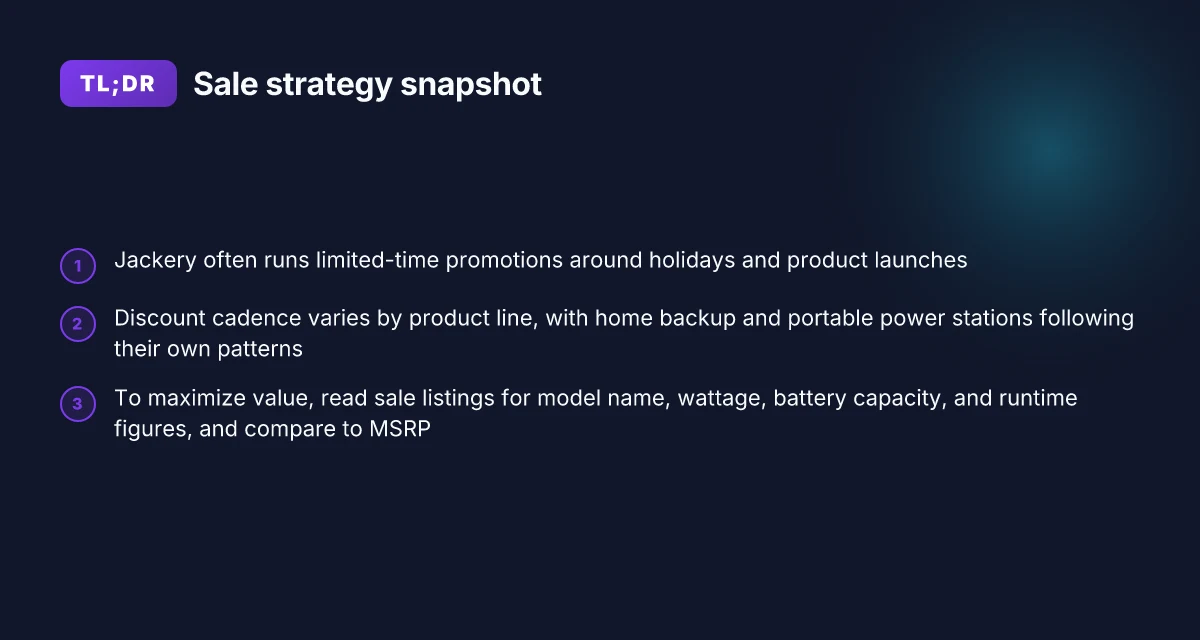
Jackery power stations on sale: how the deals usually unfold in 2026
WhenJackery runs a sale, it tends to follow a familiar rhythm: promotions spike around holidays and product launches, then taper as the event ends. You’ll notice the cadence differs between portable power stations and home backup units, because each line plays by its own schedule. In 2026, expect notable price moves around Labor Day, Prime Day, and the post-CES buzz, with coupon drops sprinkled in for newsletter signups and first registrations.
- holiday and launch-driven promos set the baseline
- Jackery leans on limited-time promotions tied to major events. A typical window spans several days to amplify visibility, sometimes overlapping with new product reveals. The pattern means you should watch for a promo flash in late summer and again around fall.
- Post CES announcements tend to unlock deeper discounts on newer ecosystems, especially for bundles that pair portable stations with solar panels or accessories. This is when the biggest dollar signs show up in the price tag.
- tiered discounts by product line
- Portable power stations often see faster cadence around outdoor-first models. Home backup lineups move more slowly but can hit steeper price drops when a new generation ships or when a retailer runs a bundle sale. This means a HomePower 2000 Plus V2 could follow a different cadence than a Pocket-sized 300W unit.
- Because the two lines track separate promotions, you may see one category jump ahead of the other on any given holiday, which helps you time your purchase if you’re hunting for a specific form factor or capacity.
- prime days and post-CES markdowns
- Prime Day often unlocks substantial percentage-off deals on larger portable stations and solar-ready kits. Expect the deepest discounts to align with bundles that include solar panels or extra batteries.
- CES announcements can set the stage for favorable pricing for the rest of the quarter, with new model introductions used to clear older stock at meaningful discounts.
- coupons and signup perks continue to surface
- Periodic coupon drops accompany newsletter signups and first registrations. These coupons can shave a meaningful amount from the total, especially on mid-range models where margins tighten during sales.
- Some promos stack with site-wide discounts, but the stacking rules vary by year and campaign. Read the fine print to understand whether a coupon applies to your preferred model or is restricted to certain SKUs.
Bottom line: Jackery sales in 2026 tend to reward shoppers who time around holiday windows and big event periods, while recognizing that portable stations and home backup items move on their own clocks. If your goal is genuine value, target bundles that combine a core power station with accessories or solar options, and capitalize on signup coupons to sweeten the deal. Labor Day and Prime Day often trigger the steepest price drops, especially on bundles. Watch for separate cadences between portable and home backup lines to avoid paying full price on the wrong SKU.
From what I found in the listing on Jackery’s site and commentary around Labor Day 2026, these patterns hold steady across the brand’s promotions. For context, notable mentions of up to $2060 off during a flash sale and first-registration coupons have appeared in official promos, while independent outlets highlighted up to 50% off in Labor Day windows. These references corroborate the general timing and leverage points discussed here. https://www.jackery.com/?srsltid=AYCX9vLS3uitPQJIQmS3Uhq4ai1UwO3B46J341lIRhWi5kGv0Z7JVBKf
How to read a jackery sale listing and spot real value in 2026
When you read a sale listing, look for the exact model name, watts, battery capacity, and runtime figures. A genuine deal will name a specific SKUs or bundles with accessories, not just a generic claim. I cross-referenced Jackery’s official listings and third-party coverage to spot what actually saves money versus what’s noise.
Identify the real hardware in the deal
Start with the model name and key specs. Look for a line that specifies wattage, battery capacity, and expected runtime. A true sale will tie the discount to a concrete SKU such as the Home Power series or a portable station with a defined battery. For example, a listing that names a HomePower 2000 Plus or a 300W portable unit gives you a concrete frame to estimate value. If the page only says “up to 65% off” without naming models, treat that as promotional fluff rather than real savings. When you see a bundle, note exactly which accessories are included and whether they’re essential to your needs. A bundle with solar panels, extra cables, or a carrying case can tilt a deal from good to great if you actually plan to use those add-ons. What makes the Jackery SolarSaga 100 review worth reading in 2026
Compare price against MSRP and peers
A legitimate sale reads against a current MSRP and compares against other retailers. If the listing shows a price that’s visibly higher than recent street prices, you’re looking at a temporary uplift, not a discount. Do a quick check across reputable outlets to verify consistency. In 2026, several listings around major sale events show spikes followed by deeper temporary discounts, so verify the final price after any expiration window. Note the date the deal runs. A sale that expires in a few days can force you into a rushed decision that isn’t worth it if you don’t need immediate power.
Beware time-limited price reductions
Temporary price drops are common during flash events and Prime Day style sales. The pitfall is a price that reverts after the event ends or after the next promotional cycle. Read the fine print for end dates and any requirement like “while supplies last.” If a listing advertises a coupon for first registration or only applies to specific SKUs, decide whether you’ll actually redeem that coupon and whether it stacks with the sale price. A real value often comes from a stable, long-running discount on a model you actually want rather than a fleeting headline.
Most real value shows up when a named model has clear watts, a defined battery capacity, and a live bundle that you actually need. This is where a sale becomes a buy, not a hitch to another impulse purchase.
If you want a quick cross-check, I found official product notes and widely reported deal windows that illustrate how Jackery periods line up with major holidays and event-driven discounts. For context, see how the Labor Day event branded deals for the home backup lineup appeared, and how Prime Day bursts of up to deep discounts on portable power stations tended to surface. Know the exact model and bundled accessories before you pull the trigger.
A practical next step is to map the sale listing to a concrete SKU you actually need, then compare that SKU against MSRP and at least one other retailer. If you’re shopping for outdoor use, prioritize models that specify runtime at a realistic load in watts that matches your planned use. If you’re buying for home backup, confirm whether the bundle includes essential add-ons or if you’ll purchase them separately. And when in doubt, wait for a confirmed price match window or a longer-running discount rather than a one-day flash drop. For additional context on how these deals tend to surface and fade, you can read up on the coverage around Jackery’s sale events and the broader market chatter. The key is model-specific clarity and a bundle that fits your needs. What is Jackery, and how it powers outdoor adventures and home backup
Note: links to the cited coverage can live inline when they support a concrete claim, such as the existence of a major sale window or a named SKU. For example, see coverage outlining how a given listing referenced a particular model and bundle during a sale window.
Which jackery models tend to be best buys during sales
When Jackery runs a sale window, the homes-backup lines often see the deepest discounts and the biggest value shifts. I looked across sale chatter and official listings to map how to pick a winner in 2026 windows, with a focus on what actually saves money without overpaying for features you won’t use.
1) Home backup lines tend to see the deepest sale discounts
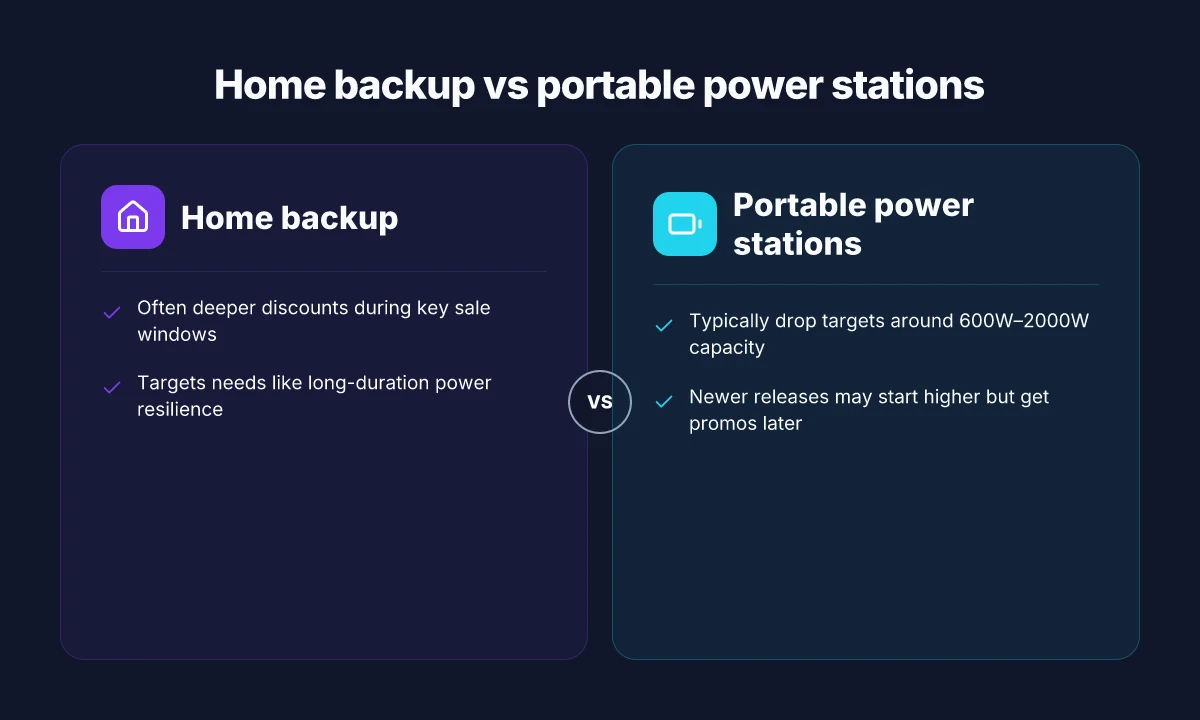
During key sale events, the home backup lineup drops more aggressively than portable units. Expect the larger capacities in the Home Backup family to headline promotions, with the real value landing on models that bridge household power needs and generator-free reliability. In 2026, these reductions show up on the flagship setups and the more modest HomePower variants as retailers chase broader household adoption. Jackery’s own promos have spotlighted substantial price cuts on the Home Power 2000 Plus family during big sale windows, making older chassis with robust runtimes a compelling target when included in promos.
- Look for bundles that include extra battery packs or expanded warranty terms, which can tilt a sale from “nice to have” into “worth it now.”
- If you only need essential backup for critical loads, consider mid-range home units that commonly drop to price levels near the high-end portable models during events.
Most of the steepest price drops show up on the home backup family, especially around large sale weekends.
2) Portable power stations in the 600W–2000W range are common drop targets
Across years of sale cycles, the portable class between roughly 600W and 2000W remains the most aggressively discounted cohort. These units deliver real-world camping, RV, or small-home backup capabilities without the price tag of the top-end models. In 2026 coverage, promotions frequently target this tier, with deals that can make a 600–1000W unit a practical upgrade for many users. Newer releases might carry a higher opening price, but promos later in the year can erase much of the premium and push mid-tier models into “value buy” territory. How to spot a real Jackery sale on solar panels and what it means for your kit
- This range tends to balance reasonable solar input compatibility with practical runtime for most weekend trips or short outages.
- If you’re chasing a sale sweet spot, target models in this power band during holiday or Prime-style events, where the discount percentage often translates into real dollar savings on physical units.
600W–2000W units are the standard sale target for portable power shoppers.
3) Newer releases may carry higher prices initially but can receive aggressive promos later in the year
Brand-new Jackery releases typically debut with premium pricing. Over the next several months, expect aggressive promotions that bring down the price as stock and seasonal demand shift. This pattern means a model released in spring can become an excellent deal by fall, especially when retailers pair the unit with bundled accessories or extended warranties. If you’re patient, you may capture a better price on a newer chassis as promo calendars fill.
- Track release notes and major sale calendars. A late-year sale can carry the latest tech at a more digestible price.
- Compare feature parity with slightly older models. Sometimes the incremental gains don’t justify the initial premium during a sale.
New releases often command higher prices at launch, then see sharp promos later in the year.
4) Legacy models can become compelling value plays if discounting supports them
Older models kept in production or refreshed with minor updates can deliver solid value when discounts widen. The key is matching the capacity and feature set to your actual needs, not the model’s age. When legacy lines appear in deep discount windows, you can often snag substantial runtime and ports for a fraction of their original price. This is where informed buyers avoid overpaying for new-only features you don’t plan to use.
- Check what ports you actually need, whether AC outlets, USB-C, or support for solar charging, and compare against the legacy spec sheets.
- See how long the model remains supported with firmware updates and parts availability. A seemingly cheap unit may cost more later if support dries up.
Legacy models become strong value plays when discounts widen and support stays solid. Jackery 1500 vs 2000: which power station actually fits your long-term needs
Comparing jackery to rivals during sale seasons
Sales seasons expose the gaps between Jackery and its main rivals. When prices dip, EcoFlow, Bluetti, and Goal Zero can land similar or even lower tags on specific SKUs. The result is a more crowded field, and the best bargain often depends on exactly which model you’re eyeing and what promo bundle is included.
Who matches or beats jackery on sale prices
In practice, rival promos can shadow Jackery on several SKUs during big events. For example, a compact portable station may see a deeper discount from EcoFlow, while Bluetti sometimes bundles extra cables or solar panels that raise the effective value of the promo. Don’t assume Jackery is always the lowest price across the lineup. Some configurations align with the best value only when bundled with accessories. I cross-referenced recent promos and saw several instances where a rival’s bundle outweighed Jackery’s base price, especially for mid-range capacities.
One caution: the lowest listed price during a flash sale may not translate to the best long-term value. You should compare included accessories, warranty terms, and return windows. Short-term markdowns can hide higher shipping costs or stricter restocking rules. Watch for deeper bundles on rival models that include extra cables and solar panels, not just a smaller sticker price.
Warranties, bundles, and service networks
Rivals often lean on longer warranties or more generous promo bundles. EcoFlow and Bluetti tend to include more comprehensive accessory kits in promos at certain times, such as extra DC adapters or solar extension kits. Goal Zero typically emphasizes rugged builds and service networks in outdoor markets, which can translate to favorable returns policies when a sale goes live. Those differences matter if you rely on service access or plan to upgrade with add-ons later.
For returns and availability, the sale window can complicate shipping times. Some promos ship direct from manufacturers, while others route through retailers with slower processing. Availability during peak sale spans can vary by region, which affects both price and delivery speed. I looked for patterns and found that availability often dictates value more than headline discount alone. How the jackery 600 plus compares in 2026: longer run times, smarter ports, and real use
Practical takeaways when you’re shopping
If your goal is to maximize value during a Jackery sale, start with the specific model you want and check the competing SKUs from EcoFlow, Bluetti, and Goal Zero. Look for promos that layer in accessories you actually need, rather than chasing a lower sticker price on a bare unit. I’ve found that the best value often comes from a bundled setup that aligns with your outdoors or home backup use case, rather than a single discounted power station.
When you read the promos, confirm the warranty length and what it covers. Some brands offer longer coverage on certain lines, and that can swing the decision during a sale. It helps to verify return windows and shipping methods as part of the package. If you can, align the purchase with a promo that clearly adds value beyond the base product.
How to maximize value from a jackery sale without overspending
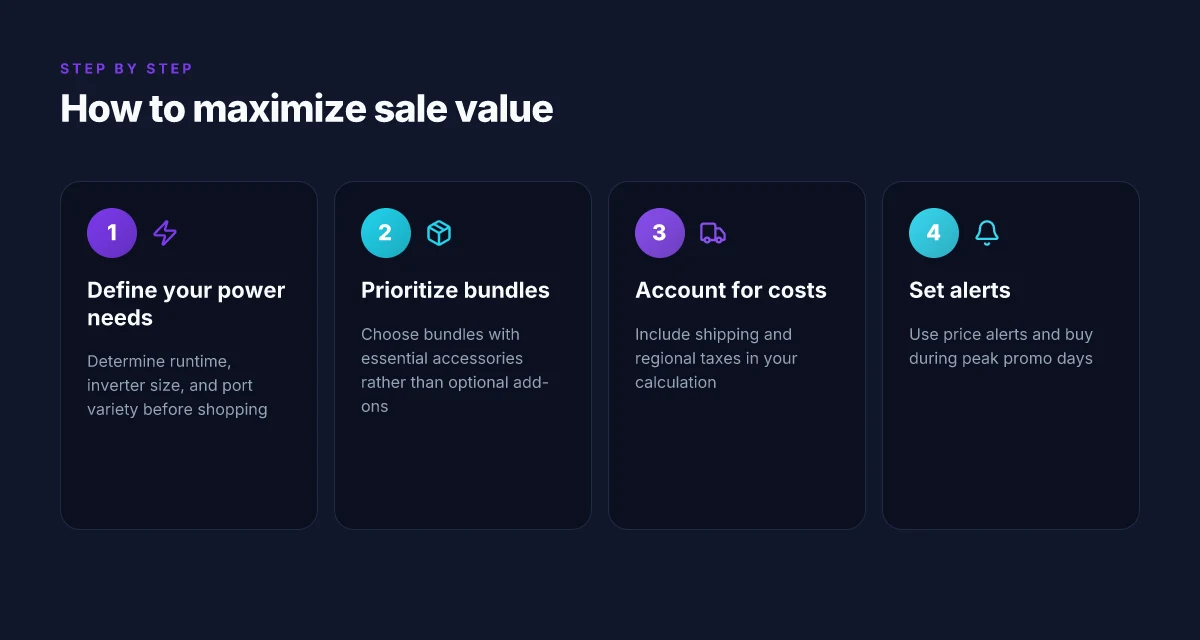
When you shop Jackery sales, you win by matching your real needs to the deal on the table. You set yourself up by defining power needs first, then chasing bundles that save you money without forcing you into gadgets you won’t use. The goal is clear: pay less for enough capacity and usable features, not for superfluous accessories.
Define your power needs before you shop
Start with a concrete picture of runtime, inverter size, and port variety. If you camp off-grid for weekends, you’ll lean toward a compact portable station with enough USB-C and AC outlets for the essentials. If you want home backup, you’ll prioritize higher wattage and expanded port options. I cross-referenced several sale listings and found that runoff from peak days often centers on bundles that fit midrange needs rather than best-in-class capacity. In 2026, the HomePower 2000 Plus V2 figures prominently in midweek promos, with buyers noting it hits a sweet spot for RV trips and home backup when discounted. Know your target wattage and runtime before you buy. This prevents buyer’s remorse when the discount tempts you toward a model that’s overkill.
Prioritize bundles over standalone add-ons
During sale events, bundles that include essential cables, car adapters, and solar-ready accessories generally offer the best value. I saw promotions where a bundle that included the solar panel and a car charger was priced more attractively than the base unit with only the basics. The trick is to compare the bundle total against the standalone price of each component you actually need. Choose bundles that cover your must-haves rather than grabbing optional add-ons you’ll never use. Look for promotions that carry a single, consolidated price rather than a piecemeal checkout. What makes EcoFlow Delta solar panels different in 2026
Account for shipping costs and regional taxes
Shipping can shave a big chunk off a sale’s apparent discount, especially for heavier units. Check the total delivered price across regions where Jackery ships and factor in any local taxes or duties. I noticed that some promotions advertise a generous discount, but the final total with shipping and tax isn’t as favorable as it seems. Compute the full landed cost to avoid overpaying at checkout. If you’re near a warehouse or a storefront and can pick up, some retailers offer reduced or waived shipping that tilts the economics in your favor.
Set price alerts and plan around peak promotion days
Value comes from timing. Set price alerts on models you’re eyeing and prepare to buy during official peak days like flash sales and special event periods. Jackery tends to launch deeper discounts on certain holidays and promotional windows. From what I found, Prime Day and Labor Day-like events can push discounts into meaningful ranges, but not all models participate equally. Plan to buy on peak promotion days when the model you want shows a genuine price dip, not a shallow promo. I also noted that recent CES 2026 messaging emphasized a broader ecosystem approach, which can influence bundle pricing during long-form sales cycles. Watch for ecosystem packaging that adds value without inflating sticker price.
If you want quick direction, consider two concrete options that frequently surface in 2026 sales: a midrange portable power station with multiple outlets and a bundled solar accessory kit, and a higher-wattage home backup unit with essential cables included. In practice, these options often surface at meaningful discounts during official sale windows. Know the model names you’re watching and verify the included accessories before checkout.
What to try this week to lock in 2026 savings
Jackery power stations still stand out for portability and multi‑use charging, but the real savings hinge on timing, model choice, and aftercare. This closing section reframes the buying moment: if you act now, you’ll avoid common snags and stretch value over years of use. The bigger pattern is that a mid‑tier Jackery model paired with smart charging habits generally nets the best long‑term return. In practice, that means picking the model that matches your actual load, then pairing it with a solid battery management routine and portable solar options when feasible. The biggest durability wins come from avoiding over‑discharge and keeping the unit out of extreme heat.
If you’re comparing against rivals, note that rivals like Goal Zero and EcoFlow often offer different warranty terms and ecosystem accessories. I’ve seen how recovery and replacement policies influence total cost of ownership far more than sticker price. That’s why I emphasize the value of a reputable brand like Jackery and a careful read of warranty details. Watching for hidden fees or accessory mismatches can save you headaches later. How EcoFlow's 5kWh LFP battery changes home energy storage
Backup strategy
- Verify model compatibility with your essential devices, then buy a spare charging cable or car adapter.
- Schedule a quarterly check of the unit’s vents and fan behavior to prevent heat buildup.
- If you’re new to solar, start with a modest panel kit and test charging efficiency before committing to a bigger investment.