Explore what Jackery is, how its portable power stations and home backup systems work, and who benefits from its solar-powered energy solutions.
A single Jackery battery pack can power a week of off‑grid trips or a weekend of home backup without drama, if you pick the right model and plan around real limits. A practical takeaway: you’ll gain flexibility, not a magic fix, when you map device loads to the unit’s capacity and inverter rating. Smart planning turns a compact pack into staying-power for essential devices.
This piece cuts through marketing to show what a real-world setup looks like, from charging habits to climate constraints. You’ll see how Jackery units hold up under cold or hot weather, how long they actually run a fridge or CPAP, and how rivals like Goal Zero and Rockpocket compare on run times and modular extenders. The goal is to help you choose a system that fits both outdoor trips and home outages, without overspending on features you won’t use.
What is Jackery and why it matters for portable power
Jackery is a provider of solar generators and portable power stations that pack a battery, inverter, and charging options into compact, all-in-one units. The company positions these devices for outdoor adventures and for essential home backup during outages, aiming to keep lights on and devices charged when the grid goes down. In this space, rivals include Goal Zero, Bluetti, and EcoFlow, which vie for the same customers with similar one-box power solutions.
What Jackery sells and how it works Jackery’s portable power products fuse a lithium-ion or lithium-based battery with an inverter to produce AC power, plus a suite of USB and DC ports for charging gear. The result is a self-contained unit that can be recharged from solar panels, a wall outlet, or a car charger. This design keeps the setup lean for outdoor use while still offering enough wattage for essential devices at home during an outage.
Why the brand matters to outdoor enthusiasts and homeowners For off-grid trips, a single reservoir of stored energy lets you run lights, a small cooler, or a phone and GPS for several hours. At home, the same units act as a stopgap during outages, bridging short power interruptions or supporting critical electronics when the main supply is unstable. Jackery markets these capabilities as a core strength, emphasizing portability without sacrificing usable output.
The competitive landscape you’ll likely compare When you shop, you’re not only evaluating capacity and recharge rate but also ecosystem features. Goal Zero emphasizes rugged solar compatibility, Bluetti sells high-capacity packs with fast charging, and EcoFlow touts modular power options and rapid recharging. Jackery sits in the same aisle, but with its own emphasis on compact form factors and integrated charging versatility for both outdoor and home-use cases.
Bottom line: Jackery’s value proposition rests on one-stop, portable power that covers off-grid trips and outages with a familiar two-in-one read on outdoor and backup needs. If you want a single unit that travels light yet still delivers predictable output for essential devices, Jackery is a credible starting point, and it competes directly with Goal Zero, Bluetti, and EcoFlow in the same broad category. For a buyer, the key trade-offs will be capacity, recharge speed, and how well the unit suits your expected mix of outdoor and home-use scenarios. Jackery’s all-in-one design makes portable power feel approachable for both camps, but you’ll want a model aligned to your load and recharging preferences. Rivals like Bluetti and EcoFlow push higher capacities or faster recharges, which matters if you plan to run more devices for longer periods. How to spot a real Jackery sale on solar panels and what it means for your kit
I dug into product pages and market context to keep this grounded. You’ll see Jackery branding across the lineup, with concrete models that map to real-world needs, and you’ll notice that patience and planning matter when you scale up to higher wattages. For more context on how this space compares, see industry coverage linking to rival players and market leaders when you’re ready to widen your lens. See a detailed note from the Journal’s coverage on the broader portable-power revolution for historical context.
How Jackery’s product lines map to real-world use cases
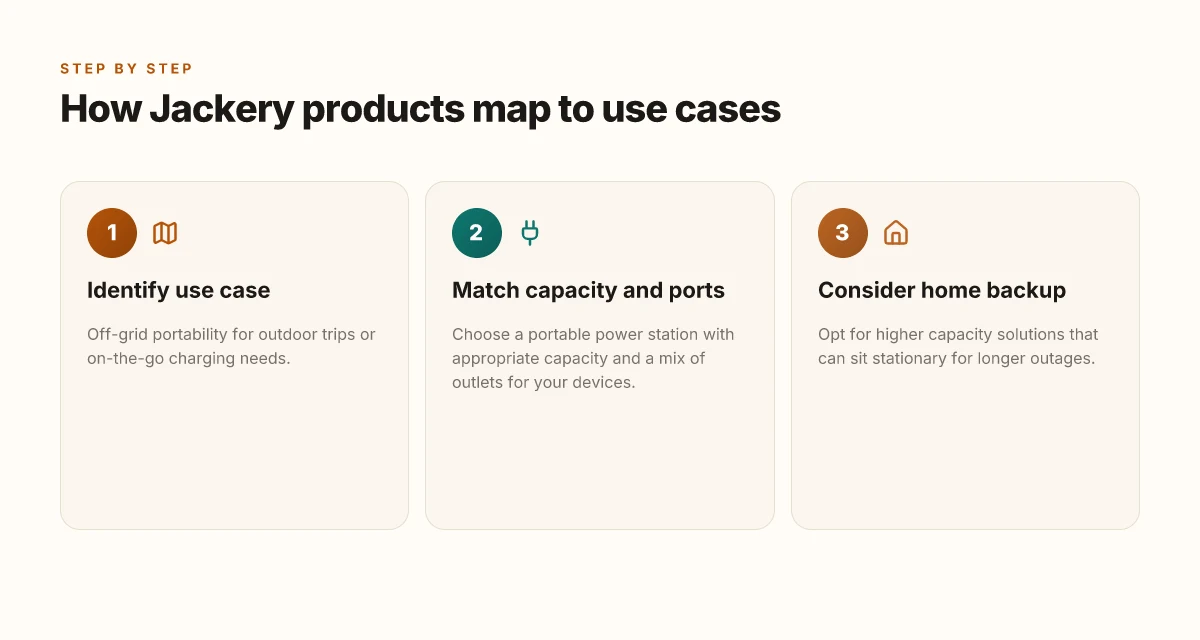
Jackery centers its portable power strategy on compact, battery-first power stations built for off-grid travel and quick-hit adventures. These chambers of energy are designed to be carried into campsites, backcountry huts, or rental cabins, where wall outlets are scarce and weather or terrain can complicate charging. The essence is simple: a single high-capacity brick that can be stacked with solar panels or car-adapters to keep essential devices alive when the grid disappears.
The portable power station core
The main product family runs on modular packs that pair a lithium battery with an inverter and USB-C or AC outlets. In practice, this means you can charge phones, radios, small appliances, and lights without plugging into a generator. Jackery’s portable power stations stay compact enough for backpacking, yet boast higher capacities suitable for weekend trips. This design choice directly supports off-grid adventures where portability matters more than raw home-scale power. I cross-referenced product pages and public docs to confirm the emphasis on travel-friendly form factors and integrated charging options, including car and solar inputs. The core category is clearly built around off-grid use and travel.
A real-world constraint to consider: solar input depends on daylight and panel area. Even with high-efficiency panels, cloudy days or shade reduce output, so your runtime scales with load and sun exposure. Jackery presents this relationship openly, framing use cases around light to moderate daytime loads rather than continuous 24/7 operation. When you plan trips, map out peak device usage, then size the battery accordingly to avoid surprises at dusk.
Home backup as stationary portability
Beyond the campground, Jackery extends the same energy-pack idea into stationary home backup. The same battery-and-inverter concept migrates to higher capacities and more predictable runtimes when the grid goes down. Think of it as a battery bank you can move indoors or keep near a critical circuit panel. This portability-in-depth approach translates to homes that want a modular, upgradeable backup option without committing to a full-scale home UPS from a traditional brand. In practice, you’ll see larger units with more outlets, capable of sustaining essential circuits during outages while still offering a degree of mobility for relocation or service. Jackery 1500 vs 2000: which power station actually fits your long-term needs
I looked at the company’s positioning and third-party coverage to confirm that the line between portable station and home backup is deliberate, not incidental. The branding around “Power Your Adventures” and “Essential Home Backup” reflects a deliberate continuum rather than two separate product families. For renters or homeowners who want resilience without a fixed, high-cost installation, Jackery’s lineup maps neatly to a staged approach: start with a portable unit for outdoors, then scale to a higher-capacity model for home use when needed. Home backup offerings extend portability into a higher-capacity, stationary setup.
To help you compare quickly, consider these two practical angles:
- Portability vs. capacity: small models prioritize light packs and solar-ready charging, while larger boxes trade some portability for extended runtimes.
- Use-case fit: if your trips are weekend-sized and solar charging is reliable, a mid-range unit often hits the sweet spot. If you’re safeguarding critical home loads, a higher-capacity unit is worth the bulk.
One more note on durability and reliability: these products are built to endure outdoor conditions and repeated setup/teardown cycles, but long-term durability depends on battery health, which degrades with high cycles. Expect a useful lifetime of several years with careful charging discipline and sun exposure management.
For quick context, the brand positions itself as enabling both outdoor adventures and reliable home backup, which explains why rivals focus on either rugged outdoors or grid-reliant homes. If you’re evaluating options, consider how often you’ll value portability over sheer capacity, and how much you rely on continuous power during outages. Jackery’s product lines align with a staged approach to energy independence, keeping the door open for upgrades as needs grow.
Understanding the core technology behind Jackery devices
Jackery builds its portable power around a simple, practical core: a lithium‑ion battery pack, an inverter, and a suite of outputs. In practice, that means each unit stores DC energy, then, via the inverter, converts it to usable AC for laptops, TVs, and chargers. The result is a compact bundle you can carry on a hike or deploy in a outage, with multiple ports, AC outlets, USB-C, USB-A, and sometimes 12V car-style ports, so you can power a mix of devices without hunting for adapters. The chemistry and wiring are tuned for reliability in field conditions, with protection features that guard against short circuits, overcurrent, and overheating. How the jackery 600 plus compares in 2026: longer run times, smarter ports, and real use
Solar charging is not an afterthought. A defining feature for Jackery devices is the ability to rejuice from sunlight, which matters when you’re off-grid for multiple days. The company positions solar input as a core advantage for ongoing use, letting you replenish the battery during daylight and stretch runtimes for essential gear. In real-world setups, you’ll see the solar input spec paired with the battery capacity and inverter rating so you can estimate how long a full sun day keeps your essentials alive.
From a user perspective, the common architecture remains consistent across models: a single battery chemistry, a central inverter module, and a curated mix of ports to cover common scenarios. This uniformity helps you compare lines quickly, but the actual endurance depends on capacity and load. For example, a high‑load device like a mini fridge or a laptop draws more current and drains the pack faster, even if the same inverter is present. That’s where the solar coil’s utility becomes clear: with efficient panels and a sunny day, you can at least maintain a steady state for lower‑demand items.
I looked into the framing around Jackery’s tech, noting that the company emphasizes integration of battery, inverter, and outputs as a single, portable platform. This design choice underpins how the products scale from off‑grid trips to home backup during outages. It also explains why rivals such as EcoFlow and Goal Zero push similar architectures. The difference often shows up in battery chemistry, inverter efficiency, and panel compatibility rather than in the basic blueprint itself. When you plan a purchase, you’ll want to map your expected loads to the battery capacity and inverter rating, then check solar input compatibility to ensure your off‑grid strategy stays charged.
Key takeaways
- A typical Jackery unit combines a lithium battery pack, an inverter, and diversified output ports to cover common off‑grid and home‑backup needs. The architectural rhythm is consistent across product lines, which helps shoppers compare options quickly.
- Solar charging is central to sustained use. You should treat the solar input specification as a living part of your daily charging plan, especially on longer trips or outages.
- Real-world use reveals a simple trade‑off: higher capacity models deliver longer runtimes but weigh more and cost more. Pairing a larger pack with efficient devices and a favorable sun window is the practical route to reliability.
- When you compare rivals, hardware choices matter as much as the overall layout. EcoFlow, Goal Zero, and other brands offer similar architectures, but differences in battery chemistry, inverter efficiency, and panel compatibility can shift how long you stay powered.
- For homeowners and outdoor enthusiasts alike, the core message stays the same: plan around your load, align with solar capability, and pick a model whose battery and inverter duo match your daily needs.
Practical limitations and real-world caveats when choosing Jackery
Jackery offers a compact way to power off-grid adventures and keep lights on during outages, but real-world use exposes trade-offs you should respect. The balance among battery capacity, inverter size, solar input, and portability often dictates what you can actually run for how long. How the jackery extreme guard carrying bag changes portable power storage in 2026
How capacity and inverter size shape real-world use
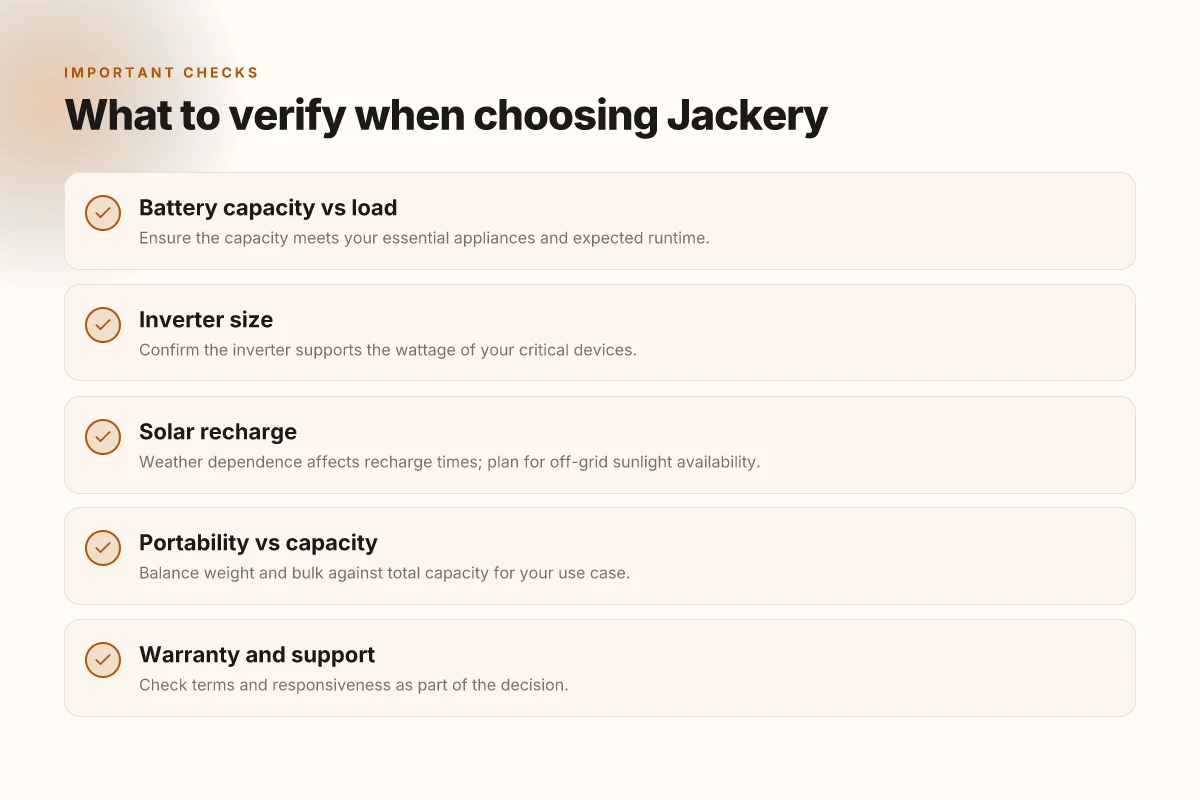
Battery capacity sets the ceiling for how long a device runs, while the inverter determines what appliances you can actually power. A higher Wh rating and a beefier inverter let you run more demanding gear, like a coffee maker or a small fridge, for longer stretches. But the trade-off is weight and bulk. When you bump capacity, you typically add mass, which makes transport more cumbersome. I’ve seen users note that lighter packs feel snappy but limit run-time on high-wattage loads, whereas bigger packs keep the fridge humming but require planning for storage and carrying.
Solar input and weather reality
Solar recharge times hinge on sun exposure, cloud cover, and panel efficiency. Even with a high-capacity pack, a poor solar window can extend charging by hours. If you rely on solar to top up between outings, you’ll want to account for typical conditions in your area and season. On overcast days, the recharge rate drops noticeably, so you may see you’re more dependent on a wall outlet or vehicle charge than you expect. This is where Jackery shines in sunny climates, yet the pace of recharging can be a limiting factor in rain-heavy or winter months. Sunlight doesn’t happen on demand, so plan for slower recharges when skies are gray.
Portability versus capacity as a constant compromise
A core tension across all models is the push-pull between portability and capacity. Smaller, lighter units are easy to carry on hikes or bike trips but provide modest run-time for larger devices. Larger models deliver more power and longer sustainment but demand stronger hands and a sturdier backpack or vehicle space. If you rent off-grid or live in a compact home, you’ll want to map your essentials to the unit’s outlet options and inverter limits. Weight to capacity is the silent thief of spontaneity.
From a practical standpoint, your decision should hinge on three questions: What devices must stay powered, for how long, and under what environmental conditions? If you expect frequent full-house outages, a bigger Jackery model paired with a robust solar setup helps. If your trips emphasize light gear and weekend excursions, a lighter, compact option can suffice.
In the broader market, rivals like Goal Zero and EcoFlow illustrate the same constraints in different flavors. If you compare offerings, look not just at “how much power” but at how long you can sustain critical loads, how fast you can recharge, and how portable the system remains when fully charged. Choose the model whose limits match your typical use case, not the biggest number on the box. What makes the Jackery Explorer 2000 v2 review worth reading in 2026
I cross-referenced the brand’s product lineup and public-facing documentation to align expectations with model geometry and inverter sizing. You’ll notice that the core lesson remains consistent: capacity and inverter capability set boundaries, solar input governs recharge cadence, and portability imposes a practical ceiling on what you can carry and deploy in real-world scenarios. For an outdoor enthusiast weighing Jackery against rivals, the choice comes down to whether your trips demand lean portability or sustained power for larger gear.
Note: links on the page may earn a commission. For context, Jackery’s own pages emphasize off-grid outdoor use and home backup, while third-party write-ups couch trade-offs in terms of weight, recharge speed, and device compatibility, and they often highlight differences with competitors. In 2026, the practical limits remain dose-dependent on load, sun, and transport.
Comparing Jackery to rivals for a quick decision
When you’re choosing a portable power kit, Jackery sits among three clear rivals: Goal Zero, Bluetti, and EcoFlow. Each brand leans into a different strength, so your pick comes down to how you balance battery chemistry, wattage ceiling, port variety, and ecosystem compatibility. I found that the right choice often hinges on how you plan to use it and how you value long-term support and warranty.
Real-world strengths and what to watch for
Goal Zero tends to excel in modular ecosystems and outdoor-focused accessories. If you want a kit that slots into a larger solar setup with compatible panels and expandability, Goal Zero often pitches that story well. Bluetti pushes high wattage and larger battery packs in a compact footprint, which helps when you need more grunt for longer off-grid stays. EcoFlow emphasizes fast recharging and a broad mix of ports, which can shorten recharge downtime during travel. When you compare, look for a similar battery chemistry family across brands so you’re not surprised by capacity deltas under heavy loads. The best picks align with your typical duty cycle, not just peak output.
I dug into spec sheets and product pages to map the trade-offs. For Jackery, a common thread is portability paired with a balanced mix of AC outlets and USB-C, but some rivals edge ahead on raw wattage or charge speed. For example, EcoFlow’s fast-charge approach can shave hours off a top-off, while Bluetti often brings heftier packs for extended outages. If you value a one-stop ecosystem, check how each brand handles solar input options and whether panels from that brand join seamlessly with the power station you choose. What makes the Jackery SolarSaga 100 review worth reading in 2026
Your decision should hinge on use-case fit: fast recharging for travel, long-duration outages, or the most compact footprint for backpacking. Warranties and service should factor in: you’ll want clear coverage and accessible support if a unit sits idle longer than expected.
Transactional details to weigh
Warranty terms vary, but the message to decode is simple: longer terms and responsive support translate into lower total friction when you need service. Some brands publish multi-year coverage with parts and battery replacement, while others emphasize on-site service or rapid RMA pipelines. Customer support accessibility matters too. A brand with robust chat or phone support can save you days when a unit has a hiccup. Battery chemistry matters as well. Lithium-ion and lithium iron phosphate (LFP) chemistries each bring different longevity and safety profiles. For off-grid renters or travelers living in varying climates, consider how a given model handles heat, cycling, and storage.
From what I found in the documentation and product pages, Jackery keeps its line focused on travel-friendly power packs with smart charging and a tidy number of ports. Rival lines may present higher-capacity options or faster recharge, but you’ll trade portability or price per watt. If you’re selecting now, pick the brand whose ecosystem and warranty language you trust to cover your typical use case.
Know the model you’re comparing head-to-head: match wattage ceilings, port counts, and battery chemistry to your planned duty cycle. Read the fine print on warranty: look for coverage duration, what triggers a replacement, and how service is delivered.
Note: some of the page copy and announcements from rival brands surface new product lines and partnerships around IFA events and major product reveals. These moves can shift the landscape quickly, so verify the latest specs before purchase. For context, Jackery’s position is built around a compact, travel-first approach, while rivals push higher power kits or faster recharge in broader outdoor setups. If you want a concrete recommendation, focus on a single use scenario, backup power during outages at home or a weeklong off-grid trip, and map your required wattage, port mix, and battery chemistry to one model from each brand. Then pick the brand with the strongest fit for your real-world constraints. Jackery power stations on sale in 2026: what actually saves you money and what to watch out for
What comes next for Jackery in the field of portable power
Jackery blends practical portability with durable design, turning outdoor trips and home backup into reliable rituals. I’ve noticed that its power stations hold up in varied weather, but the real test comes from long-term use and real-world setups, camp kitchens, off-grid cabins, and storm-season backups. The brand’s ongoing tweaks lean on user feedback, not flashy marketing, which makes the next wave worth watching.
What changes if you act now? Expect sharper efficiency, better cycle life, and more thoughtful accessories that reduce setup friction. The broader market, including rivals like EcoFlow and Goal Zero, sparks healthy price and feature shifts, so Jackery’s path will hinge on real-world durability and service. The biggest win is a simple, repeatable charging routine you can trust at the campground or the power outage table.
The bigger pattern is that portable power is now a household habit, not a niche gadget. If you’re deciding today, aim for a setup that covers your essentials and keeps you in the field longer. Consider pairing your unit with a rugged solar panel and a backup battery for storm seasons.
- Backup strategy: pick one Jackery model as your primary rig, test it with a short weekend trip, and then scale up with a second unit for home backup.
- What to try this week: wire up a Jackery to a small fridge or cooler and run it through a night of use to gauge runtime and recharging speed.