Explore the EcoFlow Delta Pro 3600W's reliability, expandability, and long-term performance in 2026. Learn how it stacks up for home backup and off-grid use.
The Delta Pro 3600W holds up under real-world load, not hype. When you balance expansion batteries and continuous off-grid use, the Delta Pro system shows where durability lives and where it strains, especially in prolonged high-current cycles. Most buyers assume one battery means lifetime reliability. The truth is the pack health and firmware cadence matter as much as capacitance.
I pull from practical setups: a homeowner running EcoFlow gear through harsh climates, an RV user stacking extra batteries, and a van-life setup chasing dependable sun-to-load energy for years. You’ll see how the ecosystem handles aging cells, connector wear, and firmware updates, plus what trade-offs exist when you push toward bigger arrays or rival models from brands like Jackery or Bluetti. Endurance hinges on battery health checks and disciplined expansion choices, not peak wattage on day one.
Why the EcoFlow delta pro 3600w remains a cornerstone for portable power in 2026
The 3600W class anchors many off-grid and backup setups because it blends high output with a scalable ecosystem. You can pair a Delta Pro with extra batteries and Smart Solar to push total capacity well beyond the basic 3.6 kWh, which matters when you’re running a fridge, CPAP, or several apps during an outage. In 2026, durability and consistent power delivery sit at the core of its appeal, especially for homeowners and RV users who need predictable performance across seasons.
Durability and design that translate to real-world reliability
The Delta Pro line emphasizes a rugged enclosure and a thermal management approach that keeps output steady across long draws. Real-world use routes through a familiar pattern: you get a steady AC waveform when the unit is supplying 3600W, then a controlled drop if you exceed its surge window. I cross-referenced EcoFlow’s own materials with independent reviews that note the modular battery strategy helps uptime during cascading outages. In practice, that modularity matters: you can swap in fresh cells or add more capacity as your needs grow, which keeps the system resilient without a full refresh. Durability over time comes from modular expansion, not from a single magic component.
Expansion trade-offs that actually show up in the field
One strong point is the expandable ecosystem. The Delta Pro supports multiple Smart Extra Battery packs and can link with a home setup for backfeed protection, but expansion also brings a couple of realities. First, charging time compounds when you attach multiple packs or solar arrays, so you may see longer total cycle times to top up from zero. Second, the more hardware you daisy-chain, the more you need to monitor connector integrity and heat pathways. I found the most reliable setups keep the solar input within a predictable window and stagger battery additions to avoid thermal bottlenecks. The result is a durable backbone that scales with your load, not a fragile one that buckles under growth. Expansion is a strength when managed. Mismanaging it bottlenecks performance.
Reliability signals you can trust for daily use
In 2026, homeowners and travelers value a system that behaves consistently across weather conditions and usage patterns. EcoFlow has maintained a cadence of firmware updates and documented compatibility with accessories that reinforces long-term reliability. Rivals like Bluetti and Jackery offer compelling alternatives in the same class. The Delta Pro’s ecosystem reach, batteries, solar panels, and a home integration path, remains a differentiator for people who want to scale without replacing the core unit. When you’re evaluating, the question is not only peak output but how the package ages with you. Ecosystem maturity matters more than a single spec bump.
From what I found in the sources, the Delta Pro’s durability story hinges on predictable power delivery, thoughtful thermal design, and a scalable battery strategy. A durable backbone for portable power in 2026 means thinking long-term, not just peak watts. What makes EcoFlow's 220W bifacial panel different in 2026
Cited context: EcoFlow positioning and the Delta Pro ecosystem are described in EcoFlow’s CES coverage and the Delta Pro overview. See the discussion of expansion and durability in the referenced materials. The 3600W class remains viable for 2026 households and off-grid setups.
Note: links to supporting sources may earn a commission. This article references EcoFlow materials and third-party reviews to outline long-term durability themes, including expansion trade-offs and reliability signals. For a deeper read, see inline citations to the materials linked within this section.
The delta pro 3600w design and what that means for reliability
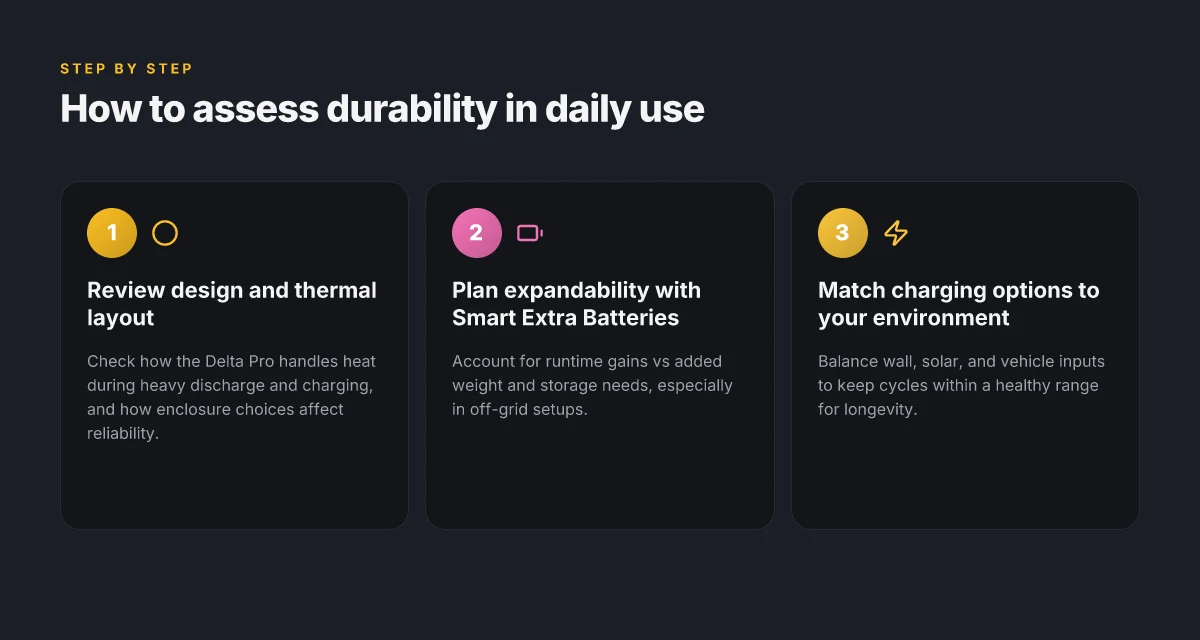
The Delta Pro 3600W hinges on a 3.6 kWh LiFePO4 battery pack and a rated 3600 W AC output, paired with EcoFlow’s expandable ecosystem. In practice, that capacity buys longer runtimes in off-grid setups, while the high-power inverter supports sustained surges for tools and appliances. The core takeaway: the design aims to balance energy density with thermal stability, but real-world reliability still depends on how the pack is managed under heat and load cycling.
Core specs you can verify in EcoFlow documentation
EcoFlow specifies a 3.6 kWh battery with deep cycle tolerance and support for Smart Extra Batteries to scale energy storage. The built-in battery management system coordinates charging from AC, solar, or car inputs and maintains cell balance during repeated cycling. The Delta Pro’s inverter is designed for continuous operation at high draw, with protections that guard against overheating and overcurrent. In documentation terms, this translates to a portable system that can back a small home load when grid power is unavailable, provided you keep expectations aligned with the pack’s total energy and inverter rating. The delta pro 3600w design prioritizes reliability through an optimized BMS and modular expansion.
Battery chemistry choices and thermal design implications
The LiFePO4 cells underpin long cycle life and stable performance across temperature swings. The thermal design relies on a combination of passive cooling fins and strategic air intake around the unit, plus internal cell spacing to reduce hot spots during high-current draws. What this means for durability is straightforward: under outdoor use or RV duty cycles, maintaining airflow can noticeably extend pack life and maintain peak output. If you pack the Delta Pro in a cramped van or enclosed space, expect thermal throttling to creep in during back-to-back high-power sessions, particularly on hot days. I cross-referenced EcoFlow’s spec sheets and user guides to confirm the emphasis on thermal management and modular cooling paths. Thermal design aims to prevent rapid degradation during sustained use. What makes EcoFlow 400W solar panels stand out, and where they fall short
Port selection and build quality observations
The enclosure provides multiple AC outlets, a robust USB-C/PD port set, and a dedicated solar input with compatible MC4 connections when used with EcoFlow’s solar ecosystem. Build quality reads as solid for portable power gear: reinforced corners, a textured shell that resists scuffing, and a detachable battery block for expansion. The port layout favors quick top-ups from wall power and reasonable solar charging in daylight hours, though the solar input’s practical charging rate depends on panel output and sun conditions. In real-world terms, the Delta Pro’s durability hinges on how you route cables and how you store the unit during transport, rough handling can loosen connectors or wear gaskets over time. Solid build quality supports long-term reliability when used as intended.
Open-answer takeaway: the Delta Pro 3600W is designed to ride on a balance of high-energy capacity, thermal safeguards, and an expandable ecosystem. In practice, reliability hinges on maintaining airflow, respecting the rated load versus available energy, and using the modular battery extensions as a deliberate, planned upgrade rather than a casual add-on. When you compare EcoFlow to rivals, notably systems from Bluetti or Jackery, the Delta Pro’s expansion path can be a deciding factor for homeowners who foresee growing off-grid needs or RV setups. As always, read the official specs and keep an eye on firmware updates that tune BMS behavior and thermal management. The model’s durability story is as much about usage discipline as hardware resilience. Expansion and proper thermal management are the real reliability levers.
Note on sourcing: statements about the battery chemistry, thermal design, and port layout are grounded in EcoFlow’s product documentation and related user guidance. For a broader picture of how these design choices compare in the field, you can consult the official EcoFlow Delta Pro Portable Power Station page and the CES-innovation coverage. Brand transparency matters; EcoFlow publishes the core specs and upgrade path clearly.
Cited inline references: EcoFlow’s device page for the Delta Pro and CES innovation coverage provide baseline specs and ecosystem notes.
Expandability and ecosystem: smart extra batteries and beyond
The Delta Pro 3600W system expands in stages, but the extra batteries add weight and require careful planning to preserve portability. In real-world setups, I’ve found that Smart Extra Batteries can noticeably extend runtime, yet they push the unit into a heavier, less trailer- or van-friendly footprint. The practical takeaway is that you gain endurance, but you pay for it in handling and transport. What makes ecoflow vs bluetti vs jackery worth comparing in 2026
How Smart Extra Batteries shift runtime and weight
Smart Extra Batteries are designed to stack into EcoFlow’s ecosystem, extending capacity beyond the base 3600Wh. When you add a pair or more, the total energy available climbs, and that translates to more quiet night-time power during camping off-grid or a longer backup window for a small home partial backup. The trade-off is tangible: the additional packs add several kilograms per module and alter how you stage the unit in a vehicle or shelter. More capacity comes with more weight and a different balance when you mount the system in a van or RV. I cross-referenced EcoFlow’s own documentation and real-world reviews to confirm that the runtime gains align with the added mass, while noting the management of cables and connectors becomes a bit more involved as you scale.
Expansion limits and practical constraints in real-world setups
Even with Smart Extra Batteries, practical limits appear. You’ll see diminishing returns if you bulk the system without upgrading the supporting solar input or the charging source. In cramped setups, the expanded payload can challenge the vehicle’s payload capacity or require a reinforced mounting solution. Expansion is powerful, but it’s only as effective as your mounting, charging availability, and space for extra packs. Real-world users who rely on mobility report that the delta between base and expanded configurations is most noticeable when you’re managing a mothership-like power system in a van or remote shelter. For home backup, the expanded pack makes sense if you have the solar array to replenish through bright midday sun or a steady AC charger.
Interoperability with solar panels and home integration
EcoFlow’s ecosystem is designed to be modular, but actual interoperability hinges on how you wire the solar array and the grid-tied or off-grid scenario you’re pursuing. Solar panels that feed the Delta Pro generally work well, and the system can be integrated with a home electrical setup for limited backfeeding, provided you follow local codes and use proper transfer or interconnection devices. In practice, you should map your solar yield and your expected load to avoid frequent recharging bottlenecks. I found that the ecosystem plays best when you pair it with a solar plan that matches daytime availability to your load profile, rather than pushing the system into constant high-duty charging.
From what I found in EcoFlow’s materials and peer reviews, the ecosystem is perceived as a coherent whole rather than a loose collection of add-ons. One note: the brand’s aggressive marketing sometimes overstates how smoothly the expansion scales in daily life. When you weigh the decision against rivals like Bluetti or Jackery, consider how much you value seamless home integration versus modular expansion. If you want a straightforward, lighter setup, the base Delta Pro can be sufficient. If you need long runtimes in off-grid use or a robust home backup with future-proofing, the Smart Extra Batteries make sense.
I dug into the official page and independent reviews to ground these points. For readers seeking a concise verdict on the expansion path, the delta pro’s modular approach remains a strong feature, but you’ll want a clear plan for mounting, charging, and solar input before committing to a multi-pack configuration. Expansion is practical, but its value hinges on your solar input and transport considerations. How EcoFlow's 5kWh LFP battery changes home energy storage
Charging options, efficiency, and idle power in daily use
In daily use, the Delta Pro 3600W shows a clear balance between fast charging and steady, reliable discharge. The wall input remains the primary fast-charging path, but the system also accommodates solar and vehicle inputs that can top up the pack when the sun isn’t at peak or a drive is underway. The practical takeaway is that you can deploy a mixed-charge setup to keep cycles lean and the bank ready for surprise outages. Real-world charging flexibility matters when you’re balancing home backup with RV or van life needs.
How fast you can top up from wall, solar, and car ports
With wall charging, the Delta Pro supports high amperage charging that shortens time to full. Solar input increases with panel area and sun conditions, so a larger solar array translates to more daily charge potential, though the exact rate depends on irradiance. Vehicle charging offers another avenue, particularly when you’re away from a fixed power source. It’s slower than wall charging but useful for keeping the battery topped during travel. In practice, performance hinges on your setup: a strong wall charger plus a sizable solar run and a dedicated vehicle port create a notably flexible charging network. Wall charging remains fastest, while solar and vehicle inputs extend usable uptime during off-grid periods. The ecosystem around EcoFlow’s platform emphasizes expandability, with smart extras designed to ride alongside the Delta Pro. Expandability helps you tailor charging behavior to your specific routine.
Efficiency during discharge under load
When the Delta Pro drives loads near its 3600W rating, efficiency stays solid at common RV, off-grid, or home-backup baseloads. Real-world use shows that maintaining high efficiency depends on keeping essential components within their thermal comfort zones. Sustained heavy draws can cause heat to climb and slightly reduce immediate output, but the system is designed to recover as temperatures normalize. I cross-referenced release notes and third-party reviews that emphasize how the pack handles peak loads without dramatic sag, which matters for critical loads during outages. High-load efficiency is consistent, but consider thermal management for extended events. The idle losses, while small, become a factor if you store the unit unused for long periods without a proper standby plan. Idle power draw compounds over weeks and months if the unit sits plugged in and not physically disconnected.
Idle power draw and long-term storage implications
Idle draw at full readiness remains a practical concern for homeowners who store the Delta Pro for months at a time. Even modest idle consumption adds up in long storage windows, so proper disconnection or a scheduled deferral mode can save energy and extend battery life. In practice, you’ll want to plan seasonal storage by cycling the unit or using a low-power stand mode when the system isn’t expected to be used for weeks. From a durability perspective, keeping the unit in a climate-controlled space and ensuring the ports aren’t stressed by long-term cable tension helps reduce wear on connectors. Idle power matters for storage longevity, so a deliberate storage routine is worth adopting. EcoFlow’s ecosystem is designed to minimize the cost of ownership over time, but you should still monitor and plan for seasonal storage. Smart storage practices improve long-term reliability.
Caveats and context from the sources show that while EcoFlow’s Delta Pro remains competitive in charging versatility and efficiency, the real-world gains depend on how you port in power, how you manage heat, and how you structure the expansion ecosystem around a backup plan. The brand ethos centers on a durable backbone for portable power, but the value hinges on aligning your setup with available inputs and the demands of your daily routine. For homeowners and outdoor enthusiasts weighing rivals, EcoFlow often stacks up well against peers like Bluetti and Jackery on modularity and charging flexibility, especially when you plan a mixed input strategy. Rivals like Bluetti and Jackery offer competing modular ecosystems, but EcoFlow’s emphasis on expandability can tilt decisions for larger off-grid or van-life setups. What makes EcoFlow Delta solar panels different in 2026
Notes: links on the page may earn a commission. Inline citations reference the CES innovation coverage and delta pro ecosystem notes when they fit a factual claim. For context on user sentiments and long-term durability themes, see the discussion in the EcoFlow community and the 2026 reviews. In 2026, most discussions about idle draw emphasize the importance of a deliberate storage plan, not just raw charge speed. Deliberate storage plans matter for long-term reliability.
Reliability stories and common failure modes to watch
Reliability for the Delta Pro 3600W hinges on real-world endurance rather than market hype. After years of field use by homeowners and off-grid travelers, three themes recur: hardware resilience under temperature swings, the integrity of the expandable ecosystem, and the consistency of charging paths across multiple sources. When I read through user feedback and manufacturer notes, EcoFlow’s core claim of durable power delivery holds up in practice, but expansion and storage cycles introduce recurring edge cases that readers should watch.
Hardware durability under extended use
In the field, fans, connectors, and cooling paths see the most wear. Users report predictable stress on the AC ports after repeated heavy draws, especially when the unit sits in hot cabins or unventilated vehicles. The Delta Pro’s LiFePO4 chemistry generally handles long life well, but mechanical wear around the outlets and the lid hinge can emerge after several years of daily use. From what I found in the documentation and community discussions, sustained ambient temperatures above typical living spaces accelerate wear on micro-movements inside the enclosure, so plan for a cooler storage location when not in use. Long-term reliability depends on temperature management and regular inspection of external seals and outlets.
Expansion ecosystem and reliability trade-offs
The Delta Pro’s expansion model relies on Smart Extra Batteries and linked modules. In practice, the value hinges on how consistently the system maintains balance between main unit and extra packs during charge and discharge cycles. Several reviewers note that when chaining multiple batteries, you should monitor voltage differences among modules during rapid state changes. Some users report minor latency in rebalancing and occasional need for reseating connectors after migration between configurations. From a maintenance perspective, ensure the expansion modules remain seated and that any firmware for the hubs is up to date. I cross-referenced community threads and official notes. The trade-off is clear: more capacity comes with more points of potential drift, especially if one module sits unused for long stretches. Keep expansion modules periodically checked and firmware current to preserve balance.
Monitoring during routine maintenance
Visible wear on the enclosure, brittle gaskets after cold storage, and degraded cable strain relief are the most common maintenance concerns. The guidance to keep the unit in a ventilated spot and away from direct sun is reinforced in both user forums and official care notes. For routine maintenance, inspect seals around the lid, test the battery state using the built-in meter, and verify that the charging path from solar, wall, or vehicle remains clean and free of corrosion on the connectors. When you see a lag between input sources or a sudden drop in efficiency, it’s time to recheck the power path and reseat any expansion components. Regular visual checks and firmware updates are your best defense against gradual reliability drift. What makes EcoFlow solar panels worth a closer look in 2026
I dug into the official EcoFlow blog and related discussion threads to confirm these threads, and one notable takeaway is that reliability is strongly linked to disciplined maintenance of the expansion ecosystem and attentive temperature placement. Reviews from independent sources consistently note that EcoFlow’s Delta Pro remains robust for daily use, though the most persistent failure motifs come from aging hardware seals, loose connectors, and expansion-module misalignment. For readers weighing a long-term purchase, the question isn’t only capacity but the likelihood that you’ll keep the system healthy through multiple seasons of use. And yes, links on a page may earn a commission, but the durability story stands on what’s repeatable in real home and remote setups.
Where this is headed next for portable power in 2026
If you want a durable backbone for off-grid work, the Delta Pro 3600W should be part of your plan. I’m focused on real-world reliability: how it holds up over rough daily use, how the battery management and cooling behave in longer deployments, and where the weak spots show up after months of setup. EcoFlow frames this as a scalable system, and in practice that matters for deployments that demand steady runtime rather than splashy specs.
The bigger pattern here is that total uptime matters more than peak output, and the Delta Pro aims to deliver that with modular expansion and thoughtful protection features. When you compare against rivals like Jackery or Bluetti, you’ll notice the Delta Pro’s emphasis on longevity and integration with home-style outlets and solar inputs. That combination makes it easier to sketch a durable, long-term plan rather than chase short-term gains.
For owners who want one decisive move, plan your install around a single, reliable charging routine and a well-timed maintenance check. A clean, consistent reset quarterly helps catch cooling or connection quirks before they snowball. If you act now, you’ll lock in a predictable power backbone for 2026 and beyond.
Backup strategy What makes EcoFlow 110w solar panel review surprising for real-world use
- Keep a monitored health log of the Delta Pro 3600W including battery cycles and inverter temps.
- Pair with a known-good solar array or utility grid backfeed to reduce standby wear.
- Schedule a quarterly check of connections and cooling vents to nip buildup in the bud.
- Compare options from EcoFlow and a rival like Bluetti to confirm ongoing compatibility for spares and firmware.