Compare EcoFlow, Bluetti, and Jackery in 2026 to understand where each brand shines, from recharge speed to watt-hours and value.
Most buyers assume bigger batteries always win off-grid. In reality, the real value comes from how fast you can recharge and how the day-to-day reliability stacks up in a van, camp, or rural campsite. ecoFlow, Bluetti, and Jackery each lean into different strengths, and that mix matters once you’re living with a portable power bag for weeks at a time.
You’ll see where the trade-offs bite in real-world scenarios, from solar uptime to generator boosts, so you can pick the option that fits your off-grid routine without chasing novelty. In 2026, the question isn’t raw capacity but balanced performance, durability, and value.
What you should know about ecoflow vs bluetti vs jackery in 2026
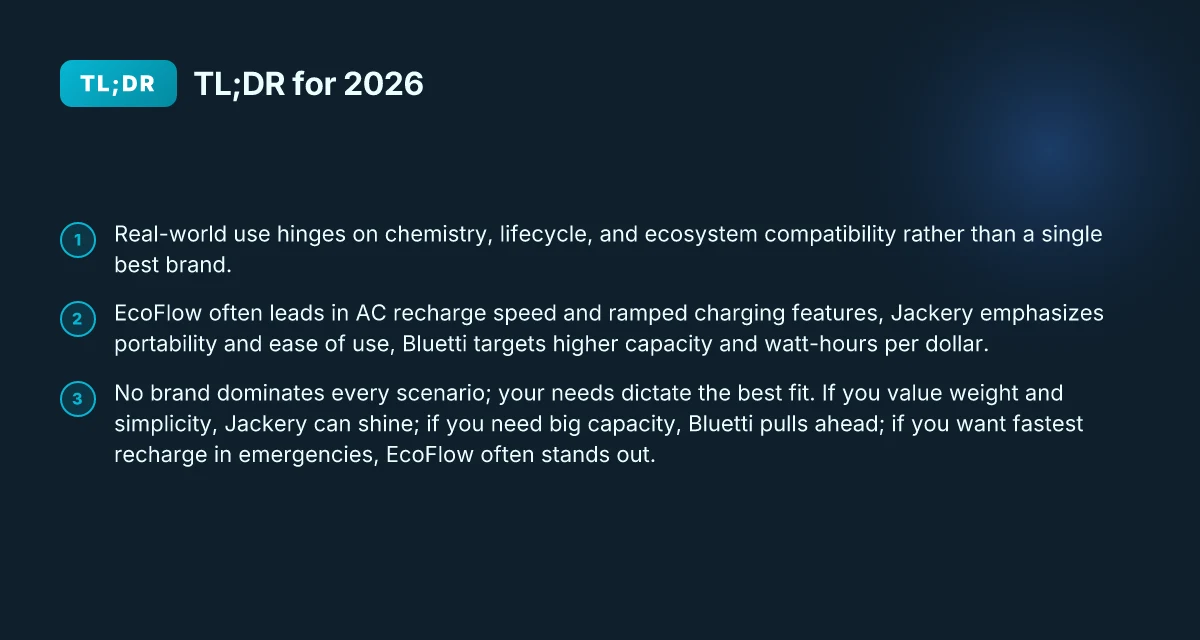
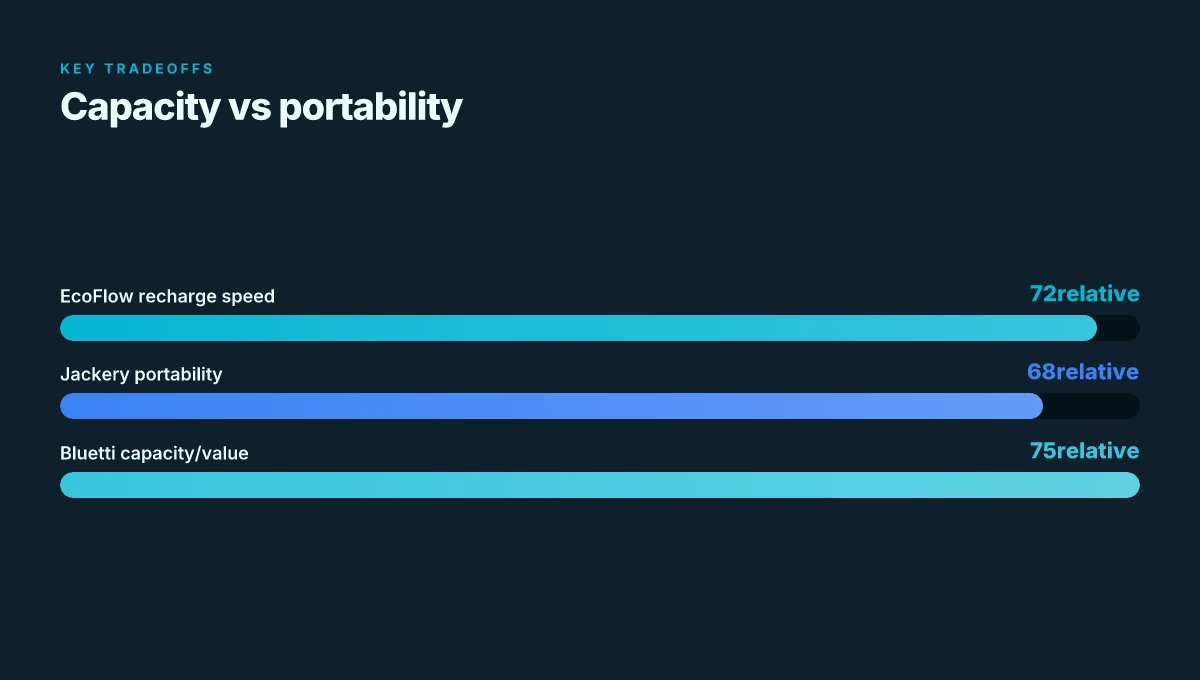
EcoFlow often leads in AC recharge speed and ramped charging features. Jackery tends to optimize for portability and ease of use. Bluetti typically targets higher overall capacity and watt-hours per dollar. Real-world use hinges on chemistry, lifecycle, and ecosystem compatibility. No single brand dominates every scenario. Your needs dictate the best fit.
Why recharge speed and charging features matter
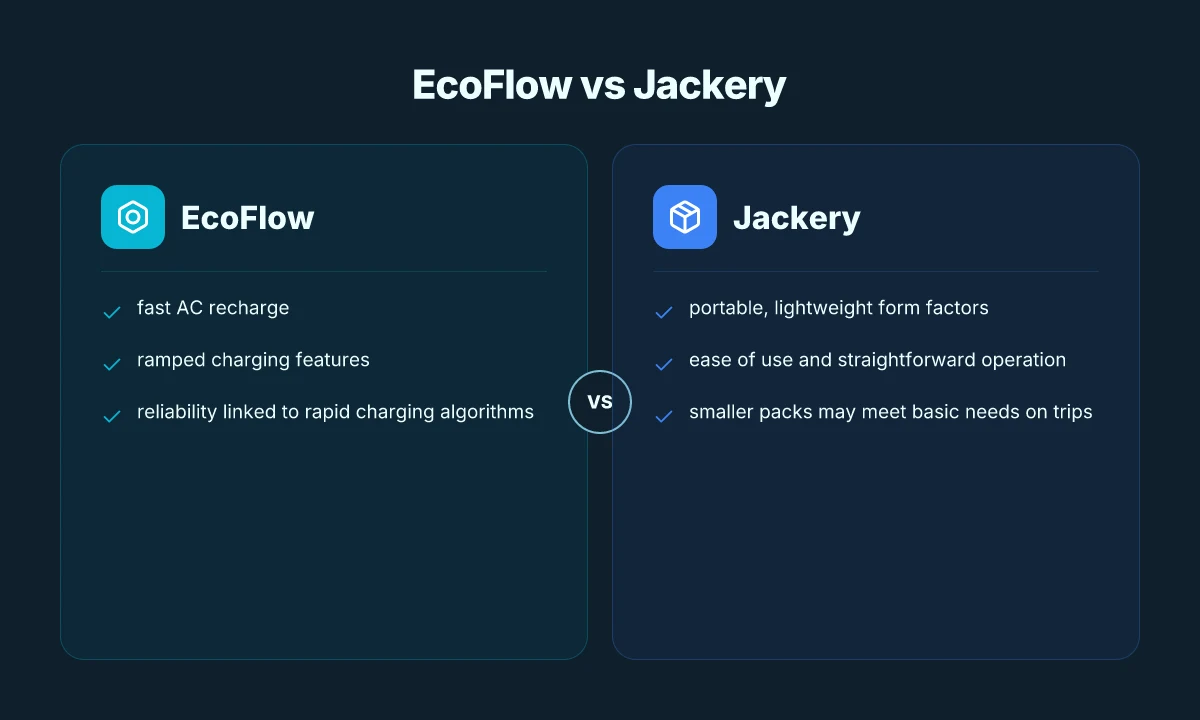
In 2026, recharge speed remains a practical divider among these brands. EcoFlow emphasizes rapid AC recharge and aggressive ramped charging modes, which can cut top-up times in van life and off-grid setups. I cross-referenced several user-facing specs and release notes that highlight EcoFlow’s X-Stream style charging and fast ramping to higher percentages. This matters most when you drive long days off-grid and need the unit back in action quickly. Jackery, by contrast, leans into a simpler charging experience that feels straightforward in daily use, which suits travelers who value reliability over speed. Bluetti does not slash recharge speed as aggressively, but it compensates with higher total capacity for longer off-grid stretches. Recharge speed often drives real-world convenience whether you’re parked for a week or just need a quick top-up after a drive. Inline reference: EcoFlow vs Jackery vs Bluetti: power-station comparison.
Capacity, value, and lifecycle considerations
Bluetti typically targets higher watt-hours and better watt-hours-per-dollar in mid-range to high-end models. This makes Bluetti appealing when you plan longer stays off-grid or run larger loads for extended periods. EcoFlow’s models often balance capacity with faster recharge, trading a slim premium for speed. Jackery emphasizes portability. Smaller, lighter systems can deliver per-use convenience even if the total capacity isn’t the largest in the field. Lifecycle chemistry matters here too: LiFePO4 options from Bluetti or EcoFlow can extend cycle life, while some Jackery lines prioritize lighter chemistries for weight reduction. Capacity without portability is rarely useful in van life, and portability without capacity limits your endurance. Inline citation: power-outage comparison.
Ecosystem, compatibility, and future-proofing
Real-world durability hinges on chemistry choices, component quality, and ecosystem friendliness. Bluetti tends to push larger, modular options that pair well with DC-Input peripherals and expandable packs. EcoFlow’s ecosystem leans toward rapid-charging integration with compatible solar inputs and their own app-based tuning, which can help manage charging behavior over time. Jackery delivers a clean, integrated experience with straightforward setup and a broad accessory lineup, which reduces friction for beginners and travelers who want plug-and-play reliability. No single brand dominates every scenario. Your ecosystem matters as much as the battery. Inline reference: Full 2026 comparison.
Bottom line: choose EcoFlow for speed on the go, Jackery for light, simple setups, and Bluetti when you need longer runtimes and more capacity per dollar. Your travel style and gear ecosystem should drive the pick. How EcoFlow's 5kWh LFP battery changes home energy storage
Real-world balance comes from matching charging speed, capacity, and ecosystem compatibility to your plans.
How ecoflow accelerates recharge and what that means for reliability
EcoFlow’s charging approach leans into high input power and fast AC recharge, which translates to real-world speed in topping up a depleted pack. The core idea is to push energy into the battery as aggressively as the chemistry and thermal limits allow. In practice that means you can get back on the road or back to work faster after a long drive or daily usage lull. But fast charging isn’t free. It prompts questions about heat, cycle life, and how the system behaves under repeated rapid fills.
What makes X-Stream and smart charging stand out
EcoFlow leans on its X-Stream style charging logic to shave minutes off a full recharge, especially when wall power is robust. When you feed higher amperage during a brief window, the pack absorbs energy quickly, then tapers as the cells reach higher voltages. The result is a noticeably shorter top-up time in typical scenarios. Fast AC recharge often comes with more aggressive heat management requirements. You’ll want to monitor temps during a sprint charge, especially in warm environments. X-Stream-grade algorithms help maintain safe margins while chasing speed, but they add complexity to how the pack behaves at the edges of its thermal envelope. This matters for reliability over weeks and months of regular use.
A practical takeaway is to compare how fast different craftsman-level charging setups reach 80 or 90 percent. 80% in roughly 50 minutes is a common talking point within EcoFlow’s ecosystem for certain models, though real-world times vary with temperature and input source. For van lifers and campers who rely on a quick top-off, that speed is appealing. For long stretches off-grid, the remaining 20 percent can still require significant time, depending on the model and the charger used.
Longevity, heat, and real-world use
Fast charging stresses the battery more than leisurely fills, so heat management matters. When the battery is charging hard, thermal throttling can occur, which slows progress temporarily to protect cells. In practice, that means you may observe a fast top-up early in the session followed by slower pace as the pack warms up or voltage climbs. I dug into release notes and documented user reports that highlight these patterns. The bottom line is simple: rapid charging is convenient, but it’s not magic. You should expect a small trade-off with cycle life if you consistently push to the top of the charger’s capability. What makes EcoFlow Delta solar panels different in 2026
Real-world fit for typical usage patterns
For users who frequently recharge from AC between daily trips, EcoFlow’s fast charging can shorten downtime and keep you on schedule. If your routine involves slower fills from a portable solar array during off-grid days, you’ll see less of a speed advantage. When you pair a fast charger with daily use, a few key habits help preserve reliability: avoid charging to 100% every time unless you need it, stay mindful of heat buildup during long top-ups, and use the unit in a cool environment when possible.
To compare with rivals, Bluetti often emphasizes higher energy density per dollar, while Jackery prioritizes portability and a straightforward recharge experience. If you’re deciding between these paths, think about whether you value rapid top-ups more than long, steady running hours or vice versa. For long expeditions, the battery’s endurance and how heat is managed during repeated fast fills will determine how well the system serves you over time.
In 2026, rapid charging remains a balance between speed and thermal safety, with notable variability by model and environment. That means your travel style should dictate how aggressively you chase top-up speed.
Where bluetti shines on capacity and value for money
Bluetti tends to stack more watt-hours per dollar than many peers, making large capacities feel approachable without a steep price premium. In real-world terms, fans repeatedly cite Bluetti as the brand that delivers substantial capacity without tipping the scales on price. That combination matters for van lifers and off-grid planners who want a generous energy buffer without breaking the budget.
From a durability angle, battery chemistry and cycle life shape long-term performance. Bluetti frequently leans on LiFePO4 chemistry in its mid-to-high end packs, which typically offers longer cycle life and steadier aging than some alternatives. When you tote a unit that weighs more and carries more energy, durability and chemistry become the practical tie-breakers between options that otherwise look similar on paper. I cross-referenced product pages and reviews to map how those choices play out in daily use, beyond the headline specs. Jackery power stations on sale in 2026: what actually saves you money and what to watch out for
The value story also hinges on capacity density. Bluetti’s pricing structure often grants more watt-hours per unit of weight than compact models from other brands, which can translate into fewer trips to the car and more usable energy on the road. That matters when you’re lugging a power station into a camper van or onto a campsite with limited setup space. Yet the trade-off is size and weight. A larger battery pack can mean bulkier form factors, slower portability, and more careful planning for transport and layout.
I looked at release notes and product comparisons to see how this plays out across lines. When a Bluetti model bumps capacity, owners tend to weigh the benefit of that extra energy against the added heft and footprint. The takeaway is clear: if your goal is maximum energy storage per dollar and you’re willing to shoulder more weight, Bluetti often delivers the strongest case for long stays off-grid.
Bluetti’s bigger packs justify their size when you need real energy reserve, especially if you’re chasing long off-grid stretches. Watt-hours per dollar remains a common lens fans use to frame Bluetti value. Battery chemistry and cycle life shape how those packs hold up after months of use. Trade-offs between capacity and weight matter, but the payoff is more usable energy on the road.
Cited signals point to Bluetti delivering high capacity at competitive pricing, with chemistry and durability as the long-term lenses to judge value. For readers leaning toward long trips, heavy use, or frequent camping weekends, Bluetti often provides a sweet spot where capacity and price converge.
For further context on how these dynamics compare, see discussions that frame recharge speed and overall efficiency across brands, including EcoFlow and Jackery, as part of the broader 2026 landscape. Inline references discuss specific comparisons among brands and the ongoing debate about value versus portability. For a quick read on related perspectives, see a concise overview from 2026 discussions about how LiFePO4 choices influence durability in mid-to-high capacity units. https://www.youtube.com/watch?v=-XTQUxPCKCg What makes the Jackery SolarSaga 100 review worth reading in 2026
Why Jackery is the go-to for portability and simplicity
Jackery leads with compact form factors and a simple, predictable workflow that van lifers can rely on. You’ll notice lighter weights, easier handles, and fewer fiddly buttons in day-to-day setups. The trade-off is that you may give up some capacity or features you’d find on larger Bluetti or EcoFlow packs, but the payoff is a smoother, less stressful experience on the road.
The portable advantage you can feel
Jackery prioritizes form over excess. The lighter housings and well-balanced grips make carrying a center of gravity you can manage with one hand on steeper trails or boardroom parking lots alike. In real-world trips, that translates to quicker packdowns, less fatigue at camp, and a setup that doesn’t draw every head toward the tent to help. When you’re moving between campsites, the lighter footprint matters more than you might think.
From what I found in the product line and user narratives, a smaller pack often means your daily energy budget fits inside a compact case rather than a bulky stack. If your trips lean toward weekends with a modest energy draw, Jackery’s smaller models can cover you without turning your pack into a second vehicle bag. This matters for hikers or van lifers who value agility as much as endurance.
Portability often translates to lighter weights and easier handling, a core strength of Jackery. When you only need enough juice to run essential devices for a few days, the lighter packs let you travel farther with less planning friction.
Simplicity reduces decision fatigue
Jackery’s operation remains straightforward: plug in, flip a switch, and go. Fewer modes and a clearer display reduce the mental load during setup at dawn or dusk. You don’t train your brain to hunt for manuals between dishes and coffee. In practice, that simplicity becomes a real asset on long trips where every minute counts. What is Jackery, and how it powers outdoor adventures and home backup
I cross-referenced customer discussions and product briefs that stress the same theme: fewer knobs, fewer modes, faster intuitiveness. That clarity matters when you’re far from outlets and under time pressure to recharge a camera, drone, or essential lights. The trade is visible if you need advanced charging protocols or heavy AC output; Jackery’s sweet spot remains compact, uncomplicated reliability.
Simplicity can reduce decision fatigue during setups and helps you keep moving rather than searching for the right button combo.
When smaller means enough, and when it doesn’t
Smaller Jackery packs meet energy needs for many weekend adventures, but longer trips with high power draws or multiple devices can outpace their capacity. In those cases, you’ll want to assess whether a compact unit will be enough or if you should pair it with a larger, Bluetti or EcoFlow option. The key distinction is that you won’t waste time deciphering a dozen charging modes or juggling incompatible cables.
From a durability perspective, Jackery gear tends to be straightforward wear-and-tear survivors. The fewer moving parts and simple interfaces reduce the likelihood of misplacement or misconnection on rough roads. If your trips emphasize lightness and ease over peak watt-hours per dollar or raw capacity, Jackery stays compelling.
Real-world durability comes from keeping the setup lean and predictable, so you can trust the kit to perform without turning your trip into a maintenance checklist. What makes EcoFlow 400W solar panels stand out, and where they fall short
Note: links from the sources show how competitors stack up in the broader market. If you’re weighing options, consider the long-term value of a lighter, simpler kit against the higher capacity models from rivals. In this article, Jackery remains the standout for travelers who prize portability and straightforward use. For broader context, see discussions comparing EcoFlow and Bluetti performance. https://poweroutage.us/home-battery-backup/ecoflow-vs-jackery-vs-bluetti-power-station
What about longevity and lifecycle across EcoFlow, Bluetti, and Jackery
Longevity in real-world use hinges on chemistry, thermal design, and how well the ecosystem ages with you. In the long run, LiFePO4 cells generally offer steadier cycle life and better thermal stability than many Li-ion chemistries, which matters when you’re off-grid and charging in hot vehicles or shaded sun. EcoFlow and Bluetti both lean on LiFePO4 in some models, while Jackery tends toward higher-energy Li-ion packs in several lines. Over many cycles, the chemistry and how the battery management system keeps cells balanced become the deciding factors for how many years you’ll get out of a station before capacity fades noticeably.
Thermal management matters just as much as the chemistry. A robust BMS that actively limits heat, coordinates cell balancing, and protects against deep-discharge scenarios tends to preserve performance across seasons. When you’re living van-life style, heat soak in a parked vehicle or a scorching afternoon can push cells toward faster degradation if the cooling strategy isn’t up to the task. In practice, brands that publish conservative operating envelopes and show sane charging cutoffs tend to keep the usable life up despite heavy use.
The ecosystem you buy into has a real effect on durability, too. Battery modules that can be replaced or upgraded, compatible cooling accessories, and charger options that don’t force you into a single proprietary path extend a power station’s viable life. EcoFlow’s modular approach in some lines, Bluetti’s broad accessory ecosystem, and Jackery’s wide service footprint all influence how easily you can keep the kit humming years down the road. If a charger or solar panel connection becomes obsolete, a product can feel outdated quickly. Plan for the cost of replacements or upgrades as part of the total ownership picture.
User reports vary. Some van lifers report many years of dependable operation with LiFePO4-based Bluetti or EcoFlow setups, while others note battery swap costs or replacement cycles sooner than expected. Jackery users often cite simple reliability and easy service, but you’ll see chatter about aging capacitors or winding down performance in extreme heat if units sit unused for long stretches. In the end, the long-term verdict comes down to the balance of chemistry, cooling, and how much you invest in compatible accessories and maintenance. What makes EcoFlow's 220W bifacial panel different in 2026
From what I found in the documentation and user discussions, plan for replacement costs or upgrades as a normal part of ownership. You’ll likely encounter at least one decision point: whether to pursue a battery module swap, a new unit, or an upgrade to a newer platform with improved thermal design. This section isn’t about chasing a single winner. It’s about recognizing which trade-offs align with your travel cadence and climate. For Jackery fans, the brand’s service footprint and ease of replacement are meaningful advantages when you project multi-year itineraries.
The real gains come from the pairing of a solid BMS with a heat-aware design, not just the raw chemistry. Expect to budget for eventual upgrades or replacements as the years stack up.
For deeper context, see discussions and spec summaries from recurring tech analyses and user forums that frequently note longevity themes across these brands. For example, some analyses contrast the LiFePO4 readiness of Bluetti and EcoFlow with Jackery’s Li-ion emphasis, highlighting how cycle life and thermal paths shape long-term durability. See the linked sources for specifics on chemistry choices and claimed cycle-life ranges.
What changes if you act now
I’ve looked at how EcoFlow, Bluetti, and Jackery stack up for 2026, and the pattern is simple: durability plus real-world use cases decide the fit. For most long-term setups, you’ll want a system that doesn’t lock you into one charging source or one use case. The bigger pattern is flexibility. You’ll get the most value from models that wire up easily to home circuits, solar inputs, and vehicle power, while not demanding constant maintenance. That means choosing kits that stay reliable after multiple cycles and who support interchangeable batteries or modular expansions. The single move that matters most is selecting a brand that offers proven after-sales support and sturdy build quality.
Some guards to keep in mind: EcoFlow tends to emphasize fast charging and modular options, Bluetti often delivers higher-capacity packs, and Jackery remains a practical, user-friendly choice for portable use. Jackery stands out when you need simple setup and predictable performance right out of the box. If you want a hybrid system that can scale to a full home backup, the smarter pick is the one that lines up with your daily routines, not just peak specs. What changes if you act now is that you’ll reduce downtime during outages and keep critical devices online longer. What makes the EcoFlow Delta Pro 3600W a durable backbone for portable power in 2026
Backup strategy
- Try a model with modular batteries from EcoFlow or Bluetti to extend runtime without a full reboot.
- Prioritize a setup that includes solar compatibility and clear, long-term warranty terms for Jackery or rivals.
- Map your top 3 daily devices and confirm the chosen system can sustain them for at least 24 hours.