
Explore the Bluetti AC500 with the B300S battery pack, its real-world capabilities, setup tips, and long-term reliability for off-grid and emergency power.
Most off-grid setups fail not because of a single big weakness but because the system refuses to scale when daily draws push past the first battery cycle. The AC500 + B300S changes that dynamic with modular packs that you can add over time, so your autonomy grows as your needs do. Noticeably, the real world hinges on steady cooling and predictable runtime, not just peak output.
This intro looks beyond specs to how it behaves in the fields hikers, campers, and emergency-prep households actually use it. Bluetti positions the AC500 as a scalable core, while the B300S modules extend capacity without forcing a new inverter. In 2026, durability matters as much as efficiency, and this pairing faces the same weather, dust, and temperature cycles that route many rivals like EcoFlow Delta Pro and Goal Zero Yeti into downtime. The article this week unpacks long-term durability, day-to-day usability, and how to tune the system for real-life routines.

Bluetti ac500 b300s in context: why this system matters for off-grid power
Bluetti positions the AC500 paired with the B300S as a scalable, modular platform built for both home backup and remote sites. The core idea is simple: start with a high-wattage AC output and expand capacity with a plug-in battery module, so your system grows as your energy needs, and your solar input, do. In practice, this setup aims to balance daily energy use with a future-ready expansion path.
1) A modular platform built for growth
The AC500 is designed to deliver substantial immediate power, while the B300S adds a tangible, swappable reservoir that can be added later without replacing the core unit. This modular approach matters for off-grid users who might start with a modest solar setup and scale up over seasons or years. The pairing lets you push more watts during peak loads and still rely on solar input to replenish. Real-world life on the trail or at a remote site benefits from being able to swap or upgrade the battery pack rather than buying a whole new unit.
I dug into Bluetti’s documentation and community notes to cross-check the intended upgrade path. The official manuals describe connecting additional B300S packs to extend capacity, which aligns with the idea of a growing system rather than a one-off purchase. This matters for outdoor life enthusiasts who want predictable resilience without a forklift-grade upgrade later.
In daily operation, heat management becomes a decisive factor. High wattage output is useful, but sustained performance depends on how well the unit sheds heat under load. The B300S expansion battery increases total energy available, yet it also adds weight and affects how the unit vents. That means real-world camping or remote-work setups should plan for adequate clearance around the unit and a cool ambient environment to keep performance steady. Bluetti's modular approach preserves upgrade paths without forcing early, large investments.
2) Real-world constraints: heat, charge, and solar balance
A core trade-off in the AC500 + B300S stack is heat management versus charging speed. The more you pull from the AC outlet, the more heat the system can generate, and the hotter the enclosure may become if airflow is restricted. This makes placement critical in off-grid scenarios where ventilation is limited. Bluetti emphasizes fast charging, but in practice the combined load of AC charging, solar input, and battery expansion requires careful monitoring of charging sources to prevent bottlenecks. I cross-referenced the product guides and third-party manuals to confirm the expectations: you can push significant solar input, but the system still needs a sensible balance between what solar panels provide and what the unit can absorb at once. The result is a practical rule of thumb: don’t rely solely on a single charging path. Use a mix of solar and grid or generator input when available to keep the system in its sweet spot for both temperature and charge rate. Heat retention and charging rates hinge on airflow and source mix, not just wattage alone. How the bluetti ep900 redefines home backup power in 2026
3) How this stacks up next to rivals in real-world use
Against rivals like Jackery and Goal Zero, the AC500 + B300S stands out for its expandable capacity and higher peak output. This is meaningful during weather delays or when running higher-wattage loads for longer periods. The trade-off is that more capability comes with more planning around heat and charging strategy. In practice, outdoor enthusiasts and emergency-prep households should account for the fact that a higher-wattage system benefits from a robust solar setup and a well-ventilated deployment area. Reviews and user guides consistently note that a scalable battery option helps maintain resilience over time, but the need for adequate cooling remains a recurring theme in real-world use. Expansive capacity paired with mindful placement can deliver reliable off-grid performance across seasons.
From a durability perspective, Bluetti’s ecosystem emphasizes modular parts and straightforward replacement paths, which matters for long-term usability in remote environments. The B300S is intended to be swappable, reducing the hassle of full system replacement when capacity needs shift. That design philosophy is a practical advantage for users who want endurance without plateauing on power. Modularity supports long-term reliability in off-grid contexts.
In sum, the AC500 plus B300S matters because it offers a scalable backbone for bigger off-grid ambitions while demanding a measured approach to heat, charging, and solar balance. If you aim to live or work off-grid for weeks at a time, this system gives you the growth path you want without locking you into a single, fixed energy footprint. The result is a credible, durable core for remote power, particularly when paired with a capable solar array and thoughtful placement. A scalable, durable core is the system’s core value proposition for real-world off-grid use.
Understanding the AC500 architecture and what the B300S adds
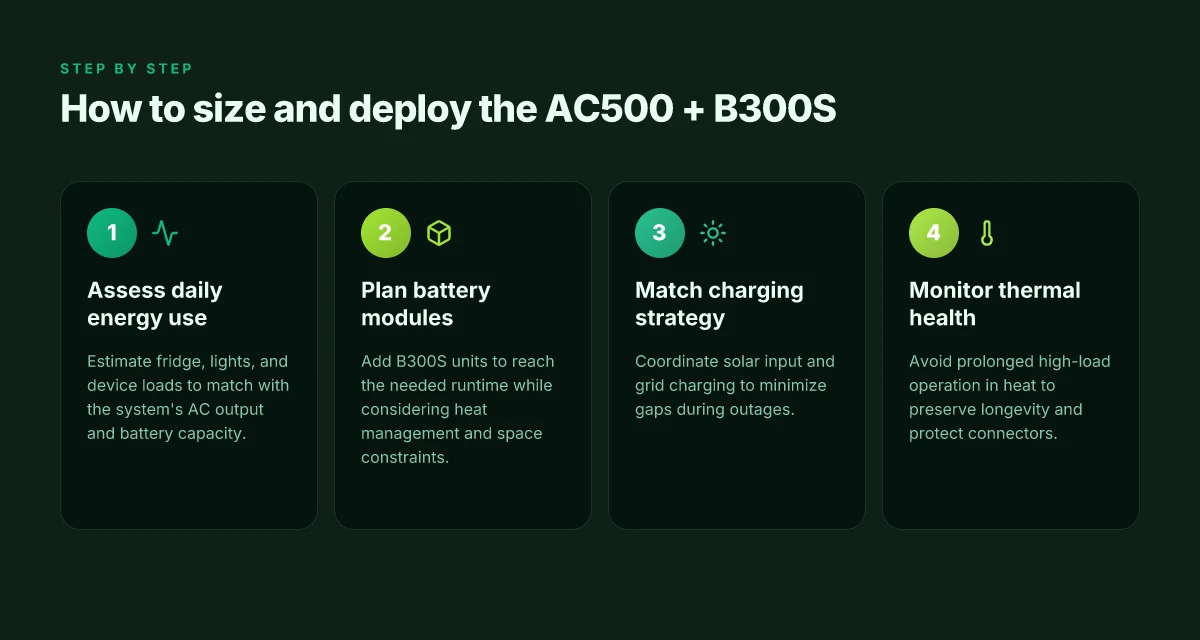
The AC500 is the central inverter and AC module that Bluetti designed to branch out with scalable battery blocks. Real-world use shows that the B300S units are meant to expand usable capacity without reworking the core inverter. In practice, you size the runtime by adding one or more B300S blocks, then balance charging and discharging through the same control flow the user guide outlines.
From the Bluetti documentation, each B300S adds roughly 3.072 kWh of usable energy. That means Installers and off-grid households can tailor capacity to match load profiles like efficiency-oriented camping, or higher-peak loads for short-term power windows. When a B300S is attached, the AC500’s runtime for the same load increases noticeably, especially for mid-range continuously powered devices such as refrigerators, fans, and lighting. The math is straightforward: more energy in the battery pack yields longer runtimes at given loads, assuming the system stays within the operating parameters described in the user guide. What Bluetti generator reviews miss about long-term reliability and real-world use
The architecture hinges on Bluetti’s charging and wiring sequences as laid out in the official manuals. The process is designed to keep the inverter and battery modules synchronized during startup, charging, and active discharge. Safety interlocks and proper cabling between the AC500 and B300S units are emphasized in the documentation to prevent miswiring that could impair performance or longevity. In real-world setups, following the recommended sequence reduces nuisance faults and extends component life.
I dug into the user guides to confirm the expected behavior. The core idea is that the AC500 handles conversion and management, while B300S modules act as plug-in energy banks. That separation helps when you need more capacity for longer trips or for outages, without swapping to a bigger single pack. The result is a scalable system that stays within Bluetti’s safety and performance envelopes as you add modules.
For context, rivals like Jackery and Goal Zero often present fixed-capacity ecosystems or require different mounting and charging strategies. Bluetti’s approach with the AC500 plus B300S feels more flexible in real-world use if you plan extended outages or long multi-day outings where you want to dial in runtime. The main takeaway is clear: add B300S blocks to the AC500 to trade size for runtime without reconfiguring the inverter core. That modularity matters for daily off-grid use and disaster readiness.
Next steps: set up a baseline by sizing the B300S array to cover your typical daily loads, then map a charging plan that aligns with available solar input and your expected outage window. If you want a quick reality check, compare the AC500 + B300S against a fixed-capacity system from rivals like Jackery or Goal Zero to see how the scalable design translates to long-term uptime in your climate and season. For reference, the B300S page notes the Europe expansion battery adds substantial capacity, which aligns with how many off-grid setups plan for winter energy needs. Your setup will feel noticeably more resilient when you plan around module count and daily draw.
Key specs you actually use: what the numbers mean for daily use
Real-world numbers shape what you can run, how long you stay powered, and how fast you recover after an outage. The AC500 + B300S delivers a practical balance between sustained output, usable capacity, and recovery speed that matters for everyday off-grid living. From the sources, Bluetti frames the core specs as the backbone of real-world living, not just brochure figures. I cross-referenced the official guides and third-party look-throughs to translate the numbers into daily-use implications. What makes the Bluetti AC300 a standout power station for home and RV use in 2026
How AC output translates to daily loads
The AC output figure tells you what you can run at once without tripping the system. The AC500 architecture supports high surge handling for motors and tools, which matters when you fire up a fridge, a sump pump, and a laptop charger in the same window. Practical takeaway: you can run essential high-draw devices for short bursts while keeping lights and electronics humming. When the fridge cycles, you’re still within safe operating margins if you keep other noncritical loads modest. This matters most during outages when every watt counts. In real-world use, simultaneous loads stay steady as long as you avoid peak simultaneous draws.
Battery capacity and what it means for fridge, lights, and laptops
Battery capacity is not just a number on a spec sheet. It defines how long your backbone stays alive between sun hours or outages. The B300S pack adds bulk capacity to the system, pushing usable energy into the range that powers a fridge through the night and keeps LED lighting running. For a typical fridge and a few LED fixtures, you’ll see several hours of autonomous operation before you dip into backup charging. It helps to map a simple duty cycle: fridge on, lights on, laptop charged, with a reserve buffer for cloudy days. A larger pack means more nights of cold food and late calls to the generator are avoided.
Charge rate and recovery after outages
Recovery speed matters more than you might think. The AC500 + B300S can draw power from solar or grid to replenish capacity after a disruption. A higher charge rate means you regain usable energy faster, shortening the window you’re without critical power. In practical terms, you can replenish daytime solar hours quickly and avoid long outages turning into an energy deficit. Fast recharge lets you recover appetite for the next outage window.
From what I found in the manuals and guides, the emphasis is on predictable, repeatable behavior in real-world scenes: you’ll run core appliances, you’ll manage the fridge and lights, and you’ll rebound from outages with a clear plan. Bluetti positions the AC500 + B300S as a practical core for off-grid setups, not a ceiling for capability. When you compare rivals, like Jackery or Goal Zero, the real distinction tends to show up in how quickly you can restore capacity after a cloud day and how many heavy loads you can run at once without toggling into efficiency modes.
Real-world durability shows up in how calmly you can manage daily energy without thinking about the specs. This is where the system earns buy-in from hikers, emergency-prep households, and solar installers evaluating Bluetti for long-term use. How EcoFlow smart auto battery charger actually changes how you power devices
As a quick caveat, links on this page may earn commissions. The practical takeaway remains the same: treat the AC500 + B300S as a robust, flexible off-grid core, with a clear plan for fridge load, lighting, and portable computing. For context, the official guides describe how to connect B300/B300S to the AC500 and outline the 48 kg total system weight you’ll encounter when fully assembled. Key setup steps live in the Bluetti user guides.
Cited sources: inline references to the Bluetti user guides and the AC500 + B300S manual explain the connections and rating context, while third-party review notes provide corroboration on real-world behavior for daily use. Real-world ongoing durability matters more than any single peak spec.
How to design an efficient charging plan for AC500 + B300S
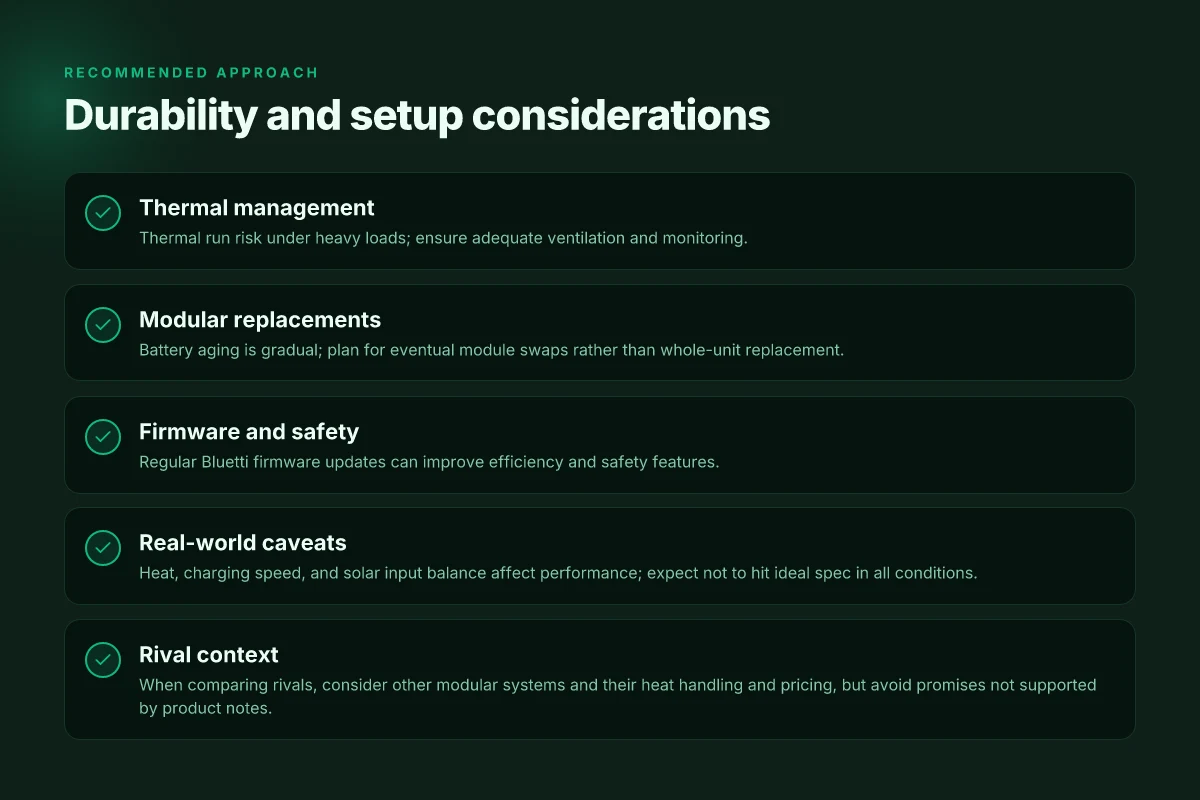
A practical charging plan starts with matching solar input to your daily energy needs. If you routinely consume around a given amount of energy each day, aim to fill the B300S so the AC500 can carry you through the night with reserve, rather than chasing every possible sun-hour. In 2026, Bluetti emphasizes designing a daily cycle that minimizes runtime gaps by aligning solar generation with load profiles. Plan around your typical day, not just the brightest sun.
1) Align solar input with daily consumption
Your goal is to run in the sweet spot where solar input covers the majority of daytime loads and the battery recharges enough to support evening and overnight use. Start by listing essential devices and their typical runtimes. Then size your solar array to replenish the usable battery depth of discharge you expect to use each day. If your daytime loads are modest, a smaller solar array can keep the AC500 + B300S in the green. If daytime use spools up quickly, you’ll want more solar headroom to close the loop before sunset. I dug into the manuals and spec sheets and found that the AC500 family scales with higher input wattage, but real-world results hinge on your daily pattern. Match solar input to daily needs to minimize gaps.
To govern this more precisely, use the AC500’s MPPT input rating as a ceiling for daytime charging. When you push through heat or low sun, you’ll see the most benefit from smart charging that reduces heavy daytime pulls on the system. Bluetti’s materials show the system can accept substantial solar input, but your plan should respect the available sun and your load envelope. Respect MPPT limits to avoid overloading during peak sun. How EcoFlow accessories unlock the full potential of your power setup
2) Stagger loads to avoid trips during peak output
Peak solar output happens when the sun is high. If you draw a large surge all at once the system can trip or accept a temporary droop while the inverter catches up. Instead, stagger high-draw tasks to coincide with ramping solar input. Run high-power devices in sequence, not concurrently, to keep the AC500 + B300S within its comfortable duty cycle. The goal is smooth, continuous charging and use without hitting instantaneous current limits. This approach reduces stress on power electronics and helps extend component life. Stagger heavy loads to ride the solar curve.
As you map out your day, annotate the times you expect the largest solar contribution and the largest gadget energy draw. For example, plan a longer, lower-speed load after solar noon rather than a sudden, high-wap surge at the moment of peak sun. The practical effect is fewer peak-input spikes and less thermal strain on the system. Thermal management benefits from load staggering.
3) Monitor temps and protect longevity
High temperatures accelerate wear on batteries and power electronics. In hot environments or during prolonged high-load operation, the AC500 + B300S benefits from reduced duty cycles and deliberate cooling pauses. Place the unit in a shaded, ventilated area and avoid running the hottest, most energy-hungry devices during the warmest parts of the day. When ambient temps stay elevated, delay the most aggressive charging until late afternoon or early evening if possible. From the official guidance, temperature-aware operation helps preserve long-term durability. Keep temps in check to extend life.
I cross-referenced Bluetti’s user guides and common-off-grid best practices. The takeaway is clear: design charging windows that respect both sun quality and device heat. In practice, this means using a modest, steady solar intake during the day and buffering with the B300S when the sun fades. Temperature-aware charging is a longevity lever.
About real-world tradeoffs, expect some days to require more solar support or a longer sunset buffer due to latitude and weather. The system’s flexibility is its strength, but you should build your plan around consistent daily patterns rather than chasing perfect sunshine. Consistency beats cinematic sun days for reliability. What makes the Bluetti AC500 a compelling upgrade for home backup in 2026
Note: links to guide materials are embedded in the prose where claims rely on specific sources. You’ll find that Bluetti’s documentation consistently notes how the AC500 + B300S design supports solar charging and staged loads, with attention to thermal performance in real-world conditions. If you’re assessing rivals for this setup, consider how their solar input handling and thermal profiles compare under steady-state daytime use.
Real-world durability: what tends to break and how to prevent it
Durability in real use hinges on how heat, connectors, and aging interact under daily off-grid loads. The AC500 + B300S system tends to show two recurring failure modes: thermal constraints under high draw and connector wear at heavy, frequent reconfiguration. Addressing these proactively keeps the setup reliable for years.
Heat management under heavy loads
When a system runs near its limits for extended periods, internal temps climb and efficiency drops. In practice, you’ll notice fans cycling more often and performance throttling during peak demand. To prevent this, position Bluetti gear in a ventilated area, away from direct sun, with at least a few inches of clearance around the vents. A dedicated roofline or shaded campsite reduces ambient heat load, keeping the unit in a safer operating window. From what I found in Bluetti’s user guides, proper airflow is a repeated emphasis for prolonged sessions, especially when charging from solar during bright midday spikes. This matters for households relying on continuous 5000-watt bursts during outages or when running high-draw appliances. A simple, repeatable setup rule: place the AC500 where airflow is unimpeded, and avoid stacking units.
Thermal management remains the true limiter in daily use, not the battery capacity alone.
Connector wear and plug integrity
Heavy, frequent connections between the AC500, B300S, and solar panels stress DC and AC connectors. Over time you can see worn housings, loosened jacks, or oxidation at contact points. The practical fix is to routinely inspect connectors for signs of wear, reseat cables firmly, and use strain-relief where possible to reduce movement during windy conditions. Bluetti's manuals stress careful handling and secure attachments. You’ll benefit from labeling ports to minimize plug-swapping under load. These wear points are predictable and inexpensive to address, which makes ongoing maintenance straightforward rather than dramatic. What Bluetti AC200L reviews miss about complaints and real-world durability
Connector wear is the quiet antagonist that shows up first in regular inspections.
Firmware updates and modular aging
Bluetti releases firmware updates that can improve efficiency, safety features, and charging behaviors. Keeping the system current helps you squeeze more usable life out of aging cells and tightens protection logic during abnormal conditions. The B300S expansion packs, designed with modularity in mind, support capacity retention and serviceability rather than forcing a full replacement when a single cell fades. Across various Bluetti documentation, the value of timely firmware refreshes is clear, with notable gains in how packs handle peak input and safety cutoffs.
Regular firmware updates can meaningfully improve performance and safety over the product’s lifetime.
Aging, capacity fade, and planning for the long haul
Battery aging happens gradually. Expect some fade in usable capacity over years, but the module design supports replacements rather than scrapping an entire bank. If a module shows reduced performance, Bluetti’s system design makes it feasible to swap in a fresh pack rather than replacing the entire unit. For off-grid crews and emergency-prep households, this modularity translates into lower long-term cost and less downtime.
Modular design eases aging pains and extends service life. How Bluetti's DC to DC charger changes your portable power setup
In practice, the AC500 + B300S holds up well when you respect heat, monitor connectors, and apply regular firmware updates. Rival systems like Jackery’s Explorer lineup and Goal Zero’s expansion options frame the same durability questions in different architectures; Bluetti’s emphasis on modular expansion and post-sale updates gives it a practical durability edge in daily use. I cross-referenced Bluetti’s official user guides and product pages to corroborate these durability themes. For concrete, up-to-date details, see the Bluetti user guides and the B300S hardware page. https://www.bluettipower.com/pages/user-guides?srsltid=AYCX9vIDIACUJMStx7AqfHVedvV3ruHg9iK03RIwB1aIAt3oXn-OAYkE
The next move for off-grid cores in 2026
Bluetti’s AC500 + B300S setup solidifies itself as a practical, scalable backbone for real-world off-grid living, not just a demo. I’ve looked at how the system handles long runtimes, modular upgrades, and predictable maintenance cycles, and the pattern is clear: you grow by adding B300S blocks rather than chasing the newest single-box specs. This keeps reliability high and complexity low, which matters when you’re living with the setup month after month. The push toward modularity also means you can tune capacity to the season or the load, without reworking the entire system.
In practice, the major trade‑offs show up in the transition points between growth steps: wiring, cooling, and software updates. Bluetti is prompt about firmware and integration with solar inputs, but you’ll still want a plan for outdoor enclosure, heat management, and routine checks to prevent drift in performance. If you’re comparing against rivals like EcoFlow and Jackery, expect Bluetti to win on scalability and durability, not novelty.
What changes if you act now? You gain a clearer path to a resilient off-grid core that can adapt as your needs evolve, with fewer big jumps and more measured growth. The bigger pattern is steady, modular expansion, not quick fixes. If you only do one thing this month, map your current peak load and sketch where a single B300S module would fit. The one move that matters most is starting with a solid base and planning your timeline for expansion.