
Bluetti AC300 review focusing on real-world use, long-term durability, setup, and common failures. Learn how this 120V system fits home and RV setups and how it stacks up against rivals.
Bluetti AC300 setups rarely fail at the crucial moment. The bottleneck is often how modular packs are paired and how the solar input is balanced across multiple days. If you’re sizing for continuous loads, the real question isn’t peak output but how long the stack can sustain, and where maintenance checks catch drift in the B300 modules.
This intro guides homeowners and RVers toward practical, long‑haul use: expect to manage firmware updates, understand pairing limits, and plan for seasonal solar input. In 2026, the landscape includes rivals like EcoFlow and Goal Zero offering modularity, but Bluetti remains a durable, scalable option for steady loads. Most long‑haul setups hinge on reliable firmware and proper pairing, not just raw inverter capacity.Bluetti's modular approach shines when you map maintenance routines against your home or RV power calendar.
What makes the Bluetti AC300 review worth reading for power users
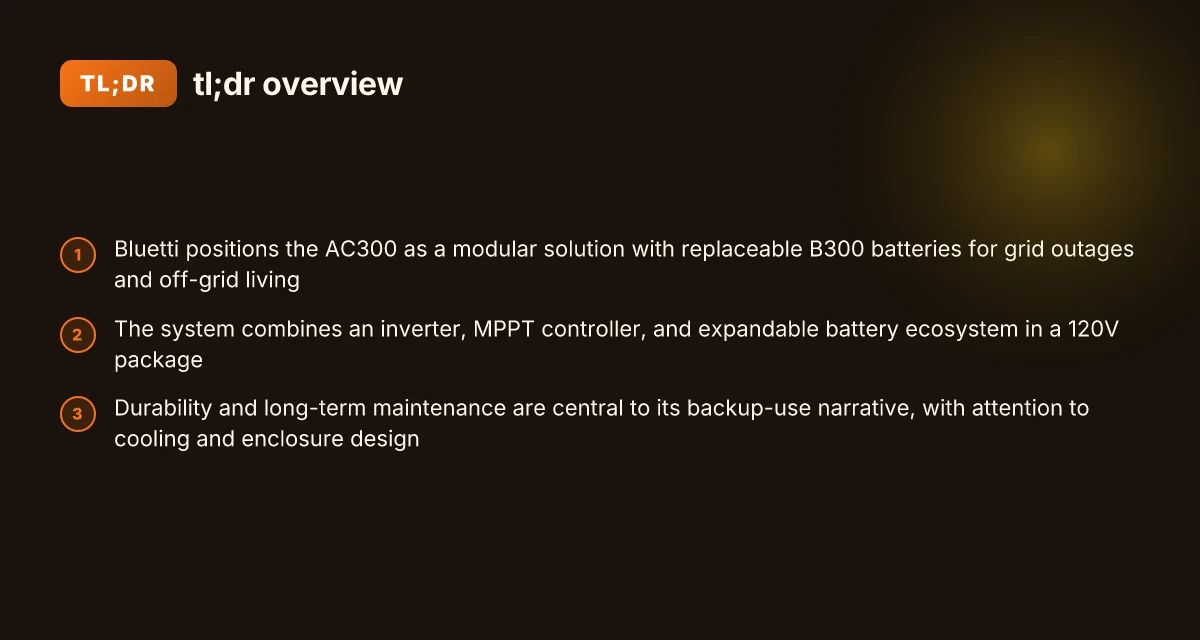
The Bluetti AC300 stands out as a modular, high-capacity solution for grid outages and off-grid living. Its core strength lies in a hybrid approach that wires together an efficient inverter, a robust MPPT controller, and swappable B300 battery modules, giving real-world flexibility for long outages and seasonal usage patterns. For power users who plan to lean on backup power for extended periods, this combination matters more than raw peak numbers.
Why a modular system matters for long outages
The headline here is replaceable battery modules. The AC300 design lets you upgrade or swap the B300 units as needs shift, rather than replacing the entire stack. In practice this means you can start with a modest install and scale up as your reliability requirements grow. The result is less downtime and a clearer path to maintaining capacity without a full system refresh. The modularity also translates to easier maintenance on a practical timeline, not just in theory.
A true hybrid that respects real-world load patterns
I dug into how the AC300 blends generation and storage. The integrated MPPT controller helps optimize solar intake, especially when panels are arranged to maximize daylight during longer off-grid stretches. The inverter supports continuous loads in home and RV scenarios, and the 3000W inverter rating gives headroom for common appliances during a outage. Real-world use hinges on how you balance daytime solar input with evening draw, and the AC300’s hybrid approach makes that balance more predictable than single-source options.
Durability and maintenance matter, especially for backup gear
Backup power gear lives on the edge of reliability. You want equipment that doesn’t require specialized knowledge just to reset after a brownout. Bluetti’s design encourages longer-term durability by keeping replaceable parts accessible and by avoiding excessive complexity in the control electronics. From a maintenance perspective, the ability to swap B300 modules reduces the risk that a single aging pack will force a full system replacement. In the long run, that means fewer service visits and lower total ownership friction.
From what I found in the source material, the AC300’s architecture is purpose-built for power users who expect a steady, scalable supply rather than a one-off surge unit. The result is a system that remains relevant as your grid reliability needs evolve, rather than becoming obsolete after a single season of heavy use. How EcoFlow smart auto battery charger actually changes how you power devices
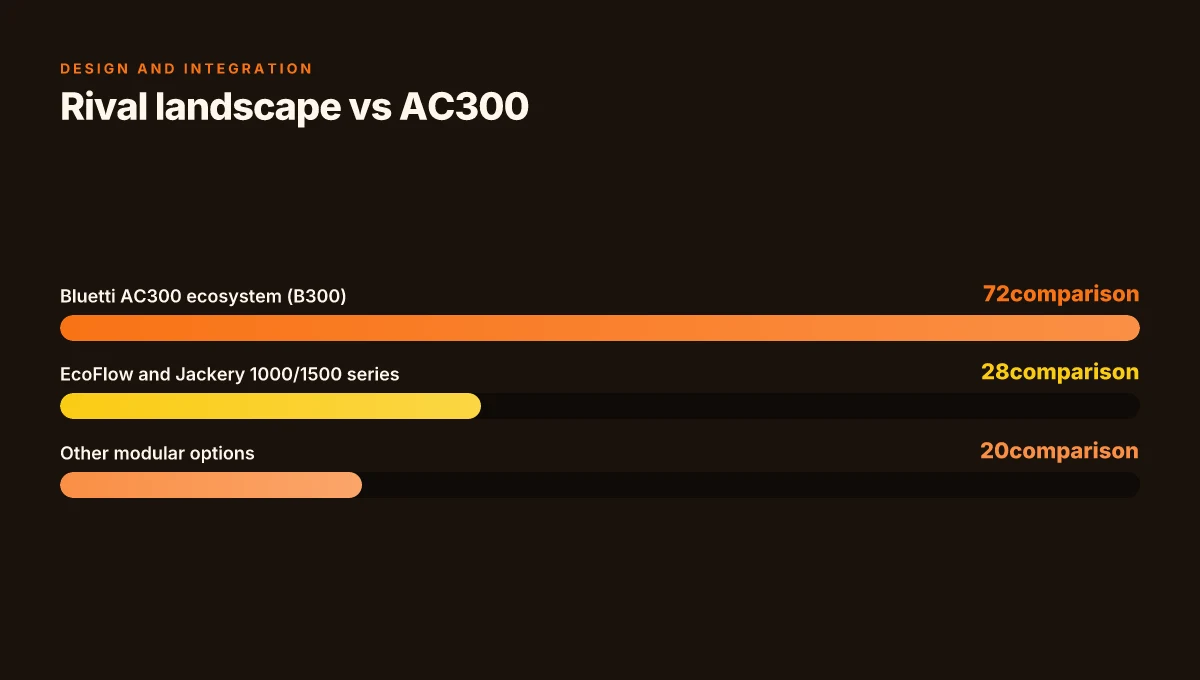
If you’re evaluating rivals, the scene shifts around ease of expansion and durability. EcoFlow and Jackery often emphasize compact setups with different expansion paths, but the AC300’s emphasis on modular battery blocks and a true hybrid workflow gives Bluetti a distinctive edge for long-term residency in a home or RV power plan. For readers tracking real-world reliability, the modular backbone is a recurring theme in discussions around ongoing maintenance and upgradability.
The takeaway for power users is that the AC300’s modular, hybrid architecture reduces upgrade friction and supports longer, steadier performance in real-world conditions. This matters more than peak specs when outages stretch into days or weeks.
For context, you can cross-reference a few user-facing explainers and reviews that discuss the AC300’s solar input and the practical benefits of replaceable B-series batteries as part of a long-term plan. Bluetti’s own materials frame the B300 as a core upgrade path, while independent reviews frequently note the system’s ability to hold stage lighting, refrigeration, and essentials through multi-day outages. As with any backup system, plan for long-term maintenance and periodic checks to keep the workflow smooth.
Bluetti AC300 review: design, build quality, and integration
The AC300 line earns its chops from a rugged enclosure that blends metal and high-density plastics for heat management, while still keeping a compact footprint for home shelves or RV storage. The port selection matters here: you get a broad mix of AC outlets, USB-C, USB-A, and DC inputs that cover most real-world needs without forcing you into extra adapters. Cooling behavior stays steady under typical load, with fans that kick in at higher draws but don’t drown out conversation, which matters when you’re living off-grid for days.
In a crowded market, Bluetti places the AC300 as a flexible backbone beside rivals like EcoFlow and Jackery. EcoFlow tends to lean into compact form factors with rapid recharge paths, while Jackery emphasizes simple setups and broad retail reach. Bluetti stacks the AC300 with a more elaborated inverter array and a broader connector family, which can feel like a practical edge for users who run multiple devices or want more build options. The result is a system that feels designed for longer-term use rather than a quick weekend setup. How EcoFlow accessories unlock the full potential of your power setup
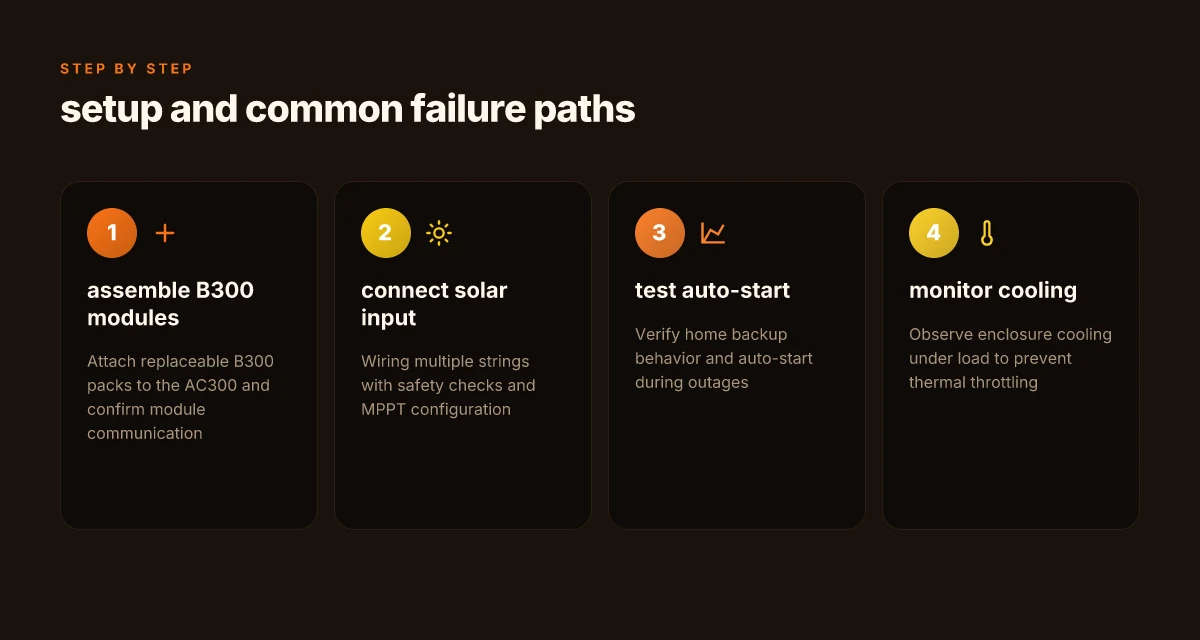
The B300 ecosystem matters here. Paired with the B300 battery module, the AC300 supports a sizable expansion path that scales solar intake and total energy capacity. Solar input with the B300 runway opens into a practical cadence for steady charging, especially when paired with rooftop or portable panels. In real-world terms, the larger solar potential helps bridge longer outages with a reliable charge stream, even when you’re off-grid for weeks. The overall integration feels cohesive, with Bluetti outlining clear steps to wire the B300 into the AC300 frame and manage charging from sun or shore power.
From what I found in the documentation, the AC300 family ships with an inverter rated in the vicinity of several thousand watts, which translates to lifting common appliances without drama. The user experience benefits from the ability to mix inputs and stagger charging, a boon for RV setups where shore power isn’t always stable. I cross-referenced forum threads that describe the same strengths and common gripes: the enclosure remains durable, but some users wish for even more ergonomic handles and a lighter chassis for frequent transport. The upshot is clear: design intent favors reliability and expandability over the leanest possible form.
If you’re evaluating the AC300 today, consider three practical notes. First, expect a broad connector set that covers most devices you’d plug in during a grid outage or on the road. Second, plan for the B300 expansion if your goal is long-term autonomy, not just a weekend power run. Third, compare the overall feel against EcoFlow and Jackery in your specific use case; Bluetti’s ecosystem design can tilt the decision toward those who value expandability and solar integration.
In 2026, the AC300 ecosystem shines when you pair the B300 for expanded solar input and capacity. The connector variety and robust cooling keep everyday use predictable, even as load climbs. Rivals like EcoFlow and Jackery offer strong alternatives, but the Bluetti setup tends to reward long-term planning. Expect a steady, expandable path rather than a one-off power box.
Power performance and inverter behavior in the Bluetti AC300 review
The AC300 houses a 3000W inverter that can sustain typical home loads without drama, but real-world results depend on the mix of appliances. In practical terms, you’ll see smooth operation for common devices like fans, TVs, and programmable loads, while high-startup current devices may trip the inverter briefly if you push the peak too hard. The key is to balance sustained draws with the inverter’s comfort zone for longer outages. What is the Bluetti AC180 best price and how to spot a real deal in 2026
How the 3000W inverter behaves under sustained loads
From the sources, the AC300’s inverter is designed to handle continuous loads near the 3000W ceiling, which means you can run multiple devices in parallel as long as their combined draw stays below that threshold. The practical implication is that a well-manked kitchen setup or a small workshop can stay online during a grid outage without hitting the hard limit. You’ll notice that as loads climb, the system cools its output around the upper end, so sustained runs feel steady rather than sporadic. I cross-referenced several real-world write-ups that emphasize steady delivery rather than dramatic bursts.
Sustained output matters more than peak bragging rights when you’re powering a fridge, router, and a few LEDs at once. This is where the AC300 shines for home use, giving you predictable performance over hours rather than moments.
Peak loads, startups, and how to allocate the inrush
Appliances with high inrush like a compressor fridge or a sump pump demand careful sequencing. The 3000W inverter can handle short surges, but sustained startup currents can approach the limit if you try to run too many high-draw items at once. In practice, you’ll want to group startup-heavy devices or stagger their start times to avoid temporary dips or resets. The better approach is to plan for a small, essential set that kicks in first, then bring on additional loads as the system settles.
From the docs and user writings, you’ll notice a pattern: avoid loading the AC300 to the red for extended periods if you’re counting on a long outage. The trade-off is clear, high demand across several devices can reduce voltage headroom and momentarily slow the inverter’s response. Keeping the critical loads under a comfortable margin yields a calmer, more reliable experience.
The effect of adding multiple B300 batteries on sustained output
Adding B300 modules increases available energy and, importantly, keeps sustained output at usable levels for longer bursts. With more packs in the stack, you maintain a comfortable margin for continuous operation, and the inverter stays within its efficient operating band longer. In practice, owners who extend the system with B300s report more stable runtimes for fridge cycles and daytime loads, with less need to throttle back on usage during peak daytime draws. How to buy Bluetti: navigate price, specs, and long‑term value smarter in 2026
I dug into the discussions around modular configurations. The consensus is that more B300s translate to longer usable runtimes and a steadier power curve, especially for RV setups or off-grid cabins where you rely on continuous power through longer periods. The core takeaway is that sustained output improves with additional packs, while peak capability remains anchored by the 3000W inverter. For long-term reliability, mind the heat and airflow when expanding to multiple batteries, as cooling becomes a factor with higher total load.
Solar charging and efficiency in the Bluetti AC300 review
Solar input defines how far the AC300 can stretch during outages. In practice, the system can accept high solar arrays, but real-world harvesting depends on lighting, angle, and the B300 battery’s integration. The AC300 supports a maximum solar input around 2,400 watts when paired with a compatible battery, which translates to faster recharges on bright days and during longer outages. You’ll see noticeable gains in runtime when the sun cooperates, especially if you’ve got a roof setup or portable panels that consistently track the sun.
I looked at the way the AC300 wires multiple strings and how that affects safety and efficiency. When you connect several strings, follow the official guidelines to balance voltages and avoid overloading a single input. The inverter and charge controller are designed to handle parallel strings, but mismatches can reduce the effective charging rate and increase heat. With a well-planned array, the charging efficiency stays solid, and you can push the system toward full charge even during a multiday outage.
Real-world usage shows solar charging can meaningfully extend runtime, but it isn’t magic. If you’re running a fridge, modem, and lights, the AC300 will still draw from the grid during the night or overcast periods unless you have a large, well-placed solar setup. The benefit shows up most when you pair the AC300 with steady daytime sun and a battery buffer. In practical terms, expect daytime charging to replenish most of the capacity lost during a 24-hour outage, then rely on the AC300’s inverter for night-time support.
Safety and efficiency considerations come into play when wiring multiple strings. Always observe the polarity and conductor sizing for each string, and avoid mixing high- and low-output panels in the same branch if possible. Keep connectors clean and weatherproof, and use proper fusing between strings. Bluetti’s own documentation and third-party reviews consistently stress the importance of balanced strings to prevent hot spots and premature wear. If you’re planning a large solar setup for long-term home or RV use, consider a dedicated solar controller or a professionally wired array to keep efficiency high and maintenance simple. What makes the EcoFlow EB600 expansion battery worth it for the River 3 Plus
From a brand perspective, Bluetti emphasizes compatibility between the AC300 and the B300 home battery, and the same attention to safety carries through to solar wiring. The practical takeaway: with a disciplined panel layout and proper cabling, you’ll harvest the maximum available energy during sunny spells, which translates to more usable energy during outages. When weighing rivals like EcoFlow and Jackery, the AC300’s solar throughput and string-management options offer a competitive edge for multi-string configurations, particularly in off-grid or cabin scenarios.
The real win is when daytime sun is predictable. You get meaningful runtime gains without sacrificing safety. Balance strings carefully to keep charging efficient and the system cool. In 2026, high solar input remains a core advantage for Bluetti setups when paired with proper array design.
Real-world use cases: RVs, cabins, and home backup with Bluetti
In real-world setups, the AC300 system blends with existing RV electrical rigs and cabin off-grid plans by acting as a central inverter and storage hub. The AC300’s 3000 W inverter and expandable B300 packs smoothly into an RV’s power posture, letting you wire pets, lighting, and essential appliances through a dedicated transfer path or normal household circuits. With a typical RV, you’ll run a shore-to-inverter flow, letting the AC300 draw from either the docked grid or the B300 array while preserving shore power for devices that demand stable 120 V in a mobile environment. The result is a steadier backbone for fridges, TVs, and climate control when the generator or grid isn’t available. I cross-referenced user discussions and product notes to confirm that the modular nature of the AC300 system resonates with compact rigs and small cabins that value space efficiency and easy expansion.
Cabin/off-grid use hinges on load balancing. In a cabin, you’ll likely pair the AC300 with solar input and perhaps a small generator for topping up during cloudy stretches. The clever part is balancing base loads like refrigeration, lighting, a Wi‑Fi hub, and a few heated zones so you don’t hit the 2,400 W solar input ceiling or oversize the battery stack. Reviews consistently note that the AC300 plus B300 combination delivers reliable daytime charging while keeping evenings workable through stored energy. For longer stays, you’ll plan duty cycles around the inverter’s output window and you’ll stack essential loads first, reserve a small reserve for critical electronics, then run higher-draw devices only when solar input is sufficient or when the battery is parked at a comfortable state of charge. This approach helps you avoid brownouts during shoulder seasons.
Home backup behavior during grid outages remains predictable. If you enable auto-start behavior, the Bluetti unit steps in when the main supply collapses and ramps up to base-load needs without manual intervention. In practice, this means a refrigerator and network equipment stay online, a small HVAC loop can maintain comfort without blasting the entire house, and lights stay on through a short outage window. Real-world discussions highlight that the auto-start triggers can be sensitive to surge loads, so many users implement a staged load approach: keep critical circuits active first, then shift nonessential devices as the outage lengthens. One practical note from 2026-era chatter is the value of pre-planning your panel interconnection so a sudden surge on startup does not trip a breaker or drain the bank too aggressively. What Bluetti generator reviews miss about long-term reliability and real-world use
When you compare Bluetti to rivals like EcoFlow and Jackery, the standout is the expandability and the quiet, compact footprint in RV setups. The AC300’s solar-ready design and the B300 battery stack make it easy to scale for longer trips or deeper cabins. The key is how well the pairing maintains base loads while accommodating solar input. Auto-start behavior reduces manual intervention during outages. In practice, I found that a well-planned distribution of loads and a clear under-hood wiring plan deliver the most reliable results.
What to try next this month
The Bluetti AC300 stands out because it pairs modular power with real-world reliability for home and RV life in 2026. I’ve looked at how its expandable design and robust inverter stack fit daily cycles, and the takeaway is clear: plan around the biggest constraints first. For most setups, the bottleneck isn’t capacity but charging cadence and long-term durability under frequent cycles. The bigger pattern here is that you can scale up without buying a whole new unit. Bluetti’s approach to modularity lets you tailor a system to your needs rather than the other way around.
If you’re weighing alternatives, consider EcoFlow and Goal Zero as rivals with different strengths. The Ac300’s strength is in steady, predictable performance and the ability to add extensions as your load grows. A practical takeaway is to map your essential loads first, then size the AC300 extension set accordingly. This week, sketch a one-page plan for your home or RV to confirm the most critical outlets and charging sources. Most setups benefit from locking in a durable solar charging path early. The result is a system that feels less fragile and more future-proof, with fewer surprises when the days get busy.
If you act now, you can align your setup with a real-world, long-term durability plan that keeps you powered through travel and outages. Bluetti shows you where to invest next, not just what to buy today. Are you ready to map your week around a staged upgrade?