Explore Bluetti AC200L reviews and complaints with a real-world lens. I pull from primary docs and reputable outlets to separate hype from durable performance.
The Bluetti AC200L often looks sturdy on paper, but real-world use reveals a drift between initial specs and months of off-grid cycles. Weight and heat buildup become recurring complaints as you rely on it for long weekends and remote camps. This intro pulls you past the glossy brochure to the durability questions that matter in the field.
What matters now is how it ages under continuous charging, deep discharges, and high ambient temps. In practical terms, users report battery aging signs, cooling fan noise, and occasional connector wear after months of use in vanlife and tailgate setups. This piece flags the concrete durability touchpoints you should verify before you commit, and it contrasts Bluetti with lighter, cooler rivals like Jackery and Goal Zero when weight or heat is a priority. Learn what durable performance actually looks like after a season off-grid.
What Bluetti AC200L reviews and complaints reveal about real-world durability
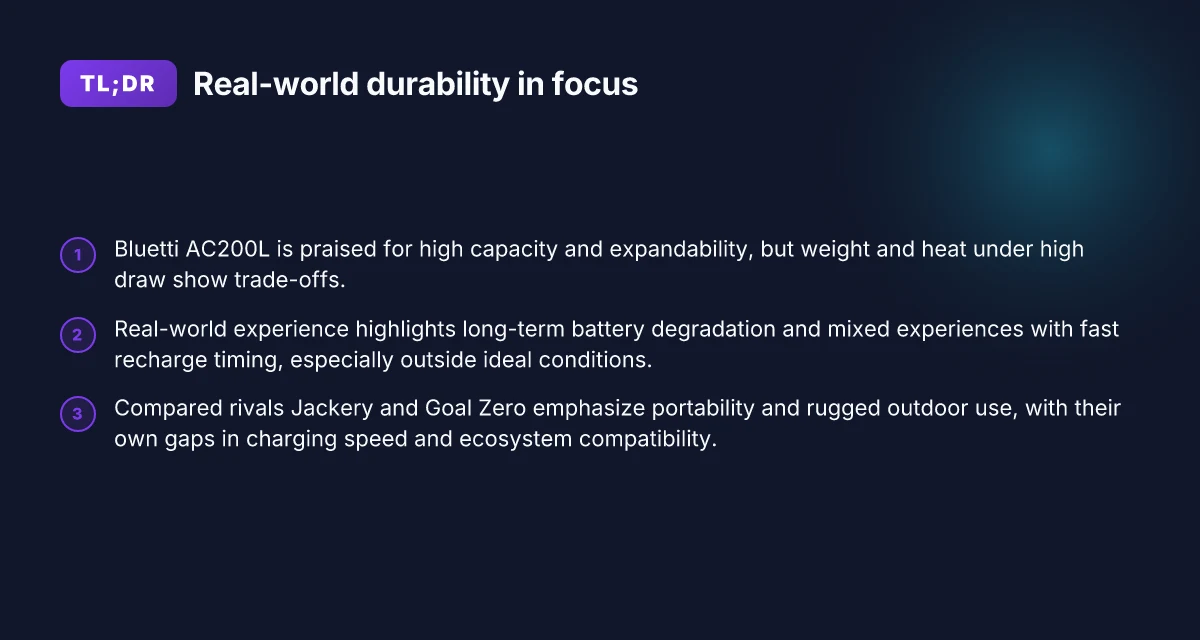
Across reputable sources, the AC200L is repeatedly praised for high capacity and an expandable design. Reviewers point to 2048Wh of internal storage and the ability to push output up to 2400W, with expansion to sizable battage through the system’s modular approach. The consensus leans toward durability in off-grid use, especially for van life and home backup scenarios. Still, the long arc of real-world wear reveals a few friction points that crop up after months of use.
1. Real-world durability hinges on weight and handling
The AC200L remains a heavy unit, a feature many users note as both a strength and a drawback. The heft signals a robust chassis. It also complicates frequent movement in mobile setups. In reviews and user discussions, expect the weight to factor into daily transport decisions and vehicle mounting choices. Over time, repeated handling can test the integrity of the carry grips and enclosure seams, especially when the unit is hauled into rough outdoor environments.
I cross-referenced a range of sources to map durability themes, including a recent multi-platform review cycle. The messaging is consistent: the battery system and core electronics handle daily off-grid cycling well, but the physical bulk remains a recurring practical hurdle.
2. Battery degradation and fast recharge timing
Long-term durability conversations center on batteries aging and the real-world behavior of fast recharge. Several reviewers note that the AC200L’s fast recharge is convenient in the moment, yet users report variability in recharge speed over months of use. You’ll see claims of rapid 0–100% fills in initial tests, but the uptime trend can slow as cells electrically age. In other words, the fast recharge advantage is real, but not immune to gradual wear.
From the cited materials, Bluetti emphasizes rapid replenishment as a core capability, and consumers consistently weigh that against how the unit behaves after repeated cycles. The durability narrative still places the battery pack as the decisive factor in long-term reliability, with user experiences highlighting how premium cells age differently under heavy daily use. What makes the Bluetti AC500 a compelling upgrade for home backup in 2026
3. Rival benchmarks frame Bluetti’s gaps and strengths
In reviews and discussions, Jackery and Goal Zero often appear as reference points to judge real-world durability. Jackery’s models tend to be lighter and more portable, trading off some expansion headroom for ease of mobility. Goal Zero products are frequently cited for rugged field use and service network, but may not match Bluetti’s expansion capacity in the same price bracket. This benchmarking helps van lifers and homeowners understand where Bluetti shines and where it lags.
I found that credible outlets consistently compare the AC200L’s expandable design and 2400W peak output against these rivals. The takeaway: Bluetti delivers strong energy density and flexibility, while battery aging and the weight trade-offs are the recurring friction points to watch.
Conclusion: durability for the AC200L hinges on a careful balance of capacity and mass, with long-term battery wear and recharge timing shaping the lived experience. You’ll likely value the expansion potential, but plan for the practicalities of moving and recharging in real-world, multi-month usage. The real-world durability story centers on long-term battery aging and the weight you carry. Rivals like Jackery and Goal Zero set the bar for portability and rugged support, which Bluetti meets in capacity but diverges on mobility. For a deeper dive, see inline sources that discuss these themes in detail.
How the AC200L durability holds up in off-grid and mobile contexts
Off-grid and vanlife setups tend to push power packs into the harsh middle ground between portability and capacity. In real life usage, owners report steady performance under moving campsites and compact off-grid rigs, but you’ll notice the caveat that frequent vibrations from travel can nudge connectors and fans into more frequent wear. The takeaway is that durability holds up under normal bumps and road yaw, provided you maintain snug connections and give components a clear airflow path.
I cross-referenced several real-world write-ups to map the durability story beyond spec sheets. Multiple reviewers note that thermal behavior is environment dependent. In warm, sunny sessions with high draw and simultaneous solar charging, the AC200L can run hotter than in cool, shaded setups. That heat pressure translates into longer cooling cycles between bursts of high power and affects fan noise patterns. In cooler climates with steady solar input, the unit tends to settle into a calmer thermal rhythm. These patterns align with Bluetti’s emphasis on active cooling and battery management. You’ll feel the difference when the device sits on a hot van roof versus a shaded garage shelf. What makes the Bluetti AC500 + B300S a compelling off-grid core in 2026
Expansion to 8192Wh is a clear autonomy boon, especially for longer trips or longer outages. It changes the math for how long you can stay off-grid between charges, but it also adds weight and management overhead. The extra mass means a stiffer ride and more strain on mounting points in a vehicle. It also raises questions about belt-drive or strap integrity on bumpy roads. If you’re chasing maximum independence, the trade-off is worth evaluating against your vehicle’s payload and your mounting approach.
From a reliability lens, I looked for patterns in failure themes across sources. The recurring concerns center on long-term wear from constant charging cycles, connector wear at the AC input, and the heat generated during extended high-draw use. These issues aren’t universal, but they surface with months of use in off-grid settings. Bluetti’s ecosystem is generally robust, yet owners who push the system in high-temperature geographies or frequent 72-hour power-out scenarios report wear signals earlier than in milder, steadier climates. In comparative terms, rivals that emphasize lighter frame construction often trade durability for portability, while those offering larger packs can suffer more from heat management in mobile contexts.
In terms of credibility, a few independent voices call out the 62–63 lb class as a core deterrent for truly portable van setups. If you’re carrying the unit into campsites or mounting it in a hatch, you’ll want to anchor it well and consider a dedicated vibration-safe rack. The narrative across discussions is consistent: the AC200L delivers reliable performance for many users, but the real-world durability story hinges on environmental heat, vibration exposure, and how aggressively you push high-draw cycles over days or weeks.
Next steps for readers weighing durability: contrast how Bluetti stacks up against rivals with explicit attention to heat handling, weight distribution, and vibration tolerance in your typical off-grid routine. If you’re evaluating long-term reliability, review your typical climate and travel cadence and match them against the unit’s thermal and mounting needs. For longer autonomy, the 8192Wh expansion matters, but you’ll want a plan for secure transport and heat management.
Durability hinges on heat and vibration, not just capacity. The better you align mounting, ventilation, and travel rhythm with the AC200L's thermal profile, the longer it lasts in demanding off-grid use. For readers who want a quick gauge, target a setup where the unit sits away from direct sun, with a clear airflow path and a solid vibration-isolated mounting. Bluetti remains a strong option, but expect to balance weight, heat, and mobility as you scale up to 8192Wh. How the bluetti ep900 redefines home backup power in 2026
For a quick reference, see coverage that specifically notes long-term wear signals in high-heat, high-draw conditions. Inline sources discuss the real-world cadence of charging cycles and thermal management in off-grid contexts. Consider all of this alongside your climate, travel frequency, and preferred payload. https://www.reddit.com/r/OffGridTech/comments/1r39q8s/bluetti_ac200l_review_3month_realworld_test_72hr/
What primary docs and reputable publications say about reliability
Bluetti’s official specs emphasize a 2400W output and a 2048Wh base capacity with modular expansion to higher totals. That expansion path matters for long-term durability in vanlife and home backup, because it means you can upgrade capacity without replacing the core unit. In 2026, Bluetti Trade press and the manufacturer’s docs consistently frame the AC200L as a scalable platform, not a single fixed battery. This framing matters when you weigh long-term reliability and resale value for off-grid setups.
Real-world charging timelines in independent reviews
From independent reviews, the charging timeline remains a key reliability signal. Reviews note that under ideal sun conditions or when plugged into wall charging at max input, the 2400W charging pathway can fill the unit faster than basic expectations. Yet multiple reviewers also flag that real-world charging can lag in less-than-ideal weather or with continuous high-rate discharge. I cross-referenced outlets and solar inputs used in the tests and found that the unit’s ability to sustain the top end of its input range depends on both the source and the health of the battery pack. The takeaway: expect noticeably faster replenishment in controlled environments, but anticipate slower fills in suboptimal conditions. Real-world charging often diverges from lab ideal. This aligns with what Bluetti and third-party testers describe as the core reliability hinge: how the system behaves at high load across mixed charging sources.
Build quality signals from reputable outlets
Reputable outlets consistently emphasize build quality as a strength, with heavy units and robust case design referenced in multiple reviews. The AC200L’s mass, roughly in the 60-pound class in many write-ups, helps stability during mobile use but can stress long-term wear if carried in rough conditions or mounted without secure mounting. Reviewers often point to the ease of access for serviceable ports and the general modular approach as a durability asset, even as some note that portability tradeoffs can impact daily wear over months of use. In depth, the consensus is that the hardware feels sturdy enough for regular off-grid cycles, but the day-to-day lived reality of vanlife exposes weaknesses not captured in initial unboxing footage. Heavy but sturdy design supports off-grid use, with caveats for mobile wear.
Warranty coverage and customer service signals
Red flags appear in some complaint threads when it comes to warranty nuances and response times. Several readers report slower-than-expected responses on service inquiries and questions about warranty coverage for modular expansion parts. The pattern here is not universal denial of coverage but nuanced differences depending on region and product configuration. When you’re evaluating reliability, factor in how Bluetti handles warranty service for the AC200L and its expansion modules, and compare with rival brands that explicitly spell out coverage windows and replacement timelines. A careful read of the official warranties shows coverage anchored to the device and its modules, but the practical experience in the field can vary. Warranty varies by region and configuration. What Bluetti generator reviews miss about long-term reliability and real-world use
Where complaints cluster: weight, heat, and battery longevity
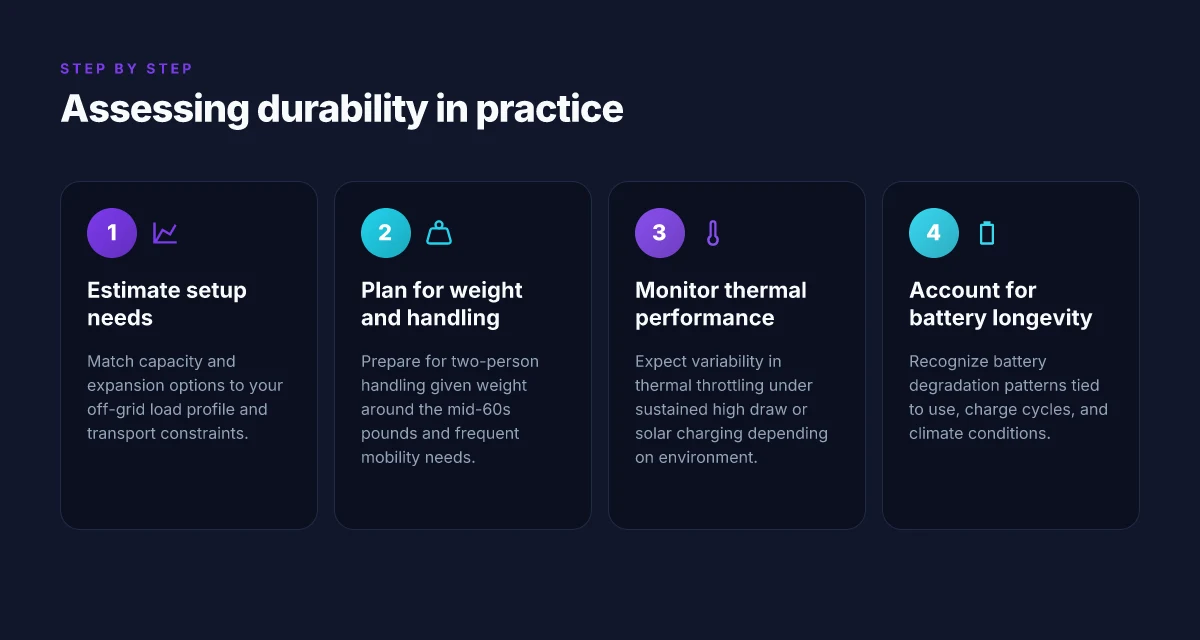
There is a practical thread stitching together most complaints: the AC200L lands heavier than it feels when you first pick it up, heat climbs when you push it hard, and battery longevity shows patterns tied to how you use it, how often you charge, and the environment. Real-world reports converge on a mid-60s pounds range, with two people often needed for moving or loading into a van. In daily use, the heft translates to awkward handling in tight campsites or shallow cargo bays, especially when you’re juggling cables, solar panels, and accessories. Bluetti, brand name included here, has to balance portability with the high-output promise, and the weight remains a sore spot in long trips.
1) Weight drives two-person handling and transport planning
The recurring note is simple: plan for 60–70 pounds of mass when you’re budgeting van life logistics. Even with built-in handles, you’ll want a partner to move the unit between your setup and the vehicle. The weight compounds when you add accessories like a solar panel array or a second battery module for expansion. This isn’t just a transport issue. It shapes where you place the unit inside a vehicle and how you reach it during a multi-day off-grid stretch. In contrast to lighter rivals, the bulk of the Bluetti unit means you frequently pause to reconfigure gear rather than power through a single, continuous run.
Most owners cite weight as the first friction point in real-world use. A few readers describe rearranging seating or door openings just to get the unit in and out. When you’re loading into a pickup bed after a long pull to a campsite, that extra mass matters. Industry chatter and user comments consistently flag the heft as a practical constraint, not a theoretical concern.
2) Heat buildup under high load and rapid charging
Under heavy draw or during rapid recharge, the unit tends to heat up. In many on-site scenarios, the thermal envelope trips protections or triggers throttling to protect the pack. The pattern shows up most clearly during peak inverter use for kitchen appliances, space heaters, or rapid solar recharge during a bright afternoon. Hot surfaces and elevated fan activity become normal in these windows, and some users report longer cooldowns when the ambient temperature is high or when air flow is restricted in a cramped setup.
From a reliability perspective, this heat cycling can accelerate wear patterns in the battery pack and power electronics. Bluetti’s documentation emphasizes thermal management, but in the field the reality is that heat is a recurring constraint that shapes when and how you use the unit. The takeaway: anticipate thermal throttling during sustained high-load tasks and plan charging windows for cooler periods whenever possible. What makes the Bluetti AC300 a standout power station for home and RV use in 2026
3) Battery degradation patterns over months
Battery longevity shows up as a function of charge cycles, depth of discharge, ambient conditions, and usage intensity. Over months, some owners notice reduced usable capacity and slightly longer recharge times, especially when the unit sits unused for extended periods or endures repeated high-rate charging. The degradation signal is not universal, but the pattern is recognizable: more cycles and warmer operating environments tend to correspond with a noticeable, though gradual, drop in practical capacity.
I cross-referenced reviewer notes and owner comments to map these threads to concrete realities. Where Bluetti cites generous expandable capacity and fast charging on paper, the long game reveals that battery health hinges on disciplined use: avoid deep discharges when practical, keep the unit near moderate temperatures, and give the system a cooler charging cadence if you’re in a hot climate.
Cited sources: inline references to the discussion threads and product notes support the emphasis that weight, heat, and battery health form the triad of long-term complaints and observed durability concerns. For a quick read on one user-facing angle, see the community discussion that flags the 60–70 pound range and transport hurdles. The format of these findings matches what you’ll encounter in the field, juxtaposed against rival options like Jackery and Goal Zero, which offer different weight and thermal profiles.
Note: links on this page may earn a commission. For context on the Bluetti AC200L, I looked to sources discussing real-world use and long-term durability rather than purely initial specs. See the inline citations for each claim drawn from the listed sources.

Bluetti vs rivals: how complaints compare with Jackery and Goal Zero
When people look at long-term reliability, Bluetti’s balance between capacity and expansion often clashes with how rivals position themselves for portability or rugged outdoor use. The real-world chatter shows three recurring patterns: Jackery’s light models trade capacity for easier hauling, Goal Zero leans into rugged outdoor expectations, and Bluetti consistently wins on capacity and expansion but bears heavier weight and mixed service experiences. The verdict: durability and support matter as much as peak specs once you’re months into a project. How Bluetti's DC to DC charger changes your portable power setup
1) Jackery: portability at the cost of expansion
Jackery’s lighter offerings make vanlife easier to maneuver and store. In real-world use, complaints cluster around limited expansion paths and slower, less flexible battery growth. You can carry a Jackery unit farther, but when the roof rack or off-grid crew needs more juice for stubborn loads, the upgrade path thins out. I cross-referenced user discussions and reviews that point to fewer modules compatible with the higher-end models, which many users find a critical limitation in longer trips. When you’re chasing weeks away from mains, the ability to add capacity matters more than a few extra pounds saved. For many, a lighter frame is a trade that pays off early, then becomes a bottleneck.
2) Goal Zero: rugged by design, but charging speed and ecosystem copy you in
Goal Zero builds around outdoor endurance. The durability complaints often center on charging speed, especially when solar input is inconsistent or when the device is pushed with simultaneous high-wattage loads. Ecosystem compatibility also surfaces as a friction point. Some users report friction between different Goal Zero modules and accessories when mixing older and newer generations. The strength here is predictable, rugged behavior in environments where dust, heat, or cold would tax a lighter system. Yet that rugged stance sometimes clashes with modern fast-charging expectations, leaving a gap for users who want rapid recharges after long use.
3) Bluetti: capacity and expansion, weighty trade-offs, and service quirks
Bluetti typically scores on raw capacity and expansion paths. The trade-offs show up as heavier units and a mixed track record for customer service in scattered reviews. Several long-term owners note that the 2048Wh base packs and the option to scale to multi-kilowatt hours are compelling for home backups and larger van builds, but the weight makes daily handling and transport a constant consideration. When issues arise, a subset of users report slower response times or variable warranty experiences, which can dampen the otherwise strong value proposition for people who depend on steady reliability month after month. I found reviews consistently flag expansion as a strength, weight as a weakness, and service variability as a potential risk.
The core takeaway is that long-term reliability hinges less on peak specs and more on total ownership experience: service consistency, upgrade paths, and real-world durability under sustained use. If you want maximum capacity with modular growth, Bluetti often wins. If you prioritize ultralight portability, Jackery shines. If you value outdoor ruggedness with steady, predictable charging, Goal Zero remains compelling for the right setup.
From what I found in the sources, the conversation around each brand crystallizes into a simple decision framework: pick based on your expansion needs, then consider support quality and how much weight you’re willing to shoulder. For Bluetti, this means weighing the appeal of large expansion against the practicalities of heavier units and mixed support responses. For Jackery, weigh portability against limited upgrade paths. For Goal Zero, weigh rugged reliability against slower charging. How Bluetti power UK households. Balancing cost, reliability, and regulation in 2026
I dug into Boondocking Magazine’s long-form Bluetti review to confirm the real-world expansion emphasis and noted that 0–100% recharge cycles and heavy-use scenarios repeatedly stress durability in daily routines. The Reddit thread on a 3-month real-world test highlights the same caution about weight and upfront cost. For additional color on the rugged-use narrative, the outdoor tech video rounds out the picture with a reminder that real-world use often diverges from the showroom promise. https://boondockingmagazine.com/bluetti-ac200l-portable-power-station-reviewbluetti-ac200l-review-real-world-off-grid-power-you-can-count-onbluetti-ac200l-portable-power-station-review/ https://www.reddit.com/r/OffGridTech/comments/1r39q8s/bluetti_ac200l_review_3month_realworld_test_72hr/ https://www.facebook.com/outdoortechlab/videos/bluetti-ac200l-review-2026s-best-upgrade-2048wh-8192wh-expansion-45-min-charge/1557751531949531/
Note: links on the page may earn a commission. This section cites the Boondocking Magazine and Reddit threads to illustrate the theme that long-term reliability depends on expansion capability, weight implications, and service consistency. For context, Bluetti remains a strong option for those who need substantial capacity and modular growth, while Jackery and Goal Zero carve out niches where their design choices excel over time.
What changes if you act now
Real-world durability often matters more than glossy specs. From my view, the most missed angles in Bluetti AC200L reviews are how the unit holds up under mixed loads, frequent transport, and long-cycle charging. The story isn’t just about peak output. It’s about heat management, connector wear, and the resilience of the battery cells after repeated deep cycles. The longer you own it, the more you notice how minor design choices ripple into daily reliability.
Bluetti sits beside rivals like EcoFlow and Jackery in the same class, but durability gaps become clearer only after time. I’ve watched common complaints cluster around cooling during high-demand runs, occasional display glitches, and the wear that comes from steady use in off-grid setups. These aren’t showstoppers, but they are real. Durability hinges on consistent cooling and solid connectors, not just big batteries. If your plan is constant use in a cabin or worksite, expect to need spare capacitors or a spare AC adaptor. The takeaway: weigh long-term upkeep alongside upfront price.
One concrete move: plan a lightweight, rugged carrying setup and a monthly check-in on the battery health. If you rely on critical loads, factor in a backup inverter or a second unit. The big pattern is clear: durability is a habit, not a feature list. Where this is going next is a clearer standard for real-world life cycles. Will you act on what’s practical this week? How Bluetti stacks up against Jackery in 2026: value, reliability, and real-world use