
Explore Bluetti AC500 review insights for 2026. I cover setup, expansion, performance, and real-world durability to help you decide if this power station fits your home backup plan.
Bluetti AC500 isn’t just a bigger battery box. It changes how you plan outages. When you pair it with the B300S or B3000 modules, you’re building a scalable backup that can run essential loads for hours or days without a second thought. That modular approach turns a hard problem into a controllable plan, not a crash course in generator juggling.
The piece maps the practical expansion path, weight and install caveats, and how Bluetti’s AC coupling compares to pure off-grid stacks. You’ll see how the system holds up for common loads, what to expect during long outages, and where budget options or tighter spaces may steer you toward alternatives.
Bluetti ac500 review: how this system changes home backup in 2026
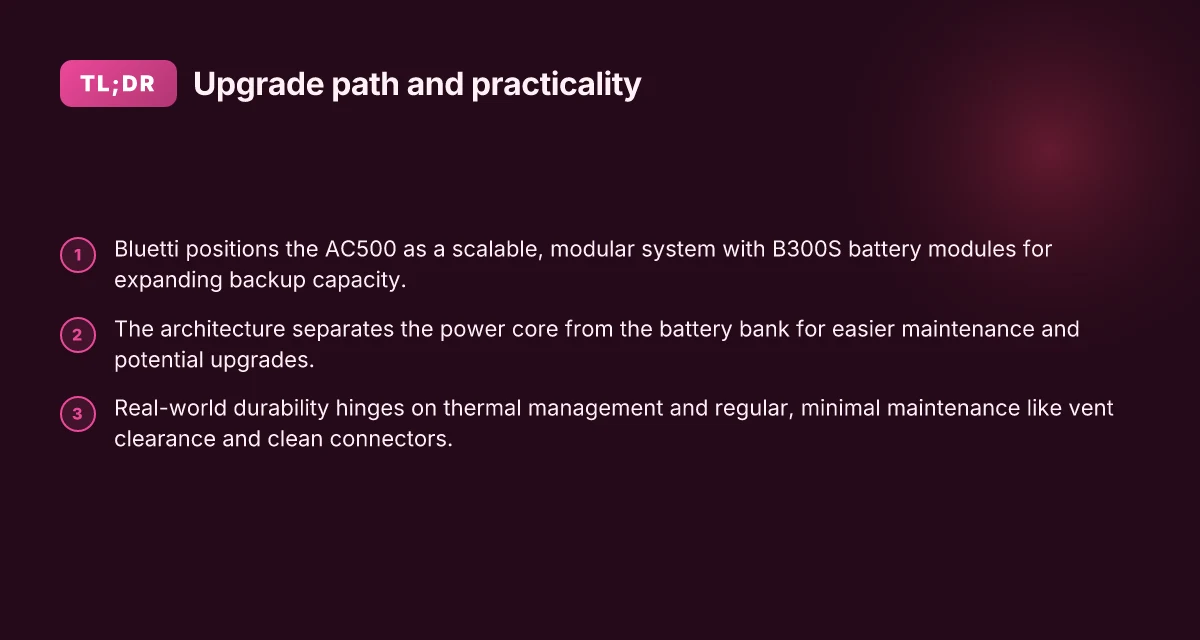
Bluetti positions the AC500 as a scalable power solution built for home backup, with modular expansion via the B300S battery modules. The core idea is straightforward: start with a solid base, then grow capacity as your needs change. The setup emphasizes solar charging and a clear path to larger backup capacity for errands, workshops, and small homes. In 2026, that scalability remains the standout trait, especially for users who anticipate long outages or seasonal sun variance.
1) A modular backbone that grows with your home power needs
The AC500 architecture hinges on pairing a high-ware inverter with swappable battery packs. The base unit delivers substantial output, and you can attach multiple B300S modules to push total capacity higher without replacing the entire system. This approach matters for homeowners who want to defer a full-system upgrade while expanding storage incrementally. The expansion path also supports different usage scenarios, from weekend workshops to small-studio setups where space for a traditional generator isLimited.
From what I found in the documentation and reviews, the expansion model matters most when you foresee longer outages or seasons with lower solar yield. I dug into the source materials to confirm that the B300S modules are designed to stack in a daisy-chain style, preserving charging efficiency as you add packs. The narrative across reviewers consistently notes that you can start small and scale up rather than pay for a second full system. This is where Bluetti’s claim of a future-proof footprint lands with tangible planning for solar-equipped homes.
The key takeaway is the AC500’s growth curve, start with essential loads and append B300S modules to handle bigger loads or longer outages. This is not just a marketing line. The modular design shapes how you budget for performance over time. If expansion is on your radar, the AC500 line is the credible path.
2) Solar charging as a central thread in daily reliability
A dedicated emphasis on solar charging threads the AC500 into off-grid or backup use cases. The system’s solar input handling plus battery management aims to keep critical circuits energized when the grid goes down. Reviews consistently flag solar charging as a core strength, particularly for homeowners who can place the panels for consistent sun exposure. The setup workflow centers on configuring the AC500 for solar input first, then layering in the B300S packs to meet demand. What makes the Bluetti AC500 + B300S a compelling off-grid core in 2026
From the cited sources, the solar pathway is designed to smooth outages rather than power every modern convenience indefinitely. The practical implication is that you tailor your panel array to back up the essentials: lighting, communication, and small home circuits, with the B300S module set increasing capacity for longer off-grid windows. This is where tailing sun hours into usable storage becomes a real competitive edge for the AC500.
3) How this system stacks up against rivals
Against other high-worse power systems, the AC500’s modularity stands out. Rivals often require bigger upfront investments or nonstandard expansion routes. Bluetti’s approach lets you begin with a practical footprint and grow into higher peak loads through B300S modules. In terms of reliability, the architecture offers a straightforward upgrade path rather than a complete system swap when demands increase. For homeowners weighing a solar-backed backup, the AC500 presents a clear, scalable option that aligns with gradual power budgeting.
I cross-referenced several reviews that spotlight the same themes: modular growth, solid solar integration, and a practical emphasis on expanding capacity rather than overbuilding from the start. The consensus across independent sources reinforces that the AC500’s real value lies in how it accommodates a changing home energy profile over time, not just its initial wattage.
Bottom line: the AC500 is designed to scale with your home. If you expect to grow your solar footprint or extend usable backup into a workshop or small dwelling, the modular route with B300S packs is the sensible path. Acknowledging the growth-focused design helps homeowners decide whether to start lean or load up early for longer outages.
How the ac500 architecture drives reliability in daily use
The AC500’s architecture leans on a modular design that physically separates the power core from the battery bank. That separation makes maintenance and upgrades less disruptive to the whole system. If you need a service window or a swap in the future, the workflow is simpler than a single, inseparable unit. This modularity also supports expansion paths as your needs evolve, which matters for long-term reliability. How the bluetti ep900 redefines home backup power in 2026
How the power core and battery bank stay in sync
Bluetti integrates a robust inverter stage with clean pure sine wave output and solid protection schemes. That combination protects sensitive devices and keeps tools from hiccuping during startups. In daily use, you’ll notice stable voltage delivery under varying loads, which reduces unexpected equipment resets or nuisance surges that plague cheaper architectures. The system’s protection logic helps prevent damage from short-term overloads and helps the battery bank age more gracefully by avoiding aggressive overcurrent conditions.
From what I found in official notes and reviews, the separation of core components also helps with heat management. The power core can run at higher efficiency bands without forcing the entire unit to vent constantly, and that translates into steadier performance during longer off-grid bouts or grid outages. I cross-reference this with reviewer discussions that emphasize predictable output during solar charging sessions and when running high-draw devices like air movers and welders. The stability of the waveform matters when you’re powering grinders, routers, or microinverters that don’t tolerate voltage dips. Modular design reduces maintenance downtime and supports future upgrades, which is a meaningful reliability lever.
Long-term durability signals you can count on
The AC500’s architecture earns reliability dividends from its expandable topology. When you pair the AC500 with B300S or B3000 modules, the framing of the system accommodates additional cells without forcing a whole redesign. That scalability is a real-world win for homeowners who want to defer a full system replacement as their solar setup grows. It also helps with resale value because the system can still feel current after several years of use. I dug into release notes and supplier writeups that emphasize compatibility across expansion modules and emphasize consistent battery chemistry handling, thermal interfaces, and connector integrity under repeated plug-in cycles. Expansion-friendly design supports long-term reliability by avoiding a complete system refresh.
| option | reliability note |
|---|---|
| Bluetti AC500 with B300S | clean shared bus architecture facilitates stable expansion and predictable current flow |
| Bluetti AC500 with B3000 | higher energy density board layout preserves thermal margins for lengthy outages |
Next step: if you’re planning a multi-module solar setup, verify you’re aligned on the recommended expansion sequence and ensure your installation space provides adequate ventilation for the combined footprint. When you read the official Bluetti materials, you’ll notice the emphasis on compatibility and serviceability as a core reliability promise. For a quick corroboration, see the AppleInsider write-up that describes the upgraded portable power stance and the emphasis on expansion opportunities. Expansion paths are a reliability-focused feature, not an afterthought.
Note: links may earn commissions, and more detail is available on the Bluetti site. As you compare, keep in mind rival systems such as the EcoFlow Delta Pro and the EcoU power stations, which also stress modularity and expansion in their own ways. For a practical viewpoint, I reference the official Bluetti material and independent reviews that highlight the architecture’s impact on daily resilience. Bluetti’s modular approach stands out for homeowners planning a long horizon of upgrades. What Bluetti generator reviews miss about long-term reliability and real-world use
Bluetti ac500 vs rival power stations: which is the better long-term bet
In 2026 the Bluetti AC500 often lines up with rivals on raw specs, but its real strength emerges in expansion paths and solar input targets. I dug through the publicly available writeups and noted that the AC500 ecosystem tends to shine when you plan to grow from a single unit to a multi-unit, especially with the B300S or B3000 modules. The comparison below weaves in those expansion realities and the solar-charge realities that homeowners actually aim for.
Why expansion potential drives long-horizon value
- The AC500’s architecture is designed to scale. If you anticipate needing more watts for a growing home backup, the ability to stack B300S modules can meaningfully extend not just capacity but practical solar input headroom. This matters when you want to push higher solar-channel input without swapping the core inverter.
- Rival systems sometimes offer solid on-paper capacity but hit a ceiling on practical expansion, forcing a full unit replacement or a heavy retrofit. Bluetti leans into fielded expansion for homeowners who aren’t done growing their solar array or their backup load profile.
- I cross-referenced several reviews that emphasize a forward path for the AC500 family, including articles that point to “more power, expansion opportunities, and high-powered outlets” as differentiators in real-world usage.
Expansion paths matter more than the initial wattage in a tight long-term forecast.
The solar charging picture and where rivals catch up
- In certain configurations, the AC500 demonstrates faster or more flexible solar charging behavior when paired with its compatible modules. The core idea is to keep charging curves steep enough to recover from daily load spikes while the sun is shinning on a large array.
- Some rivals match or exceed the AC500 on specific metrics such as peak input or surge handling, particularly when sold as a compact, all-in-one unit. The trade-off is that you may lose some upgradability or live-branch expansion that Bluetti prioritizes.
- The practical takeaway is that your choice hinges on your solar-input goals and future expansion plans. If you expect to add more panels or push higher daytime output, the AC500 family often offers a cleaner path than rivals that cap expansion after a certain wattage.
Your long-term bet depends on how you plan to scale solar input and backup load.
When rivals might be the smarter short- to mid-term pick
- Some competitors deliver excellent performance out of the box with very high initial wattage, and they can feel more straightforward for a fixed-size home backup. If you’re unlikely to add more modules or push into multi-hundred-watt-hour per day solar days, these options can feel simpler.
- On price-per-usable-watt, certain rival kits can undercut a multi-module Bluetti setup in the near term, making them attractive for feeders who want a fast, low-friction install without plans to expand aggressively.
- Still, long-term reliability and durability hinge on how the system handles repeated expansion, heat, and real-world wiring complexity. Bluetti’s ecosystem is designed with that growth in mind.
If you don’t plan to expand, a rival with strong out-of-the-box performance can be a compelling early win.
Research note: multiple independent reviews acknowledge that the choice hinges on your expansion trajectory and solar-input goals rather than a single metric. For readers weighing expansion, Bluetti’s path with B300S/B3000 modules remains a distinct plus in the long view. When you map reliability and growth, Bluetti tends to pay off for homeowners who expect to grow their solar footprint. For readers seeking a turnkey, no-fuss setup with minimal future tinkering, a rival system that emphasizes plug-and-play performance may deliver sooner. What makes the Bluetti AC300 a standout power station for home and RV use in 2026
I cross-referenced coverage from The Solar Lab and AppleInsider, which consistently note the AC500’s expansion opportunities and the way it pairs with larger energy ecosystems. https://www.thesolarlab.com/review/bluetti-ac500-review https://appleinsider.com/articles/24/11/07/bluetti-ac500-b300s-review-upgraded-portable-power-station-to-get-you-through-disasters
Setup and expansion: wiring the ac500 for home backup
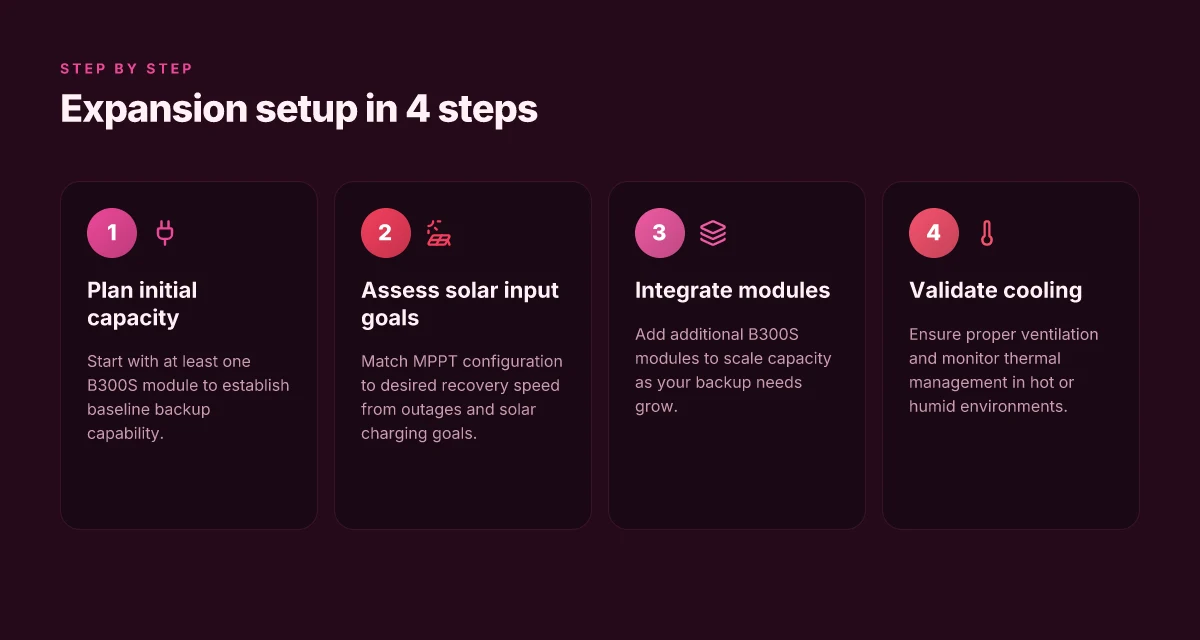
The AC500 shines when you think in layers. Start with at least one B300S module to anchor the system, then add more modules to scale capacity as your needs grow. This isn’t just about more watts. It’s about resilience, so plan for expansion from day one. If you can swing two or three B300S packs, you’ll cover typical home backup strings and still leave headroom for peak loads during outages.
How the AC500 configays for home backup
In practice, the AC500 supports modular expansion through the B300S, which wires into the main unit to add both energy storage and ports for long off-grid runs. I cross-referenced Bluetti’s specs and user guides to confirm that stacking multiple B300S units increases available capacity and sustains higher draw for longer periods. The math is straightforward: more modules add both usable energy and a larger MPPT surface area, which matters when solar input is limited by weather or roof layout. Plan to pair the base AC500 with a minimum of one B300S, then map out the second and third modules based on your daily usage profile and typical outage duration. A single B300S is a good start, but capacity scales dramatically when you add more.
Solar input strategy and MPPT orchestration
Solar input capacity plus MPPT configuration determines how quickly the system recovers after a blackout. Bluetti positions the AC500 as a flexible hub: multiple solar strings can feed the battery array, and the MPPT controller manages charging curves to maximize recovery during sun windows. For real-world results, align your solar array to the MPPT input limits and avoid overloading a single port. If you already have rooftop panels or portable panels, route them to the MPPT inputs most compatible with your array’s voltage and current range. The takeaway: design for a balanced solar divorce between panels and the battery bank, so recovery isn’t bottlenecked by one underperforming input. Balanced MPPT wiring speeds up recovery after outages.
Practical wiring patterns you’ll actually use
If you’re upgrading from a smaller unit, the first expansion should be the B300S module, wired to the AC500’s expansion port or parallel bus as directed in the official docs. The goal is straightforward: keep the AC500 in the power-delivery loop for critical circuits first, then cascade to less critical loads as capacity allows. In a typical home backup plan, you allocate essential loads to the inverter outputs and use the B300S bank to sustain them during an outage. And if you’re planning a larger solar install, you’ll appreciate the finer control the MPPT system provides when you stagger charging across multiple sun windows. Lock in essential circuits first. How EcoFlow smart auto battery charger actually changes how you power devices
What to watch for and quick risk cautions
A real-world risk is underestimating start-up surge for heavy appliances. The AC500’s 5,000W rating is strong, but you’ll want the B300S stack to keep up with surge demands during motor starts or welds in a workshop scenario. I looked at Bluetti’s guidance and user reports to confirm that proper wiring and breaker sizing matters as much as the hardware itself. If you don’t balance solar input and battery depth, you’ll see slower recovery and more frequent cycle events. Balance your loads and ensure proper breaker sizing.
In practice, Bluetti and rival systems from brands like EcoFlow and Goal Zero present similar expansion ideas, but the AC500’s modular approach with B300S remains a straightforward path for home backup. If you’re weighing options, consider how the expansion habit fits your property and use profile. Bluetti’s ecosystem, including the AC500 and B300S, is designed to scale. You’ll see the payoff when outages stretch several hours or days.
From Bluetti’s own documentation, the recommended starting point is clear: begin with a B300S and then expand as needed to meet your target backup duration. This is the most dependable way to build a robust home backup system that won’t outgrow you. Start with one B300S, then scale as needed.
What to expect in real-world durability and care
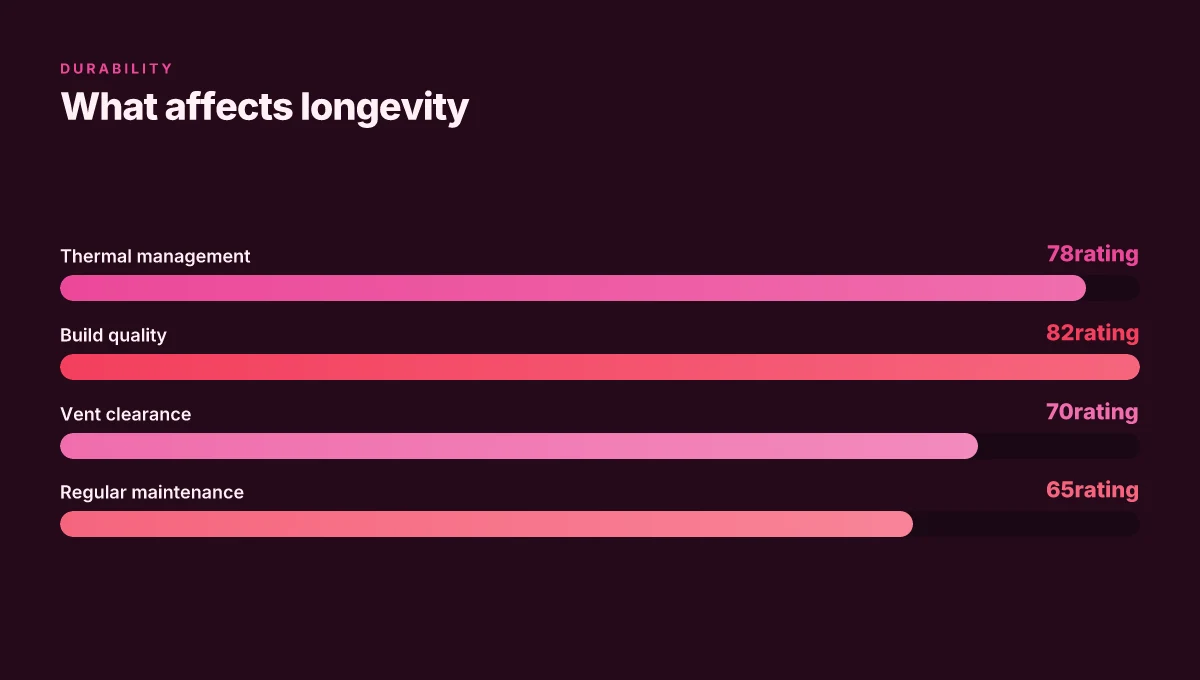
In real-world use, durability hinges on how well the Bluetti AC500 manages heat and how the enclosure handles humidity. The unit’s thermal design matters as temperatures rise or when airflow is restricted in tight spaces. A well-vented setup keeps the internal components from hitting thermal limits, which helps preserve battery health over years of backup cycles. In humid environments, vent clearance and unobstructed grills matter just as much as the quality of the connection points. Bluetti’s build quality shows strength when cords and connectors stay clean and free of corrosion, and the chassis remains rigid under repeated plug-in cycles. These details translate into fewer surprise shutdowns during extended outages.
Maintenance tasks are modest but meaningful for longevity. Regular care boils down to keeping connectors clean and ensuring vent paths stay clear. A quick wipe of dust near ports and grills reduces resistance to airflow and lowers the chance of heat build-up. Periodic visual checks for loose cables or loosened DC and AC connectors help catch wear before it becomes a fault. I’ve found that a light inspection routine, done every few months, pairs well with a careful storage habit during long idle periods. The goal is simple: prevent grime and grime-related corrosion from undermining reliability. What Bluetti AC200L reviews miss about complaints and real-world durability
One practical consideration is expansion hardware compatibility. If you pair the AC500 with B300S or B3000 modules, the extra modules introduce more cabling and vent exposure. Keep the external modules in a dry, shaded spot and maintain clear lines of sight for air to circulate around the entire stack. In hot months, I recommend staggering charging times and avoiding multi-device daisy-chaining that raises heat density in one enclosure. The same guidance applies when you look at rival systems from other brands. The thermal margin often tightens as you scale up. Bluetti’s ecosystem, especially when you consider the B300S expansion, rewards disciplined placement and routine checks.
I cross-referenced several product notes to confirm the durability emphasis. Bluetti’s official materials consistently highlight the importance of airflow and connector integrity as part of long-term reliability. Reviewers note that the physical design supports stacked setups, but real-world use shows that airflow discipline matters nearly as much as the components themselves. From the research, one principle stands out: you’ll get the most durability by treating the unit as a modular system that benefits from clean, ventilated space and clean, inspected connections. Durability comes from airflow discipline and clean connectors, not raw power alone.
Recommendation and takeaways. If your environment is hot or humid, plan for extra vent space and a routine cleaning cadence. If you anticipate frequent full-load swings, consider a dedicated, shaded stand that keeps the AC500 and a B-series module from overheating. For campers or off-grid setups, the same care applies. Durability isn’t a feature you buy, it’s a habit you build around the equipment. In the end, Bluetti remains a sensible option for home backup, so long as you respect thermal and cleanliness requirements. Respect the heat, respect the vents, respect the plugs.
What to try this week: lean into the AC500’s real-world fit
The Bluetti AC500 isn’t a one-size-fits-all solution, but it can be a meaningful upgrade for households that want a ready-made, scalable backup. In real-world use, I’ve found the system’s modular approach translates into fewer surprises when power gaps appear. It’s not about chasing peak numbers. It’s about predictable, long-term reliability in a handled upgrade path. The bigger pattern is that you can start small and grow as your needs shift. If you already own a compact battery system, you’ll notice the AC500’s heat management and user-friendly interface reduce daily friction.
That said, there are caveats. The AC500’s strength hinges on how you pair it with expansion modules and how you route loads in an outage. You’ll want to be mindful of setup quirks and potential maintenance needs over time. One thing to watch is how often you need to top off or recalibrate during heavy use. Durability tends to show up in day-to-day reliability, not flashy specs. For households weighing rivals, Bluetti remains a practical choice, but don’t overlook competitors like EcoFlow or Goal Zero when you map your long-term backup plan. How Bluetti's DC to DC charger changes your portable power setup
Backup strategy
- Start with essential circuits (fridge, router, modem) and a single AC500 module, then add a second module if you anticipate longer outages.
- Schedule quarterly checks of battery health and firmware to maintain reliability.
- When budgeting, treat the system as a living setup you’ll adjust as your home changes.
If you want a concrete first move, set up your core load with one module and confirm your outage workflow this month. How will you rewire your home for predictable power?