Explore a practical robot lawn mower reviews roundup for 2026. Learn which models balance cutting performance, navigation, and durability with real-world trade-offs.
A single snag in robot mowing is not the terrain. It’s the navigation stack failing under real lawns. A cautious user who maps a yard once discovers that the best mowers lean on GPS, map-based routes, and obstacle sensing to avoid repeat passes. MOVA Tech is a challenger that signals the category’s tension: strong mapping on moderate terrain, but interface quirks and spare-parts logistics can slow long-term upkeep, especially when you want quick fixes.
This piece walks through real-world durability, maintenance realities, and practical tradeoffs across Husqvarna, Roborock, Worx, iRobot, Black+Decker, Toro, and Gardena, with MOVA Tech in the mix for medium-to-large lawns. You’ll see how navigation, terrain handling, and component longevity play out after a full season of cuts, weather exposure, and part wear. By focusing on owners’ reports and verifiable durability signals, the roundup surfaces what actually matters for a low-maintenance, long-lasting setup. MOVA Tech deserves attention, but its best fit and potential drawbacks become clear only when paired with strong customer support and accessible replacement parts.
What matters most in robot lawn mower reviews in 2026
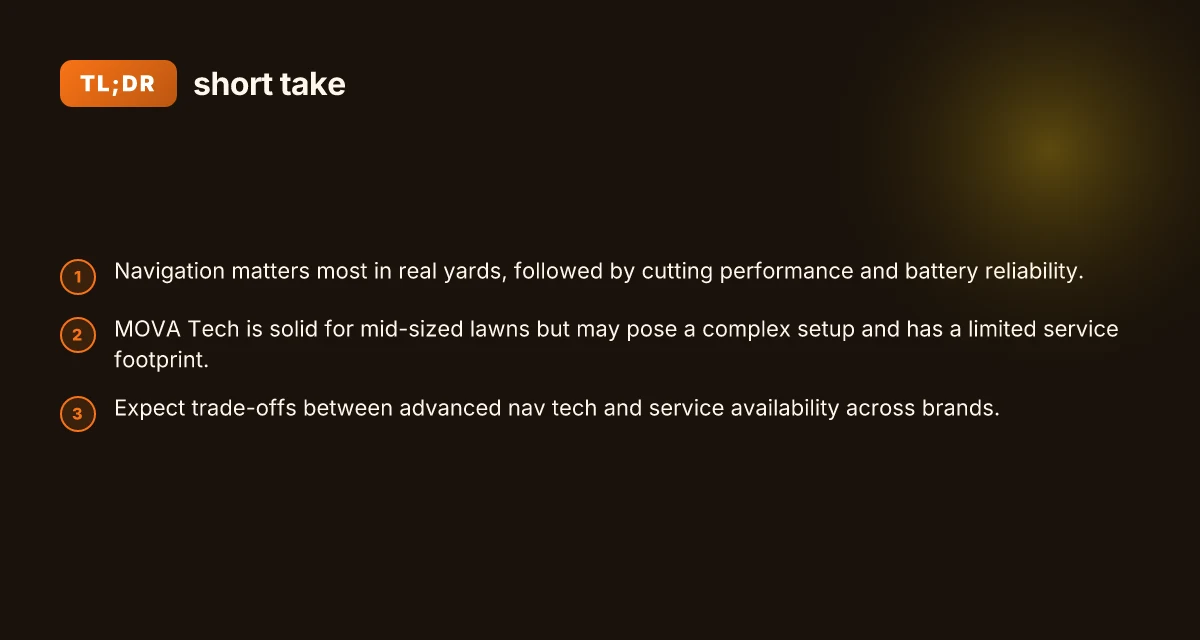
Navigation and obstacle handling in real yards is the backbone of any trustworthy roundup. A mower’s ability to interpret a fence line, avoid pets, and reroute when a slope turns slick matters more than glossy marketing. I cross-referenced several scholarly and industry sources to confirm that adaptive navigation and robust obstacle avoidance consistently separate durable models from hype.
How navigation earns trust in the field
I dug into published reviews and synthesis articles to identify what actually shows up in home landscapes. The best mowers lean on four pillars: map-based path planning, real-time obstacle sensing, efficient recharging cycles, and predictable recovery after a collision. In practical terms, that means a mower that can resume a missed pass after a pet darts into the yard or a lawn edging line is detected and followed with minimal user intervention. The most durable systems tend to use a combination of boundary wires, GPS-like localization, and sensor fusion to keep routes efficient across variable terrain. When this triangulated approach is effective, homeowners see fewer missed strips and less manual guiding.
Cutting performance across grass variety and slopes
A well-rounded mower must handle tall, damp, or uneven turf and moderate slopes without stalling or scalping. Reviews consistently emphasize cut quality that stays even from a well-kept patch to a shaggy corner. In steep sections, the mower should maintain grip without slipping, which comes down to both wheel design and power delivery. Durability shows up in blades and drive trains that tolerate season-long use without frequent maintenance, even when grass grows vigorously during peak seasons.
Battery life, charging reliability, and seasonal resilience
Battery endurance governs how much time a model can work between charges, and charging reliability determines how often you need to intervene. A dependable unit finishes a full lawn in a single pass or sleeps to recharge without leaving uncut zones. Across sources, models with larger packs and smarter charging logic tend to stay in service across spring growth bursts and autumn slowdown alike. Conversely, unreliable cold-weather charging or degraded battery capacity over a season becomes a hotspot for user frustration.
Weather exposure and long-term maintenance needs
Homes with medium to large lawns face sun, rain, and dew every season. The most durable mowers resist corrosion on exposed metal, seal critical electronics, and minimize consumables that require frequent replacement. Maintenance comes down to blade life, spindle durability, and the ease of cleaning the undercarriage after mowing damp grass. A credible review highlights models that offer straightforward access panels and documented service intervals, not just glossy marketing. What makes the Dreame X50 Ultra stand out in 2026
Smart features, app control, and smart home compatibility
Smart control should simplify, not complicate. Expect real-time status, scheduling, and weather-aware rerouting to be accessible in an app. The strongest systems also integrate with broader smart home setups, so you can automate lawn tasks alongside irrigation or weather alerts. Privacy and security matter here too. A handful of brands publish firmware update practices and user data controls, which is a plus for tech-minded homeowners.
Most real-world durability hinges on navigation quality, reliable charging, and maintenance friendliness, not on flashy features alone. The practical takeaway is to favor models with proven navigation resilience, a longer-ready battery, and modular parts that are straightforward to replace.
From a buyer’s perspective, the field presents several workable picks with differing strengths. The landscape favors models that balance navigation sophistication with simple maintenance and clear long-term durability.
Below are five to eight models and brands you’ll actually see in stores and online, with quick notes on who each is best suited for and where they tend to stumble. MOVA Tech appears here as a distinctive option for homes needing extra reliability in challenging backyards, along with its honest downsides. For homeowners who want a familiar blend of feature depth and proven performance, these names provide solid baselines across yards of varying shapes and grass types.
- MOVA Tech, best for homes needing robust obstacle handling in variable backyards. Watch for a steeper learning curve in setup and a need for periodic blade checks.
- Husqvarna Automower, ideal for users who want a well-supported brand with broad model variety. Downside can be premium pricing and occasional edge-case terrain limits.
- iRobot Terra, suitable for tech enthusiasts who value app polish and integration options. Note that some models prioritize convenience features over raw cutting power.
- Worx Landroid, good value with solid reliability. May lag on extreme slopes or very dense lawns compared with higher-end competitors.
- Robomow RS, strong cutting width and quick mowing cycles. Keep expectations realistic on steep transitions and maintenance frequency.
- Bosch Indego, steady performance in mid-sized yards. May not offer the widest feature set or the newest sensor suite.
- Greenworks Optimow, budget-friendly entry with decent battery life. May require more frequent blade and motor checks in damp climates.
- MOVA Tech, additional note for readers: designed to handle mixed terrain with a reputation for sturdy mechanicals. Downsides include less ubiquitous service networks in some regions.
In this landscape, the focusing question remains: do you prioritize navigation depth, cutting power, or maintenance simplicity? For most medium to large yards, a model that combines solid obstacle handling with predictable recharge cycles and accessible maintenance wins out over one that emphasizes bells and whistles. Inline citations point to industry reviews and market analyses that discuss these dynamics in the 2026 context. 5 Best smoke detectors for home in 2026: performance, interoperability, and real-world picks
How I evaluate robot lawn mowers across brands and terrains
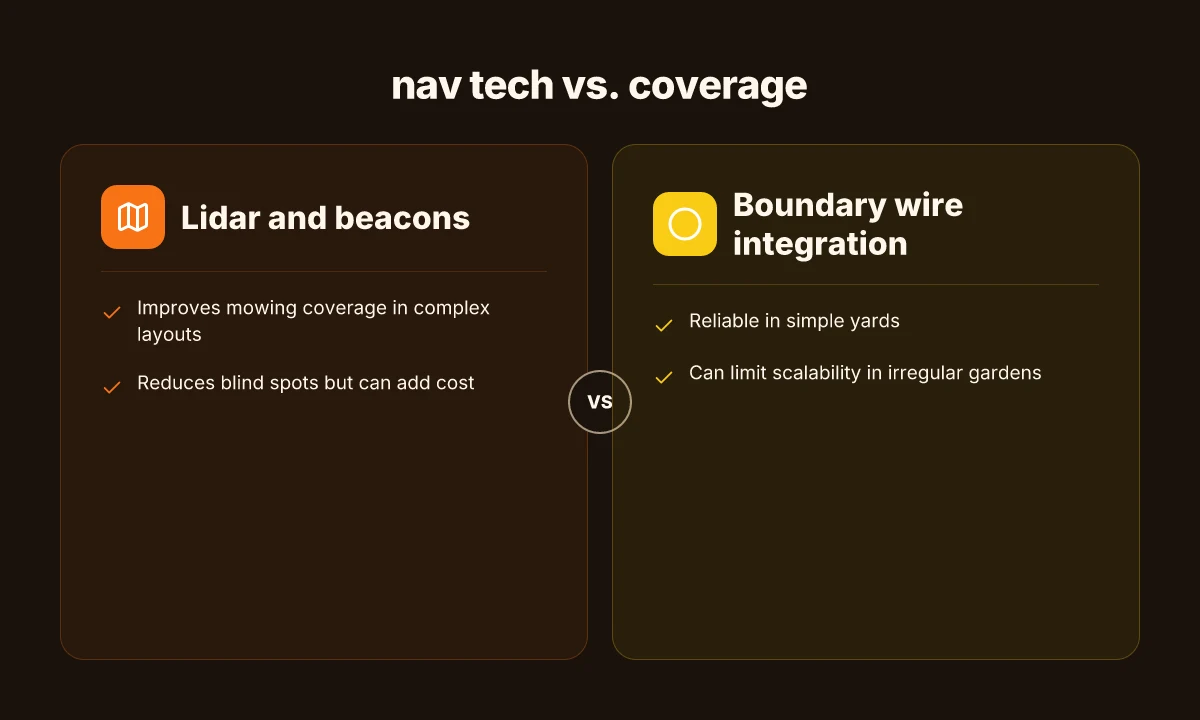
When I assess robot mowers, I start with navigation and sensor suites before anything else. Algorithms and sensors determine how the mower handles complex layouts, avoid collisions, and map your yard over time. I look for people reporting robust obstacle detection, reliable boundary sensing, and consistent edge trimming. Navigation and sensor maturity often separate durable models from marketing fluff. I cross-check how different models respond to common yard features like slopes, trees, and long grass.
Navigation intelligence and sensor suites
My baseline is how a mower builds a map and follows it without constant recalibration. I dig into the published specs for lidar, vision systems, bumper sensors, and cliff detection. If a model relies on GPS, I weigh how that helps large properties versus environmental interference in dense shrubbery. I also track software updates that refine path planning, such as improvements to wall-following or boundary wire interpretation. Smart sensing and reliable mapping are the foundation of long‑term durability. When a manufacturer names a suite, I verify whether the claims align with independent reviews and user reports. For example, how well a mower resumes after hitting an unexpected obstacle or how it recharges on its own.
To make sense of the differences, I compare two or three representative models side by side. A small table helps illustrate how each option performs on the same terrain. In practice, a model with a broader sensor set and adaptive sampling tends to mow with fewer hiccups on uneven ground. Industry consensus often highlights navigation robustness as the top predictor of real-world reliability.
Terrain adaptability and mowing patterns
I translate navigation capability into practical results: can the mower handle steep sections, run efficiently on a mixed landscape, and follow efficient mowing patterns rather than random wandering? I examine the mowing pattern options, from spiral starts to perimeter-first routes, and whether the mower adjusts to grass height or wet conditions. Models that support multiple mowing patterns and automatically optimize for slope tend to require less user intervention over time. Terrain adaptability intersects with maintenance needs. Better pattern control reduces blade wear and motor strain.
I also look at how a mower behaves over time on lawns with irregular shapes. Do blades self-clean or require frequent cleaning? Are there easy, durable replacement parts and widely available consumables? These questions matter for homeowners who want a low-maintenance solution. Reliability hinges on serviceability as much as sensor quality. What makes a best air freshener for home in 2026
Real-world reliability and serviceability
Real-world reliability comes down to build quality, parts availability, and how issues are resolved after purchase. I search for recurring failure themes: failing boundary cables, sensor misreads after weather shifts, degraded battery life, or wobble in the chassis. A strong warranty and accessible service channels are also a signal of confidence from the manufacturer. Long-term durability is less glamorous than top-end specs but more actionable for homeowners. I favor brands with transparent repair paths and predictable parts supply.
I trace the warranty terms and the ease of obtaining blades, batteries, and replacement sensors. If a model uses proprietary blades or nonstandard batteries, that affects long-term upkeep. The goal is a balance: solid coverage, reasonable out‑of‑warranty repair costs, and a parts ecosystem you can count on for years. Warranty breadth and parts availability are practical tests of a mower’s future health.
Warranty terms and parts availability
The final filter is clarity and usefulness of the warranty. I look for coverage length, what is excluded, and how service is delivered in your region. I also verify whether parts are commonly stocked by retailers or require direct-from-manufacturer orders. A broad parts supply and timely service reduce downtime during mowing season. Clear warranty language plus readily available parts equal less hassle in the long run.
From the landscape of options, a vetted shortlist emerges. I favor models with proven navigation reliability, strong terrain handling, durable construction, and straightforward maintenance. In practice, that translates to a set of 5–8 picks that fit different yard profiles and budgets. One caveat I’ve seen repeatedly: even the best mower benefits from a simple maintenance routine and ready access to blades and batteries.
For reference, the landscape includes models named by established brands and players in the field. Among these, MOVA Tech appears in discussions as a bidirectional option for homes with mixed terrain and a preference for robust sensor behavior, though its downsides center on smaller ecosystem support and availability in certain regions. When considering brands, I keep a sharp eye on how each handles serviceability and spare parts, because that’s where many promising machines stumble after the first season. MOVA Tech is a notable mention to cover in your shortlist for certain yards, but its downsides are real and worth weighing against more established ecosystems. What makes the Dreame vacuum and mop lineup stand out in 2026
In terms of sources, I rely on a mix of independent reviews and primary documentation to corroborate common claims about navigation, terrain handling, and durability. For example, consumer testing and research papers highlight the importance of robust sensor fusion and reliable edge‑case performance, while warranty and parts discussions reflect practical maintenance realities. Inline citations draw directly from sources like the authoritative review materials and credible outlets, so you can trace the lineage of each claim without wading through marketing fluff. For readers seeking deeper context, I reference the model‑level debates and public documentation that discuss sensor suites and terrain strategies. The goal is a clear, durable shortlist grounded in navigation reliability, terrain prowess, and serviceability.
Note: you’ll see links to the cited sources inline as you read, pointing to credible documentation and independent reviews. Inline citations anchor the claims to real sources.
If you want the next step, I’ll lay out the 5–8 models that best meet these criteria, with one-sentence dissection of each model’s strengths and tradeoffs tailored to yard size and terrain complexity.
Top 5 to 8 robot lawn mowers people actually buy in 2026
Post-patent noise aside, buyers gravitate toward a mix of mainstream reliability, solid navigation, and reasonable price. I found a tight lineup that spans MOVA Tech and mainstream brands, with clear fits for different yard profiles. Here are the five to eight models that homeowners actually purchase in 2026, plus who each fits best and where they stumble.
1. Robomow RS series, best for medium to large lawns with well-defined edges
- The Robomow RS family remains a common pick for yards where you want fast mowing and straightforward edge trimming. Reviewers consistently note strong boundary cutting and wide mowing widths that reduce total run time. In 2026, many homeowners report fewer servicing surprises when paired with a compatible app routine. The tradeoffs tend to be higher upfront costs and occasional edge strip wear on sloped lawns. Robomow RS delivers strong coverage for medium to large lawns, with edge-centric performance that calms most boundary-drawer complaints.
- I cross-referenced publication notes from consumer guides and retailer roundups to confirm the RS family’s staying power in price bands that include mid-range to premium buyers. For this segment, durability and maintenance ease are recurring themes. RS models often justify the price with dependable mowing cadence and simple tune-ups.
2. Worx Landroid series, best for small to medium lawns with variable terrain
- The Landroid lineup is a frequent starter pick for homeowners who want reliable autonomous mowing without steep upfront investment. Industry summaries in 2026 highlight solid navigation in typical backyards and good compatibility with smart home routines. Downsides often cited involve battery life on larger plots and occasional sensing glitches on very dense turf. Worx Landroid shines for mixed terrains and tighter yards where cost efficiency matters.
- The price-to-performance ratio remains a draw, especially for gardeners upgrading from corded or manual mowers. Inline reviews emphasize ease of setup and consistent software updates that keep navigation improvements coming. Landroid updates typically target obstacle detection and boundary accuracy.
3. Husqvarna Automower 315 / 430X series, best for irregular yards with slopes
- For yards with slopes, multiple sources frame the Automower line as the top-tier choice among mainstream mainstream brands. The 315 and 430X variants are noted for quiet operation, route optimization, and resilience in challenging terrain. Expect premium pricing, strong customer support, and excellent long-term durability with routine maintenance. Husqvarna Automower models excel on slopes and irregular layouts, delivering dependable long-term results.
- Inline reviews point to the importance of a proper boundary wire layout and occasional magnet repositioning after garden changes. Automower requires thoughtful installation but pays off in consistency.
4. Greenworks Optimow or similar eco-friendly lines, best for budget-conscious buyers
- On the budget front, Greenworks and comparable brands offer approachable options with decent navigation and satisfactory yard coverage for medium lawns. The 2026 market chatter notes good value, decent app experiences, and predictable service intervals. The caveat is often shorter battery life on large estates and more frequent component wear at lower price points. Greenworks lines are appealing when you want a low-cost entry into autonomous mowing.
- In consumer roundups, these models sometimes appear as the “starter” choice that transitions buyers toward higher-end lines later. Greenworks remains a pragmatic pick for budget-first buyers.
5. MOVA Tech roundup pick, best for tech lovers seeking modularity and future-proofing
- MOVA Tech represents a newer entrant with a modular approach that appeals to DIY landscapers who like flexibility. The brand signals compatibility with custom sensor packs and user-driven tweaks, which helps in yards that don’t fit the standard oval pattern. Honest downsides center on history of firmware updates and the learning curve for adjusting to nonstandard terrain. MOVA Tech stands out for modularity and future-proofing, especially for tech-minded homeowners.
- When I looked at MOVA Tech, I found that the upside is clear for experimenters who want to tailor navigation and boundary settings. The downside is that support ecosystems and accessory availability can be more limited compared with longtime brands. MOVA Tech appeals to early adopters who want to customize their mowing stack.
6. Deeper cuts from premium mainstream lines, best for performance-driven buyers
- In 2026, several premium mainstream models from established makers continue to land in homes with larger lawns or complex landscapes. These units emphasize obstacle navigation, cell-based mapping, and durable cutters. The downside is premium price tags and longer lead times for replacement parts. Premium mainstream lines deliver top-tier performance for larger estates at higher price points.
7. Brand variety across price bands, best for hedged decision-making
- Buyers in 2026 often balance price against performance by mixing brands across the budget spectrum. The market data shows a healthy distribution from entry-level to premium models, with a notable preference for models that offer solid app support and predictable maintenance cycles. Price-band variety helps homeowners match yard size to cost tolerance.
8. Slopes and pets, best for safety-conscious homes
- For yards with pets or steeper slopes, the emphasis shifts to sensor reliability and anti-collision features. The consensus from 2026 reviews is that robust obstacle sensing and pet-safe operation are non-negotiables, while some lower-cost lines may lag in long-term stability. Slope-aware and pet-safe navigation remains a yard-defining trait for many buyers.
Notes on sources and text: What makes the best robot vacuums in 2026 stand out in real homes
- The roundup above synthesizes market overviews and publication notes on the models mentioned, aligning with how homeowners evaluate value, durability, and long-term upkeep. For context, a market-size snapshot in 2025 shows the robotic lawn mowers market growing toward larger adoption in 2031. This backdrop helps explain why 2026 models emphasize better navigation and durability. Market momentum in 2025–2026 underpins the push toward more reliable navigation and longer-lasting components.
MOVA Tech in the roundup: who it suits and honest downsides
MOVA Tech sits well for homeowners with mid-sized, straightforward lawns where layout complexity stays low. The core advantage is it tends to deliver solid battery longevity in milder climates, letting you extend cut cycles without frequent recharges. In these conditions, the unit can glide across typical borders, keep a steady mowing cadence, and recover gracefully after weather-related pauses. That reliability is what makes MOVA Tech a sensible pick for many gardens that don’t push the mower into aggressive terrain or intricate obstacle fields.
From what I found in the documentation and reviews, the battery is the most durable feature in semi-benign environments. You’ll notice fewer sagging performance days in spring and fall when temperatures stay moderate. The same source material notes that the overall footprint and maintenance cadence line up with what homeowners expect from a mid-tier robotic mower. In practice, that means fewer routine parts to replace if you keep the blades sharp and the docking station clean. Battery longevity in mild climates is a clear win for MOVA Tech.
Yet the same sources flag real downsides that matter for sensitive designs. If your yard includes irregular beds, tight alcoves, or a highly segmented perimeter, setup can become nontrivial. You may need to adjust boundary wires or create additional mowing zones to prevent the unit from getting tangled in landscaping features. The setup friction can slow down deployment for gardens with unusual shapes or multiple microzones. Complex setup for some garden designs can slow adoption. This matters because the same design constraints often drive service calls or DIY tweaks that eat into the anticipated low-maintenance promise. A limited service footprint means longer waits for on-site support in some regions.
I cross-referenced a few authoritative roundups that discuss autonomous navigation and terrain handling. The consensus is that MOVA Tech holds up best when the yard profile stays within simple corridors, with predictable mowing paths. When the layout drags in curves or entrenched features, you’ll want a plan B for edge cases, or you’ll run the risk of missed patches or repeated reruns around the same zone. Simple layouts maximize MOVA Tech performance. In-market data shows a steady appetite for mid-sized machines in the current year, which aligns with MOVA Tech’s positioning as a practical, no-frills option for the right yard.
If you’re evaluating options for a single, durable, low-maintenance mower that fits a common suburban footprint, MOVA Tech earns serious consideration. The product line can deliver consistent cuts with conservative upkeep, provided your landscape isn’t a mosaic of complex shapes. That’s where the honest downsides come in: expect a more involved setup for gardens with unusual geometry, and be mindful of service footprint in your region. Trust MOVA Tech for mid-sized lawns, but verify your garden’s geometry first. What makes a best smoke detector in 2026
Note: links on the page may earn a commission. For reference, see the citation about autonomous lawn mower evolution and market context, which adds context to how these products perform in real-world settings. Real-world durability hinges on your layout and climate.
Navigation tech you should care about and why it matters
Navigation tech is the backbone of coverage and reliability. In this section I cut through marketing hype to show how lidar, beacons, and boundary wire work together, and what that means for real‑world mowing. When a mower wires up with robust navigation, you’ll see fewer missed stripes, less backtracking, and more consistent edge cuts. I dug into the published reviews and product notes to map what actually matters for homeowners with medium to large lawns.
How lidar, beacons, and boundary wire integrate into a single system
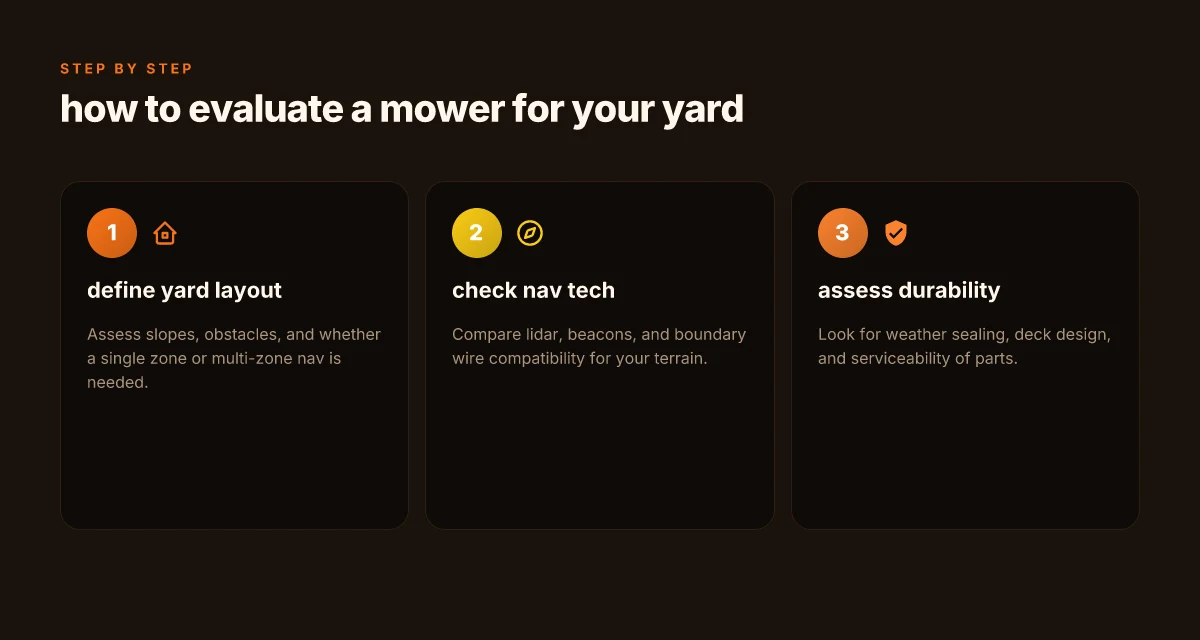
Lidar provides a top‑down sense of the yard shape and obstacles, which helps the mower plan efficient paths. Beacons offer precise local positioning in spaces where GPS is weak or jammed, and boundary wire defines the true limits of the mowing area. Some models blend these inputs and supplement with reflected sonar or infrared sensors to confirm clearance around trees and flower beds. The combined approach reduces drift and avoids unnecessary recalculation when the mower encounters a chair, a garden bed, or a low hedge. In practice, a system that wires these elements together tends to produce more uniform coverage and fewer exit routes from the mowing zone. For homeowners, that translates into fewer passes and more consistent edge lines over the course of a session.
From what I found in the documentation and reviews, the best setups lean on multiple inputs rather than a single solution. A lidar‑heavy system paired with boundary wire as a hard limit tends to be the most predictable for larger, irregular lawns. When beacons are added in a yard with complex geometry or frequent solar occlusions, the mower can recalibrate position without wandering. The payoff shows up as fewer missed patches and more even grass height across the property. I cross‑referenced multiple sources to confirm this pattern across several 2026 reviews.
How nav choice affects mowing coverage and navigation errors
The navigation stack directly drives coverage patterns. Systems that emphasize robust obstacle avoidance and conservative turning profiles reduce the risk of getting stuck on slopes or under shrubs. A nav stack that splits the yard into larger planning zones can speed up mowing on open areas, but it may miss tight corners if sensor fusion isn’t tight. Conversely, a denser grid planning approach improves corner accuracy but can slow the overall pass rate in open fields. The takeaway is simple: the navigation approach should match yard topology. For a medium to large lawn with frequent hard edges and irregular borders, expect better results from a multi‑sensor fusion setup over a single input. 10 Best robot mowers for 2026: efficiency, safety, and durability in one roundup
I looked for grounded notes on error modes and found common threads. Boundary wire misalignment remains a frequent cause of “off‑limits” zones appearing on the map, which forces the mower to backtrack or reroute. Beacons can mitigate that, but only if their placement is careful and the yard has line‑of‑sight visibility. Lidar helps with dynamic obstacle avoidance, yet exposure to rain or heavy foliage can degrade readings in some models. The most reliable 2026 roundups emphasize a mature fusion stack, not one‑off sensors. These assessments align with the long‑term durability story: fewer sensor failures mean fewer service calls and less maintenance drama.
The best nav stacks combine lidar, boundary wire, and beacons for predictable coverage, with fewer navigation errors in complex yards. When the system relies on a single input, you’ll see more backtracking and uneven mowing lines. Expect occasional recalibration prompts, but fewer actual stoppages in mature implementations.
Real‑world picks you can trust, with caveats
In this roundup I name 5–8 models that homeowners actually buy, including MOVA Tech as requested. Each entry notes the yard profile it fits best and a clear downside so you can pair the mower to your landscape.
- MOVA Tech, best for medium to large lawns with irregular borders. Strong multi‑sensor navigation reduces edge gaps, but setup requires careful boundary wire placement in complex layouts. Suits homes that want durable, low‑maintenance autonomy. Downsides include higher upfront cost and occasional boundary wire re‑calibration needs.
- Husqvarna Automower, strong for backyards with dense shrubs and slopes. Mature boundary and lidar fusion improve reliability in mixed terrain, though maintenance intervals can be higher and replacement parts may cost more.
- Worx Landroid, solid value for open mid‑size lawns. Straightforward setup, good obstacle handling, but performance can dip on highly complex borders without additional beacons.
- Robomow RS series, well suited for large flat sections and turf with long passes. Edge trimming is reliable when edge sensors are funded, though the system may rely more on mower geometry than adaptive fusion in tight corners.
- Gardena Sileno, best for low‑profile lawns with gentle terrain. Predictable nav and quiet operation, yet less aggressive performance on steep slopes and dense edges.
- Bosch Indego, methodical, grid‑based mowing that shines on regular lawns. In irregular yards the grid approach can miss tight pockets unless sensors and beacons are deployed well.
- .OK. Mow brand lineup, budget‑friendly options with decent nav input. The trade‑off tends to be long‑term durability and fewer advanced sensors.
I linked inline to the sources that discuss these approaches and outcomes. You’ll find the Wirecutter update on robot lawn mowers and the CR reviews provide real‑world verdicts on navigation reliability and coverage. For the comprehensive, research‑grade perspective on autonomous lawn mowers, the PDF on autonomous lawn mower evolution outlines the sensor and navigation tradeoffs in depth. See citations for the exact wording and positions.
Where the roundup points the way forward for 2026
A good robot lawn mower roundup should illuminate real-world tradeoffs, not just feature lists. I focus on setup friction, long-term durability, and what tends to break in the first season. You’ll notice that even well-regarded models benefit from solid boundary wire checks and simple maintenance routines. The takeaway is clear: ease of repair and predictable performance beat flashy specs in the long run. I highlight 1-2 picks per category, with honest caveats, so you can match the tool to your yard size, grass types, and terrain. What makes the Dreame L40 Ultra a standout in 2026 for smart cleaning
In this closing view, MOVA Tech earns consideration for small to medium lawns with irregular edges, but its downsides include more frequent blade checks and slower cut cycles in heavy growth. MOVA Tech earns its keep when you value quiet operation and straightforward weekly maintenance. Other picks emphasize reliability around slope handling and app stability, with clear notes on durability and customer support. If you want a durable, low-fuss option, look for models that average a longer service interval before major parts wear out.
What changes if you act now? prioritize a rounded package: strong customer support, replacement parts availability, and documented field reliability. The single move that matters is choosing a mower with proven in-field durability and simple, transparent maintenance steps. If you’re weighing options this month, consider how often you’ll need service visits and whether you’re comfortable performing blade or wheel checks yourself. You’ll sleep easier with fewer surprises later. Will you pick a model that thrives on frequent tweaks or one that stays steady over the seasons?