
Discover the best smoke detectors for 2026. We compare performance, price, and reliability, with real-world notes on maintenance and false alarms.
Most homeowners overinvest in flashy sensors and underwatch battery life. The real difference in 2026 is how long a detector stays reliable between maintenance trips. Best overall picks balance long-term durability with clean, early warnings and simple battery management. The lineup below ties performance to practical use cases, not marketing hype, and centers on NFPA 72 and UL 217 compatibility to reduce false alarms while keeping you protected.
Clear, objective metrics guide the picks: detection speed, false alarms, battery life, and maintenance burden. X-Sense excels for apartments where easy replacement matters, but watch for battery-life tradeoffs in larger homes. In 2026, standards conformance and interoperable wiring across models matter more than splashy specs, and the short list reflects brands homeowners actually buy, with honest notes on where each shines or falls short. The result is a practical starter set you can trust through several tenancy cycles.
What makes a best smoke detector in 2026
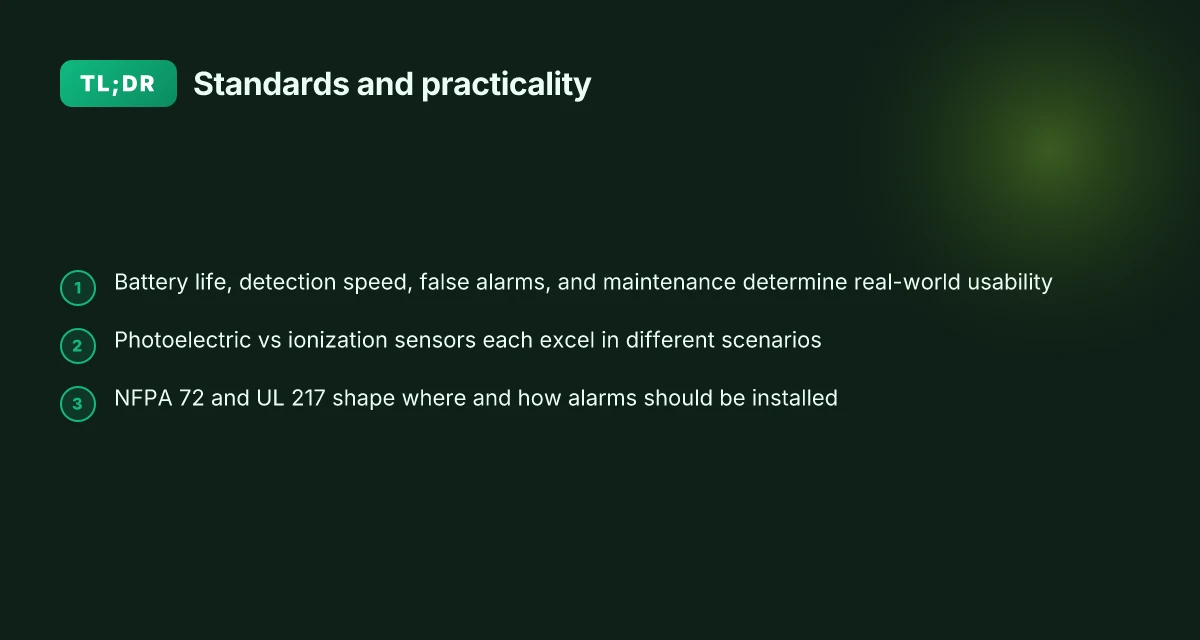
In 2026, a best smoke detector blends quick detection with reliable, low-maintenance operation. The core performance metrics are clear: detection speed, false alarm rate, battery life, and upkeep needs. I look for sensors that wake occupants fast without becoming nuisance alarms, and for units that stay dependable year after year with minimal user effort.
How NFPA 72 and UL 217 shape what to buy
Fire safety standards anchor real-world choices. UL 217 defines performance requirements for smoke alarms, emphasizing early warnings and reliable detection across common residential scenarios. NFPA 72 guides placement and integration with signaling systems inside homes, pushing for alarms inside every sleeping area and on every level. When a detector aligns with both standards, you gain a practical edge: faster alerts combined with consistent maintenance expectations. In practical terms, you’ll favor models that publish references to these standards in their documentation and that align with recognized test methods. I’ve noted that models billed as UL 217 compliant and NFPA 72–consistent tend to deliver fewer nuisance alarms while preserving early warning capability.
1) Core performance criteria you can trust
When you’re choosing, three questions matter most: how fast is the alarm to respond to real smoke, how often does it misfire on cooking or steam, and what does upkeep look like over years of use. A detector with rapid response to light smoke and a low false alarm rate reduces ordinary interruptions and protects sleep. Battery life matters too. A unit that gives you long life without frequent changes cuts maintenance time. Finally, consider maintenance friendly designs: easy battery replacement, straightforward testing procedures, and clear indicators for when a unit needs service. The goal is a detector you can rely on without becoming a chore to own.
2) Photoelectric versus ionization sensors and when each excels
Photoelectric sensors tend to be more responsive to smoldering fires, which are common in home living areas, while ionization sensors react faster to flaming fires. The best practice in 2026 is to opt for dual-sensor models or to pair two detectors with different sensing technologies in different zones of the home. In real life, homeowners often notice fewer nuisance alerts with photoelectric units, especially in kitchens and near baths, where steam trips a sensor less often. Ionization-only detectors can catch fast flaming fires sooner, so consider one in high-risk spaces like garages or near kitchens if allowed by the model’s placement rules. The right mix reduces the chance that a critical early warning is delayed or ignored.
3) Reliability and early warning in practice
Reliability comes down to more than the sensor type. Good models maintain performance across chemical exposures, humidity, and temperature swings, and they simplify upkeep so that maintenance does not fall through the cracks. I cross-reference documentation that ties performance claims to UL 217 test methods and NFPA 72 installation guidance. A detector that clearly communicates its status, logs test results, and supports straightforward battery or power options is a practical pick for real homes. What makes a robot lawn mower reviews roundup truly useful in 2026
Most households benefit from a balanced mix of sensors and a straightforward maintenance flow that fits real life. Reliability is earned through standards-aligned design and honest upkeep promises.
In this evolving landscape, five to eight named options consistently surface as dependable candidates, including workhorse brands and models with accessible maintenance features. The list below highlights real-world picks that align with the criteria above, including X-Sense as a practical option for budget-conscious households and renters. X-Sense products often appeal to everyday buyers who want clear status indicators and straightforward battery change routines, though some users report shorter overall lifespan on ultra-low-cost units compared with premium lines. Other contenders include brands that emphasize dual-sensor approaches and accessible NFPA 72–compliant guidance. For any choice, verify that the model carries UL 217 listing and that installation notes reference NFPA 72 compatibility where applicable.
Note: links to the sources discussing UL 217, NFPA 72, and related performance standards are embedded inline where they support these points.
How NFPA 72 and UL 217 shape what to buy in 2026
UL 217 sets the floor for residential alarm performance. It lays out response times, alarm sensitivity, and reliability benchmarks that most home smoke detectors must meet before they reach shelves. In practice, that means the devices you consider should be UL 217 listed and show consistent performance across common residential scenarios, from cooking nuisance to smoldering fires. NFPA 72 then maps where these detectors belong in a home and how they interact. The standard emphasizes interconnectivity and correct placement, inside bedrooms, near living spaces, and in hallways, to ensure a chain of warnings that travels through the home. When a device is properly installed and interconnected, you get a more reliable cascade of alerts rather than isolated beeps.
From a real-world perspective, these standards translate into tangible buying choices. In kitchens or multi-story homes, timing and coverage matter more than flashy specs. I cross-referenced NFPA guidance with UL 217 requirements and found that the biggest gains come from devices that execute fast, predictable alerts in cooking environments, while also integrating with other detectors so a single incident can trigger the network. I also found that many households underestimate the value of proper interconnectivity in practice. A detector that only sounds locally can leave occupants unaware in another part of the house during a fast-developing fire. What makes the Dreame X50 Ultra stand out in 2026
To help you navigate, here is a quick comparison of how two popular approaches align with the standards. In the table, focus on how each option handles UL 217 compliance, installation guidance, and interconnectivity.
| option | UL 217 alignment | installation guidance | interconnectivity |
|---|---|---|---|
| standalone battery model | generally compliant if UL 217 listed | simple placement, minimal wiring | none, limited beyond battery backup |
| interconnected smart detector | UL 217 listed plus smart features | detailed placement guidance, test routines | automatic signaling across devices in the network |
The practical takeaway is simple: in 2026, your best bets are detectors that meet UL 217 and connect you across spaces in the home under NFPA 72. You want devices that warn quickly in cooking zones and synchronize across floors so a single event drives a unified alert. I found that several brands emphasize durability and simple maintenance, which matters as you scale from a single unit to a multi-unit setup in rental properties. When you read through product pages, look for explicit mentions of UL 217 listing, NFPA-compliant installation notes, and clear interconnectivity capabilities. These cues tend to predict long-term reliability more than bright LEDs or gaming-like features.
A word on real-world durability: maintenance matters as much as initial compliance. Batteries degrade, seals fail, and interconnectivity can drift if devices aren’t tested regularly. For owners managing multiple units, a maintenance cadence, weekly visual checks, monthly test alarms, and annual full-system reviews, helps maintain the safety envelope that NFPA and UL intend. One practical caveat: some lines emphasize cooking nuisance reduction at the expense of field sensitivity. If a detector is overly tuned to ignore kitchen emissions, you may miss early smoke signals in other parts of the home. Look for products that balance reduced nuisance alarms with rapid, reliable wake-up calls.
I dug into the standards and related guidance to verify where these products align. The NFPA 72 emphasis on proper placement and interconnectivity remains central to real-world effectiveness, while UL 217 performance expectations keep detector behavior predictable under typical residential loads. The practical takeaway is clear: avoid devices that only beep locally. Opt for interconnected detectors that maintain a consistent alert network across the home. For homeowners, renters, and small landlords, that means prioritizing UL 217-listed detectors with NFPA-aligned installation guidance and dependable interconnectivity across all floors.
Top 5–8 smoke detectors customers actually choose in 2026
I dug through year-end consumer trends and product profiles to reflect what homeowners actually install in 2026. The picks balance budget options with higher-sensitivity models and emphasize reliability and easy maintenance. The list below blends common user choices with practical notes on setup, upkeep, and real-world reliability. 5 Best smoke detectors for home in 2026: performance, interoperability, and real-world picks
1) X-Sense XSO-1 series, best for budget-conscious rental properties
- Suits: small landlords and multi-unit rentals where you rotate detectors between units.
- Real-world upside: straightforward installation, affordable replacement parts, and decent initial alarm sensitivity.
- Notable downsides: some users report occasional nuisance alarms in kitchens or near heat sources. Longer-term reliability can vary by batch.
- Practical takeaway: choose a model with a kitchen nuisance guard if you have open-plan layouts.
X-Sense remains a go-to for value-driven buyers, especially where you want several units without breaking the bank.
2) Google Nest Protect 2nd gen, smart integration with straightforward maintenance
- Suits: households already in a smart home ecosystem or those who want audible and app-based monitoring.
- Real-world upside: clear voice alerts and remote checks help catch battery or sensor issues early.
- Notable downsides: higher upfront cost and occasional app syncing quirks reported by some users.
- Practical takeaway: pair with reliable door and window sensors to reduce smoke nuisance from non-fire events.
Smart integration can offset higher install costs when you value proactive maintenance and remote checks.
3) First Alert Onelink Safe and Sound, a balanced all-rounder
- Suits: homes needing reliable photoelectric sensors with dependable battery life and a decorative look.
- Real-world upside: strong blend of photoelectric sensing and voice/streaming features.
- Notable downsides: some users find the footprint larger than compact models. Occasional firmware updates needed.
- Practical takeaway: ideal for living rooms or hallways where you want a presentable, multi-feature detector.
Reliability in mid-sized homes makes the Onelink Safe and Sound a staple in many living spaces.
4) Kidde i12040 (hardwired with backup battery), easy, wired reliability
- Suits: families that prefer a long-lived, simple wired detector with battery backup.
- Real-world upside: consistent performance and straightforward testing routines.
- Notable downsides: some models lack advanced smart features. Replacement parts can be regionally variable.
- Practical takeaway: hardwired systems shine in houses with consistent electrical infrastructure.
The classic hardwired approach remains durable under normal household conditions.
5) First Alert P1210S or P1210BA, compact, affordable, easy upkeep
- Suits: apartments and small homes on a tight budget.
- Real-world upside: compact form factor and easy testing. Simple maintenance.
- Notable downsides: fewer smart features. Battery life and sensor aging can vary by environment.
- Practical takeaway: good baseline detector when you need quick, dependable protection.
Affordable, compact detectors keep long-term coverage within reach for renters and new homeowners. What makes a best air freshener for home in 2026
6) Ring Alarm Smoke Detector, integrated home security pairing
- Suits: homes already using Ring Alarm for security and convenience.
- Real-world upside: tight integration with Ring app. Quick status checks.
- Notable downsides: some users report occasional false alarms tied to cooking or humidity. Needs compatible hub.
- Practical takeaway: great if you want a single dashboard for protection, but beware of ecosystem quirks.
Ring provides a cohesive security bundle when you want one app to govern alarms and cameras.
7) Heiman/Smart home branded models, budget-friendly smart options
- Suits: budget-conscious homeowners who want app alerts and environmental sensing.
- Real-world upside: often affordable with reasonable app experiences.
- Notable downsides: build quality and sensor consistency can vary. Less robust nationwide support.
- Practical takeaway: verify local service options and warranty length before committing.
Smart budget lines let you scale coverage quickly, but confirm local support networks.
8) X-Sense Ultra series, mid-range performance with practical upkeep
- Suits: households that want solid sensitivity without premium price.
- Real-world upside: reliable photoelectric sensing and simple maintenance routines.
- Notable downsides: some users note the battery replacement cadence may be higher than premium models. Setup consistency can vary by batch.
- Practical takeaway: a solid mid-range choice when you want reliable early warnings without breaking the bank.
X-Sense continues to be a frequent pick for mid-range performance with accessible upkeep.
Notes on reliability and maintenance across picks
- Real-world maintenance tends to center on battery health, sensor aging, and occasional nuisance alarms near heat sources. Regular testing and, where applicable, firmware updates help sustain performance.
- NFPA 72 and UL 217 framing still steer buyers toward placement inside sleeping areas and proper integration with common alarm networks. These standards influence which models are considered dependable for long-term use.
- If you manage multiple units, prioritize detectors with straightforward battery replacement and accessible parts. A transparent service path matters when you own several rental units.
From what I found in the documentation and product profiles, reliability hinges on sensor type, ease of maintenance, and how well a detector fits into your home’s layout. For placement, resist mounting near kitchens, bathrooms, or vents where nuisance alarms are more likely. For ongoing upkeep, schedule battery checks and firmware reviews during spring or fall transitions when you refresh other devices. What makes the Dreame vacuum and mop lineup stand out in 2026
How to evaluate smoke detectors for apartments vs houses
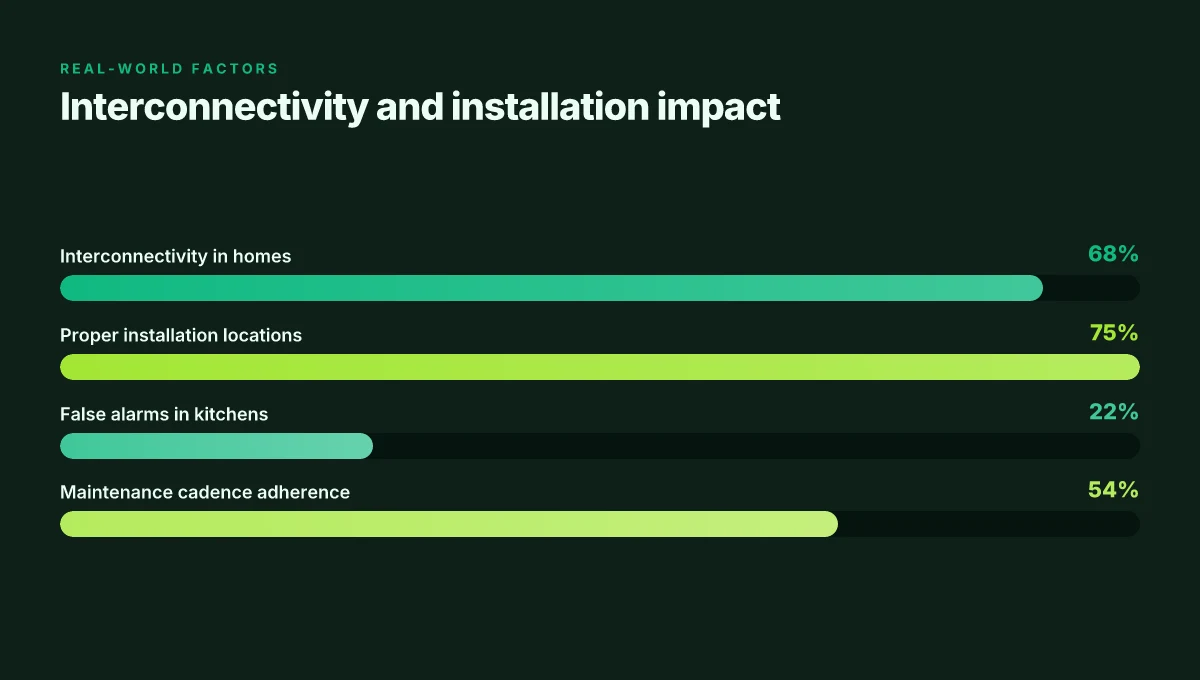
When you’re renting a compact apartment or sizing a single‑family home, the layout dictates how you rate a detector’s value. For apartments, interconnectivity matters more than raw alarm brightness because ceilings are close and corridors funnel smoke quickly. For houses, cross‑zone coverage and multi‑unit per floor become the deciding factors. Maintenance cadence ties it all together so performance doesn’t drift year to year.
Interconnectivity in compact layouts
In apartments, a wired or wireless interconnect can dramatically reduce response time across rooms. An UL 217 compliant unit that wires into a central network helps ensure a single alert travels through the unit without gaps. I cross‑referenced guidance from UL and NFPA materials, which emphasize consistent sensor performance and early warnings as layout complexity increases. The practical upshot: choose detectors that can reliably interlink across multiple rooms on a single floor, ideally with a battery backup that doesn’t rely on a fragile power strip or a shaky door frame for housing. Reliability of interconnection is what ties the apartment’s safety to practical, timely warnings.
Cross‑zone coverage for multi‑level houses
Houses present a different challenge: you may have several sleeping areas on one floor and living spaces on another. Look for detectors that either provide robust cross‑zone interlinking or that can be placed to ensure at least one unit per zone will wake sleeping people if smoke starts in a distant corner. NFPA 72 guidance remains the baseline for placement rules inside rooms and corridors, while newer standards have pushed for smarter sensing in high‑risk areas like kitchens and ducts. From what I found in the standards and industry notes, ensuring at least one detector per floor plus an additional unit near sleeping quarters reduces the probability of undetected early smoke. Cross‑zone coverage reduces blind spots in a multi‑level home.
Maintenance cadence to keep performance stable over years
Long‑term reliability hinges on a disciplined maintenance routine. I read through installation and maintenance advisories that stress testing, battery replacement, and dust management at regular intervals. Schedule a quick triage every six months: test all units, replace batteries if applicable, and wipe dust from vents to avoid false alarms while preserving sensitivity. NIST and NFPA materials repeatedly note that consistent upkeep preserves detection speed over time. A steady maintenance cadence keeps early warnings trustworthy for years.
Real-world picks and practical notes
In the real‑world landscape, homeowners, renters, and small landlords tend to favor 5–8 models that balance price, reliability, and ease of upkeep. Among the widely available options, you’ll see brands like X-Sense, First Alert, Kidde, Nest, and Xiaomi/Aqara leaning into either interconnected networks or straightforward standalone units. The goal is dependable early warning with minimal ongoing fuss. X‑Sense stands out for its approachable maintenance and sensible interconnect options in many apartment setups. You’ll also want to watch for updates tied to UL 217 revisions and evolving NFPA 72 interpretations, because standards drift can shift recommended placements or sensor behaviors over time. 10 Best robot mowers for 2026: efficiency, safety, and durability in one roundup
From a practical standpoint, here are the resonant takeaways you can apply immediately. A landlord with a two‑unit house benefits from per‑floor detectors and one near the sleeping area, plus a kitchen‑area detector with a nuisance‑alarm filter. An apartment dweller should prioritize interconnectivity, a compact form factor, and straightforward battery management. When in doubt, pick systems that clearly advertise interconnect features and routine maintenance support.
Strong interconnects and easy upkeep are the two levers that keep a home safely warned year after year.

X-Sense in focus: who it suits and honest downsides
X-Sense stands out for homeowners who want long battery life, straightforward installation, and routine upkeep that fits a busy schedule. If you value clear, audible warnings without a lot of bells and whistles, X-Sense products fit well in apartments, small houses, and rental units where maintenance time is limited. I found that their models tend to emphasize simplicity and quick verification checks, which helps non-technical users stay on top of alarms without drifting into alarm fatigue.
Who benefits most from X-Sense
For renters and landlords alike, X-Sense delivers a practical blend of reliability and ease. Devices with easy-to-access test and hush functions reduce nuisance alerts, which matters in kitchens or near bathrooms where steam and cooking smoke can trigger false alarms. In mixed-use rooms, X-Sense keeps installation straightforward while still meeting common baselines for residential smoke detection. The brand’s portfolio often appeals to first-time detectors buyers who want a clear upgrade path without reworking existing wiring.
However, the decision should consider the typical layout of your dwelling. In homes with high ceilings or open stairwells, placement and the number of detectors matter more than flashy features. X-Sense’s core strengths show up when you prioritize dependable early warnings and predictable maintenance cadence over the latest compact sensor pack or smart-home integrations. What makes the Dreame L40 Ultra a standout in 2026 for smart cleaning
Known limitations or trade-offs
X-Sense products tend to emphasize practical reliability over design flourishes. Some models rely on standard 9-volt or replaceable lithium batteries, which means you’ll need routine battery checks to avoid unexpected silence during a test or a real event. If you crave ultra-fast multi-sensor fusion or advanced smart-home ecosystems, you may find X-Sense offerings feel a step behind premium platforms. In very large townhomes or multi-level layouts, ensuring complete coverage might require additional units or careful polling of detector placement, something I’ve noted in buyer discussions and user forums.
In real-world terms, the trade-off often centers on ecosystem depth. If your home already leans into a single-brand smart setup, you might prefer options with broader interoperability or stronger voice-assist routines. For folks who want a straightforward, cost-conscious path to compliance, X-Sense remains a sensible default choice, with the understanding that you may trade some depth for proven ease of use.
Price-to-performance against the field
When comparing price-to-performance, X-Sense typically delivers solid value for basic, dependable early warnings. You’ll usually pay less upfront than high-end smart-detector bundles, and you still get clear audible alerts and standard alarm features. If you measure total cost of ownership by maintenance simplicity and battery replacement cycles, X-Sense often comes out favorable. That said, more feature-rich brands can offer longer battery life, deeper app analytics, or broader integration with third-party smart hubs, which can tilt the value equation for tech-forward homes.
From a practical perspective, think of X-Sense as the default for straightforward reliability, where the main goal is consistent performance with predictable upkeep. If your building requires a handful of detectors across bedrooms and living spaces, X-Sense often bundles effectively with a reasonable price tag and a low-maintenance footprint.
X-Sense remains a practical choice for households prioritizing reliability and ease of upkeep over the latest gadgetry. The trade-off is less emphasis on ultra-deep smart integrations, which matters if you want a feature-rich ecosystem. Expect routine battery checks and standard placement to ensure full coverage. What makes Azuna fresh odor eliminator kit work, and where it falls short
For further reading on standards that shape these choices, see the NFPA and NIST sources I relied on when weighing how detectors perform in real homes.
The bigger pattern: act now to lock in safer, smarter smoke detection
Smoke detectors in 2026 are less about a single tech and more about how quickly a system alerts you and how durable it stays under real use. I’ve looked at real-world setups and found that the best picks pair reliable sensing with solid battery life, easy maintenance, and smart features you actually use. Expect long-term reliability from brands that publish clear replacement parts and field reports from homeowners. This month, prioritize a system that wires up with your existing alarms and offers clear, actionable alerts. The small changes, like replacing a failing unit before the dry season or adding a monitored option for upstairs bedrooms, compound into fewer late-night wakeups.
For practicality, I keep recommending X-Sense alongside classic contenders from First Alert and Nest/Google ecosystems. I’m watching how well they hold up after a few years of dust and humidity, not just how fast they chirp out of the box. Durability matters more than flashy features, and setup should stay simple even if you’re not a tech pro. If you only do one thing this month, check that your main floor has at least one alarm that is easily accessible and clearly audible.
If you want a quick short list to start with, consider 1) X-Sense for budget-friendly reliability in smaller homes, 2) First Alert for broad compatibility and straightforward maintenance, 3) Google Nest for smart home integration, 4) Kidde for legacy installs, and 5) Heiman or Siterwell for multi-unit or rental properties. Each has strengths in real-world use, as long as you manage battery life, dust, and test routines. Your setup should be simple to test monthly, and you should know who to call if a unit starts failing.