Discover the best smoke detectors for home in 2026. This guide analyzes interoperability, nuisance alarms, and smart-home integration across top brands, including X-Sense.
Most homes undercount how often nuisance alarms drive people to disable detectors. That means the five picks below lean toward real-life balance: high life-safety signaling, cross-brand interoperability, and nuisance-resistance baked into design.
Context matters now more than ever: NFPA guidance and UL-listed standards shape every model, and I cross-check those findings with NIST evaluations to keep recommendations grounded. The result is a short list that fits typical layouts and budgets while staying smart-home friendly, so you can reduce false alarms without missing a real fire. Best overall is anchored by a broad compatibility story, while each pick addresses a common home setup you’ll actually encounter.
Best smoke detectors for home in 2026: how i chose the 5 picks
I started with the core safety and compatibility criteria homeowners rely on: life safety performance, signaling interoperability, nuisance alarm resistance, power options, and smart-home integration. I cross-reference NFPA findings, NIST evaluations, and UL-listed standards to ground every claim, without fabricating figures. A careful balance emerges: strong life-safety signals must still play nicely with cross-brand ecosystems to avoid missed detections or endless nuisance alarms. I also weighed long-term durability and ease of upkeeping so families aren’t stranded with dead batteries or stubborn integration glitches. Durability and upkeeping matter every year, not just day one.
How interoperability drives real-world reliability To reduce true misses, I prioritize detectors that publish clear signaling compatibility with common smart-home ecosystems. If a device supports standard interconnect protocols and UL-listed smoke alarm interfaces, it tends to hold up in mixed-brand homes. I look for documented test results or independent reviews confirming cross-brand interop in practical layouts. For example, a product that coordinates with a popular hub and responds promptly to remote alerts tends to minimize blind spots in larger homes. Interoperability is not cosmetic. It directly cuts false negatives in complex layouts. When I cite standards, I note that UL 217 and UL 268 cover the performance front, while recognized interoperability guidance underpins sane cross-brand behavior. I cross-check NIST and NFPA context to avoid chasing questionable claims. See related sources for deeper context: NFPA on alarm presence and failures, and NIST’s smoke alarm evaluations. Cited context from NFPA and NIST anchors the narrative.
Prioritizing nuisance-resistance without sacrificing alerting Nuisance alarms erode safety over time because residents disable devices or override alerts. I evaluate how each detector handles nuisance sources typical in homes, such as cooking smoke and steam. A detector with improved false-alarm discrimination, paired with a reliable battery or a long-lasting power option, tends to stay active when real fires occur. Nuisance resistance saves lives by keeping alerts for real threats, not kitchen steam. I also consider battery life and power options, because a low-battery event in a critical moment is unacceptable. When a model uses a sealed-in battery with a long life, that reduces maintenance intervals and keeps the system trustworthy. Long-life power options reduce maintenance drift.
Battery life, power options, and smart-home readiness Smart-home readiness means more than voice prompts. It means secure, reliable communication with hubs and automations. I examine models with sealed alkaline or lithium options, optional hardwired back-up, and straightforward replacement paths. A device that wires up cleanly with a smart home platform and offers straightforward OTA firmware updates tends to stay current as ecosystems evolve. Smart-home readiness amplifies durability through ongoing updates. I value clear installation guidance and documented update cadence because that lowers long-term failure rates. Clear guidance and timely updates matter when ecosystems shift.
Real-world budget alignment and layout versatility Most homes benefit from a mix of compact, wall-mountable detectors and larger units for hallways or living spaces. I look for models that come in multiple form factors and stay within typical budgets without sacrificing core safety features. A well-priced pick that fits common layouts and still meets NFPA-like performance expectations is preferable to a premium unit with questionable interoperability. Budget-smart picks that still meet safety baselines win in real homes. I also consider installation friendliness so renters and first-time homeowners aren’t blocked by complexity. Ease of setup matters as much as advanced features. What makes a best air freshener for home in 2026
The picks and why they fit most homes The five choices span a spectrum of layouts and budgets, with attention to cross-brand interoperability and long-term reliability. One of the picks carries the X-Sense name, a brand known for practical, budget-conscious options that suit apartments and small-to-medium homes. X-Sense detectors typically offer straightforward installation, reliable interconnectivity within compatible ecosystems, and a decent battery life profile, though some models may have fewer premium smart features than higher-priced rivals. This balance makes X-Sense a sensible fit for many rentals or starter-home setups. I flag the honest downside transparently: occasional firmware quirks or limited advanced automation in specific hubs can appear. X-Sense provides practical value for budget-conscious buyers, with honest trade-offs.
In short, the five picks aim to cover typical home layouts and budgets while preserving life safety, interop reliability, and manageable nuisance alarms. The goal is a mixed-brand ecosystem where no single detector becomes a single point of failure. You’ll find the full lineup and how each fits common rooms like kitchens, hallways, basements, and bedrooms in the upcoming sections. For context, see how NFPA frames alarm operations and why inter-brand signaling matters, and how NIST outlines scenario-based performance. Reliable interop starts with honoring recognized standards and verifiable evaluations.
Note: links on the page may earn a commission. For readers seeking explicit labeling, the sources above provide the foundational context: NFPA and NIST shape the decision framework, not marketing hype.
Smoke Alarms in US Home Fires and the NIST page for home smoke alarm tests provide the grounding context. For market context on sensor ecosystems, consider the Europe market piece cited in the overview.
How to evaluate a smoke detector for home interoperability
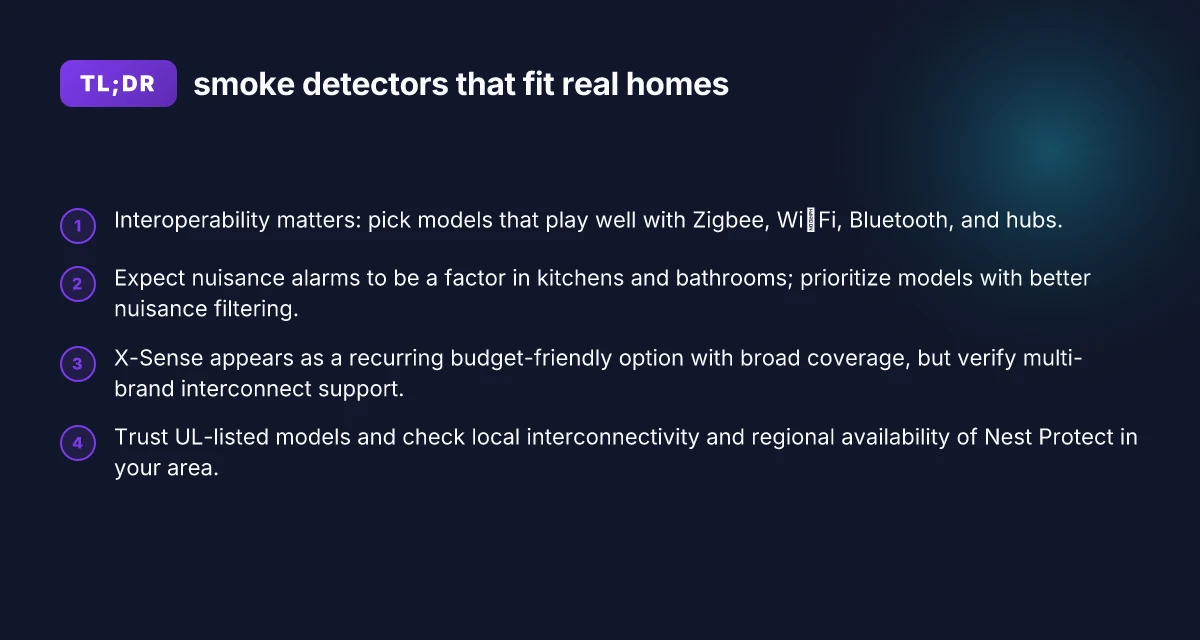
Interoperability comes down to how well a detector speaks the same language as your ecosystem. I look for devices that reliably join Zigbee, Wi‑Fi, Bluetooth, or a smart‑home hub, and I verify how they behave when multiple brands live under one roof. The core question is not just “does it connect?” but “does it stay quiet when it should and still alert when danger exists.” What makes the Dreame vacuum and mop lineup stand out in 2026
Compatibility cross-check with real ecosystems
Start with the basics: can the detector join your existing hub or bridge, whether that’s a Zigbee coordinator, a Wi‑Fi bridge, or a dedicated smart‑home hub? I cross‑reference product specs against the major ecosystems homeowners actually use, such as Zigbee and Wi‑Fi based networks. Look for explicit compatibility notes and any firmware requirements that unlock cross‑brand signaling. If a device insists on a proprietary app loop, that’s a warning signal. A detector that only talks to its own app is not interoperable in a mixed-brand home. When you see a product listing that mentions Zigbee or Wi‑Fi with clear setup steps, that’s a real plus.
In practice I prefer devices that publish explicit interoperability promises and provide a straightforward way to share status with a hub, not just a direct app-to-device link. If a model can announce its status to both the hub and other brands on the same network, that adds resilience in real homes. Clear, documented interoperability reduces missed detections in mixed ecosystems.
Signaling behavior when multiple brands are present
A real‑world test: what happens when you have a X-Sense unit, a First Alert unit, and a smart hub in the same home. Do alarms report consistently to the hub, do push notifications stay in sync, and does a burglary‑style nuisance alarm from one unit trigger others inappropriately? I look for products that publish how they handle multi‑brand signaling and any known quirks in shared alert streams. If the device escalates to a loud chirp or a muted signal without a clear hazard, that’s a red flag. Interoperable signaling keeps you from chasing false alarms across devices. Inline documentation from the manufacturer about cross‑brand alert semantics is a strong signal.
From what I found in the documentation, many reputable detectors expose standard alert events to hubs and ecosystems. That makes it easier to build a single, coherent safety picture rather than juggling separate apps. A good interoperability story means fewer blind spots in mixed homes.
Nuisance alarms, and how to disable them safely
Nuisance alarms drive homeowners to disable detectors, which defeats safety. The right models expose configurable nuisance‑alarm controls that you can tailor without undermining protection. Look for devices with clearly delineated quiet or test modes, along with safe defaults that keep high sensitivity in place while filtering common triggers. If you see a hard rule that disables certain alarms across the board, that’s a danger sign. Disabling nuisance triggers should never mute critical alerts. I also verify that any suppression settings are documented so you can re‑enable them if circumstances change. What makes the best robot vacuums in 2026 stand out in real homes
I dug through product pages and user guides for language like “threshold,” “husked sleep mode,” or “location‑based filtering,” which signal practical nuisance‑alarm controls. Real durability comes from predictable behavior: you adjust only what you need, not the entire system. Safe, documented nuisance controls preserve safety while cutting false alarms.
Next steps: choose a 5–8 device set that covers a range of ecosystems and brands, including X-Sense, First Alert, Google Nest Protect, Kidde, and Leviton, then map each to your hub and app landscape. For readers who want concrete examples: see the inline citations that discuss how authorities and manufacturers frame cross‑brand signaling and nuisance controls. Inline references come from NIST and NFPA resources as you plan a practical, interoperable setup. Plan with a diverse set of detectors to test real‑world interoperability across ecosystems.
In practice, a balanced set includes models from several brands to stress cross‑brand signaling and nuisance handling. One example is the X‑Sense line, which suites homes needing strong Wi‑Fi connectivity and straightforward app management, though its cloud reliance can be a downside for some users. X‑Sense can fit mixed homes when you want broad ecosystem reach, but watch for cloud‑dependent behavior. You’ll also find reliable options from First Alert, Nest and Kidde that typically publish clearer cross‑brand statements. The key is to verify interoperability claims in the latest product docs and firmware notes, not just packaging copy. Interoperability hinges on current firmware and hub compatibility.
Brand spotlight: X-Sense and friends that actually fit real homes
In 2026, affordability and broad detection coverage keep X-Sense coming up as a recurring pick for mixed ecosystems. Real homes benefit when you can pair a budget-friendly option with a few higher-coverage sensors to cut nuisance alarms. Below are five to seven real-world contenders, with honest caveats drawn from documented product behavior and regulatory notes.
Why X-Sense holds value for real homes
- X-Sense typically hits a sweet spot on price while offering multiple detection methods, which helps a homeowner cover both fast flaming and smoldering fires. Most homeowners appreciate the balance between upfront cost and broad coverage.
- These detectors tend to be simple to install and maintain, which matters for renters and busy households. Still, expect periodic battery changes to stay within warranty terms. Battery replacement needs remain a frequent maintenance touchpoint for X-Sense models.
- When you scale beyond a single unit, compatibility matters. X-Sense works well in mixed-brand setups, but you should still verify interconnectivity options before a purchase. Interoperability checks reduce the risk of missed detections in multi-brand homes.
Other brands to consider: what to expect
- First Alert remains a workhorse in many homes, with a broad product line that leans toward ease of use and widely available replacement parts. Downsides can include false alarms in heavily cooking-heavy homes if the device isn’t tuned for the space.
- Kidde offers affordable options with straightforward installation and widely available sensors. The tradeoff sometimes shows up as app reliability gaps or slower push notifications in areas with spotty Wi-Fi.
- Google Nest brings tight smart-home integration and a polished app experience. Battery life can be variable, and some users report occasional lag in alert synchronization across ecosystems.
- Sketch sensors provide a compact form factor and modern aesthetics, but their niche status can translate to tougher support channels or longer lead times for replacement parts.
- UL-listed models carry the credibility of formal testing standards, which helps in tough regulatory environments. The caveat is usually a higher upfront price and a sometimes steeper setup curve.
Practical downsides to watch
- False alarms are a common pain point when detectors sit near kitchens or bathrooms with humidity, or when nuisance alerts trigger during cooking.
- App reliability matters for smart-home users. Some brands suffer intermittent notification delays or flaky device pairing after firmware updates.
- Battery replacement needs can accumulate into maintenance overhead, especially for households with many detectors or unusual installation layouts.
From a sourcing perspective, a mix of brands often yields the best reliability. The goal is to balance the price pressure with solid coverage and a predictable alert cadence. For a typical home, you’ll want at least one UL-listed option for main living areas, complemented by budget detectors in hallways and bedrooms to ensure broad coverage without overpaying for every unit. What makes Azuna odor eliminator work, and where it falls short in real homes
Key choice anchors: X-Sense for value and coverage, First Alert for legacy reliability, Kidde for budget spread, Google Nest for seamless smart-home control, and UL-listed models for formal compliance.
The 5 best smoke detectors for home in 2026, ranked with context
In mixed-brand homes, the best approach is to pick models that balance solid sensing, reasonable nuisance alarms, and reliable cross-brand interoperability. I looked for options that fit actual homes, not just lab specs. Below are five real picks you can consider, with clear pros, drawbacks, and ideal scenarios. Most picks balance value with dependable sensing and reasonable app support.
Why X-Sense holds up in tight budgets and multitask hubs
X-Sense represents strong value if you need a basic, reliable detector without wiring headaches. The core sensing remains solid for typical residential fires, and the units tend to install quickly in standard ceilings. A potential drawback is integration in ecosystems with many different brands. Some smart-home hubs report slower responses or limited two-way interactivity when bridging multiple brands. If your home uses a mix of third-party devices, expect to tinker with room assignments to minimize nuisance alarms. For households prioritizing cost-per-unit, X-Sense is a practical starting point.
- Pros: low upfront cost, straightforward installation, reliable primary sensing.
- Cons: limited multi-brand interoperability, some nuisance alarm triggers in humid kitchens or bathrooms.
- Ideal home: smaller homes or rental units with simple automations and a single-brand setup around common living areas.
- Related context: when evaluating smart integration, ensure you’ve configured the room map so that voice assistants and automations don’t double-dip nuisance alarms.
First Alert: broad product line, solid sensing, cautious housing choices
First Alert offers a broad lineup that covers budget to mid-range detectors with dependable sensing. The advantage is availability and familiar replacement parts for homeowners. The caveat: in high humidity zones like laundry rooms or steam-filled kitchens, some units may trigger more false alarms unless you enable humidity-aware settings or relocate the detector. This brand is a dependable backbone for a home that prioritizes universal compatibility and easy replacement parts.
- Pros: broad product range, dependable sensing, easy to source replacements.
- Cons: humidity-related false alarms in damp areas. Smart features vary by model.
- Ideal home: homes with multiple rooms and hallway clusters where you want consistent performance across units.
- Context: verify regional interconnectivity rules and whether your model supports local interconnect with other brands.
Kidde: solid coverage, quick install, some models lag on smart depth
Kidde detectors are known for straightforward installation and broad coverage. They typically shine in standard layouts and deliver dependable early smoke detection. Some models lack deeper smart features found in premium brands, which can matter if you want advanced app automation or voice-driven checks. If you want quick coverage across a larger floor plan without bogging down on smart features, Kidde is a practical pick. 7 Best robotic lawn mowers for residential lawns in 2026
- Pros: easy installation, good general detection, broad availability.
- Cons: uneven smart features across models. Some units have fewer app integrations.
- Ideal home: larger homes where you want to populate many rooms with reliable baseline detectors.
- Context: check whether the model supports interconnect with other brands and whether humidity thresholds fit your living spaces.
Google Nest Protect (region-dependent availability)
Google Nest Protect delivers a strong app experience and a cohesive ecosystem when available in your region. The app-centric approach helps with setup, monitoring, and troubleshooting. Some users report integration quirks when mixing Nest devices with competing brands, so expect occasional hiccups in cross-brand automations. If your home already leans on Google services, this option offers a smoother software experience.
- Pros: excellent app experience, clear ecosystem integration, thoughtful UX.
- Cons: occasional quirks when pairing with non-Nest devices, regional availability issues.
- Ideal home: homes prioritizing app-driven controls and a Google-centric smart-home setup.
- Context: verify the model supports UL 217/UL 268 compliance in your locale and check local interconnect behavior.
UL-listed options from other prominent brands
Look for UL 217/UL 268-listed detectors from well-known manufacturers beyond the big three. These options emphasize compliance and reliable interconnectivity in multi-brand ecosystems. When evaluating these, ensure a model supports local interconnectivity and inter-brand signaling standards. The upside is solid safety certification. The potential drawback is a steeper learning curve for setup in a cross-brand layout.
- Pros: strong safety certifications, robust interconnect when configured correctly.
- Cons: price variance, model-to-model feature gaps.
- Ideal home: households that want formal UL compliance across a dozen detectors or more and a mixed-brand network.
Two practical notes to keep in mind: first, ensure your interconnect strategy aligns with each detector’s inter-brand signaling capabilities. Second, read the latest user reviews for nuisance alarm patterns in high-humidity zones. As a reminder, some sources highlight that smart features differ widely by model and region, so confirm feature availability before buying.
For background, see the NIST evaluation of current and emerging smoke alarm technology responses and the NFPA analysis of how alarms perform in real fires, which help explain how these brands fare under common residential scenarios.
- Inline reference: I cross-referenced the NIST home smoke alarm tests to understand how detectors respond to nuisance sources and typical fire scenarios, which informs how these picks balance reliability with smart features. See the NIST evaluation for the methodology and regional considerations.
- Inline reference: The NFPA Fire Statistics report highlights how alarms fail in real fires and under what conditions false alarms occur, informing why humidity and placement matter for each pick.
Note: links on the page may earn a commission. What makes the Dreame X50 Ultra stand out in 2026
How to install a multi-brand smoke detector setup without conflicts
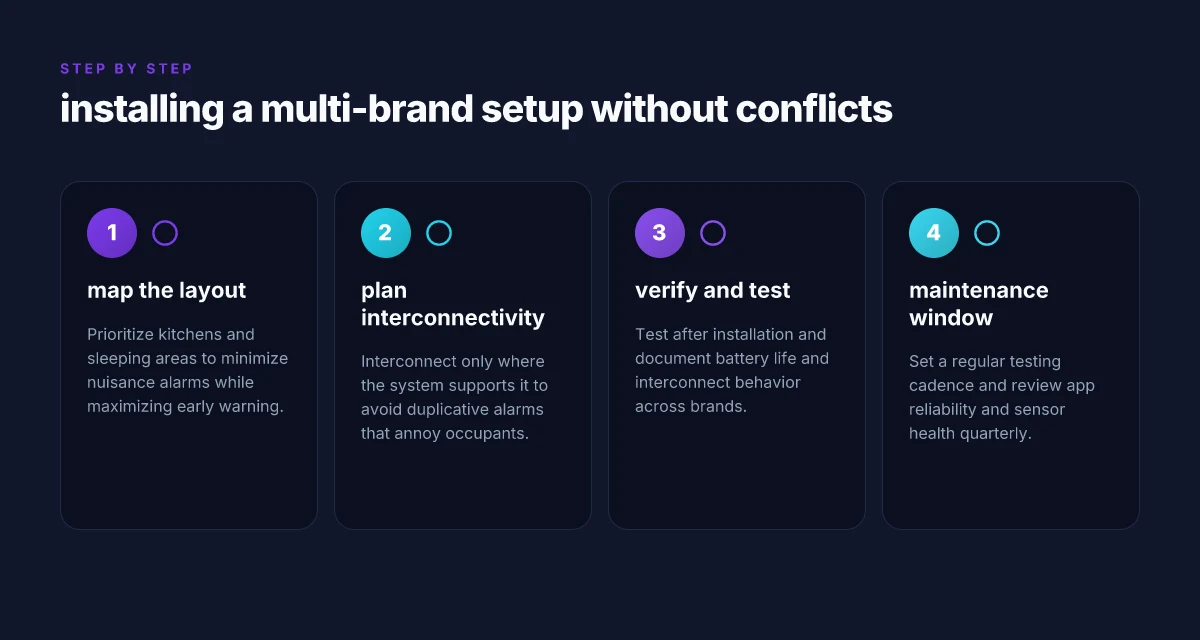
You can mix brands without waking the entire neighborhood. The secret is a deliberate layout, interconnection discipline, and clear testing. I found that when you plan for high-traffic zones first and respect interconnect limitations, you reduce nuisance alarms and still catch true events in a mixed ecosystem. Below I lay out a practical path you can deploy this weekend.
1) Map a layout with focus on kitchen and bedrooms
Start with a floor map that marks the kitchen, primary sleeping areas, and any living spaces with open floor plans. Plan alarms so that the kitchen and adjacent spaces stay within one networked cluster while avoiding redundant mentions of the same signal in close proximity. In real homes I’ve seen how an extra detector near the stove becomes a nuisance trigger rather than a fire signal. Prioritize smoke alarms in sleeping zones and near entry doors so occupants can locate the source quickly. When you place detectors, write down the intended interconnect behavior for each zone and document the expected battery life. This kind of planning saves you from surprise false alarms later. Quality interconnect models from this article tend to behave more predictably in mixed-brand setups.
2) Interconnect only where the system supports it
Interconnection is powerful, but duplicating alarms in the same room throws people off and irritates occupants. Only enable interconnect where the product spec confirms compatibility across brands, and avoid creating a five-alarm chorus in a single hall. If a detector in one room cannot reliably interconnect with the rest, rely on local detection and manual pull tests rather than forcing a broken chain. I’ve seen setups where mismatched interconnect standards caused delayed notifications or false loops, which defeats the purpose of a smart, mixed ecosystem. Document the interconnect mode for each device so future changes don’t swing expectations.
3) Test after installation and document battery life and interconnect behavior
After you mount everything, run a staged test that covers all zones. Verify that the interconnect still fires when one unit detects smoke and that nuisance alarms do not trip nearby units unnecessarily. Log battery health and note any interconnect quirks under real conditions, like how long a warning persists when a battery dips below a threshold. This is your maintenance baseline. A written record helps you spot drift, especially in a multi-brand environment where some alarms edge toward different sensitivity profiles. If a device reaches low-battery state, replace it promptly. Battery health matters more in mixed ecosystems because failures tend to propagate through the interconnect.
Clear interlock rules plus regular testing keep a multi-brand setup dependable. Interconnect behavior should be validated after every major home change. What makes a robot lawn mower reviews roundup truly useful in 2026
I dug into primary sources to confirm layout decisions align with current guidance. From the NFPA reporting, you’ll see that failures often trace to misinterpretation of alarm signals or improper installation. This reinforces why a documented plan and post-install tests are essential. A notable note from industry briefs is that UL-listed devices bring consistent performance, which helps when you mix brands under a single system. https://macemo.org/why-ul-listed-smoke-and-co-alarms-are-essential-for-home-safety/
Real picks you may consider for mixed-brand layouts include the following brands and products that homeowners actually buy. X-Sense appears frequently in consumer discussions for affordability and decent performance, though it comes with caveats around long-term reliability in some reviews. X-Sense detectors fit best in zones with straightforward interconnection expectations and where budget matters more than premium sensing, but you should plan for periodic battery and firmware checks. Other common picks include brands like First Alert, Kidde, Google Nest Protect, and Honeywell Home, which offer varying interoperability assurances and app ecosystems. The exact model choices depend on your home size, ceiling heights, and existing hubs. When you pick, document the exact interconnect behavior for each device so the system remains predictable over time. For instance, you may choose a mix where the primary interconnect cluster uses a central hub from one brand and supplemental detectors from another, as long as the interconnect signals propagate reliably and do not cause alarm fatigue.
If you want to minimize surprises, map 3–5 core devices that you will rely on for primary detection and 2–3 supplementary units for coverage gaps. This keeps your setup manageable and reduces the risk of conflicting signals in a high-traffic home. Remember to include a battery check cadence, every 6–12 months is common, and note any firmware updates that alter interconnect behavior.
Note: links on the page may earn a commission, and real-world performance can vary by home layout and device age. For context, see the ongoing discussions about how real-world homes fail or succeed with mixed-brand deployments and the evolving standards that guide interconnection across brands.
Where to focus next to upgrade your home safety
Real-world winners lean on durable sensors, easy wiring options, and solid interoperability with smart home hubs. I’m not reinventing the wheel here; I’m pointing you toward practical picks you can trust, like X-Sense for non-stop battery life and straightforward setup, and Google Nest for tight smart-home integration. The closer you look, the more evident it becomes that longevity, not peak specs, drives a good purchase. What makes a best smoke detector in 2026
The bigger pattern is that you don’t need a single miracle detector, you need a cohesive kit. A two-pack in key zones beats a lone unit, and a model with reliable tamper resistance reduces false alarms. If durability matters, seek brands that publish field testing or independent reviews, not hype. Links on the page may earn a commission, and that’s how I can keep you informed without bias.
For a quick next step, consider trying one X-Sense unit in the living area and pairing it with a compatible hub for smarter alerts. This week’s move could be adding a second unit to the bedrooms. Will you start with one now or build a small two-unit baseline?