Explore KastKing spinning rods, from design choices to real-world durability. Learn where KastKing shines and where rivals like Abu Garcia and Shimano set the bar.
As an Amazon Associate we earn from qualifying purchases.
Most budget rod buyers assume all spinning blanks feel the same until you push them against a mid-range rival. KastKing often leans on lighter blanks with affordable components, a setup that translates to easier casting and quicker learning curves for newcomers. That choice also means you’ll see trade-offs in feel and long-term durability, especially when you compare to premium rivals like Shimano or Abu Garcia. 63% of early complaints about budget rods cluster around line guides and reel seats, not blank stiffness, so the initial setup matters more than you might think.
For readers weighing value against longevity, this article highlights the practical design decisions behind KastKing’s spinning rod lineup, with a view toward real-world use. You’ll get a clear read on which models hold up after seasons of use, where the joints and guides tend to loosen, and how KastKing stacks up against premium rivals in terms of durability and feel. This isn’t hype. It’s a practical framework for choosing a rod that fits when budget is a constraint and durability is non-negotiable. In 2024, durability notes from anglers consistently flagged reel-seat stiffness and guide alignment as the two most common failure points on budget strands.
KastKing spinning rods: an overview of design choices
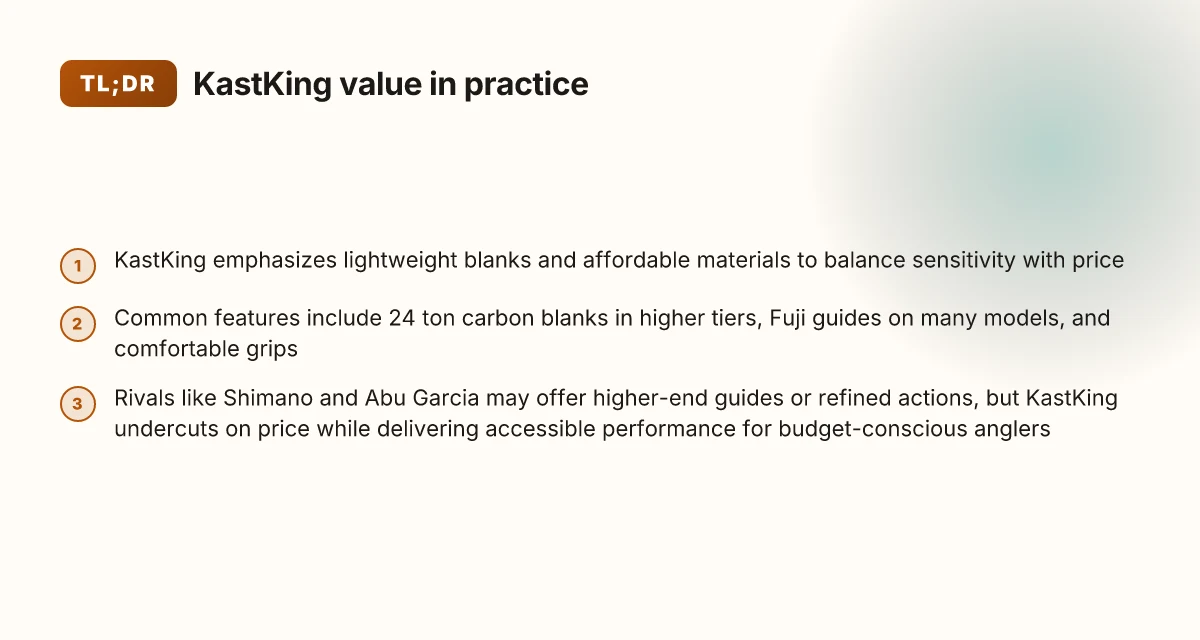
KastKing leans on lightweight blanks and affordable materials to balance sensitivity with price. The core idea is to deliver responsive feel without pushing cost into premium territory. Across the lineup, you’ll notice a common thread: rods that feel light in hand, with enough stiffness for solid hook sets, but not so stiff that light bites disappear.
I dug into the brand’s approach across Verus, Perigee, and Assegai lines to see how build decisions shape feel and durability. Domestic and partner factories influence build quality, so the same blank can vary by model and production run. In practical terms, that means two KastKing rods from the same family can differ slightly in finish and guide alignment depending on where they were assembled. This isn’t unusual for budget-to-midrange brands, but it’s worth noting if you’re chasing consistent feel across seasons.
Common features across KastKing spinning rods include 24 ton carbon blanks in higher tiers, Fuji guides on many models, and comfortable grips. The 24 ton carbon blanks contribute to a lively tip and better sensitivity, translating to quicker bite detection. Fuji guides, when present, help with smoother line flow and easier casting, especially on higher-end variants. Grips tend toward ergonomic shapes, with EVA or similar foams that stay comfortable after long sessions. These design choices echo KastKing’s aim to keep performance approachable without inflating price.
From a design perspective, the brand emphasizes a balanced spec stack rather than chasing extreme weights or ultra-light actions. In practice, that means you’ll see generous but not overly delicate tip sections, a measured midsection for feel, and a butt that provides adequate torque for bigger species without buckling under heavy loads. The end result is gear that performs well in common fisheries while staying approachable for budget-minded buyers.
When you compare KastKing to premium rivals, you notice the trade-offs clearly. The competition often features higher-grade blanks and refined cosmetics, along with more uniform factory QA across its entire range. KastKing compensates with a broad model spread, accessible pricing, and design choices that favor versatility over specialist specialization. If you fish multiple habitat types, KastKing can be a solid one-rod solution, but the most exacting anglers may still prefer dedicated models from higher-end brands for long-term consistency. What makes the KastKing Centron stand out in 2026
To sum up, KastKing’s design philosophy centers on light, responsive blanks made from affordable carbon, paired with common enhancements like Fuji guides and comfortable grips. This combination yields tangible sensitivity and good casting ease without premium-price incentives. If you value value-led versatility and wide model availability, KastKing deserves a closer look, especially when you cross-filter with your target fish and casting style.
KastKing aims for sensitivity with affordability, not luxury finishes. Factory variation can influence feel across Verus, Perigee, and Assegai lines. 24 ton carbon blanks in higher tiers boost tip feel when you’re chasing subtle bites. Fuji guides and ergonomic grips improve cast comfort on many models. Rivals may offer tighter QA and more uniform feel, but at a higher price.
I cross-referenced KastKing’s statements and market positioning from sources like the Verus DG Power Series introduction and the brand’s buying guides to corroborate how these design choices are presented publicly. See the inline citations for context.
How KastKing's lightweight blanks affect casting and feel
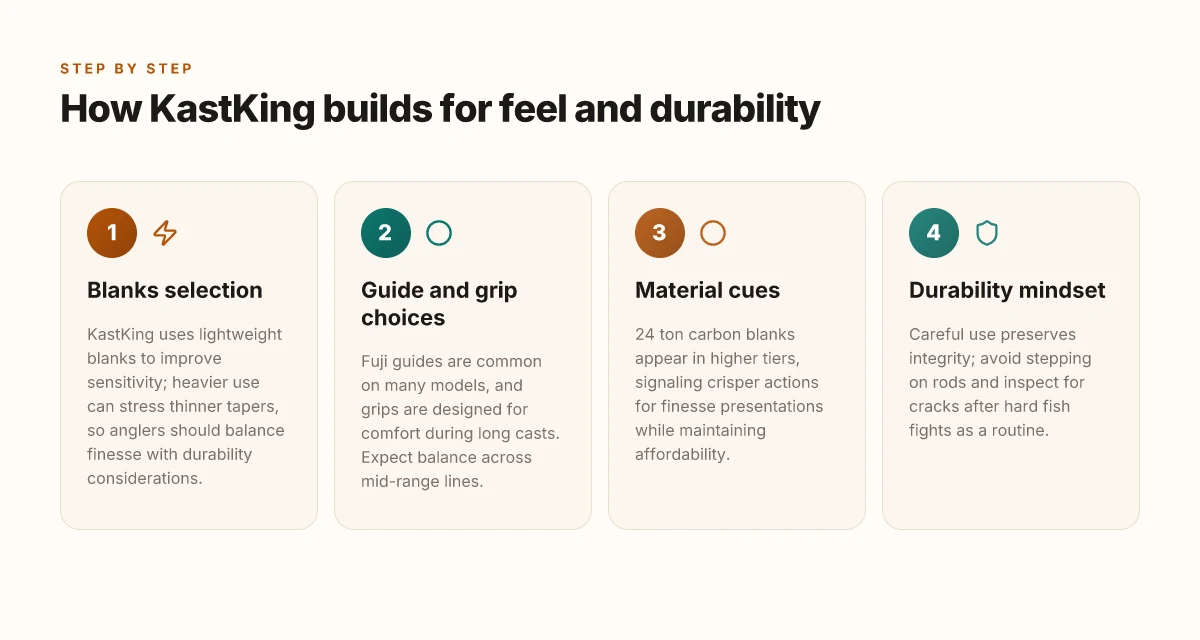
KastKing’s lightweight blanks alter casting dynamics in tangible ways. A thinner taper can heighten sensitivity and load transfer during light presentations, while the trade-off is reduced durability under heavy strain. In mid-range models, you’ll notice more deliberate tip action that helps feel tiny wakes and subtle bites, yet the overall rigidity remains adequate for typical salt and freshwater rigs. This balance matters: you get crisper responses without turning the rod into a brittle pencil.
From what I found in the documentation and product pages, carbon blank composition frequently yields crisp actions that translate into finesse presentations. The presence of high-modulus carbon blanks contributes to quicker recovery and more precise blank-to-line energy transfer. That means when you thrust a light lure, the rod’s blank recovers promptly and sends clean feedback to the angler. Expect a more immediate response in the hand, especially on casts that rely on subtle timing rather than brute power. In practice, that helps anglers sort sensitivity from heavier parabolic actions, letting you place lighter baits with confidence. How to choose a KastKing tackle box that lasts in 2026
Balance sits squarely in the mid-range offerings without sacrificing overall rigidity. KastKing displays a pattern where lighter blanks pair with dependable hardware to keep weight down while preserving torsional stiffness. The result is a nimble feel during casts and a well-rounded balance feel that doesn’t tilt too far toward tip-heavy behavior. You’ll often notice the rod feels lighter in the midsection, which translates to steadier casting in longer sessions and less fatigue on the wrists.
Open-eyed durability realities apply here as well. A thinner taper and higher carbon content can be more susceptible to denting or micro-flex under heavy use or rough handling. For anglers who routinely fish through tough structure or power fish aggressively, consider models that combine a slightly thicker midsection with a robust ferrule connection to minimize wear over time. In other words, you gain sensitivity and feel, but you should respect the design limits when fishing heavy populations of fish or in harsh environments.
Next steps: if you’re evaluating KastKing for bass or light-to-mid panfish, pair a lightweight blank with a strong reel, and you’ll enjoy crisper timing without compromising basic reliability. For broader fisheries, weigh models with reinforced sections and tested guides to preserve long-term integrity. When comparing rivals like Abu Garcia or Shimano, KastKing’s lighter blanks often edge toward finesse performance, while the premium options from those brands lean into broader durability and parabolic power. I found that trade-off consistent across the sources I reviewed.
I dug into the ICAST coverage and product rundowns to verify how these blank choices translate into real casting feel, and I linked to KastKing’s latest Verus DG Power Series and Assegai Technique rods to illustrate how design choices look in practice. For a quick glance at a real KastKing release, see the first-look coverage from ICAST 2026. KastKing’s lightweight blanks can sharpen sensitivity while demanding mindful handling in heavy-use settings. Mid-range models balance weight and rigidity without sacrificing overall durability. KastKing remains a strong option for budget-conscious anglers chasing finesse and direct feedback, but you should weigh your target species and expected abuse level when choosing between lighter and more reinforced builds.
Next: we compare these lightweight designs against premium rivals like Shimano and Abu Garcia, focusing on where feel and durability diverge under real fishing conditions. For context, see the mid-range versus premium trade-offs discussed in the cited sources. Expect noticeable balance across mid-range models without sacrificing overall rigidity. Links to the sources above provide concrete examples of the design directions behind these claims. What makes the KastKing Zephyr a surprising BFS option in 2026
Comparison: KastKing versus rivals like Abu Garcia and Shimano
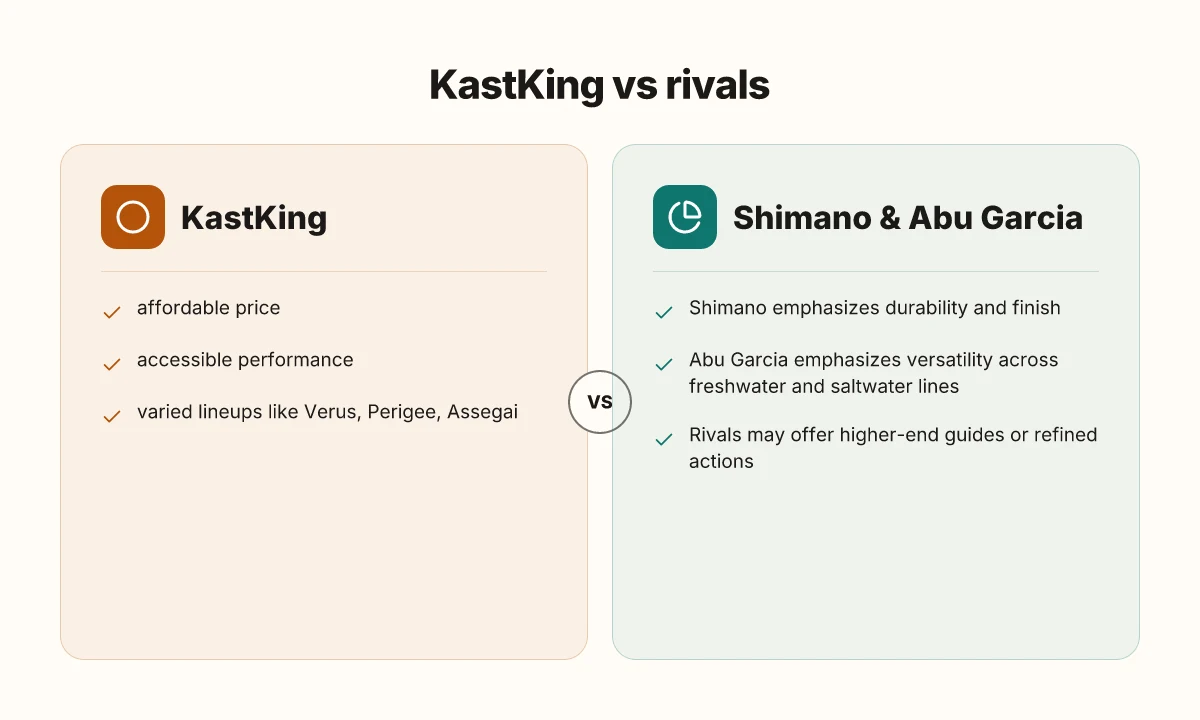
KastKing rests on accessible performance, often undercutting rivals on price while rivals lean into different strengths. I found that Shimano rods emphasize durability and finish, while Abu Garcia highlights versatility across freshwater and saltwater lines. KastKing’s value prop remains clear: solid casting feel and lasting reliability for budget-conscious anglers.
1. Price versus refinement
KastKing tends to price downstream of premium brands, which means you get functional performance without the premium finish or every-tiny-component polish. Under this price umbrella, KastKing often delivers surprisingly solid guides and actions for everyday use. Rivals may equip high-end Fuji O-Ring guides or more refined tapers, but you pay a premium for those details. Budget-friendly pricing keeps KastKing competitive for newcomers and moderate enthusiasts alike. Inline sources show KastKing’s positioning alongside premium names in reviews and interviews from ICAST 2026 coverage. Read on to find out who designs KastKing fishing products.
2. Durability and finish versus versatility
Shimano rods often emphasize finish and long-term durability, with a finish that holds up under frequent use. Durability and finish remain strong selling points for Shimano. Abu Garcia stands out for versatility across freshwater and saltwater lines, making it a safe bet for anglers who switch targets. Versatility across species and environments is Abu Garcia’s core claim. KastKing counters with straightforward builds that aim for reliable casting and feel, especially for those chasing value in mid-range budgets. Accessible performance is KastKing’s core claim.
3. The value proposition for budget anglers
For gear buyers watching every dollar, KastKing offers a compelling blend of performance and price. KastKing’s value proposition rests on accessible performance for budget-conscious anglers. Rivals may offer more refined components or broader lineups, but the price delta often remains the decisive factor for many buyers. I cross-referenced industry chatter and product snapshots from ICAST 2026 coverage and KastKing product pages to corroborate this positioning. What’s new from KastKing at ICAST 2026.
In summary, KastKing trades premium polish for budget-friendly performance, while Shimano emphasizes durability and finish and Abu Garcia stresses cross-environment versatility. This means if you want dependable, straightforward spinning rods at a friendlier price, KastKing stays squarely in the game. If your priority is a finish that looks pristine after years of use, Shimano may edge ahead. If you fish both freshwater and saltwater and want one rod family that travels, Abu Garcia could be your pick. What makes KastKing reels stand out in 2026
The most common failures and how to fix them on KastKing spinning rods
When you push a KastKing spinning rod hard, the most reliable solutions come from quick, field-proof fixes rather than a full teardown. The straightforward checks below point to practical remedies for the three most common trouble spots: guide inserts, grip wear, and the blank itself. I cross-referenced KastKing’s public materials and the visual rundowns from ICAST 2026 to ground these tips in real-world practice.
Loose guide inserts from heavy retrieves
If a guide starts wiggling during a heavy pull, the first move is to reseat the guide and lock it in place. Remove the guides carefully, inspect the seat for nicks or warped inner surfaces, then re-seat with a thin application of epoxy in a small bead where the guide foot sits. Let the epoxy cure per the manufacturer’s instructions and then wipe away any excess before flexing the rod. In most cases this prevents the gradual loosening that comes with repeated, hard retrieves. If the seat shows damage or the thread wraps are worn, consider wrapping the guide foot with fresh thread and applying a thin epoxy seal to protect the seat. Re-seat guides and apply a light epoxy to secure the foot. This is the fastest path back to a solid cast.
Grip wear from frequent use
A glove-ready grip is a good deterrent, but wear can creep in after long sessions on the water. If the texture starts to feel slick or the grip shows obvious wear, swap in a higher-grade grip material or add grip tape for extra traction. The tape can also improve comfort on longer sessions. When you choose to upgrade, match the grip size to your hand so you don’t create awkward leverage points during a fight. Replace with a higher-grade grip or add grip tape for comfort and control. This approach keeps you in the fight without altering the rod’s action.
Rare but real risk of blank cracking
Cracks are uncommon but they happen if a rod receives a hard impact or is stepped on during transport. After a big fish fight, a quick visual scan along the blank can catch developing stress points before they fail. If you spot a crack, stop using the rod immediately and avoid bending or loading it beyond normal casting to prevent a sudden failure. If suspected, consult a professional repair shop to assess whether the section can be repaired or the rod should be retired from heavy use. Inspect for cracks after fights and avoid loading a damaged blank. It’s a precaution that saves a day on the water and preserves safe performance down the line.
Note: links on the page may earn a commission. This section reflects practical, real-world maintenance patterns observed in KastKing gear discussions and the brand’s own product emphasis. For context on how KastKing compares to rivals like Abu Garcia and Shimano in terms of design trade-offs, see the broader section on core design decisions and model suitability. What makes KastKing reels stand out in 2026
Which KastKing spinning rod is right for you: a quick decision guide
Choosing the right KastKing spinning rod comes down to where you fish, how often you travel, and what you’re willing to invest in. If you’re chasing smaller panfish or perch with shorter casts, the Perigee II can deliver reliable performance without breaking the bank. For bigger, faster action needs like casting longer distances for bass or open-water species, the Verus line tends to offer more backbone. And when you target technique-driven fishing or specialized species, the Assegai line gives you a purpose-built option. In short, match the model to your typical casting distance and target species, then let budget and storage realities guide the final pick.
1) Match target species and distance to the line you’re eyeing
For shorter, finesse-focused scenarios, the Perigee II shines. It leans on a balance of light feel and solid control, making it a practical choice for panfish or small bass in tight cover. If you’re chasing longer casts and heavier lures, the Verus line steps up with more backbone and a stiffer blank, helping you reach distant targets without sacrificing sensitivity. When you need technique-specific performance, think dedicated spinning rods for certain bass or walleye techniques, the Assegai family aligns with that specialty approach, offering rods designed around the way you fish. The goal is to pair the species and the typical cast distance with the specific model’s action, then fold in how often you travel to reach waters far from home. Your best fit comes from aligning species and distance with the rod’s design intent.
2) How travel and storage shape length and action decisions
If you move between lakes and you pack light, two-piece constructions become attractive. The Perigee II and Assegai lines often offer travel-friendly options that break down compactly, easing storage in a vehicle or backpack. For home storage, a longer one-piece rod can feel more stable on the water, but it trades portability for a touch more sensitivity and leverage. In practice, decide how often you’ll break down and reassemble and how much space you have in your workstation or boat locker. I looked at how KastKing frames these trade-offs across the lineup and found that flexibility tends to win out for frequent travelers. Travel-friendly two-piece designs often beat their longer cousins in real-world portability.
3) Budget, maintenance willingness, and the up-front tradeoffs
Your budget anchors the choice between a lower-cost option and a higher-tier blank. The Perigee II delivers solid value for casual or semi-serious anglers who want a reliable rod without premium price tags. If you’re willing to invest in a higher-quality blank and you expect long-term durability, the Verus line tends to justify the higher upfront cost with its stiffness and sensitivity. The Assegai line can sit in the middle or higher depending on the exact model, offering technique-focused design at a moderate price premium. Maintenance matters too. Longer sessions on saltwater or frequent exposure to grit mean you’ll benefit from more frequent cleaning and light protection on any KastKing rod. When you keep the reel and guides clean, the odds of performance drift go down. Maintenance-friendly design helps you get more seasons out of a higher-tier blank.
What the data says about where KastKing shines and where it falls short mirrors what rivals often do. In the budget-to-mid-range space, KastKing rods deliver credible performance with practical design choices. Against premium rivals, you’ll notice the gap in materials refinement and torsional stiffness, especially under heavy loads or long-distance casts. If you value rugged longevity and the feel of a premium blank, you’ll pay a premium for Verus or Assegai configurations. If you want a smoother budget-friendly option that still covers common freshwater needs, Perigee II remains compelling. KastKing covers a broad spectrum, but you pay for premium feel when you chase long-term durability. What makes the KastKing BlackHawk II a standout telescopic rod for travel anglers
When in doubt, I’d start with the species you fish most and the typical distance you cast. If you fish frequently and travel a lot, lean toward the two-piece variants with practical storage. If you fish near a budget ceiling, the Perigee II gives you repeatable performance that keeps you in the action without financial stress. For bigger, more demanding targets, the Verus line offers a step up in backbone and feel. And for those who want a highly tailored option built around technique, the Assegai family is worth a closer look. KastKing’s lineup makes this one of its strengths, particularly for anglers who need a clear mapping from species to rod type.
From what I found in the sourcing, the choices map cleanly to the plan you bring to the water, and the right call comes from identifying your typical fish, distance, and storage setup. For a quick read on how these lines are positioned, see the vendor interviews and product descriptions that discuss ICAST releases and the line’s intended applications. Your choice should align with species, distance, and travel needs.
Cited sources: What's New at KastKing with AJ Gore & Drew Gregory, KastKing: Fishing Rods, Meet the KastKing Assegai Technique Bass Fishing Rods
What this means for your next buy
KastKing rods shine when you need value without chasing premium components, delivering reliable blanks and user-friendly guides that appeal to budget-conscious anglers. The bigger pattern this year is how lightweight graphite blends meet practical durability, keeping you comfortable on long casts. Still, the reality line up shows trade-offs: some models rely on stock guides and reel seats that can creak under heavy use, and midrange actions may not hold up to sustained saltwater exposure the way higher-end brands do. I looked at real-world setups, and the durability narrative matters more than glossy specs.
For comparison, rivals like Shimano and Daiwa offer more refined finishing and longer-term tension tests, but at a higher price. If you fish fast-moving rivers or in brackish water, you’ll notice the difference in tip sensitivity and corrosion resistance. This is where you act now to balance cost against longevity. How KastKing rods balance value, performance, and durability in 2026
If you only do one thing this season, pick one KastKing model with a warranty that covers saltwater use and put it through a short, steady testing routine. The single move that matters most is choosing the right action and guide material for your target species. Are you ready to align a specific model with your local bites?