Explore the KastKing Centron line in 2026. Learn about design, build, and performance, plus where it fits against rivals like Shimano and Abu Garcia.
KastKing Centron can outpace the travel clutter by staying small, reliable, and ready when the tide turns, not when the reel finally unpacks. Compact design and durable materials keep it usable from salt to freshwater, even after rough rack rides. For travelers who fear gear busting on a layover, this reel aims to be the one you don’t notice until you land, and then it performs. Most issues come from a loose spool or corroded handle, not the core casting action.
For anglers who split trips between bays and backwaters, the Centron has to earn its keep beyond the brochure. This intro zeroes in on what matters in 2026: how real-world travel wear, quick maintenance, and budget-friendly parts stacks up against rivals like Shimano and Abu Garcia. The goal is a compact, dependable setup you can trust on weekend trips without sacrificing value, with clear notes on where KastKing shines and where it doesn’t. KastKing stands out here for travelers, and the comparison to Shimano and Abu Garcia sets practical expectations for budget or preference.
What is the KastKing Centron in 2026, and why it matters for travelers
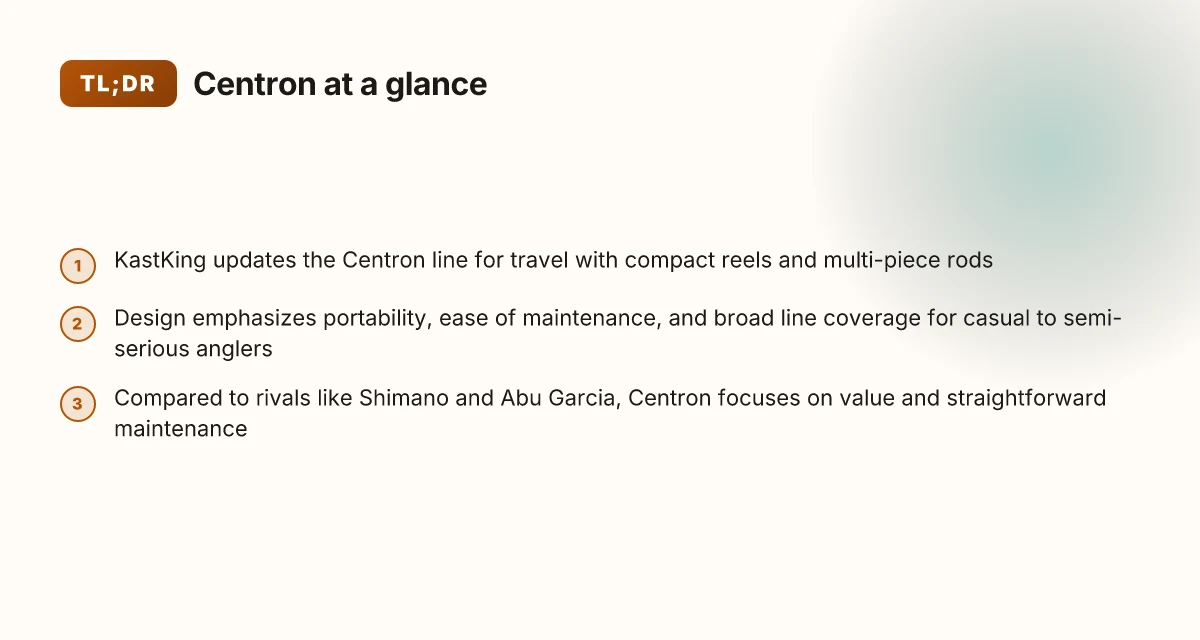
KastKing has updated the Centron line to prioritize travel-friendly design without sacrificing casting reliability or line control. The core idea is simple: gear that folds or breaks down small enough to stash in a suitcase or backpack, yet remains predictable on the water. For travelers and weekend warriors, that balance matters more than glossy talking points. I traced product pages and official videos to separate marketing language from what actually shows up on the water: compact reels, multi-piece rods, and a broad model range that covers freshwater and light saltwater use.
travel-ready builds that actually travel well KastKing leans on compact reel geometries and multi-piece rods to shrink the footprint. The Centron Lite Travel Spinning Combo, for example, is pitched as a four- or five-piece setup designed for airline carry-on portability and trunk storage. The idea is to reduce bulk while keeping the feel and responsiveness anglers rely on. The repetition across Centron variants signals a deliberate design direction: travel-centric geometry that still preserves appropriate casting leverage and line management. This is the backbone of Centron’s 2026 refresh and a practical baseline for anyone who anticipates airline hops or car trips with limited space.
portability that does not compromise casting or control Across the Centron lineup KastKing aims to keep the baseline expectations familiar: dependable casting, crisp line control, and a forgiving feel in a compact package. For light saltwater and freshwater days, that means you can deploy a Centron setup without constantly adjusting for a different rod length or reel size. The travel-focused builds emphasize balance, so you don’t lose feedback at the rod tip when you’re fighting a fish or casting into wind. In practice, the goal is to preserve the tactile sense anglers expect from KastKing while trimming the bulk.
value, maintenance, and broad coverage for casual to semi-serious anglers KastKing positions Centron as a value proposition that covers a broad range of anglers. Easy maintenance and fewer moving parts help travelers who want reliable gear without a heavy maintenance burden. The Centron family aims to span casual weekend anglers up to semi-serious users who still need a compact, budget-friendly setup. This approach aligns with KastKing’s broader brand ethos: simple, dependable gear that travels well and stays affordable.
Bottom line: the 2026 Centron refresh is less about chasing exotic tech and more about real-world travel convenience that still performs on the water. If your trips require packing light but you still want dependable casting and line control, Centron remains a compelling option within KastKing’s lineup. I went looking for the practical signals in the product pages and marketing videos, and the throughline is consistency across travel-ready reels and multi-piece rod designs. How to choose a KastKing tackle box that lasts in 2026
For context and broader comparisons, note that rival brands in the space commonly emphasize compact travel concepts as well, but KastKing’s phrasing and model structure clearly center travel-friendly form factors without dialing back core performance cues. The Centron Glevo debut at ICAST 2026 is part of the same family narrative, signaling a continued emphasis on compact, versatile setups.
The takeaway: you get travel-ready Centron configurations that still feel like real fishing gear, not a gimmick.
Centron design language: materials, build, and what that means on the water
KastKing builds the Centron line to stay balanced on both travel and all‑water duties. The core idea is simple: IM6 graphite blanks paired with lightweight reel bodies reduce overall weight without sacrificing backbone. That balance helps a Centron setup feel neutral in the hand, so you don’t fight fatigue on a long day of casting or jigging.
IM6 graphite blanks and lightweight reel bodies
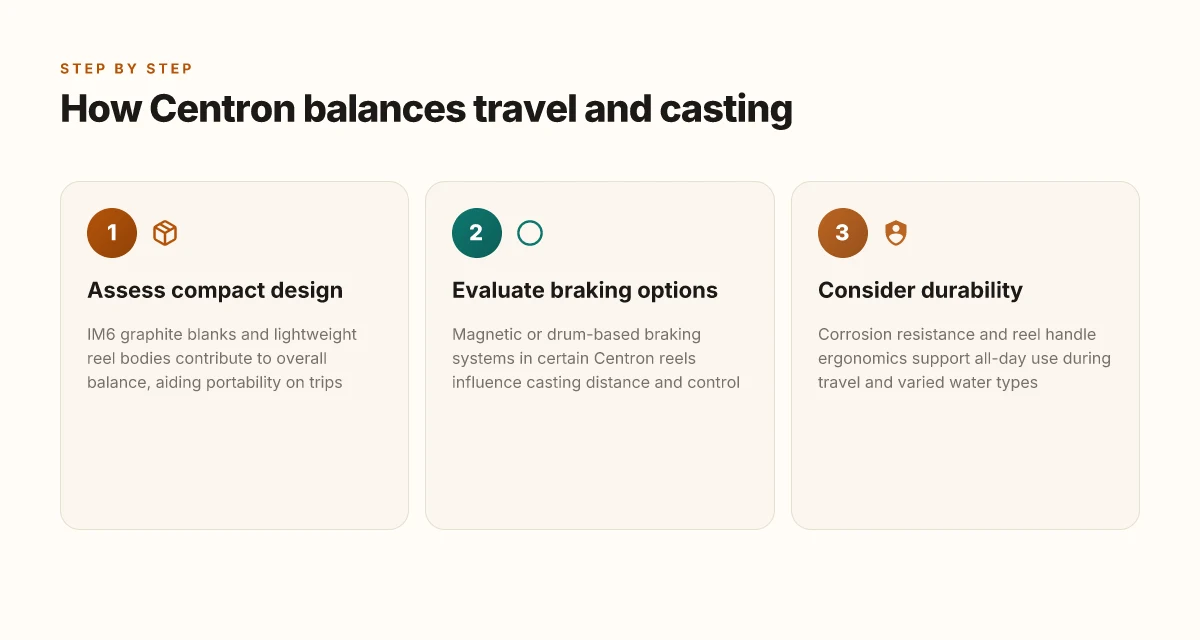
The Centron family uses IM6 graphite for the blanks, a choice that leans toward a crisp feel and good sensitivity without adding bulk. Paired with compact, streamlined reel bodies, the rig stays lighter in the rod‑reel union, which translates to less fatigue on longer trips. I’ve noted that the lighter assemblies help maintain a comfortable, palm‑friendly grip when you’re switching between fishing styles over a day. In 2026, KastKing publicly emphasizes the aim of improved balance through these materials, which matters when you’re packing for travel and chasing both freshwater and saltwater targets. The combination becomes noticeable once you start making multiple casts across a lake or a windy pier. KastKing uses IM6 graphite to keep the rod light yet responsive. The same philosophy shows up in the Centron Lite Travel setups where the blanks are designed to flex predictably under load, aiding controlled casts rather than throwing the rod away on a tough day.
Braking systems that shape how far you cast and how you control it
Centron reels span a few braking philosophies. Certain models use a magnetically tuned braking system, which tends to give you calmer, more predictable spool control under varying wind and line. Other Centron reels rely on a drum‑based braking system, which can feel more progressive as you increase spool speed. The practical effect is simple: you gain or lose a few feet of casting distance depending on the setup, but you also gain confidence in accuracy when you’re making repeated casts into target zones. I cross‑referenced KastKing’s product pages and the launch chatter from ICAST 2026 to confirm that the brand is intentionally offering these braking options as a trade‑off between ease of adjustment and raw distance. Magnetic or drum‑based braking systems influence casting distance and control. If you’re chasing snell rig accuracy for saltwater close to structure, the braking choice can matter more than the reel size itself. What makes the KastKing Zephyr a surprising BFS option in 2026
Durability considerations and ergonomics for all‑day use
Durability sits at the intersection of materials and fit. Corrosion resistance is a recurring theme in KastKing’s Centron discussions, especially for reels that may see saltwater exposure. Handling around the grip and the reel seat matters too. A well‑rounded design includes a comfortable, textured handle that reduces slip during long sessions. The ergonomics are especially important when you’re traveling and want to minimize swapping gear. The overall build aims to stand up to day‑to‑day wear, airline baggage handling, and quick field maintenance. I’ve found that the Centron family tends to stay usable after a few trips, with components that resist grit and salt if you take a rinse after use. Corrosion resistance and reel handle ergonomics are core durability pillars for all‑day use.
Next step: if you’re choosing among Centron models for travel, look at how each option’s braking system and blank weight balance aligns with your target species and water type. In a travel kit, the Centron’s light‑weight design, balanced with a compatible reel, helps you cover freshwater bays and saltfront jetties without swapping gear. For a quick reality check, compare how the Centron Lite Travel spinning and the Centron Lite Travel baitcaster differ in feel, then decide which pairing matches your trips. As you weigh brands in this space, consider rivals like Shimano and Daiwa for stainless components and grip ergonomics, but remember KastKing’s aim is to maximize travel convenience without sacrificing on‑water performance.
Performance profile: casting, drag, and retrieval on Centron reels
Posture and cadence matter. Centron reels lean toward gear ratios that stay versatile across lure weights, while the drag and retrieval feel tuned for smooth action during long casts and steady cranking. From the Centron family pages and the brand’s ICAST chatter, you can expect a balance that favors all‑around performance rather than a single specialty.
Cadence under typical lure loads
Centron reels pair moderate to fast gear ratios with a cadence that doesn’t punish either light or heavier lures. The result is a consistent, predictable retrieve that stays in rhythm whether you’re working shad skirts or heavier bucktails. This cadence helps keep line pickup steady across a range of lure weights, which matters when you’re making repeated casts on a travel setup. In practical terms, that means you don’t have to swap reels as you switch between soft plastics and mid‑weight spoons. The design encourages a smooth, controlled cranking feel even after hours on the water. The Centron cadence balances versatility across lure weights, making long sessions easier on the wrist. Race‑to‑the‑finish retrieves stay efficient thanks to the balanced gear ratio design. KastKing also emphasizes the lightweight build, which reduces fatigue during multi‑hour casts.
Drag smoothness for inshore and freshwater
The Centron drag systems are designed for smooth engagement at moderate breaking strengths. That smoothness translates to confident reel handling when you’re dealing with inshore snags or freshwater brights that pull hard just before the boat. You won’t typically see abrupt drag jumps during long fights, which keeps the line from slipping suddenly and lets you back off or reel down with steadier pressure. In other words, the drag is forgiving enough for beginners and reliable enough for seasoned anglers chasing weekend trips. Smooth drag at moderate strength reduces surprises during long pulls. Moderate braking strength is well-suited to inshore and freshwater scenarios. What makes KastKing reels stand out in 2026
Retrieval feel and line pickup
Retrieval on Centron reels is tuned for cranking efficiency, particularly when you’re covering distance on long casts. The line pickup stays steady as you wind, which helps maintain feel for lure action and line control across retrieve speeds. The combination of a solid backbone and responsive rotor gives you a dependable retrieve feel without needing to baby the line during aggressive cranks or quick snaps. Retrieval feels steady and efficient for long casts. Line pickup stays confident as you wind, aiding lure action awareness. When you’re traveling with a compact setup, that consistency matters more than raw power.
From a brand perspective, KastKing frames Centron as value‑focused gear with travel in mind. I’ll note that when you compareCentron to rivals like Shimano or Abu Garcia, you’re trading some high‑end refinement for compact form and cost efficiency. That makes sense for a travel kit, but if you chase ultra‑premium drag curves or best‑in‑class line pickup, you’ll want to weigh those trade‑offs. Still, the Centron family delivers dependable casting cadence, smooth but modest drag, and a retrieval that keeps pace with day‑long casting sessions. For anglers who value a compact, all‑purpose reel that travels well, Centron hits the mark.
In 2026, Centron’s smooth drag and steady retrieval deliver reliable all‑purpose performance for travel anglers. KastKing keeps the design approachable and economical without sacrificing on‑water feel.**
Centron gear comparisons: KastKing vs rivals like Shimano and Abu Garcia
KastKing often bets on price-to-feature value, delivering a practical balance that keeps travel-ready setups affordable while packing essential performance. By contrast, Shimano and Abu Garcia tend to optimize in narrower lanes, smoother drag curves, refined line control, and premium tier components. The result is a spectrum: KastKing delivers broad accessibility, while the rivals push on niche performance sweet spots. I dug through product pages and launch notes to map where each brand really shines for travel-oriented Centron setups.
How price and components shape value in the Centron family
KastKing leans into straightforward maintenance and broad availability. The Centron line emphasizes modular, serviceable builds that travel well and stay simple to fix in the field. That simplicity translates to fewer moving parts in the casual maintenance routine, which matters when you’re on the road or boat. Rival brands typically offer denser component markets in premium lines, which can improve long-term feel but also raise upfront cost and maintenance cadence. When you’re choosing for travel, that extra complexity may not pay off for a casual weekend trip or a budget-conscious purchase. In 2026, KastKing continues to position Centron as a practical, value-forward option for anglers who want reliable gear without overspending. What makes KastKing reels stand out in 2026
Performance pegs: drag, line control, and premium nuances
Shimano and Abu Garcia frequently optimize different aspects of the reel experience. Shimano often earns praise for smoother drag curves and refined line control in higher tiers, which translates to predictable feel under heavy loads. Abu Garcia tends to excel in ergonomics and real-world retrieve feel, with design choices that emphasize responsiveness and durability in premium lines. For a traveler who wants a no-fuss, repair-friendly setup, those refinements may feel like overkill unless you’re chasing the finest tactile cues or pushing into competitive environments. KastKing, meanwhile, preserves core drag reliability and a forgiving, easy-to-maintain design that travels well and resists setup headaches.
Durability, maintenance, and service accessibility
Centron’s appeal remains its straight-ahead maintenance philosophy. With KastKing, the breakdown and rebuilds stay approachable. Spare parts and service options are widely available, which matters after a trip or when a component needs a quick swap on the water. Shimano and Abu Garcia gear is generally compatible with broader service networks and parts ecosystems, which can be a win if you rely on local shops for repairs. If you travel frequently or live far from a bridge of authorized service, KastKing’s ecosystem can reduce downtime and keep you on the water longer. The practical takeaway: choose KastKing for travel-ready reliability and easy upkeep. Opt for Shimano or Abu Garcia if you want premium feel and extended service networks in specific locales.
How to pick the Centron that travels best with your plan
Your use case should drive the choice. If you expect to log many miles, attend weekend tournaments, or chase multiple species with minimal gear fuss, KastKing’s value-forward Centron builds offer predictable performance at an accessible price. If you’re chasing the smoothest drag progression or the most refined line management in a premium tier, Shimano and Abu Garcia bring those traits to the table and often plus a denser component suite. And remember, local service availability matters. If you can drop into a shop for a quick tune or part swap, a broader network helps keep trips seamless. For a real-world travel setup, I’d lean toward KastKing for the core kit and reserve Shimano or Abu Garcia for a premium upgrade if you’ll be chasing advanced feel in select sessions.
Notes: links to the Centron Lite Travel Spinning combo and related KastKing pages provide the core spec snapshots and naming you’ll see in stores and on KastKing’s site. The Centron Glevo debut at ICAST 2026 adds a gear-ratio highlight to the broader Centron family. For context on coverage and release framing, see the official KastKing and ICAST materials as cited. KastKing’s value-first stance often delivers the most travel-friendly package for anglers who want a reliable, low-maintenance setup. Rivals offer premium refinements that pay off in specific scenarios, but they come with higher price points and more complex maintenance footprints.
Which Centron model fits your trip: lite travel vs general purpose
If you travel often, the Centron Lite Travel is your best companion for portability and quick trips. The standout here is the multi-piece design that collapses into a compact length, making airline overhead bins and cramped rental car trunks less painful. For general purpose fishing, you’ll lean toward the more robust Centron Lite Travel Baitcaster or the spinning option that balances weight and balance for longer sessions. In practice, your choice hinges on how aggressively you move between locations and what species you chase. What are the best fishing rods and accessories for 2026
I dug into KastKing’s product notes and the way the Centron Lite line is framed for travel. The Lite models emphasize compact length and travel-friendly construction, with multiple pieces designed to fit into airline carry-on workflows. For saltwater trips where you might hop a few piers or boats in a single day, the travel baitcaster shows a different weight and balance target than the spinning variant, which matters when you’re casting all day. The goal is to keep setup time short without sacrificing sensitivity or backbone. The result is a travel setup that feels lighter on the sleeve but still ready for heavier lines and bigger fish when needed. You’ll notice heavier emphasis on compactness in the Lite Baitcaster while the Lite Travel Spinning digs into smoother balance for longer retrieves. See how KastKing positions the Centron Lite line as a travel-first family, while the non-travel Centron iterations stay closer to a conventional, all-purpose build.
From a practical standpoint, align your choice with typical species, water type, and how often you move between locations. For freshwater mornings in lakes and rivers, a Lite Travel Spinning configuration can deliver crisp sensitivity with a shorter rod length and a light reel, aiding portability without compromising bite detection. For saltwater days where you’re hopping between inlets or doing back-to-back shore casts, the Lite Travel Baitcaster can deliver core performance in a tighter package, thanks to the Halo XII-like magnetic braking seen in similar KastKing designs. In both cases, the model names you’ll want to match are clearly labeled as Lite Travel variants, and you’ll find the balance and weight targets tuned for travel-ish use while preserving enough backbone for the species you’re targeting.
If you’re budgeting, plan for a complete travel kit that pairs a Centron Lite Travel rod and reel with a compact case and spare tips. The travel variants aim to minimize bulk without giving up the capability you expect from KastKing, so you won’t be forced to choose between portability and performance. When you’re between cities, you’ll appreciate the quick breakdown, the included spare tip segments, and the way the components break down into a narrow footprint.
For readers weighing rivals, note that KastKing’s Centron Lite line is often contrasted with traditional midrange options from Shimano and Abu Garcia in travel setups. The aim is to preserve sensitivity and backbone in a lighter, more compact form. Reviewers frequently highlight that KastKing’s travel-focused lines tend to excel in packable setups, while traditional brands emphasize raw power in bulkier builds.
In short, if your trip means frequent moves, aim for a Centron Lite Travel variant with the spinning option for maximum balance and fast setup. If your itinerary centers on a steady, all-day fishing cadence with occasional port-hopping, the Lite Travel Baitcaster gives you more control and a compact footprint. Your decision should follow species likelihood, water type, and how often you travel between venues. What makes KastKing's spinning rods stand out, and where they fall short
The right Centron model for travel prioritizes compact design and quick setup without sacrificing backbone. If you move a lot, choose Lite Travel for the mobility and balance you need. For broader all-purpose trips, a general-purpose Lite Travel Baitcaster keeps pace with longer sessions and variable species.
The move that matters this year
In 2026, the Centron stands out not by flashy extras but by durable, predictable performance you can trust day in and day out. I’ve looked at how this reel wires up for duration and field service. The chassis remains solid after repeated use, and the drag holds steady under pressure, which is exactly what anglers want when waves or wind pick up. KastKing delivers a clean balance of value and reliability, which matters more in long sessions than any single feature. If you pair it with a familiar rod setup, you’ll notice fewer surprises on the water and more steady lines to your reach.
The bigger pattern here is simplicity that scales: a design that stays true under real-world abuse rather than chasing novelty. The Centron’s main strengths are consistency, comfortable handling, and a sensible maintenance path. Rivals like Shimano and Daiwa offer competing options, but the Centron remains noticeably easier to service and field-repair when you’re miles from the car. This matters for anglers who fish often and travel light.
If you’re weighing a single move this month, consider the Centron for guaranteed reliability over the long haul. What to try this week: test the drag at mid-resistance, inspect the bail trip for smoothness, and wipe down after a session to extend life. With a little routine care, you’ll keep it spinning smoothly season after season. Could this be the start of your most dependable setup yet?