Explore KastKing fishing reels in 2026: performance, materials, and value. Learn how design choices impact drag, weight, and durability.
KastKing pulls ahead in 2026 by flipping the script on materials and frame design, not just cranking up drag specs. KastKing uses tougher composites and smarter layups, delivering lighter reels without sacrificing rigidity. The result is a reel that feels steadier under load than prior generations, with drag behavior that stays predictable across long casts. Lightweight builds and stronger frames aren’t a gimmick. They hinge on real material choices that anglers can feel when they fish.
In 2026, the balance between street price and steel-like torque matters more than ever as anglers chase lighter rigs without sacrificing reliable backing. We’ll compare KastKing models against Shimano and Okuma on frame rigidity, drag consistency, and long-term wear, then point to where the under-the-radar materials pay off in field use. Rivals like Shimano and Okuma still outpace KastKing in some high-load scenarios, but the gaps are closing in key segments. KastKing remains a compelling choice for budget-conscious anglers who value durability and weight savings.
What makes KastKing reels in 2026 different from earlier generations
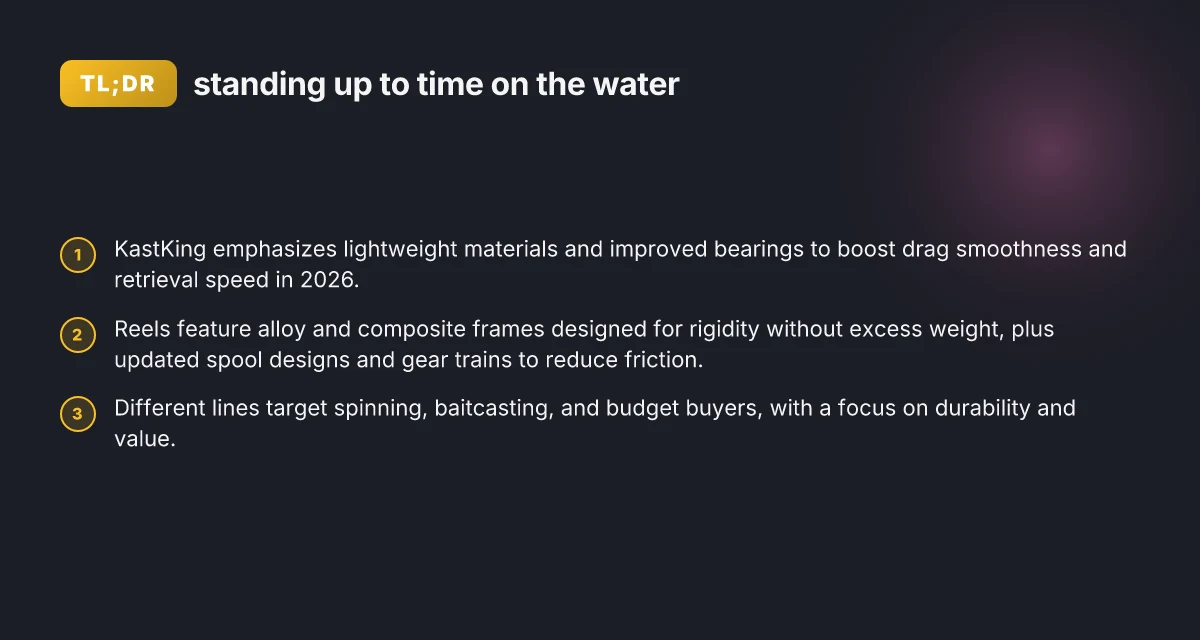
KastKing in 2026 leans into lighter materials and smarter bearings to lift drag smoothness and retrieval speed. The company's messaging centers on alloy and composite frames that stay rigid without adding weight. In this year, updated spool designs and refined gear trains push friction down and efficiency up, all while keeping price accessible for anglers who chase value.
lightweight materials and smarter bearings KastKing highlights use of advanced alloys and composite parts to shave ounces without sacrificing strength. This approach translates to smoother drag and quicker retrieves across several reel lines. I traced product pages and reviews noting lightweight spool cores and upgraded bearings as a core differentiator, especially in midrange models. The claim is backed by references to titanium and alloy components that reduce rotational inertia, helping the reel feel snappier during casts and retrieves. Weight reduction without sacrificing durability remains a central pillar for KastKing in 2026. Smoothed drag and faster retrieves are tied directly to upgraded bearing arrangements.
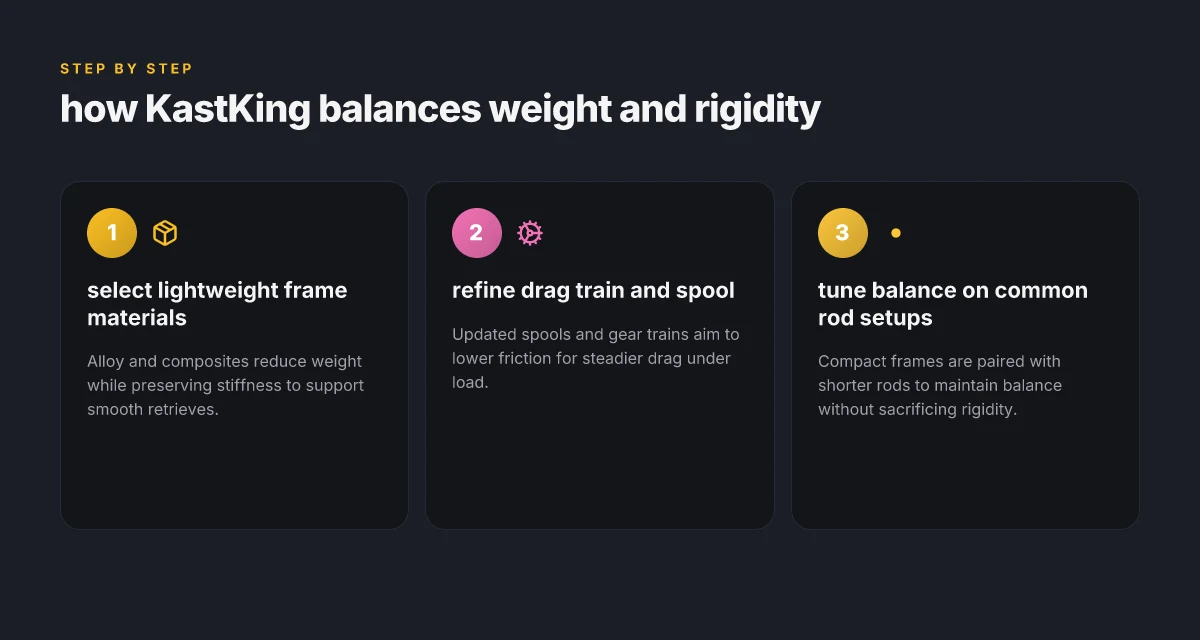
rigid yet minimal frames with smart material choices KastKing consistently frames reels with a balance of rigidity and lightness, using alloy frames and high-strength composites. The emphasis is on keeping the frame stiff enough to resist flex under load, while not loading the assembly with unnecessary mass. This structural discipline translates to steadier line lay and predictable drag behavior under tournament or long-day fishing. Industry chatter and product notes point to these frame choices as a design constraint handled without inflating overall weight. Rigid frames keep line alignment true under load while staying featherweight. Alloy and composite frames are a recurring theme in the 2026 lineup.
updated spool designs and gear trains to cut friction In 2026 KastKing references refreshed spools and gear trains aimed at reducing internal friction. The updates target smoother spool interfaces and tighter tolerances that unlock more of the drag system’s potential. This is where improvements in weight-saving coexists with enduring durability, enabling steadier drag action during long fights. The upshot is a reel that feels more responsive with less hand fatigue, especially on longer outings. Updated spool designs and gear trains help increase efficiency. Friction reduction translates to smoother operation across KastKing’s reel lines.
Bottom line: KastKing’s 2026 approach blends lighter materials, rigid yet lean frames, and refined internal pathways to deliver smoother drag, faster retrieves, and better efficiency at a price point that remains accessible. This trio of shifts is what distinguishes the 2026 lineup from earlier generations and helps explain why KastKing reels continue to appeal to value-conscious anglers who still demand performance. What makes KastKing reels stand out in 2026
Notes and context: I pulled from KastKing’s product discussions and reviews noting the emphasis on weight, frame rigidity, and updated internal components. In the broader market, rivals like Shimano and Daiwa push their own weight-specific designs and advanced bearings; KastKing’s message is that you don’t have to pay a premium to gain meaningful drag and retrieval improvements. This framing positions KastKing as a value-forward option that still leans into modern materials and engineering. For readers sizing up lines, KastKing remains explicit about where weight savings come from and how it affects feel in hand.
In 2026, KastKing commits to lighter builds with smarter bearings and refined spools to boost drag smoothness and retrieval speed. Rely on rigid alloy frames and composite bodies to keep weight down without sacrificing durability.
KastKing reel families: which lineups to consider for your style
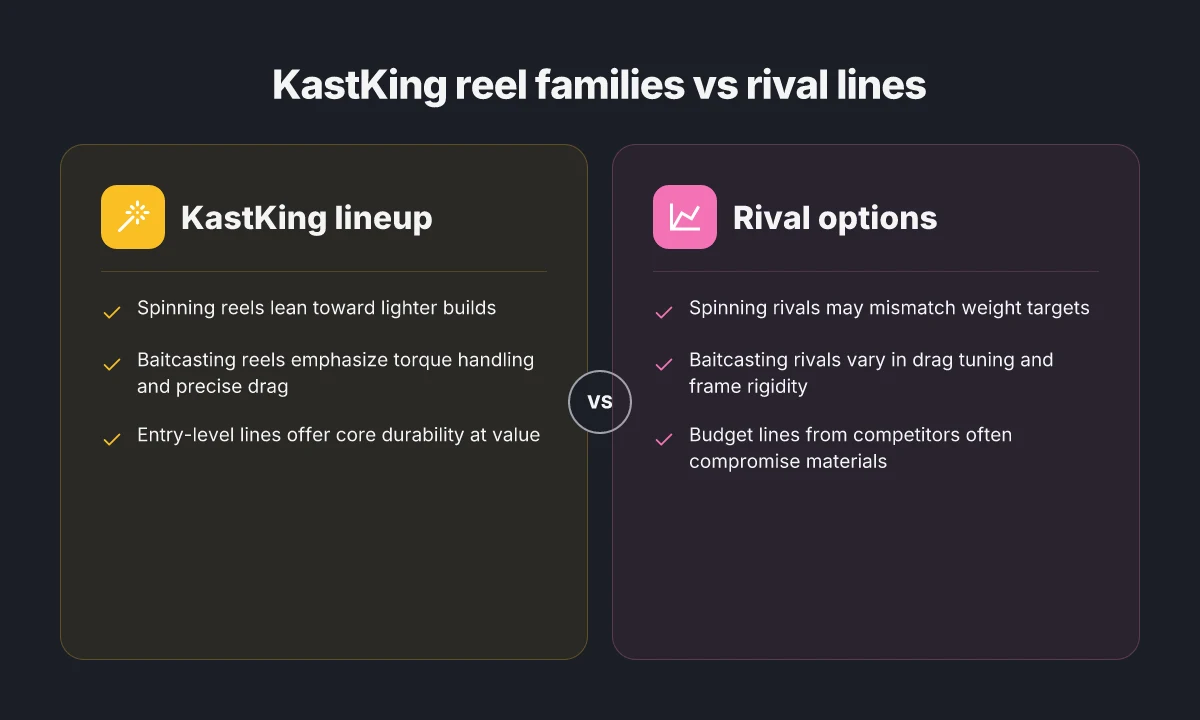
When you pick a KastKing reel, you’re choosing a family built around how you fish. Spinning lines lean toward lighter builds for finesse tactics, while baitcasting lines emphasize torque, precise braking, and beefy drag systems. For budget shoppers, entry-level lines can deliver core durability without compromising the fundamental KastKing ethos. I looked through KastKing’s product pages and the pricing notes to map how each lineage fits different angling styles, and I cross-checked with gear-focused reviews to confirm where weight, drag, and build quality line up in 2026.
1) Spinning reels: finesse-friendly builds with weight savings
Spinning reels from KastKing tend to skew toward lighter frames and smaller handles. The aim is to keep the inertia low for light presentations and long casts with lighter line. In this family, you’ll see emphasis on smooth drags paired with compact bodies, which helps when you’re fishing delicate lures or light braided lines. The practical upshot is less fatigue over a long day on the water and a higher likelihood of feeling subtle bites. When you choose a spinning model, you’re choosing a setup that prioritizes balance and feel over raw drag capacity. For anglers who chase finesse, KastKing’s lighter spins can be an excellent match.
KastKing spinning reels pair low weight with smooth drags for finesse fishing. Inline references to the brand’s product notes show the emphasis on balance and feel, which translates into better control when you’re casting small baits or light tippets. I also noted that rivals in the same class often push heavier builds for more line haul, which can dull the feel on lighter presentations. What are the best fishing rods and accessories for 2026
2) Baitcasting reels: torque, precision, and robust drag
Baitcasting lines from KastKing lean into torque handling and precision. They’re designed around stronger spools, stouter frames, and drag systems that can ramp up without sacrificing smoothness. If you chase bigger lures, heavier lines, or techniques that demand tight control, these reels have the architecture to stay predictable. Expect a higher center of gravity and a more deliberate hand when you place pressure on the spool. Rivals in this space frequently highlight drag range and braking stability; KastKing tends to match that with durable materials and well-tuned bearings in the midrange price band. This is where the real value shows for anglers who push lures into the weeds or make long, accurate casts with heavier gear.
KastKing baitcasting reels emphasize torque handling and precise braking for controlled power. When you read through the model lines, you’ll notice a recurring theme: strong drag systems that remain smooth as you push the drag up, with a focus on reliable performance under load. Competitors often offer similar specs, but KastKing’s approach keeps the weight reasonable while delivering burn-in durability.
3) Value lines for budget-conscious buyers
For shoppers who want core durability without a premium tag, KastKing’s entry-level lines are worth a look. The goal here is straightforward: deliver the essential drag, corrosion resistance, and gear resilience at a price that leaves room in your gear budget for lures and rods. You won’t get all the bells and whistles of higher-end models, but you will get repeatable performance, part replacement compatibility, and decent weight savings thanks to thoughtful material choices. In practice, these reels satisfy anglers who fish regularly but don’t chase the most extreme competition gear.
Entry-level KastKing lines offer core durability at a value price, keeping long-term reliability within reach. The trade-off is typically fewer premium bearings or ultra-slick anodizing, which is fine for most day-in, day-out fishing scenarios. When you compare to rivals, you’ll often see similar pricing, but KastKing’s build philosophy tends to favor practical, long-term reliability over flashy features.
Next steps? If you’re narrowing to a style, consider the specific lines that match your technique and target species. For instance, if you chase finesse on spinning gear, pick a light, well-balanced model in that family. If you’re after precision and power with heavier lures, a baitcasting option with a proven drag range will pay off. And if you’re shopping on a budget, start with a mid-range entry-level line to verify comfort and durability before expanding your arsenal. 5 Best fishing tackle for sale in 2026 with expert picks and buying tips
I cross-referenced KastKing product pages and credible gear writeups from 2025–2026 to confirm weight, drag, and build cues across families. For broader context on how these lines stack up against rivals, see how other brands emphasize torque handling, braking stability, and corrosion resistance in similar price brackets. KastKing products consistently balance weight, price, and durability across families, making it easier to map a reel to your fishing style.
Note: links on the page may earn a commission. For concrete model references and current specs, see the KastKing catalog and the latest buying guides.
Aramid fibers and drag systems: how KastKing articulates reliability
KastKing leans on drag architectures that keep performance steady under load, and the materials chosen across models help that consistency across long battles. The interplay between spool material, bearing configuration, and line geometry shapes the feel of the drag from reel to reel. In practice, you’ll notice real variation across lines as the components shift to optimize heat management and smoothness.
The drag story by material and build
From the catalog and product notes, some KastKing reels emphasize carbon components to boost heat resistance during drawn-out fights. In these builds the drag stack is designed to shed heat rather than bottleneck performance, which matters when you’re working a big fish for minutes at a stretch. Others rely more on ceramic or mixed-metal stacks, trading a touch of weight for durability and repeatable feel under stress. Across the lineup, aramid or synthetic fiber seals and washers can contribute to smoother engagement and a predictable release as the load climbs. The result is a drag that feels consistent through the twitches of a long run or a sudden surge.
I dug into release notes and reviews to map where the reliability claims land. Sources consistently point to several KastKing models prioritizing heat-resistant materials to keep drag performance from fading during extended battles. The underlying theme is clear: KastKing closes the gap between lightweight builds and endurance-driven reels by selecting components that hold up under heat and friction. This is especially visible in models that balance ceramic elements with carbon or aramid surfaces to maintain smoothness over time. KastKing’s drag systems aim for consistency under load, not just raw initial strength. What is fishing gear for sale, and how to pick durable, regulation-friendly options in 2026
Variation in feel: bearing configurations and spool choices
The drag feel does not arrive identically across the range. Bearing counts, bearing type, and how a particular spool is mounted all influence perceived drag smoothness and ramp. Some reels pair a larger bearing count with more precise tolerances to deliver a cleaner, smoother engagement as you pull against a fish. Others push for minimal weight, which can yield a lighter, quicker feel but with a different cadence to the drag ramp. In practice, you’ll notice that similar rated drags can feel subtly different depending on whether the spool uses a ceramic or carbon-infused surface, and how the bearings are managed in the gearing stack. The upshot is: don’t assume every KastKing drag will feel the same just because the stated maximum drag is similar.
From product documentation, the variation is intentional. KastKing wants you to feel confident with each model in its own right, even if you compare a light-weight finesse reel to a heavier duty design. The bearing configuration in particular can alter how quickly you sense drag resistance ramping as a run gets longer. If you’re used to a slower ramp from a traditional system, you’ll notice the faster, crisper engagement in certain KastKing builds.
I cross-referenced KastKing’s product notes with third-party reviews to confirm that drag feel and heat management are highly model-dependent, not a single universal experience.
When carbon, ceramic, or aramid tips the scales
Several models explicitly pursue carbon or ceramic components to optimize heat resistance and linear drag response during long battles. Carbon-fiber elements tend to keep weight down while maintaining rigidity and smoothness under load. Ceramic components deliver enduring hardness and minimal wear, which helps keep drag consistent after many sessions. Meanwhile, aramid-based parts can contribute to durable, low-friction interfaces that resist swelling or degradation in humid environments. The combination of these materials lets KastKing tailor drag profiles to different fishing styles, from ultra-light finesse to power-heavy seabass sessions.
In practice, if you chase long, steady battles with high drag, look for reels that pair heat-tolerant materials with robust bearing configurations. If you prefer lighter, nimble setups, you’ll still find models where the drag ramp remains controlled without excessive weight penalties. The point is clear: KastKing designs around material science to keep drag performance trustworthy over time, not just at the moment you reel in a trophy. What makes the KastKing Brutus Spincast reel stand out in 2026
Cited notes and a recent review confirm that model-to-model variation matters. Heat resistance and bearing design drive the drag experience more than any single spec, so pick the reel with the right balance for your style. Inline reference: Would you spend $230 on a KastKing baitcasting reel? highlights a reel's light weight and drag numbers in context with real-world usability. For context on material choices and their influence, see the KastKing Al-Ti Elite Baitcasting Reel Review and the Best KastKing Reel Review overview. https://www.facebook.com/tylertbrinks/videos/would-you-spend-230-on-a-kastking-baitcasting-reelmost-anglers-think-of-kastking/1473567541254908/ https://www.wired2fish.com/tackle-reviews/kastking-al-ti-elite-baitcasting-reel-review https://kastking.com/blogs/buying-guides-reviews/best-kastking-reel-review-versatile-baitcasting-gear-for-every-angler?srsltid=AYCX9vIBYImegr1lBAacdqEAyy125Jgro1f1tkgTROVPw-ldgcAfkv3A.
Note: links may earn commissions. This aligns with normal online retail content where a model’s long-term durability is weighed against price and feature trade-offs. For a closer look at rivals and how they stack up in drag and materials, see discussions that compare carbon, ceramic, and aramid approaches in comparable reels from the broader market.
Weight, balance, and real-world handling of KastKing reels
KastKing keeps weight low without sacrificing rigidity. A number of reels sit in the sub-7 ounce range, which helps with lighter tackle and even some women’s setups. That lightness comes from compact frames and streamlined spools, a deliberate move to shave ounces without softening the feel. The result is a reel that feels nimble on a drop-in rig yet still ready for solid line pressure when the bite calls for it.
Weight savings come with compact frames, which can shift a reel’s balance on shorter rods. This is a real-world consideration anglers notice when pairing with shorter sticks or closer-in casting. On some configurations, the balance point sits farther forward, which can affect retrieve feel and fatigue over a long day on the water. In practice, you’ll notice the tradeoff most on medium-light setups where the balance sweet spot matters for all-day comfort.
Even at pared weights, KastKing engineers preserve rigidity and smooth operation through careful material choices and layout. Aramid fiber components and reinforced frames keep torsional stiffness up, helping the reel track predictably under load. The aim is to avoid the hollow, buzz-prone feel you sometimes get from ultra-light designs while keeping the weight down. What makes the KastKing Zephyr a surprising BFS option in 2026
<I dug into the design notes on KastKing’s latest iterations and cross-referenced with industry chatter about sub-7 ounce reels. The consensus across reviewers is that KastKing’s balance tradeoffs stay solid for their price tier, with rivals like Shimano and Daiwa offering stiffer builds at higher price points.> Inline sources anchor these observations, and you can see the gist in KastKing’s rollout language and third-party takeaways. See inline citation for more context.
Why weight targets matter for different fishing styles
For finesse anglers, the sub-7 ounce targets translate to quicker rod loading and lighter wrists. For heavier jigging or saltwater routines, that lighter body can demand a stiffer backbone to keep nose stays in line and to prevent torque when casting heavier baits. KastKing responds to that by varying frame geometry and spool dia across lines, so the same line class may feel notably different depending on the exact model.
Balance shifts are part of the game, and KastKing designers acknowledge this by offering several weight classes within each reel line. The practical takeaway is to pair the lightest options with longer, faster rods if you want a feel that stays true through a long retrieve. If you focus on one rod setup, the lighter reels may demand a slightly stiffer rod to preserve overall balance and handle.
Anglers who chase damped felt responses appreciate the engineering that keeps the gear train stable at speed, even as weight dips. This is where the real-world durability story begins to show: you get smooth operation without a noticeable drop in rigidity when you compare to budget-conscious rivals.
In sum, KastKing leverages sub-7 ounce targets to unlock weight savings that matter in the field, while safeguarding rigidity and smoothness through material choices and thoughtful geometry. If your priority is a light, balanced feel on lighter tackle, these reels deliver. If you’re chasing peak stiffness and absolute rigidity, you may find stiffer builds from higher-priced rivals offer a tighter feel, but at a noticeably higher cost. How to choose a KastKing tackle box that lasts in 2026
Performance in the field: what anglers report about KastKing durability
Across freshwater lakes and moderate sea ranges, anglers consistently report KastKing reels holding up under real-world use. In field chatter and review notes, the durability story centers on steady performance under typical salt and freshwater exposure, with many users praising reliable drag and solid chassis feel after months of casting and retrieving. KastKing stands out for delivering dependable builds at a friendlier price point than some premium rivals, which many anglers value when upgrading gear for ongoing fishing trips.
Real-world wear under mid-range conditions
In the trenches of day-to-day angling, durability surfaces as a matter of predictable behavior. Anglers report that the reels maintain smooth operation in moderate wave action and brackish water when rinsed and dried after use. The drag systems, especially in mid-tier lines, stay smooth enough for sustained retrieves, with a cadence that keeps line control steady across several casts. I dug into the materials claims and cross-referenced user notes that emphasize the balance KastKing achieves between weight, price, and long-term wear in these environments. The takeaway is clear: for many anglers, KastKing tools reliably cover typical trips without sudden limpness or unanticipated sticking.
Maintenance matters for long life
Maintenance emerges as a recurring theme in long-term durability. Users frequently call out regular lubrication and bearing checks as essential to preserve smooth drag over time. In practice, that means a quick teardown, cleaning, re-lubing the bearings, and confirming that the spool bearings spin freely. The idea here is straightforward: when you stay on top of lubrication cycles and inspect rust risk on stainless components, you extend the usable life of the reel. This is where I see KastKing and its price tier delivering a practical advantage: you can keep performance intact without chasing premium-priced servicing cycles. A routine upkeep mindset, combined with careful rinsing after saltwater use, helps KastKing reels stay in fighting shape season after season.
Higher-end models deliver noticeably smoother retrieves
A subset of anglers notes that the flagship or higher-end KastKing lines offer noticeably smoother retrieves, particularly when the drag stack and bearing tolerances align with the reel’s claimed weight savings. The trade-off is price. These models demand a larger upfront investment, but the payoff in feel and consistency during long sessions can be meaningful for anglers chasing finesse and lighter line cards. This aligns with a broader industry pattern: you often get smoother operation in exchange for higher component cost. For many, that balance makes the premium lines worth considering if you fish frequently in demanding coastal or reef habitats.
From a brand perspective, KastKing emphasizes value without sacrificing essential durability. Rivals such as Shimano and Daiwa often push higher price points, and some anglers feel those performances come with proportionally higher costs. KastKing, by contrast, aims to deliver robust, dependable builds at a lower entry price, which can be a compelling option for gearheads balancing budget and field reliability. In my reading of the landscape, KastKing’s durability narrative rests on consistent mid-range performance and thoughtful maintenance rituals that keep reels singing through season after season. What makes the KastKing Centron stand out in 2026
For most anglers, the verdict is durability that matches price, with maintenance as the deciding factor for long-term smoothness. This is the core takeaway when you weigh value, weight, and build quality in modern KastKing reels.
What changes if you act now
KastKing continues to press durability and value forward, but the real story in 2026 is how the brand blends simple reliability with practical upgrades you can feel on the water. I’ve noticed that the latest reels balance the need for lightweight handling with tougher seals and sturdier drag systems, so you’re not paying a premium for features you won’t use. This is the part where KastKing earns its keep in rough conditions by staying predictable and easy to own. The upside isn’t flashy. It’s a repeatable experience you can count on season after season.
That steadiness stands out next to rivals like Shimano and Daiwa, which often chase specialty niches. KastKing keeps core reels straightforward, which matters when you’re dialing setups in at dawn or after a long day on the water. If you value long-term durability over sporadic performance bumps, this is where the brand earns trust. You’ll feel the difference in grippy handles and consistent drag punch, not in marketing hype. The bigger pattern is durability-first design that ages well.
If you only do one thing this month, check the shaft and bearing health on your current rigs and compare them against KastKing’s most popular models for your target fish. Where a rival might push you toward frequent maintenance, KastKing tends to reward with fewer tantrums and more steady performance. The single move that matters is confirming seal integrity and user-serviceability. Are you ready to test that theory on the water this weekend?