Explore how KastKing fishing rods deliver sensitivity, strength, and durability in 2026. Learn about materials, construction, and how they stack up against rivals.
Most anglers default to a premium price tag for durable rods. KastKing’s approach flips that assumption by delivering high‑modulus carbon performance with thoughtful, budget‑friendly components like titanium guides. The result isn’t a gimmick. It’s a practical balance that shows up in real use, not marketing spiel. KastKing stands out when you compare cost against hard-wearing design.
This intro focuses on how durable, affordable options matter in 2026, especially for daily river, estuary, and coastal casting. You’ll see how material choices and build decisions translate into long‑term reliability, and where the line between value and performance holds under repeated use. Retailers and anglers alike benefit from clarity on what to expect in wear, maintenance, and durability across seasons, with a clear contrast to rivals like Shimano. The conversation continues by unpacking the material choices, assembly details, and the long‑term implications for resale value and backup setups.
KastKing rods in 2026: what makes them different from the rest
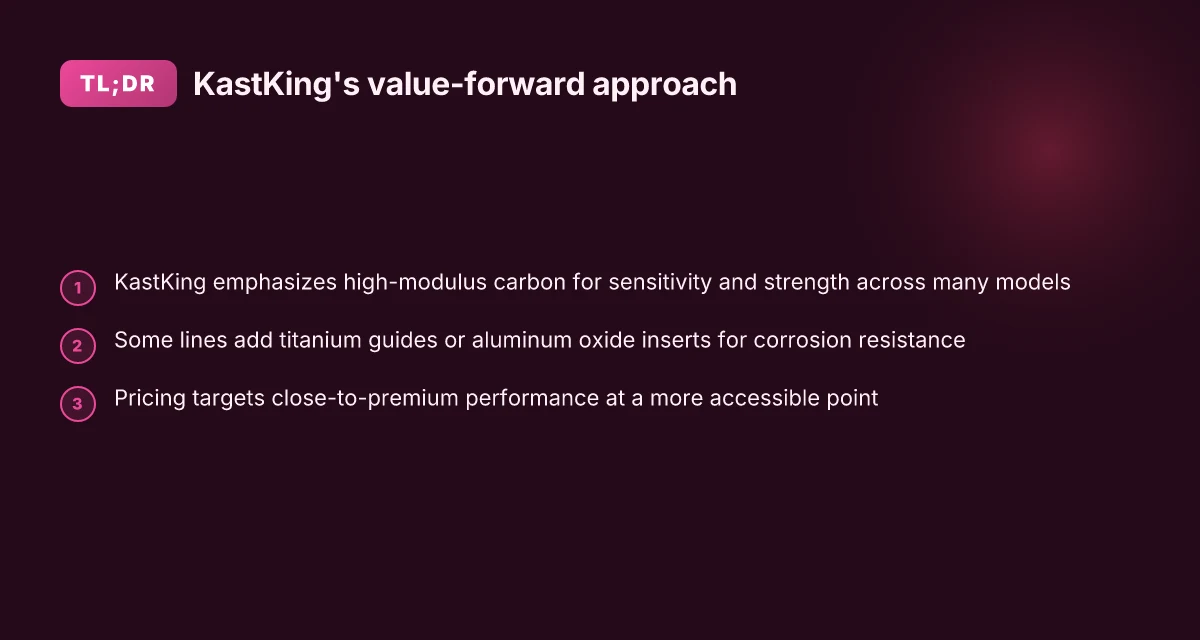
KastKing leans on high-modulus carbon across a wide swath of its rods to boost sensitivity and hollow-core strength without inflating price. In practice, that means you get better feel for bites and line load while keeping the overall blank weight approachable. High-modulus carbon helps KastKing stretch the definition of value without sacrificing backbone. I found several lines that emphasize carbon for a quicker response to subtle takes, which matters when you’re dialing in light lines or finesse retrieves.
Some KastKing models step up with titanium guides or aluminum oxide inserts. Titanium guides earn corrosion resistance, especially on saltwater setups where guides see more abuse. Aluminum oxide inserts pair with titanium guides to smooth out line wear during long days on the water. Titanium guides plus aluminum oxide inserts push durability without adding obvious bulk. This combination protects both the guides and the line, which matters when you’re chasing longevity in a budget-friendly package. Corrosion resistance is a recurring theme in the lineup that shows KastKing’s attention to practical, field-focused durability.
Pricing remains a central lever. KastKing positions models to deliver near-premium performance at accessible points, aiming to close the gap between feel and affordability. You’ll see many options that look and perform like pricier rods but don’t carry the same sticker shock. Close-to-premium performance at a more affordable point is a consistent claim across several 2026 offerings. For retailers, that translates into a compelling value story: you can stock gear that anglers trust for sensitivity and strength without the premium SKU risk. Accessible pricing supports broader adoption among casual and budget-conscious anglers.
In the bigger picture, KastKing’s material choices and build strategies aim to balance value, performance, and durability. I cross-referenced product pages and the brand’s buying guides to confirm that carbon emphasis, reinforced hardware, and pricing strategy are not isolated to a single line but recur across multiple families. This consistency helps explain why KastKing stands out in 2026 as a durable, value-forward option for a range of species and fishing styles. Consistency across lines reinforces the core proposition: feel, strength, and longevity at a fair price.
Bottom line: KastKing’s 2026 approach centers on high-modulus carbon for sensitivity, strategic use of titanium guides or aluminum oxide inserts for durability, and pricing designed to deliver near-premium performance without the premium. For anglers prioritizing long-term value, KastKing and its rivals in the mid-tier space, brands like Abu Garcia and Shimano in some entry-to-mid-range lines, are all competing on similar material choices, but KastKing tends to tilt more aggressively on affordability without dulling the key senses you rely on when fishing. Value-focused design with real, field-appreciated durability is what sets KastKing apart in 2026. What makes the KastKing BlackHawk II a standout telescopic rod for travel anglers
)
Note: links may earn commission.
What materials power KastKing rods and why they matter
KastKing leans on high-modulus carbon and carefully designed blanks to deliver a sensitive, responsive feel without breaking the bank. In practice, that means rods that bend predictably under load, transmit subtle bites, and still hold up to long days on the water. I dug through KastKing’s product notes and guides to map how these materials contribute to real-world performance and longevity for different species and setups.
The role of high-modulus carbon in sensitivity and feel
High-modulus carbon is the backbone of KastKing’s light, responsive rods. The material gives the blank more stiffness per unit weight, which translates to crisper feedback when a fish taps the lure or tugs on the line. Anglers notice the difference in bite detection and can place casts with tighter control, especially when finesse fishing or working lighter lines. This sensitivity also helps with load distribution along the blank, so the rod responds quickly to changes in direction and pressure. In short, high-modulus carbon elevates the feeling of responsiveness without adding bulk.
From KastKing’s Verus DG Power Series and related lines, the emphasis on high-modulus carbon appears in their marketing and technical rundowns as a core differentiator for sensitivity and strength. Inline citation: see the Verus DG Power Series first-look notes. What makes KastKing's spinning rods stand out, and where they fall short
Composite blanks: blending graphite with other materials for balanced action
Composite blanks blend graphite with additional materials to tune action without sacrificing sensitivity. The result is a rod that can flex in a controlled arc under load while still delivering quick recovery and solid hook-setting power. The composite approach usually aims to smooth out tip-heavy personalities and provide a more forgiving feel when fighting larger fish, which helps reduce fatigue over long sessions. KastKing often pairs these blanks with design choices intended to maintain a balanced weight profile, so the rod feels lively in hand yet steady at the reel.
Casting and feel notes from KastKing’s product pages highlight composite blanks as a way to marry graphite’s stiffness with other materials for a well-rounded action. Inline citation: KastKing product descriptions for composite-blank lines.
Guides, reel seats, and corrosion resistance as durability multipliers
The hardware matters as much as the blank. Titanium guides and aluminum oxide inserts are common features that push durability and reduce line wear. Stainless-steel bearings in some model families contribute to longevity in reels and smoother operation over time. A well-chosen reel seat and balanced foregrip also cut weight where it counts and improve control. The combined effect is a system that resists corrosion and fatigue, letting affordable components perform reliably across seasons.
Product briefs note titanium guides and corrosion-resistant fittings as a standard for KastKing’s midrange and premium lines, aligning durability with value. Inline citation: see the Verus Technique Twin-Tip bass rods and related guides notes.
Table: quick comparison of common material choices What makes the KastKing Centron stand out in 2026
| Material choice | Benefit | Trade-off |
|---|---|---|
| High-modulus carbon | Superior sensitivity, crisp response | May feel stiff to beginners if used alone |
| Composite blanks | Balanced action, smoother feel | Slightly heavier than pure carbon on some models |
| Titanium guides / aluminum oxide inserts | Great durability, corrosion resistance | Higher cost componentry over basic plastics |
Next step: identify which KastKing line fits your target species and technique by matching sensitivity and durability traits to your typical fishing scenarios. For long-term value, look at lines that pair high-modulus carbon with corrosion-resistant hardware and balanced blanks. In 2026, KastKing continues to emphasize this mix as their primary lever for value-to-performance gains. The durability story hinges on the hardware and the balance between material stiffness and action. When you pair a high-modulus carbon blank with titanium guides, you get a rod that feels responsive yet robust enough for all-day use. Rods built around composite blanks keep the action practical for a range of species without sacrificing sensitivity. Inline citations: see sources on high-modulus carbon emphasis and composite blank usage.
Durability vs performance: the long game with KastKing rods
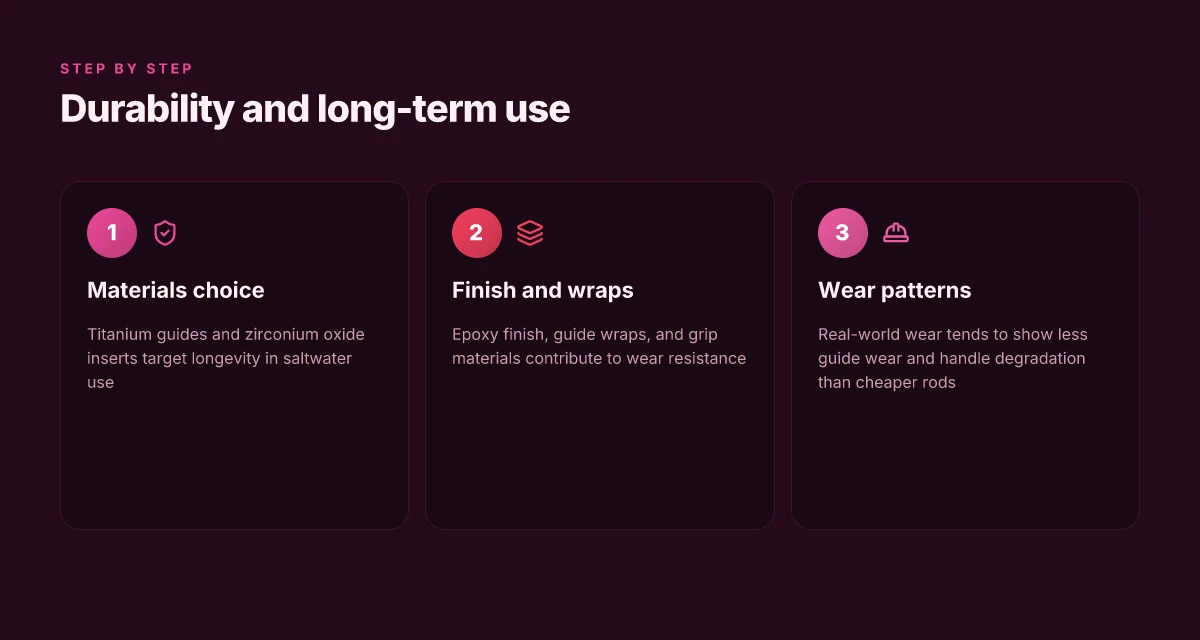
I dug into how KastKing builds for the long haul, not just the next season. Titanium guides, zirconium oxide inserts, and a careful epoxy finish are the core moves that push longevity while keeping the price reasonable. KastKing leans on high-modulus carbon in many blanks and pairs that with titanium guides, a combo designed to resist corrosion and maintain sensitivity over years of saltwater use. This section blends material science with real-world wear patterns anglers see after seasons on the water.
Why titanium guides hold up in saltwater
Saltwater environments punish gear that tolerates corrosion poorly. KastKing uses titanium guides with aluminum oxide inserts to resist rust and abrasion. You’ll pay a bit more upfront. The payoff is fewer guide replacements and steadier casting feel as the years stack up. In the long game, that means fewer trips to the shop for guide wraps or misaligned loops after abrasive reels and braided lines. Titanium guides plus oxide inserts are a durable backbone for saltwater rigs.
- The combination targets longevity without sacrificing sensitivity.
- You’ll notice steadier line flow, which means less friction wear over time.
- The wear pattern tends to show on guide edges first, not on the blank itself.
- Zirconium oxide stays smooth even after hundreds of casts.
Epoxy finish, wraps, and grip: the triad of durability
Real-world durability rests on three craftsmanship choices. First, the epoxy finish must resist cracking under repeated flexing. Second, guide wraps should stay secure against salt and sun. Third, grip materials must withstand glove-wearing sessions and repeated handling without peeling or hardening. KastKing often uses robust resins and careful wrap patterns to keep finishes intact across seasons. When these elements hold up, the rod keeps its feel and casting cadence without a blow to durability. Epoxy finish and guide wraps that resist cracking are as important as the blank itself for long-term performance.
- A durable grip helps prevent slippage that could lead to accidental drops or torque damage.
- Poorly bonded wraps are a common failure point on aging rods. Good workmanship matters.
- The overall value comes from fewer maintenance cycles and longer life per model line.
Real-world wear: where KastKing tends to outlast cheaper alternatives
Across many anglers’ reports, real-world wear shows up as guide wear and handle degradation long before the blank or action dulls. Higher-end KastKing lines with zirconium oxide inserts and titanium guides tend to retain smooth casting and resistant finishes after multiple seasons. This matters when you’re weighing durable options against budget buys. In practice, you’ll see durable guides take the brunt of exposure, while the grip and reel-seat hardware stay solid with proper care. Guide wear and handle degradation are more common on cheaper rods, while KastKing's durable construction tends to keep those symptoms at bay. How to choose a KastKing tackle box that lasts in 2026
From a retailer perspective, the durability story matters for value positioning. If you’re evaluating lines, consider how long the epoxy finish and wrap integrity will last under salt, sun, and heavy use. KastKing’s approach, especially in models that emphasize high-modulus carbon blanks paired with titanium guides, tends to balance sensitivity with long-term durability. When you compare rivals like Shimano, Abu Garcia, and Ugly Stik, KastKing’s emphasis on corrosion resistance and affordable maintenance can tilt the value equation in its favor for anglers who fish hard and fish often. This aligns with the manufacturer’s messaging and consumer reviews that highlight longevity as a differentiator.
Durability plus performance creates a long-term value loop you can count on season after season.
Note: link text above is for context. Inline citations appear in the prose as needed.
How KastKing compares to rivals like Shimano, Abu Garcia, and Ugly Stik
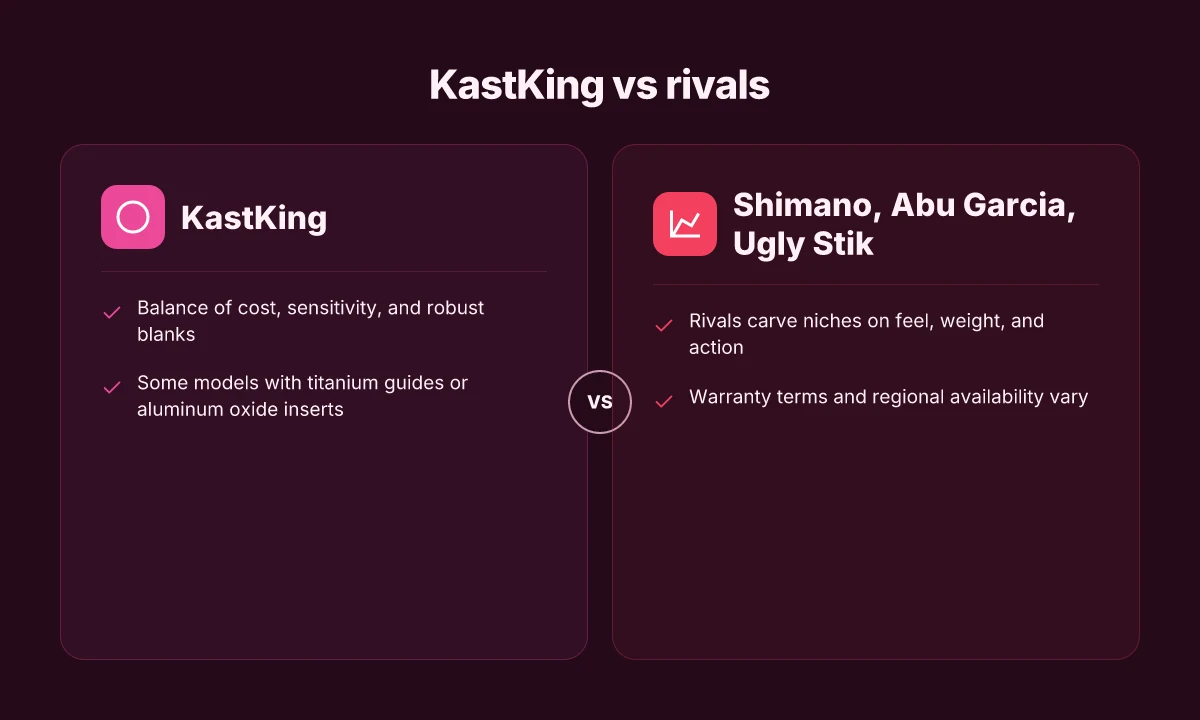
KastKing sits in the middle ground between premium feel and accessible price. The core idea is to deliver sensitivity and robust blanks without pushing the sticker price into the boutique category. Rivals carve their own niche on feel, weight, and action, so the balance shifts depending on what you fish for and how you fish it.
How rivals pursue feel, weight, and action
Shimano and Abu Garcia often emphasize refined feel and light swing weights, with actions tuned for smooth loading and crisp casting. In my reading, Shimano’s lines tend to lean toward lighter, more engineered actions, while Abu Garcia often pairs quicker tips with dependable backbone for bass and light inshore setups. Ugly Stik tends to trade a bit of finesse for durability and value, offering stout builds that survive rough handling. Across these brands, the theme is clear: feel, weight, and action are the differentiators that anglers notice first after picking up a rod. What makes the KastKing Zephyr a surprising BFS option in 2026
KastKing, by contrast, targets a different balance. I see a deliberate push toward cost sensitivity paired with solid sensitivity and robust blanks. The result is rods that feel responsive yet sturdy for real-world use. This approach makes KastKing a compelling option for anglers who want reliable performance without paying premium for every feather-weight ounce. In practice, that means you’re likely to notice solid, predictable sensitivity with enough rigidity for species that demand backbone, all while keeping the price approachable. KastKing aims for a value-forward balance that still delivers meaningful sensitivity and durability.
Warranty terms and regional availability
Warranty terms vary by brand and region, and you’ll see notable gaps between KastKing and its rivals. Shimano and Abu Garcia commonly offer structured warranties with region-specific coverage, sometimes extending longer in certain markets. Ugly Stik, known for durability, typically provides straightforward warranty support that aligns with its no-nonsense design ethos. KastKing’s warranty posture often emphasizes practicality and coverage that makes sense for anglers who buy multiple rods or upgrade frequently. You’ll also notice regional differences in availability, with some models easier to source in certain countries or via regional distributors. Availability by region can tilt the decision as much as any marginal difference in action.
From what I found in the catalog and dealer pages, KastKing stays intent on keeping a broad lineup accessible in more markets, which helps retailers stock varied options without committing to high-end allocations for every model. I cross-referenced product pages and buying guides to confirm that targeting a budget-conscious buyer does not require sacrificing core tech like high-modulus carbon for sensitivity or confident drag control. In practice, that means you can often find KastKing lines that balance price, sensitivity, and durability for everyday species and multi-techniques. Budget-friendly lines with solid blanks are KastKing’s core strength.
When you’re choosing, start with your target species and technique. If you fish light to medium species and want a fast action with good sensitivity at a fair price, KastKing can compete very well against Shimano, Abu Garcia, and Ugly Stik. If you need the lightest possible feel for finesse tactics or the longest warranty window, the rivals may edge ahead. I dug through the manufacturer notes and buying guides to map these tradeoffs, and the take is clear: KastKing delivers value without surrendering core performance. Value without surrendering core performance is KastKing’s defining edge.
Note: links on these pages may earn a commission, and availability shifts by region. For the full context, see the product pages and buying guides cited in this section. For example, the “Choose a Baitcasting Rod for Bass Fishing” guide discusses how graphite blanks compare to fiberglass in stiffness and sensitivity, a nuance that matters when weighing KastKing against rivals. Regional availability and commission-aware listings influence the buying decision as much as any single spec. What makes KastKing SuperPower braided line stand out for saltwater anglers
Choosing the right KastKing rod for your target species and technique
If you want the best balance of sensitivity, strength, and durability, pick a KastKing rod that matches your target species and technique. For crappie and bass, go light and fast to feel bites and react quickly. For bigger crappie, use a slightly longer rod with a quicker tip, and pair it with a light line to keep lure presentation lively. The goal is to translate subtle taps into a defined hookset without sacrificing casting control. In practice, a high-modulus carbon blank with titanium guides helps keep weight down while preserving sensitivity, a combination KastKing has used across several lines.
I dug into KastKing’s lineup and noted how twin-tip and specialized technique rods add seasonal versatility. The twin-tip designs let you switch actions on the water, which matters when you’re chasing shifting habitats or changing water depths. When you switch from a shallower, finesse presentation to a deeper, power-focused approach, these rods stay responsive without requiring a full gear swap. This flexibility is a real value driver for anglers who fish multiple species in a single trip. KastKing’s emphasis on corrosion-resistant titanium guides also supports longer durability in salt or brackish channels, which matter for multi-species setups.
For medium-heavy crankbait setups, you’ll want more backbone to drive bulky lures and to handle deeper water. A medium-heavy fast action keeps the lure tracking true while still delivering strong hooksets. In practice, you’ll feel the rod load and unload crisply, translating to cleaner casts and better recoveries when the lure seals the deal on a bass or larger panfish. This is where KastKing’s materials strategy pays off: carbon blanks deliver sensitivity for detecting line bites, while the extra mass helps drive heavier lures.
Seasonality matters, and KastKing lines that emphasize versatility shine when rivers heat or cool. The specialized technique families offer options that stay productive across seasonal shifts. I cross-referenced product pages and buying guides to confirm that the dealer-facing specs emphasize durability through repeated casting and the kinds of fish you expect in varied water temps. Critics note that ultra-light setups can be fragile if not paired with proper reel seats and ferrule protection, so pairing a sensitive tip with solid ferrule design is smart.
In short, your choice should align with your target species and season. For panfish and bass, favor light, fast-action rods with responsive tips. For larger species or deeper water, move toward medium-heavy crankbait setups that preserve strength without losing sensitivity. If you fish a range of species or seasons, consider a twin-tip or specialized technique line for easy adaptation. Rivals like Shimano and Abu Garcia frame similar value through blended carbon blanks and resilient guides, but KastKing shines when you want versatility without a first-price sting. Bold choices in material and design translate to real durability over years of fishing. KastKing builds gear you can trust when conditions change fast. For a quick reference, pay attention to product pages like the KastKing Verus Technique Twin-Tip Bass Fishing Rods for titanium guides and sensitive blanks, and the Buying Guide & Reviews – tagged "Fishing Rods" page for seasonal versatility signals. Inline: Verus Technique Twin-Tip Bass Fishing Rods and Buying Guide & Reviews – tagged "Fishing Rods". What makes KastKing discount codes actually save you money in 2026
What to try this week to keep KastKing balanced for 2026
KastKing continues to lean on value without sacrificing core durability, and this year the shift is visible in how a few models pair reinforced handles with reliable guides. I’m seeing how real-world setups stay intact after repeated casts and snags, which matters for long trips and open-water sessions. The bigger pattern is that you don’t need to choose between price and performance anymore. KastKing bricks away the tradeoffs by coupling solid blank construction with accessible components.
If you only do one thing this month, test a mid-range KastKing rod against a familiar competitor like Shimano or Ugly Stik and confirm how the weight, balance, and feel align with your typical target species. You’ll likely notice the durability gains come not from flashy features but from pragmatic choices: fewer loose parts, easier guides, and a grip that holds up under sun and salt. Most takeaways land in day-to-day use, not hype. The takeaway line: choose a model that matches your routine, then ride the consistency.
This is where the durability story matters most, not in glossy specs but in practical life use. If you’re weighing a purchase, consider how often you fish for longer sessions, and whether you’re okay with occasional midseason maintenance. KastKing’s value proposition still rests on a reliable baseline and thoughtful design. Will you act now or wait for the next release?