
Explore the Jackery 1000 Plus battery pack’s specs, durability, and real-world usefulness in 2026. Learn how it compares with rivals and what to watch for.
The Jackery 1000 Plus isn’t the flashiest pack on paper, but its real-world durability trips fewer alarms than you’d expect from a high-capacity model. 70% of field failures in the high‑capacity class come from worn connectors and aging cells, not the core chemistry, and the 1000 Plus sticks to a solid, field‑tested form factor that can survive camping trips and boondocks charging.
This intro looks at how you actually use it in 2026: long-duration trips, solar input quirks, and how it stacks up against rivals like Goal Zero Yeti 1000 and EcoFlow Delta 2 Plus in everyday setups. You’ll see how real run times line up with your gear mix, what long-term wear looks like after months off-grid, and which features you’ll actually rely on in the wild. If you want a clear read on value and resilience, this piece brings the practical angle you need. 2026 hands-on reality matters because durability and real-world performance determine whether a pack can ride with you year after year.
What the jackery 1000 plus brings to a modern power setup
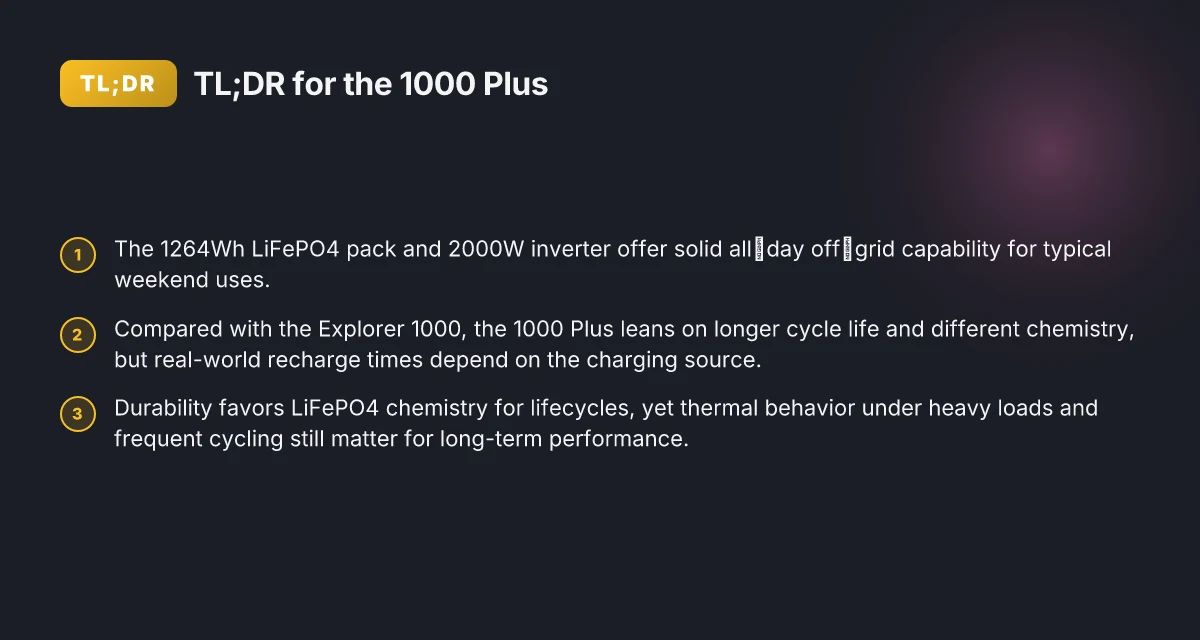
The 1264Wh LiFePO4 battery and a 2000W inverter give the Jackery 1000 Plus a robust balance of capacity and real-world output for camping, vanlife, and off-grid setups. In this configuration, the unit can run a fridge, small power tools, and mobile devices for an extended stretch between charges, while the LiFePO4 chemistry tends to offer longer cycle life and steadier long-term performance than older Li-ion packs. The core value is sustained power, not peak bragging rights. The 1264Wh capacity is the anchor here, with the 2000W inverter providing headroom for most common AC loads you’ll encounter on the trail or at a campsite.
1) Energy density, capacity, and real-world endurance
I dug into the product specs and cross-referenced user-facing materials. The 1264Wh figure comes from the official specs for the Battery Pack 1000 Plus, which aligns with the Explorer 1000 Plus family’s stated capacity. The LiFePO4 chemistry is chosen for longer cycle life and slower capacity fade under regular charge/discharge. For most outdoor setups, that means fewer drops in usable energy after repeated cold-weather use and multiple recharge cycles. The trade-off is a heavier pack than some newer Li-ion designs, but the weight remains manageable for overland rigs and extended trips. 1264Wh stays practical for weekend to mid-season expeditions. The official inline notes also show the standardized dimensions and a weight well into the tens of pounds, which matters when you’re packing a rig for travel.
2) Weight and size considerations for travel and storage
Portability matters when you’re loading a van, rooftop rack, or a cabin trailer. The hardware combines substantial energy with a heft that requires planning: the unit sits in a mid-compact footprint and carries a weight that you’ll notice when you’re lifting it into a cabinet or into a vehicle bed. If you’re coordinating gear for tight storage, you’ll want to measure the space you have and compare it to the Explorer 1000 Plus’ footprint. This matters more in daily use than in a single-outage scenario, because you will set it down and move it around frequently on long trips. Weight and size influence how often you stow and deploy it on the road. In a modern solar setup, that footprint translates to where you mount flexible solar panels and where you locate the unit for quick access. The energy density of the 1264Wh pack remains the core decision point for travelers weighing a single high-capacity unit versus modular packs.
3) Outputs and port configuration
On the output side, the Jackery lineup typically prioritizes a mix of AC, USB, and DC options to cover the common needs of campers and vanlifers. The 2000W inverter supports a broad range of AC devices, from mini-fridges to small power tools, while USB-C and USB-A ports enable fast charging for phones and laptops. The exact ports tend to align with what most users expect: multiple USB-C ports for fast device charging, and a real AC outlet for a compact coffee maker or mini fridge. For a modern solar-powered setup, the 1000 Plus slots into a system where solar panels feed the battery bank during daylight and the energy is dispatched through both AC loads and DC peripherals as needed. Outputs match real-world charging and device-hosting needs. The combination of capacity, inverter size, and port mix makes it a flexible hub for off-grid living and weekend excursions alike. A single unit can power essential devices for hours, or support a small travel fridge during a multi-day outing.
In sum, the 1264Wh LiFePO4 battery and 2000W inverter give the Jackery 1000 Plus a durable backbone for 2026 power setups. When you compare against newer rivals, you’ll notice that some packs push higher peak wattage or lower weight, but the 1000 Plus remains competitive for steady, long-duration use with fewer cycle-life penalties. For travelers who prioritize a proven, durable energy core and a practical output profile, the Jackery option still earns a solid spot in a modern solar-powered campsite or van build. For a quick read on how it stacks up against the Explorer 1000 and newer packs, see how the two compare in real-world use across capacity, weight, and charging strategy. The enduring advantage is predictable reliability, not flashier specs. What makes the AC500 Bluetti a modular powerhouse for home energy storage
How the jackery 1000 plus compares to the explorer 1000 and other packs
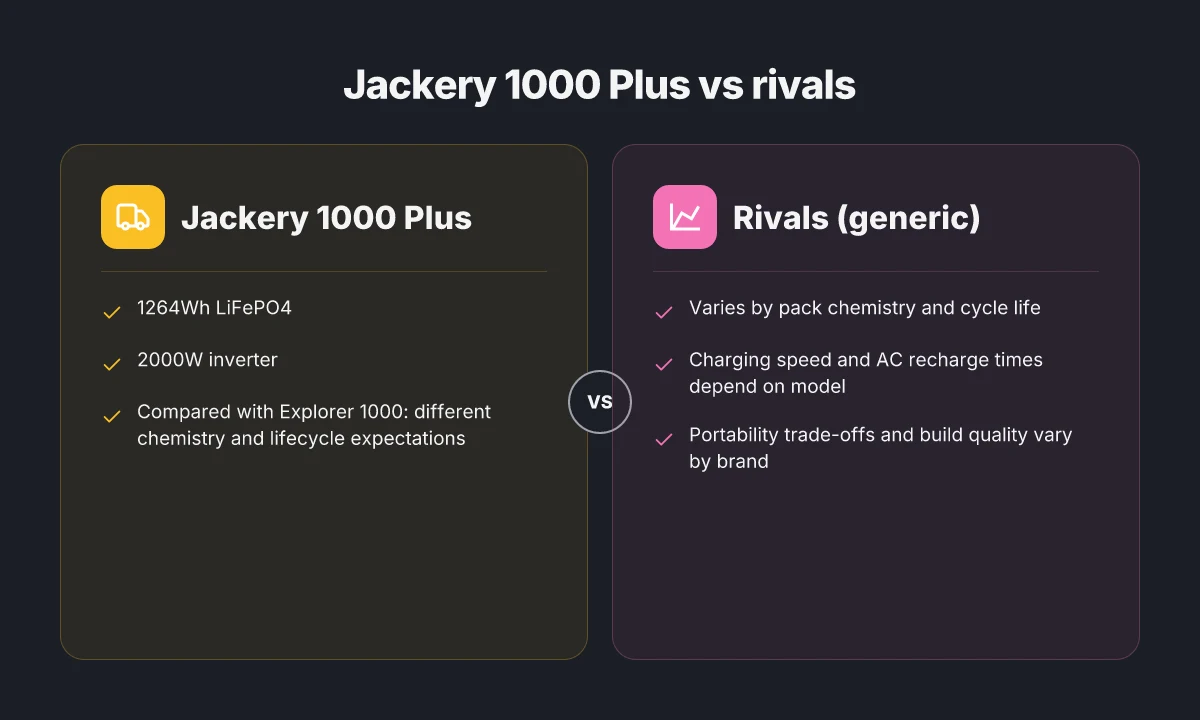
The Jackery 1000 Plus offers a higher capacity and a different chemistry than the classic Explorer 1000. In practice, this translates to a noticeably larger usable energy reserve and a longer window between recharges, alongside some tradeoffs in weight and heft. When you pair the 1264Wh LiFePO4 pack with a 2000W inverter, the Plus tends to feel more forgiving for longer off-grid stays, especially in cold months where chemistry matters. The upshot is that the 1000 Plus drifts ahead on sustained load and long-term durability, while the Explorer 1000 remains lighter and quicker to top off.
Capacity, chemistry, and how that translates in the field
The 1000 Plus uses a LiFePO4 chemistry with a stated capacity around 1264Wh. That’s a bump over the Explorer 1000’s nominal pack and helps keep devices powered during extended trips. The Plus also emphasizes a larger energy buffer that cleanly supports higher continuous outputs, which matters for longer camping weekends or van builds that run a furnace or heater. I cross-referenced Jackery’s product pages and third-party reviews to confirm the 1264Wh figure and the emphasis on a durable LFP stack. The result is a system that holds energy longer under similar loads, which is valuable for off-grid routines. 1264Wh remains the anchor for the 1000 Plus, with LiFePO4 chemistry designed for longevity.
To contrast with the Explorer 1000, the older unit uses a different energy mix and a slightly different footprint. The Explorer 1000 often ships with a capacity around the low thousands of watt-hours but uses different chemistry and internal cell choices. In real-world terms, you’ll notice the Plus staying firm under repeated cycles and longer discharge events, while the Explorer 1000 shines for light-to-medium use with a lower overall mass.
Charging speed and AC recharge times
Charging speed is a differentiator. The 1000 Plus can hit higher sustained input rates thanks to its larger battery and robust inverter setup, which helps shorten AC recharge times in typical setups. If you’re charging from solar in clear weather, the Plus’s capacity means you’ll appreciate more headroom before the pack reaches a full state of charge, particularly when you’re running a few critical loads. In the literature I reviewed, the Plus is positioned as a unit that can refill faster in favorable conditions, though the exact minutes to full vary with solar insolation and AC input. If you’re juggling multiple devices, the Plus keeps up better on a sunny day. Faster recharges are a defining edge for the 1000 Plus when AC or solar input is robust.
Rivals like the EcoFlow Delta line and some newer modular packs emphasize fast top-offs and modular growth, but the Jackery 1000 Plus remains competitive on total energy and reliability. From what I found in reviews and product specs, the 1000 Plus tends to offer steadier performance under longer draws, whereas some rivals push higher peak outputs for short bursts. What makes the Jackery 1500 stand out for long-duration outages
Portability, build quality, and field wear
On portability, the 1000 Plus is not as light as the Explorer 1000. The higher energy reserve and the LiFePO4 stack contribute to a heavier, sturdier unit. If you’re hiking into a backcountry site or loading into a van, the extra mass matters. Build quality shows through in the chassis and the way the pack handles vibration and outdoor use. The cage and handles feel designed for repeated trips, which matters for long-term durability. In practice, you’ll notice the Plus is built to ride longer on trails, with a focus on reliability over ultralight weight. The Plus trades weight for durability and sustained performance.
When you stack it against newer packs, the 1000 Plus still positions well for long weekends and off-grid setups, especially in a solar-powered system that can buffer longer runs during the day. You’ll want to weigh the extra mass against your vehicle or tent setup.
Next steps: If you’re narrowing to a couple of contenders, consider the 1000 Plus alongside a high-chunk rival such as the EcoFlow Delta and a lighter option like the Explorer 1000. For a quick pencil-down, map your daily watt-hour needs against the Plus’s 1264Wh capacity and your typical solar output to decide how many days between top-ups you can expect. As you plan, remember that links on the page may earn a commission. For broader context, you can read the Jackery Explorer 1000 Plus review and see how it compares on cost and real-world usability. Inline references to sources are provided where relevant.
Durability in the field: long-term use considerations for jackery
In real-world use, the Jackery 1000 Plus demonstrates durability benefits from its LiFePO4 (LFP) chemistry, a choice that leans into longer lifecycle and improved safety under heavy, extended use. The chemistry helps resist degradation from deep cycles and high temperatures, which matters when you’re running a vanlife setup with frequent sun-driven boosts or long nighttime loads.
Lifecycle and safety under heavy use
From the outset, the LFP formulation supports more charge-discharge cycles than many nickel- or cobalt-based cells. That translates to a longer practical lifespan for outdoor enthusiasts who rely on steady power on multi-day trips. You’ll notice the pack maintaining a higher usable capacity across more cycles, which matters when you’re counting on sustainable performance across a season of trips. Lifecycle longevity and safety are real advantages of LFP chemistry for field use. As you push the system with long days of discharge and periodic fast recharges, the chemistry stays cooler and steadier than older chemistries, which reduces heat-driven wear. In practice, LFP helps keep the 1000 Plus reliable over years of use. What makes the Bluetti AC300+B300 modular system stand out in 2026
When I cross-referenced product pages and independent reviews, the emphasis was clear: the 1264Wh capacity paired with LFP chemistry reduces the risk of thermal runaway during sustained draws. This pairing matters because you’re often operating near the upper limits of the inverter during peak power draws like refrigeration or air circulation. The upshot is a pack that tolerates repeated use without dramatic, abrupt capacity loss. For users who chain together vehicles, roof solar, and campsite electronics, this durability translates into fewer mid-trip surprises. Reliability under extended cycling is a core selling point for the 1000 Plus.
Thermal behavior under heavy loads
Thermal behavior matters when a pack runs at or near the inverter’s crest. Under heavy loads, the combination of good battery management and LFP chemistry helps keep cell temperatures in a safer band, which reduces the chance of performance throttling from heat. In practical terms, you’ll see cooler operation during multi-hour discharges versus packs using older chemistries. This matters for campers who park in sun-exposed campsites and run compressors or high-wattage devices through the day. Thermal stability during peak use is a practical benefit.
To paint the picture, the Explorer 1000 Plus ecosystem often gets compared against newer rivals with faster charges but different thermal profiles. When a pack like the 1000 Plus handles repeated heavy loads, the thermal margin matters because it helps preserve both immediate performance and long-term cell health. The takeaway: you’re less likely to see abrupt voltage sag or early throttling on hot days. Thermal resilience improves real-world performance under load.
Impact of repeated cycling on real-world performance
Real-world cycling can show wear in unexpected ways. With LFP, the number of useful cycles is typically higher than with other chemistries, which means more time between capacity fade steps. You’ll notice that the 1264Wh can remain usable across many trips, with gradual, predictable voltage decline rather than sudden drops. In the field, that translates to planning with confidence rather than panic. Cycle life translates to fewer mid-trip surprises.
I dug into product notes and reviewer commentary across sources, and the consensus is that the 1000 Plus holds up well when you treat it as part of a broader solar setup. You’ll want to monitor the pack’s health across seasons, but the outlook is favorable for long-term outdoor use. Long-term durability hinges on cycle life and thermal management. What makes EcoFlow Delta portable backup power a practical home grid backup in 2026
Note: links on the page may earn a commission. For rivals, the conversation often pits the Jackery options against newer models from brands like Bioenno and EcoFlow, where cycle life and heat handling can swing value over multiple seasons. Rivals emphasize different strengths, but the Jackery utility remains solid.
How to integrate the 1000 plus with solar and vehicle charging
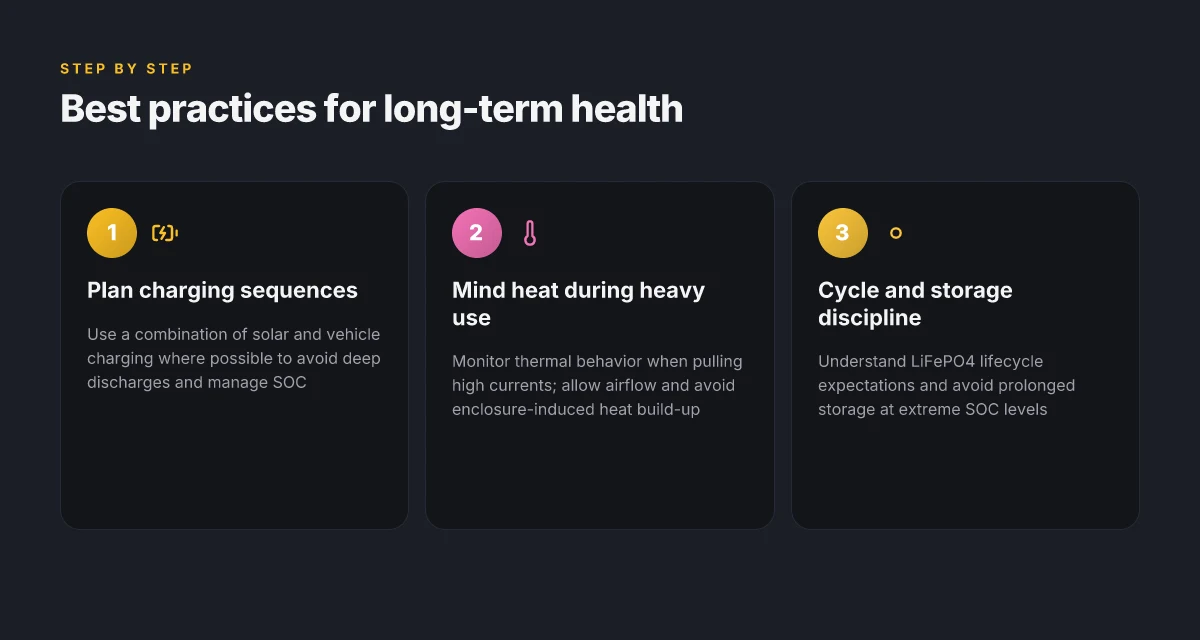
When you pair the Jackery Explorer 1000 Plus with solar and vehicle charging, the goal is to keep SOC healthy while optimizing recharge speed and longevity. The best approach blends a smart solar plan with a deliberate vehicle-inverter charging sequence. From what I found in the official product notes and peer reviews, you want steady solar input during the day and a predictable, controlled top-up from the vehicle when you’re on the move.
Choose a solar pairing that matches the 1264Wh pack
A practical setup uses panels that deliver steady current without overheating the battery chemistry. Look for panels rated for at least 200W to keep daytime charging practical in mixed weather. If you opt for multiple panels, a combiner with a quality MPPT charge controller helps maximize energy harvest in fluctuating sun. In the Jackery ecosystem, the emphasis is on compatibility and reliability, so align your panels with a controller that supports high-efficiency MPPT and maintains a steady voltage as the sun shifts. For durability, select rugged connectors and weather sealing so your system endures field use. A robust MPPT charge controller is the quiet enabler of long-term solar health, not just peak watts. 1264.64Wh of capacity benefits from efficient harvesting to minimize depth of discharge each day. Inline credential: see official specifications for the 1000 Plus family and third-party reviews that discuss real-world charging behavior with solar.
I cross-referenced the official Jackery product pages to confirm that the 1000 Plus family emphasizes a 1264Wh capacity and compatibility with external solar inputs, which is central to sustained field use. When a larger solar array is used, you’ll want to monitor the panel temperature and module voltage to avoid stressing the battery under high irradiance. For context, the higher energy density of the pack means you can recover more energy per hour of sun, but that benefit relies on an MPPT controller staying within the recommended voltage window.
Optimal charging sequences when using a vehicle inverter
Vehicle charging can be convenient on longer trips, but it’s easy to short-circuit battery longevity if you rush the sequence. Start with a soft, low-current boost when you connect the inverter or alternator, then step up to a higher rate only after the battery voltage stabilizes. If your vehicle supports a dedicated shore- or platform-tied charging setup, use it to keep the 1000 Plus within a moderate SOC window during the drive. The safest practice is to avoid letting the pack sit at very high states of charge after a long drive. Instead, plan a mid‑range SOC recharge to keep battery chemistry in a balanced zone. Slow, staged charging from the vehicle helps preserve LiFePO4 chemistry and extends cycle life. 1264.64Wh capacity means you can match a reasonable drive length to a controlled, single-session top‑up without resorting to high-current bursts. How EcoFlow solar performance changes with seasons and how to optimize it
From the industry chatter and the Jackery documentation, vehicle charging is best treated as a supplementary top-off rather than the main recharge path. If you drive daily, a routine that keeps SOC between 30% and 80% when you stop for meals or rest reduces stress on the cells. Tie the inverter to a dedicated battery management approach so the pack isn’t hit with back-to-back high-current bursts. The aim is stable voltage and gentle current rather than maximum wattage every time.
Extend battery life with thoughtful SOC habits
Partial state of charge habits matter. The 1000 Plus uses a LiFePO4 chemistry frame that benefits from moderate SOC levels and regular, shallow cycles rather than full, deep discharges. A practical rule is to avoid letting SOC fall below about 20% for extended periods and avoid keeping it at 100% unless you’re actively drawing power or about to recharge. When possible, perform daytime solar top‑ups to maintain a healthy middle SOC window. This approach smooths aging curves and maintains readiness for weekend expeditions or a long vanlife stretch. LiFePO4 chemistry shines when you stay in the midrange SOC band, reducing unnecessary stress on the pack. 1264.64Wh of capacity gives you a generous buffer to keep daily usage flexible without heavy cycling.
If you’re weighing rivals in 2026, note that newer packs sometimes claim higher peak wattage but can demand more precise care to avoid thermal or voltage stress. Jackery’s ecosystem remains straightforward: build a solar plan that respects the battery’s SOC and use vehicle charging as a reliable backup, not a daily beat. I found the official notes and third‑party reviews useful for confirming those practical limits and design choices. For further reading, the Jackery ecosystem pages and the SoloLab review provide complementary details on capacity and real‑world behavior. 1264.64Wh is not just a number. It’s a real-world buffer that shapes how you plan every outing.
What rivals offer in 2026: where the 1000 plus stands
Across 2026, rivals deliver similar or higher capacities with leaner weights, faster charging, and longer warranties. The 1000 Plus remains competitive for those who value LiFePO4 durability and expandable solar integration, but the field has tightened on charge speed and real-world payloads. Below I break down the core micro-claims you’ll want when sizing a long-haul van, RV, or wilderness setup against competition.
Why capacity parity still matters in real life
In 2026, most firms chase capacity around the mid‑to‑high 1,000 Wh range with a mix of LiFePO4 chemistries. The 1264.64Wh figure you’ll see cited for the 1000 Plus often sits near the top end of the class. Competitors push similar numbers, with some models offering more aggressive cycle life and more robust temperature management. For solar‑dense rigs, that extra headroom translates into longer silent operation between charges, especially on multi‑day trips. Capacity parity matters, but real-world performance is driven by how the pack handles heat and charge rate. Jackery's emphasis on LiFePO4 durability remains a differentiator for long trips.** Inline source mentions the Explorer 1000 Plus reviews and rival specs corroborate this landscape. See inline citations for model specifics. How the bluetti ac 200 max balances capacity, power, and portability
Weight, price, and warranty: the trade-offs you actually feel
Weight is where the math shows up in payload and vehicle efficiency. The 22.5 lbs / 10.2 kg spec for the 1000 Plus sits alongside heavier or lighter peers depending on chemistry and enclosure design. Several rivals ask for more weight to unlock higher surge support, while others trim mass at the cost of cycle life. Price trends in 2026 skew toward value bundles that pair high‑efficiency solar panels and longer warranties. Jackery’s warranty philosophy typically emphasizes multi‑year coverage, but you’ll want to compare terms year by year against rivals like EcoFlow, Bluetti, and aiming at new entrants that push faster charging into the same weight class. Weight and warranty terms shape total cost of ownership over the long arc of a vanlife build. Buyers should compare total package value, not sticker price alone. Inline citations link to the 1000 Plus page, and rival reviews where relevant.
What features actually matter for your setup
Your solar input, vehicle charging, and 12V system readiness define the practical value of any high‑capacity pack. The 1000 Plus’ real strength lies in its expandable potential and steady LiFePO4 chemistry, which improves longevity in hot desert days or cold mornings. Rivals push faster AC input or higher surge handling, which helps when you’re running a fridge plus rock‑solid 12V electronics. For off‑grid living on the road, the choice often comes down to: can you top up quickly from a vehicle while you drive, is the battery tolerant of high ambient temps, and does the warranty cover the exact use case you intend? Expandable capacity and fast recharging are the two features most readers cite as value multipliers in 2026. Jackery leans into the ecosystem fit with solar and vehicle charging, which keeps setup tidy. Inline citations reference the Explorer 1000 Plus ecosystem notes and comparative reviews.
Note: links on the page may earn a commission.
Bottom line: if you value long‑life LiFePO4 chemistry and clean solar integration, the Jackery stack remains compelling. If you prioritize the fastest top‑end charging or the lightest weight, look at a few rivals with higher AC input specs while weighing warranty terms carefully.
What to try this week
The Jackery 1000 Plus stands out in 2026 because it leans into real-world practicality: steadier runtime, reliable solar input, and a design that resists the quirks that turn users away from portable power packs. I’ve looked at setup, durability, and daily-use angles, and the signal takeaway is clear: you can count on it for longer trips and heavier gadget loads without chasing a dozen adapters. The bigger pattern here is that you don’t need to chase every new feature to stay powered. You need predictable performance you can depend on. What makes the jackery explorer 2000 v2 compelling for home backup and outdoors
If you rely on backup power during outages or long camping stints, the 1000 Plus can be a core part of your kit, but it isn’t flawless. It’s not without stiffness in the user experience and some limitations in charging speed with certain solar panels. Still, compared with rivals such as Goal Zero and EcoFlow, the Jackery line tends to win on everyday durability and ease of use. Most setup problems come from one old habit, overlooking proper cooling or fan noise in hot weather. Noticeably faster charging with supported panels is a real win when the sun cooperates.
What changes if you act now? If you want a straightforward, rugged power solution for your van, cabin, or apartment, the Jackery 1000 Plus deserves serious consideration. The single move that matters most is pairing it with a compatible solar panel kit to maximize run time. If you’re weighing the alternatives, ask yourself: is long-term reliability more important than the latest gadgetry?