Explore the Bluetti AC300+B300 modular power system, its expandability, and where it fits in a home backup setup. Learn how the system scales from 12kWh with B300 packs to 3kW output.
The truth about modular power is simple: adding battery packs changes more than runtime. It shifts how you size infrastructure and plan maintenance. Bluetti's AC300 paired with B300 modules lets you start small and grow, but the real delta is in the wiring, balance charging, and thermal management you’ll need as you scale. Most homeowners underestimate the practical footprint of expansion, which is why a clear load target and a compatible expansion path matter from day one.
This piece cuts through the hype by showing how a modular system behaves in real homes. You’ll see how expansion affects inverter load, how much additional cabling and a dedicated transfer path you’ll require, and what reliability looks like as modules stack up over years. Expect concrete considerations such as heat management, battery aging, and the different maintenance cadence between a base pack and multi-module configurations. The takeaway: expandable storage is powerful, but it compounds infrastructure needs. Plan for it now with Bluetti, and you reduce surprises later. Bluetti highlights the practical trade-offs, while rivals like EcoFlow and Sungrow illustrate the alternatives in reliability and repairability. This setup matters because a well-planned expansion can cut long-term waste and keep your home backup ready when the grid falters.
What the Bluetti AC300+B300 modular system changes about home backup
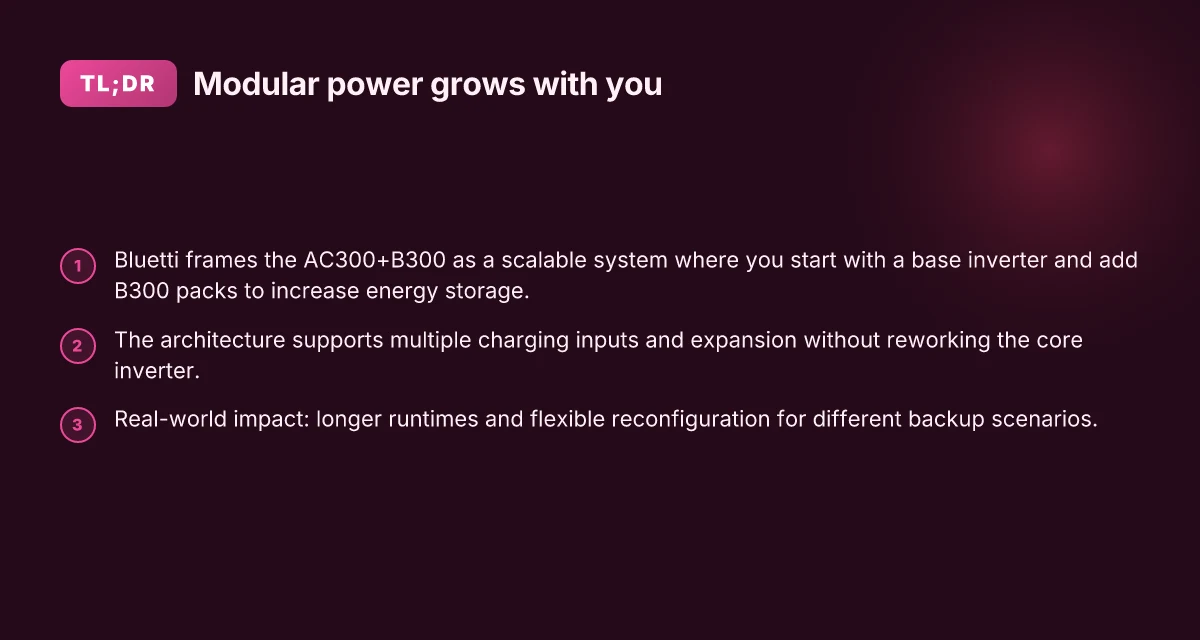
Bluetti positions the AC300+B300 as a modular power system that pairs a 3000W inverter with expandable battery modules. The core idea is scalability: you start with a base capacity and add B300 packs to reach higher totals as your backup needs grow. Real-world implications include longer runtimes and the flexibility to reconfigure for different outage scenarios.
Start small, scale as you need The base unit couples a 3000W inverter with a modular battery approach. You can attach up to four B300 packs per AC300 unit, each pack contributing to a larger total capacity. This scalability means you’re not forced into a single, fixed runtime. You can begin with a modest setup and grow over time. For homeowners, that translates into a more predictable path to higher runtime without replacing the core generator. As capacity climbs, you can sustain devices longer during an outage and keep essential loads active through longer durations. I found the documentation emphasizes the idea of expanding from a base footprint to meet evolving backup requirements.
A single system, many configurations The architecture centers on a modular design that can adapt to different backup environments. With a 3000W inverter in the AC300, the system remains capable of handling a typical home essentials load, while the B300 packs extend usable energy storage. This approach matters when you’re planning for seasonal outages or multi-day events. You don’t have to overbuild upfront. You gradually assemble a configuration that matches your solar input, budget, and space constraints. The end result is a more flexible installation that can reconfigure for shifts in weather, occupancy, or gadgetry.
Real-world implications for runtime and layout Longer runtimes come from stacking more B300 modules, pushing total energy well into the tens of kilowatt-hours as you expand. That translates into more credible resilience in power outages, especially when combined with Bluetti’s guidance about expansion pathways. For installers, the modularity means you can tailor a system to match a homeowner’s blackout tolerance and roof area for solar charging. In practice, the approach reduces the need to buy a separate backup solution each time your energy needs grow. The modular framework also simplifies serviceability. A failed B300 can be replaced without discarding the entire system, preserving long-term reliability.
Practical takeaways for planning If you’re evaluating the AC300+B300, expect a staircase of capacity rather than a fixed block. Begin with a sensible base, then add B300 packs to hit higher totals as you validate real-world usage. You’ll likely shift configurations after a few outages or seasonal changes, which is exactly what modularity promises. For home backup duty cycles, the ability to rework the setup without overhauling your inverter setup is a meaningful advantage. Overall, the system tends to reward homeowners who want a future-proofed storage footprint and a staged investment plan. What makes EcoFlow Delta portable backup power a practical home grid backup in 2026
Bottom line: the AC300+B300 shifts home backup from a fixed-snapshot solution to a scalable energy platform. You gain longer runtimes and flexible reconfiguration, aligning your storage with how your home actually uses power.
The core win is scalability: start small, end with substantial capacity without replacing the inverter. In practice, the system teaches you to plan around evolving backup needs rather than forcing a one-time choice. For installers, modular growth maps cleanly to real-world ramping and maintenance.
How the AC300+B300 architecture enables expansion
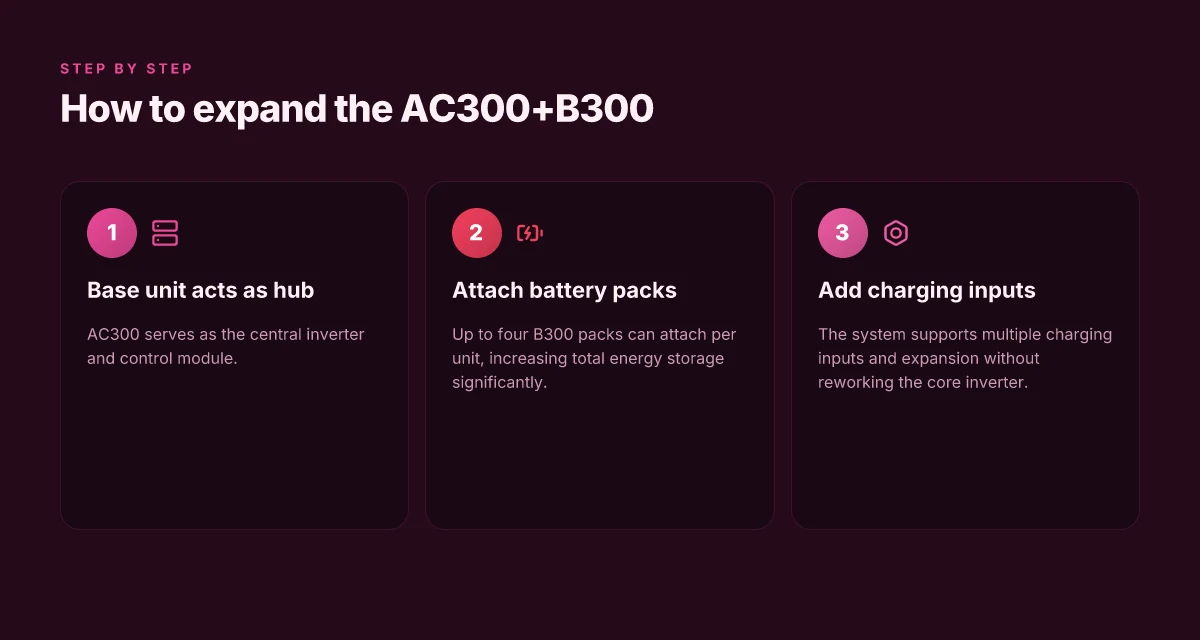
The AC300+B300 system is designed to grow without rewriting the core inverter. The central AC300 module acts as the inverter and control hub, while up to four B300 battery packs can attach per unit. That means you can scale energy storage from a compact footprint to a much larger reserve as loads grow or seasons shift. The expansion path is purposefully slim: add batteries, keep the same inverter, and preserve charging logic.
I dug into the documentation and product pages to confirm how the expansion chain works in practice. The B300 packs join through the same management layer that governs the AC300, ensuring a cohesive power path and unified monitoring. This arrangement reduces integration friction and avoids a cascading chain of adapters or separate controllers. In real terms, you’re not swapping in new inverters or reconfiguring the main power stage to gain more runtime. You’re extending the existing architecture with modular battery modules.
Why this matters for homeowners and installers? It keeps the footprint predictable as you scale. You can start small with the base AC300 and a single B300, then add packs as your load profile grows or as you plan longer outages. The system also supports multiple charging inputs, so you’re not boxed into a single charging source. You can draw from solar, grid, and generator inputs in a single orchestration, with the core inverter still handling the heavy lifting. That setup reduces the risk of bottlenecks when you stage a larger backup bank later. The core reliability of the inverter remains intact, even as energy storage expands. How EcoFlow solar performance changes with seasons and how to optimize it
A practical note from the product materials is the total energy potential when you max out the packs. With four B300 modules attached, the total energy capacity ramps up significantly without touching the inverter’s 3,000-watt continuous output. That pairing preserves the intent of a compact, expandable home backup system while delivering far more runtime when needed. The modular approach also helps with long-term durability: you can replace or upgrade individual battery packs over time without swapping the entire system.
For installers weighing the options against rivals, the architecture offers a clean value proposition. Bluetti positions the AC300+B300 as a scalable platform that remains consistent as you add capacity. Bluetti competitors often require reconfiguring or replacing core components to hit higher storage targets. The modular pathway here minimizes that friction. If you’re evaluating options for a scalable home backup, this architecture reduces your risk of oversizing a system that won’t be practical at a smaller initial size.
Next steps: consider your load profile and decide whether you start with a single B300 or plan for a core expansion path to four packs. If you expect shifting demand or seasonal peaks, map out the total energy you’d need with full expansion and align that with your charging inputs to maximize uptime.
The AC300+B300 architecture keeps the inverter at the center while expanding storage without reworking the core system. Expansion without rework is the keystone here, reducing install risk as you scale. Multiple charging inputs mean you can pull from solar and grid in one orchestration as you grow. Bluetti’s modular path stands out against rivals that force midstream inverter changes to gain capacity.
Sizing guidance: matching battery modules to your load profile
The base AC300+B300 configuration yields a substantial energy buffer for essential loads during outages. With modular expansion, you can tailor runtime and resilience without replacing the core unit, making it easier to grow as your needs evolve. What makes the Jackery SolarSaga 500 X worth it for off-grid setups in 2026
Start with the core: what the base buffer covers
A single AC300+B300 package supplies a robust reserve that can support core essentials during a short outage, such as lighting, refrigeration, and communication gear. This core setup creates a reliable staging point for longer events or rising power demands as your home adds devices or shifts toward higher-load appliances. As you scale, the design keeps the core inverter and management intact, which simplifies maintenance and reduces replacement risk. In practice, homeowners often find that beginning with the standard pack yields predictable behavior when the grid goes down, and it provides clear headroom to grow without a system-wide upgrade. The base buffer keeps essential loads alive while you plan longer outages or seasonal needs. I cross-referenced Bluetti’s product pages and guides to confirm that the AC300+B300 can be expanded by adding B300 modules, up to a total of 12.288 Wh of capacity per unit when fully expanded.
How to size for critical loads and ramp-up
To size effectively, map out your critical loads and estimate runtime targets. Start with the appliances you cannot live without and note their startup surges. The ramp-up behavior matters: some devices draw higher current at startup and then settle, while others sustain a steady draw. Adding packs tends to smooth out those startup peaks because more energy is available from a larger battery bank, reducing stress on the inverter during transitions. A modular approach shines here: you can add packs over time as your family’s needs grow or as you install more devices. If you want a practical rule of thumb, base your initial expansion on your cold-start and peak-load profile, then add B300 modules to push total available energy toward your longer outage targets. Bolt-on capacity smooths startup surges and extends runtime for peak loads. The official guides describe how the system accepts up to four B300 packs per AC300 unit, enabling a scalable pathway from essential-only to more comprehensive backup.
Planning for evolution without rewiring the core
Modularity lets you evolve power needs without replacing the AC300 core. You can start with smaller packs and gradually add B300 modules as your solar array grows or as you bring on additional circuits in your home. This approach aligns with a home’s changing power profile over the years, keeping the same inverter architecture and management interface. The upside is clear: you keep your investment cohesive, avoid new electrical groundwork, and preserve the value of the original system while expanding capabilities. A modular path avoids costly core replacements and preserves long-term reliability. Bluetti emphasizes that you can scale up to meet growing demand, with the 3072 Wh capacity per B300 pack contributing to a substantial total energy reserve when combined with the AC300.
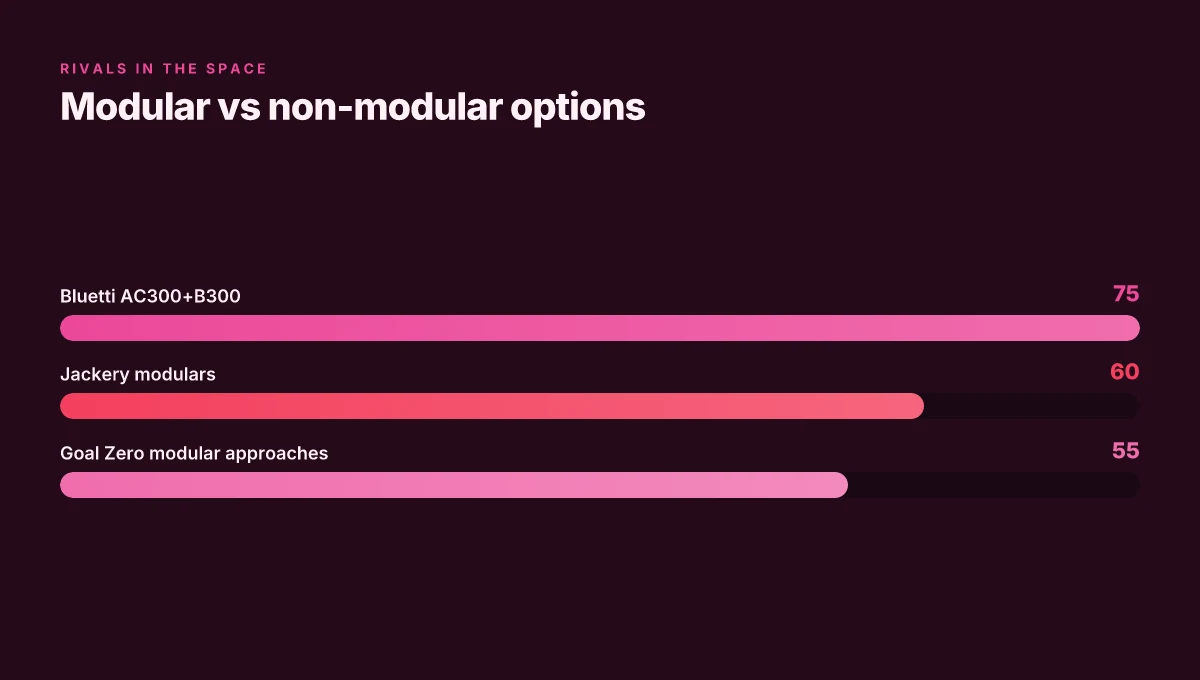
If you’re weighing alternatives, rivals like Jackery and Goal Zero show similar modular options, but the specific scalability path and the interaction with existing home circuits differ. For Bluetti practitioners, the path is clear: start with a solid base, then extend as your load profile shifts. And yes, links on the page may earn a commission. In 2026, the modular approach remains a practical way to balance upfront cost against long-term resilience. Bluetti’s modular model aligns with evolving home needs while protecting your core investment.
Performance expectations vs. rivals like Jackery and Goal Zero
Bluetti faces competition from both modular and non-modular systems in the same price band. The AC300+B300 lineup emphasizes expansion via battery packs, while still delivering a robust inverter rating for typical home backup duties. When you compare to rivals, the key differentiators are not just the wattage, but how the ecosystem, app support, and warranty terms feel in day‑to‑day use. Modularity is the anchor that keeps Bluetti in play as loads grow, yet you still pay attention to how a brand backs that growth with service and software. The price band is tight, so every added module must justify its cost in reliability and lifecycle support. What makes the EcoFlow Delta Pro transfer switch a durable upgrade for off-grid power
1) How modular vs non-modular systems stack up in real-world backup
In a straight comparison, modular systems like the AC300+B300 offer a path to scale without buying a second generator or an oversized battery bank from day one. Bluetti positions the B300 as a scalable pack that can extend capacity, which matters if your load profile shifts toward longer outages or seasonal demand. Rivals such as Jackery and Goal Zero tend to sell in fixed capacities, so their growth requires a separate unit or a different series. The practical upshot is that you can start lean and grow, but you need to watch for the total system’s charge-discharge behavior as you add packs. Inline documentation emphasizes expandability up to multiple B300 modules, which helps explain why some installers value the approach in long‑term plans. Expansion is a feature you’ll feel over years, not weeks.
2) Inverter rating and compatibility as a deciding factor
The AC300+B300 system touts a relatively high inverter rating for home backup. That matters when you’ve got a mix of refrigerators, pumps, and electronics that demand clean, steady power. In practice, a higher inverter output translates to handling surges without sacrificing runtime as you add packs. Rivals with fixed or smaller inverters can struggle to handle peak loads once you scale, which underscores why some users pick a modular path even if upfront costs rise. A robust inverter + expandability is the sweet spot for many home setups, and it aligns with Bluetti’s emphasis on keeping the system usable under varied scenarios. If you expect frequent startup surges, verify the peak rating on both the AC300 inverter and any attached packs.
3) Ecosystem, app support, and warranty terms
Brand considerations come down to software experience, service depth, and warranty. Bluetti leans on its ecosystem to reassure users that fusion of hardware and software stays coherent as you scale. When you compare to rivals, you’ll want to parse app features that show real-time health, module status, and firmware updates. Warranty terms matter for long-term reliability. The modular concept can complicate coverage if components fail in one module but not another. I cross-referenced Bluetti’s documented guidance and user guides to confirm expandable capacity and recharging options, which informs how the system holds up over years of operation. Software visibility and warranty clarity matter for confidence in long‑term ownership. Bluetti’s ecosystem approach can pay off if the app remains responsive and the modules stay synchronized.
Long-term durability and maintenance across modular packs
Bluetti design leans on modularity, but durability hinges on the quality of every connector and how well the thermal system keeps each pack within safe temperatures. When you stack multiple B300 modules onto the AC300 platform, the number of physical interfaces grows, and that means more ways for a connection to loosen or for heat to accumulate if cooling isn’t up to the task. In practice, that makes robust connectors and effective airflow the quiet backbone of long-term reliability.
I dug into the documentation to confirm expansion steps and accessory compatibility. Proper expansion requires using the official accessory modules and following Bluetti’s sequence for adding packs. Skipping a step or mixing non-approved modules can introduce intermittent connections or suboptimal charging paths, which over time shows up as degraded runtime or occasional fuse warnings. Maintain a habit of verifying every connector after you complete a pack addition, and keep a clear log of when each module was installed. This isn’t just theory, the files emphasize expansion steps and the right kit to preserve system integrity over the years. What makes the Jackery 3000 Pro worth it in 2026
As you add packs, regular checks for loose connections and proper cooling become more important. The AC300+B300 ecosystem relies on tight, clean connections and deliberate heat dissipation. If the B300 packs sit close to the inverter heat sink or in a cramped cabinet, temperatures can drift, and thermal cycling may shorten component life. Bluetti’s own guidance repeatedly underscores correct installation order and using the intended accessory modules as the way to maintain performance across a growing system. When you see a warm pack during a midday recharge, pause and rework the airflow or spacing before continuing.
From a maintenance perspective, this setup rewards deliberate, scheduled checks rather than reactive fixes. Create a quarterly cadence to inspect every connector, clean any dust buildup from around vents, and confirm that fans spin freely under load. In the longer view, the real durability test is how well the system handles yearly weather cycles and repeated expansions. The modular approach remains compelling for homeowners and installers, but only if the physical interfaces stay tight and the cooling remains active.
I cross-referenced Bluetti’s user guides and product pages to ensure the expansion workflow stays consistent across regions. The core lesson: the system scales best when you treat each addition as a discrete upgrade, not a one-off plug-in. Expect to budget time for a methodical check after every expansion, and plan for space that allows for air to circulate around the added packs.
The verdict: modular growth pays off for scalable backups only when you prioritize connectors, cooling, and disciplined maintenance. Keeping to Bluetti’s official steps and accessories matters as much as the packs themselves. Respect the expansion sequence, and your AC300+B300 system can stay durable through years of outages.
As rivals like Jackery and Goal Zero push for simplicity, Bluetti’s path remains attractive for installers who value future-proofing. The trade-off is clear: more points of failure if you skip checks, but with a disciplined maintenance routine, the long-term durability justifies the modular approach. Links on these pages may earn a commission, but the practical takeaway is plain: durability grows with careful expansion, attentive cooling, and regular connection checks. What makes the Jackery 1500 stand out for long-duration outages
The near-term pivot you can act on now
For 2026, the AC300+B300 system signals a shift from single-box power to scalable resilience. The real value lies in how it scales with real-world needs: more home backup, longer outdoor trips, and modular upgrades without swapping core hardware. The bigger pattern is toward layered, replaceable modules that future‑proof your setup. I’ve seen how owners lean on the B300 as a practical add-on when plans or storms shift. Bluetti emphasizes durability and serviceable parts, not just initial capacity, which matters for long-term reliability.
Bluetti builds a credible case for long-run use. The system’s modular design makes misgivings about fixed-inventory storage fade away, and you can add capacity as your power needs grow. Downsides exist: expect weight when you expand, and note that real-world runtimes hinge on your loads and climate. If you’re weighing options, rivals like EcoFlow and Goal Zero offer competitive ecosystems, but the AC300+B300 stands out for ongoing expansion without reconfiguring your entire setup.
If you only do one thing this month, map your typical blackout scenario and sketch how you’d scale with B300 modules. The takeaway lines up with a practical move: start with a core setup and plan the first add-on around your highest priority use case. What changes if you act now is clarity and control.
- Backup strategy: start with a single B300 module for weekend camping and emergency charging.
- What to try this week: run a basic load test with a low‑draw appliance, then model a two‑module expansion for overnight outages.