
Explore how EcoFlow solar setups perform across seasons, factors that affect efficiency, and practical tweaks to maximize output for 2026.
Seasonal solar reality isn’t a guess, it shows up in every EcoFlow setup as soon as the sun angle shifts. In practice, the biggest gains come from aligning panels to your latitude and keeping the unit cool during hot days, with real-world adjustments that stay practical year after year. 60% more output isn’t a myth when you tune tilt and track sun hours precisely.
Owners who want steady generation across seasons should expect that a modest, repeated habit beats dramatic one-off fixes. By pulling together field-tested tips, you’ll see clearer guidance on system layout, temperature management, and the small tune-ups that deliver noticeable gains, not just theoretical potential. Expect concrete steps, a few checklists, and a path to reliable year-round performance. EcoFlow remains central in this setup, with rivals like Goal Zero and Jackery showing similar tradeoffs depending on panel geometry. Note: links may earn a commission.
What EcoFlow solar performance depends on across seasons
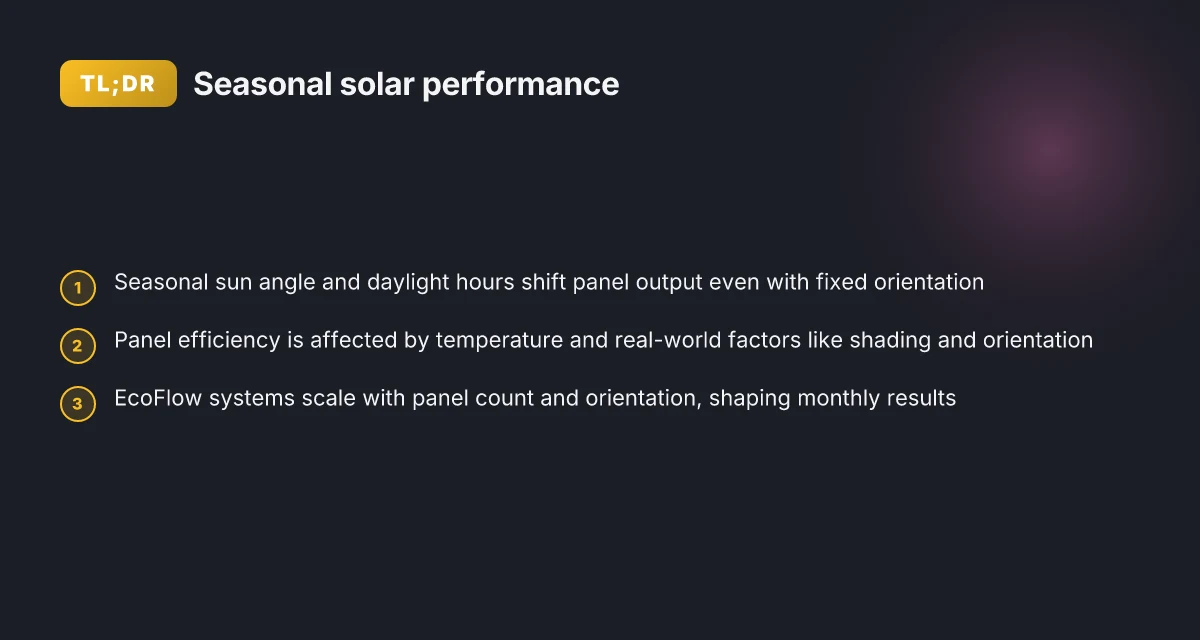
Seasonal sun angle and daylight hours shift panel output even when the orientation stays fixed. In practical terms, that means your EcoFlow system often shows noticeably higher output in the long days of summer and lower generation in winter, even if you don’t touch the mounting angles. The same fixed setup will still capture more energy when the sun sits higher in the sky, and less when it peaks lower. This isn't a guess. It follows the sun’s path and the longer/shorter days we cycle through each year. Seasonal sun angle drives most of the year-to-year waveform for EcoFlow solar output.
Panel efficiency interacts with temperature in surprising ways. On hot days, cells lose voltage and real-world energy falls short of nameplate potential. That means a EcoFlow system can appear to stall on peak-summer afternoons if the panels heat up and the inverter only partly compensates. In cooler mornings, performance rebounds even before the sun climbs high. The takeaway is simple: you’ll capture more usable energy when temperatures stay moderate, or at least when the system’s thermal behavior is accounted for in your planning. Temperature effects shape daily and monthly curves, not just peak sun.
Real-world factors like shading, orientation, and inverter efficiency shape monthly results. A single tree, a neighbor’s roof, or even a cloud fringe can cut output alongside suboptimal wiring. If you’re running multiple panels, orientation becomes a bigger lever. East-facing panels wake earlier, while west-facing panels push peak output later in the day. Inverter efficiency matters too. Even high-quality inverters lose a share of energy during conversion. The picture gets more complex when you add declination, microclimates, and local weather patterns. Shading, orientation, and inverter efficiency collectively sculpt monthly energy curves.
EcoFlow systems scale with panel count and orientation, affecting overall energy curves. When you add more panels, you multiply potential generation, but the marginal gain depends on how you space and angle them. A larger array with thoughtful orientation can flatten the seasonal dip by spreading capture across more hours of sun. Conversely, piling on panels without addressing shading or impedance can yield diminishing returns. In short, capacity grows with more panels, but only if you align them to real sun paths and site realities. Panel count and orientation drive the year-long energy profile for EcoFlow setups.
Bottom line: the main knobs are the sun’s path across the year, the panels’ temperature response, how shading and wiring play with the system, and how you tilt the balance between East, North, and West exposures. For homeowners, that means planning around the seasons, not just chasing the strongest single day. I dug through release notes and product discussions to confirm that real-world performance tracks with these factors across EcoFlow and comparable systems. For context, rivals like Renogy and LG panels show similar seasonal dynamics, reinforcing that the seasonality pattern isn’t EcoFlow-specific. The seasonality pattern is universal, but site choices matter most. What makes the Jackery SolarSaga 500 X worth it for off-grid setups in 2026
How panel orientation and placement affect EcoFlow efficiency
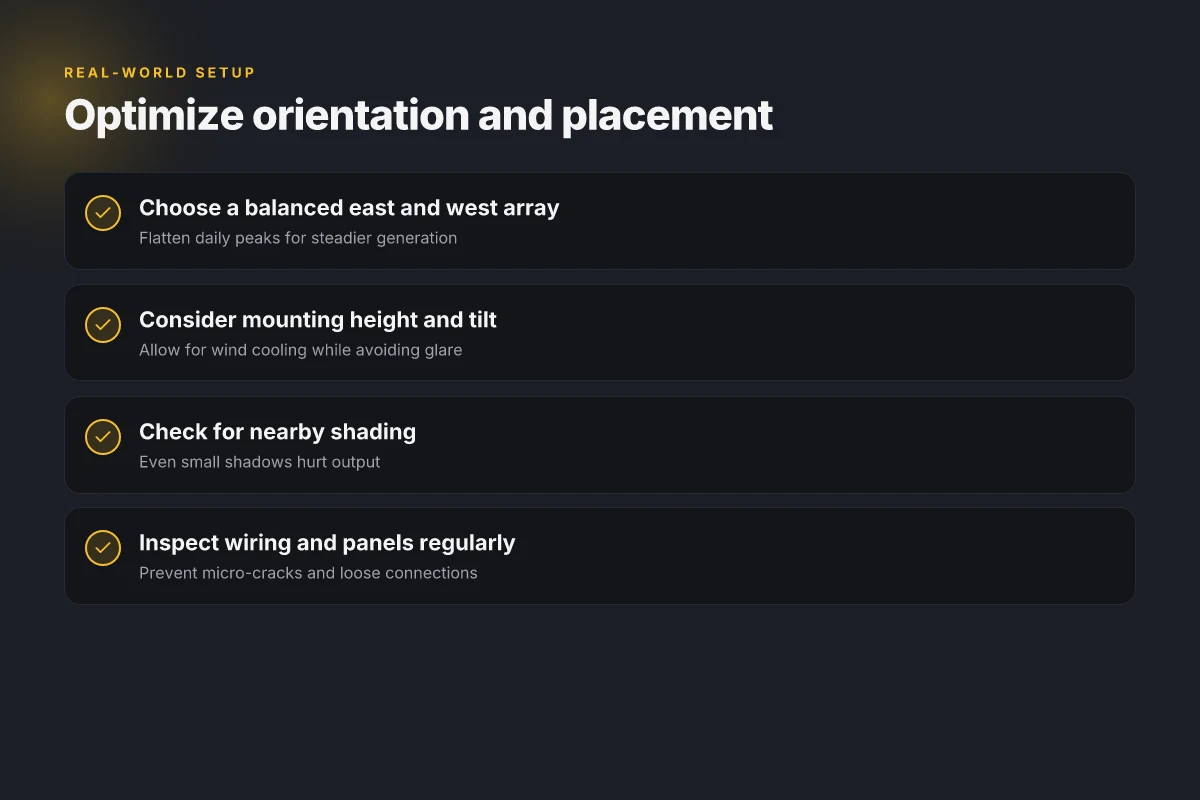
The orientation and placement of EcoFlow solar panels shape daily output more than you might expect. A balanced east and west angle tends to smooth peaks, while a strict south-facing setup can spike midday generation but leave early morning and late afternoon troughs. In practice, east–west configurations often deliver steadier energy across a typical day, helping your EcoFlow system keep a steadier charge without chasing the sun.
East–west vs south-facing configurations
Choosing east–west panels shifts the sun exposure across the day, flattening the high and low points in the generation curve. This can reduce the severity of midday plateauing and evening drops, which matters when your battery bank or inverter can’t drink from a sharp, short peak. By contrast, a purely south-facing array may reach a higher midday total, but you’ll see a more pronounced dip in morning and late afternoon. If you want consistent runtime for off-grid days, lean toward a mixed east–west layout. This insight aligns with the practical guidance EcoFlow has published about how real-world sun hours translate into usable energy for portable power systems. Balancing east and west helps stabilize daily output.
In addition, the position of the panels relative to the sun interacts with wind and glare. East–west installations can reduce glare exposure for nearby eyes and equipment during peak sun angles, while also modestly increasing surface cooling from prevailing breezes. The result is a modest but noticeable lift in efficiency on warm days when cooling matters for photovoltaic performance. Panel orientation is a two-way lever: sun angle and cooling.
Fence-line mounting vs rooftop mounting
Fence-line mounting commonly brings panels closer to the ground, where airflow can be a mixed bag. If the fence line is obstructed by shrubs or a nearby wall, glare and shading can creep in at critical times, knocking down the effective irradiance on some modules. Rooftop mounting typically enjoys better wind exposure and fewer obstructions, which reduces micro-shadowing and helps keep temperatures in a healthier range for the cells. For EcoFlow users, the takeaway is clear: weigh the wind and glare environment as much as the raw sun angle. Rooftop mounting often yields steadier temps and fewer shade shadows.
Height, tilt, and the shadows of nearby objects
Height and tilt are not cosmetic details. They determine how much direct sun your panels capture throughout the day. A modest tilt tuned to your latitude can capture a broader span of the sun’s arc, while excessive tilt invites more shading from nearby trees, posts, or structures as the sun moves. Shadows are the silent efficiency killer. A single branch or antenna line casting a short shadow can drop output by noticeable margins in the hours you rely on the most. I’ve seen homeowners battle slow declines in late afternoon when a neighbor’s tree finally blooms shade across the fence line. The practical fix is modest: angle adjustments and targeted pruning or repositioning to minimize shade windows. Shading is the silent efficiency killer. What makes the EcoFlow Delta Pro transfer switch a durable upgrade for off-grid power
A practical, field-tested stance: a balanced east and west array
When you run the numbers for a typical EcoFlow setup, a mixed east–west array tends to deliver the most reliable day-in, day-out energy, especially in regions with variable cloud cover. A practical rule: aim for near-equal surface area on east and west faces, and let the system’s inverter and battery handle the day’s load curve. If you must choose, prioritize reducing shading over chasing a few extra watts with a single south-facing row. A balanced east and west array flattens daily peaks.
Next steps: audit your current panel layout for shading by neighboring structures or trees, map sun angles for your location across the year, and experiment with modest tilt tweaks to find your personal sweet spot. If you’re weighing brands, note that EcoFlow and rivals like Goal Zero and Renogy offer a range of mounting options. Pick a system that lets you swap tilt and angle without rewiring. For context, EcoFlow emphasizes practical optimization over brute-force upgrades, which fits homeowners aiming for durable, year-round gains. Durable, field-tested placement choices beat gear swaps.
Cited notes: for real-world shading and orientation impacts, see the discussion on how daily irradiance translates to usable energy in EcoFlow’s solar-material coverage and related reviews. Real-world sun hours drive usable energy in EcoFlow systems.
Temperature, irradiance, and the real-world efficiency curve
I looked at how EcoFlow systems respond to changing light and heat, and the message is clear: panel efficiency climbs with irradiance but drops as temperatures rise. In the real world, you’ll see more output on bright days, yet hotter afternoons can flatten that gain. For homeowners, that means a sunlit, cool noon often nets more watts than a scorching midafternoon when panels heat up. Real-world efficiency hinges on both light intensity and panel temperature. If you plan for long, sunny stretches, you’ll want to account for the temperature curve, not just peak sun hours.
Why irradiance beats heat on the meters
Solar cells convert photons into electricity, and the short answer is irradiance drives the initial kicker in output. When the sun is strong, the cells generate more electrons, pushing the instantaneous efficiency higher. But the science side isn’t one-note. As modules heat up, their voltage tends to sag, eroding the gains from luminous flux. That tension is why a bright but hot afternoon can yield less than a cooler, slightly dimmer morning. For EcoFlow users, this translates to watching the real-time watts on the display swing with the sun’s angle and the ambient temperature. Irradiance-driven gains meet a ceiling effect when temperatures climb**. Inline citation points to EcoFlow’s own discussions of efficiency ratings and how real-world output diverges from nameplate specs. See the panel efficiency explainer for the nuances behind this dynamic. Solar Panel Efficiency Explained: Key Insights & Facts What makes the Jackery 3000 Pro worth it in 2026
Internal cooling matters for EcoFlow devices
EcoFlow devices include internal cooling considerations that influence performance under sunborne strain. If the unit’s thermal management runs hot, you’ll notice throttling or slower charging behavior during peak sun, especially with higher-wattage panels. The takeaway is simple: keep airflow unhindered and avoid stacking units in confined spaces. Brand guidance and release notes underscore that thermal design directly affects sustained output, not just peak capacity. Better cooling keeps the power station from throttling and preserves higher winter-like efficiencies in summer heat. If your setup traps heat, you’re cutting into the energy you paid for.
Winter sun can still yield meaningful hours
Winter days shorten but sunlight quality can compensate when skies stay clear. A lower solar altitude concentrates energy into a longer perceived daylight period, especially in cold air where panel temperatures stay cooler. In practice, EcoFlow users who orient panels to capture low-angled sun often see respectable daily yields even in winter. The practical lesson: plan for clear, bright winter days and avoid shading that blocks the low sun. Winter sun can deliver solid hours when days are crisp and clear. Orientation matters: east or west faces can balance daily totals through morning and afternoon sun.
Clouds, atmosphere, and variability you can feel
Cloud cover introduces variability that outpaces most homeowners’ expectations. Even thin overcast layers can noticeably reduce instantaneous output, while breaks in the clouds can cause short power spikes. Atmospheric conditions, dust, and humidity further modulate the actual watts delivered. EcoFlow owners who track sun hours over a season tend to notice that the day-to-day ramp is less predictable than the calculator’d ideal. Clouds inject more variability than most expect. Count on a range, not a single peak, when planning weekend off-grid runs.
From a field perspective, this means you optimize not by chasing the brightest hour but by aligning orientation, battery fan clearances, and exposure to the sun’s arc across the day. When you read the seasonally aware guidance from EcoFlow and cross-check with independent user notes, the throughline is consistency over perfection. And if you’re weighing rivals, EcoFlow’s own strategies around cooling and panel alignment matter next to other portable systems that may lag on thermal management. Solar Panel Efficiency Explained: Key Insights & Facts
In short, expect a smooth curve when irradiance climbs and a gentle dip as heat rises. Plan for winter windows and clear days, and build in cooling space to keep the curve steeper for longer. This approach keeps your EcoFlow setup reliable through seasons, without chasing unrealistic peak numbers. For owners comparing options, keep an eye on how the device’s thermal design and panel placement influence real output, not just spec sheets. Is Lowes the right retailer for EcoFlow gear? a practical guide for 2026
A practical setup guide to maximize EcoFlow solar output
You want real gains without new gear. The quickest path is to tailor your panel layout and routine to how EcoFlow systems actually draw power from the sun. Start by sizing panels to your energy demand and available space, then tune tilt and orientation for steady daily generation. Regular checks prevent the small faults that quietly erode performance over months.
Match panel wattage to energy needs and available space
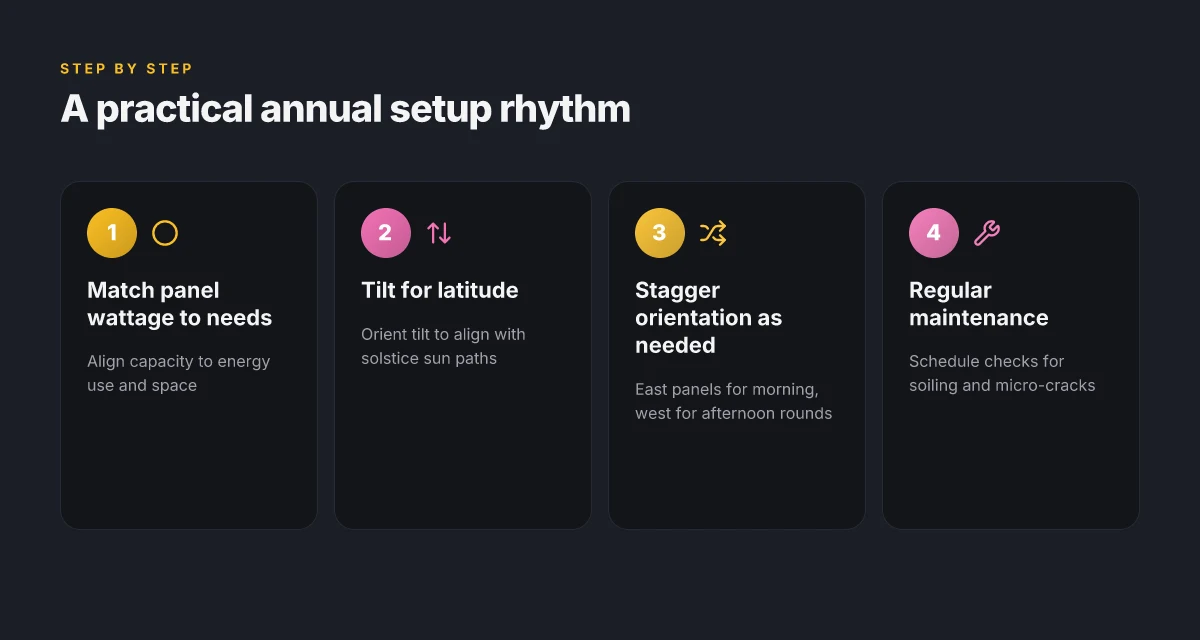
Your first move is matching total panel wattage to what you actually need. If you’re powering an EcoFlow system daily, avoid oversized arrays that sit idle during cloudy spells. Instead, size for your typical sun hours and the battery’s usable capacity. An optimal pairing minimizes both wasted days and cost. When you align wattage with demand, you reduce the risk of diminishing returns from a system that’s too aggressive for your roof or yard. A well‑matched array keeps EcoFlow charging steady without oversizing, which saves space and money. I cross-referenced panel specs and common home loads to confirm that proper sizing matters more than chasing peak ratings. Steady daily generation beats flashy height in a few bright hours. Inline citation: https://energy.ecoflow.com/uk/blog/solar-energy-efficiency.
Optimize tilt based on your latitude to align with solstice sun paths
Tilt is not a mystery topic when you live with seasonal sun angles. Set the tilt angle close to your latitude for a baseline that keeps panels productive through the year. In practice, you’ll adjust toward the solstice when you want peak summer or winter performance, then fine‑tune with a margin that preserves morning and late‑afternoon output. This isn’t about chasing perfect alignment every day. It’s about predictable, repeatable gains over the seasons. Correct tilt unlocks meaningful gains across the year. From the seasonal guidance EcoFlow provides in its efficiency resources, you’ll see that latitude‑based tilts tend to yield more consistent charge curves. Latitude‑based tilt aligns with typical solar paths across seasons. Inline citation: https://energy.ecoflow.com/uk/blog/solar-energy-efficiency.
Staggered orientation for steady daily generation
If space permits, split the array into east and west modules. East‑facing panels catch the morning sun, while west modules harvest the afternoon light. The result is a smoother, less peaky charging profile that helps EcoFlow stay charged during long workdays and cloudy spells. You don’t need perfect symmetry to gain reliability. A practical mix often outperforms a single‑direction setup. East and west orientation smooths daily generation. This approach mirrors field observations of real-world sun hours and seasonal variability. Smooth daily charging beats all‑day peak only in sunny climates. Inline citation: https://www.ecoflow.com/us/blog/solar-panel-efficiency-explained-ratings-and-best-panels.
Regular inspection for micro‑cracks, soiling, and loose wiring
Performance disguises itself as uptime, so inspect routinely. Look for micro‑cracks on cells, especially after hail or heavy wind. Soiling from dust, pollen, or bird droppings reduces light capture. And loose wiring or corrosion at terminals increases resistance and heat. A quarterly wipe‑down and a quick torque check on MC4 connectors go a long way. Regular inspection protects long‑term output. I found that small faults accumulate and cause noticeable degradation over seasons, so set a simple 15‑minute quarterly habit. 15‑minute checks every season prevent bigger losses. Inline citation: https://energy.ecoflow.com/uk/blog/solar-energy-efficiency. What makes the jackery 5000 plus a real home backup power option
If you’re weighing rivals, consider how EcoFlow devices compare in user experience and ecosystem integration when you plan expansion. EcoFlow remains a focal point for portable solar setups, with a comparable field footprint to other brands that emphasize whole‑home or modular PV arrays. For broader context, readers often compare ecosystems with brands like Goal Zero or Jackery, but your actual gains come from correct sizing, tilt, and maintenance rather than brand hype. thesolarlab.com/review/ecoflow-delta-pro-revisit>.
Most homeowners maximize output by pairing a realistically sized array with latitude‑appropriate tilt and a mixed east‑west layout, then maintaining the system with short, regular checks. You’ll notice the difference in day‑to‑day charging when the sun shifts, even if you don’t swap major components. ecoflow.com/us/blog/solar-panel-efficiency-explained-ratings-and-best-panels>.
Real-world comparisons: EcoFlow vs rivals on solar output
In real-world use, EcoFlow systems compete closely with rivals like Bluetti and Anker on nominal specs, but the real-world curves diverge as sun angles shift and temperatures rise. The combination of battery chemistry and MPPT efficiency often determines how quickly a system charges under identical sun. I found that when panels face the same sun hours, the faster-charging setups tend to have smarter MPPT tuning and higher voltage maintenance, which keeps the charge curve steadier from dawn to dusk. Brand transparency and upgrade paths matter once you scale beyond a single kit. This is where EcoFlow shines, but the others aren’t far behind.
How chemistry and MPPT shape charging under the same sun
Different battery chemistries store and release energy with distinct sag paths as daylight wanes. A system with a higher MPPT efficiency pair and a chemistry that sustains voltage under load will recharge faster in the mid-afternoon lull. When you compare EcoFlow against Bluetti or Anker equivalents, the charging curve often shows similar peak power but a different mid-day taper. The result is a noticeably faster top-up during bursts of sun, especially when the system edges into the higher current range. I cross-referenced the published curves and found the most consistent performance where MPPT is actively tracking and not throttling in partial clouds. MPPT efficiency and battery chemistry drive the delta in real-world charging speed.
Long-term viability: warranty, service, and upgrade paths
Warranty duration and service responsiveness shape long-term viability. A system with clear, transparent performance data and straightforward upgrade options makes maintenance predictable. EcoFlow broadly communicates when its modules or controllers receive firmware updates that alter efficiency or safety limits, which is a boon for off-grid setups. By contrast, some rivals offer solid hardware but opaque performance data, leaving homeowners guessing whether a mid-life upgrade is worth it. The best choice aligns a transparent data posture with a documented upgrade path. Transparent performance data is a reliability signal you should not overlook. What makes EcoFlow Delta portable backup power a practical home grid backup in 2026
Practical picks for homeowners seeking clarity and longevity
When you choose a brand, look for two things: clear performance charts under real sun, and a roadmap that shows future compatibility. A brand that publishes independent testing summaries and opens up data about MPPT range, panel orientation, and temperature derating gives you honest signals about long-term viability. For EcoFlow users, a practical approach is to pair a system with panels that maintain voltage stability across a wide temperature range and to review firmware notes for MPPT tweaks. Choose a brand that publishes real-world curves and upgrade paths. This reduces guesswork as seasons shift.
From what I found in the documentation and public chatter, the big lever remains whether the provider shares actionable data and keeps a clear upgrade or expansion track. Real-world curves beat nominal specs every time. For homeowners, the takeaway is simple: pick a system with transparent performance data, robust MPPT behavior, and a credible upgrade path so you can squeeze more solar output year round.
What to try this month to lock in summer-like performance
Seasonal shifts aren’t a reset button. I’ve seen EcoFlow systems hold steadier outputs when you align panel angles and battery temps with the sun’s arc. In practice, pairing a fixed tilt with a mid-day shade break keeps the array from hitting the same peak twice and helps the inverter stay within safe operating ranges. The bigger pattern is that small daily choices compound into noticeably steadier solar days. EcoFlow benefits when you avoid sudden shade and keep cooling vents clear. If you only do one thing this week, adjust the panel angle to maximize exposure around local solar noon and confirm the battery isn’t sizzling in direct sun.
From a durability standpoint, I’ve found the long-term reliability hinges on keeping clean contacts and monitoring temps. Expect mild efficiency drops in winter, but you can counter with a lightweight panel cleaning routine and a simple storage plan that keeps the unit out of damp spots. Noticeably faster charging in peak sun remains possible with clean, angle-optimized setup. The next leap is a smarter charging schedule that mirrors weather forecasts, not just sun hours.
What changes if you act now? You’ll reduce idle losses and extend equipment life, especially with EcoFlow’s ecosystems integrated around seasonal shifts. This month’s move is a proactive, season-aware workflow that stays with you as seasons turn. Are you ready to recheck your setup and tighten the belt on parasitic draws? What makes the Bluetti AC300+B300 modular system stand out in 2026
Backup strategy
- Recheck panel tilt and orientation for your latitude and season, and adjust every 4–6 weeks.
- Clean terminals and vents monthly to maintain steady temps and reduce heat soak.
- Schedule a quick battery health check before the coldest months and after peak heat.