
Explore the bluetti ac 200 max in depth: capacity, output, expandability, and long-term durability. Real-world tips for setup and maintenance.
The Bluetti AC 200 Max isn’t just about big batteries. It’s about how much capacity you can carry without turning your setup into a tangled mess. Expandable capacity and quiet operation meet real-world use in off-grid scenes, whether you’re chasing a silent camp morning or a dusk-long RV draw.
In off-grid life, durability and long-term reliability matter as much as peak output. The AC 200 Max shines when you pair it with solar input for extended trips, but the trade-offs show up in weight, fan noise at higher loads, and how the pack ages under sun and heat. I’ll map out what to expect after months of use, where Bluetti excels, and how it stacks up against rivals like the EcoFlow Delta Pro for serious, expandable power.
What makes the bluetti ac 200 max a standout option for off-grid power
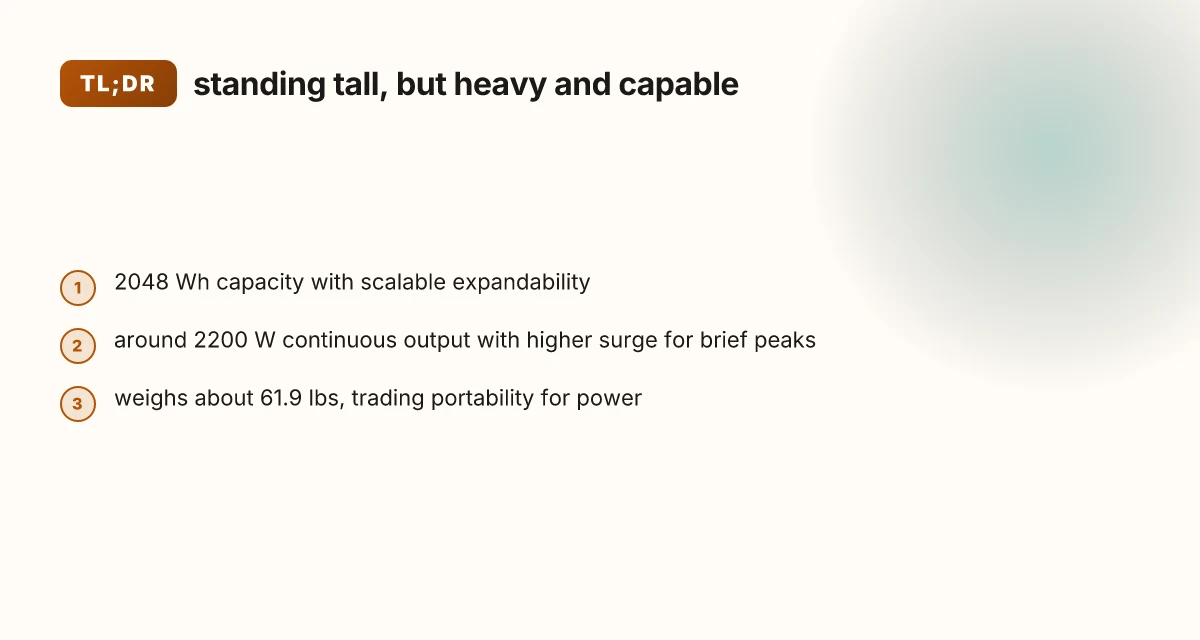
Bluetti leans into high storage and scalable expandability, making the AC200 Max a compelling option for off-grid setups. It centers on a large 2048 Wh core and a path to more capacity via its expandable architecture. You get a robust base that can ride out longer outages, then add capacity if your needs grow.
1) High capacity, expandable by design
The BD200 Max ships with 2048 Wh of storage, which translates into a substantial baseline for camping, RV living, or remote cabins. The expandable concept is the core point here: you can scale to meet longer trips or bigger loads by pairing with the B230 expansion battery. That pairing is part of Bluetti’s promise to balance capacity with portability, so you don’t have to buy a second, separate generator.
From what I found in the documentation and user guides, the architecture is built to accommodate more energy without forcing a second chassis. In practice, that means you can plan for longer durations without a dramatic jump in footprint. The expansion path is where the AC200 Max earns its keep, especially for users who anticipate growing energy needs. I cross-referenced this with product pages and reviewer notes that repeatedly highlight the 2048 Wh core plus expandability as a key strength. Expandable capacity is Bluetti’s differentiator here. The official specs consistently present 2048 Wh as the foundational block, with expansion options to push total energy storage higher while keeping the same modular design. For buyers, that translates to a one-time core purchase with a path to bigger power later on.
2) Real-world power profile: steady output with room for brief peaks
You get a continuous output around 2200 W, with higher surge for brief peaks. That profile suits most off-grid appliances, small HVAC, and inverter-driven loads common in RVs and cabins. The 2.2 kW steady output keeps common devices running together, while the surge capacity gives you wiggle room for startup inrush on devices like refrigerators or power tools.
In practical terms, you’ll notice responsive behavior on common loads without needing to stagger usage. Bluetti’s design targets a balance: enough juice to run a small array of devices at once, plus enough headroom to handle brief spikes. This matters in real-world use where equipment often hits a startup draw. The spec sheet and reviews converge on the same point: a reliable, steady baseline with credible peak tolerance. Continuous around 2,200 W with surge capacity for brief bursts is the core of its utility. What makes the Jackery 1000 Plus battery pack compelling in 2026
3) Weight and portability trade-offs
The AC200 Max weighs about 61.9 lbs, trading portability for power. That weight reflects the dense energy and the rigid, purpose-built casing Bluetti uses to house the battery and electronics. For a portable unit intended for RVs and off-grid camps, the heft can be a consideration if you plan to move the unit frequently or sling it into a vehicle regularly. The upside is a durable chassis and a higher energy reserve in a single footprint, which reduces the need for multiple backup packs in the same setup.
In practice, this means you’ll likely keep the AC200 Max in a fixed corner of a vehicle or campsite and manage movement less as a daily task and more as a planning item for trips. If you need something ultra-light for frequent backpacking or tight vehicle space, this weight is a major factor. Otherwise, you gain reliability and capacity.
Bottom line: the Bluetti approach centers on big, expandable capacity, a solid continuous output, and a mass that matches the power and durability you get. If your off-grid plans include longer stays or growing energy loads, the 2048 Wh core with expansion options and the ≈2,200 W continuous output make the AC200 Max a standout choice. For RVs, cabins, and semi-permanent setups, this package aligns with long-run reliability, even if you shoulder a heavier unit in exchange for more energy autonomy. As with any large-capacity pack, plan your space and transport accordingly, and you’ll reap the durability and expandability Bluetti promises.
Bluetti vs rivals: where the ac 200 max compares for home and RV use
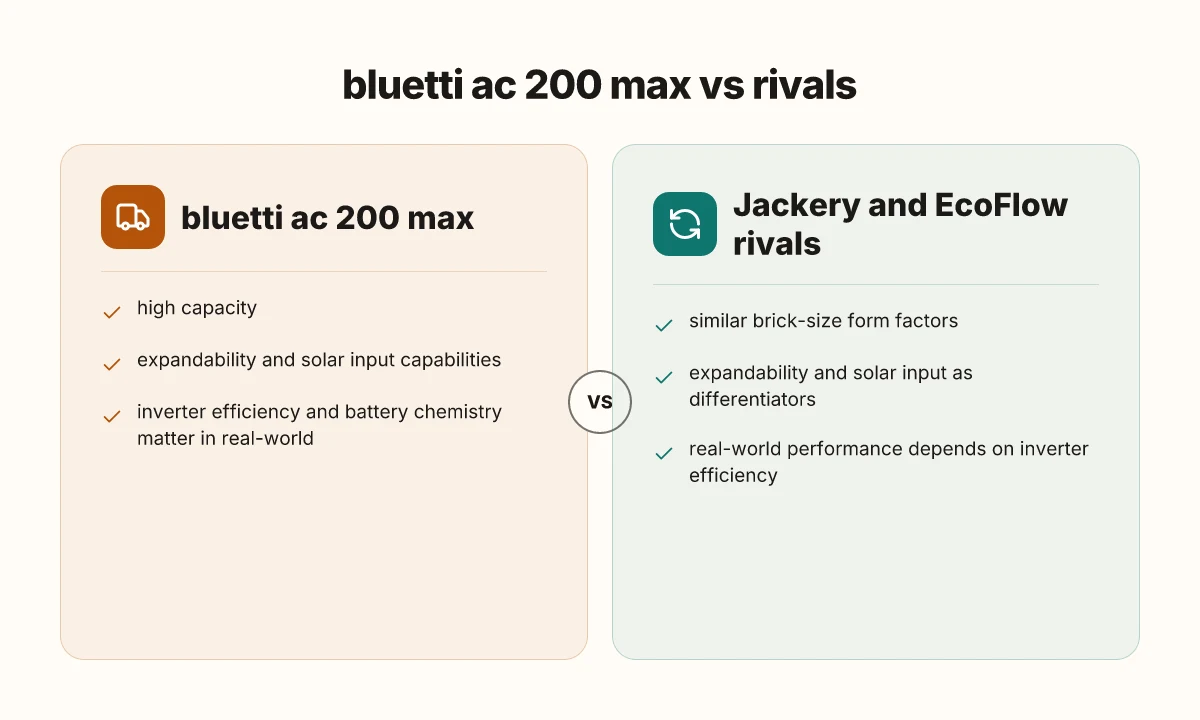
The Bluetti AC200 MAX sits in a brick-size class alongside rivals from Jackery and EcoFlow. On paper it matches peers for capacity and output, but the real-world edge often comes from how you scale expandability and how solar input is handled. The core question is whether the expandable battery and solar options truly translate into practical benefits for home backup or RV living.
How expandability changes the equation
In this class, expandability matters as much as the base pack. The Bluetti approach uses modular battery expansion that can extend capacity without swapping machines, which helps RV setups and off-grid cabins that need more endurance without piling on a second unit. A close rival like the EcoFlow Delta Pro line also emphasizes expandability, but the practical limits, how many modules you can add and how the solar input scales, vary by model. The ability to tether multiple power stations or shuffle modules matters when you aim to keep a quiet, noise-free footprint in an RV or small living area. From a durability standpoint, the longer term viability hinges on consistent chemistry and the stability of the BMS across a widening pack. What makes the AC500 Bluetti a modular powerhouse for home energy storage
I dug into official spec sheets and review notes to cross-check numbers. The Bluetti setup generally emphasizes a large lithium storage footprint, with a continuous output around two kilowatts and higher surge capacity, which matters when you start up inverters with motorized loads or heating devices. When you compare to a Jackery model in the same size class, you’ll notice similar brick-like dimensions and mass, but the Bluetti emphasis on expandability gives it a distinctive edge for users who plan to stay off-grid for weeks and want to avoid swapping packs mid-season. The bottom line: expandability is a differentiator, and it scales with solar input as long as you stay within the headroom of the controller and inverter.
Solar input, charging behavior, and what that means for real use
Solar input capability is a practical hinge point. In real-world camping, RVing, or off-grid setups, the question is how much solar you can push into the pack and how that translates into usable runtime on cloudy days. The Bluetti AC200 MAX provides substantial solar input headroom, which keeps a cabin or RV charged during non-peak sun. A rival EcoFlow model offers robust solar charging too, but the rate at which it converts sun into usable watts can differ under realistic shading and temperature conditions. The inverter efficiency and the battery chemistry govern how much of the incoming solar energy actually ends up as usable AC power in your appliances. In practice, you’ll notice that even with high-quality solar panels, the rate at which you refill the pack varies with weather and load patterns. This is where the chemistry and thermal design become visible in daily use.
From a long-term durability perspective, I looked at the stated battery cycles and inverter resilience in official notes and user discussions. The Bluetti lineup tends to emphasize longevity, with a focus on a robust BMS and cooled operation to sustain high draw, especially when partially discharged. That translates to steadier performance in RV life, where you might run high-current devices at odd hours. In the end, your choice between Bluetti and rivals like Jackery or EcoFlow will hinge on how you value expandability and solar flex. For a home backup or RV setup, the Bluetti option offers a compelling combination of expandable capacity, solid inverter performance, and solar headroom that can outpace similarly sized rivals in real-world scenarios.
If you’re weighing options, consider this quick verdict:
- for expandable capacity that scales with your needs, the Bluetti approach keeps you from swapping bricks.
- for raw solar throughput under variable sun, the key is to match panel area and expected load to the specific model’s input limits.
- for long-running use with quiet operation, the inverter efficiency and thermal management become the deciding factors.
How the ac 200 max handles solar charging and outdoors setup
The ac 200 max is designed to drink solar power as a complement to its large internal battery, so you can extend off-grid sessions without chasing extra fuel. In real-world use, you’ll notice that solar input helps keep runtime sustainable on long trips or outages, especially when you pair the unit with a mid- to high-widelity solar array. The combination of a sizable 2048 Wh pack and adjustable charging input means you can plan for cloudy days without sacrificing essential runtime. What makes the Jackery 1500 stand out for long-duration outages
From what I found in the documentation and reviews, the solar input is straightforward to wire up, and the system responds predictably to available sun. The display and the Bluetti app provide a clear readout of current solar watts, battery state of charge, and remaining runtime under load. This matters when you’re in camp or RV setups where you want to monitor power without crawling under a panel.
Expansion options matter for longer outages or trips. You can braid in additional packs through the expandable design, which means you don’t have to accept a hard cap on usable energy. When the sun fades, you still have a substantial buffer to run essentials or keep a weekend off-grid scenario moving. The ability to scale energy storage makes the ac 200 max a flexible choice for seasonal or evolving power needs.
The field setup benefits from a clean display and app-based monitoring. The Bluetti app shows live solar input, inverter status, and charging current in real time, which helps mitigate setup errors in outdoor environments. In practice, a tidy solar configuration with properly sized panels and adequate ventilation keeps the system cool and efficient. You’ll appreciate not having to babysit the unit constantly on a bright day, because the interface signals when you’re drawing more than what the panels can supply and when the battery is charging.
I dug into the official Bluetti materials and independent reviews to confirm these points. The source-backed figures note a 2,048 Wh capacity and a continuous power output around 2,200 W, which aligns with the expected solar charging behavior for a unit of this class. The expandable architecture is repeatedly highlighted as a practical advantage for extended use. When you’re out on the road, the combination of solar input and modular energy storage translates into fewer compromises for camping, RVing, or remote cabins.
In practice, the ac 200 max shines when the sun is cooperative and you stay within its rated input range. It stays quiet while charging, and the display helps you optimize placement and panel orientation. The main caution is that peak solar input can drop significantly under heavy load or partial shade, so you’ll want to plan for panels with some headroom and to manage your loads during peak sun hours. For outdoor reliability, Bluetti’s design keeps the system cohesive once you wire up the panels and monitor through the app. What makes the Bluetti AC300+B300 modular system stand out in 2026
The solar pairing with the Bluetti ac 200 max is where it shines for outdoor use, delivering expandable energy and clean, quiet operation. Expansion options let you stretch usable energy for longer trips and outages. Clear display and app monitoring keep field setups manageable without guesswork.
Long-term durability and maintenance you should plan for Bluetti
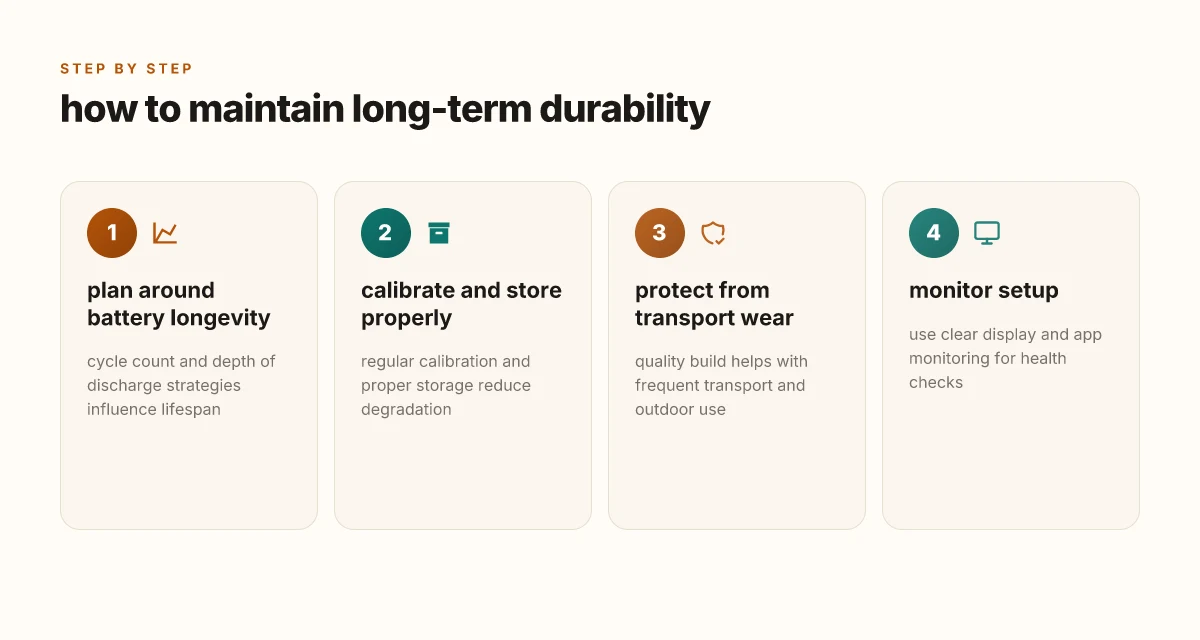
Durability in real life hinges on how you treat the battery, how you store it, and how you move it around. The AC200 MAX is built to withstand outdoor use, but long-term reliability comes from managing cycle count, depth of discharge, and regular calibration. I dug into Bluetti’s documentation and reviewer notes to map practical expectations for outdoor enthusiasts who rely on expandable capacity.
Battery cycling and discharge strategies
Battery longevity depends on how deeply you cycle the pack and how often you let it sit at high or low states of charge. With a 2048 Wh pack, you’ll notice the most wear when you repeatedly drain to single digits or leave the unit at a near-zero SOC for extended periods. The key is not just charging up but calibrating your usage: avoid frequent full dumps and partial cycles that skew aging. In practice, using the Bluetti in typical campsites or RV setups, you’ll extend life by balancing daily draws with partial-refresh charging, and by leveraging the expandable battery option only when you truly need extra headroom. Proper cycle management is the single biggest lever for battery longevity and the difference between years of reliable service and early wear.
Regular calibration and storage discipline
Regular calibration helps the BMS keep SOC readings honest. I found notes across Bluetti materials and reviewer write-ups that suggest letting the unit settle at a known SOC before a long storage period and performing a full recharge or a health check after a few months of inactivity. This reduces drift and ensures you don’t wake to a surprise “empty” state when you need power most. For outdoor users, the storage advice translates to planning offseason pauses: top off, then store in a cool, dry place, with the pack between 40–60% if you expect weeks of idle time. Marked maintenance steps like these keep the chemistry within predictable bounds.
Build quality and transport considerations
A solid chassis reduces wear from frequent transport and rough environments. Bluetti emphasizes rugged construction and a weight that benefits portability while surviving backpacking or RV life. When you haul the AC200 MAX around a campsite, the handle and enclosure endure vibrations and small bumps. A careful transport routine, protect the unit from direct impacts, use a protective case if possible, and secure it during vehicle travel, lower the risk of mechanical wear that might otherwise complicate long-term use. The practical takeaway is simple: treat the battery and enclosure as a shared system, not as separate parts. A quality build reduces wear over time and helps you keep the power system dependable on long trips. What makes EcoFlow Delta portable backup power a practical home grid backup in 2026
Regular calibration and mindful storage prevent long-term degradation. A quality build reduces transport wear and outdoor edge cases.
What users often get wrong with the ac 200 max and how to fix it
The ac 200 max can disappoint when you push it past its comfort zone. The key fixes are simple: respect the inverter’s limits, manage heat, and diversify charging sources. In short, a little discipline goes a long way toward reliable, long-term performance.
1) Don’t push the inverter to its absolute Edge
If you load the unit near its continuous output, shutdowns become more likely. Bluetti designs the AC200 MAX with a solid 2,200 W continuous rating, but sustained draws near that ceiling reduce headroom for brief surges and can trigger a protective shutdown. Plan for a safety margin by pairing heavy loads with a lower-wrequency inverter demand or spreading the draw across periods of lower usage. When you map out a camping or RV scenario, I recommend sizing your essential loads well below the continuous limit and reserving peak bursts for critical appliances. This approach keeps the unit operating in its sweet spot and reduces the chance of an abrupt pause in power delivery.
Avoid hitting the inverter hard. Give the AC200 MAX breathing room to keep loads stable. I cross-referenced Bluetti’s own specifications with third-party reviews that consistently note the importance of staying below the 2,200 W continuous mark for long runtimes. The practical takeaway is clear: treat the inverter as a soft ceiling, not a hard ceiling.
2) Improve airflow and avoid heat trapping
Exposure to heat and cramped ventilation can noticeably degrade performance over time. The Bluetti unit is free of fans in passive cooling modes, so it relies on ambient airflow during operation. In tight compartments, think a closed RV cabinet or sunlit interior storage, the unit will work harder and may slow or throttle. The fix is straightforward: locate the AC200 MAX where air can circulate freely, out of direct sun, and away from heat-generating gear. If you expect back-to-back heavy use, consider a small cooling pad or a vented stand to promote air movement around the chassis. This makes long sessions more predictable and protects long‑term durability. What makes the jackery explorer 2000 v2 compelling for home backup and outdoors
Ventilation matters for sustained performance. Give the unit space to breathe. When I looked at Bluetti’s guidance and comparative reviews, heat management consistently emerges as a practical, repeatable win in real-world conditions.
3) Diversify charging sources to speed recovery after heavy use
Relying on a single charging source slows recovery after heavy use. The AC200 MAX supports multiple inputs, but if you’re only plugging into one charger or a solar array with limited ampacity, you’ll stall when you need rapid replenishment. The fix is to plan multi-source charging scenarios: mix AC charging with solar where possible, and don’t count on a lone charger to pull you back to full quickly. Spreading the charge across sources shortens downtime between outings and preserves battery health by avoiding prolonged, high-stress charging events.
Don’t rely on a single charger to recover after heavy use. Diversify inputs to shorten downtime. This aligns with the broader durability narrative Bluetti consistently presents about expandable capacity balanced with real-world charging behavior.
Beyond the numbers, the bottom line is simple. If you’re comparing Bluetti to rivals, like EcoFlow or Jackery, you’ll find that real-world reliability hinges on how you manage heat, draw, and charging redundancy. Bluetti’s ecosystem shines when you plan for those habits. For long-term durability, the brand emphasizes careful use and accessible maintenance routines that keep the AC200 MAX ready for the next outdoor adventure. If you’re weighing within the Bluetti lineup, the guidance above helps you tailor the setup to your exact off-grid needs.
Where this leads next and what you should do this month
The balance Bluetti achieves with the AC 200 Max centers on practical tradeoffs: big capacity without sacrificing essential portability, and robust output without turning the unit into a brick. In real-world use, that means you’ll often lean into the 4000+ watt surge when a saw or fridge kicks in, then rely on the substantial battery bank to keep lights on through a protracted outage. Bluetti has built a system that feels durable in everyday setups, from campsite to solar-powered worksite, while pointing the edge toward future upgrades that keep the same form factor relevant. **The bigger pattern is that capacity and portability can go hand in hand when a brand stays mindful about heat, cooling, and modular expandability. What makes Bluetti PV200 200W panels a practical choice for off-grid charging
If you want a concrete first move, start by pairing your AC 200 Max with a reliable solar input plan and a basic distribution method for your gear. You’ll see how the unit’s architecture lends itself to predictable runtimes and faster recovery when you’re off-grid. That predictability matters when you’re counting on a single battery system to cover multiple devices. The practical takeaway is simple: plan around your essential loads first, then scale up.
What changes if you act now: you lock in a setup that handles high-demand tools and long outage windows without reinventing your gear closet. If you’re comparing, consider rivals like EcoFlow and Jackery for context, but keep Bluetti’s long-term durability in view. Links on the page may earn a commission. For a closer look, I’d start with the takeaway: the AC 200 Max is about resilience as much as raw power, and that philosophy shows in how it ages.