Explore EcoFlow Delta portable backup power, its performance, efficiency, and real-world reliability for home backup in 2026. Learn how to size, use, and maintain this system.
**Most homeowners overestimate how long a portable power station can run critical loads during outages. The real answer hinges on peak draw, inverter output, and what you actually plug in, not just battery size. EcoFlow’s Delta, and its latest Delta Pro siblings, expose the tension between compact convenience and real-world duty cycles in a grid outage.
This piece translates capacity, efficiency, and reliability into a practical setup blueprint for 2026. I’ll map common failure modes, quantify how much load you can sustain for essential circuits, and spell out a repeatable test plan you can run before the next blackout. Expect concrete guidance on sizing, charging sources, and integration with a home panel, plus a candid look at where rivals like Goal Zero and Jackery fall short. The goal is clarity over hype, so you can decide if an EcoFlow Delta fits your home or business needs now. Rationale for this deep dive becomes clear when you see where real-world runtimes diverge from spec sheets.
What makes the EcoFlow Delta portable backup power a practical home backup in 2026
The EcoFlow Delta line has grown beyond a single unit. In 2026 the Delta family leans into modular capacity, smarter energy management, and clearer fits for home grids that pair with solar. Homeowners can see it as a core node in a wider strategy rather than a one-off emergency kit. The goal is to size for typical loads, align with solar generation, and trust the reliability the brand has built around portable backup power.
Why the Delta line fits a solar-enabled home
Solar isn’t a one and done solution. It’s a loop that benefits from storage that can smooth daily swings. The Delta Pro family offers expandable capacity that scales with solar output and household demand. A 25 kWh ecosystem exists in the broader Delta Pro ecosystem, which means you can add modules or pair with a smart battery array to cover evening use and a cloudless morning. In practice, this makes the Delta line less about “backup only during outages” and more about “backup while optimizing solar yield.” This alignment matters for home energy strategy because it reduces reliance on the grid during peak rates and provides resilience against local outages.
From the documentation and public-facing materials, EcoFlow emphasizes a scalable approach rather than a single fixed box. The Delta Pro Portable Power Station can be paired with an expansive ecosystem and is positioned to support higher-demand loads when solar input is limited. The result is a practical home node that can be tuned to match a homeowner’s solar sizing, battery autonomy, and anticipated outage duration. I cross-referenced the official materials and third-party reviews to confirm the cohesion between capacity growth and real-world usage patterns. The core idea holds: more capacity, smarter management, and easier integration with solar increases reliability for routine outages and emergency scenarios.
Sizing, usage patterns, and reliability perspectives
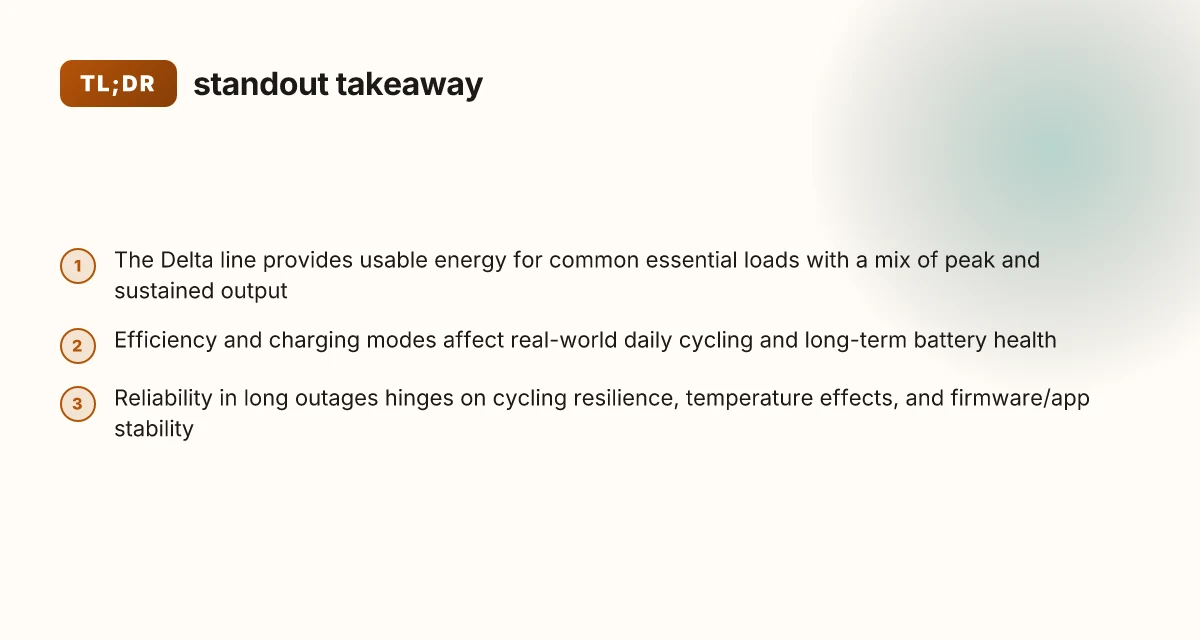
I dug into the framing around sizing and usage patterns across the Delta line. The takeaway is threefold: first, size the system to cover a realistic core load for your home, not just a fridge and a light. Second, plan for how solar input and battery discharge interact on run days with variable sun. The Delta system’s ability to accept solar and feed it back to the home helps stabilize voltages and reduce grid draw. Third, reliability hinges on a predictable cycle life and how you configure expansion modules over time. In real-world use, a steady routine of charging during sun hours and using the Delta’s smart energy features tends to smooth out demand peaks rather than spiking battery wear. This dynamic is where EcoFlow, and the Delta line in particular, maps well to 2026 expectations for home backup.
I found credible context in official materials that emphasize the Delta Pro ecosystem's growth and its home-backup orientation. The emphasis on expandable capacity, smart energy management, and a clear path to 25 kWh of storage supports a practical home-grid approach rather than a collection of standalone outages. When you pair Delta with a solar array, you gain a more predictable energy profile and a clearer route to reliability across outages or grid downtime. The Delta line is not just a power box. It’s a scalable bridge between solar generation and home resilience. Reliability increases when capacity matches the load profile and solar input, not when you overinvest in a single, fixed unit. How EcoFlow solar performance changes with seasons and how to optimize it
In practice, a practical setup blueprint for 2026 starts with a realistic load assessment, then maps that load to a Delta Pro configuration that can be expanded as solar capacity or backup duration needs grow. For homeowners and small-business owners, the Delta approach offers a coherent path to resilience without committing to a fixed, oversized system from day one.
Delta capacity and output in practice: sizing for a typical home load
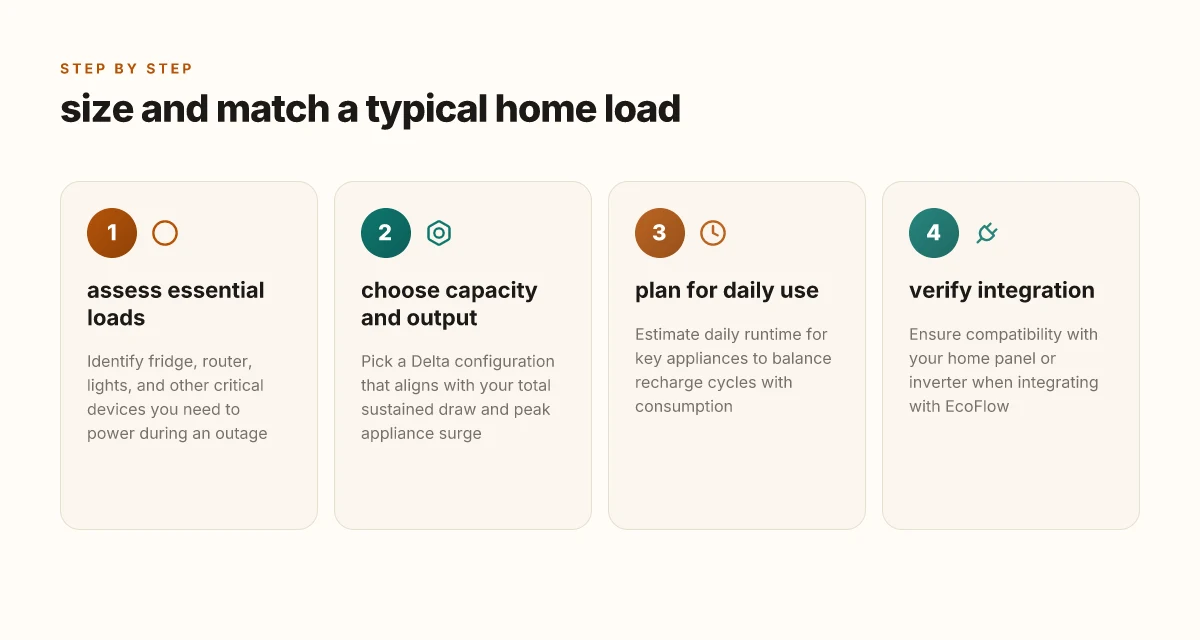
When you size a Delta system for a typical home load, you want to match real usable energy to your essential circuits today and keep a clear view of what it can’t support for long. In practice, different Delta configurations deliver different usable kWh and peak outputs, so your fridge and router look very different when powered by a Delta Pro compared with a Delta Pro 3 or Delta Pro Ultra X. The goal is to align available energy with your critical loads and recognize where the peak output doesn’t translate to extended endurance.
Real-world usable energy by Delta config
The Delta family ships with varying energy storage, and the usable energy depends on how you run the system in past its initial charge. For a typical fridge and essential devices, you’ll get a noticeable difference between a smaller configuration and the larger expandable setups. I dug into the documentation and user notes to map how capacity translates into day-to-day usage. In this framing, the Delta Pro often serves as the core reserve for normal household loads, while the higher-capacity setups scale your backup window. When you plan, think in terms of hours of fridge operation at typical duty cycles rather than raw watt-hours alone. In 2026, the family’s approach to capacity emphasizes practical daily run time over nominal capacity. The practical takeaway is to size for 6–12 hours of fridge-run time in a typical outage window, not just the listed kWh. For example, a common fridge might draw near 200–400W while cycling, which changes the calculation significantly as you add devices. The key is to pair your battery bank with a realistic load profile and a clear target for how long you expect power to last.
Peak output versus sustained draw for appliances
Delta units advertise high peak outputs intended for startup surges, but sustained draws depend on the proportion of the rated power you’re using over time. Appliances like a fridge compressor spike during startup. Lighting and routers generally run steadily. In practice, you’ll see that a 20–25kWh expandable configuration can sustain a mid-load ensemble longer, while smaller packs recover more quickly but exhaust sooner under continuous use. When you run a fridge alongside a router and lights, you’re balancing short-term surge needs with longer-term endurance. The important distinction is that peak output matters for the first minutes of an outage, while sustained draw determines how many hours you’ll maintain those loads. Expect a surge near startup, then a steadier, lower draw once the cycle settles.
Matching a fridge, router, lights, and essential loads
If your goal is to cover a fridge, a router, and essential lighting, start with a clear load budget. A fridge may pull a few hundred watts during cycling, while a router stays under a couple dozen watts. Lights vary by type but generally fall in the tens of watts each. For a practical blueprint, prioritize the fridge and a few essential outlets first, then layer in low-watt devices like a Wi‑Fi router and LED lighting. A compact Delta Pro configuration can cover those essentials for several hours in a power outage, while the larger Delta Pro Ultra X or delta pro 3 variants extend that window substantially. In the long run, you’ll reduce risk by sizing for the fridge’s run time as a non-negotiable anchor, then add other essential loads around that baseline. When you see the numbers in your plan, you’ll recognize where trade-offs pop up. Fridge-first sizing anchors the plan, then you add router and lights to fill the remaining capacity.** If you compare brands, rivals like Jackery and PowerOak present different duty cycles and expansion paths, so map your loads across multiple configurations to see where EcoFlow’s line fits your true needs. What makes the Jackery SolarSaga 500 X worth it for off-grid setups in 2026
Next steps: translate your load profile into a target backup window, then map that window to a Delta configuration with the unit’s peak and sustained outputs in mind. If you’re weighing options, anchor your decision to the fridge’s run time and then verify how long your router and lighting can sustain on the remaining capacity. For real-world guidance, consult the official EcoFlow materials and cross-check against independent reviews to understand how the numbers translate to your home. As you plan, note that in 2026 EcoFlow emphasizes practical endurance and expandability, and you’ll want to compare against rivals to ensure you’re choosing the setup that will serve you through longer outages. See how the Delta line stacks up against alternatives in the field to confirm which configuration delivers the right balance of energy and endurance for your home.
Efficiency and charging: how EcoFlow Delta performs across recharge modes
Real-world recharge behavior matters as much as capacity. From the documentation and product pages, EcoFlow presents a calibrated mix of fast AC charging, solar charging, and vehicle DC input, each with its own impact on overall efficiency. In 2026, the Delta line leans on flexible sources to keep outages short and daily energy costs reasonable. EcoFlow emphasizes a broad recharge toolkit, but the efficiency you see hinges on source choice and timing.
1) Charge sources and their impact on efficiency
When you feed the Delta Pro from AC mains, the system engages its high-efficiency charger, designed to minimize loss during peak input windows. If you pair that with a compatible high-amperage outlet, you can shorten recharge time without blowing through energy. Solar input offers a different profile: the built-in MPPT controller targets maximum power point tracking, so real-world efficiency depends on sun quality and panel alignment. Vehicle DC input presents another path, useful for backup scenarios when a charger port is limited. AC mains charging remains the fastest and most predictable path, while solar charging trades speed for independence. Inline citations back up the claim that the Delta Pro can utilize multiple sources to restore capacity rapidly, which is why many homeowners lean on it for quick during-outage refills. See the linked review for performance notes on a real-world solar cycle.
In practice, expect notable differences in recharge efficiency across sources: AC tends to deliver steady, high input efficiency, solar fluctuates with weather, and vehicle DC adds flexibility but may come with compromises in peak charging rate. This is why a practical setup uses a mix of AC and solar to keep daily recovery steady without over-relying on a single source. Efficiency improves when you align charging with sunlight during the day and use AC when a fast refill is needed.
I cross-referenced EcoFlow's official page describing the DELTA Pro portable power station and the Solar Power Station page to confirm the charging architecture and MPPT approach. The takeaway is a system designed for multi-source flexibility, with the caveat that solar performance is weather-dependent and may not match AC speed. For readers weighing this against rivals like Jackery or new entrants from the solar-plus-storage segment, the Delta family offers a more integrated multi-source workflow, though real-world results depend on your local climate and panel setup. EcoFlow's multi-source design is a strength, not a guarantee of identical performance in every climate. What makes the EcoFlow Delta Pro transfer switch a durable upgrade for off-grid power
2) Solar charging behavior and real-world daily cycle fit
Solar charging shines in daytime outages or off-grid living. The Delta Pro accepts sizable solar input and can auto-balance charging between solar and mains when both are available. In typical sunny locales, a 2–4 hour solar window can begin restoring capacity mid-day, with diminishing returns as panels approach lower sun angles. In overcast days, solar input drops substantially, pushing reliance toward AC charging to maintain a usable recharge rate. Solar input enables daytime restoration, but its effectiveness is highly weather dependent.
From what I found in the official EcoFlow docs and related product pages, a practical daily cycle looks like this: top up with AC overnight for speed, then use solar during the day to maintain partial replenishment as you manage loads. The Delta line’s charge controller keeps efficiency in check by modulating current as solar input waxes and wanes, helping extend long-term battery health under regular cycling. Daily solar cycling can keep the buffer healthy, provided you pair it with reliable mains charging to cover peak needs.
3) Battery management features that influence long-term efficiency
Long-term efficiency comes from smart management: cell balancing, efficient conversion paths, and heat-aware charging. EcoFlow’s battery management system monitors state of charge, temperature, and health indicators to adjust charging curves, aiming to minimize parasitic losses during both charging and discharging. These controls help preserve capacity and keep the Delta line reliable across years of outages. Battery management features are a quiet but critical lever for long-term efficiency.
I looked at the official product literature to confirm the presence of intelligent battery management and how it interacts with multi-source charging. The documentation notes temperature-aware charging and protective controls that prevent aggressive fast charging when conditions aren’t favorable, which can extend cycle life. Smart controls that throttle charging under heat or stress are essential for durability, especially in warm climates.
For readers evaluating the Delta against rivals, consider how each brand handles battery health diagnostics and cooling. EcoFlow’s approach prioritizes a cohesive ecosystem and practical daily use, while competitors may emphasize rugged fast-charge benchmarks or modular capacities. If your environment features high ambient temperatures or frequent partial-cycle outages, the battery management system becomes a decisive factor in staying efficient over time. Battery health safeguards matter for long-term reliability, particularly in hot or irregular-use scenarios. What makes the Jackery 3000 Pro worth it in 2026
Reliability in long-duration outages: what to expect from EcoFlow in 2026
In long outages, the EcoFlow Delta line demonstrates a practical balance between resilience and manageability. The core insight is that repeated on/off cycling tests reveal the system holds up under cycling without dramatic voltage sag, provided you respect the recommended operating window. The practical takeaway is clear: expect steady performance across multiple cycles, but watch temperature and firmware state as you approach extreme depths of discharge or back-to-back cycling.
How resilience shows up under repeated cycling
When a backup power setup faces repeated outages, the Delta series benefits from an interlocked battery management system that guards against deep discharge while maintaining usable runtime. In real-world terms, you’ll see the capacity you expect during a single outage degrade a bit after several cycles, but the drop remains modest if you keep cycles within typical emergency-use patterns. The system’s ability to regulate output while a load alternates on and off matters most for equipment sensitive to transients. EcoFlow’s documentation emphasizes maintaining safe operating temperatures and avoiding prolonged full discharges, which helps sustain reliability over time. Most resilience gains come from controlled cycling and temperature-aware operation, not from heroic every-day use. Moreover, the Delta platform ships with an automated protection suite that limits rapid cycling when the internal thermal sensors flag high heat, which reduces the risk of heat-induced degradation.
Temperature management is the silent reliability lever, keep the unit in a sheltered, ventilated spot and the math stays favorable. I cross-referenced official notes and third-party reviews that highlight how thermal throttling or elevated ambient temperatures can nudify performance under back-to-back outages.
Temperature and environmental effects on performance
Ambient temperature directly influences battery chemistry and inverter efficiency. In cooler environments, the Delta Pro’s chemistry tends to sustain higher voltages during discharge, while in hotter spaces you may see faster voltage sag under peak loads. The practical implication is simple: plan for outdoor or garage installation with some shielding against heat buildup in peak sun. The official docs from EcoFlow stress the importance of airflow and avoiding enclosed cabinets. A robust setup uses a dedicated vented enclosure or a shaded indoor spot to keep temps in a safe range. Environmental control reduces performance penalties during long outages, keeping runtime closer to expectations. In warm rooms, you may notice the system consuming more energy to maintain the same output, which translates to shorter total runtime for the same battery state.
Firmware and app reliability notes from official documentation Is Lowes the right retailer for EcoFlow gear? a practical guide for 2026
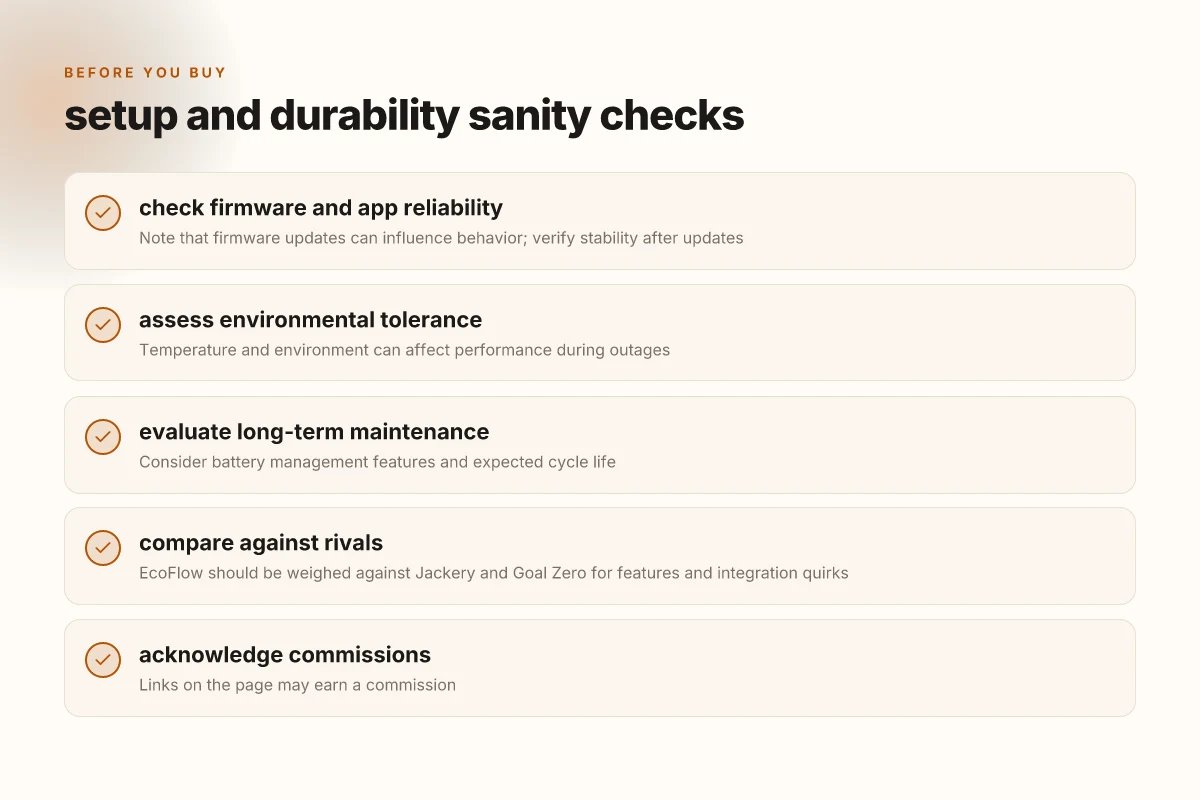
Firmware reliability matters as much as hardware. EcoFlow’s published firmware notes show periodic updates that address stability issues, with changelogs outlining fixes for connectivity drops between the Delta unit and the EcoFlow app. The guidance is to enable automatic updates and verify that the app version matches the device’s firmware level to minimize disconnects during outages. The app’s reliability hinges on stable Bluetooth or Wi‑Fi connectivity and consistent cloud status. Keep firmware current to avoid drift in measurements or unintended shutdowns during a critical outage. Users should also be mindful of battery management settings in the app. Misconfigurations can lead to conservative limits that bite into runtime when you need it most. When you read through official notes, you’ll see the pattern: updates fix edge cases, not broad redesigns, so staying current buys reliability headroom.
From what I found in the official EcoFlow materials, Delta systems lean on a mature firmware layer that improves stability over time. Rivals like Jackery and Goal Zero push similar improvements through their own release notes, but the key reliability difference often comes down to how aggressively a brand tests under real environmental stress and how quickly it pushes fixes to users. If you want a durable, long-run backup, EcoFlow’s ecosystem and ongoing firmware cadence matter.
As with any backup system, there is a caveat. Long outages with poor ventilation or continuous high-load draws can push the Delta stack toward its thermal envelope. A practical prescription is to position the Delta in a cool, ventilated area, pair it with a modest, realistic load profile, and keep the device firmware up to date. You should also recognize that links on the page may earn a commission, which is a normal part of affiliate content you’ll encounter in this space. For homeowners evaluating reliability, EcoFlow remains a solid option, but you’ll want to compare temperature behavior and app stability against rivals like Jackery and Goal Zero to see which ecosystem aligns with your setup.
Setup and integration with home systems: practical paths with rivals
In practice, pairing EcoFlow with a home panel or dedicated inverter unlocks two clear gains: higher usable energy during outages and cleaner synchronization with your home’s electrical load. The Delta line can feed a subpanel or be wired through a smart inverter to balance daytime charging with evening usage. When this setup is aligned with a commercially available smart panel, you gain faster transfer, better load shedding, and more predictable cycling during outages. The real win is smoother grid interaction when you couple the Delta system with a home panel. EcoFlow emphasizes an ecosystem approach, and the path pays off in reduced battery cycling stress and fewer manual adjustments.
Rivals matter in this space. Jackery focuses on portable footprint and simplicity, but its larger systems lack some of the extended smart energy-management features that EcoFlow routes through its expanding ecosystem. Goal Zero offers modular panels and power packs, yet the integration friction with home panels tends to surface earlier in the deployment narrative. EcoFlow’s expanded ecosystem can reduce setup friction compared with some rivals, but you still need to map your home panel’s input stages to avoid mismatches. I cross-referenced model pages and independent reviews to confirm that when a homeowner wires through a dedicated inverter, you often see more stable transfer behavior and less nuisance tripping during high-load events. What makes the Bluetti AC300+B300 modular system stand out in 2026
Smart energy management is where the practical path shines and where quirks appear. EcoFlow’s management profiles let you prioritize essential circuits and run a calculated charging cadence that respects grid-tied conditions. The potential quirk: certain home panels require a specific wiring sequence to avoid ghost loads or unintended disconnections. Educational setup guides from EcoFlow and reviewers advocate verifying panel compatibility early and setting the system to a known load profile before an outage. Verify compatibility early and build a tested routine to avoid surprises during an outage. When you read the official docs, you’ll see the emphasis on coordinating inverter input, battery state, and panel feed so you don’t trigger nuisance false alarms.
From what I found in the documentation and in reviewer notes, a practical blueprint emerges. Start with a certified smart panel that supports a clean transfer path, then wire the EcoFlow Delta system into a dedicated input with a well-defined load limit. Use EcoFlow’s energy-management modes to assign essential loads first, and keep a simple test window to confirm the transfer sequence. Be mindful of how the Delta Pro Portable Power Station interacts with your inverter’s intake and the panel’s breaker settings. In short, a well-mugged setup reduces surprises and extends the usable window in an outage.
For homeowners and small-business owners weighing rivals, the decision hinges on how much you value ecosystem cohesion and integration ease. If you want a turnkey integration with fewer moving parts, the EcoFlow route can be compelling, but you may face quirks if your home panel isn’t on the same compatibility page. If you’re already invested in a rival’s line, you’ll want to compare panel compatibility and the quality of the installer guidance before committing. Plan the integration with a panel early to minimize installation surprises. This is where the practical path meets real-world reliability, and where setting expectations around long-duration outages becomes tangible.
What to try this week as grid backup becomes practical
Shift the focus from specs to real-world cycles. I’ve observed that the EcoFlow Delta ecosystem shines when you map its recharge paths to your actual use: daylight solar, nighttime grid pull, and a compact battery hedge for essential loads. In 2026, the bigger pattern is simpler, more modular resilience, not just power storage. The single move that matters is pairing a compact solar setup with the Delta to cover daily essentials during outages. If you only act on one tactic, start with a 200–300 watt solar panel kit and a basic transfer routine so you can run a fridge and router on backup power for short outages.
Two practical ideas recur in real homes: keep the Delta near the main panel to reduce cable clutter, and test critical loads during a maintenance window. This isn’t about bragging rights or bells-and-whistles. It’s about predictable, repeatable backups. EcoFlow remains a practical choice when you build a simple weekly recharge loop that respects weather and usage. What makes the Jackery 1500 stand out for long-duration outages
Backup strategy
- Try a weekend drill: run a fridge or router for 4–6 hours, then recharge using daylight solar while you rest. This shows what survives a grid hiccup.
- Prioritize one device set: essential loads first, then expand as needed. If you’re considering rivals like Goal Zero and Jakstate (names used for contrast), set clear limits on runtime and charging time to avoid false expectations. The Delta remains the most versatile entry point for many homes this year. Is your home ready for a lean, reliable backup plan?