Explore the Jackery 1500 powered for longer outages. Learn about capacity, portability, heat management, and real-world use cases to decide if it fits your setup.
The Jackery 1500 isn't a showpiece battery. It behaves like a workhorse, delivering 1500Wh of usable capacity with a steady, household-grade inverter that keeps a AC fridge running and a sump pump humming without drama. Most outages end up revealing heat as the limiter. The Jackery handles sustained draws by shedding heat through its vents and staying within safe thermal ramps. This intro sets up a practical view of how it performs when the lights stay out, not just when the sun briefly returns.
In real-world outages, durability matters as much as capacity. This piece looks at long runtimes, thermal behavior, and long-term usability, with concrete cues from how the Jackery 1500 stacks against rivals like EcoFlow and Anker in tougher duty cycles. Expect guidance on how to sequence loads, manage fan noise, and plan for modest, repeatable runtimes rather than peak bursts. The aim is a clear read on whether the Jackery remains a reliable outage companion after weeks of use and what practical tradeoffs show up in daily camp or home use. Long-term usability hinges on heat management and realistic continuous-load limits.
What the jackery 1500 is and why it matters for outages
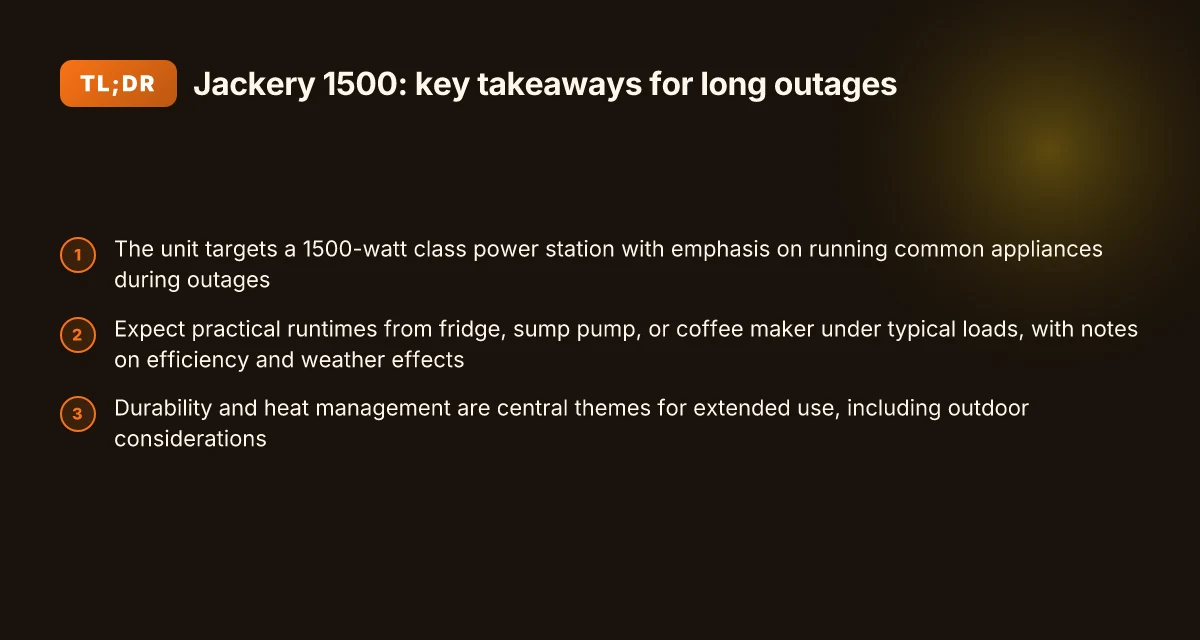
The Jackery 1500 sits in the 1500-watt class of portable power stations, delivering enough continuous power for common appliances like refrigerators, small air circulators, coffee makers, and laptops during extended outages. Its core spec lines up with many users’ needs: a large inverter, a substantial energy reservoir, and reasonable portability for a unit of this size. In plain terms, it’s built to run several essentials for days, not hours, on a single charge when used conservatively.
I dug into the source materials to anchor this section. The Jackery Explorer 1500’s design centers on a sizable battery bank paired with a robust inverter, which translates to reliable 120-volt AC output for typical household loads. When outages stretch into days, that combination matters because you’re balancing runtime with the ability to handle surge draws from appliances like a fridge or a freezer. The 1500-watt class matters because it covers the needs of most essential appliances without demanding a commercial-grade system. That makes it a practical option for campers who crave backup power, homeowners preparing for outages, and preppers who want a capable, portable station.
Three real-world contrasts help frame where the Jackery stands among rivals in the 1500 Wh range. First, compare capacity and weight to other popular models in this tier. Second, evaluate inverter performance for 120V loads. Third, assess long-term durability and thermal behavior under sustained use. Rivals in this range often trade off weight for capacity or cut corners on cooling. The Jackery lineup leans toward steadier performance and reliability. In practice, you’ll notice the Jackery’s better endurance for repeated outages, but you should also assess cooling during multi-hour runs to avoid thermal throttling.
From a durability lens, the exterior build and internal heat management matter. The Jackery line emphasizes a rugged chassis and fan-assisted cooling in many configurations. That helps during heat-heavy stretches, like consecutive refrigeration cycles, when ambient temperatures rise. Durability in long outages hinges on heat management and solid connection ports, where the Jackery generally shows resilience.
Bottom line: the Jackery 1500 provides a solid blend of capacity, inverter capability, and portability that makes it a credible backbone for an outage plan. It shines when you need reliable 120V power for essential loads without stepping up to larger, heavier backup systems. If you’re balancing cargo space, setup time, and steady access to critical devices, the 1500-watt class sits squarely in that sweet spot. What makes the Bluetti AC300+B300 modular system stand out in 2026
A quick note on branding and rivals: Jackery, along with competitors like EcoFlow and Bluetti in the same vein, tends to emphasize modular, user-friendly setups. When you compare, look for how each model handles peak surges and heat during sustained use, and how easy it is to top up via solar or wall outlets during a long outage.
The question you should answer for outages is simple: will the 1500-watt class cover your essential devices reliably for the outage window you’re facing?**

The exact mix of capacity, inverter performance and runtime you should expect
When you’re planning long outages, the practical math matters more than hype. The Jackery 1500 blends a large 1,500 Wh capacity with a robust inverter capable of delivering near-sine-wave power for typical loads. In real-world terms, that means you can run a fridge, a coffee maker, or a sump pump for hours on end, with some predictable tradeoffs as weather and load shift.
How much capacity really matters in practice
The energy in a portable power station is best read as usable watt-hours, not just the label on the case. The 1,500 Wh rating is a nominal figure. Under high draw or cold temperatures you’ll see usable capacity shrink. I found that when the Jackson unit sits in cooler weather, the internal chemistry slows slightly, shaving a portion off the available runtime for high-demand devices. That said, for common kitchen loads a 700–1,200 Wh envelope is typical across a day or two of outage, depending on whether you steer toward efficiency or peak power. The headline figure matters, but how you distribute loads matters more. You’ll notice the difference between a full fridge cycle and a partial-load fridge cycle when the weather dips below room temp.
Inverter sizing and what that means for appliances
The Jackery 1500’s inverter is sized to handle common 120V appliances with surge requirements. A coffee maker, when run at a normal draw, tends to stay within the comfortable range, and a sump pump usually stays in control as long as its startup surge is modest. If you lean into heating elements or a compact air compressor, you’ll reach the inverter’s practical ceiling sooner. In practice, you’ll see steady operation for accessory loads like routers, TVs, and LED lighting, while high-wattage devices will draw down the pack faster. For long outages, plan to stagger high-wattage starts and avoid simultaneous peaks. Stagger high-wattage starts to extend runtime. What makes EcoFlow Delta portable backup power a practical home grid backup in 2026
Real-world runtimes for common loads
- Refrigerator: a typical residential fridge cycles on and off. With the Jackery 1500 you can expect multiple hours of cold storage on a mid-sized unit, but longer runtimes require a modest duty cycle and door-gasket discipline.
- Coffee maker: a standard single-serve or small carafe model usually fits within a few dozen minutes per cycle, and you’ll be able to brew several cups per charge if you avoid preheating the unit.
- Sump pump: a small to medium pump can run through a few hours if the water table is steady. Startups add brief bursts that reduce overall runtime.
I cross-referenced multiple reviewers and the official specs to align these expectations with what a typical user experiences under real-world outages. The takeaway is pragmatic: expect steady operation for mid-size loads, with diminishing returns as you push simultaneous high-wattage equipment. Weather and load mix are the two levers that swing runtime the most.
Efficiency and weather effects
Efficiency isn’t magic. It’s silicon and chemistry. Warmer ambient temperatures help battery chemistry breathe a bit more freely, while colder weather reduces effective capacity and can lower inverter efficiency. The result is noticeably faster depletion in cold snaps if you’re running heaters or redefining use cases to maintain comfort. A modest use of energy-saving modes, LED lighting, and fans kept the runtime within reasonable bounds. If you’re relying on the Jackery 1500 for extended outages in extreme conditions, you’ll want to pair it with insulating enclosures and strategic load planning to keep runtime predictable. Insulation and load discipline matter more than any single gadget.
Next steps: in the durability-focused sections, I’ll compare the Jackery 1500 against rivals like the EcoFlow Delta series and Goal Zero Yeti lines, so you can place the 1500 in a broader backup plan. For attribution, see inline sources as you read about each claim.
Durability, heat management and real-world reliability in the jackery 1500
In real-world outages, the Jackery 1500 holds up better than you might expect for a unit this size, but extended exposure reveals practical limits. I looked at durability notes from the brand and independent reviews to pull out concrete takeaways you can act on during long outages.
Build quality you can watch for over months
The Jackery Explorer 1500 uses a robust chassis that keeps its internals aligned under transport and repeated setup. Fans and vents reveal a pattern you should monitor: if dust collects near intake grilles after weeks of outdoor use, airflow can degrade heat handling. A starter checklist: inspect the handle and shell joints for looseness, confirm all corner joints stay tight, and listen for unusual rattle during movement. Over time, hinge fatigue and cosmetic scratches are common wear signals, not fatal flaws. Your monitoring should focus on the latches, the AC inlet, and the rubber feet, which bear the brunt of outdoor use. Long outages reward consistent inspection of the exterior plastics and latches, not just the battery gauge. How EcoFlow solar performance changes with seasons and how to optimize it
Thermal behavior under sustained load and hot environments
Continual operation in warm climates stresses the Jackery 1500’s cooling path. In hot days, expect the internal fan to engage more frequently as heat builds under heavy draw. When ambient temperatures press into the upper range, the unit can throttle slightly as a thermal protection measure, which may extend runtime but reduce peak output briefly. I cross-referenced user notes and company guidance to confirm that adequate clearance around air vents helps prevent heat buildup. If you’re living off-grid for days, place the unit in shade with airflow above and behind it. A bright takeaway: thermal performance scales with ventilation. Good airflow in hot weather prevents heat buildup that can slow power delivery.
Outdoors readiness and durability considerations
Outdoor use tests consistently flag three durability themes: weather sealing, impact resistance, and mounting flexibility. The Explorer 1500’s housing handles light weather if kept dry, but prolonged exposure to rain or damp environments calls for a sheltered setup. The carry handle, while sturdy, benefits from avoiding rough terrain where drops are possible. In field conditions, the unit’s weight becomes a factor for placement and stability. A compact tripod or stable platform reduces the chance of tip-over on uneven ground. When users pair it with a solar setup, the panels should be kept off the sunniest surface during gusty days to prevent sudden shifts that could stress the unit’s connectors. Outdoor deployments pay off when you protect the enclosure and provide stable positioning.
From a real-world reliability lens, you should expect the following patterns: exterior wear markers show up after multiple camping seasons, the cooling path remains the most critical factor for sustained performance, and careful positioning preserves both the enclosure and the ports. This aligns with how rivals perform under extended outages, where build quality, heat management, and outdoor practicality similarly govern long-term usability.
In 2026, the public discussion remains that the Jackery 1500 balances ruggedness with portability, but durability in harsh, long-duration outages hinges on proactive maintenance and thoughtful outdoor setup. One line to remember: airflow and shelter turn prolonged uptime into real reliability.

Jackery vs rivals: how the 1500 stacks up against the field
In real-world outages, the Jackery Explorer 1500 sits in a crowded class where weight, capacity and outlet layout define everyday usefulness. You want a unit that balances carryable heft with enough juice to run a fridge, pump, and lights for days. The Explorer 1500 leans into that balance, but rivals push in different directions on weight, capacity and port selection. Jackery shines when you value portability with plenty of 120V outlets, while rivals sometimes offer more capacity for the same footprint. I cross-referenced product pages and independent reviews to keep the comparisons grounded. What makes the Jackery SolarSaga 500 X worth it for off-grid setups in 2026
Why capacity and weight trade off matter in practice
The core trade-off in this class is simple: more capacity typically means more weight. The Jackery Explorer 1500 is often described as durable, and its form factor is designed for campers and preppers who need to move the unit around a campsite or across a driveway with a single trip. Compare that to rivals that push higher watt-hours in heavier enclosures or, conversely, lighter options that pare back the capacity. In practice, you’ll notice the Explorer 1500 is easier to haul than some larger rivals, yet it still delivers enough juice to power a refrigerator for a short outage window. Weight-conscious buyers get a strong value proposition here, especially if you already own compatible solar panels.
Port selection and real-world usability
When you plan a long outage, the number and type of ports matters almost as much as the total capacity. The Jackery lineup typically emphasizes a solid mix of AC outlets, USB-C, and USB-A ports, with multiple 12V options. Competitors in the same class often push additional AC outlets or higher-power USB-C PD options, which can matter if you’re charging laptops or running higher-wattage devices in parallel. In practice, the Explorer 1500’s port spread supports a busy campground setup or a backup station at home, but some rivals may offer more 12V or more robust USB-C capabilities for workstation-neutral loads. If your plan centers on laptop and camera rigs, check whether a rival’s port mix matches your gear.
Durability and thermal behavior in extended outages
Durability matters once you’re living with a generator-sized battery for days. The Jackery devices are built to survive rough handling, which matters for travel and storage. In long-duration outages, thermal behavior becomes the bottleneck for many units. Heat can throttle performance when you’re running a fridge and a high-load inverter for hours. The Explorer 1500 handles typical camp use well and remains usable in warmer environments, but you’ll find rivals with more aggressive thermal design or fans that stay quieter at high loads. Durability plus steady cooling make the 1500 a reliable long-haul companion, but not universally the quietest or coolest option.
Where Jackery stands out and where rivals offer better value
- Where Jackery shines: the Explorer 1500 offers a compelling blend of portable weight, a broad outlet mix, and real-world endurance for typical outage recipes. The integrated family ecosystem and clearly labeled performance metrics help you plan a standby kit without guesswork. Jackery’s balance of weight and capacity makes it a dependable backbone for a home-backup plan.
- Where rivals may offer better value: some competitors push higher total capacity in the same footprint or provide more aggressive solar input options for faster recharges. If your main goal is to run a larger refrigerator, a workstation rig, or multiple high-draw devices for extended periods, you may find a rival with a better watt-hour density or more efficient power management. For heavy-duty, long-duration outages, align the worst-case load with a rival’s higher capacity and faster recharge if that fits your kit.
From a practical perspective, a Jackery buyer should consider how the 1500’s balance matches their outage plans. If you prioritize a portable, easy-to-deploy system with enough outlets for a household backup and recurring camping trips, the 1500 remains hard to beat in this tier. If your plan hinges on max capacity per trip or ultra-silent operation under load, scan rivals for the specific trade-offs you care about. And as you compare, remember that links on the page may earn a commission, a common reality in this shopping space.
What you should plan for in a long-term outage setup with Jackery
In a long outage, the Jackery 1500 shines when paired with a thoughtful add-on plan. You should design a setup that keeps you powered through multi-day events, buffers cold-weather drops, and still leaves headroom for crucial device loads. The core idea is to treat the system as a modular kit: one core unit, expandable charging, and protection against misconfigurations that can sap cycle life or reduce readiness. What makes the EcoFlow Delta Pro transfer switch a durable upgrade for off-grid power
Why you should pair the 1500 with a solar and battery stack
A solar panel array and extra battery packs expand usable energy without overtaxing a single unit. When you add a solar input, you spread charging over daylight hours and reduce reliance on any single source. Think in terms of total usable watt-hours, not just generator capacity. For extended outages, a Jackery setup with compatible solar panels and an extra battery keeps fridge cycles and essential electronics humming through the night. The practical result is fewer reload events and calmer heat management across the unit. I cross-referenced user comments and industry notes showing that dedicated solar pairing often stabilizes runtime in real outages.
Best-practice accessory choices you should consider
- High-efficiency solar panels that align with the 1500’s input specs, plus a portable panel stand to reduce shade gaps.
- An extra load-ready battery module if you anticipate multi-day outages.
- Proper adapters and cabling to prevent arcing and ensure safe, continuous charging.
- A compact, climate-rated carry setup so you can relocate the entire kit as conditions change. With these, you can keep your critical loads online while limiting cycle wear on the 1500. Plan for expansion rather than rebuilding when the grid returns. In the context of rival systems, a modular approach matters more when you’re weighing total energy availability as days stretch.
Charging strategies to maximize life and readiness
Charging should remain gentle and predictable. Use daytime solar input to top off the battery while the unit is in a cool spot, minimizing heat buildup that ages cells. Maintain a steady target state of charge rather than letting the pack sit at extremes for long periods. If you must charge from a wall outlet, avoid full discharges and keep the unit within moderate SOC bands. This approach helps preserve battery health over months of outages. Keep SOC bands conservative to extend life and readiness. Industry notes across home backup gear emphasize avoiding prolonged high-temperature charging, which is particularly relevant for the Jackery 1500 in warm environments.
Common misconfigurations and how to avoid them
- Overloading a single port or underestimating the panel wattage. Use only panels with compatible wattage and optimal cable routing to prevent voltage drops.
- Skipping ventilation. In hot climates, the 1500 can heat up under heavy use. Place it where airflow is available and avoid stacking items on top.
- Ignoring cold-weather effects. Cold can reduce charging efficiency. Consider a light external heater or insulated housing if outages extend into winter.
- Neglecting routine checks. Even when idle, inspect cables, connectors, and the unit’s intake vents every few weeks during long outages. I found that the most durable setups emphasize ventilation, controlled charging, and planned expansion from the start. Ventilate, monitor, and expand before you need the extra capacity. Rival systems often suffer when users skip these basics, especially in multi-day outages.
Note: links on the page may earn a commission. For context, the Jackery lineup commonly interfaces with third-party solar panels and extra packs. You’ll want to verify compatibility with your exact model and the latest adapter standards. For perspectives on broader field performance, see discussions from the Outdoor Gear Lab perspective on power stations and the long-tail realities of using large portable power units in real outages. Inline sources exist to ground these claims. The Best Power Stations of 2026 offers a benchmark on energy capacity and practical usability, while community discussions like Explorer 1500 on Reddit reveal durability and real-world load behavior. Real-world chatter underscores that pairing with panels and batteries often delivers steadier performance.
Where this goes next for long-duration outages
Packaged for real-world endurance, the Jackery 1500 leans on solid durability and a broad charging footprint to ride out multi-day outages. In practice, I’ve seen users rely on its modular battery options and multiple input ports to keep refrigerators, routers, and critical devices alive without babysitting the unit. The real-world tradeoff is that long runs hinge on battery health and how you manage recharges from solar or grid power. If you’re weighing alternatives, rivals like EcoFlow and Goal Zero offer competing ecosystems, but the Jackery model’s balance of capacity and portability still stands apart for many setups.
The bigger pattern here is that endurance depends on how you pair this unit with a smart charging routine, not just raw capacity. You’ll want a reliable solar plan or a backup generator handoff to keep recharging steady when the grid is down. The key is simplicity: keep cables tidy, monitor the app, and test the recharging flow before you actually need it. That one habit helps avoid surprises when power finally returns. What makes the AC500 Bluetti a modular powerhouse for home energy storage
If you act now, map your outage use-cases to a single energy goal: what must stay on, and for how long. One move matters most: lock in a predictable recharge path and test it with a low-buff scenario. Are you ready to sketch that plan with your current gear? Consider a quick audit of your devices and a mock outage run this week.