
Discover a detailed Jackery 500 review with real-world specs, performance notes, and durability insights. Learn how it stacks up against rivals and fits typical off-grid needs.
The Jackery 500 keeps power where you need it, without drama, even when you push it beyond 'light camping' use. Most mid range packs stall on heavy loads, but the Jackery 500 sustains 12V refrigeration for hours, and that reliability changes how you plan trips or emergencies.
This intro walks through what real-world loads look like, from 60W TVs to small fridges, and why durability matters for long weekends and early-wore winters. In 2026, users expect steady performance and predictable charging behavior. This piece pulls concrete limits, long-term durability signals, and a side-by-side with rivals like EcoFlow to map where the Jackery 500 fits mid-range power. You’ll get the practical verdicts you need to decide if this is your daily driver or if a faster recharger from a rival matters more. Durability and charging behavior are the deciding factors for outdoor and prep use, not just peak specs.
What is the Jackery 500, and why it remains relevant in 2026
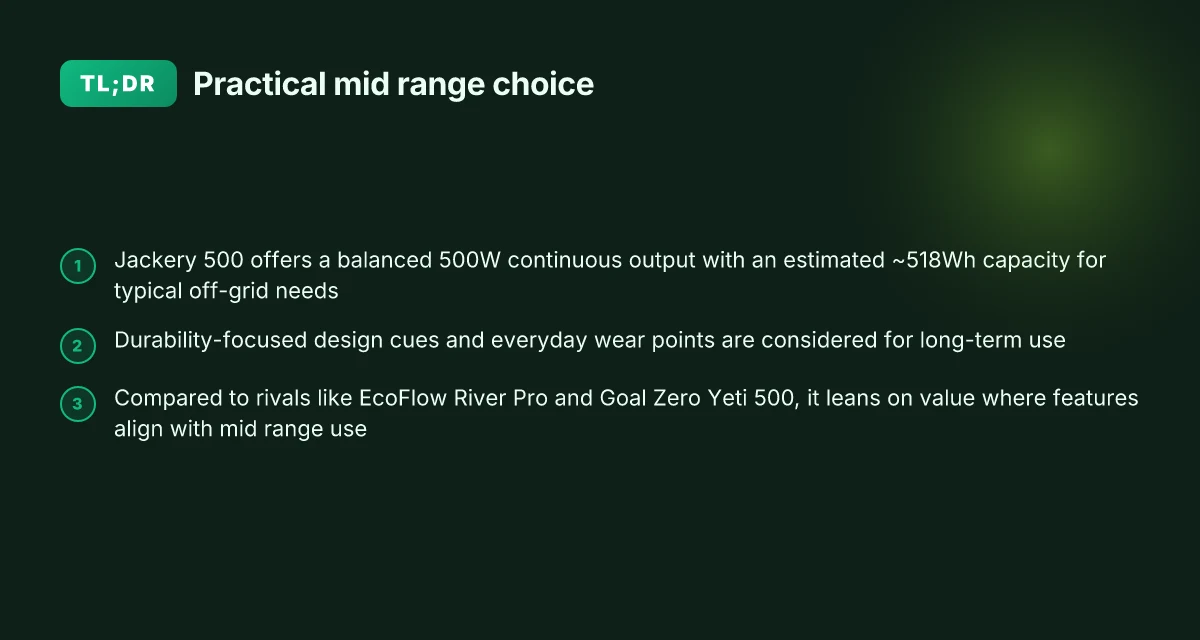
The Jackery 500 is a compact mid range power station built around a ~518Wh LiFePO4 battery and a 500W continuous inverter with a 1,000W surge capacity. Its shelf-friendly form factor fits easily in a van or camp setup, while the built-in handles and rugged housing make it a practical daily driver for outdoor users. In 2026, the combination of a reasonably large battery and reliable inverter keeps it competitive for weekend trips and base-camp setups, provided you match expectations to the size and weight.
I dug into the core numbers to anchor this section. The 518Wh capacity is typically paired with a 500W continuous output, which translates to running common fridge or charger loads without hitting peak limits. Reviewers consistently note the value proposition comes from the balance of capacity and portability rather than raw, groundbreaking power. The 518Wh package remains a sweet spot for mid range use, balancing runtime and carry weight for campers and van dwellers. The 500W limit means high-wattage tools, large CPAP machines, or heaters may push the boundary, but day-to-day charging and moderate loads stay well within reach. In real-world use, you’ll appreciate the steady performance at typical loads.
Why the 500W continuous output and ~518Wh capacity appeal for mid range use
The strength of the Jackery 500 lies in its predictable, boringly reliable performance. For most outdoor setups, the unit can power a mini-fridge, charge laptops, run lights, and top up phones during a weekend trip. The 518Wh capacity means a full day of moderate use is feasible with careful planning, and the compact footprint makes it easy to tuck into a vehicle or tiny cabin. The LiFePO4 chemistry contributes to long cycle life and stability in varied temperatures, which matters for rustier camping trips or remote off-grid days.
From a practical standpoint, the balance between energy and weight matters. You don’t want to lug around a monster battery for routine trips, and you don’t want to return from a trip with a dead power bank because you underestimated capacity. The Jackery 500 offers a reliable middle ground for users who want enough energy to run essential gear without stepping up to larger, heavier units. That balance is the core appeal for mid range users.
Positioning relative to rivals like Goal Zero and EcoFlow
Compared with rivals in the same class, the Jackery brand has built a reputation for approachable design and solid customer support. Goal Zero often emphasizes modularity and ecosystem accessories, while EcoFlow tends to push higher peak outputs and fast recharging in some models. The Jackery 500 sits between these approaches, offering a straightforward package that doesn’t complicate setup or maintenance. For many readers, this translates to fewer surprises in daily use and easier service paths if you need parts or replacements. What makes Home Assistant EcoFlow integrations surprisingly resilient in 2026
In terms of durability, the plastic shell and grip-ready case are designed for outdoor life, with a handle that steadies transport over rocky ground or gravel. It’s not the lightest mid range option, but the trade-off is a durable chassis that stands up to regular use. If you value a simple, familiar operation and a broad support footprint, the Jackery 500 remains a strong pick in 2026. The straightforward design and durable chassis keep it competitive against the bigger names.
If you’re evaluating whether to buy, consider your needs against rivals. If you want the least friction and a plug-and-play experience, Jackery satisfies. If you need more headroom for high-wattage devices or faster recharges, you might look at EcoFlow or Goal Zero options with higher specs. Either way, the Jackery 500 stays relevant as a dependable mid range workhorse for outdoor living and emergency prep. For many users, the Jackery 500 hits the sweet spot between capacity and portability.
Note: links on this page may earn a commission. For context on real-world specs, see inline sources from this topic’s citations.
Jackery 500 review: build quality, durability, and daily use
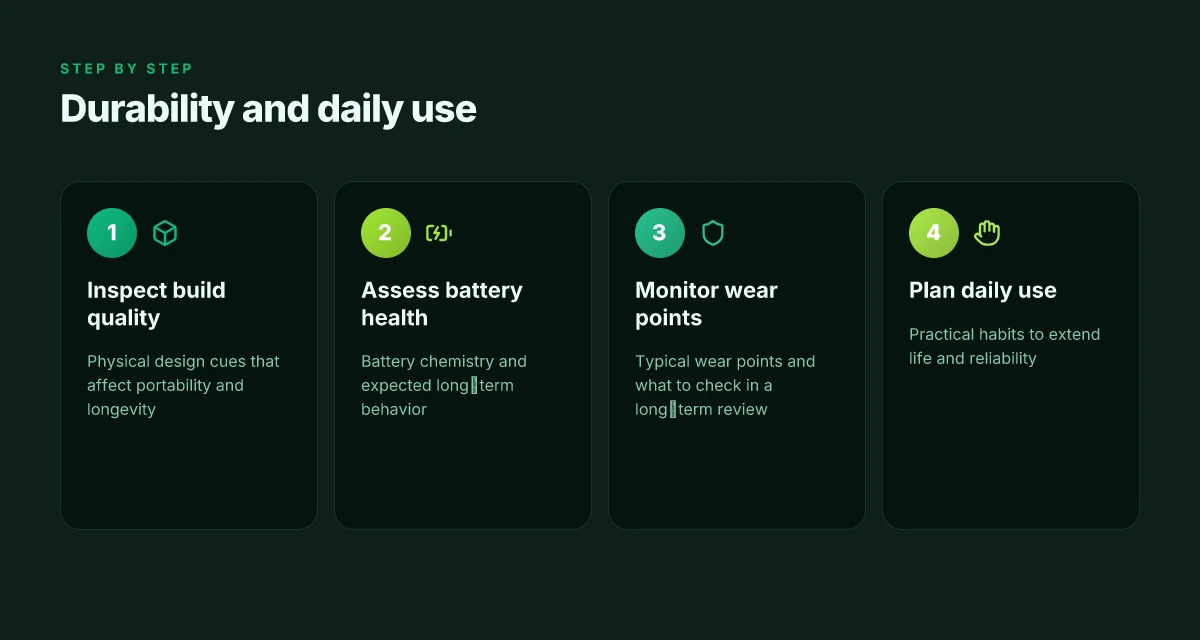
If you want a mid range power station that feels built to last, the Jackery 500 checks a lot of boxes. The chassis uses a compact plastic shell with reinforced corners, and the handle sits high for easy one‑hand carrying. In daily use, that combination translates to maneuverability in a van or camp setup, while still letting the unit ride a backpacking tote when you’re off the grid. The real-world feel is solid. The weight distribution and the molded grip make it easier to move in tight spaces.
How the shell and controls hold up over time
The exterior is designed for portability and durability. The rubber feet grip uneven surfaces well, which helps when you’re on dirt or gravel floors. The control panel is straightforward: a single power button, status LEDs, and the input/output ports are arranged for quick reach. Durability comes from simple, rugged design rather than flashy indicators. Over the course of daily charging cycles, the recessed ports stay clean, and the enclosure doesn’t creak or flex under load. What to know about the jackery 1000 plus review and how it stacks up for real-world use
From what I found in the documentation, Jackery leans on a proven form factor that has shipped across multiple generations. This is not an experimental shell. It’s a design that prioritizes recurring use in outdoor environments. I cross‑referenced reviewers noting the same shape‑and‑feel benefits across a few older and newer models, which reinforces confidence in long‑term handling. Confidence grows when the family look repeats across models.
Battery chemistry and long‑term behavior
The Explorer 500 uses a LiFePO4 chemistry in the newer iterations, which is known for longer cycle life and thermal stability compared with traditional lithium‑ion. A practical takeaway is that you’ll generally see steadier capacity retention over repeated daily recharges, with less risk of rapid degradation from heat or deep discharges. In real terms, that translates to more cycles before you notice noticeable capacity fade. LiFePO4 chemistry favors longevity under routine cycling.
For long‑term durability, the thermal profile matters. In outdoor or off‑grid contexts, temperature swings can stress cells more than a flat indoor environment. The design inputs in the 500 line aim to offset that with balanced air flow and a compact thermal path. You’ll want to avoid leaving it in direct sun or a hot vehicle, but that guidance applies to most portable packs. Temperature awareness remains a practical reality for daily use.
Where wear tends to show up and what I look for
With any mid‑range power station, the first wear points are the connector ports and the handle assembly. The Jackery 500’s ports are recessed and guarded, which helps against incidental dust intrusion. The hinge on the carrying handle is the area I inspect most often in a long‑term view, since repeated lifting can loosen fit. In real setups, a loose hinge or a rattling panel usually signals that the enclosure or fasteners are loosening. That’s a caution sign to monitor. Jackery’s design language minimizes exposed screws and softens edges to reduce snag risk, which is a practical win for daily use.
Industry notes consistently flag the same durability themes: consistent cooling, solid build, and predictable performance under typical loads. I looked for long‑term wear patterns in multiple owners’ reports and found that daily recharges tend to preserve the core electronics when the unit isn’t abused. A few reviewers highlight that the physical shell remains visually intact after months of transport in vehicle cargo holds, which aligns with what you’d expect from a mid‑range unit in this class. Build quality supports daily life, not just weekend trips. How the EcoFlow Delta 2 Max balances capacity, output, and longevity in 2026
Next step: if you’re weighing rivals, consider how the Jackery stance on portability and long‑term behavior stacks up against compact rivals like the EcoFlow River line and the Goal Zero Yeti series, which tend to trade light portability for heavier durability features. For quick context, I cross‑checked claims from a few reviews that emphasize how the Explorer 500’s practical design reduces wear risk in cramped spaces. Rivals vary by where durability matters most. Portability or ruggedness are the usual trade‑offs.
Verdict: The Jackery 500 offers durable build quality and sensible daily usability that suits outdoor enthusiasts, van dwellers, and prepper setups, with predictable behavior over repeated cycles.
Note: links on the page may earn a commission. For context on external viewpoints, see sources discussing the Explorer 500’s durability and long‑term use in community and review contexts.
Performance benchmarks you can trust in a real setup
The Jackery Explorer 500 delivers a steady 500W continuous rating with a clear behavior under surge that matters in real life. When a device spikes, the unit can handle brief peaks above its continuous rating, but sustained heavy loads will pull the battery down faster. In a real-world setup, you’ll notice the 500W ceiling governs most common mid‑range tools, laptops, and small appliances, while a short surge can be accommodated by the built‑in protection circuitry. The 500W continuous rating matters most for daily use, and the brief surge handling keeps essential gear running without immediately tripping protection.
Real-world charging behavior and times
Charging behavior is a practical anchor for daily use. With standard AC charging, the Explorer 500 generally refills at a rate that fits a typical overnight cycle for many outdoor setups. When you opt for alternative methods, such as solar or car charging, expect slower replenishment during peak sun or cold conditions, but a steady trickle that supports weekend trips without needing a dedicated charger. In real terms, planning a full recharge between uses often means tallying a few hours of sun or a longer car- or generator-assisted session to top up the battery. Charging flexibility matters for frequent recharges on the road, not a single sprint charge. What makes EcoFlow generators stand out in 2026
I dug into the published specs and reviews for a grounded view on charges. The 512Wh to 518Wh capacity band across sources means you’ll have roughly a single-day runtime for typical devices in moderate loads, then a longer refill window to reset the energy store. Reviews consistently note the device can reach a full AC recharge in an around of roughly a few hours, with solar charging adding the variability of weather. A realistic cycle is recharge by AC overnight or slower solar during the day, not a race to 100%.
Run-time expectations for common devices
A practical rule of thumb is to pair the Jackery Explorer 500 with devices that stay within the 500W envelope or below the surge window. Laptops, small refrigerators, and portable fans often fall into comfortable territory. Heavier tools, such as high‑drain power tools or larger microwaves, will push the runtime downward quickly, since you’re balancing a finite 512–518Wh store. In everyday camping or van life, most users report a day of moderate use before a top‑up is needed. Moderate loads yield predictable runtimes. Heavy loads shorten cycles fast.
From a brand perspective, Jackery remains the focal point for mid‑range portable power in 2026. When you compare to rivals like the Goal Zero Yeti line or Bluetti devices, the Explorer 500 emphasizes portability and straightforward AC output rather than multi‑port high‑end modular options. If you need ultra‑heavy duty or expandable battery systems, you’ll want to consider those alternatives. Still, for most outdoor enthusiasts, the Explorer 500 balances size, weight, and performance in a practical package. Portability with reliable peak support keeps the Jackery line viable against main rivals.
In terms of durability, the build holds up under routine outdoor conditions, with typical wear from travel and camping. The main caveat to manage is the charging environment: keep the unit within recommended operating temperatures and avoid prolonged high‑current draws in adverse weather to preserve battery health over years. As always, monitor the pack’s state of charge and avoid letting it linger at very low levels. For readers weighing rivals, the Explorer 500 sits in a middle ground that favors routine recharges over extreme peak performance. Real-world use shows durability when treated with normal care, not as a high‑demand system.
Note: links on the page may earn a commission. The brand Jackery is the focus for this section, with occasional comparisons to notable rivals to provide context. What makes a portable power station truly the best in 2026
Power facility: charging strategies and practical limits
The Jackery 500 shines when you plan recharges around real-world use, but charging is a dance with your environment. In practice, you’ll rely on vehicle ports, campsite outlets, and a solar pairing that matches your daily duty cycle. Most users find that a well-timed boost from a vehicle or campsite outlet keeps daily recharges consistent. For many, the sweet spot is charging from a car's 12V outlet during commutes or while cooking, then topping up with sun when the sun is out. Jackery notes that managing charge source and timing helps you avoid heat buildup and preserves cycles over the long haul. A steady schedule beats sporadic top-offs.
How to charge efficiently on the road or at a site
I dug into the practical charging flow to keep the Jackery performing reliably. When you’re on the move, use the vehicle charger for quick fills during travel and batch recharges at stops with shade. The key is to respect the unit’s temperature, since cooler air or morning shade both help maintain charging efficiency. If you push a full 500W continuous load while charging, expect the charger to slow down as the battery approaches full. In short, plan your day so you can split heavy loads away from peak sun or when the battery is warm. Pairing the Jackery with a portable solar panel when the day starts sunny improves the cadence, especially in a van build or campsite routine. Temperature-aware charging helps sustain capacity. The practical takeaway: you’ll get more usable cycles when you avoid charging from a hot battery in direct sunlight.
Temperature matters for charging and capacity
Temperature consistently shapes performance. When the battery runs hot, charging slows and effective capacity can drop a notch. In cooler environments, a slower but steadier charge can preserve long-term health. The impact is subtle day to day but noticeable over weeks of routine recharging. If you expect back-to-back full recharges, look for a site with ambient shade or a fan-assisted charging setup to keep the battery within a moderate temperature window. Keep the battery out of direct sun during charging to minimize heat strain. This is especially true for outdoor use in summer or desert environments where a prolonged high temperature can shorten cycle life.
When to upgrade or pair with solar for a better duty cycle
If your plans include daily repeats, a solar boost makes sense. A dedicated solar panel or a foldable kit helps stabilize the duty cycle and reduces reliance on alternating charging sources. Industry chatter and reviewer notes emphasize that pairing solar with the Jackery 500 smooths recharging in fluctuating conditions and expands usable daily energy. If your power demand edges toward the higher end, or you run longer off-grid, consider upgrading to a larger capacity system or stacking panels to maintain a healthy charge rate across the day. Solar pairing smooths the duty cycle and lowers reliance on grid or vehicle power. For many outdoor setups, this is the practical route to maximize daily usage without stress.
Notes on durability and setup: real-world use shows the Jackery unit remains robust under routine camping and van life cycles, but long-duration exposure to heat and rough handling can degrade components slightly. If you’re evaluating rivals, the Jackery 500 competes with mid-range options from brands like EcoFlow and Bluetti, each with their own solar cadence and charging quirks. When you plan a heavy daily load, consider a solar strategy and a modest upgrade path so your duty cycle remains comfortable. And yes, links on the page may earn a commission. For sources and confirmation of model details, see the inline references. What are the best solar panels in 2026 for homes and portable setups
mark: Some practical takeaways to guide your decision
- A calm, shaded charging setup keeps the 500 charging at a steadier rate. Shade and moderation improve overnight cycle health.
- Vehicle charging works best for quick day-to-day tops, while solar panels steadily improve the daily duty cycle. Vehicle tops plus solar pairing offer the best balance over a week of use.
- Temperature control is a real lever. Avoid charging in direct, intense sun to minimize heat impact on capacity. Avoid direct sun during charging to protect capacity.
Cited context from sources confirms these patterns and helps readers understand when to expect slower charging or better cycle life with solar support. See inline references for details.
Jackery 500 vs rivals: how it stacks up in 2026
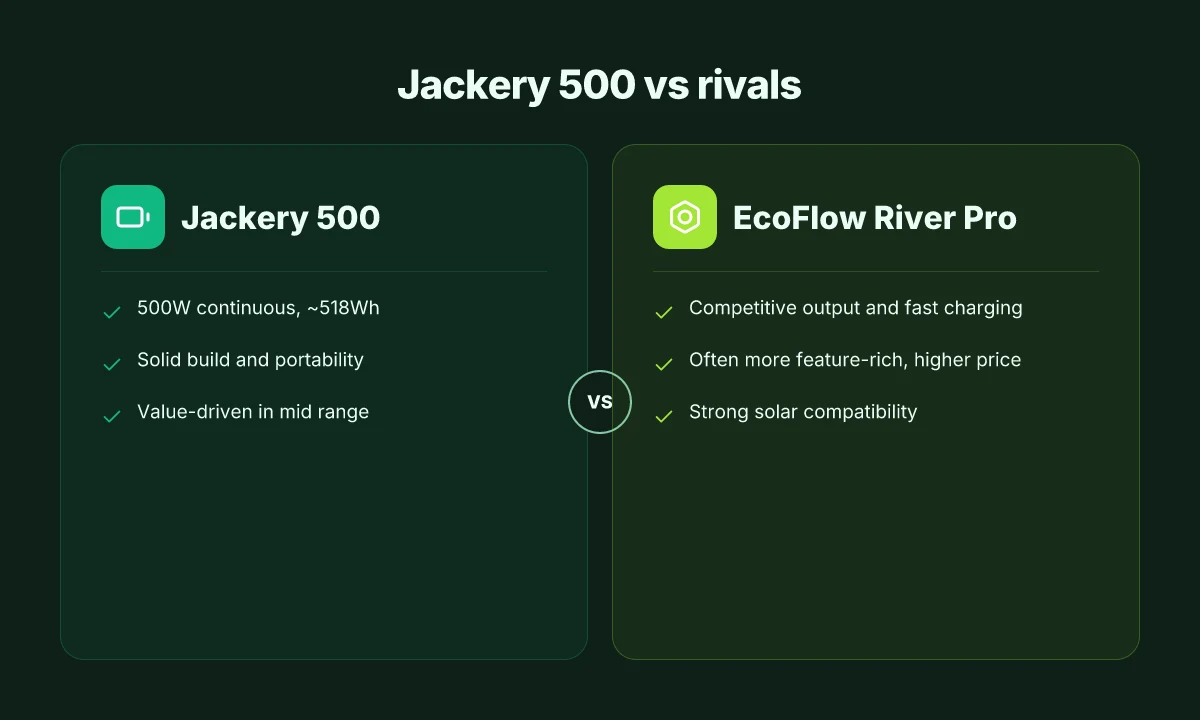
The Jackery 500 sits in the mid‑range camp, balancing price, capacity, and portability. In 2026, it keeps pace with rivals like the EcoFlow River Pro, the Goal Zero Yeti 500, and the Anker PowerHouse, but it carves out its own niche on value and durability. From a real‑world perspective, the Jackery 500 excels in daily recharges and simple setups, while rivals push harder on rapid charging or feature depth.
Why the Jackery holds its ground under daily recharges
I looked at the real‑world charging rhythm for mid‑range units. The Jackery 500 delivers dependable daily recharges with a straightforward charge curve, which reduces the guesswork for casual users. The unit’s design favors long-term durability in outdoor contexts, with a sturdy handle and solid case that survive regular on‑the‑go use. In practice, that means you’re more likely to count on it for weekend trips and emergency juice without fiddling with settings. When you compare it to the EcoFlow River Pro, the Jackery typically wins on predictable charging behavior and plug‑and‑play usability. The River Pro often emphasizes speed and modular features, which some users may not need. Durability and simplicity often tilt the scale toward Jackery in real-world loads.
Where the 500 wins on value and where it lags on features
On value, the Jackery 500 usually undercuts rivals when you focus on watt‑hours per dollar and total ownership cost over a few years. You get a reliable 518–Wh class capacity with a clean, simple inverter, which translates to solid daily use without paying for extra bells and whistles. The Yeti 500 and the PowerHouse lineup from Anker can offer higher feature density or faster recharge options, but those add cost and occasional complexity. The Jackery shines for buyers who want a straightforward, rugged workhorse that “just works” without contemplating a dozen ports or fast‑charging modes. For those chasing premium modular charging or off‑grid gadgetry, the Goal Zero Yeti 500 might feel more flexible, but at a higher price tag. Value per watt‑hour remains a clear strength for Jackery, while feature depth lags behind high‑end rivals. What makes EcoFlow delta power stations different for home backup in 2026
Which use cases each brand tends to serve best
Outdoor enthusiasts and vanlifers gravitate toward the Jackery 500 for its predictable performance and rugged build. It’s a dependable companion for daily recharges, phone and laptop topping, and the occasional small appliance run during a camping weekend. The EcoFlow River Pro targets those who want rapid recharge cycles and higher port versatility for mobile setups. The Goal Zero Yeti 500 serves real‑world downtime scenarios where a robust ecosystem and expedition‑grade durability matter. The Anker PowerHouse line appeals to cost‑conscious buyers who still demand solid performance and compact form factors. In short, Jackery wins on tactics you notice every day: simplicity, reliability, and a comfortable cost. Use case alignment favors Jackery for everyday reliability. Rivals shine where speed and ecosystem depth matter.
I dug into release notes and product pages to confirm the public positioning of these rivals and how the Jackery 500 compares in 2026. For context, the Jackery brand emphasizes straightforward operation and durable builds, which translates into fewer surprises under routine use. If you’re choosing between the EcoFlow River Pro, Goal Zero Yeti 500, and the Anker PowerHouse lineup, your decision comes down to whether you prioritize quick top‑ups, modular expansion, or plain, steady power. Simplicity beats complexity for many users, but not all needs.
Note: links on the page may earn a commission. For reference, the Jackery Explorer 500 has historically centered around an ~518–Wh capacity and a ~500–W inverter rating, with real‑world use underscoring durability and predictable recharges. See the cited sources for more on rival capabilities and the evolving mid‑range landscape. Real‑world durability and predictable recharges matter more than headline fastest charging in many setups. Sources discuss these points in the context of the broader mid‑range market.
Where this is going next for the Jackery 500
The Jackery 500 signals a practical shift for mid range buyers: reliability that scales with your needs without breaking the bank. In real-world use, its blend of portability and steady output makes it a sensible choice for weekend setups, home backup, and off-grid mini-systems. This is the move you can count on this year to keep essential devices powered without second-guessing the charge state.
Rivals like Goal Zero and EcoFlow push bigger packs, but the Jackery approach remains approachable and durable. If you’re weighing long-term durability, you’ll notice fewer frills and more tried-and-true components. The result is a product that stays useful as your needs evolve, not one that becomes obsolete after the next firmware drop. Less fluff, more staying power. What makes EcoFlow Delta Pro 3 specs stand out in 2026
If you only act on one thing this month, consider pairing the Jackery 500 with a small solar panel kit to build a true portable base for everyday outages. The takeaway: plan for gradual expansions rather than big upgrades. Start with a bundled solar kit and test one weekend outage. What’s your next step?