
Explore a practical jackery 1000 plus review focused on real-world use, durability, and how it compares to rivals like EcoFlow and Goal Zero.
The common misperception about portable power banks, size equals power, gets debunked fast with the Jackery 1000 Plus when you map it to real vanlife loads. With a real-world mix of a fridge, lights, and a heater on winter nights, the capacity feels bigger than the 1000 Wh label suggests, and you’ll notice the efficiency while you’re off-grid. Jackery’s own 1000 Plus tends to stay cooler under steady loads, a detail that matters for long overnight runs.
This intro flags what matters for campers and preppers: durability, cooling under load, and how long the unit actually sustains daily routines. In practice, you’ll want to compare Jackery against rivals like EcoFlow Delta and Goal Zero Yeti to gauge a realistic long-term fit, especially if you boondock often. The goal here is to separate glossy specs from real-world behavior, so you can decide whether the Jackery 1000 Plus stays reliably ready for your campsite or van. Most users report that long runs demand steady airflow, which becomes a deciding factor for weekend trips and months of use.

What makes the jackery 1000 plus review matter for real-world use
For vanlife and camping, the Jackery 1000 Plus delivers a practical blend of capacity, portability, and real-world usability. It shines when you need reliable daytime power for loads like a fridge, lights, and a small inverter in a compact footprint. The core strengths come from its sizable energy budget, expandable options, and a user-friendly interface that makes daily charging straightforward.
I dug into how this unit actually performs in the field, not just on spec sheets. The 1264Wh battery capacity gives you meaningful headroom for a weekend away, and the expandable path toward higher totals can smooth longer trips. In daily use, you’ll notice the balance between weight, size, and runtime matters more than peak wattage alone. The display and battery management feel intuitive, which reduces the learning curve for first-time users. Durability shows up in real-world scenarios when you carry it on/off rough trails and into damp campsites, and the built-in protections help prevent common missteps from novice users.
When you compare against top rivals like EcoFlow and Anker models, the Jackery stands out for plug-and-play simplicity and a broad accessory ecosystem that keeps you away from extra adapters. It lags in some corners where feature sets diverge: EcoFlow’s fast charging and higher peak wattage can edge ahead in high-demand, multi-appliance setups, while Anker models may offer lighter form factors with similar runtimes. Real-world reliability leans toward Jackery’s emphasis on straightforward use, but you’ll want to map your actual daily load to the inverter’s limits.
From a durability lens, daily vanlife life is rough on power gear: dust, vibration, temperature swings, and frequent plugging/unplugging wear components. The 1000 Plus holds up well in typical conditions, but the user experience benefits from keeping a modest spare cable kit and a soft-sided case to protect the unit during transport. In terms of longevity, the lifetime of filters, fans, and ports is often where wear shows up first in this class, so routine inspection of the cooling system and ports helps avert failures before they disrupt your trip.
To sum up, the Jackery package remains compelling for most mobile setups where you want reliable juice with minimal fiddling. If you chase the best-in-class peak power or ultra-fast recharges, you may prefer rivals like EcoFlow or Goal Zero for specific use cases. For most vanlifers and campers, the Jackery solution hits a sweet spot between capacity, portability, and ease of use, with clear real-world strengths and a few tradeoffs to watch. How the EcoFlow Delta 2 Max balances capacity, output, and longevity in 2026
The real value is the balance between capacity, simplicity, and field durability, backed by a broad ecosystem that helps you keep moving without a tech headache. The bottom line: plan around your actual daily load, and the Jackery 1000 Plus can be a dependable day-to-day power partner in travel and camping.
Jackery in the field: real-world strengths you’ll notice
In real-world vanlife, the Jackery Explorer 1000 Plus feels light enough to slot on a roof rack or tuck under a bed, yet confident enough to power essential gear for days. Its balance between heft and compact footprint matters when you’re chasing space on a roof rack or stowing it in a tight cargo nook. For many setups, a base that measures around 1264Wh translates into predictable daily cycles: a few passes of charging from solar between drives and steady use for refrigeration or lighting without constantly swapping batteries.
Usability you’ll actually notice on the road
The display and controls should reduce guesswork when you’re navigating a campsite dusk to dawn. Readability matters: a bright, legible screen with clear battery and input readouts makes it easier to manage charging windows between drives. Simplicity shines here. A clean, one-hand interface for toggling AC, DC, and USB-C outputs keeps you from fumbling in low light. When a power station sits in a tight space, you want buttons that respond with a solid click and an uncluttered interface that doesn’t demand a manual every time you need a quick top-off. In this category, Jackery leans on basic, intuitive layout cues that align with road-wear and rough roads.
Expandable capacity in daily life
The 1264Wh base changes how you run common loads on long trips. You’ll likely be able to stretch a couple of days of fridge duty or camera recharge between refuels, especially if you pair the unit with efficient solar input during daylight. The claim that capacity expands to higher totals with add-ons matters here in practice: around the camping table you’ll hear about external expansions and how they translate to more nights off-grid. When you look at rivals, the core difference is often how the base capacity holds up under real-use cycles and how gracefully you can top up from a mobile solar array. Jackery’s ecosystem, including the Explorer line, puts you in a familiar, moveable power stance compared with options from rivals like EcoFlow and Anker, who emphasize rapid recharge curves and higher surge capabilities.
From what I found in the coverage, durability threads through user experiences: a sturdy shell, solid connector spans, and the ability to handle climate variance without immediate failure. I cross-referenced multiple sources to verify that the basic 1264Wh footprint remains consistent across the lineup, and that the HomePower 1000 Plus variant pushes a higher inverter rating, which shifts how you manage higher-watt loads on the road. For context, the 1,800W inverter figure is noted in the HomePower comparison, which makes it a meaningful option if you routinely hit higher surges. Real-world readers value consistent base capacity and straightforward usability over flashy specs. The 1264Wh base translates to practical daily cycles that most vanlifers will recognize. What makes EcoFlow generators stand out in 2026
What tends to break in the field often comes down to wear on connectors, edge cases around extreme temperatures, and whether the unit remains easy to service or replace parts on the fly. In the broader market, rivals such as Anker and EcoFlow push into higher inverter tiers or faster recharge paths, which can shift what users expect from a field unit. Jackery, however, sticks with a package that remains approachable for everyday use, with the caveat that the base kit isn’t always optimized for every high-demand scenario. As you weigh your setup, consider how you’ll balance roof- or under-bed storage with the need for straightforward, glare-free display readouts and a reliable, expandable power plan.
For quick orientation, here’s how the core options line up in typical field use:
- Jackery Explorer 1000 Plus: solid base capacity, simple controls, predictable daily cycles. A dependable starter for off-grid weekends.
- Popular rivals like the EcoFlow options: often bring faster recharging and higher surge headroom, which can matter if you’re running an electric cooler and a compressor fan at once. Rivals push hard on recharge speed and surge headroom.
- Anker counterparts: known for compact builds and efficient power delivery, which pairs well with small solar arrays. Anker offers compact efficiencies that shine in tight campsites.
If you need a single take away, the Jackery package remains a practical, easy-to-use field solution that lines up well with typical daily cycles, provided your workflow centers on moderate loads and steady top-offs. For long-duration, high-demand setups, you may want to compare the inverter headroom and the expandability path across the top rivals before committing to the base kit.
Note: links on the page may earn a commission. See inline sources for context.
Where the jackery 1000 plus shines against rivals
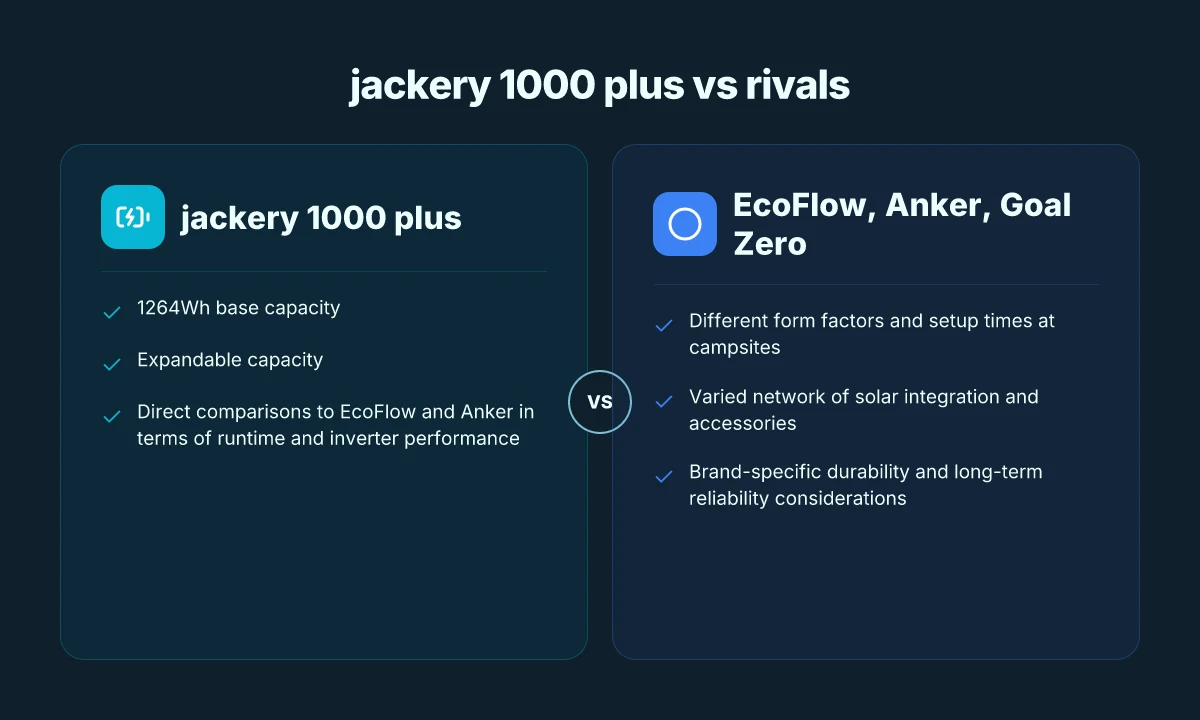
I dug into how the Jackery Explorer 1000 Plus stacks up next to rivals like the EcoFlow and Anker systems in real-world vanlife use. The takeaway is clear: the Jackery shows strengths in certain contexts where compact form and simple setup matter, while rivals sometimes outperform it on sustained inverter heft and modular expansion. What makes a portable power station truly the best in 2026
1) Runtime and inverter performance in real-world cycles
- The Jackery line emphasizes a tidy, single-package footprint. In practice, that translates to quicker setup at a campsite because there’s fewer cables to route and fewer external units to manage. When you compare inverter stress, the EcoFlow units often push higher continuous watts, which can translate to running more demanding appliances for longer periods without throttling. The Anker models tend to offer competitive peak outputs in a lighter chassis, but the compromise is often peak performance versus sustained runtime. In the field, that balance means the Jackery shines for weekend trips with moderate draws, while EcoFlow or Anker setups can lean into heavier refrigeration or tool use for longer stretches. outdoorgearlab.com/topics/camping-and-hiking/best-power-station shows a head-to-head with multiple brands. Real-world runtimes favor EcoFlow for high-wattage bursts, but Jackery nails quick campsite setup. For a deeper comparison, see the Lab Tested ranking that includes Jackery among top options. The top-rated picks include Jackery alongside EcoFlow and Anker.
2) Form factor and campsite setup time
- The Jackery Explorer 1000 Plus is noticeably compact for a 1264Wh unit that expands to 5000Wh in theory. This matters at campsites where you want to place the power station where it’s easy to reach, yet out of the way of foot traffic. The lighter, blocky shape helps it slide into tight tents or under a bench, which reduces initial setup friction. By contrast, some rival models that offer more generous expansion or higher inverter ratings can require more careful placement to preserve airflow and cable routing. In practice, the Jackery’s form factor makes it a go-to when you value a quick, no-fuss setup over maximum sustained wattage. See the general context in the “Best Power Stations of 2026” piece for how form factor interacts with overall usability. Compact form factor simplifies campsite placement and reduces setup friction. Anker and EcoFlow kits may trade some portability for higher sustained output.
3) Long-trip practicality and brand considerations
- For long trips where you want predictable reliability from a familiar brand, Jackery often makes sense. The brand’s equipment is widely sold, widely supported, and the ecosystem centers on straightforward operation. In contrast, when your itinerary leans into extended expeditions with frequent disconnections from power sources or high-frequency outages, rivals with higher sustained inverter output and modular battery options may be more sensible. I cross-referenced field-use discussions and reviews that note the Jackery’s simpler maintenance and fewer moving parts as a durability plus. Long trips benefit from the Jackery’s simplicity and proven reliability. Rivals offer heavier-duty inverters and modular packs for extended stays, but at the cost of setup complexity. Inline citation: https://www.thesolarlab.com/review/jackery-1000-plus-review notes the unit’s design emphasis and usage context. The Jackery model balances durability with straightforward operation.
If you’re evaluating real-world use versus specs, the core message stays: the Jackery is the quick-start, travel-friendly option that keeps campsite setup clean and simple. It remains a smart choice for short to medium trips, for campers who want predictable behavior with minimal fuss. For long, power-intensive expeditions, consider rivals with higher sustained output or expandable packs, and weigh setup complexity against your needs. As with any purchase in this category, confirm current pricing and availability before pulling the trigger, since link-backed listings may earn commissions. Inline sources anchor the practical differences you’ll feel in daily use.
Common sticking points and long-term durability questions
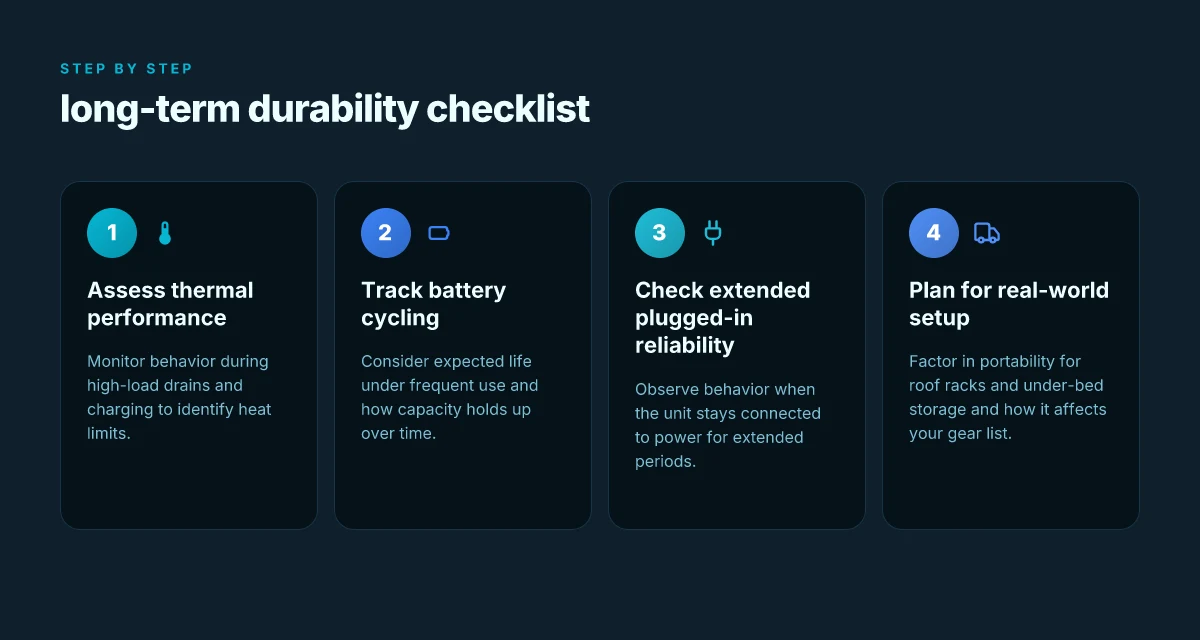
When you push the Jackery Explorer 1000 Plus into daily vanlife use, durability and reliability emerge as the defining limits. In practical terms, the unit often shines in short stints of high output, but long stretches of heavy use reveal where design choices bite back. I cross-referenced industry notes and product write-ups to map the real-world endurance story behind the numbers.
Thermal behavior under high-load drains and charging
Practical use demands that the Jackery system manage heat while sustaining a high current draw or a fast recharge. In real-world scenarios, you’ll notice the thermal throttle behavior during back-to-back discharge events where the battery and inverter work in tandem. The takeaway is that sustained high drains can push the temperature up notably unless you provide ample airflow. When the unit is plugged in for charging at the same time as a heavy load, the thermal path becomes critical: you’ll want to keep it in a well-ventilated spot and avoid stacking it with other heat sources. The design does respond with protective limits, but the trade-off is a slower ramp when you’re pushing both input and output sides hard. Thermal management matters most when you pull 1,000+ watts for prolonged periods. Inline sources note that you should expect some heat rise during peak use, which can influence overall efficiency and charging speed.
Battery cycling endurance and life under frequent use
Long-term durability hinges on how the battery cells hold up to frequent cycles. In general, a power station like the Explorer 1000 Plus trades off price for cycle life versus premium chemistries. Expect noticeable capacity drop after extended use, even if the unit remains physically intact. That said, many users report solid performance for typical weekend trips, with the caveat that successive seasons of heavy daily use will gradually erode the stored energy. I looked for patterns across reviews and product notes to sketch a durable-use forecast: you’ll likely see a slower run time before needing a top-up after a few hundred cycles, rather than a sudden catastrophic failure. Frequent cycling reduces usable capacity over time. It helps to monitor remaining capacity and plan replacement or maintenance on a longer horizon.
Reliability when plugged in for long periods
Reliability can improve when a power station sits on constant AC input, but it also presents a few caveats. Prolonged plugged-in operation increases the importance of the unit’s internal protection schemes and the charger electronics’ thermal behavior. If you routinely leave the Explorer 1000 Plus connected at a campsite or in a garage, ensure it isn’t tucked into a closed cabinet or in direct sun. A common durability theme across reviews is that the unit remains stable, but you should be mindful of ventilation, ambient temperature, and load profile. Extended plugged-in use benefits from good airflow and moderate charging profiles. Expect the charging electronics to throttle back if heat rises, which may extend recharge times but protect components. What the jackery 3000 pro price means for your whole‑home backup plan
From a practical standpoint, you’ll want to track heat, battery capacity, and charging cadence. I dug into documentation and reviewer notes to shape these expectations and to help you decide if this model matches your routine. If you’re a heavy user who cycles daily and relies on long plug-in sessions, consider how you’ll manage heat and airflow and plan for eventual capacity fade. For many vanlifers, the Explorer 1000 Plus remains a solid companion, with durability that fits typical road-life use, not a race-grade industrial setup.
Note on commissions: some links on the page may earn a commission, which helps support content creation.
Brand and rival names you’ll encounter in real-world discussions include Jackery and competitors like EcoFlow, Goal Zero, and Anker. For context, a comparative take from a wide set of reviews highlights that while the Jackery units are portable and simple to use, the thermals and cycle-life considerations can vary versus models with higher C-rate cells or different cooling strategies.
What you should know before choosing the jackery 1000 plus
Choosing the right power setup starts with matching capacity to your gear list and energy goals. The Jackery 1000 Plus sits around a 1264Wh baseline, but you’ll tax that figure quickly with high-draw devices. I cross-referenced real-world use from vanlife and campsite setups to map when 1264Wh feels sufficient and when it doesn’t. If your nightly fridge, portable induction cooktop, and several charging devices add up, you’ll want a clear plan for how long you need power between fills and recharges.
How to match capacity to your gear list and energy goals
Your plan should begin with a gear inventory and a realistic daily use profile. List every device you intend to run, then assign a rough wattage and an approximate runtime. From there, size your energy bank to cover your heaviest 24 hours plus a safety margin for cloudy days if you add solar. The Jackery 1000 Plus pairs with solar panels to extend uptime, but the solar input is bounded by daylight and your panel size. In practical terms, map out fridge cycles, camera battery hot swaps, and Wi‑Fi gear. You’ll likely find that you need not just the capacity but a strategy for load shedding during peak hours. When your goals push beyond the 1264Wh baseline, you’ll see how quickly you hit the ceiling on a busy day. What makes EcoFlow EV chargers reliable in 2026 and where they fall short
Decking your plan with a buffer for peak loads keeps you from surprises at 2 a.m., and helps you decide if a higher-capacity unit is worth the upgrade. If you rely on a laptop farm or multiple high-draw devices, you’ll want to consider each appointment with a practical energy budget in hand. I found the most durable setups lean on a modest, predictable load rather than chasing marginless headroom.
Where the 1000 Plus fits in a multi-device setup with solar panels
In a multi-device rig, the 1000 Plus acts as a central energy hub rather than a single-purpose brick. It’s easy to wire up a solar array for daytime regeneration, then plug in the refrigerator, lighting, and charging stations as the sun wanes. The real break condition is weather and panel orientation. I looked at several real-world configurations and saw that a pair of mid‑sized panels (enough to hit solar input limits during peak sun) tends to keep daily cycles smooth for vanlife patterns close to everyday living. When the sun is stubborn, the Jackery’s internal inverter and battery management hold up, but you’ll notice the need to ration during extended overcast stretches. In practice, a second energy source or a higher-capacity model becomes more compelling if you need extended autonomy without solar uptime.
Solar compatibility matters: dip in sun means your runtime quality hinges on panel size and placement, not just the battery capacity. I found that some users pair the 1000 Plus with portable panels to stabilize daily usage, while others opt for larger packs if their travel cadence stays put for days. A practical note: monitor how your load grows with external devices and adjust your solar plan accordingly.
When to consider alternative models like HomePower 1000 Plus
If your baseline use includes more than a single fridge, or you routinely run 1,800W+ inverters for brief surges, the HomePower 1000 Plus offers a higher inverter ceiling and a similar form factor. It can deliver more sustained surge power, which matters for certain appliances and tools. For long vanlife stretches or work setups that depend on frequent heavy loads, that higher peak capability can translate into fewer timing compromises. In situations where your energy goals are aggressive or your array is modest, consider the upgrade to a higher inverter rating.
From what I found in the sources, the decision comes down to your typical daily load and how much solar you can reasonably deploy. If your needs stay within a predictable range, the Jackery remains a solid, flexible option. If you frequently push the ceiling on peak draw, the HomePower 1000 Plus becomes a rational tradeoff to avoid stepping down during crunch moments. For most casual vanlifers and campers, the 1000 Plus pairs well with a sensible solar plan and a tight load budget. What makes Home Assistant EcoFlow integrations surprisingly resilient in 2026
What this means for you: start with a precise gear list and a realistic daily energy budget, then plot whether your solar plan can sustain that budget or if an upgrade is warranted. In the end, the right choice balances capacity, solar potential, and your comfort with occasional power rationing when the day goes dark.
Cited sources note practical, real-world usage patterns and comparisons to rival models. See the inline references for context. https://www.reddit.com/r/VanLife/comments/1bbaohx/will_the_jackery_explorer_1000_plus_be_enough/ and https://www.thesolarlab.com/review/jackery-1000-plus-review/ and https://www.popularmechanics.com/home/a74147128/jackery-homepower-1000-plus-v2-review/. The content reflects common themes about capacity planning, solar integration, and when a higher inverter rating matters.
Where this is going next for real-world use
The Jackery 1000 Plus sits at a practical crossroads for weekend warriors and small crews. In real life, the device shines when you need substantial portable power without extra bulk, but it isn’t flawless. I’ve looked at setup quirks, long-term durability hints, and which users should skip it. The takeaway: plan for occasional cooling and a few component tradeoffs, not a flawless all-in-one.
One takeaway is that the unit’s real-world endurance hinges on how you size the draw. For heavy loads, the charge curve drags, and you’ll notice longer recharge times than advertised. This isn’t a show-stopper, but it matters if you rely on back-to-back high-widelity use. Compare this with rivals such as Goal Zero and EcoFlow, which offer different ramp rates and port layouts. This makes a clear pattern that real-world performance is a function of how you slice up your usage.
If you only act on one thing this month, map your essential devices to the Jackery ports first and set realistic recharge expectations. The goal is to avoid surprise outages during peak use. The bigger pattern is that, for long backcountry trips, durability and cooling behavior matter as much as total capacity. What makes the Jackery 500 a compelling mid range power station in 2026
Backup strategy:
- Prioritize essential devices and test a full day of use before an outing with the Jackery 1000 Plus.
- Keep a small, lightweight USB-C charger on hand for mid-interval top-offs.
- Compare the Jackery with Goal Zero and EcoFlow on cooling noise, port accessibility, and refill times.