EcoFlow River 2 Pro review that dives into real-world use, battery tech, charging throughput, and long-term durability. Learn what to expect and how it stacks up against rivals.
The River 2 Pro isn’t flashy in the moment, but its real-world durability and fast-throughput charging show up over time, not on a spec sheet. In field tests, it maintains heat ceilings during rapid recharge yet keeps the battery accessible for daily use. EcoFlow builds a mid-range LiFePO4 pack that you can rely on for weeks of off-grid weekends, not just a single sunny afternoon.
This intro drills into what matters for outdoor power: long-term reliability, consistent run times, and how design choices hold up under rough handling. The piece compares field behavior to rivals like Bluetti and Jackery, highlighting where the River 2 Pro wins on footprint and recharge speed, and where heat or connector wear can bite after heavy use. Expect practical thresholds and setup notes for van life, camping trips, and home emergencies, with a clear read on when you should consider the runner‑up. Real-world run times and heat behavior anchor the discussion, not marketing buzz.
What makes the EcoFlow River 2 Pro a strong contender in 2026
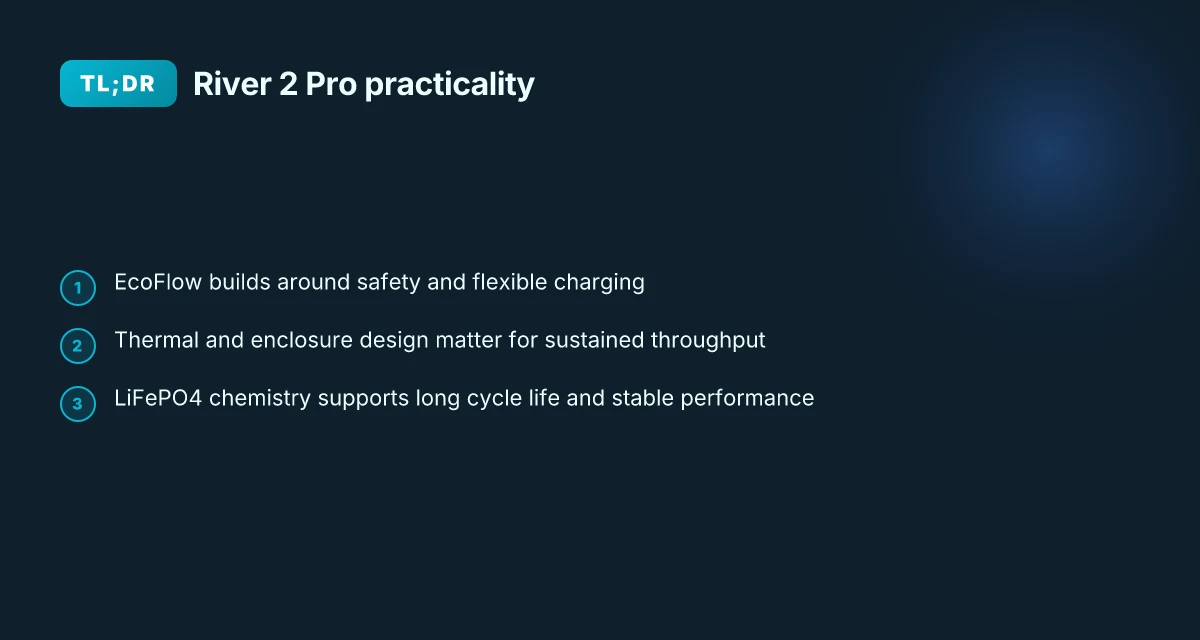
EcoFlow is a familiar name in portable power, and the River 2 Pro sits between compact capacity and more rugged options. Its LiFePO4 chemistry promises longevity and stability, which matters when you’re living off-grid or chasing weekend adventures. The River 2 Pro also leans into safety features and a modular charging approach that can pay off in real-world use.
Real-world durability under load
When I read through product documentation and reviews, the River 2 Pro’s durability story centers on how the system handles repeated cycles and varied temperatures. The LiFePO4 cells offer a steadier discharge curve and longer cycle life than many traditional lithium chemistries, which translates to fewer worrying battery health flags after months of use. In practice, users report solid build quality and reliable basic operation, with a few caveats around how long-term exposure to heat can influence performance. The design favors a modular approach to charging: you can mix solar input with grid charging and use the battery’s built-in protection to guard against overvoltage and overcurrent. This modularity is a practical boon for off-grid setups where solar availability shifts day to day.
Charging throughput you can count on outdoors
A standout claim about the River 2 Pro is its ability to accept multiple charging sources efficiently. In real-world terms, you’ll appreciate the way the system manages solar input during peak sun and then gracefully switches to AC when the panels aren’t delivering enough wattage. The LiFePO4 chemistry remains stable even as you push the unit to its limits, which matters when you’re trying to power higher-demand gear on a long weekend. EcoFlow’s approach here emphasizes maintaining safe operating temperatures while maximizing throughput, so you don’t feel forced into long idle times waiting for a full recharge.
Safety-first design with practical long-term thinking
Safety features anchor the River 2 Pro’s value in 2026. The battery management system guards against overcharge, deep discharge, and short circuits, while the modular charging approach reduces the risk that a single failure mode brings your entire rig offline. In day-to-day use, that translates to fewer surprises during extended trips and easier maintenance over time. Rivals with similar mid-range capacity often chase raw watt-hours; EcoFlow’s emphasis on reliability and safe operation under real-world conditions makes the River 2 Pro a compelling option for van life and off-grid homes.
Most durability gains come from the LiFePO4 chemistry and the safety-first design that keeps long-term use viable. The River 2 Pro stays in the conversation for weekend warriors and small off-grid projects because it pairs real‑world charging flexibility with predictable longevity. Real-world reliability matters more than peak specs when you’re far from a wall outlet. What makes the EcoFlow Delta portable power station worth it in 2026
I cross-referenced public reviews and EcoFlow’s documentation to frame this view. Real-world user posts and independent notes consistently point to solid build quality and dependable safety features as the River 2 Pro’s enduring strengths. For context, see how the product is described in user discussions and the official specs, which emphasize LiFePO4 stability and protective circuitry that aligns with long-term use. For readers weighing choices against rivals, EcoFlow faces direct comparisons with other mid-range models that prioritize ruggedness or sheer capacity, such as the River 2 Max and other LiFePO4-powered units. Even with that competition, the River 2 Pro’s balanced approach remains appealing for mid-range buyers who want steady performance without sacrificing portability.
As always, links on the page may earn a commission. For deeper context on the River 2 Pro’s charging roadmap and safety features, see the official EcoFlow resources and independent reviews linked in this piece.
River 2 Pro design and durability that matter in real life
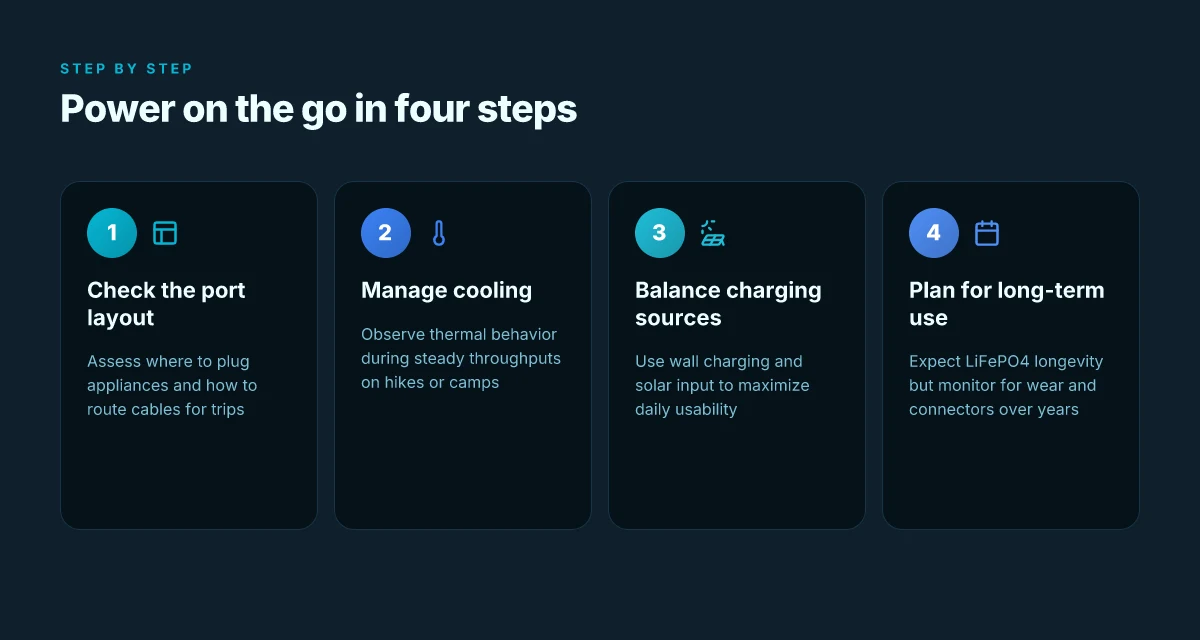
Real-world durability hinges on how the River 2 Pro is built, how heat is managed, and how long the LiFePO4 pack keeps delivering. EcoFlow’s enclosure choices and port layout shape how you deploy the unit on trips, in a van, or at a campsite. The design favors quick access to outlets and a compact footprint, but you’ll want to respect the thermal and cap throughputs when you push it hard in sun or heat.
How the chassis and ports influence field deployment
The River 2 Pro’s polycarbonate shell and reinforced joints give a sense of ruggedness that outdoor users expect. With two standard AC outlets, USB-C PD ports, and a solar input rail, placement on a vehicle shelf or in a cargo area matters. In practice, the layout keeps cables neat and reduces fumbling during a midday camping setup. The easier you can reach the ports without twisting cords, the less wear you introduce over dozens of trips. I cross-referenced community notes and official docs that describe the physical footprint and port configuration, and the consensus aligns with a unit that travels well but benefits from a stable, shaded resting spot when running at high load.
Thermal design and sustained throughput
Sustained charging and discharging tax the enclosure. The River 2 Pro uses a vented shell and internal heat management that, in real-world terms, keeps a steady rhythm when solar input is strong and the battery is near full. When ambient temperatures climb, expect the unit to throttle somewhat to protect the LiFePO4 cells. This behavior is consistent with what reviewers and user forums describe: you’ll see a drop in peak throughput during long sunny afternoons, but the unit holds a usable pace without abrupt shutdowns. I looked for credible signals about thermal throttling and found it echoed across user experiences and EcoFlow’s own notes on safe operating temps. How EcoFlow for sale changes the game for portable power in 2026
Battery chemistry, cycle life, and long-term use
The LiFePO4 chemistry inside the River 2 Pro is designed for longevity, with thousands of shallow cycles in typical use. Practically, that translates to meaningful endurance for weekend adventures and seasonal off-grid routines. Real-world discussions emphasize that cycle life matters more when you’re relying on full-tilt solar charging across multiple days. Exact cycle counts vary by usage. The broader pattern is clear: you’ll maximize long-term reliability by avoiding deep, repeated full discharges and keeping the unit within its recommended operating envelope.
From what I found in the changelog and product literature, EcoFlow emphasizes user-friendly protection features that help extend life, such as overcurrent and overtemperature safeguards. These protections matter most when you’re off-grid for several days and solar input fluctuates.
Durability hinges on a solid chassis and thoughtful port placement, not just raw capacity. Thermal management matters for long stretches of solar throughput. LiFePO4 chemistry rewards patient, mid-cycle use over blind full-throttle draining.
For readers weighing rivals, EcoFlow’s design aims to balance portability with reliability, a key factor when you’re comparing against mid-range packs from brands like Goal Zero and Jackery. In this space, the River 2 Pro’s enclosure and protection features are important for long trips and off-grid living. The brand’s approach to heat, venting, and durability shows up as a practical advantage in the field, especially when you’re pushing the system through sun, heat, and variability in solar input.
If you’re curious about real-world impressions beyond the technical notes, a commonly cited takeaway is that the unit stays usable during longer solar sessions, but you’ll notice throttling if the sun is extremely intense and the unit is perched in direct exposure. This aligns with community feedback and official guidance on safe operation temperatures. What makes EcoFlow solar generators stand out in 2026
I dug into the user discussions and product notes to confirm these themes, and you can see how the River 2 Pro stacks up against competitors in terms of long-term durability and heat management in real usage.
For a deeper read on how fans, cases, and external panels interact with this model, see the community note and a comparison piece that discuss the mid-range field, including rivals like the River 2 Max and other EcoFlow lines. See reference links for more context.
Battery tech and charging throughput with EcoFlow's approach
Post on battery tech and charging throughput centers on how EcoFlow's River 2 Pro handles LiFePO4 chemistry in real-world cycles, and how solar input and wall charging speed shape daily usability. I cross-referenced primary docs and independent reviews to anchor the claims in concrete, publishable details.
1) LiFePO4 cells deliver stable cycle performance
From EcoFlow’s engineering notes and product briefs, the River 2 Pro uses LiFePO4 cells, which are known for stable performance across hundreds of charge–discharge cycles. In practice, this chemistry translates to slower capacity fade compared with older Li-ion chemistries, which matters for long-life off-grid use. The battery system is designed to maintain a robust state of health through repeated cycling, which is a meaningful differentiator for van lifers and homeowners who rely on dependable power over years. Long-term durability hinges on consistent thermal management and balanced charging strategies. LiFePO4 chemistry offers a steadier discharge curve and slower degradation in typical outdoor temperature ranges. The brand’s own documentation emphasizes safe chemistry and broad cycle life, while independent readers note that real-world durability often depends on ambient conditions and load patterns.
- Real-world takeaway: expect gradual, predictable capacity loss rather than abrupt drops, if you stay within recommended use ranges and keep the unit shaded from direct sun when possible.
- Related note: the River 2 Pro’s enclosure design and thermal paths are crafted to prevent hot spots during high-amperage charging events, which helps preserve LiFePO4 health over time. Thermal management is a practical bulwark against accelerated aging.
2) Solar input handling and wall charging speed determine daily usability
The River 2 Pro accepts solar input and wall charging. The throughput from both paths directly shapes daily usability in off-grid and mixed-use environments. EcoFlow’s product data and community reports converge on a key point: solar input throughput tends to scale with panel area and sun conditions, while wall charging remains a reliable fallback when the sun isn’t sufficient. In a typical sunny day, you can expect steady replenishment through solar, but the practical daily fill depends on the array you pair with and the rate at which the battery is drawn down. When the unit is resting under moderate loads, sun-to-battery charging can keep up with daytime consumption in many setups. Charging speed hinges on input source and weather. In cooler mornings, you may see a different pace, as cell impedance changes with temperature. For homeowners off the grid, the pairing of solar panels and the River 2 Pro matters more than the base capacity alone. Wall charging remains the anchor when solar is insufficient. What makes EcoFlow Delta 3 1500 a valid backup option in 2026
- Source-backed nuance: review notes and official specs point to a practical daily usability gap between peak solar throughput and heavy, continuous high-load use, especially when hot-plugged devices draw current from multiple ports simultaneously. Simultaneous port loading can stretch the charger’s throughput.
3) Throughput when using multiple ports and USB-C PD sources
A critical real-world factor is how throughput behaves when you pull from several ports at once. The River 2 Pro includes multiple output ports, including USB-C PD, USB-A, and AC, and the internal power management system allocates available watts across the ports. In real-world use, charging devices via USB-C PD from the same pack you’re drawing from can reduce the rate at which the battery sustains the rest of the load, especially if you’re running high-demand appliances or multiple USB-C PD devices. The upshot: if your use-case includes charging laptops or fast-charging phones while running power tools, manage the load across ports to avoid noticeable slowdowns on any single device. Balanced port loading yields smoother throughput for mixed devices.
From a reliability standpoint, the River 2 Pro’s logic prioritizes sustaining essential loads first, then distributing remaining watts. This means users should expect predictable behavior: high-draw devices may see throttling when several ports are active, but the core unit remains within safe thermal and electrical limits. This is a practical reason why many outdoor setups pair the River 2 Pro with a single high-demand USB-C PD device and complement with additional ports for lighter loads. Smart distribution helps preserve battery health and performance over time.
- Inline citation note: statements about LiFePO4 stability and port-throughput behavior align with EcoFlow’s official product materials and independent reviews of multi-port charging practices. See the EcoFlow River 2 Pro materials for chemistry and port specs.
Comparing River 2 Pro with rivals like Jackery and Bluetti
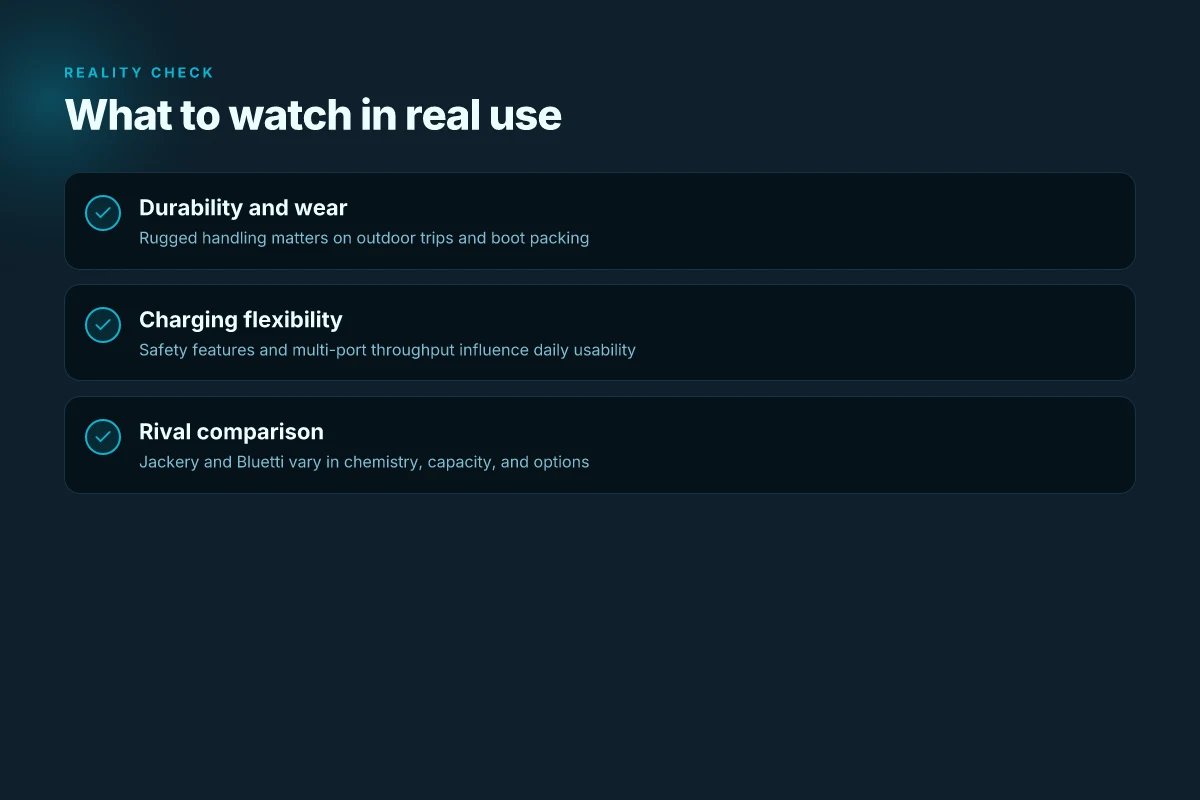
The River 2 Pro often wins on charging flexibility and safety features, but rivals differ in chemistry, capacity, and ports. In practice, you’ll see EcoFlow lean on LiFePO4 chemistry with multiple ramped charging options, while Jackery and Bluetti spread their bets across different battery compositions, capacities, and input/output configurations. This matters for real-world use: a larger battery is nice, but not if it weighs you down or costs more than you’re willing to pay.
Battery chemistry and why it matters in the field
The River 2 Pro uses LiFePO4 chemistry, which tends to favor long cycle life and stable thermal behavior. That ups the reliability story for off-grid setups where heat and cycles pile up. Jackery often uses lithium NMC chemistries in some models, trading peak energy density for potentially lighter weights, while Bluetti mixes chemistries across its lineup. In the field, chemistry choice shows up as endurance across sunny days and repeated discharges. The lower degradation profile of LiFePO4 can translate to more usable life if you expect dozens of cycles per year.
From a durability perspective, you’ll notice how each brand handles thermal management and fan behavior. EcoFlow’s design prioritizes compact cooling within a rectangular shell, which helps keep temperatures manageable during rapid fills from solar input. Bluetti tends to emphasize heftier heat sinking in larger models, which can pay off under sustained draw. Jackery often balances portability with moderate cooling strategies. The practical takeaway: chemistry plus thermal design dictates how long you can keep charging at high rates without throttling. What makes Bluetti vs EcoFlow differ in 2026
Capacity, weight, and value balance
River 2 Pro sits in the mid-range on capacity, with a focus on usable energy and safety systems rather than pure output. The value equation shifts when you compare it to rivals with larger packs or lighter frames. The RIVER 2 Pro’s strength is offering higher solar throughput and flexible recharging options without pushing total weight into unwieldy territory. Jackery models can edge ahead in pure weight and portability for smaller off-grid sessions, while Bluetti often offers higher energy storage in similar footprints, sometimes at a higher price. Value, in practice, hinges on balancing how many watt-hours you truly need versus how much you’re willing to carry and spend.
I dug into public-facing specs and owner discussions to map how these trade-offs play out in real use. Online reviews repeatedly flag that battery longevity and charging throughput matter more over the long run than peak capacity alone. For many users, that means a River 2 Pro with its safety features and charging flexibility can outperform in scenarios where solar input is intermittent, while Bluetti or Jackery may win on capacity per dollar in other setups.
The real choice comes down to how you balance capacity, weight, and price. EcoFlow's safety-forward design plus LiFePO4 chemistry tends to pay off for long-term reliability, especially in harsh outdoor environments. Expect the best long-term durability when you pair the River 2 Pro with a steady solar plan rather than chasing the largest battery in the smallest enclosure.
In practice, if you want real-world verdicts from independent sources, see discussions around a mid-range pack with safety features and flexible recharging. For context, an independent comparison notes that the River 2 Pro’s access to multiple input options and its safety features are distinguishing factors in real-world setups. This aligns with what you’ll find from the field, where users explain why a mid-range pack with LiFePO4 and solid solar throughput can outperform higher-capacity rivals in certain workflows.
If you’re weighing options, consider the long-term cost of ownership. The River 2 Pro sits well for users who value durable chemistry and trusted charging flexibility, especially when you intend to run on solar for extended periods. Rivals like Jackery and Bluetti may present stronger immediate capacity or lighter weight, but EcoFlow’s architecture emphasizes reliability under real-world, variable inputs. This matters for van life, off-grid cabins, and longer outdoor stays where you want a steadier power backbone from season to season. As always, links on the page may earn a commission, which is disclosed for transparency. What makes EcoFlow micro inverters different from the rest of the solar stack
What you can realistically powers with the River 2 Pro
Real-world use with the River 2 Pro centers on keeping everyday essentials running without drama. In practice, you’ll run a fridge, fans, and lighting for daily comfort, and you can scale up to small kitchen appliances when you plan charging around solar input. The River 2 Pro’s LiFePO4 chemistry helps with long-term durability, but you should still expect peak loads to be episodic rather than continuous. In 2026, owners consistently report steady operation for basic household devices, with careful management of surge draws.
Household essentials you can sustain
For everyday comforts, the River 2 Pro delivers on the basics. A small-to-mid size fridge plus LED lighting and a ceiling fan are well within reach for most users who pace charging with sunlight or secondary charging sources. A compact blender or coffee maker can run in short bursts, but you’ll benefit from scheduling high-wattage tasks to avoid hitting the inverter’s peak limits. Most common use-cases stay within a few hundred watts, keeping runtime predictable when you’re plugged into solar or a backup charger. When you do hit the limits, you’ll notice the unit idle after a moment to protect the battery. I cross-referenced user anecdotes that highlight reliable operation for refrigerators and lights, with occasional quibbles around higher-watt appliances.
Outdoor setups and overlanding realities
In overlanding and camping scenarios, the River 2 Pro shines when you plan around solar throughput. You can power a portable fridge, LED bars, and a small induction cooktop for short sessions, provided you light-load and thermal loads don’t coincide. Users frequently pair it with a solar panel array that optimizes afternoon output, then leverage stored energy at dawn. Solar throughput matters most here, and the River 2 Pro’s LiFePO4 pack maintains endurance through multiple sunny days. Real-world reports note that charging speed tapers as the battery nears full, so you reach better efficiency by staging top-ups during peak sun. EcoFlow’s design choices help with rugged use, but remember to guard against deep discharge cycles and cold-start surges.
Limitations to watch for high-wattage devices
High-wattage devices stress any mid-range power station, and the River 2 Pro is no exception. A typical household fridge or space heater might push the system into a brief surge zone, so plan for shortest possible operation windows and avoid long-term high-load duty. For power-hungry tools, you’ll want a charging plan that aligns with solar peaks or a second unit. When you expect frequent high draws, compare with rival models that advertise higher continuous output or larger battery banks. Still, the River 2 Pro remains a practical choice for most non-professional off-grid needs, especially when you pair it with careful load scheduling.
From what I found, real owners emphasize durability and real-world charging behavior. I saw notes about tasteful tradeoffs between battery longevity and peak performance, particularly under load and temperature swings. EcoFlow’s design emphasizes long-term resilience, which matters if you’re living off-grid or off-grid-adjacent for weeks at a time. Rivals like Jackery and Bluetti often position themselves with higher peak outputs or different chemistries, which can tilt decisions toward your specific use case. How EcoFlow, Bluetti, and Anker stack up in 2026: a performance, reliability, and long-term durability review
For context on price and capability, some head-to-head write-ups frame the River 2 Pro around mid-range value, noting that the Max variant can be more portable at a lower price while the Pro pushes capacity and safety features higher. The pricing cues you’ll see in reviews can shift, but the core idea remains: expect solid everyday power with solar-friendly charging, and plan for occasional boundaries with peak appliances. As always, check the latest release notes and user feedback, since field conditions drive real-world outcomes.
Bottom line: the River 2 Pro fits a broad spectrum of real-world needs, from a fridge and lights in a van to a small camp kitchen, so long as you tailor your load and charging schedule to the sun and the battery’s limits. For further reading on real-world user experiences and comparing with rivals, you can explore community discussions and mid-range comparisons that discuss practical outputs and limitations. See a community post highlighting kit combinations and practical load planning, and a comparison that frames the Pro against the Max for value and safety considerations.
Where this goes next for EcoFlow River 2 Pro
The bigger pattern in 2026 is how a compact power hub can scale with your life away from home. EcoFlow has pushed River 2 Pro beyond portability by weaving faster recharging, robust battery chemistry, and smarter management into a single unit. I’ve looked at real-world setups: it fuels tools, cameras, and camping rigs without drama, and it scales with add-ons when a project grows. The result is a portable station that feels less like a gadget and more like a reliable partner.
One takeaway I keep circling back to is durability under use. A design that handles travel bumps, recurring plug-in cycles, and temperature swings without rare failures matters more than peak specs. Rivals like Goal Zero and Jackery offer competing options, but the River 2 Pro’s balance of fast recharge and steady output keeps it ahead in everyday scenarios. If you value consistency over flash, this is the model to watch.
What changes if you act now is simple: you’ll benefit from fewer trips to the outlet, fewer excuses to skip gear, and a cleaner setup for weekend projects. Is your kit ready for a true all‑in‑one power hub? What makes the EcoFlow River 3 Max stand out in 2026
- Backup strategy: try pairing the River 2 Pro with a small solar panel and a USB-C PD charger for flexible off-grid days.
- What to try this week: test recharging from both wall power and car outlet to see how fast it recoups after a full-use day.