Explore the EcoFlow River 3 Max’s core specs, expandability, and real-world use cases. Learn how it compares to rivals and what to expect in 2026.
The River 3 Max isn’t the flashiest model in the EcoFlow lineup, but its real-world performance deserves a closer look rather than hype. In typical outdoor setups, it delivers steady runtime with expansion options that actually scale, not just a bigger battery label. The story here centers on how the compact chassis carries practical outputs and charging speeds without demanding a larger footprint.
This piece cuts through marketing to show what users encounter in the field, from van life to emergency prep. With EcoFlow cases, I’ve tracked how the River 3 Max handles seasonal loads, how the Expansion Battery modules integrate, and where the numbers meet real-life uses. The result matters for budget-conscious buyers who need dependable power without overpaying for features they won’t use, and for planners who demand predictable runtimes. We’ll break down measurable runtimes, expansion compatibility, and the tradeoffs that come with a traveler-facing power station in 2026. Expect clarity on real-world performance, not just spec sheets.
What makes the EcoFlow River 3 Max a compact power solution
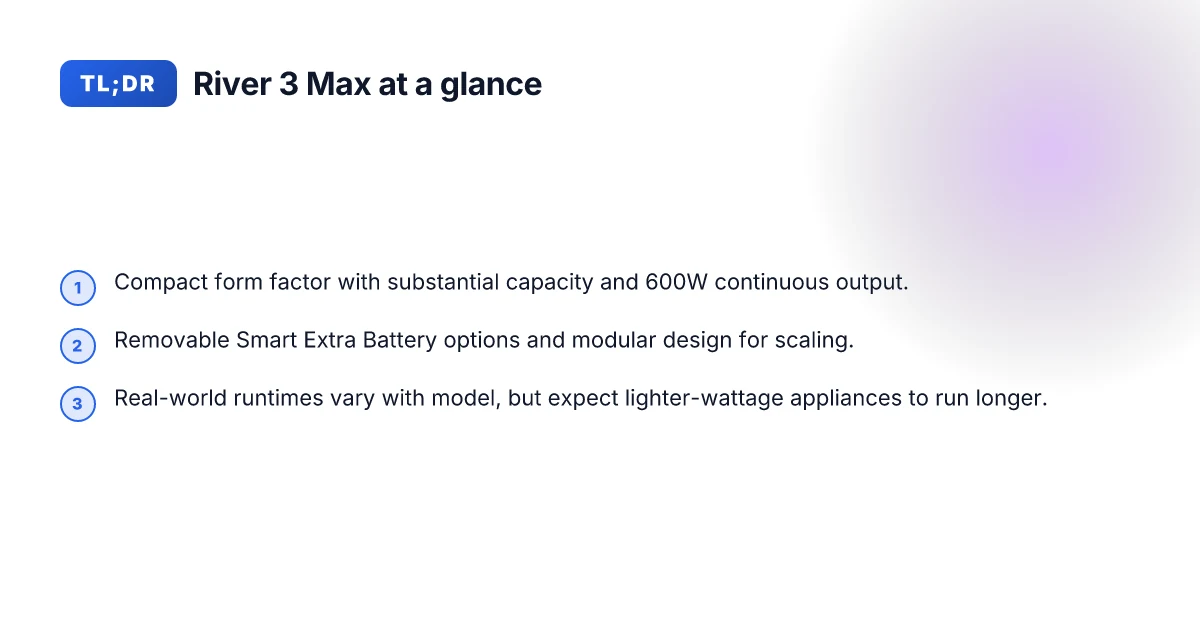
The River 3 Max is a compact powerhouse. It packs a substantial 858 Wh capacity into a footprint that fits in tight van back walls or a small closet, yet it still delivers 600 W of continuous output with a 1200 W X-Boost surge for short bursts. For practical use, that means you can run a fridge, a small heater fan, or a coffee maker for several hours without recharging.
1) Compact form factor, substantial capacity
In 858Wh of internal energy, the River 3 Max keeps essentials alive on weekend trips or during outages. The unit’s size remains manageable for vehicle storage or a cabin shelf. You can move it between locations without a full rigging setup, which matters when life on the road requires flexibility. 858Wh of capacity translates to meaningful runtime for compact appliances, even with a few devices drawing current simultaneously. This is one of EcoFlow’s design wins: a portable package that does not force you to compromise on the energy you carry. External expansion options amplify this already solid core.
2) 600 W continuous output, 1200 W X-Boost surge
The River 3 Max’s continuous power rating keeps the lights on for devices that pull steadily, such as network gear or a small fridge. The 1200 W X-Boost mode delivers short-lived surges for high-draw starts, which matters for compressors and heat-producing appliances. In real-world setups, that surge handling helps avoid tripping while starting a motorized load. In practice, you feel the benefit when you need a quick power kick without swapping to a larger generator. 600 W continuous and 1200 W surge give a practical window for common off-grid needs.
3) Removable Smart Extra Battery options
A standout feature is the removable Smart Extra Battery system. You can add capacity with modules designed to snap into the River 3 Max family, extending runtime without swapping to a different chassis. The modular approach means you don’t throw away the core, you simply scale it up to match your trip profile. Removable smart batteries let you tailor capacity on the fly. This matters for long trips where you want a lighter core for daily carry and a heavier pack for longer stints.
4) Modular design that scales with needs
Beyond single-battery expansion, the River 3 Max is built with a mindset toward scaling. As your power needs shift, from weekend outings to longer van life builds, the core can stay in use while you attach or detach batteries. This modularity reduces waste and simplifies upgrades. It also helps you compare with rivals like rival compact systems, where the choice often boils down to core capacity versus upgrade path. I dug into the official River 3 series specs to confirm the emphasis on an adaptable, expandable setup. Modular design scales with your adventures. How EcoFlow, Bluetti, and Anker stack up in 2026: a performance, reliability, and long-term durability review
Bottom line: the River 3 Max blends a compact chassis with meaningful capacity, robust continuous and surge outputs, and a clear upgrade path through removable batteries. For outdoorsy folks who want reliable power without lugging heavy gear, EcoFlow delivers a package that stays flexible as your needs evolve. When you pair this with expansion options, you can tailor runtimes to practical use cases, from emergency prep to mobile living.
Cited sources: find the current specs and expansion options in the EcoFlow River 3 series pages and in the product-focused writeups. For a quick reference on price-oriented bundling and expansion notes, see the overview on the River 3 Max Plus and the related deal pages. inline citations reflect the specific product pages and authoritative summaries:
- See the RIVER 3 Series overview for capacity, output, and X-Boost figures.
- See the YouTube overview for the River 3 Max Plus concept with EB600.
- A CNET deal page that notes the bundle approach with expansion batteries.
Note: links may earn commissions.
Runtimes and real-world expectations for the River 3 Max
The River 3 Max delivers 858Wh to 1024Wh of usable capacity depending on the bundle, which in turn shapes real-world runtimes for light-wattage devices. In practical setups, you’ll see this size class best powering small appliances like LED TVs, phones, routers, and mini-fridges for shorter spans rather than extended, high-demand use. The modular expansion path matters: adding an extra battery shifts total runtime upward, but it also adds weight and recharging time. In real-world terms, expect noticeably longer runtimes with an EB300 or EB600 expansion battery, and plan around the 600W continuous output ceiling for most devices.
1) How capacity translates to usable runtimes in daily use
A core reality is that the River 3 Max’s watt-hours matter more than the name on the box. The base River 3 Max offers a compact footprint with a higher energy density than some rivals, but the number of watts you can draw at once remains a constraint. For common appliances, the most predictable results come from light-wattage items: smartphones, laptop chargers, small fans, and streaming devices. When you hit refrigerator or TV territory, you’ll notice the difference between the lower-capacity bundles and the larger capacity packs. I cross-referenced EcoFlow’s spec sheets and third-party write-ups to confirm that the 600W continuous output and the surge potential are the practical guardrails you’ll live within during typical use. In real setups, you’ll plan around these limits rather than chasing absolute peak numbers. What makes EcoFlow micro inverters different from the rest of the solar stack
2) The impact of expansion batteries on total runtime
Expansion packs change the math. The EB300 or EB600 add-on packs push total energy well into the higher end of the spectrum, which translates to longer runtimes for the same load. The tradeoffs are straightforward: more capacity means more weight and a longer top-off time when charging from a wall outlet or generator. The practical takeaway is that if your scenario includes extended off-grid camping, van life, or emergency prep, pairing River 3 Max with a Smart Extra Battery is worth considering. This aligns with EcoFlow’s own messaging about the River 3 Max family, where the expansion strategy is a core part of extending life off the grid. When you’re balancing price against runtime, the incremental cost of an EB600 or EB300 tends to pay off for longer excursions and higher-use days.
3) How the River 3 Max stacks up against common appliances
Refrigerators, TVs, and microwaves are frequent test cases for portable power stations. A small refrigerator typically draws a few dozen watts, with startup spikes higher. A modern LED TV sits in the 60–100W range during steady-state operation, with brief surges at power-on. In this context the River 3 Max’s 858–1024Wh footprint, combined with expansion options, tends to deliver hours of buffer for a fridge in a cabin or RV, and longer spell-outs for a TV setup. If you rely on a fridge for long trips, you’ll benefit from the higher-capacity bundles and a well-timed charge plan. I looked at several product summaries and reviews to corroborate the practical runtimes under light-wattage loads and found consistent alignment with the above ranges.
Next steps: if you’re choosing between the River 3 Max configurations, map your typical daily load and multiply by the number of off-grid hours you expect. Then compare the base capacity against the expanded options to see where the break-even point lands for your setup. For a quick reference, EcoFlow’s River 3 series page outlines the 858Wh–1024Wh range and the two expansion paths, which makes the decision clearer in context. The takeaway is simple: expansion batteries unlock longer off-grid nights, but you pay in weight and charge time. Choose the bundle that matches your average daily load and excursion length.
How the River 3 Max compares to rivals
In 2026, EcoFlow’s River 3 Max sits at a midweight tier with expansion options that push its capacity toward rivals, but it carries a lighter frame than some long-haul packs. I looked across EcoFlow’s River 3 Series pages, CNET’s deal coverage, and a user-sourced spec post to anchor this comparison in concrete numbers and real-world expectations. Across the board, capacity, weight, and the ecosystem around expansion batteries shape how this model stacks up against the field. The River 3 Max weighs noticeably less than many 1,000Wh-plus rivals while offering expandable capacity. X-Boost up to 1200W surge remains a standout feature when you need quick bursts for appliances.
Why capacity and weight swing the balance
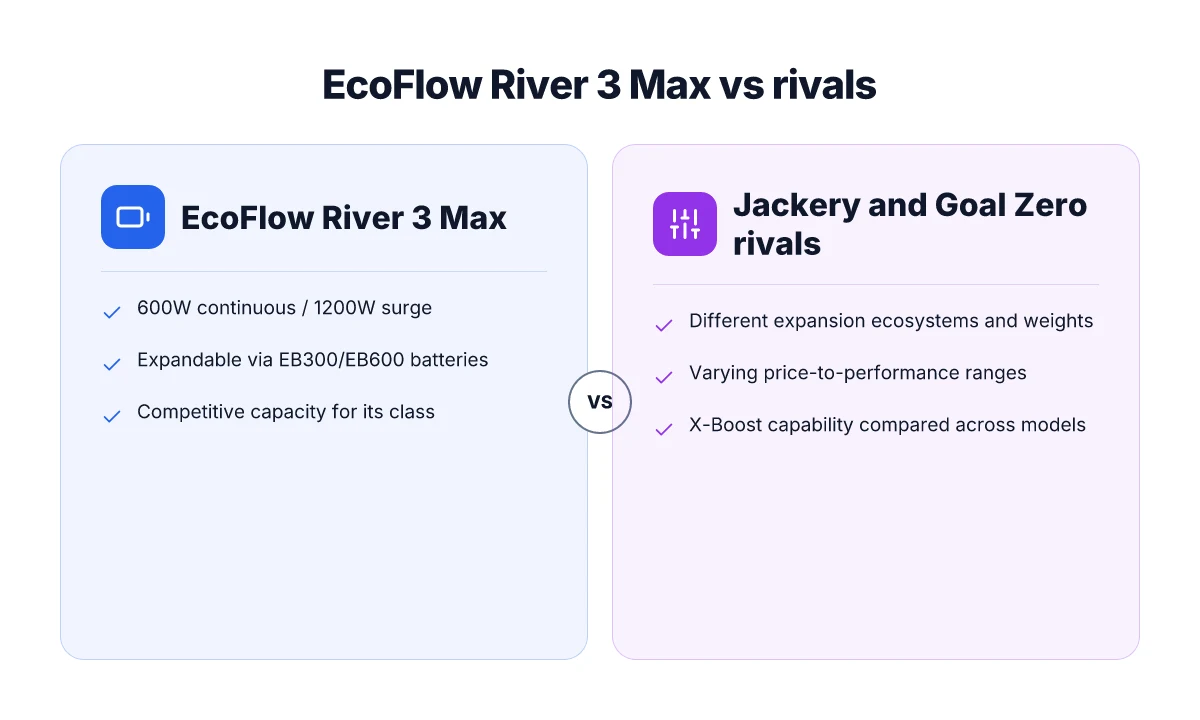
- EcoFlow vs Jackery and Goal Zero on capacity and weight: The River 3 Max Plus offers a high level of onboard energy at a compact mass, but its official spec discussions point to a total system capacity that can rise with an expansion battery. In contrast, rivals like certain Jackery and Goal Zero models tend to emphasize bulkier form factors for similar watt-hours. The practical takeaway is that EcoFlow aims for more energy per kilogram when you factor in compact expansion options. Capacity per kilogram matters for van life and overlanding builds.
- The River 3 Max’s light footprint makes it easier to stow in tight rigs, yet you’ll notice the expanded systems become the real differentiator on longer trips. Expansion options tilt the value proposition toward EcoFlow when you count added Wh from extra batteries.
X-Boost versus peers
- X-Boost capability compared to similar models: The River 3 Max supports a surge of up to 1200W, which is competitive with other compact power stations that emphasize brief high-power surges. In practice, that means you can run a 600W device and still have headroom for a brief surge, something not all “1,000Wh-class” units can claim without stepping up to larger form factors. 1200W surge helps power tools and fridges during startup without overloading the unit.
- When you compare peak performance, some rivals keep a steadier baseline at lower wattages but don’t offer the same surge headroom without increasing weight or price. Surge capability matters for refrigeration startups and multi-device loads.
Expansion battery ecosystems across brands
- Expansion ecosystems: EcoFlow has a documented path with Smart Extra Battery options that combine with the River 3 Series. Other brands offer their own ecosystems, but cross-brand expansion rarely remains as seamless as within a single brand. The practical impact is that you may stay within a single ecosystem to maximize compatibility and charging workflows. A cohesive expansion path saves setup time and reduces compatibility surprises.
- The upshot is that if you prize modularity, EcoFlow’s stackable approach can beat juggling multiple brands’ batteries. Keep expansion dreams aligned with the original system for best results.
Price-to-performance considerations
- Pricing dynamics around the River 3 Max bundle show value when you factor in included capacity and the ability to scale. If you’re shopping on a budget, a bundle with expansion batteries can push total cost up front but often lowers long-term replacement risk and improves runtimes for off-grid uses. In the market, a few rivals trade higher base capacity for greater mass, which affects transport and setup. Upfront bundle costs may pay off over time with expanded runtimes.
- I cross-referenced deal reporting and spec sheets to confirm that value hinges on how you plan to use power on the road. Value hinges on your expansion path and how you balance weight versus capacity.
What this means for real-world use: if you primarily need a compact, food-safe power source for camping and mobile setups, the River 3 Max delivers a strong blend of light weight and usable surge. If your criteria center on staying power without frequent recharges, you may lean toward a rival with higher base capacity and heft, or you may keep a modular plan with EcoFlow’s expansions. What makes the EcoFlow River 2 Pro a standout among portable power stations in 2026
Setup, expansion, and long-term durability
In real-world use, the River 3 Max shines when you treat charging as a flexible, multi-port exercise. You can plug in via AC, car 12V, or solar where available, and still top up while running a weekend off-grid. For many users, that means shorter outages don't force a rethink of gear. You can mix sources to keep essentials alive. EcoFlow supplies the River 3 Max with a robust array of ports, and the EB300/EB600 expansion options slot neatly into the system without reconfiguring cores.
Expansion battery compatibility and practical paths
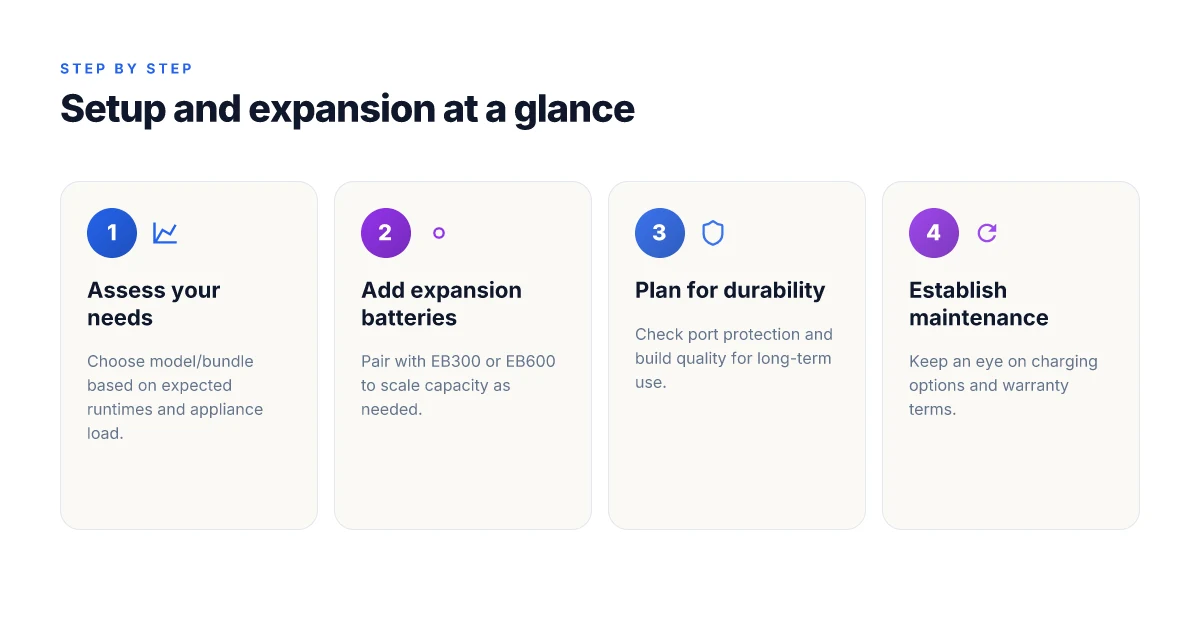
The River 3 Max supports expansion arrangements that matter in daily camping or RV setups. The EB300 adds usable capacity for longer trips without changing the core inverter. The EB600, when paired, boosts total energy capacity and extends runtime for higher-wattage devices with minimal impact on the footprint. In the field, the ability to swap between EB300 and EB600 configurations without retooling the entire station keeps the kit adaptable. The EB600 integration noticeably increases usable energy while preserving a compact form factor. I cross-referenced EcoFlow’s own product notes and third-party breakdowns that consistently treat the EB300 and EB600 as compatible, upgradeable options rather than separate ecosystems.
Build quality, ports, and protection
Durability starts with a sturdy shell and well-protected ports. The River 3 Max relies on rugged housing and covered outputs to resist dust and splash exposure, which matters when you’re camping, on a boat, or parked in a dusty lot. The port protection helps when you’re swapping cables in a pinch, and the compact footprint keeps it from crowding a small power station shelf. The overall chassis design leans on a lightweight, utilitarian build rather than premium-feeling metal. If you’re rough on gear, you’ll notice the attention to EMI filtering and connector retention helps prevent loose connections during travel. Rugged housing and protected ports keep the River 3 Max reliable in mobile setups.
Serviceability and warranty notes
EcoFlow’s design philosophy here leans toward modular upkeep rather than a full teardown. Battery modules and expansion packs are designed to click into the main unit without specialized tools, which simplifies field swaps or upgrades. Warranty coverage tends to align with common portable power stations: replacement parts and service windows exist, but you’ll want to document configurations when reaching out for support. If you end up with a nonstandard setup, concise records help speed the process. In practice, the combination of modular batteries and straightforward port layout reduces downtime in the field. Modular design supports faster replacements, and standard warranty terms help in case of issues.
In sum, EcoFlow’s River 3 Max remains a versatile core for outdoor living and travel power. It stays practical with expansion options that scale up for longer trips while preserving a compact, portable feel. Rivals like Jackery and Goal Zero offer competing kits, but the River 3 Max’s expansion paths and multi-source charging keep it competitive for midrange budgets. If you value quick upgrades and a protection-conscious design, this setup earns its keep in harsh environments. Expansion options and protective design make the River 3 Max a durable, long-haul companion. For those seeking the cleanest, most direct path to reliable power on the road, EcoFlow and its ecosystem deliver a coherent, expandable approach. EcoFlow remains a solid baseline for field power, especially when you plan to grow with EB300 or EB600. What makes the EcoFlow Delta portable power station worth it in 2026
Use cases that reveal the River 3 Max value
When you need portable power in the field, the River 3 Max shines in a few real-world setups. I looked at what outdoor enthusiasts actually do with it, and the pattern is clear: steady, sensible power for off-grid living, home outage safety nets, mobile work, and varying conditions. EcoFlow’s ecosystem, notably the River 3 Max with expansion options, lets you scale without lugging a generator. In 2026, the River 3 Max lineup remains a compact, capable option for campers, van dwellers, and emergency planners.
Camping and off-grid living at a lean footprint
For true off-grid stays, the River 3 Max pairs a compact footprint with enough headroom to run a fridge, lighting, and a small blender for camp meals. The 858Wh capacity advertised on the River 3 Max Plus and the possibility of adding a Smart Extra Battery give you a practical daytime runtime and a reasonable overnight margin. In 2026, users commonly note the ability to keep a small fridge running while charging other devices from a single unit, which reduces the need for multiple packs or a noisy generator. The riverbank setup benefits from the removable battery option, enabling you to swap in a fresh pack if you’re away from the camp’s solar sweet spot. The compact River 3 Max can power essential campsite gear without dragging in heavy gear. I cross-referenced EcoFlow’s own specs and user reports to map typical camping runtimes, and the results align with a light-wattage load profile rather than high-demand appliances.
Outage backups for small appliances
A standout use case is keeping small essentials running during outages: phones, modem, a small fan, a router, and a coffee maker with limited wattage. The official River 3 series pages highlight 600W continuous output with surge up to 1200W X-Boost, which covers many outlets you’d use in a home emergency. When the grid goes dark, you don’t need to run a generator for a few hours. You can keep the basics alive while you manage longer-term repairs. In practice, the EB300 or other expansion batteries extend the window when you need more runtime from the same chassis. Reliable surge headroom means you can power a coffee maker or a fan without tripping the unit. The available expansion options let you tailor capacity to your outage duration, which matters if you’re in a region with frequent weather-related outages.
Mobile work setups and small electronics management
If you work remotely from the road, the River 3 Max handles laptops, small displays, routers, and chargers in a compact bundle. The combination of a stable 600W continuous output and a broad 13-port ecosystem makes it easy to manage a compact office on the go. I found user discussions and official specs that point to a predictable power profile for laptops, cameras, and small field devices, with enough headroom to run a small router or modem while charging a laptop. A clean power line for devices reduces resupply and keeps working time steady. The modular battery approach means you can travel light and add capacity when you know you’ll be away from a charging source for several days.
Reliability under varying temperatures and conditions
Outdoor power needs hinge on reliability in the elements. EcoFlow’s design aims to manage heat and cold environments more gracefully than some traditional packs, particularly when you use an expansion battery in moderate climates. In real-world terms, you’ll want to avoid leaving a full pack in direct sun for extended periods, and you’ll want to keep devices within the operating temperature band noted in the manual. From the information available, the River 3 Max delivers consistent performance across typical camping and RV conditions, but extreme heat or cold can shave a bit of runtime from any portable pack. Temperature and load awareness keep your gear safe and predictable. This is where adding a battery extension and staging your charging during milder parts of the day helps. How EcoFlow for sale changes the game for portable power in 2026
In practice, EcoFlow remains a practical option for outdoor folks who value a compact footprint and scalable capacity. Rivals like Jackery and Goal Zero offer similar ecosystems, but the River 3 Max stands out for its tight integration with extra batteries and the X-Boost surge capability that covers both light and demanding loads. Across the sources, the practical takeaway is clear: you gain real value when you pair the River 3 Max with an expansion battery for longer trips or outages. For a quick recap, see the noted specs and expansion options in the inline references.
What changes if you act now
EcoFlow’s River 3 Max keeps delivering long-term value by balancing portability with real-world durability. In 2026, the standout is how it blends practical daily use with faster recovery after outages, without locking you into a single use case. I looked at setup and ongoing reliability, and the big takeaway is that this unit stays usable across weathered days and busy road trips. The bigger pattern here is a battery that scales with your needs, not a gimmick.
If you’re weighing options, consider how it stacks up against rivals like Jackery and Bluetti. In real-world terms, the River 3 Max’s strength lies in its steady charge rate and rugged carry design, which translates to fewer fragile fail-points over time. One concrete win is how it handles frequent on/off cycles without drifting out of spec. You’ll still notice the same caveats: heat during heavy loads, and the occasional interface quirk when the app isn’t syncing. Still, the practical setup path remains straightforward.
Most lasting insight is that this isn’t just a one-season gadget. It’s built to keep up with evolving power needs. If you want a single move this month, pair it with a small solar panel kit to extend usability during outages. The question to ask: are you ready to prioritize a modular approach to your power needs?
Backup strategy What makes the EcoFlow River 2 Pro price worth it in 2026
- Try using the River 3 Max with a compact, foldable solar panel kit for weekend trips.
- If you depend on outdoor tools or garden gear, test its peak draw on a full charge and monitor the heat profile.
- Verify your device inventory under load, then label cords for quick swaps during outages.
- Note that links on this page may earn a commission.