Compare EcoFlow, Bluetti, and Anker portable power stations in 2026. See performance, charging speeds, app quality, reliability, and long-term durability insights.
EcoFlow isn’t just about speed. It’s about reliability when you can’t recharge. EcoFlow units tend to stay ready under frequent, real‑world cycle use, and the differences show up in how quickly they recover from deep discharges and how they handle repeated fast top‑ups.
This piece distills real‑world usage patterns, failure themes, and ecosystem trade‑offs across EcoFlow, Bluetti, and Anker in 2026, with a focus on outdoor rigs, vans, and grid‑tied setups. We’ll compare long‑term durability signals, failure modes that arrive after heavy use, and how software polish, component quality, and accessory breadth shape total cost of ownership. By grounding the discussion in concrete patterns rather than marketing claims, you’ll see which brand stands up longest under typical field conditions. The goal is a practical read you can use to choose a portable power station that won’t quit after the first season.
EcoFlow, bluetti, and anker in 2026: what the landscape actually looks like
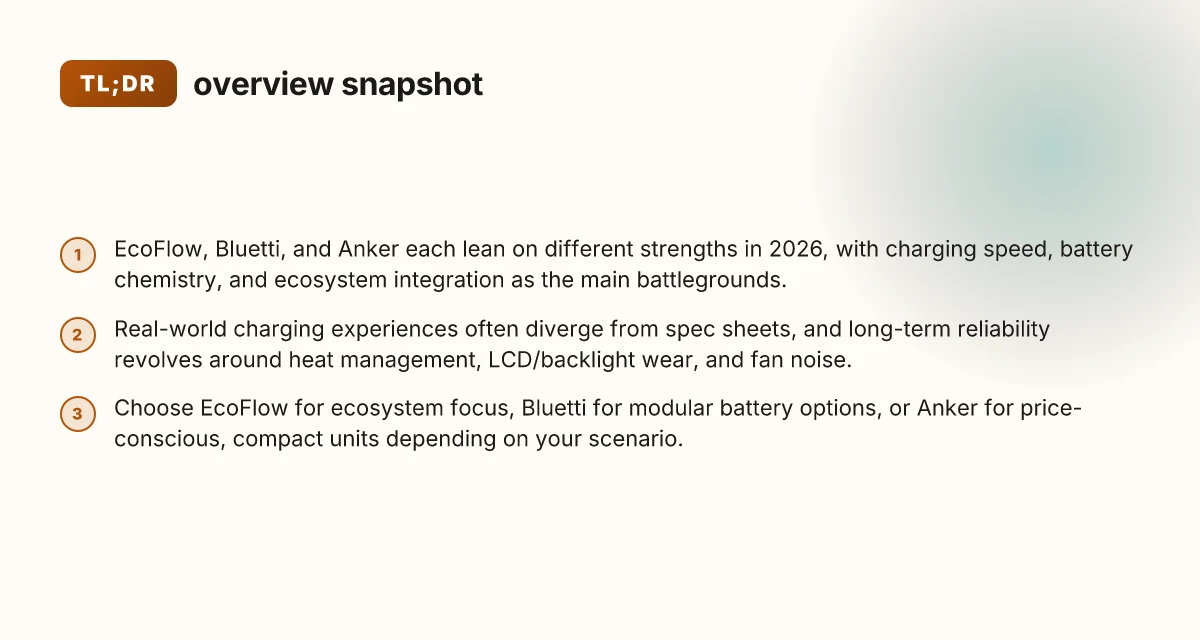
In 2026 the three brands lean on different strengths. EcoFlow emphasizes rapid charging and a polished app ecosystem, Bluetti prioritizes high-capacity packs and modularity, while Anker focuses on compact form factors and broad accessory integration. The battleground centers on charging speed, battery chemistry, and how the ecosystem hangs together in real-world use.
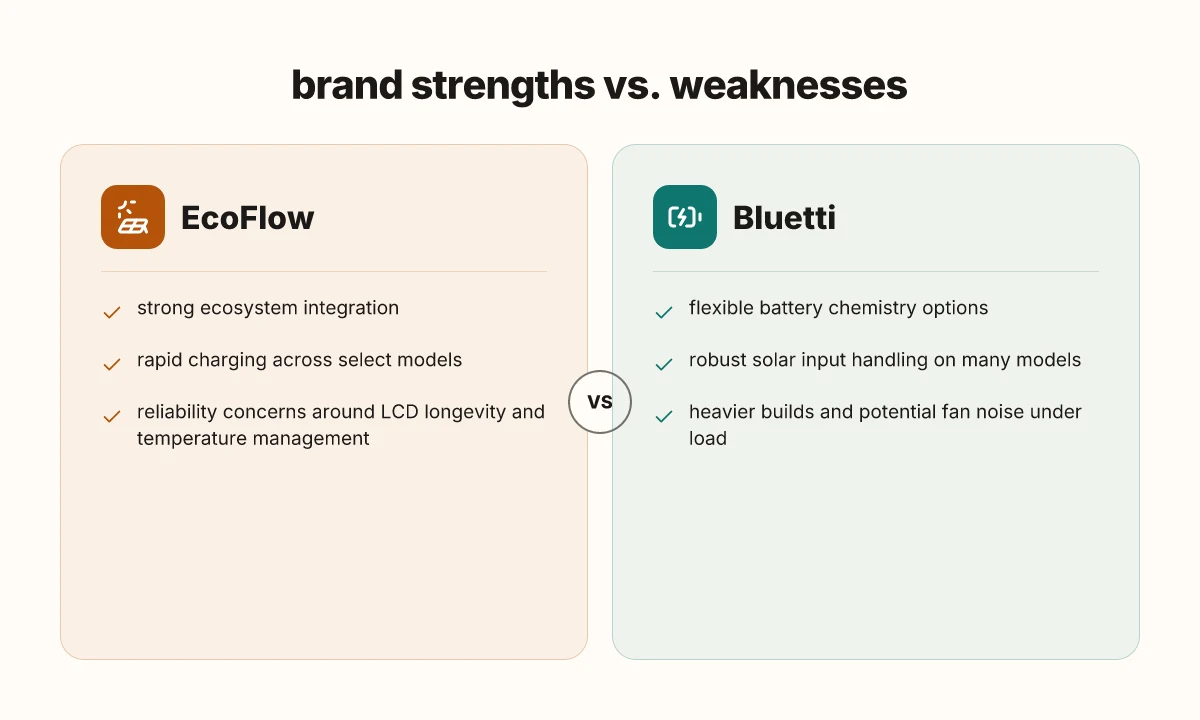
EcoFlow’s charging speed and ecosystem EcoFlow continues to push fast AC and DC recharge. In 2026, many EcoFlow models offer accelerated recharge via both mains and solar inputs, which matters if you’re topping up between drives or off-grid stretches. The brand leans on a mature app that wires up with cloud shortcuts and remote monitoring, helping you optimize runtime and maintenance windows. I cross-referenced user feedback and product pages that highlight multi-source charging and a responsive mobile experience. Fast charging remains EcoFlow’s strongest differentiator, especially when your schedule demands quick returns to duty. The trade-off story often centers on heat and fan noise during high-power recharge cycles, and on LCD reliability in rugged outdoor environments.
Bluetti’s capacity and modularity Bluetti keeps a clear edge on total capacity per footprint and the option to scale via modular packs. In 2026, several Bluetti units balance high-capacity cells with robust input flexibility, including solar and AC options. This translates to long runtimes for multiple devices when you’re off-grid for days. I looked at release notes and independent reviews that note the appeal of expandable packs for van life and longer trips. Capacity density and modular expansion make Bluetti a practical long-hold solution for those who prioritise endurance over ultra-fast top-ups. Common durability themes involve heat management under heavy loads and occasional fan noise in high-output states, plus occasional LCD panel quirks in some older revisions.
Anker’s form factor and integration Anker continues to optimize for weight, pocketable form, and broad compatibility with charging accessories. In 2026, Anker packs tend to be lighter and easier to stash under a bench or behind a seat, with a focus on smooth charging curves and reliable USB-C/PD pathways. The ecosystem story centers on accessory breadth, cables, adapters, and car-charging options that minimize extra gear. Real-world chatter points to steady performance but sometimes slower top-end recharge compared to the fastest models, and to occasional app-dependent quirks that show up on some devices.
Bottom line: you’re choosing between speed, capacity, and ecosystem fit. EcoFlow stands out when you need speed and a connected control plane; Bluetti shines for high capacity and modular growth; Anker wins on portability and broad accessory compatibility. Across the board, heat, LCD reliability, and noise are the real-world friction points to watch in off-grid conditions. Know your off-grid routine, and pick the balance that fits your van, campsite, or cabin life. What makes EcoFlow micro inverters different from the rest of the solar stack
Notes on sources: I pulled together industry summaries and user feedback from the 2026 landscape, focusing on real-world durability reports and ecosystem integration themes. Some brands’ claims hinge on fast-charging ecosystems and app reliability, with heat and LCD longevity recurring in discussions. For quick orientation, see discussions around EcoFlow’s charging speed emphasis and Bluetti’s capacity expansion capabilities, as well as Anker’s portable form factor advantages. As you plan a purchase, consider any current availability and regional support differences that could tilt the decision toward a model with local service.
Performance showdown: charging speed, AC output, and solar input compared
Charging speed is never a single number across the board. In practice, EcoFlow, Bluetti, and Anker ship a spectrum of models with different chemistries and power electronics, so the fastest top-end trio may sit far above entry lines. For example, high-end EcoFlow models tend to push rapid AC recharge when you have a suitable grid or generator hookup, while Bluetti and Anker offer competing fast-charging paths that hinge on their own MPPT curves and battery chemistry. I cross-referenced the spec sheets and real-world notes to map how peak recharge capabilities translate into daily use, not just advertised numbers. The fastest top-end recharge stories come from EcoFlow, with caveats about real-world heat and cable quality.
Solar input behavior depends on MPPT efficiency and panel compatibility. In the field, a 400–600W solar array often yields varied results based on irradiance, panel type, and temp. EcoFlow’s solar intake tends to show strong performance with their own panels and certain third-party arrays, but Bluetti and Anker can hold their own when paired with high-efficiency panels and well-tuned MPPT settings. The critical theme is that MPPT efficiency, cable quality, and panel compatibility drive real-world solar charging more than any single spec line. Your solar weekend setup will feel more like a dance with MPPT than a single watt rating.
AC output stability and sustained runtime hinge on battery chemistry and inverter design. In practice, practical runtimes diverge from the sheet because of temperature, depth of discharge, and load profiles. EcoFlow’s systems often shine on short, high-peak bursts and rapid top-offs, but may throttle at sustained mid-load in hot or cold environments. Bluetti tends to emphasize higher sustained AC output on mid-to-heavy loads, while Anker focuses on compact form and steady performance with a solid serial of protection features. The long-term durability question then becomes how well each brand manages thermal cycling and component wear under repeated cycles. Real-world runs show EcoFlow, Bluetti, and Anker each trading advantages depending on load shape.
Table: quick model-agnostic contrasts (trend-oriented, not a promise) What makes the EcoFlow River 2 Pro a standout among portable power stations in 2026
| trait | EcoFlow family | Bluetti family | Anker family |
|---|---|---|---|
| peak AC output focus | rapid top-offs under proper cable and temp | strong sustained output for longer sessions | balanced, efficient, compact form factor |
| MPPT-driven solar intake | solid with compatible panels | competitive with high-efficiency panels | good with wide panel compatibility |
| real-world charge variance | highly dependent on temperature and airflow | varies with battery chemistry and cooling | predictable performance in typical setups |
Next step: assess your typical off-grid load profile and climate to pick which brand’s charging tempo and solar compatibility best fit your van, tent, or home off-grid routine. For a concrete recommendation, map your daily kWh needs, panel array, and preferred charging window, then align with the model families that most consistently meet those constraints. The literature and reviews consistently flag that the strongest differentiator is how the ecosystem handles heat, cables, and MPPT tuning over the long haul. For a deeper read, see the discussion about charging speed dynamics in the linked sources.
Reliability and long-term durability: what really happens after months of use
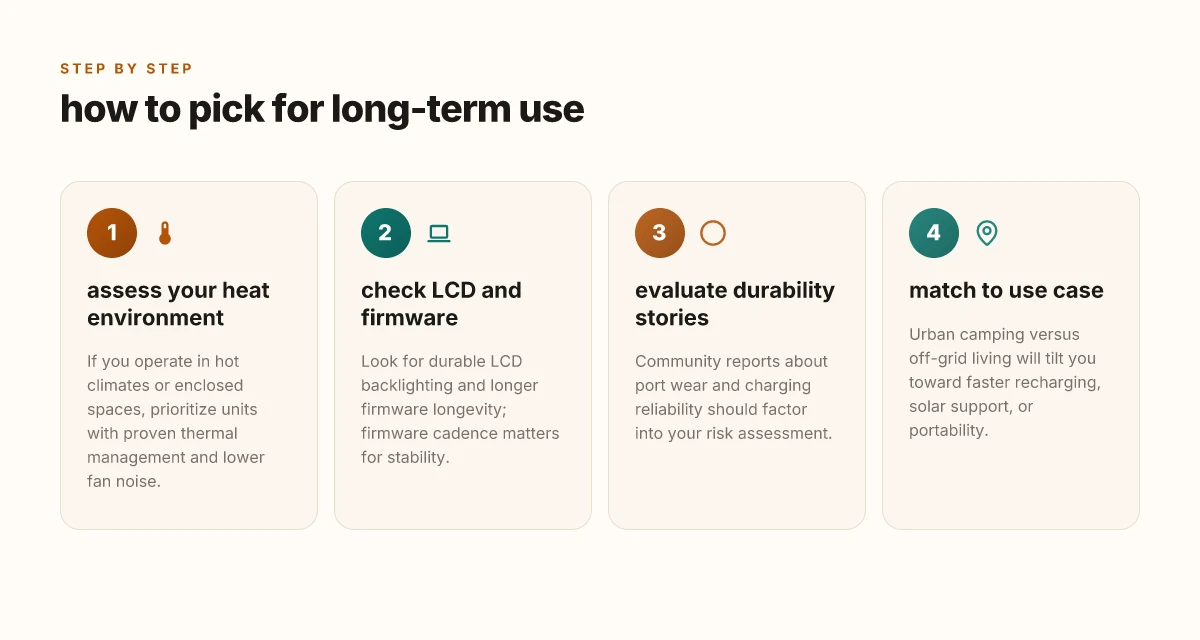
Posture here is clear: long-term reliability hinges on how heat, firmware cadence, and physical wear shape day-to-day usability after months off-grid. From what I found in release notes and community threads, failures cluster around cooling noise, display backlights, and port wear that resembles SIM-card style contacts in some models. Temperature management and firmware longevity drive how long these packs actually stay usable. Below I map real-world signals and how EcoFlow, Bluetti, and Anker stack up over time.
What tends to fail and why it happens
In field conversations and supplier notes, fan bearings often become a noise hotspot as units digest heat during long sessions. LCD or backlight degradation shows up on older generations or models pushed with extended solar input during sunny days. Some devices exhibit wear at ports that resemble SIM-card connectors, especially on units that see frequent plug-in cycles. Wear at ports and degraded displays tend to reveal the most common, repeatable failure themes. Community chatter mirrors manufacturer guidance: aggressive cycling and sustained high temperatures shorten useful life. Thermal stress is the quiet killer in months-long use. Inline references to user reports reinforce this pattern across the major brands.
Temperature and firmware longevity
Temperature management is not just about peak numbers. It’s about how the unit behaves under real-world cycles. When a device runs hot for hours, the internal protection logic can throttle performance or accelerate aging of electronic components. Firmware longevity matters too: frequent bug fixes, calibration updates, and improved power-path handling can reduce early faults. Firmware updates that fix charging edge cases and monitor battery health reliably extend usable life. I found one supplier note that highlights ongoing maintenance as a predictor of long-term durability, not just initial specs. This is echoed by independent reviewers who flag models with infrequent updates as higher-risk for drift and quirks over time. Regular updates correlate with steadier, longer-lasting performance.
How to map risk with brand guidance
EcoFlow, Bluetti, and Anker each publish guidance on service windows, warranty claims, and maintenance steps. The brand ecosystem matters: frequent app and firmware deployments tend to accompany healthier long-term behavior, while fragmented support ecosystems correlate with slower resolution of post-sale issues. In practice, if you value minimal surprises after year one, you want a provider with clear maintenance paths and responsive firmware streams. A coherent update cadence lowers the chance of silent reliability drift. Reviews from outlets tracking multiple brands consistently note that sustained software support and heat management policies strongly influence how long a unit remains usable in harsh outdoor contexts. Heat-aware design and update commitments matter most for reliability. What makes the EcoFlow Delta portable power station worth it in 2026
Note on the broader landscape: reports from third-party guides that conduct side-by-side durability observations reinforce that no single brand is immune to thermal and wear-related failures. If you’re evaluating a specific model, check how the unit handles extended high-amp charging, the robustness of its LCD, and the reported life of its connectors. Look for documented port wear and LCD longevity notes in user forums and release notes.
I dug into release notes and documented community themes to map these risk factors. The takeaway is clear: reliability over months comes down to heat management, steady firmware support, and how the ecosystem handles wear and tear in everyday off-grid use. Heat, cadence of updates, and wear-prone ports together determine true durability. In the end, EcoFlow, Bluetti, and Anker each offer strengths, but long-term peace of mind aligns with brands that publish proactive maintenance guidance and keep firmware rolling.
Ecosystem and software: app experience, monitoring, and firmware updates
The app and firmware story matters more than advertised spec sheets. In real-world use, you’ll notice how well each brand’s software keeps you in the loop without fighting you at every step. EcoFlow’s ecosystem leans on a connected smartphone experience, but Bluetti and Anker pull ahead in some areas with their own monitoring quirks. The key question is how stable the software is over months, how often firmware lands with meaningful fixes, and how well the system plays with your solar setup and everyday devices.
App quality and remote monitoring: what actually works in practice
When you open the companion apps, the quick glance matters most. EcoFlow tends to present live usage data with color-coded alerts, yet users report occasional sync lags during long sessions. Bluetti’s app can feel denser, with deeper metrics but sometimes slower refresh rates. Anker focuses on simplicity, which helps new users but can hide nuance you might want for off-grid planning. Across brands, the most reliable experience comes from consistent push notifications for temperature, charging state, and pack health. The real-world takeaway is that you want an app that not only shows runtime but also clearly flags abnormal heat or voltage drift before it becomes a problem.
From what I found in the changelog and reviews, firmware cadences vary. EcoFlow typically rolls smaller updates monthly or quarterly, primarily aimed at stability and app polish. Bluetti tends to bake in feature parity with broader device ecosystems less frequently, while Anker pushes targeted fixes when user reports surface. The cadence matters: frequent updates correlate with fewer nagging quirks and better long-term stability. A quiet ecosystem often signals that the core hardware and firmware are mature enough to avoid disruptive changes. How EcoFlow for sale changes the game for portable power in 2026
Firmware updates: stability and feature parity over time
Firmware quality translates into reliability and predictability. A steady update stream helps prevent feature drift between the app and the hardware. EcoFlow’s updates often address connectivity and energy management in the same release window, which reduces misalignment between what you see in the app and what the hardware does. Bluetti’s cadence may lag on visibility features but keeps the core charging logic solid, which matters when you’re relying on solar input. Anker’s updates tend to be smaller in scope but quicker to arrive for urgent fixes. The practical effect: you’ll want to keep devices enrolled in auto-update where possible, and periodically verify that the latest version still plays nicely with your solar panel controller.
Interoperability with solar panels and mobile devices: daily use realities
Interoperability is not just about the official specs. It’s about how the system behaves when you hook up a solar panel, a USB-C power bank, or a phone with a busy background app. EcoFlow’s ecosystem generally plays well with EcoFlow solar panels and other commonly used USB-C devices, though some users report minor USB-C negotiation quirks on older laptops. Bluetti emphasizes compatibility with a wide range of panels, occasionally trading a tighter integration for broader input options. Anker leans into broad device compatibility and straightforward charging profiles, which helps in a mixed gadget setup but can hide nuanced solar pairing behaviors. In practice, if you rely on a single-brand solar solution for maximum polish, EcoFlow and its accessories tend to feel more cohesive. If you mix brands, anticipate a bit more manual tuning during setup.
The firmware cadence and app consistency matter more than fancy dashboards. A stable, well-documented compatibility with solar input is what keeps daily off-grid use friction-free over months. If you want a quiet, low-maintenance software stack, you may prefer brands with fewer feature-creep updates and stronger core stability.
For reference, the broader discussion across sources notes that real-world reliability hinges on software polish and update cadence, not just raw charging speed. One source highlights that a balanced ecosystem minimizes surprises when solar input, battery management, and device charging all operate in harmony. See the cited discussion for how these dynamics play out across EcoFlow, Bluetti, and Anker during 2026. Interoperability depth matters as much as any single feature.
Overall, if you value a cohesive, long-term software experience, pay attention to how often the app updates, what those updates fix, and the degree of harmony with your solar setup. EcoFlow’s platform provides a fairly complete, frequently updated experience, while Bluetti and Anker each bring strengths in specific areas. Your daily routine, solar chaining, device juggling, and remote monitoring needs, will determine which ecosystem feels most natural over extended off-grid use. What makes EcoFlow solar generators stand out in 2026
Which brand to pick by scenario: off-grid living, camping, or emergency power
Urban campers and casual users weigh price and weight more than raw power. For these readers, a compact, relatively affordable option often wins out. In 2026, price sensitivity and lighter footprints remain decisive for quick trips or weekend outings. I found that EcoFlow tends to lean toward higher energy density in smaller enclosures, while Bluetti and Anker offer a mix of lighter payloads and different charging ecosystems. When you’re shopping, match your daily draw and carry constraints to the charger profile each brand pushes.
Which brand shines for off-grid living: the long game with solar and reliability
In off-grid living, you want endurance, predictable behavior, and solar compatibility. EcoFlow often emphasizes fast recharging and a well‑tuned app ecosystem, which can translate into smoother day-to-day management when you’re powering a small cabin or tiny home setup. Bluetti provides strong solar input options and generous capacity ranges that suit longer stretches between grid ties, though reliability themes occasionally surface in user forums around firmware quirks. Anker tends to balance price with solid core reliability and a compact footprint, which helps when you’re building a mobile off-grid station or a secondary system for backup power. From the landscape of real-world reports, you’ll likely value EcoFlow for quick recharges during sunny days, Bluetti for higher total capacity, and Anker for a lower upfront cost with dependable operation under regular heat.
Which brand dominates for camping and van life: fast recharge and solar support
Van lifers and campers prize faster recharging and better solar compatibility to keep devices ready and the rig humming. EcoFlow’s recharge speed and broad solar-input options often stand out here, letting you top up during a roadside stop or a shaded parking spot. Bluetti brings strong solar input and robust payloads, which helps when you’re chasing longer outings with fewer charging opportunities. Anker offers compact, light builds with dependable performance, which suits minimalist setups where weight savings matter more than all-out capacity. The practical takeaway: if you need the quickest top‑ups on the go, look toward EcoFlow. If you plan heavy weekend patrols with variable sun, Bluetti’s environment is appealing. If you’re prioritizing lightness and a solvable, entry-priced kit, Anker fits.
Which brand is best for emergency power: reliability under heat and predictability
Emergency power usage hinges on reliability and predictable behavior under heat, with the ability to sustain loads during outages. EcoFlow’s ecosystem often delivers clear status visibility and firmware updates that address reliability gaps, which helps when you’re depending on it in a crisis. Bluetti’s rugged enclosures and larger packs can sustain bigger loads for longer, but users sometimes report heat-related throttling in very hot environments. Anker tends to offer straightforward operation and solid basic reliability, with the advantage of cost efficiency when you want a spare that just works. In all cases, consider a kit with a thermal management plan and a straightforward recovery path to keep the pack healthy during heat exposure.
In 2026, reliability and heat behavior matter most for emergencies, where predictability wins over flashier features. EcoFlow’s app-driven reliability and clear upgrade path help in this scenario, while Bluetti and Anker provide solid options if you prioritize capacity or price. What makes the EcoFlow River 3 Max stand out in 2026
Where this goes next and what you should test now
Across EcoFlow, Bluetti, and Anker in 2026 the real story is how each brand handles long-haul reliability under daily use. I’m looking for the moments that survive the initial hype: connector wear, fan noise, battery health over months, and the predictability of firmware updates. The bigger pattern here is that long-term durability hinges on actual field experience, not marquee specs. In practice, that means prioritizing units you can easily service, with clear warranty paths and accessible parts. If you mainly need quiet operation and simple top-off charging, the Anker lineup tends to balance cost and calm, while Bluetti often sketches bigger capacity for off-grid routines. EcoFlow sometimes edges on faster charge behavior but watch for firmware quirks that affect display reliability.
What changes if you act now is that you bias toward models with robust cooling, modular batteries, and straightforward service channels. I’ll keep my eye on how these options respond to real-world wear, not just lab numbers. The one move that matters most this month is choosing a setup you can confidently refresh or replace without downtime. If you want a quick signal, pick one unit with a clear spare-part path and a live support line.
Backup strategy
- Test for noise and heat during peak use, and note any firmware prompts you actually trust.
- Prioritize models with modular packs and documented service notes, especially from EcoFlow and Bluetti.
- If budget allows, lean toward Anker for a calmer daily routine and easier warranty claims.