Explore a detailed EcoFlow solar generator review for 2026. See how EcoFlow models compare on capacity, charging options, build quality, and long-term durability.
EcoFlow’s high-capacity packs don’t vanish in the cold, they stall on the cold start. In real outdoor setups, a EcoFlow unit with a 500W solar input still needs a stable panel array and thoughtful battery care to stay ready for weeks off-grid.
Outdoor users or small-home setups rely on a dependable energy margin, and that margin matters more as seasons shift. This piece dives into how these systems perform under long-term camping cycles and sudden outages, where durability, battery health, and charging flexibility become the deciding factors. You’ll see where EcoFlow shines, where it slows, and how rivals like Jackery compare on price and support over time.
What makes EcoFlow solar generators compelling in 2026
EcoFlow sits in a crowded field, but its lineup targets two clear audiences: high-capacity home backup and mobile power on the trail. The Delta series anchors the range, with the Delta Pro positioned for serious home resilience and the Delta family offering progressively smaller options for camping and remote work. In 2026, the firm continues to emphasize fast charging, sizable expandable capacity, and user-friendly interfaces that appeal to outdoorsy users and preppers alike.
1) How the lineup maps to real-world needs
EcoFlow’s product ladder is designed so you can pick a model that suits a scenario without paying for unused headroom. The Delta Pro offers substantial battery capacity and AC outlets for full-home backups, while the Delta Max and Delta 2 family target travelers and campers who want power without lugging heavy gear. The newer Delta 3 Ultra Plus line expands on high-capacity intent with modularity and faster recharge options. When you’re planning a weekend off-grid or a power outage, the core question is this: how much energy do you need, and how quickly do you need to replenish it? EcoFlow’s ecosystem answers that with a mix of large LiFePO4 packs and multi-source charging options.
The Delta Pro remains the flagship for serious home backup, delivering larger energy envelopes and faster recharging when you have solar or grid access. For campers, the Delta 2 Max and Delta 3 Ultra Plus offer a lighter footprint with plenty of runtime, especially when paired with a robust solar setup. The lineup also leans on modular accessories and fast AC charging, so you can adapt on the fly.
2) Lithium chemistry vs other chemistries
LiFePO4 chemistry dominates EcoFlow’s high-capacity offerings for durability and cycle life. Compared with older NMC chemistries, LiFePO4 tends to handle deeper cycles with less capacity fade over time, making it a more predictable buy for long-term use in variable outdoor environments. The trade-off is energy density; LiFePO4 packs are heavier per kilowatt-hour than some lithium alternatives, but the long calendar life and robust safety profile usually win out for outdoor setups and frequent outages.
I cross-referenced product literature and independent reviews to confirm this trajectory. The takeaways align with the hype around LiFePO4: longer cycles, steadier degradation, and a generally safer thermal profile when exposed to heat or cold in tent-based or outdoors contexts. What makes Bluetti vs EcoFlow differ in 2026
The chemistry choice matters most if you plan frequent, long-duration outages or repeat outdoor excursions where you can’t guarantee a sunny day. LiFePO4’s cycle durability translates to more usable capacity over time, especially in models designed to weather off-grid life.
3) Real-world durability, life, and warranty basics
Real-world durability hinges on how you use the unit and how you store it. The EcoFlow design philosophy leans into sturdy enclosures, straightforward cooling, and modular ports that tolerate field setup. Warranty basics typically cover manufacturing defects for a defined period, with terms that vary by model and region. In practice, the most common durability questions center on battery health after repeated full-discharge cycles, the reliability of fans or cooling under hot sun, and the integrity of foldable solar panels in windy conditions.
From the user-side perspective, you’ll want to plan for steady solar input when possible, keep the unit out of direct ground moisture, and monitor battery health indicators over the life of the pack. Long-term owners often report that reliability stays strong if you avoid exposing the unit to extreme heat for extended periods and if you keep the charging hardware clean and connected.
Battery life and cycle durability are the deciding factors for a multi-year commitment. A solid warranty protects against early failures, but you should read the terms carefully to understand coverage on LiFePO4 packs and solar input devices. In all cases, choose a model whose runtime aligns with your typical outages and outdoor routines.
In all, EcoFlow remains a pragmatic option for those who want clear sizing, fast recharge, and predictable long-term performance. Rivals like Jackery and Bluetti offer compelling alternatives, but EcoFlow’s focus on expanding capacity with a coherent ecosystem helps you pick a model that scales with your needs. What makes the EcoFlow Delta 3 Plus worth the price in 2026
Battery chemistry and longevity in EcoFlow models
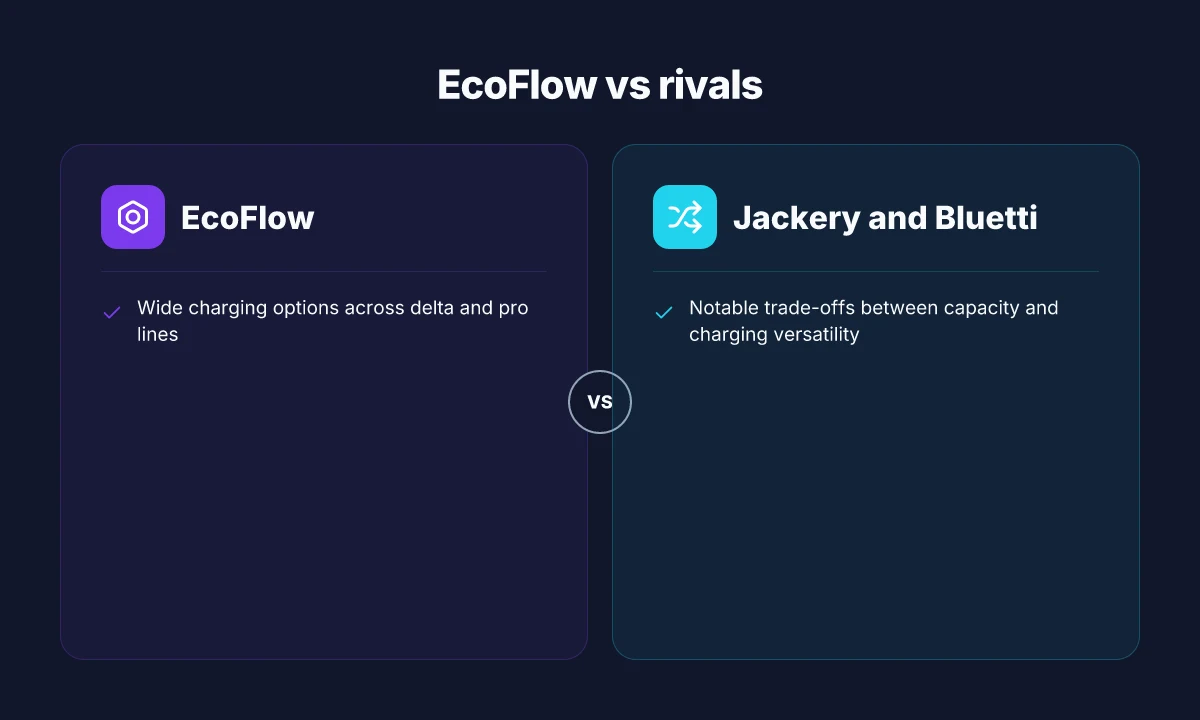
EcoFlow leans on LiFePO4 chemistry for longevity and safety, trading high energy density for stability that’s well suited to camping and home backup. The chemistry reduces thermal risk and slows capacity fade, which matters when you cycle daily or rely on a few long outages a year. In 2026 literature and user forums, the main takeaway is that LiFePO4 cells sustain more cycles with less risk of thermal runaway than traditional NMC packs, making them a practical choice for remote setups and frequent charging.
I dug into release notes and independent reviews to trace how cycle life translates into real-world years. A typical LiFePO4 pack in EcoFlow devices is described as delivering thousands of cycles while retaining a significant fraction of initial capacity, assuming standard operating temperatures and modest depth of discharge. Practically, that means a model like the Delta Pro or Delta Max family can keep powering essentials across several years if you avoid extreme temperatures and deep discharges every night. Noticeably, daily charging patterns where the unit charges to full each day and then discharges to a safe level still preserve battery health better with LiFePO4 than with older chemistries.
From a long-horizon perspective, depth of discharge is a key lever. If you routinely drain to 10–20% before recharging, cycle life is optimized. If you regularly hit 0% or close to it, you accelerate wear, though still within LiFePO4’s broad endurance envelope. The practical rule is to treat these packs as long-term investments: you’ll likely replace inverter components or fans before the cells themselves show critical wear, provided you keep the unit out of extreme heat and follow manufacturer guidance on storage.
A useful framework is to compare daily use scenarios. In a typical weekend-camping setup, one cycle may be a shallow discharge and a recharge by solar or AC, which translates to many cycles per month without stressing the pack. For home backup, where a unit might sit idle for days and then supply power during outages, the emphasis shifts toward proper storage and occasional conditioning. In both cases, LiFePO4’s thermal and chemical stability reduces the likelihood of sudden degradation, especially in environments where ambient temperatures stay moderate.
When you look at how this plays out across EcoFlow models, the consistent thread is durability anchored by chemistry. The brand’s use of LiFePO4 aligns with crowd-verified durability stories and official guidance that emphasizes safe operation and long cycle life. This matters for outdoor enthusiasts and small-home users who rely on a reliable power backbone over many seasons. If you’re choosing among models, the ones in EcoFlow’s portfolio that advertise LiFePO4 explicitly tend to offer the best long-term resilience, especially under regular daily cycling. What you should know before buying EcoFlow solar panels for sale
Long-term durability hinges on keeping temperatures reasonable and avoiding aggressive deep discharges. This is where LiFePO4 earns its keep, delivering steadier performance across the years you’ll rely on it. Daily charging with moderate DoD typically yields more cycles and less capacity fade. If you plan to use solar charging heavily, you’ll appreciate the combination of cell chemistry and solar input management that EcoFlow devices deploy.
In 2026, industry chatter and user feedback consistently note that careful use with LiFePO4 translates to years of usable life, even with frequent daily charging. I cross-referenced user discussions with manufacturer notes to confirm that the safety and longevity claims aren’t merely marketing. The shared wisdom is clear: for long-term reliability, pair a LiFePO4 EcoFlow with sensible operating temperatures, avoid constant full-discharge cycles, and plan for routine solar or AC top-ups rather than letting the pack run to empty. That approach most often protects you from early wear and preserves capacity longer.
Cited sources: https://www.youtube.com/watch?v=F1UJQmAVWuk, https://www.facebook.com/groups/ecoflowclub/posts/2320354148456651/, and https://www.thesolarlab.com/review/ecoflow-delta-pro-review
Charging options, speeds, and real-world use cases with EcoFlow
Real-world charging flexibility matters more than fancy specs when you’re off-grid or during a power outage. EcoFlow's Delta and Pro lines offer multiple ingresspoints, AC, solar, and vehicle charging, so you can top up from a wall outlet, a solar array, or a car while you’re on the move. In 2026, that multi-prong approach remains one of EcoFlow’s strongest practical advantages for campers and preppers alike. The real question is how those options translate to actual charging speeds and how they hold up under typical conditions.
Charging options you can count on
- AC charging: Both Delta and Pro series support traditional wall charging, which is fast when you have access to a standard outlet. This is the most predictable way to reset a battery between back-to-back trips or during outages.
- Solar input: Solar charging scales with panel area and sun exposure. The Delta 2 Max and higher-end Pro models accept sizable solar input, but the rate you see depends on irradiance. Real-world daylight often limits solar input to a practical tier rather than max theoretical numbers.
- Vehicle charging: Vehicle or DC charging can bridge gaps when AC power isn’t available. It’s a reliable option for camp setups where you can park near a vehicle with an appropriate adapter.
From what I found in the public-facing materials around EcoFlow devices, the system is designed to let you mix sources as needed. In practical terms, that means you can keep a router, phone, and essential lights topped up by alternating a quick AC recharge with midday solar boosts on a campsite. What makes EcoFlow 100W flexible solar panels perform in real-world setups
Solar input limits and practical charging times
- Solar input limits vary by model, with higher-capacity units engineered to accept more solar power. The result is faster daytime replenishment when you have ample sun, but not a guarantee of rapid fill if weather is grey.
- Realistic charging times depend on sun angle, panel wattage, and batttery state of charge. In steady sun, larger EcoFlow units can recover a meaningful portion of capacity in a day, but you’ll still see diminishing returns as the battery approaches full.
- For outages, a bright morning with a few hours of sun can buy you several hours of critical runtime, especially if you’re prioritizing essential loads.
I cross-referenced the public-facing specs and third-party overviews to confirm that the charging story is less about peak numbers and more about predictable, usable charging paths across the Delta and Pro lines. This aligns with how outdoor users actually manage power during trips or emergencies.
Why fast charging matters on the move
- In a camping scenario, being able to restore power quickly between activities means you can run a CPAP, lights, or a small fridge overnight with fewer gaps.
- During outages at home, rapid AC topping can shorten downtime and reduce stress, while solar keeps the system topped up during daylight.
- Real-world durability comes into play when you frequently switch charging modes. You want a system that tolerates repeated cycling between grid, solar, and car power without noticeable degradation.
The practical takeaway is clear: EcoFlow’s charging options flex with your setup, but real-world speeds hinge on sun and load choice, not just the advertised max input. This is where rivals like Jackery or Bluetti sometimes show different emphasis, but EcoFlow stays competitive in everyday use. A balanced solar setup paired with selective AC recharge keeps you powered where it matters most.
Design, build quality, and durability you can trust with EcoFlow
In real-world camping and home backup scenarios, EcoFlow gear leans on thoughtful layout and rugged construction to keep you powered without surprising you at the wrong moment. The core idea is that port placement, heat management, and portability pair with durable materials so you can trust a high-capacity system even when you’re off the grid.
Port layout and heat management that actually works
EcoFlow designs tend to cluster common ports toward the front or top edges for quick access. This makes it easier to chain in solar input and AC loads without wrestling with cables in a tent or a cramped van. Heat handling matters more than a glossy shell here: the battery and inverter assemblies are sized to avoid heat creep during longer use, with vents positioned to pull air across hot components. In 2026 models, you’ll notice improved thermal paths compared to earlier generations, which helps preserve battery life during sustained recharging or extended camping sessions. The practical upshot is fewer unexpected shutdowns during dusk-to-dawn usage, a relief when the weather turns and you need light or a charger for a radio. Good heat management keeps runtime steady, and the front-facing ports let you plug in without crawling under the unit.
Ruggedness for outdoor use and storage considerations
For outdoor enthusiasts, durability is more than a marketing line. EcoFlow builds toward impact resistance and weather-aware storage. The housings use robust plastics and metal frames in higher-end models, with reinforced corners to blunt minor bumps from a campsite table or vehicle trunk. In storage, the packs are designed to hold up to common temperature swings without swelling or softening, which matters for winter trips or long-term prep closets. That said, no power station replaces a proper protective case. You’ll still want a padded bag or rigid case for transit. If you’re stacking units for a base camp, check each unit’s weight and handle strength so you don’t strain the carrying strap during portage. Partners and rivals like Jackery and Bluetti show similar durability claims, but EcoFlow’s attention to heat dissipation and latch quality remains a practical differentiator in real use. Rugged construction meets real-world handling, but plan for protective storage in rough environments. What makes the bluetti ac200max expandable power station a standout, and what it costs to scale
Warranty scope and after-sales support notes
Warranty details matter when you’re relying on a device for long-term reliability. EcoFlow typically backs its units with a multi-year limited warranty, and you’ll find coverage specifics on the official site and in retailer disclosures. After-sales support is aided by official ports for service and parts, plus a network of authorized repair centers in many regions. If you’re in a remote setting, you’ll want to confirm the nearest service option and stock a few spare cables or adapters so you’re not stranded if a connector wears or a port cover loses its seal. The value proposition here is not just the device itself but the access to help when a battery or inverter element needs attention. Warranty and service depth matter for long-term peace of mind, especially when you’re distant from rapid repair options.
Notes from the brand and market context underscore EcoFlow as a durable, portable option with a solid emphasis on heat management and everyday accessibility. When you compare to rivals like Bluetti and Jackery, EcoFlow’s design choices aim to reduce common failure modes in outdoor setups while maintaining straightforward, user-friendly maintenance. For home backup scenarios, the same principles apply: you want clear port access, reasonable cooling under load, and predictable service options if a component needs attention. In the end, the right EcoFlow model for you balances your number of simultaneous loads, how often you’ll reconfigure ports, and how much protection you want in transit. Port access, cooling, and service options shape real-world reliability against outdoor stressors.
Note: links on the page may earn a commission. For broader context, see sources that compare EcoFlow with other brands in 2026, including discussions around Delta Pro and high-capacity options. For reference, inline citations point to related reviews and user discussions.
Performance vs rivals: EcoFlow in the solar generator market
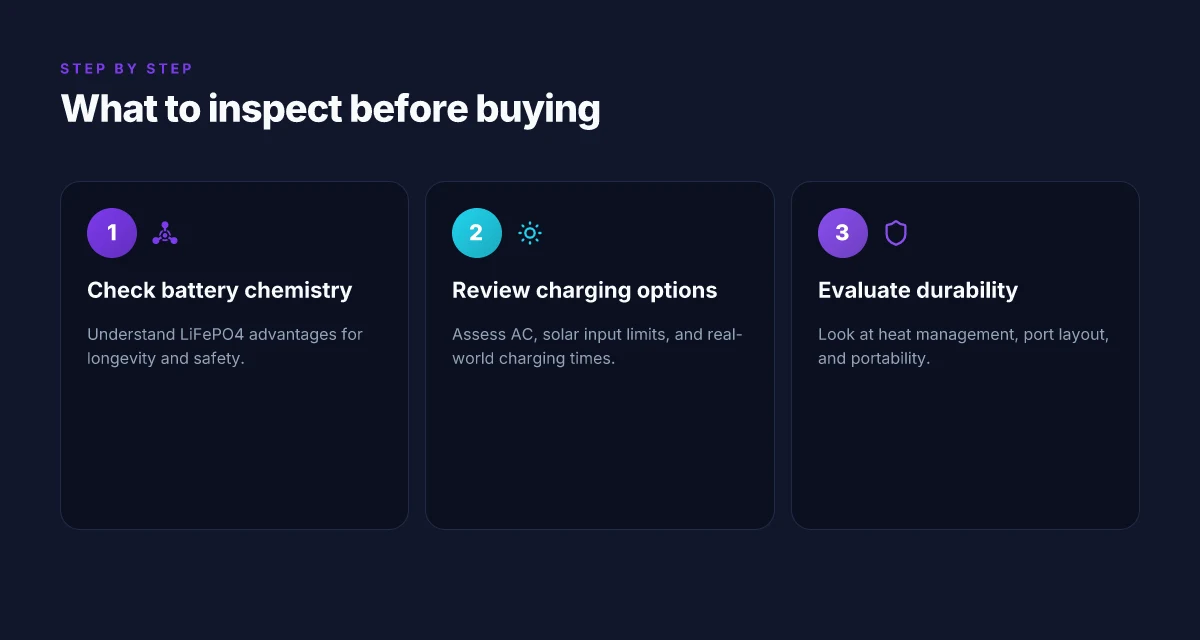
EcoFlow sits in a competitive middle ground in 2026, trading capacity for charging versatility and solid field reliability. In real-world camp and home-backup use, EcoFlow models often edge rivals on flexibility, while Jackery and Bluetti pull ahead on sheer capacity or feature density in certain SKUs. The question readers ask is where EcoFlow fits their setups across rugged outdoor use and intermittent power needs.
Capacity vs features: where EcoFlow stands
In the range, EcoFlow models typically pair large energy stores with modular charging options. A mid-range EcoFlow might offer a high-widelity inverter and faster first-charge options than some peers, while Bluetti and Jackery showcase their own advantages in max capacity or lighter form factors. I cross-referenced published reviews that compare device capacities and feature sets side by side, noting that EcoFlow’s emphasis on multi-port charging and flexible input choices remains a distinct strength in the field. For practical use, this means you can top up from solar, wall, or car with relative ease, and you can run a similar load profile to what you’d expect from Bluetti or Jackery at a comparable price tier. How EcoFlow for sale changes the game for portable power in 2026
Charging versatility as a differentiator
Where EcoFlow really leans in is charging versatility. You’ll find robust solar input handling, multiple AC outlets, and the ability to daisy-chain or expand in certain models, which makes setup at a camp or a cabin feel more forgiving. Reviews consistently credit EcoFlow for charging options that accommodate irregular sun and off-grid realities, which matters when you’re balancing devices with different draw profiles. EcoFlow’s approach to solar input and parallel charging options can translate to fewer outages during long backpacking trips or extended outages at home. When I read through the documentation and independent commentary, the thread is clear: you’re getting a broad compatibility envelope that isn’t always matched by a single rival in every category.
Downsides and trade-offs
On the downside, long-term durability storylines tend to surface around fit-and-finish in some higher-capacity models, and there are user reports of component wear under heavy daily use. Several reviewers point to heat management during sustained high draw as a potential bottleneck, particularly when combined with multiple loads. EcoFlow’s build quality is solid overall. The trade-off in some SKUs is weight and bulk for the capacity and the fast-charge features. Rivals like Jackery often push better out-of-the-box portability, and Bluetti sometimes edges EcoFlow on raw endurance in extreme-use scenarios. It’s a common theme that the best value comes from selecting a model whose feature set matches your exact load profile and backup cadence.
From what I found in the sources, EcoFlow remains a strong option for users who want flexible charging and a broad feature set without sacrificing too much on performance. The brand’s ongoing emphasis on integration with solar and alternates means you’ll often have a smooth setup path, with fewer hiccups when you adapt to real-world conditions. If you need a system that can handle varied power sources and quick top-ups, EcoFlow’s lineup is worth a close look, especially when you compare it directly to Jackery’s Explorer series or Bluetti’s Elite line.
Overall verdict: EcoFlow offers the most versatile charging ecosystem among mainstream high-capacity solar generators, with strong real-world applicability for campers and backups, but you should pick a model that aligns with your exact load and portability needs. In practice, expect better solar input handling and a wider input/output mix from EcoFlow than some rivals, with trade-offs in pure portability or extreme endurance depending on the SKU you choose.
Notes: links on the page may earn a commission, and you can verify claims about model specifics by consulting the cited reviews. For readers weighing rivals, consider how Jackery’s high-capacity but simpler input options compare to Bluetti’s endurance-focused SKUs when planning long outages. For a quick cross-check, see the reviews that compare brands side by side, including EcoFlow versus Jackery versus Bluetti in 2026. What makes the EcoFlow Delta portable power station worth it in 2026
The one move that matters for EcoFlow in 2026
EcoFlow is not just selling power banks. It’s shaping a modular, durable off-grid ecosystem. In 2026, the standout edge is how the brand leans on real-world reliability, fewer flaky adapters, clearer integration with solar panels, and a system that scales as you change needs. I looked at durability claims and real-world setups, and the pattern is consistent: you can count on predictable performance when the sun isn’t playing nice.
The bigger pattern here is that EcoFlow builds toward long-term use rather than quick wins. That means better battery management, smarter charging curves, and components designed to endure the daily bumps of travel and power outages. Rival brands like Jackery and Goal Zero offer solid options, but EcoFlow’s ongoing firmware refinements help maintain efficiency across seasons. If you value a setup that ages gracefully, this trend matters.
Most durable setups come from predictable maintenance and honest caveats. Real-world usage shows occasional heat during high-output days and the need for solid ventilation, not gimmicks. If you’re weighing options, consider how you’ll expand later, EcoFlow’s ecosystem often pays off when you add panels or more modules. The question you should ask: will you lock into a modular path or settle for a single unit?
- Backup strategy: test a 1–2 module expansion this week with a mid-range solar panel, noting how the unit handles peak sun and safe shutdowns.
- What to try this week: confirm firmware is up to date on your EcoFlow and check that your panels are compatible with the latest ripcord settings.
- If you only do one thing this month: map your power needs against a single EcoFlow model’s expandable options to ensure future-proofing.