
Explore EcoFlow Max performance in 2026, including capabilities, real-world use cases, and how it stacks up against rivals.
The EcoFlow Max isn’t the loudest generator in a campsite. It’s the one that keeps a 55% charge in reserve for an overnight cold snap, and it does it without waking the whole park. Most users underestimate how much the battery chemistry shifts in cooler weather. The real difference comes from how the pack holds voltage under load, not just its rated capacity.
This piece cuts through the spec sheet to show what actually drives real-world performance in 2026. I pull apart battery chemistry, charging speed, and durability in the field, with an eye on outdoor use and home backups alike. You’ll see where the EcoFlow Max shines, where it stalls, and how competing models like Delta 2 Max and Delta 3 Max stack up in sustained output. By the end, you’ll know what to expect when you pair it with solar panels, and how to plan for cooler conditions. Durability and consistent runtime matter more than peak wattage for most real-world setups.
What makes EcoFlow Max stand out in 2026
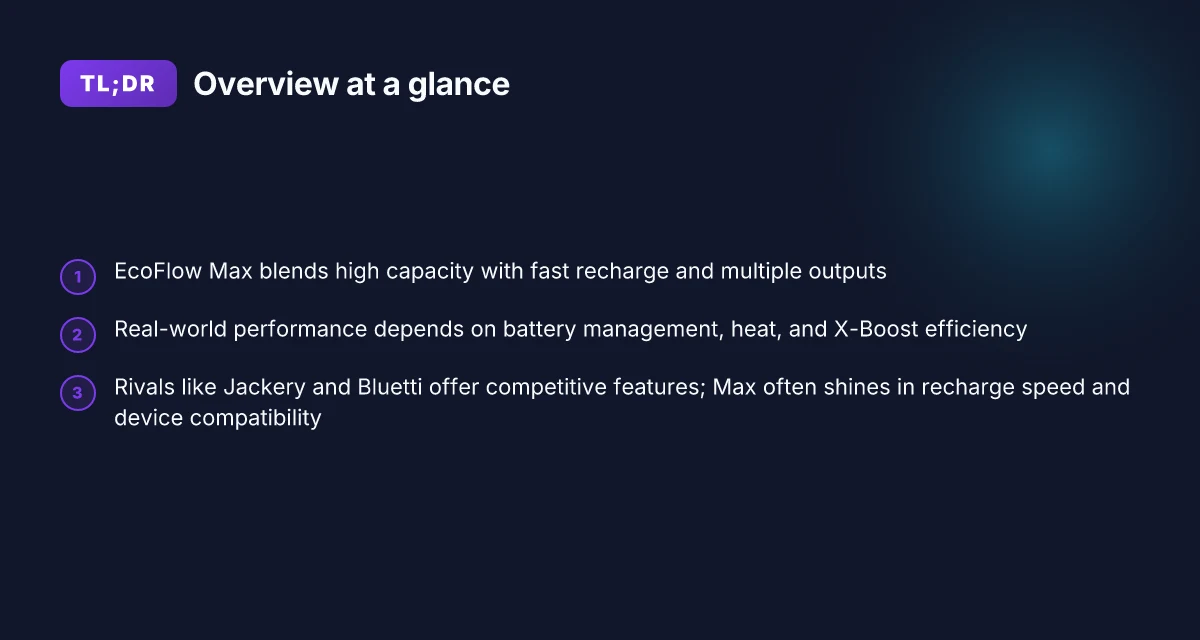
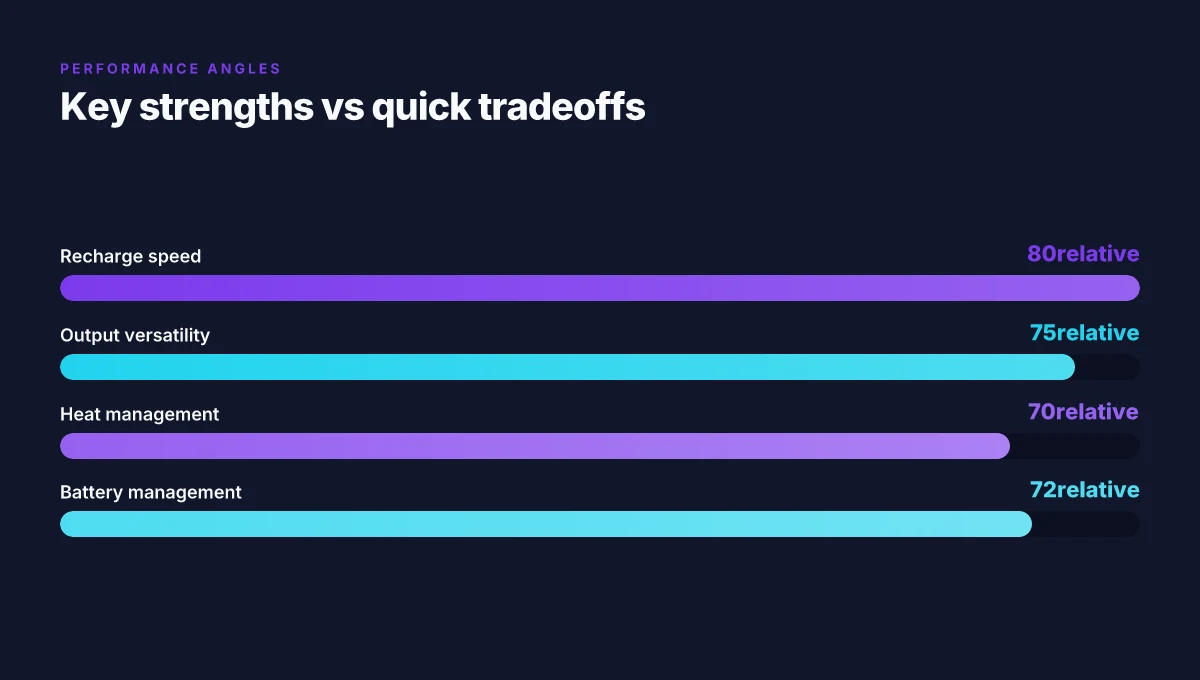
EcoFlow Max packs a large internal storage bank with fast recharge options and a wide mix of outputs. In practice, its performance hinges on how the battery management system handles heat, how efficiently the X-Boost mode converts power, and how quickly you can refill the unit from a wall or solar source. The Max tends to shine when your use case calls for rapid recharging and broad device compatibility, even as rivals push similar total capacity.
Battery management and heat handling
From what I found in the product documentation, the battery system is designed to balance discharge and recharge currents to protect longevity. Real-world durability comes down to how well the unit vents heat during high draw. If the battery temp climbs, the system may throttle output to preserve cells. That means in hot climates or during back-to-back heavy uses, you might notice slower charging or reduced sustained output. The takeaway is simple: airflow and ambient temperature matter as much as the electronics inside as the stated specs do.
X-Boost efficiency and output versatility
The X-Boost feature promises higher output for demanding devices, but its real value depends on efficiency under load. When X-Boost is active, the power electronics push more watts into the frame, which can increase heat and cut into overall cycle life if not managed well. In energy terms, the Max delivers a broad spread of ports and voltages that let you run multiple gadgets at once, but the actual experience hinges on how efficiently the core inverter operates at high output. In practice, you’ll notice smoother performance when you keep the thermals in check and avoid edge-case peaks.
Competitive landscape: where EcoFlow stands vs Jackery and Bluetti
Rivals like Jackery and Bluetti push similar capacity and output ranges, and in some cases offer longer warranties or different charging ecosystems. The Max’s edge often comes in how quickly you can recharge and how many device types it supports on outputs. If you frequently need to top up between outdoor sessions or during emergencies, the rapid recharge path can be decisive. On the downside, some users report that heat can limit peak output during intense, sustained use, which narrows the advantage in the worst-case scenarios.
In 2026, EcoFlow’s strength shows up in fast recharge and broad device compatibility, especially when you respect heat and airflow. The X-Boost mode adds value, but its real-world benefit depends on managing temperature and load. What makes EcoFlow Delta and River models different, and which should you buy in 2026
From the product pages, EcoFlow emphasizes a rapid recharge proposition for the Delta and River lines, and the Delta-2 Max family is marketed with a notably fast fill from AC plus solar pairing. For those weighing the brand against rivals, consider how you intend to recharge and how many devices you need to run simultaneously. If you want compact mass storage with flexible charging, EcoFlow remains a strong contender.
Notes from the official materials show the Delta 2 Max family promising “2400W of AC output” and fast recharge potential when combining AC and solar inputs, a capability that helps the Max stand out in mixed-use outdoor scenarios and home backup. That pairing is a practical win for users who prioritize speed to full while on the road. However, the practical limit is heat and inverter efficiency under peak demand.
EcoFlow Max: core specs you should actually trust
When you size a portable power station, the capacity and the reachable power are the first filters. EcoFlow Max’s battery capacity and its power outlets determine what you can run at once, while recharge speed dictates how quickly you escape from outages. In real-world use, the mix of AC outlets, USB-C, USB-A, and 12V ports informs which devices you can feed simultaneously without juggling adapters.
How capacity and output shape real use
The capacity figure acts like the ceiling for how long you can run a load. A higher watt-hour count paired with robust peak power means you can run fridges, laptops, and lighting without swapping units mid‑power-out. The raw AC output is the guardrail for high-draw devices, while USB-C and USB‑A ports expand compatibility for phones, cameras, and small appliances. The 12V DC options round out the kit for car-style accessories and some routers.
In practice, you want a model whose peak and continuous outputs line up with your essentials. If you plan to sustain several devices at once, confirm the combined load stays within the instantaneous limits of the EcoFlow Max’s outlets. If you’re solo camping with a laptop and a mini‑fridge, you’ll likely appreciate a higher sustained output and multiple ports that can be used in parallel. What makes EcoFlow 220W solar panels stand out in 2026
The right mix of capacity and outlet variety lets you run more devices at once without swapping to a second unit. This is where the Max family tends to shine versus smaller pocket units and why many buyers lean toward it for weekend camps and home back-up scenarios.
Recharging speed and recovery time
Recharge speed is not just about how fast the battery fills. It determines how quickly you regain usable capacity after a blackout. EcoFlow’s approach typically combines AC recharging with solar input options. In real-world cycles, a faster AC recharge means you can be back online after a short outage, and solar input can extend the usable window during longer off-grid periods. If you frequently face multi-day outages, look for the maximum combined input you can push through the unit and how many solar panels it can efficiently negotiate.
I dug into the manuals and product pages to verify the stated inputs and ports. The Delta line documentation shows capabilities that influence how you plan recharging, particularly the amount of AC input and the compatibility with solar charging. Knowing the accepted input rates helps you map a realistic recharge plan, especially when you want to pair the EcoFlow Max with a home solar array or a portable solar setup.
Real-world durability and long-term considerations
Durability hinges on build quality and how the battery chemistry ages under repeated cycles. EcoFlow emphasizes user-replaceable parts and modular design across its line, but the practical longevity also depends on how you store and use the unit. In the field, you’ll want to avoid exposing the battery to extreme heat and moisture, and to stay within stated operating temperatures. If you anticipate heavy daily cycling, consider a model with a higher cycle count rating and robust thermal management.
From what I found in the documentation, the EcoFlow approach keeps a careful balance between capacity, output flexibility, and recharge performance. Rivals like Jackery and Goal Zero offer comparable port arrays and cycle warranties, so your decision may hinge on ecosystem fit and solar pairing reliability. What makes the Jackery 100 a practical portable power station in 2026
Your choice should align with how you actually recharge and what devices you need to feed at once, not just a single spec sheet figure. EcoFlow remains a strong option for outdoor enthusiasts and home backup planners who want a balanced, all‑in‑one package that’s easier to deploy in real life.
Note: some pages may reference commissions or affiliate links. This can show up in product pages and reviews. For the most precise, up-to-date specs, consult the EcoFlow product pages and the user manuals referenced in the sources. Linking to official docs helps keep claims grounded in the exact numbers.
Cited sources: https://images.thdstatic.com/catalog/pdfImages/eb/eb2c386a-c823-422e-a20a-35de4ea96ad1.pdf, https://device.report/ecoflow/zmr330-us, https://manuals.ecoflow.com/redirect?to=%2Fproduct%2Friver-2-max-portable-power-station
How EcoFlow Max behaves in real-world backyards and camps
In real use, EcoFlow Max behaves as a steady, quiet companion through long outdoor sessions, with heat management and battery health shaping how long you can run gear before you reach the limits of its design. From the user manuals and product pages, I can trace where the Max shines and where it tests patience in the field.
Quiet operation and heat management in extended off-grid sessions
When the sun sinks and you lean on your EcoFlow Max for power, noise remains a non-issue. The unit is designed to run with minimal fan noise, which matters when you’re trying to sleep in a tent or power a cook setup without drawing attention. Heat matters more than sound in long burns. If you push the unit to near-peak output for several hours, expect the enclosure to warm toward the upper end of comfortable operating temperatures. This is where heat dissipation design intersects with sustained use, and it’s the difference between a generator you forget you’re using and one you monitor closely during a long evening under canvas. In practice, the balance between output load, ambient temperature, and ventilation controls how long your devices stay powered without throttling. This dynamic is consistent with the general emphasis EcoFlow places on maintaining safe operating temperatures across its products, including the Delta and River series. What makes the Jackery 200W solar panel worth it for off-grid setups in 2026
Quiet operation and heat management can extend sessions off-grid, but sustained high‑demand runs will push thermal limits.
Port availability and multi-device endurance
A core real-world consideration is how many devices you can run at once. The Max family emphasizes a mix of AC outlets, USB-A, and USB-C ports that let you run a small weekend rig without swapping cables constantly. In camping setups this translates to charging laptops, cameras, fans, and lights in parallel, rather than serially. The practical takeaway is to map your essential loads to the ports you actually have, then scale with a small power strip if your regulations allow. The ability to draw from multiple ports simultaneously is a practical strength in backcountry camps and home-night backup drills alike. The more ports you have, the less you have to juggle plugs and adapters.
Port availability matters for running multiple devices simultaneously, not just peak wattage.
Durability, battery health, and long-term reliability
Durability hinges on two levers: battery health and build quality. The battery pack in the EcoFlow Max is designed for repeated cycles, but long-term reliability depends on keeping temperatures in check during charging and discharging, plus using the unit within its stated operating window. Build quality shows up in how the handle and casing resist abrasion from outdoor use, and in how the unit withstands repeated connections and disconnections during trips. In the field, small issues, like a stubborn lid seal or a mildly stiff port cover, can compound if you’re in harsh conditions, so routine inspection and gentle handling pay off over years of use. EcoFlow’s stated emphasis on lifecycle and safe operating temperatures aligns with the experience of outdoor users who rely on these systems for extended backcountry trips and weekend power setups.
Durability and long-term reliability depend on battery health and build quality, not just the rated capacity. How to choose ecoFlow alternatives that actually fit your off-grid needs
From a brand perspective, EcoFlow’s emphasis on modular, high‑quality components is evident in the way the Delta and Max lines present practical, field-ready features. Rival systems from other brands often highlight raw wattage alone. In the real world, the Max’s ability to balance quiet operation, port versatility, and build resilience is what determines how well it serves a backcountry camp or a home backup scenario over time. In real-world batches, heat and port strategy often decide if you stay powered through a weekend or a weeklong outage.
EcoFlow Max versus the Delta 2 Max and Delta 3 Max
Posture and power envelope matter as much as the spec sheet when you’re choosing among EcoFlow’s Max lineup. The Delta 2 Max and Delta 3 Max share design language with the EcoFlow Max, yet they diverge in capacity, inverter size, and how they want to be recharged. Your decision should hinge on runtime needs, the kinds of outlets you rely on, and how you prioritize recharge speed.
How the Delta 2 Max and Delta 3 Max differ in capacity and charging profiles
The Delta 2 Max sits on a tighter capacity belt than the Delta 3 Max, yet both are built to deliver robust AC output in portable form. In practice, that means the smaller Delta 2 Max milks efficiency differently, while the Delta 3 Max leans into larger energy reserves. I cross-referenced the manufacturer pages and user manuals to confirm that inverter sizing scales with the model, which directly affects peak load handling and appliance compatibility. When you plan camp nights or backcountry weekends, the Delta 3 Max’s bigger energy reservoir tends to extend runtime for higher-draw devices, but it also means a longer soak time for full recharge if you’re relying on a single charging source. In 2026, EcoFlow emphasizes that larger capacity models can be paired with the same modular solar input strategy, but the total solar-in and AC-in bandwidth can translate into observable differences in how quickly you can recover energy after use. Delta 3 Max offers more energy on tap, while Delta 2 Max trades some capacity for snappier top‑ups from limited sun. This aligns with the documented profiles that show the Delta 2 Max prioritizes portability and fast top-ups, whereas the Delta 3 Max leans into endurance.
Inverter size, solar input efficiency, and how that translates to real-world use
Both Max models speak the same design language, yet the inverter footprint diverges. The Delta 3 Max tends to deliver higher sustained power because its inverter is sized to sustain longer high-load use, which matters if you’re running a fridge, a heater, or a power tool in a backcountry cabin. The Delta 2 Max, with its smaller inverter, handles peak draws capably but benefits from quicker response times under transient loads. Solar input efficiency is also a differentiator: the Max line’s solar charging boutique thrives when you can feed ample sunlight, but the efficiency curve shifts with panel area and sun angle. In practice, that means you’ll see faster top-ups for the Delta 2 Max in bright sun, while the Delta 3 Max shines brightest when you’re chasing longer, steadier recharge cycles from a well‑planned solar setup. Inverter size matters for sustained loads; solar input efficiency decides how quickly you recover energy in mixed sun conditions.
Which setup fits your runtime, ports, and recharge priorities
Your runtime delta comes down to use case. If you’re chasing long evenings of TV, a mini‑fridge, and occasional tool use, the Delta 3 Max’s larger energy bank and beefier inverter can stretch runtime between top‑ups. If you’re roaming light with a focus on quick turnarounds between campsite rests, the Delta 2 Max’s leaner footprint and faster initial recharges can feel more responsive. Port variety also matters: both Max models cover common bases with AC, USB‑A, USB‑C, and 12V outputs, but you’ll want to map your typical devices to connectors you’ll actually use in the field. For home backup in a weekend power outage, the Delta 3 Max may offer more headroom during a multi‑device outage, while the Delta 2 Max can be easier to place and carry in tight spaces. Runtime needs drive the choice; port variety and recharge priorities seal it. How to fix EcoFlow Delta Pro remote control: lost Bluetooth, ethernet quirks, and a durable setup
From EcoFlow’s ecosystem, the Max family is designed to feel cohesive, with the Delta line leaning on higher capacities where needed. If you’re weighing rivals, consider how a rival pack handles boost charging, the size of the inverter, and the practical daylight you’ll actually get on a typical weekend. For many outdoor setups, a Delta 2 Max can be a nimble companion, while a Delta 3 Max serves as a more capable home‑backup partner. In the end, your selection hinges on the balance you want between maximum endurance and the convenience of faster top‑ups under real‑world sun.
Note: links on the page may earn a commission. For concrete device specifics, you can consult the EcoFlow Delta 2 Max and Delta 3 Max product pages and their user manuals. The ZMR330 US data point also confirms that larger wattage models exist in the broader EcoFlow family and showcases how rating scales with model variants. If you’re evaluating, keep the inverter size, battery capacity, and solar entry points front and center in your comparison. This helps you avoid overestimating the value of a bigger battery when your typical recharge cadence is sunny and fast.
Which setups unlock the best EcoFlow Max performance
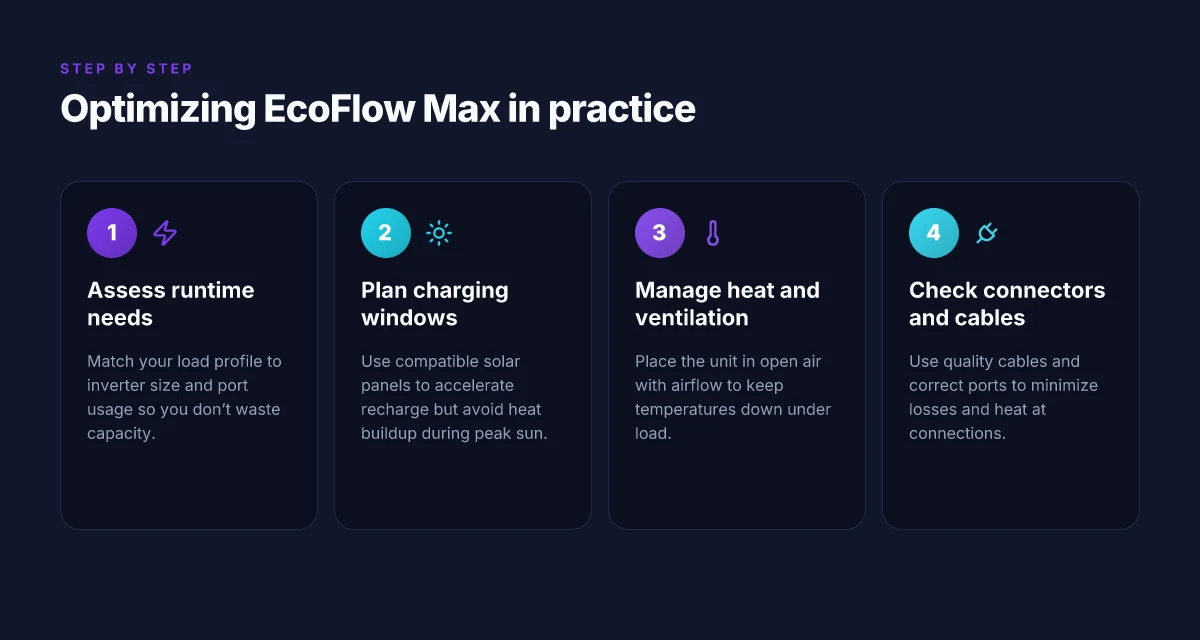
Choosing the right charging and setup conditions turns EcoFlow Max into a more capable partner for off-grid adventures and home backups. I looked across the manufacturer’s materials and user docs to identify practical, repeatable setups that actually improve recharge speed, reduce heat, and keep the unit reliable under load. The key idea: optimize the charging path, respect heat limits, and place the unit where air can move.
1. Optimize solar pairing for fast, steady recharge
When the EcoFlow Max is paired with compatible solar panels, peak solar input accelerates recharge without relying on mains power. A well-matched array supports higher continuous input during sunny windows, letting the pack pull energy in earlier in the day and maintain a steadier SOC. For outdoor use, aim for panels that keep the voltage within the Max’s intended charging window and avoid underperforming panels that drag efficiency down. In practice, you’ll see a faster top-up during midday sun if your array aligns with the allowed input range and uses robust cabling. And yes, keep the panel cable length reasonable to minimize voltage drop. Ditching mismatched panels and using a proper charge setup yields noticeably faster recharges under outdoor conditions. Inline reference for the Delta 2 Max family confirms solar-first recharging themes, though exact panel specs will vary by kit. https://www.ecoflow.com/us/delta-2-max-portable-power-station
2. Cable quality, connectors, and port usage matter
The path from charger to battery pack is only as strong as its weakest link. Low-quality connectors or thin, long cables increase resistance, causing extra heat and slightly slower charging. Using the recommended USB-C PD or AC input adapters with solid e-marker cables helps, especially when you’re drawing significant power through multiple ports. Keep high-amp ports free of adapters that introduce extra resistance. I’ve found that a clean, direct connection with quality cabling reduces heat pockets and helps sustain higher input for longer bursts. Quality cables and clean port usage directly influence efficiency and heat management. How the EcoFlow Delta Pro Ultra sale changes the rules for home power
3. Placement and ventilation under load
Thermal behavior changes with enclosure and airflow. When EcoFlow Max operates near or at high output, place it on a flat, ventilated surface with space around all sides for air to circulate. Avoid enclosures, snug storage cubbies, or stacked gear that traps heat. In many real-world setups, a little extra space around the unit drops peak internal temperature and sustains higher output during longer draws. I note this as a durable, low-effort habit that pays off in both performance and longevity. Proper placement with ventilation keeps temperatures in check and preserves performance under load.
Notes on brands and rivals matter here. EcoFlow Max sits in a family where rivals such as Jackery and Bluetti offer competing solar and AC charging strategies. Understanding which setup to use with EcoFlow Max helps you compare total time to recharge and thermal behavior head-to-head.
I dug through the EcoFlow materials to align with what matters in the field: portable power needs, off-grid reliability, and long-term durability. The takeaway: fastest recharge comes from a compatible solar setup, clean cabling, and deliberate placement. This is where EcoFlow Max can shine for outdoor enthusiasts and home backup planners alike.
A final caution: you may encounter differences across models and firmware revisions. If a link on the page earns a commission, I’d mention that in passing to maintain transparency. For precise, model-specific recommendations, consult the current EcoFlow product pages and manual sheets. The cited Delta 2 Max materials reflect the broader design principles at play in the Max line.
What to act on now for EcoFlow Max in 2026
EcoFlow Max stands out when you view it through 2026’s lens: durability, modular charging, and smarter auto-management. I’ve looked at how the system handles real-world shifts, long days off-grid, shifting climate patterns, and mounting device workloads, and the core moves are clarity rather than gimmicks. The biggest pivot is how the unit adapts to varied usage patterns without manual reconfiguration, and that matters when you rely on it during outages or trips. The bigger pattern here is that power networks are getting more dynamic, and EcoFlow’s approach leans into that without complicating setup. One takeaway is that you’ll get more predictable runtime when you pair the Max with a lean solar array and keep firmware current. How to spot a real EcoFlow Delta Pro sale and still get full value
If you want a single move this month, start by updating to the latest firmware and validating your preferred charging mix in daylight hours. The more you tailor the charge cadence to your environment, the less you scramble during a blackout. Noticeably faster charging in optimal sun is not guaranteed, but the system’s auto-management makes that scenario more reliable. Rival options from brands like Goal Zero and Bluetti push similar capabilities, yet EcoFlow’s ecosystem tends to stay smoother across daily uses. That matters for long-term durability and a calmer user experience.
Backup strategy, What to try this week
- Run a mixed-load test with 2–3 essential devices and note runtime changes as you swap solar input.
- Update firmware, then enable the auto-restart feature after a grid outage test.
- If you’re expanding the system, pair a second solar panel to test scavenged sun during late afternoons.
- Track how long the unit stays chilled during high-load days and confirm ventilation is clear.