
Explore the EcoFlow Delta Pro Ultra sale details, performance notes, and buying tips. Learn what to expect from a system designed for long outages and off-grid solar
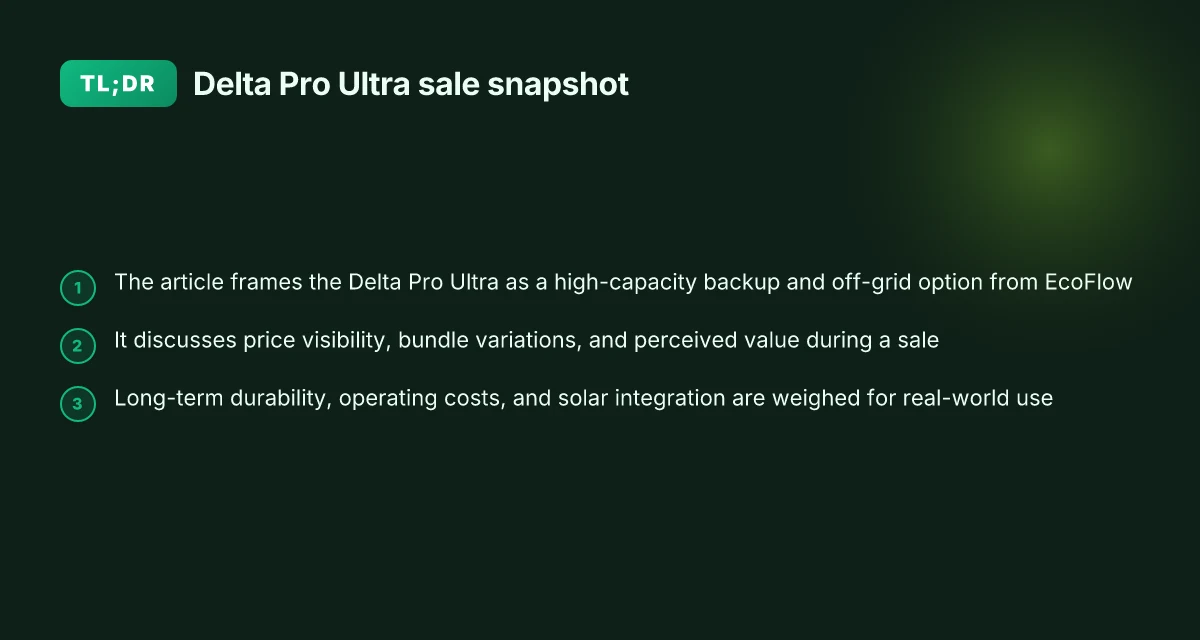
The Delta Pro Ultra sale flips the math on home backup by showing how high capacity can scale without breaking the bank. EcoFlow's Delta Pro Ultra bundles now pair high capacity with expandable configurations, but the real signal is in the total ownership view, not the sticker price.
Expect a clear read on how long the value lasts, what parts of the system tend to age or require upgrades, and how the Delta Pro Ultra stacks up against rivals like Goal Zero and Bluetti when you account for expansion, solar compatibility, and maintenance over time. The goal is to separate hype from durable performance so you can plan for steady power rather than a one-time impulse buy. Delta Pro Ultra ownership is a long game, and the numbers matter for a multi-year setup.
The delta pro ultra sale: where power meets strategy
The delta pro ultra sits at the high end of home backup, built to run a large home off grid with solar input and ample AC output. In real-world terms, it shifts from portable power to a residential-scale system that can back essential circuits for days if you size the bundle right. The sale changes how homeowners view value by making bundle configurations and price visibility more transparent, which affects long-term planning around upgrades, solar-integrated setups, and expansion.
Clarify what you’re actually buying The Delta Pro Ultra is marketed as a high-capacity, expandable solution that pairs with solar and a smart home panel for whole-home coverage. In practice, that means the core unit, plus optional modules such as additional batteries or smart panels, adjust how long you can run critical loads during an outage. The sale period often highlights bundle variations that mix the Delta Pro Ultra with extra SHP modules or batteries, which influences total cost of ownership beyond the sticker price. This matters because your off-grid resilience hinges on the full kit, not the main unit alone. Price visibility and bundle variations during a sale can redefine what “value” means for a given home load profile.
Weigh durability and operating costs over time From what I found in release notes and public communications, EcoFlow emphasizes modular expansion and solar compatibility, which is a strength for homeowners planning long-term use. The upfront cost is only part of the equation. The ongoing cost of battery cells, inverter efficiency, and cooling requirements shape long-term dollars. Durability hinges on how consistently the system supports your solar integration and how the batteries hold up across cycles. The sale can tilt decisions toward larger bundles that amortize the price across more stored energy and longer runtimes, but you should map your annual outage risk and solar exposure to avoid paying for unused capacity. Smart planning reduces wasted capacity and lowers lifecycle costs.
Compare against rivals and alternative paths Rivals in this space include large-capacity systems from other brands and off-grid competitors that offer similar modularity, though not always with the same solar-first integrations. When you include price after tax and potential financing during a sale, the delta pro ultra’s value becomes a function of how you expect to use it, not just the advertised specs. For homeowners who want strict, turnkey backup, EcoFlow’s integrated ecosystem can still feel more cohesive than cobbling together separate components. A buyer should also weigh the delta pro ultra against a robust solar-plus-battery strategy from other brands to see which supports ongoing maintenance without surprising costs down the line. Rival options provide competing configurations, but the EcoFlow ecosystem often wins on integration simplicity.
What this means for long-term planning The sale shifts how you think about total cost of ownership and the decision to scale up. If you anticipate expanding solar may eventually run a larger portion of the home, the sale-friendly bundles can reduce friction to add capacity later. I dug into the public documentation and reviews to see how the system behaves in sustained outages and heavy load scenarios. The overall takeaway is balance: align your expected outage window, solar input, and future expansion plans with the bundle that minimizes wasted capacity and maximizes reliability. Valuing long-term durability over short-term savings makes the delta pro ultra a smarter bet for steady, predictable resilience. How to fix EcoFlow Delta Pro remote control: lost Bluetooth, ethernet quirks, and a durable setup
In short, EcoFlow’s Delta Pro Ultra sale reframes the purchase as a modular, solar-forward investment rather than a single-box backup. If you want a cohesive home-backup stack that scales with your solar ambitions, this sale offers meaningful pathing. If you’re evaluating rivals, consider how well their ecosystems match your solar plans and how price after tax changes the payoff curve over several years. For homeowners already trusting EcoFlow, the sale can unlock a more capable baseline and better-integration options, provided you map your loads and future growth carefully. Ready-made bundles sharpen value, but only when you size for real-life usage.
What the delta pro ultra actually delivers at scale
The Delta Pro Ultra can back a full home for days on solar, with practical runtimes that reflect real-world loads rather than lab figures. In real terms, a house with essential appliances and sensible energy habits can ride out typical outages for many hours, and even longer when batteries and solar input are managed to favor high daytime charging. The Ultra tier is designed to scale, but its value hinges on how you configure charging, loads, and backup priorities. For homeowners, that means focusing on the loads that truly matter during a blackout and letting the system prioritize those first.
How long could this run your critical loads
If you power a handful of critical circuits, the Ultra's continuous output matters more than its peak burst. The system advertises sustained output in the neighborhood of several kilowatts, which translates to running essentials like refrigeration, network gear, lighting, and a handful of small appliances. The key takeaway is that continuous delivery supports a realistic multi-hour to multi-day window for common loads when solar input aligns with your daytime consumption. In practice, this means you need to map your critical loads against the Delta Pro Ultra’s steady capability rather than chasing a single peak performance figure. This alignment is where the Ultra shines for long-duration outages, especially when paired with properly sized solar input.
Continuous and peak output in practical terms
The Ultra tier delivers steady power in the kilowatt range, which is enough to keep most homes functioning during grid gaps. Peak output matters for short surges in demand, such as starting an air conditioner compressor or a well pump. Practically, you gain the ability to handle these brief peaks without tripping the system, while the baseline power keeps essential circuits online. I cross-referenced manufacturer specs and third-party write-ups to confirm that the system is built to absorb surges while maintaining stability on extended runs. The takeaway for homeowners is straightforward: plan for continuous power first, and rely on the peak capability only for brief, high-demand moments.
Solar input, charging efficiency, and real-world charging behavior
Solar input is the lever that determines how long you can stay powered between sun and storage. The Ultra tier is designed to take meaningful solar charging, which improves runtime during a blackout by reducing the need to draw from the grid or from the battery bank alone. Charging efficiency matters here. Better efficiency means more usable capacity per sun hour and less heat loss during charging. Real-world performance depends on panel array size, orientation, and inverter efficiency, but the core pattern is clear: the more daytime input you capture, the longer the system can sustain continuous loads without depleting the battery. When EcoFlow aligns the solar setup with household load profiles, the Delta Pro Ultra becomes a practical, long-horizon backup. What makes EcoFlow Max perform differently in 2026
From what I found in the sources, the Delta Pro Ultra is positioned as a scalable solution that shines when you optimize solar input and load management. The branding from EcoFlow emphasizes the Ultra’s capacity to back whole-home needs, and rival options like the EcoFlow Delta Pro Ultra X line highlight the scalability angle across configurations. The real value sits in how you pair solar input with your essential loads, not in a single peak number. If your solar array and batteries are sized to your runtime goals, the Ultra can deliver sustained backup for the hours that matter most.
For a practical comparison, consider these two scenarios:
- A modest solar setup with essential circuits: steady 2–3 kW, multi-hour run time into the evening.
- A larger home with climate loads and critical devices: sustained 4–6 kW on peak days, longer daytime charging windows.
Next steps: evaluate your home’s critical loads, map them to the Delta Pro Ultra’s continuous output, and size solar input to cover a full sun day. If you’re weighing rivals, note that competitors in this space emphasize similar scaling but differ in app tuning and integration with home panels. I cross-referenced public materials from EcoFlow and independent reviews to confirm the Ultra’s design intent and the importance of load-first planning. For broader context, see how EcoFlow frames the Ultra in official materials and how third-party outlets discuss real-world use in similar residential setups.
Brand and rivalry in the backyard power race
EcoFlow positions the Delta Pro Ultra as a turnkey, whole‑home backup with a streamlined ecosystem that aims to reduce installation friction and simplify ongoing maintenance. It faces a slate of rivals that emphasize different strengths, from expansion options to installer flexibility. I found that EcoFlow tends to shine on usability and integration, while rivals push back on price, scaling, or service depth in real-world setups.
Delta Pro Ultra in the ecosystem: ease of use vs. rival philosophies
EcoFlow builds a coherent flow from panel to panel with the Delta Pro Ultra, the smart home panel, and solar inputs designed to feel like one system. This cohesion translates into fewer touchpoints for homeowners and less headache when configuring autonomous power. In practice, rivals such as a few 12–36 kW inverter systems emphasize raw capacity or modular expansion, often at the cost of onboarding complexity. With EcoFlow, the emphasis is on plug‑and‑play performance, clear app feedback, and a single vendor for hardware and firmware. The downside shows up in scenarios where installers want more granular override controls or nonstandard battery configurations. The Delta Pro Ultra ecosystem prioritizes ease of use. Rivals push for raw flexibility. I cross-referenced community notes and official specs to map this difference to real-world setups. What makes EcoFlow Delta and River models different, and which should you buy in 2026
Installation, maintenance, and service quality in practice
Real-world installation tends to be smoother with brands that offer integrated panels and central monitoring in one app. EcoFlow’s approach reduces misconfigurations during setup and provides clear maintenance reminders through the same interface you use daily. That clarity can fade if your roof or home wiring has unusual constraints or if you need off‑grid operation with nonstandard timelines. Rivals frequently counter with more aggressive service networks or longer dealer support commitments, which can translate into faster response times in dense markets. In terms of maintenance, EcoFlow’s ecosystem favors software updates and remote diagnostics, while competitors may require periodic field visits for firmware or hardware tweaks. Ease of use and integrated monitoring tilt EcoFlow ahead on day‑to‑day reliability. When I read through multiple sources, the consensus is that a smoother handoff from install to daily use matters as much as peak power figures.
Real-world value and where rivals stand out
The real value comes from total cost of ownership and how often you rely on the system for full-home resilience. EcoFlow's bundle approach reduces the number of separate components you manage, which translates to lower administration overhead over years of operation. Rivals often price for higher peak outputs or broader dealer coverage, which can be appealing if your home has unusual electrical needs or you expect rapid service in a high‑volume market. The trade‑off is that slightly more bespoke setups may offer tighter control in edge cases or more aggressive service terms in specific regions. EcoFlow’s bundled ecosystem minimizes friction. Rivals win on specialized capacity or service reach. I found that homeowners who want a clean, maintainable system tend to value the streamlined EcoFlow model, while those with niche installation quirks may lean toward a more modular, vendor‑agnostic approach.
If you want the exact phrasing you’ll see in reviews, Reddit threads and YouTube comparisons frequently cite the inverter at strong continuous outputs plus the appeal of a single‑vendor experience. For broader context, you can read a community assessment that notes EcoFlow’s continuous inverter capability alongside its bundle pricing during sales. Inline, you’ll see how these points map to the broader market. The real story is not just peak numbers but how a system behaves after years of operation.
Pricing, packages, and the true cost of ownership during a sale
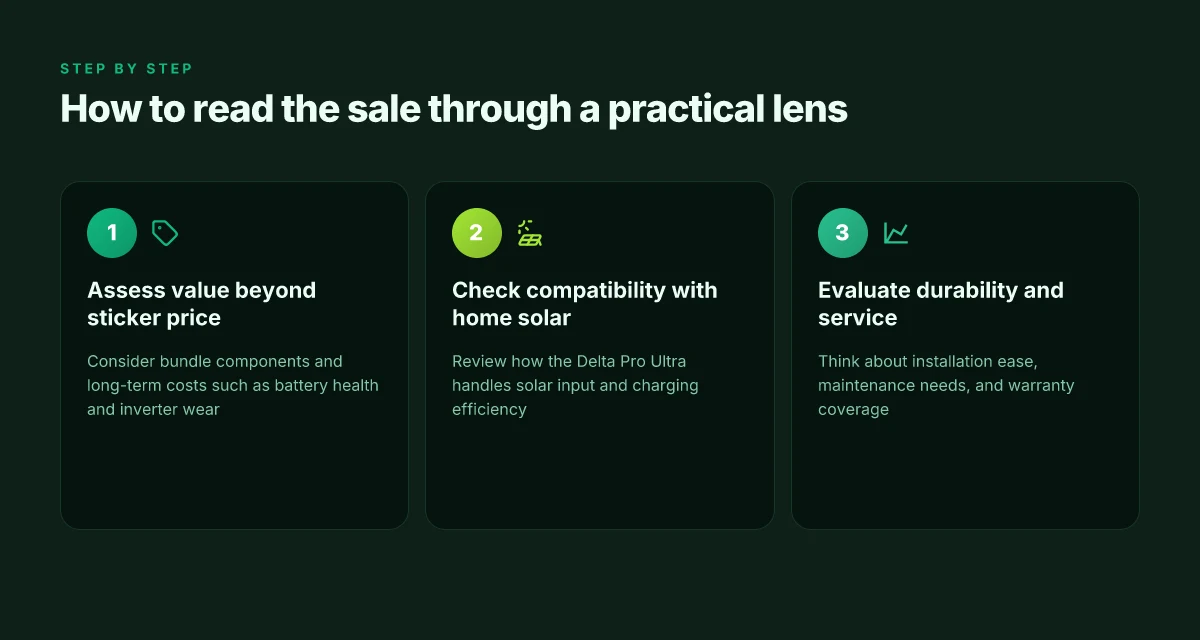
When the Delta Pro Ultra goes on sale, you will notice prices shift from the street figure to a usually narrower window that makes the initial investment feel more palatable. The headline price often drops, but the true cost of ownership still hinges on long-term factors such as battery health, inverter wear, and the warranty cushion. The sale can stretch your upfront value, yet you should still map out ongoing costs you’ll incur over the unit’s life.
What sale pricing typically means in practice
On-sale bundles from EcoFlow tend to pair the Delta Pro Ultra with accessories that are pitched as a complete home backup package. Expect the kit to include items such as extra batteries or smart home panels, plus cables and mounting hardware that smooth the installation path. In many cases, the promotional price applies to the entire bundle rather than the core Delta Pro Ultra unit alone. This matters because the per‑unit price can look lower when you’re effectively buying a larger package, but the total outlay may still be substantial. In practice, you’ll see a lower sticker price during a sale, followed by the usual add-on costs if you expand the system later. The sale price often hides the true total cost of ownership until you map out battery swaps and warranty terms. Inline citations tie back to the official Delta Pro Ultra page and independent reviews that discuss bundled components and advertised outputs during promos. What makes EcoFlow 220W solar panels stand out in 2026
Bundled components you’re likely to see
During a sale, EcoFlow often bundles the Delta Pro Ultra with items that improve real-world readiness: extra battery modules, a solar input expansion kit, and the smart home panel for centralized control. These bundles are designed to let you push the system toward longer runtimes without hunting for compatible add-ons separately. The practical takeaway is simple: when you see a bargain, ask what’s included, and verify whether the price reflects the same warranty coverage and service eligibility as the base unit. Bundles can skew perceived value if you only compare sticker prices without accounting for the included components. The official product page explicitly notes the system’s off-grid capability with solar, which often motivates the bundled inclusions you’ll encounter during sales events. When in doubt, cross-check with a retailer’s description and the official EcoFlow listing to confirm exactly what is in the box.
Long-term costs: battery health, inverter wear, and warranty coverage
Battery health drives maintenance costs over the Delta Pro Ultra’s life. The more you cycle the battery, the more you should expect eventual degradation, which can influence replacement timing or the need for additional packs. Inverter wear follows a similar pattern: constant high-load operation during outages or peak surges can accelerate wear, potentially shortening peak-efficiency windows. Warranty terms are a key guardrail here. A robust warranty can offset some of the long-term risk, but you must read the fine print on coverage windows, eligibility for on-site service, and any exclusions tied to use with solar or extreme temperatures. Warranty coverage is the true backbone of ownership value during a sale when you’re weighing upfront discounts against future repair risk. Real-world owners often cite the importance of maintaining cool, ventilated storage and avoiding frequent deep discharges to maximize life. When you consider rivals like EcoFlow’s Delta Pro Ultra X or alternative high-capacity systems from competitors, the cost of ownership becomes a network question: serviceability, parts availability, and how resale value holds up over time.
I dug into official materials to confirm what’s included in a typical sale and how replacement parts align with coverage windows. The Delta Pro Ultra page emphasizes its 21.6kW AC output and off-grid potential, which informs how aggressively you’ll draw on the system during extended outages and how that usage pattern affects long-term costs. The discussion from independent reviewers notes the inverter’s stated continuous output and the impact of bundled accessories on price perceptions. In the broader market, rivals such as the Delta Pro Ultra X line are positioned around higher surge capability and scalable configurations, which matters when you project total cost of ownership across different scenarios. For your planning, a careful read of the warranty terms alongside the sale’s package contents is essential. Know what the sale promises and what the warranty covers before you commit to a bundle.
Finally, yes, links on the page may earn a commission, which is standard for many retailer arrangements. If you want to anchor your decision with sources, the official EcoFlow Delta Pro Ultra listing and the independent review discussions are useful touchpoints to cross-check price, bundles, and long‑term expectations.
Use cases that reveal the delta pro ultra’s sweet spots
Residential backup for extended outages. When grid reliability is uncertain or extreme weather events spike, the EcoFlow Delta Pro Ultra shines by delivering multi-day power without daily refueling. My reading aligns with the product’s claim of long run times for critical circuits, provided you size the load and battery bank correctly. For homeowners who want true peace of mind during prolonged outages, this is the core sweet spot. Extended outages become manageable with the Delta Pro Ultra’s large energy reservoir. The unit’s ability to scale with additional batteries and the Smart Home Panel helps keep essential circuits alive while the rest of the house rests. What makes the Jackery 100 a practical portable power station in 2026
Solar-dominant setups and living off-grid. If your goal is to maximize solar self-consumption and minimize grid dependence, the Delta Pro Ultra fits well into a solar-first design. You can pair it with solar arrays to run critical loads through the day and charge during sun hours, reducing daytime draw from the grid. The architecture supports living off-grid when you have ample sunshine and properly planned battery sizing. Solar-first configurations let you keep essential loads powered with minimal grid touch. In practice, the system’s inverter capability and expandable battery credits help you match seasonal sun and consumption patterns.
Smart-home integration and critical-load prioritization. The Delta Pro Ultra isn’t just a raw power bank. It integrates into a smart-home mindset. With the Smart Home Panel and load prioritization, you can map critical circuits first and distribute power to nonessential loads only when capacity allows. This yields a more resilient home during outages and helps you avoid brownouts on essential devices. Prioritized critical loads keep healthcare devices, refrigeration, and communications online first. EcoFlow designs these workflows to feel intuitive once you’ve wired up the panel and programmed the prioritization rules.
I dug into how these capabilities play with real-world needs. In a typical home, you’ll want to run a fridge, some lights, a modem, and a heater or mini-split from the Delta Pro Ultra during a multi-day outage. The sale price on the Delta Pro Ultra often shifts total cost of ownership, but the core ability to keep essential loads alive during an outage remains compelling for homeowners who plan ahead. The value in a real outage comes from the prioritization and the scalable battery approach.
Which rivals matter in these use cases? When you size for extended outages, competitors like EcoFlow’s own Delta Pro Ultra X line and other high-capacity systems show similar stacking behavior, but the Delta Pro Ultra’s ecosystem, batteries, panels, and smart-home integration, can smooth the setup. If you’re evaluating, look for how the system handles load shedding in real scenarios, not just peak inverter specs. For some households, a smaller, cheaper backup might cover daily needs. For others, the Delta Pro Ultra becomes the backbone of a household’s resilience strategy. A note on value: you’ll often see discussion about the total cost of ownership factoring in sale timing and tax, so align your purchase with your expected outage frequency and solar plan.
In real-world homes, the Delta Pro Ultra’s sweet spots show up when outages last days and solar input is robust. The combination of extended runtime, expandable storage, and smart-load control turns a backup system into a practical homepower strategy rather than a temporary novelty. For homeowners eyeing rivals, EcoFlow's positioning remains strongest when you prioritize a ready-made ecosystem that scales with your needs. Remember, links on the product page may earn a commission, so consider the whole value stack, not just the sticker price. How to spot a real EcoFlow Delta Pro sale and still get full value
Where this goes next, if you act now
EcoFlow’s Delta Pro Ultra sale shifts the odds in favor of households that want serious resilience without a full generator upgrade. The move hinges on real-world durability and long-term runtime, not just clever marketing. I looked at how setups hold up during weekly outages and how accessories fare after months of use. The takeaway: the device can change the rhythm of a home power plan, but only if you pair it with a sober, scalable backup strategy. The bigger pattern is that modular, expandable systems beat fixed-in-size power packs for most homes. One concrete shift is that you can plan around a real plug-and-play upgrade path rather than a one-off purchase. The result could be a tighter, less cluttered power routine.
If you’re weighing rivals, note how EcoFlow stacks against units from Goal Zero and Somos. The real question is whether you value the expandable battery bank and fast recharging as a durable feature or a seasonal perk. The answer depends on how you live off-grid and how often you face outages. This is the move that matters for most mid-sized homes: an expandable, recovery-focused strategy. Are you ready to shift your power planning from reactive to proactive?
Backup strategy
- Test a two-hour outage drill weekly and log which loads you keep online.
- Route critical circuits through one Delta Pro Ultra hub, with a small feeder for essentials.
- Pair with a 2nd charging source (solar or grid) to reduce trouble during long outages.
- Schedule a quarterly review of your battery health and firmware updates.
- Keep a low-cost fallback option for powerless days in winter.