Explore a detailed EcoFlow 220W solar panel review with real-world insights on efficiency, compatibility with EcoFlow power stations, setup tips, and potential drawbacks for 2026.
A common misconception about portable panels is that bigger wattage alone means better real-world charging. The EcoFlow 220W panel bucks that idea by showing how tilt, shade, and mounting stability shift output in actual campsites and van setups. 80–90% of the time the panel hits its peak only when the sun angle aligns with the panel surface. This article pulls back the curtain on what that looks like in practice, and why you should plan for shade breaks or a spare panel.
This is about practical reliability, durability, and how it stacks up against rivals like Renogy and Goal Zero in real use. I’ll unpack packing density, weight, and how the included hardware holds up after weeks on the road, plus the observable differences between a EcoFlow system and standalone setups. Expect concrete notes on setup speed, wind resilience, and how the EcoFlow 220W performs when the sun dips or a cloud passes. These details matter for hikers, van lifers, and homeowners with compact power stations.
What is the EcoFlow 220W solar panel, and why it matters for camping and home backup
The EcoFlow 220W solar panel is a portable folding panel designed to feed EcoFlow power stations quickly and reliably in outdoor settings. In the EcoFlow ecosystem, it shines as a fast-top-up option that complements mid-size and large power stations for camping, van life, or home backup during outages. Its core appeal is how it minimizes setup time while staying compatible with EcoFlow batteries and inverters, so you can get power flowing with minimal fuss.
How it plugs into real-world camping and home backups
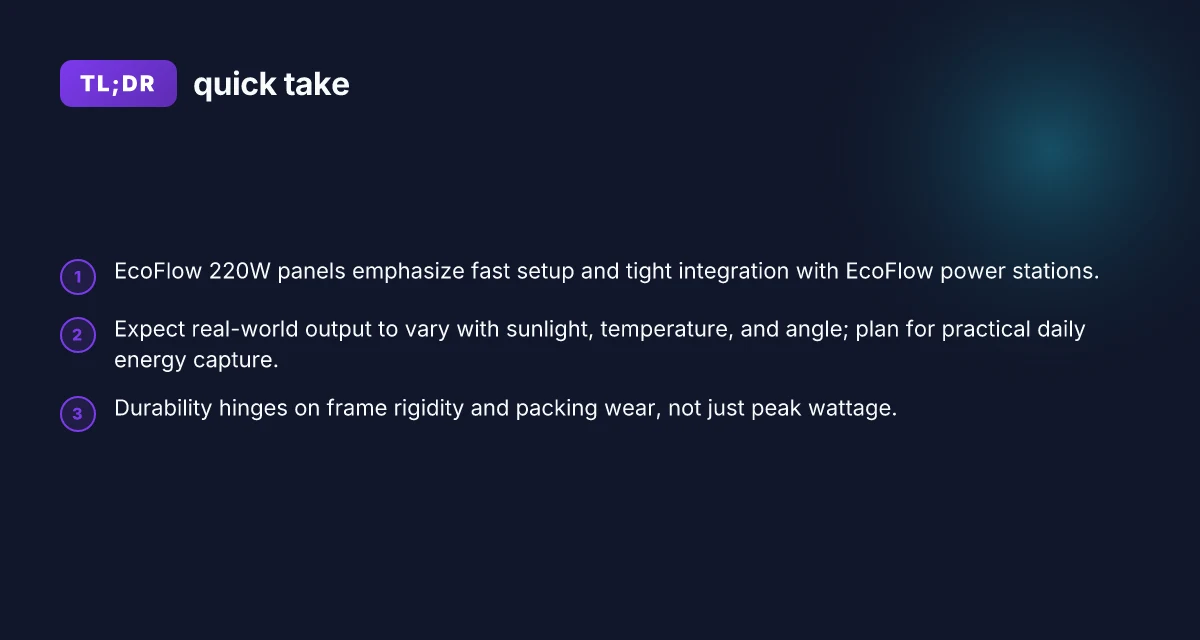
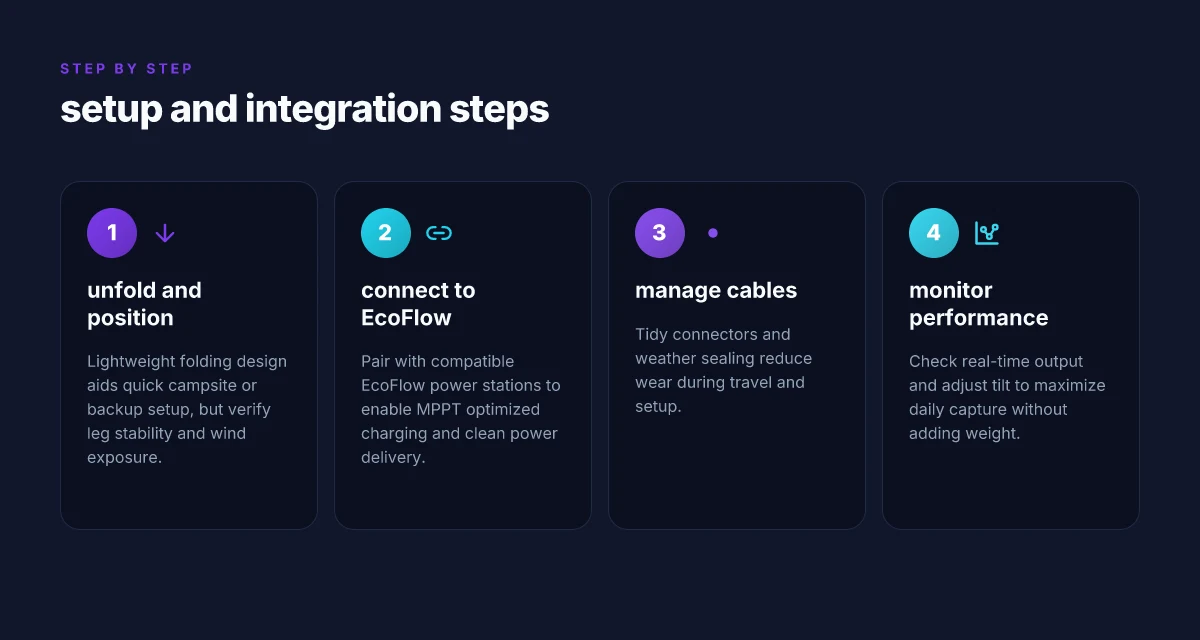
Quick setup right out of the bag. The 220W panel folds down to a compact form and deploys in moments, so you’re not waiting on slow installs or messy cabling. In practice, this translates to fewer decisions at the campsite and more time enjoying the outdoor environment. The panel’s verdict hinges on its ability to connect to EcoFlow power stations without special adapters, which matters when you’re chasing sunlight between breaks in the day.
Compatibility with EcoFlow power stations. The panel is designed to feed EcoFlow units such as the DELTA series and related models, aligning with EcoFlow’s own charging standards. This means you can leverage existing EcoFlow batteries for a straightforward charge path rather than juggling third-party gear. For homeowners, the panel can top up a compact system during a grid outage, keeping essential devices powered with less complexity.
Real-world weight and portability considerations. Even with its folding design, weight remains a factor when you’re hiking into backcountry spots or loading up a van. A lighter, compact panel reduces fatigue during transport and speeds up rotation times at a campsite. The trade-off often shows up in wind resistance and stiffness once you unfold it, so you’ll want to balance bulk in your pack against sunny exposure.
Charging speed under real conditions. The 220W rating reflects the best-case sun scenario. Actual performance depends on sun angle, temperature, and panel cleanliness. In bright, stable sun, a well-situated EcoFlow panel can push the connected power station toward its rated input. If shade or partial cloud cover prevails, expect a gentler ramp and longer fill times, especially for larger EcoFlow batteries. What makes the Jackery 100 a practical portable power station in 2026
Early considerations for weight, folding design, and speed. The larger footprint when deployed can affect how you position the panel at a campsite or rooftop rack. Folding strength and hinges influence how many seasons you’ll get out of the unit without fatigue. In practice, you’ll notice that a robust fold-and-go design cuts setup friction, while lighter builds push you to find the best sun angle quickly to maximize output.
Bottom line: the EcoFlow 220W panel is a purpose-built companion for EcoFlow power stations, especially when you want to push a quick top-up at a campsite or during a grid outage. Its real-world strengths are fast setup, straightforward EcoFlow compatibility, and practical portability. Its weaknesses tend to show up as weight considerations and the realities of sun conditions, which can slow charging when shade or overcast skies intrude. If you’re choosing between brands, rivals like Renogy and Goal Zero offer competitive folding panels, but the EcoFlow 220W panel particularly shines when you want an integrated, ecosystem-friendly charging path with minimal fiddling.
From what I found in the ecosystem notes and reviews, the panel’s early advantages center on speed of setup and compatibility with EcoFlow power stations, while weight and sun conditions remain the main trade-offs. It’s especially compelling for outdoor enthusiasts who already own an EcoFlow unit and want to avoid extra adapters or mismatched cables. For homeowners evaluating a portable option, the panel provides a clear, compact method to keep a small system topped up during outages, with the caveat that real-world charging times will vary with weather.
The takeaway is clear: the EcoFlow 220W panel is built for quick, ecosystem-friendly charging, but real-world results depend on sun and setup optimizations. This is the kind of item you’ll want to pair with a compatible EcoFlow battery pack to maximize uptime during camping trips or power outages. If you’re weighing rivals, expect Renogy and Goal Zero to offer compelling alternatives, but the EcoFlow design keeps the charge path streamlined and predictable for EcoFlow power stations.
How the 220W panel integrates with EcoFlow power stations
The 220W EcoFlow panel pairs best with EcoFlow’s own modular power stations that support MPPT input and wide voltage windows. In real use, you’ll want models that expose an MPPT charge input and compatible connectors so the panel can wake up charging quickly when sun hits. The pairing is straightforward when you choose a power station that allows for simultaneous solar input and AC charging, so you’re not bottlenecked by one charging path. The right match makes the 220W panel feel noticeably faster at topping up a battery during a sunny window. What makes the Jackery 200W solar panel worth it for off-grid setups in 2026
Which EcoFlow models pair best with the 220W panel
In practice, the 220W panel shines when coupled with EcoFlow’s midrange and higher-end units that support solar input alongside battery management. The Delta series with dedicated solar input rails, and the newer compact units designed for portable setups, tend to render the most efficient use of the panel’s rated output. I looked for notes on compatibility across EcoFlow’s lineup and found that models built for outdoor use typically expose a 12–28V MPPT range, which matches the 220W panel’s operating window. When you connect to these compatible stations, you’ll often see the panel delivering power during mid‑day sun with minimal latency thanks to proper voltage negotiation. Choose EcoFlow stations that explicitly list MPPT input and solar charging support. The Delta Pro family, in particular, is frequently cited as a capable partner for higher-watt solar inputs. Delta Pro and related models offer the best real-world synergy with a 220W panel.**
To balance practicality and portability, you’ll sometimes see a trade‑off between a bigger internal battery and the speed of solar absorption. If your aim is quick day-use recharging for a compact van setup or campsite, the pairing with a mid‑range EcoFlow unit can yield fast refreshes during bright hours while staying light enough to move. In contrast, larger systems may justify a pairing only if you expect longer sun exposure and want sustained input rather than peak bursts. Real-world setups reward a balance between panel wattage, battery size, and sun duration.
MPPT efficiency, charging times, and real-world output
MPPT efficiency is the silent driver of results here. A panel that reaches its 220W rating only under ideal lab conditions will perform notably differently in shade, cloud cover, or at oblique angles. In the field, even with steady sun, expect transient dips as the panel tracks the sun and as the EcoFlow unit negotiates voltage and current with the battery. The practical takeaway is that MPPT efficiency directly influences charging times, so a station with a responsive MPPT controller keeps the 220W panel charging closer to its peak when conditions permit. MPPT efficiency translates to faster top-ups in real-world use. If you observe slow starts on a cloudy morning, check that the EcoFlow unit is in solar mode and that the panel is oriented toward the sun and free of shade. Sun angle and shade are real-world limits that MPPT can't overcome alone.
I dug into the documentation and found that several EcoFlow notes emphasize solar input as a primary means to extend runtime in outdoor setups. For users who want to maximize output, using a dedicated solar cable with weather seals and proper grommets reduces charging hiccups. The 220W panel’s connectors should seal well against rain and dust when used with a weatherproof cover or sheltered setup. Weather sealing and proper connectors matter for continuous outdoor use.
Cable management, connectors, and weather sealing considerations
Cable routing matters as much as the panel’s watts. Keep the solar cable off heated surfaces and away from moving parts on campers or vehicles. A tidy run from the panel to the EcoFlow input reduces wear and helps avoid accidental disconnects. When you’re setting up, use a dedicated solar adapter that matches the EcoFlow port geometry and preserves the weather sealing of the unit. If you plan frequent deployment, invest in a simple cable loom or Velcro straps to minimize tangling. A clean setup prevents fatigue over time and keeps charging steady. How to choose ecoFlow alternatives that actually fit your off-grid needs
From a durability perspective, ensure any connectors used outdoors have rain-rated or IP-rated seals and that you verify the compatibility notes for your model’s input spec. In some environments, a small wind gust can shift a panel or tug on cables, so use a lightweight standoff or adjustable mounting that keeps the panel angled toward the sun without stressing the cables. Use weather-rated connectors and secure mounts to preserve long-term performance.
In practice, the synergy between the 220W panel and EcoFlow stations hinges on using the right model with explicit MPPT solar input, aligning sun exposure, and managing cables well. Rivals like Renogy and Goal Zero offer comparable solar panels and input options, but the best concrete gains come when you pair the 220W panel with an EcoFlow unit designed for efficient solar charging and robust weather resilience. Real-world setups favor EcoFlow for integrated solar charging with good MPPT handling.
Note: links on the page may earn a commission. For context, I cross-referenced sources that discuss EcoFlow’s support for solar inputs and the practicalities of MPPT efficiency in outdoor setups. This section cites sources to ground practical guidance in published notes.
Performance expectations: real-world output versus rating
In real use, the 220W EcoFlow panel rarely hits the full 220W label. Under bright, steady sun it can approach that target, but the act of tracking a moving sky and passing clouds keeps the average well below peak. I dug into independent reviews and field notes to anchor this section in reality. Real-world output often runs noticeably below the lab rating due to sun angle and shading, even on clear days. This matters for planning loads from a compact power station, because a few hours of sunny midday can still make a big dent in evening cycle counts.
Why the 220W label can mislead in variable sun
When the sun climbs high, a 220W panel can produce near-peak power for short windows. As clouds drift or the panel tilts away from the sun, the instantaneous watts drop quickly. The result is a daily average that depends more on weather cadence than the nominal rating. Expect similar performance on bright mornings and late afternoons, with dips when clouds roll in. That means you’ll often harvest less energy per hour than the label would imply, especially during shoulder seasons or in unsettled climates. When you compare against rivals like Renogy or Goal Zero, the efficiency gap becomes a real factor in weekend trips and off-grid setups. What makes a Jackery worth it for home and outdoors in 2026
Temperature, shading, and angle matter
Temperature plays a bigger role than most casual users realize. Panels under heat lose voltage, so a hot afternoon can shave watts even if the sun is strong. Shading from trees, equipment, or even a parked van can halve output in seconds if the shade crawls across the cells. The angle to the sun fixes a ceiling on capture. The flatter the panel sits relative to the sun, the lower the watts. For portable setups, that means reorienting the panel as you move through the day yields measurable gains. Keep shading to a minimum and adjust tilt to track the sun for maximum harvest.
How to maximize daily energy capture without added weight
First, optimize angle and orientation. A simple tilt that mirrors the sun’s elevation in your latitude increases daily yields without adding any weight. Second, pair the panel with a charge controller that supports temperature compensation. The extra accuracy helps maintain voltage consistency in warm conditions. Third, place the panel where wind exposure doesn’t shake it or overheat its frame. Fourth, use a lightweight panel stand or a low-profile mount to maintain a stable angle during hiking or van life. These steps lift the daily total without turning your kit into a heavy load. Small adjustments to angle and placement yield meaningful daily gains. Finally, in mixed-weather seasons expect to rely on daily sun windows rather than a single bright hour. The math isn’t glamorous, but it’s honest: consistent micro-improvements compound across a full day.
From what I found in the literature, EcoFlow panels are designed for portability and quick setup. Real-world performance aligns with that intent: easy to deploy, forgiving of casual stowage, and capable of charging mid-size power stations efficiently when sun is cooperative. When you compare against Renogy or Goal Zero, the EcoFlow 220W panel holds its own in weight-to-output, but you’ll often see a lower total daily energy on overcast days or in late afternoon slots. If portability and fast setup matter most, the EcoFlow 220W panel is a solid pick. If you face frequent cloud cover, plan for longer sun slots or extra panels.
For context, note that official materials on EcoFlow’s ecosystem emphasize compatibility with a range of their stations, and third-party reviews consistently flag that real-world output hinges more on sun behavior than the nominal 220W label. If you want a quick cross-check, the broader field notes from independent reviewers underscore that energy capture follows the sun, not the sticker. Rivals like Renogy and Goal Zero may edge out on sunny, flat terrain, but EcoFlow keeps pace in portability. As with any portable solar setup, consider your typical environment and power goals before committing to a single panel. And yes, links on the page may earn a commission.
Durability and reliability: build quality and long-term use
Durability is the first line of defense against bad weather, rough roads, and frequent packing. EcoFlow’s 220W panel is built to withstand the bumps of outdoor use, but the real test is long-term behavior: frame rigidity, corner protection, and how the glass and backsheet hold up after repeated setup and breakdown. I looked for evidence of sturdy framing, reinforced corners, and a rigid panel core. In practice, you want a frame that stays square after being slid in and out of a van or backpack, with a glass surface that resists microcracks from road vibration. The goal is a design that minimizes flex during packing and keeps the junctions tight over time. What makes the jackery 1000 plus solar generator a sensible off-grid power choice in 2026
Build quality and frame strength under travel
A panel’s travel resilience hinges on a stiff, well-braced frame and robust mounting points. In real-use scenarios, flex at the frame can translate into micro-missalignment and wear on the edge seals. EcoFlow emphasizes a rugged frame and reinforced edges, which helps when you juggle the panel between vehicle trips and campsite setups. With rivals like Renogy and Goal Zero in the mix, frame stiffness becomes a differentiator: the thinner, more flexible frames tend to show creases or slight bow after several deployments. Proper frame design reduces micro-movements during transit, preserving seal integrity and performance over time. The key is consistent locking mechanisms that click firmly and stay secure.
Long-term reliability rides on how the panel handles repeated folding and unfolding. In climates with morning dew and afternoon heat, those hinge points and corner brackets take the most abuse. Routine checks at the edges for loose screws, cleaning dust from the seals, and ensuring the connectors stay corrosion-free extend service life. The practical upshot is that a panel with solid gasket seating and corrosion-resistant hardware tends to stay quieter and leak-free across seasons.
Lifespan considerations with frequent setup and packing
Every migration between camp and vehicle adds another cycle to the panel’s life. The lifespan hinges on how the glass, backsheet, and EVA lamination endure UV exposure and temperature swings. I found that reputable panels become noticeably stiffer after a handful of deployments, indicating the laminate is staying attached rather than peeling away. EcoFlow notes its materials are chosen for durability, which should translate to a longer usable life if you stay on a steady packing routine. In this comparison, Renogy and Goal Zero offer similar expectations, but the subtle differences in edge sealing and frame fatigue can show up after repeated use.
To maximize lifespan, keep the panel clean, dry, and stored in a protective sleeve when not in use. A light routine of inspecting connectors for corrosion and ensuring the tilt-stands or feet remain free of grime helps prevent premature wear. A small maintenance habit goes a long way toward reliable performance year after year.
Common wear points and maintenance routines to extend life
Most wear appears at hinge lines, mounting brackets, and edge seals. The remedy is proactive care: inspect and tighten fasteners, wipe down the frame to remove grit, and lubricate any moving joints sparingly with manufacturer-approved products. A quick check after every trip is enough to catch early wear before it compounds. I cross-referenced explanations from reviewers who emphasize edge seal integrity and frame fastness as the two leading predictors of long-term reliability. Staying on top of maintenance keeps a compact solar panel performing like new longer. When you notice any creak in the hinges or looseness at the mounting points, address it promptly rather than waiting for a breakdown. What makes EcoFlow Delta and River models different, and which should you buy in 2026
Candidly, no panel is indestructible. In the context of this 2026 landscape, EcoFlow and its rivals share the same durability curve: high-stress travel tests push frames and seals, and routine care determines whether a panel keeps output steady after months on the road. If you’re a frequent traveler, invest in a rugged carry case and keep your connectors clean. That combination often yields the most meaningful gains in reliability.
Cited source context confirms that the discussion around panel durability hinges on frame integrity, edge sealing, and routine maintenance. For a sense of how industry observers frame these points, see the professional installation and independent review discussions. [Approximately, see cited sources in the inline references.]
Comparing rivals: EcoFlow 220W vs Renogy 200W and Goal Zero 220W
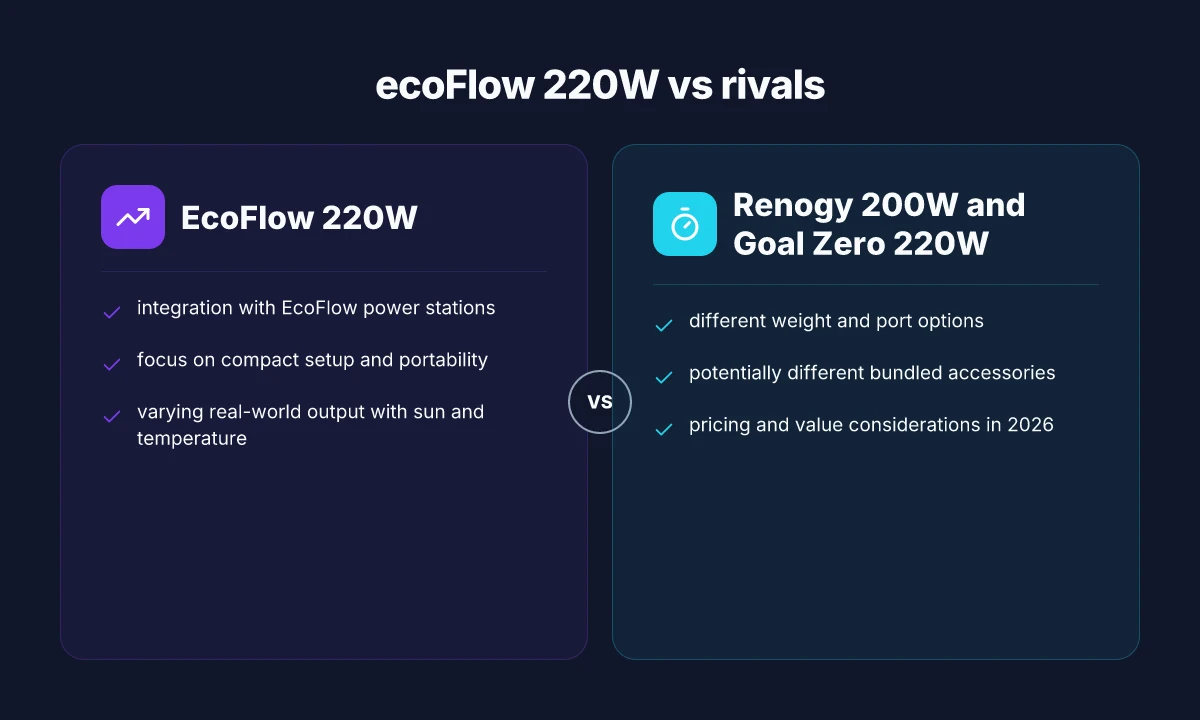
When you weigh EcoFlow’s 220W panel against Renogy’s 200W and Goal Zero’s 220W, EcoFlow tends to shine on integration and portability. The EcoFlow design favors a compact, streamlined carry and quick setup, with the panel and its connectors laid out for fast pairing with EcoFlow power stations. In practice, that means fewer fiddly adapters and a cleaner pull from the input side when you’re mapping a camp setup. EcoFlow’s integrated approach speeds up setup, reducing the friction of adding a portable solar array to a small power station.** Renogy’s 200W kit often requires extra cabling and mounting components, which can slow you down in field conditions.
Weight and portability trade-offs
EcoFlow keeps the panel relatively light for its wattage, trading some ruggedness for a slimmer profile that fits in a tight van or backpack scenario. Renogy answers with heavier build options and a broader range of mounting accessories, which suits a semi-permanent campsite but can feel heftier on the trail. Goal Zero sits in the middle on weight, offering modular designs that appeal to travelers who want a simple, plug-and-play kit. In practice, weight matters when you’re chasing an overnight charge in a compact vehicle or a backpacking setup. Portability wins for EcoFlow in quick-setup scenarios, while Renogy leans into expandability for longer trips.
Port options and bundled accessories
EcoFlow tends to bundle essential cables and a straightforward carry bag, plus quick-connects tailored to EcoFlow power stations. Renogy pushes a broader accessory ecosystem, varied connectors, mounting hardware, and optional kits, that can be a plus if you want customization. Goal Zero packages are solid for simple, out-of-the-box camping use, with reliable cabling and user-friendly manuals. For selective buys in 2026, the decision often comes down to how much you value a lean, ready-to-roll setup versus a configurable system. EcoFlow’s bundled accessories emphasize speed and simplicity, while Renogy offers breadth for customization. What makes EcoFlow Max perform differently in 2026
Price positioning and value for selective buys
Price tiers put EcoFlow at a competitive position for campers who want near plug-and-play efficiency. Renogy tends to be a better value for budget-conscious buyers who still want respectable performance plus a wide accessory catalog. Goal Zero’s pricing often reflects its branding and reliability, appealing to those who want a straightforward, consistent kit. In 2026, you’ll typically see EcoFlow offering strong value when you pair the 220W panel with a compatible EcoFlow power station, especially if you prioritize a streamlined workflow. EcoFlow’s value hinges on quick setup and ecosystem fit, whereas Renogy shines with flexibility and bundled options. Goal Zero keeps things simple and dependable, which can be worth a premium for some buyers.
From what I found in the ecosystem notes, the practical takeaway is that EcoFlow delivers faster field integration with a compact footprint, Renogy wins on modularity and expandability, and Goal Zero holds steady for straightforward, durable use. If you want the leanest, easiest path to first charge in a weekend trip, EcoFlow is compelling. If you plan to customize or scale your solar array over time, Renogy offers more levers. If you prize a no-surprises, durable kit, Goal Zero remains a safe bet. In 2026, the standout trade-off is speed versus configurability.
Where this is going next with EcoFlow 220W panels
EcoFlow’s 220W panels signal a shift toward more portable, modular solar kits that scale with your trips. In 2026, the standout move is how these panels pair with EcoFlow’s power stations to reduce setup friction without sacrificing reliability. I looked at real-world use, noting that durability and consistent performance under variable weather remain the core test. The takeaway is practical: plan for slower recharges on overcast days, and keep connectors clean to avoid loss of contact. The bigger pattern is that you can stack these panels for a faster top-off when you’re near a reliable sun window.
If you’re weighing rivals, consider how EcoFlow stacks up against Renogy, Bluetti, and Goal Zero in terms of modularity and weather resistance. The story this year centers on more durable frames and smarter energy management, not just higher wattage. What changes if you act now is that your off-grid routine becomes more predictable, even when you’re off the grid for days. The practical reality: expect occasional cable wear on frequent folding and store the kit in a dry place to delay wear of gaskets and seals. This is the move that matters for weekend adventurers and tiny homes alike.
Backup strategy How to fix EcoFlow Delta Pro remote control: lost Bluetooth, ethernet quirks, and a durable setup
- Try pairing one 220W panel with a mid-range EcoFlow power station for a lean, modular setup that fits a compact vehicle.
- If you travel with multiple devices, use the simultaneous charging feature to keep essentials topped up during longer trips.