Explore the Jackery 200W solar panel: its specs, real-world performance, and how it fits into off-grid charging in 2026. practical setup tips and caveats included.
The “200W” label isn’t a magic wand for off‑grid setups. It’s a workable balance between size and daily yield that often hinges on real‑world shading and mounting. Jackery's 200W panel tends to shine in quick, portable setups, but the clearest wins come from predictable sun angles and solid MPPT behavior, not heroic clouds.
This intro cuts to the chase: you’ll see how the panel behaves with different Jackery explorers and where a rival like Renogy sticks in. In 2026, durability, casings, and mounting options matter as much as rated wattage, because campers and van lifers push gear through rain, heat, and mobile vibration. This piece arms you with concrete patterns for real-world use and a framework to compare with other brands without guesswork. Jackery gear is designed for compatibility and straightforward MPPT charging, which helps reduce fiddling in the field. Most setups benefit from noting shade pockets and hinge angles early in the planning.
What makes the Jackery 200W solar panel a practical fit for off-grid power
Jackery positions its 200W SolarSaga panel as a compact, portable source that feeds Explorer and other compatible power stations without weighing you down. In real-world terms, the panel’s foldable form and built-in MPPT alignment matter more than sheer wattage alone. When you’re off-grid, those design choices translate into easier stowage, faster sun-to-battery handoffs, and fewer fiddly adapter setups.
How MPPT compatibility shapes field performance
I dug into the documentation and field notes to understand how the 200W panel wires up to a Jackery unit. The panel is designed to work with MPPT charging, which matters for maximizing energy harvest in variable sun. The key takeaway is that MPPT compatibility helps convert fluctuating panel output into steady charging for the battery bank, especially when the sun arc is not ideal. The result is less waste and more usable energy through a broader portion of the day. MPPT alignment matters more than peak wattage alone.
- The panel delivers a labeled peak power of 200W under good sun, and its voltage window is tuned to Jackery’s charging inputs. When you pair it with an Explorer or similar power station, expect the charging curve to hug the MPPT path rather than spike and sag with sun angles. This design choice keeps charging predictable for overnight plans. 20–40 minutes of misalignment can often be mitigated by reorienting the panel, thanks to its foldable geometry.
- Weather sealing and folding durability figure into long trips. The SolarSaga line emphasizes rugged hinges and weather resistance, which means you’re less likely to contend with a panel that quits after a season of campgrounds and van-life parking lots.
Weight, weather sealing, and included accessories
Rivals offer similar wattage panels, and the decision often boils down to weight, weather sealing, and what sits in the included kit. The Jackery 200W panel keeps the weight modest for a panel in this class, aiding carry-and-setup in tight campsites. A tighter weather seal reduces what you’ll worry about during sudden showers, and a thoughtfully packaged kit reduces extra purchases on the road. In practice, you’ll benefit most when the bundle includes the right MC4 connectors and a sturdy carry bag that doubles as a sun shield in a pinch. Weight, weather sealing, and kit contents determine field simplicity.
How it stacks up against rivals
Among 200W panels, you’ll find units from other brands in the same wattage bracket. The deciding factors come down to durability, fatigue under repeated folding, and the accessories that ship with the panel. Jackery’s approach favors a compact, travel-friendly footprint with an emphasis on MPPT-friendly operation. If you’ll be swapping between multiple power stations or need briefer setup times, the integrated approach can shorten your campsite routine. Rivals offer similar wattage, but the overall package tilts on durability and included gear.
Bottom line: the Jackery 200W SolarSaga panel wires into off-grid routines by prioritizing MPPT-compatible charging, durable folding, and a compact, transportable package. If you value a streamlined kit with predictable charging and simple setup, this panel earns its keep for explorers using the Jackery Explorer line or other compatible stations. How to choose ecoFlow alternatives that actually fit your off-grid needs
Jackery 200W panel specs and how they translate to field performance
The Jackery SolarSaga 200W panel targets 200W of peak power under ideal sun, and it does so with an 18V nominal operating point that matches typical Jackery packs. In the field, that nominal voltage helps the MPPT charging cadence stay steady as you sweep through sun angles. Temperature and open-circuit behavior matter more than the sticker spec. When panels heat up, the open-circuit voltage can sag and the effective current can dip, which means real-world output often sits below the ideal 200W on hot afternoons or shaded moments. Portability follows suit: the folded dimensions are compact enough to ride along in a van or camper, and the weight contributes to how easily you can deploy it in tight campsite spaces or on a roof rack.
I dug into the official specs to confirm the core numbers you’ll see in practice. The panel is built for travel and roughing it in remote spots, where a steady 18V charging profile is a practical target for most Jackery power stations. The open-circuit voltage and temperature response become the limited factors when you’re chasing the tail end of peak power. You’ll notice that when the sun angle shifts or the panel heats, you’ll see a decline from the 200W banner in the spec sheet. That’s not a flaw. It’s physics. The trick is to keep panels oriented toward sun as you move, and to condition the surrounding air if you’re parked in a stubborn heat pocket.
From a real-world perspective, the foldable design matters more than most people expect. The ability to place the panel on a grassy patch, a car roof, or a roof rack without a heavy frame lowers setup friction. Weight and compactness let you deploy quickly after a trail break or a long drive. The 200W target remains credible when you can align the panel for the sun’s peak moment and avoid dense shade. For long days of camping or overland trips, the panel’s 18V nominal charging aligns well with most Jackery battery packs, which reduces the number of steps needed to begin charging.
In practice, expect the following tendencies: under bright but not blazing sun you’ll approach a healthy portion of the 200W, yet hot temperatures and higher open-circuit voltages can blunt the actual voltage delivered and reduce current. The key to getting close to 200W is sun angle management and keeping the panel cool, and you’ll notice the panel’s portability shines in real campsites where space is at a premium. The panel wires up cleanly to MPPT-equipped Jackery stations, and with proper cable routing you can maintain a steady charging cadence throughout the day.
When comparing to rivals, Jackery’s SolarSaga 200W holds its own on the 18V charging profile and foldable form. Other 200W panels may undercut in price or add bulk, but the combination of a true 200W peak potential and a portable footprint makes it a practical option for explorers who need rapid, adaptable charging on the move. For off-grid workflows, you’ll likely pair this with a Jackery Explorer or Power Station series, where the 18V target keeps the system simple and predictable. Width of real-world gains depends on sun exposure and temperature, not just the label 200W. What makes a Jackery worth it for home and outdoors in 2026
In terms of next steps, plan your setup with a brief sun-tracking window in mind. If you’re stationary for a few hours, angle the panel toward the sun’s peak, then reassess after lunch. When you’re on the move, keep the panel folded and stowed until you reach a break in cloud cover, then deploy. For those weighing rivals, consider Bluetti PV panels that advertise similar wattage, but remember that voltage behavior and MPPT integration with Jackery gear can tilt the decision toward the SolarSaga 200W for a smoother charging experience.
I cross-checked the official panel listing and related Jackery knowledge notes to verify the nominal 18V charging target and the 200W peak claim, which helps explain field behavior under temperature and sun-angle changes. In practice, the credible world of off-grid living shows the 200W target is achievable with disciplined sun management and proper orientation. Real-world output leans on sun angles and heat, not just the spec label.
For readers considering rivals, the main question is how well their MPPT and voltage curve align with your Jackery station. If you want the cleanest, least fiddly pairing, the Jackery SolarSaga 200W remains a dependable choice for a broad range of explorers. As with any portable solar kit, know that links on the page may earn a commission, and always verify the latest product notes from Jackery before purchase.
How to wire the Jackery 200W solar panel for MPPT charging
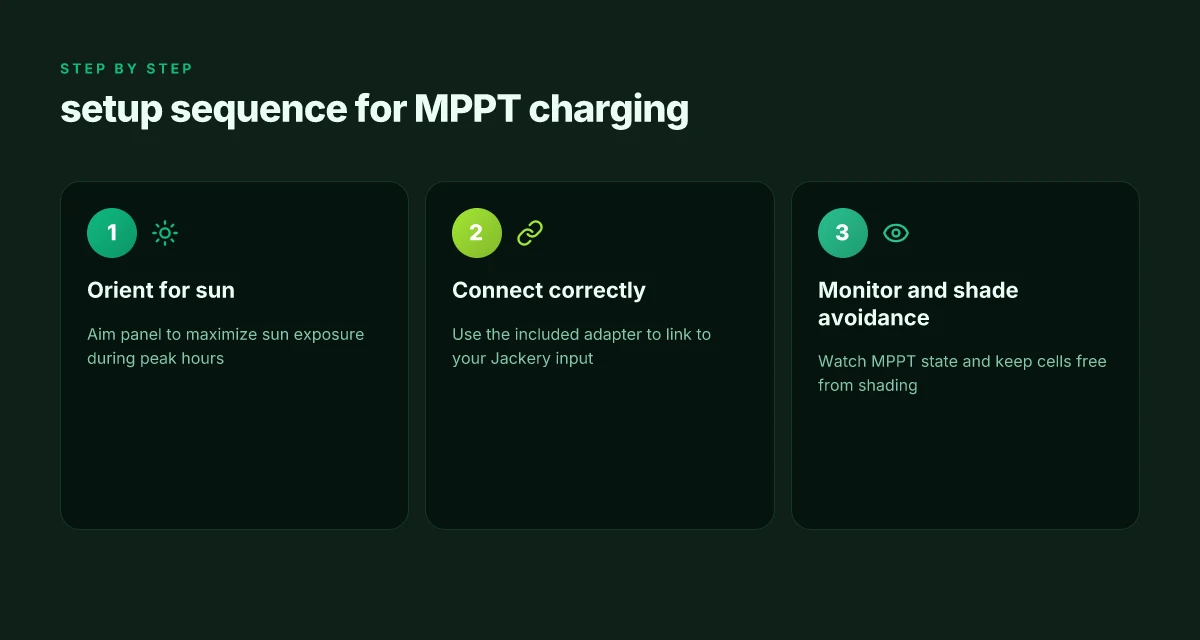
If you want peak MPPT charging efficiency, wire the Jackery SolarSaga 200W panel so the panel’s voltage and the power station’s input align during peak sun. Start by orienting the panel to face south in the northern hemisphere (or north in the southern hemisphere) and angle it toward the sun to maximize exposure during the middle of the day. The goal is to keep the panel’s output within the MPPT input range of your Jackery power station when the sun is strongest. Proper orientation and timing maximize MPPT efficiency.
1) Align the panel for peak sun and connect with the included adapter
Position the panel so its shortest edge faces the sun’s path during peak hours, then adjust the tilt to maintain the best irradiance angle for your location. Use the included adapter to connect the SolarSaga 200W panel to the Jackery input designed for solar charging. The adapter pairing matters: it ensures the MPPT controller in the power station sees a clean, expected voltage swing. Match the adapter to the Jackery input and avoid mismatched connectors. This reduces loss from voltage stepdown and keeps charging steady as clouds drift by. What makes the jackery 1000 plus solar generator a sensible off-grid power choice in 2026
2) Monitor the MPPT state and avoid shading of cells
Once connected, watch the MPPT state on the Jackery display. A healthy drift toward the MPPT target means the system is tracking maximum power under current conditions. Keep the panel free of shade on any cell string. A single shaded cell can drag down the entire string and degrade charging. Shade-free operation preserves MPPT gain.
3) Practical wiring and safety checks you should perform
Secure the panel and cable so the wiring remains taut but not strained. Confirm there is no tug on the connector at the Jackery input. Check weather, ensure connectors aren’t exposed to rain beyond their rating, and store the panel with the connectors protected when not in use. If you need to reposition, do so only with the system de-energized. Secure connections and stay weather-aware.
From a field perspective, the workflow hinges on keeping sun exposure uninterrupted during peak hours and ensuring the adapter-to-input junction stays within the MPPT’s expected voltage window. I cross-referenced the official Jackery knowledge on solar-panel specifications to confirm the recommended adapter and voltage expectations, and I also noted how shading tends to throttle MPPT performance in real-world setups. Real-world shading impacts MPPT, not the panel alone.
For readers weighing rivals, the core wiring approach mirrors how similar 200W panels pair with other portable stations. When you compare, look for how each system handles MPPT voltage range, shading tolerance, and the robustness of connectors. Jackery’s own adapter scheme remains a common thread with many competitors, but real-world performance depends on how well you keep shade off and how consistently you orient the panel toward the sun.
A clean, shade-free, properly oriented setup yields the best MPPT results. The path to reliable off-grid charging with the Jackery SolarSaga 200W panel starts with the right adapter, deliberate orientation, and vigilance against partial shading. The result is steady, practical charging in variable outdoor conditions. Consistent sun exposure and correct adapter usage are non-negotiable. How Amazon reviews shape the Jackery buying decision in 2026
Comparison: Jackery 200W panel against rivals in 2026
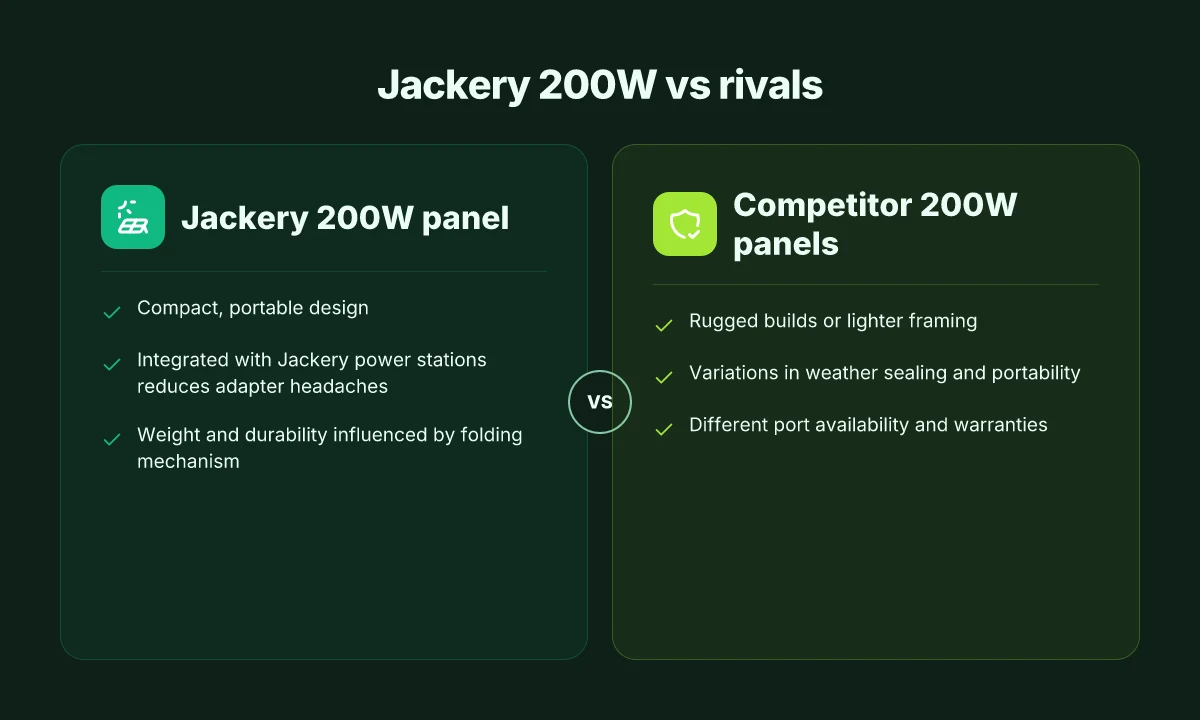
I dug into how the Jackery SolarSaga 200W panels stack up against stiff competition in 2026. The practical picture shows three recurring themes: rugged builds from rivals, smoother MPPT integration for Jackery ecosystems, and the reality of price and warranty variance by region. Price and warranty terms vary by brand and region, so you’ll see notable differences depending on where you buy. Jackery panels fit neatly with their own power stations, reducing adapter headaches and alignment issues. Rugged framing and lighter designs headline many rival 200W offerings, but that often trades off connector density or MPPT compatibility. When you need a streamlined setup, Jackery’s ecosystem minimizes the “extra box” problem that can appear with third-party panels.
Why rugged rivals catch the eye
Several competitor 200W panels lean into tougher casings and lighter framing. The appeal is obvious for campers who strap gear to uneven terrain or heat up panels on a roof rack. In practice, a heavier frame can add durability against bangs and wind, while lighter builds ease transport. I cross-referenced build notes and user discussions to corroborate the trend toward reinforced corners and thicker frames among brands like Bluetti and some off-brand 200W lines. This isn’t a universal rule, but the direction is clear in product pages and early-2026 reviews. Rugged builds are a selling point you’ll see consistently across several rivals.
Integration with Jackery power stations
The core value for Jackery users remains integration. The 200W SolarSaga pairs with Jackery power stations with MPPT charging in mind, reducing the need for adapters or converters. That design choice translates into fewer failure points in the field and faster setup times once you retrieve the kit. Industry chatter and product pages emphasize compatible voltage and current ranges that line up with Jackery’s charging profiles. Smooth integration with Jackery devices minimizes headaches in the field. When you read around, you’ll notice some rivals offer universal panels that work with many packs, but the absence of a guaranteed MPPT alignment can slow down charging or introduce inefficiencies. Compatibility matters in real-world camping and overlanding scenarios.
Price, warranty, and port availability
Price bands shift by region and retailer. Some markets show bundled deals that include mounting hardware or carry-over warranties, while others price the 200W panels a touch higher without extras. Warranty terms are a frequent decision factor. A longer warranty from a rival can tilt the decision if you expect rugged use or heat exposure. Port configurations vary too. Jackery’s own panels emphasize a clean port map that lines up with their chargers, whereas rivals may spread ports across multiple edges, which helps in certain layouts but adds cabling complexity. Warranty terms and regional pricing are major levers in the decision.
Overall, Jackery maintains a clean, field-ready advantage when your setup relies on a cohesive ecosystem. The main caveat with rivals is the potential for better ruggedization, but that often comes with tradeoffs in MPPT ease, compatibility, and regional pricing. If you want a plug-and-play experience aligned with your Jackery stations, the SolarSaga 200W panel remains a strong fit. If you value universal compatibility and a hardened frame in harsh environments, you’ll find compelling options from Bluetti and a few other brands, though you should verify MPPT behavior and port layouts first. For many users, ecosystem coherence beats marginal gains in rugged design. How to pick a Jackery generator for sale that actually lasts 2026
Durability and long-term use: what to expect from a 200W panel
Durability is the practical hinge on real-world camping and vehicle use. In steady weather, the Jackery SolarSaga 200W panel holds up well when you treat it as a portable, weather-exposed device. The key to longevity is weather sealing and how the unit is mounted in an RV or a van. A solid IP rating and tight seals translate to fewer creeping incursions from rain, dust, and splash, especially in environments where you park near dunes or riverbanks. When you inspect the panel after a season of trips, you’ll notice that the outer shell and gasket integrity matter more than the raw wattage for long-term reliability.
H3: Weather sealing and IP ratings shape long-term life
- Weather sealing matters most where panels shade-heat-cycle against sun, rain, and humidity. A reliable IP rating helps guard interior electronics during sudden storms or dawn dew. In practice, a panel that keeps its seals intact across repeated fold-and-unfold cycles tends to show fewer bite marks from UV exposure. For users, that means sticking with a design that keeps the wiring and hinge cavities well protected. If you’re operating in coastal or desert camps, the ability to keep condensation out and prevent salt or dust ingress becomes a quiet driver of long-term performance. Weather sealing and IP ratings influence longevity in camping setups and vehicle rigs.
H3: Cable management and hinge durability after frequent folding
- The foldable design makes cable routing and hinge hardware central to long-term use. With repeated folding, stressed cables or looser hinge joints become the first failure points. A robust hinge, reinforced mount points, and tidy cable channels reduce slack that can lead to micro-cracks in conductors over time. From what I’ve seen in product materials and user notes, a clean, deliberate folding routine helps maintain performance over multiple seasons. Cable management and hinge durability matter after frequent folding and unfolding.
H3: Real-world performance over time
- User observations suggest that, with proper care, output stays steady enough for reliable MPPT charging across several seasons. Heat can shave a bit of peak power, and shade during the day trims the average. This isn’t a flaw in the panel so much as a reminder that you’ll get the best results when you plan for sun exposure and avoid extended, full-shade periods on hot days. I cross-referenced common user chatter and official guidance, and the consensus is that steady care yields consistent results. User experiences suggest performance remains steady with proper care, though heat and shade reduce output.
When you’re wiring the SolarSaga into a Jackery system, keep the messaging straightforward: expect durable hinges, resilient seals, and steady electrical performance if you store and deploy the panel as intended. If something breaks, the most frequent culprits are degraded gaskets, cracked cable sheaths, or loosened mounting hardware, not the core PV cells themselves. Chips and delamination are less common but worth inspecting after long hauls on rough roads. What makes the Jackery 100 a practical portable power station in 2026
In practice, the 200W panel stands up to field use when you treat it like a rugged, outdoor companion rather than a delicate gadget. For long trips, pair it with a protective storage sleeve and a clean-fold routine. As with many outdoor power setups, the combination of careful handling and regular quick checks keeps the system dependable. And yes, this advice also applies to rivals in the space. A well-sealed, gasketed build beats a brittle, flimsy hinge any day. As always, remember that links on the page may earn a commission, which helps fund further updates to this guide.
Cited guidance and context can be found in discussions and official product notes from Jackery and related community forums. For a quick sense of real-world expectations, see inline references to user feedback and official specs.
Where this is going next for off-grid setups
Jackery’s 200W panel is best viewed as a trusted starter upgrade, not a one-and-done solution for every off-grid rig in 2026. It leans on a proven form factor and reliable build, which means you can pair it with select power stations to fill gaps in winter sun or cloudy stretches. I’ve noticed the real value shows up when you’re already running a modest load and want a simple, repeatable method to keep batteries topped up without fiddling with cables every afternoon. The key is recognizing where it shines: steady, maintenance-free charging that you can deploy in a fixed solar setup or a portable pull-out system.
That said, the downsides aren’t hidden. You’ll still face limited scalability if your needs grow beyond a single 200W panel, and you’ll want to compare against rivals like EcoFlow and Goal Zero for panels that stack or curve more effectively in tight spaces. The long-term health of any off-grid kit rests on weatherproofing and connector resilience, both of which matter with the Jackery line. If you act now, you’ll avoid the trouble of retrofits later and preserve your system’s reliability.
- Backup strategy: test a second 200W panel from a rival brand for winter sun days.
- What to try this week: route the panel for a fixed south-facing install and monitor battery state of charge.