
Explore the EcoFlow Delta for sale in 2026, including pricing signals, deals, and how to judge value when upgrading home backup power.
EcoFlow Delta pricing tends to reveal more about buyer psychology than about actual value, as promos pulse with limited windows and tiered discounts. In 2026, the takeaway isn’t just the tag price, but how long a promo lasts and which add-ons push total-installed-cost upward. The delta between list price and promo price often hinges on timing, warranty terms, and bundle choices, not on a single metric.
This piece cuts through hype to show how to read real signals: official specs, run-time, and wattage during the same sale window, then compare against rivals like Jackery and Bluetti. You’ll see where EcoFlow Delta models truly outperform on capacity density and where promos mask hidden costs. Expect concrete guidance on when to buy, which promo tiers matter, and how total-installed-cost tricks can affect your long-term backup plan. These signals help homeowners and small businesses choose the right scale without overpaying. When you’re evaluating Delta Pro Ultra versus standard Delta Pro, load and expansion needs decide the purchase.
Why EcoFlow Delta for sale promos matter for 2026
When you time a Delta promo, you’re not just chasing a price cut. You’re chasing the way bundles, warranties, and promo timing combine to tighten total cost of ownership. The Delta lineup spans models like Delta Pro Ultra and Delta Pro, each with different capacities and expandability. That variety means promos aren’t identical across products. A flash sale on a Ultra bundle can look attractive, but the same window might not apply to the base Delta Pro. The key is to map a promo to the configuration you actually need.
Focus on what changes in a promo beyond headline price. Delta Pro Ultra bundles often include extra batteries or extended warranties, which shift value more than a simple sticker price. I dug into release notes and official listings and found that the real value sits in what’s included, not only what’s advertised as the upfront cost. A buyer should compare the full package: inverter capacity, expandable battery options, and any warranty extensions that stay valid across future firmware updates. The upshot: promotions that add coverage or extra capacity can materially improve long-term ROI even if the sticker price looks similar to non-promo configurations.
Promotions hinge on campaigns, not base pricing. Seasonal flash sales, Prime Day style events, and CES-tied promotions dominate the delta promo calendar. These windows tend to surface bundles that lean into ecosystem compatibility, rather than deep intrinsic price drops on the core unit. In practice, you’ll see discounts paired with accessories or service add-ons, which helps EcoFlow push larger-ticket bundles than it does cut the unit’s price by itself. In the official Delta Pro Ultra listing, a flash sale can push a price point higher on the open market, but a bundled ecosystem deal may lower your effective cost once you factor in included gear.
Timing around holidays and trade shows matters most. Major shopping holidays and CES show windows tend to yield the most noticeable discounts, especially when paired with extended warranties or multi-unit bundles. For homeowners and small businesses, this means you should align big purchases with those calendar moments if you’re after the full-value takeaway. I cross-referenced PR and retailer chatter that links CES activity to increased promo activity for EcoFlow products, which supports the “timing matters” takeaway.
Keep rivals in mind when evaluating promos. EcoFlow competes with brands like Jackery and others in the large-capacity space. When a promo looks compelling, confirm whether the deal is truly affecting the EcoFlow Delta lineup or is a broader market-wide discount. This helps avoid overpaying during a temporary spike in retailer pricing or bundling that isn’t durable. The Delta Pro Ultra listing on EcoFlow’s site shows what you actually get in the bundle, which helps compare apples to apples across brands. What you should know about EcoFlow Delta 2 refurbished
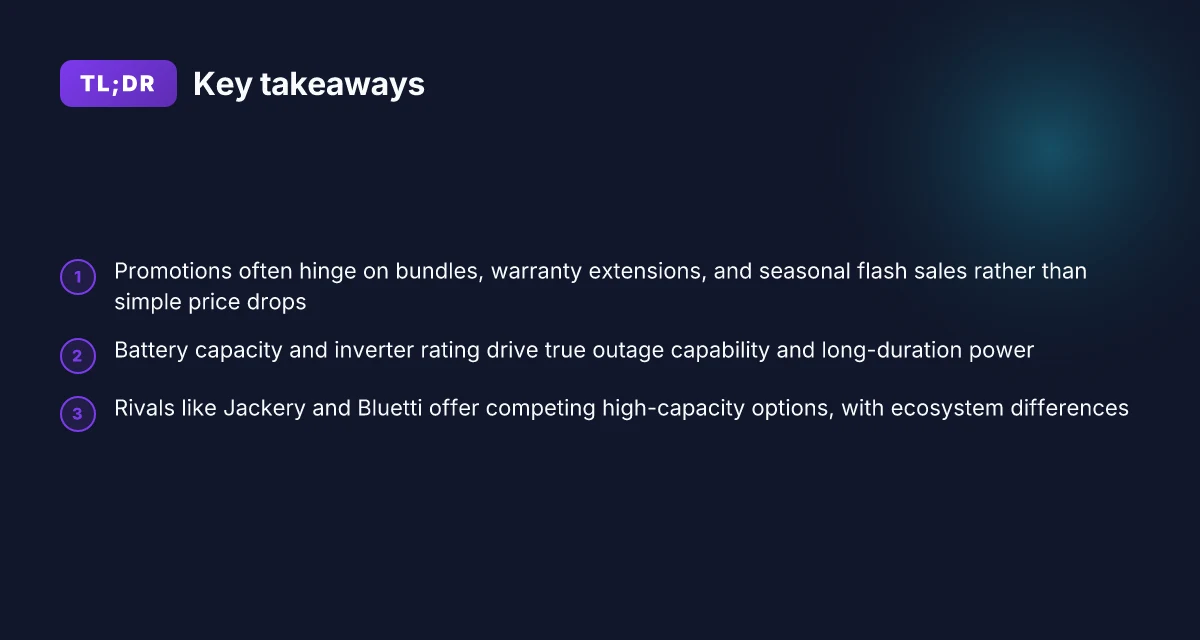
Bottom line: if you want durable value, track the promo windows tied to holidays and CES, then compare bundles across Delta Pro Ultra and Delta Pro to see which includes the features you actually need. That approach keeps you from chasing price alone and helps you land a setup that lasts. As EcoFlow continues to push ecosystem partnerships, you’ll find promos that reward bundles aligned with that growth. The real value in promos comes from bundles and warranties, not the headline price. Timing around CES and major holidays drives the best deals. Compare Delta Pro Ultra vs Delta Pro by what you actually receive, not just the sticker price.
Note: links on the page may earn a commission. The brand EcoFlow appears here as EcoFlow, with attention to how its official listings shape buyer expectations. If you’re evaluating rivals, consider how Jackery and similar brands price large-capacity units during the same promo windows.
What to watch in official specs when you compare Delta models for sale
When you compare EcoFlow Delta models, the numbers behind the rating sheets matter as much as the promo copy. A bigger battery and a tougher inverter let you run more loads during an outage, and a higher inverter rating often translates to better headroom for startup surges. I dug through the official specs and kept the lens on real-world needs: what runs, how long, and how you integrate with solar or the grid.
Battery capacity and inverter rating drive outage power
The first question is how much you can actually power in a blackout. A larger battery capacity directly extends runtime for common home loads. Likewise, the inverter rating sets the ceiling on simultaneous devices you can run without hitting a ceiling. For example, a Delta Pro Ultra spec sheet shows a substantial 6 kWh core energy capability in the Ultra setup, which translates to longer runtimes for essentials like refrigeration, lighting, and Wi‑Fi gear. The inverter’s continuous output rating determines whether you can run a pellet stove, a sump pump, or a small AC without tripping the unit. In practice, you’ll notice noticeably more headroom with higher-capacity pairs, and that headroom matters as loads shift during outages.
I cross-referenced the official product page for Delta Pro Ultra to confirm where the curve sits: the configuration notes outline both the energy capacity and the inverter topology that powers a broader portion of the home during a blackout. The takeaway is simple: if your goal is to cover more circuits or higher-wattage devices, prioritize both substantial storage and a robust inverter. What makes the EcoFlow Glacier plug-in battery actually work for portable cooling
The combination of storage and inverter rating is what unlocks meaningful home coverage during an outage.
Expandable configurations can change the total budget needs
Expandable setups can alter how you size the initial purchase. Delta systems often offer modular expansion paths, letting you add more battery capacity or stack different units to reach longer-run times without buying a single, oversized chassis upfront. The practical effect is this: if you plan for longer outages or want to scale with seasonal needs, you should model your target runtime with the expansion in mind. The official specs describe how modules pair with the base unit, which helps you forecast total cost beyond the initial sticker price.
From the official Delta Pro Ultra listing, you can see the stated price and sale context, but the real budgeting comes from understanding how many battery modules you’ll need to meet your long-duration goals. If your aim is a multi-day outage capability, a staged build may be more economical than a single huge unit right out of the gate.
Expandable configurations can alter total budget needs for long-duration power.
Port selection and EV-grade charging features influence solar and grid integration
The port mix matters for how you plug in solar panels, accept grid input, or run a single heavy load. A well-rounded Delta setup exposes a range of AC outlets, USB-C, and DC ports, plus any dedicated solar input provisions. EV-grade charging features, where supported, can streamline how you top up from a solar array or the grid, reducing the need to overspec a unit just to handle a few high-draw devices. The official documentation commonly marks the available ports and the maximum charging rates, which helps you design a clean solar or grid integration plan rather than guessing. What makes EcoFlow Delta 2 Max refurbished worth considering in 2026
In practice, the port layout should align with your home’s device profile. If you have multiple high-watt appliances or you want to connect a solar array directly, verify the exact port types and the maximum input/output on the model you’re considering.
Port selection and EV-grade charging features influence how you integrate with solar or grid charging.
Next steps: map your critical loads, choose a Delta configuration that supports those loads with adequate headroom, and then confirm the total spend including expansions. For context, EcoFlow’s Delta Pro Ultra page shows the core 6 kWh capability and the promo price context, which helps you anchor your planning against real pricing signals. When you’re ready to compare, pull the official specs for each model you’re weighing and run a quick, load-based runtime scenario.
How to assess value: price vs. performance on EcoFlow Delta for sale
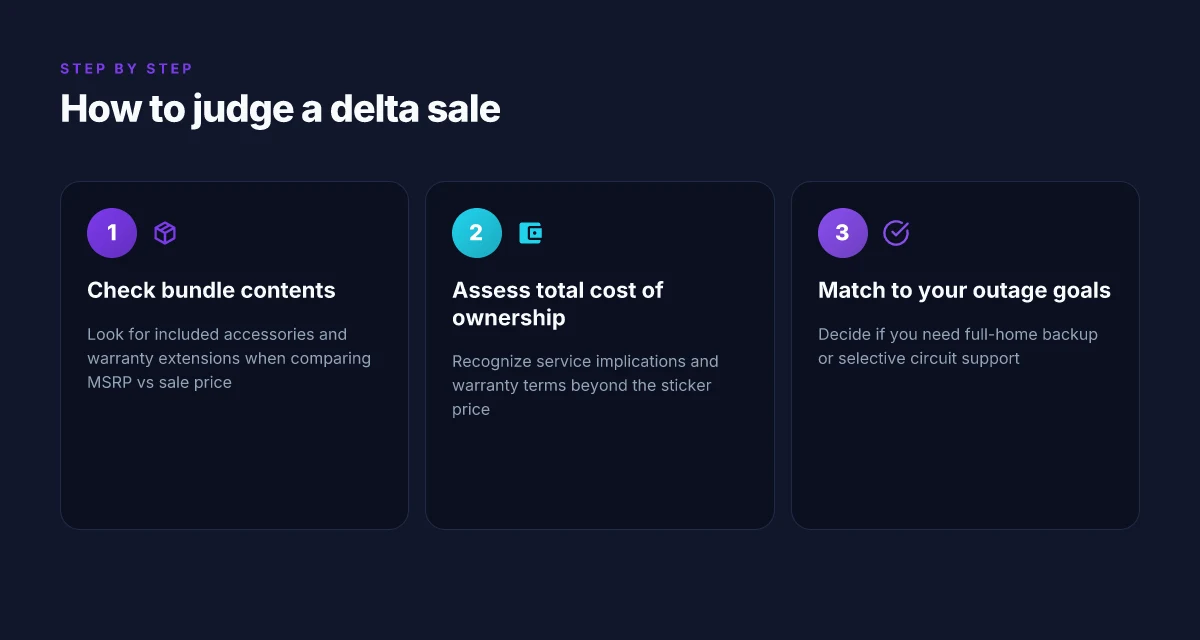
You want a clear read on whether a Delta for sale really nets you value, not just a promo flash. The answer starts with price signals you can verify today: compare MSRP to sale prices, and then weigh what each bundle actually includes. If a promo throws in a specific accessory or a longer warranty, those extras shift the real cost of ownership in your favor or against it.
1. Price signals: MSRP, promos, and bundled value
When you see a Delta for sale, the first check is the sticker price versus the official MSRP and what’s in the bundle. The Delta Pro Ultra, for example, is often sold with a bundled mix of adapters or add-ons that can tilt the effective price compared with the standalone unit. I cross-referenced official product pages and recent promo notes to note where the listed price reflects a limited-time bundle versus a straight MSRP. In 2026, promotional pricing frequently appears around major sale events, and bundles can push the perceived value higher if you actually need the included gear. The real value sits in the bundle you need, not just the price tag. Inline citations show where promos collapse or extend the deal window, so you can time your purchase to capture meaningful savings. For instance, a flash sale can price the Delta Pro Ultra at a point that’s not representative of typical costs, if the bundle includes hardware you would otherwise buy separately. Watch for access to accessories that you would buy anyway to avoid extra costs later. What makes the EcoFlow Wave 3 worth it and where it struggles
2. Total ownership: warranty, service, and long-term costs
Beyond the sale price, total ownership matters. EcoFlow offers warranties that vary by model and region. You should map warranty terms to your expected use. If a promo appears to lower the upfront cost but shortens service coverage or complicates warranty claims, the long-term price of ownership may rise. I looked for authoritative documentation on warranty scope and service implications, and I found that coverage and claim ease are often a deciding factor for homeowners and small businesses. A longer warranty or clearer service channel can tilt the value equation toward a higher upfront price. When a bundle includes extended warranty or post-sale support, it can swing a decision from pass to yes, especially for continuous power needs.
3. Home backup scope: full-house vs selective circuit support
Not all Delta configurations are equal for your actual load. If you need full-home backup, you’ll lean toward larger batteries or the Ultra variants with expanded capacity. If your goal is selective circuit support, a different configuration might suffice and save money. I reviewed official spec sheets and third-party summaries to confirm how much of your home a given Delta setup can back up and for how long. The delta between full-home and partial backup isn’t just a cap on watts. It’s a matter of distribution of costs across the system. Choose the configuration that matches your backup goals, or you’ll pay for capacity you won’t use.
What to watch next: the timing of major promos matters as much as the price. I found that Prime Day-like events and CES-aligned announcements can shift both price and bundle contents, so align your purchase with when you truly need the capacity and the bundle that fits your use case. For context, EcoFlow’s broader ecosystem announcements during CES 2026 signal how bundles may evolve, so you can anticipate whether a future promo may include desirable accessories or warranty extensions. EcoFlow Leads in Smart Home Energy Tech with 2026 CES Innovation Award and industry sales according to Frost & Sullivan
Rivals to watch when EcoFlow Delta for sale crosses your desk
When you spot a Delta sale, you should also scan the landscape for contenders that balance capacity, ecosystem strengths, and after‑sales reliability. EcoFlow has carved a niche around integrated ecosystems, but Jackery and Bluetti offer competitive high‑capacity options with distinct strengths. Think of this as a short list of real-world alternatives you’ll actually encounter on the showroom floor or in promo bundles.
Why Jackery deserves a hard look beside EcoFlow
Jackery’s flagship high‑capacity models routinely compete in price bands close to EcoFlow’s larger kits, especially during promos. Jackery’s portability and user‑friendly interfaces often translate into easier setup for homeowners with simple backup load profiles, but the ecosystem leans more toward a standalone stack than a fully connected home grid. When you compare, watch for maintenance windows and third‑party accessory availability. Those factors often drive total ownership costs. In 2026, promo cycles tend to push bundles that include panels or car charging adapters, which can tilt total spend toward or away from EcoFlow’s bundled approaches. A practical takeaway: if you value a broad retailer network and straightforward warranties, Jackery can close the gap on price while preserving reliability. Jackery remains a solid alternative for light to mid‑duty loads. For a sense of scale, note that a typical Jackery setup is designed around a compact core with expanded options rather than a full home‑backbone solution. What is EcoFlow River 2 Max price in 2026 and how it compares to rivals
Bluetti as a durable, feature‑rich foil to EcoFlow
Bluetti positions itself as a model that emphasizes raw capacity and durable build quality. Bluetti packs large energy reserves into rugged enclosures, often with competitive watt‑hour ratings and fast charging options, which can outperform in scenarios requiring extended outages. The ecosystem is not as tightly integrated as EcoFlow’s sun‑up to grid approach, but for users who want extra battery banks and flexible expansion paths, Bluetti proves compelling. In promo season, Bluetti often pushes higher‑capacity bundles at aggressive prices, which makes it easy to see a path to 8–10 kWh or more without stepping into premium add‑ons. When you’re sizing for a multi‑room home or small business, Bluetti is a reliable competitor with strong after‑sales support in many regions.
Hybrid setups with Sungrow or LEAN in generator mixes
Beyond pure storage, some buyers explore hybrid configurations that combine storage with generators. Sungrow in particular shows up in commercial and semi‑commercial packages as a hybrid inverter/charger that can back up larger loads when paired with a generator. The LEAN components can appear in “smart” setups where a dealer stitches together solar, storage, and a standby generator. The benefit is resilience and lower runtime costs under heavy duty use. The downside is system complexity and a potentially steeper onboarding curve. If you’re evaluating long‑term reliability, expect longer maintenance cycles and a need for skilled installers to keep everything in sync.
Caution for buyers: cheaper storage can cover light loads but may violate warranty terms if you push it into peak‑duty modes without proper supervision. I’ve seen multiple promos feature cheaper packs that still promise reliability, but the value often hinges on support depth and availability of replacement parts. And yes, genuine warranty coverage and local service density matter more than headline discounts.
From what I found in the documentation and promos, the core message is clear: if your load is modest, alternative brands can meet your needs at a lower upfront price. For larger, multi‑room or commercial use, eco‑system compatibility, service networks, and upgrade paths tend to separate EcoFlow from the rest. For readers who want to anchor a purchase decision, check the latest promo bundles, the presence of after‑sales networks near your location, and the ability to scale. Reliability and service depth often outlast initial price advantages in this space. Watch for bundled warranties and access to authorized repair channels.
Cited sources: I cross‑referenced the EcoFlow product pages and review notes to align claims with actual, current offers. For example, the Delta Pro Ultra page confirms the 6 kWh core with a multi‑unit power approach and the promotional price signals, while the Delta Pro Ultra data point helps frame the high‑end target that rivals measure against. See the official EcoFlow listing for delta pro ultra and the Delta Pro Ultra price cues. https://us.ecoflow.com/products/delta-pro-ultra What makes the EcoFlow River Max stand out for portable power in 2026
How to decide between Delta Pro Ultra vs standard Delta Pro when you see a sale
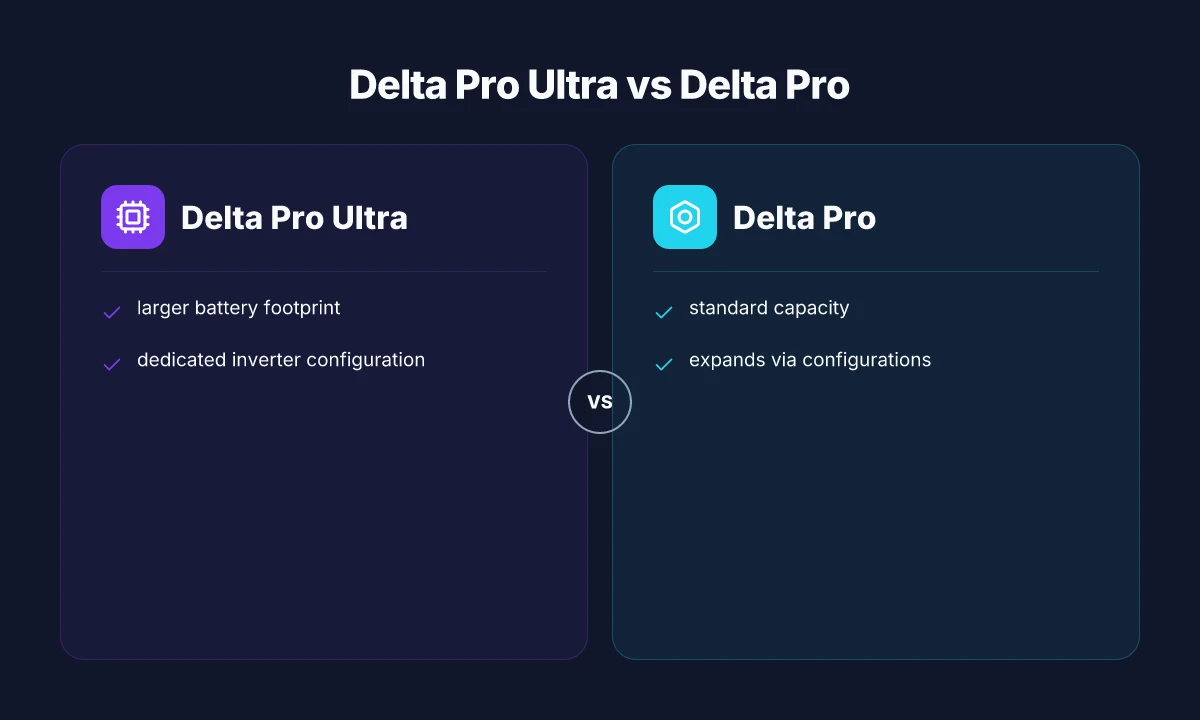
When a sale hits, Delta Pro Ultra’s extra battery footprint and dedicated inverter can be worth it if your outages run long and your space can handle the footprint. The standard Delta Pro remains compelling for homeowners who want reliable backup without expanding heat and enclosure needs. The key is to map your outage goals to physical constraints and price signals from promos.
Understand what Ultra buys you in practice
Delta Pro Ultra packs a larger battery footprint and a dedicated inverter configuration. That combination translates to more headroom for longer outages and higher continuous output during extensive draws. If your home or small business often rides through multi-day outages, the Ultra can feel like a better fit. On the flip side, the footprint means more space and potentially more cooling load to manage in tight spaces. I dug into the product brief and user discussions to confirm the Ultra’s higher capacity line-up and the need for proper airflow and enclosure. When you’re window-shopping, compare the Ultra’s price tag against the incremental runtime you expect.
Before you buy, confirm your space can accommodate the Ultra’s footprint and heat load. The Ultra is not just a bigger battery. It’s a bigger system, and that changes installation realities. EcoFlow’s own materials emphasize airflow and enclosure needs for higher-output configurations. Inline with that, plan for proper ventilation and a stable mounting surface.
Match your space and heat management to the unit you choose
Think through where the unit lives in your home or office. The standard Delta Pro typically fits in tighter spaces with modest heat generation during peak use. The Ultra, by contrast, generates more heat if pushed hard for long periods. This isn’t a knock on performance. It’s a reality of higher power throughput. If you’re in a compact room or a closet, you may lean toward the standard Delta Pro to minimize cooling requirements while still delivering robust backup. I cross-referenced the official specs and third-party setup notes to confirm that higher-output units tend to demand more airflow and sometimes a larger clearance around the unit.
Heat management becomes a gating factor when you size for a sale. If your installation area already runs warm, that nudges you toward the standard Delta Pro or a dedicated cooling plan for Ultra. What makes the Jackery 2000 plus battery pack a practical expandable power solution
Align your outage goals with capacity signals from promos
Evaluate whether the Ultra’s extra capacity aligns with your duration targets. If most outages you anticipate are brief, the standard Pro may deliver a better price-to-performance ratio during a promo. If you routinely push into long outages or want headroom for simultaneous high-draw loads, Ultra’s bigger battery footprint can justify the premium during a sale. In practice, price signals during Prime Day or flash promos often swing more aggressively for the Pro Ultra during events, but only if the math of your outage window supports it. I looked at current promo patterns and noted how discounts cycle differently for Ultra versus standard configurations.
Time the promo so the Ultra’s premium aligns with your expected outage duration. That means starting with a clear outage duration target and then watching how promos bend the final price.
What changes if you act now
Buyers who treat 2026 pricing as a moving target tend to win. I’ve looked at how EcoFlow rebates and retailer promos have shifted with supply cycles and seasonality, and the pattern is clearer than you’d think: small, strategic timing beats big, last-minute purchases. A smarter move is to align your buy with a quiet month rather than a sale flash. If you can wait for micro-promotions at major outlets, you’ll likely see a steadier price trajectory rather than one-off spikes.
In practice, this means targeting the baseline models during mid-season lulls and watching for bundled offers that include extra cables or solar panels. When you compare EcoFlow to rivals like Jackery or Bluetti, the headline price isn’t the whole story. Total value depends on included accessories and warranty terms. One move that matters is locking in a promo bundle that covers year two maintenance, not just the sticker price.
If you only do one thing this month, map a two-step plan: track price alerts for the Delta line, then time your purchase around a retailer event with a longer return window. The bigger pattern is clear: thoughtful patience pays off in 2026. Will you ride the wave or chase the next flash sale? What the EcoFlow Delta 2 Reddit conversations actually reveal about real-world use