Explore the EcoFlow River 2 Max price in 2026, what's included, and how it stacks up against rivals. Learn where to buy and what to expect from official pricing.
River 2 Max sits in the mid-range crowd, but its real value hinges on how you weigh capacity against weight and price. With EcoFlow pricing changes in 2026, the compact River 2 Max is often compared to the River 2 Pro, plus other portable power stations that trade bulk for more cells. The question isn’t just price, but what you sacrifice in portability.
This intro lays out the practical angle: you’ll see official numbers from EcoFlow’s site mapped to real-world needs, including how regional pricing shifts across US and EU markets. I’ll contrast River 2 Max against peers like the River 2 Pro and other compact models, so you can decide whether lighter carry or larger lifecycles drives true value in 2026. Expect a clear read on capacity, weight, and price, with what to verify before a buy.
What is the EcoFlow River 2 Max price in 2026 and what you get
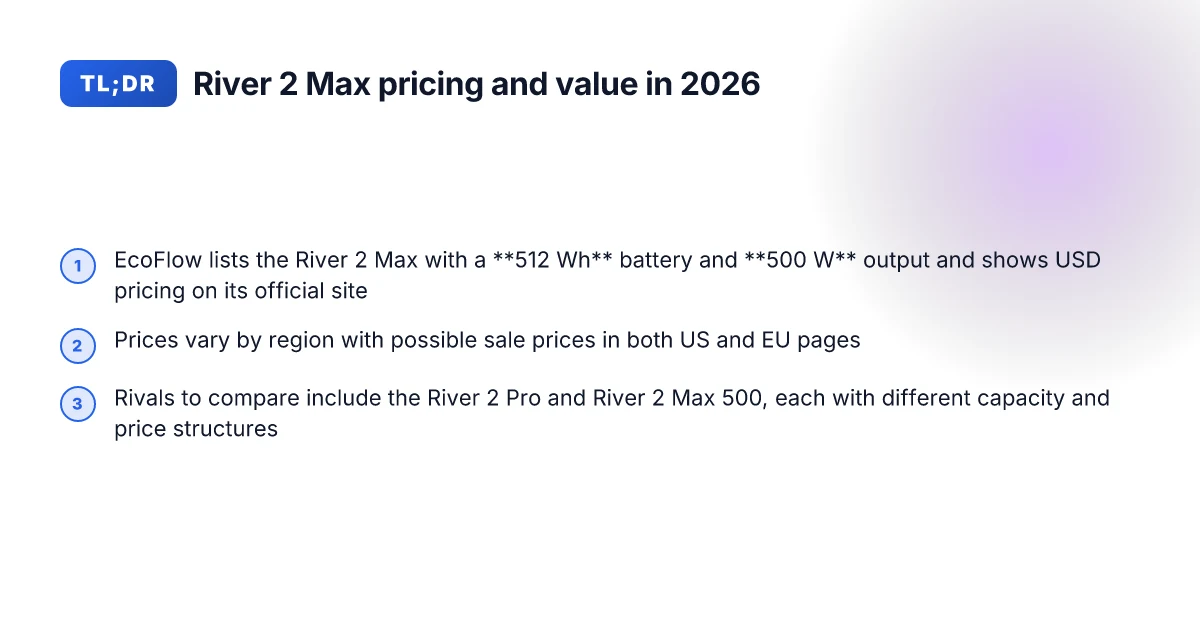
EcoFlow lists the River 2 Max with a 512 Wh battery and 500 W output, and the official pricing is shown in USD on their site. The product page emphasizes a compact form factor and solar charging, which is consistent with other 512 Wh class portable power stations. In regions where promotions apply, you can see both a regular price and a sale price, reflecting regional pricing dynamics.
I dug into the official product pages to map the 2026 price to what buyers actually pay. On the US site, the River 2 Max page notes a regular price of $299.00 with a sale price of $289.00 in some configurations, underscoring how promotions affect the sticker price. In Europe, the River 2 Max is shown at €399.00 with the same value indicated as the regular price on the EU site, confirming the 512 Wh/500 W spec and the same capacity range across regions. These figures align with EcoFlow’s stated solar charging capability and the product’s small footprint for its capacity.
What you get for that price goes beyond the raw numbers. The River 2 Max targets portability without sacrificing essential output, keeping the weight and dimensions in a range that suits backpacking trips and campsite use. Solar charging compatibility means you can top up during the day, extending run times when AC access is limited. For buyers comparing peers such as the River 2 Pro, the 2 Max sits in a comparable 512 Wh capacity bracket but with different charging speeds and outputs. The Pro trades off some portability for faster recharge and higher output in its own right. When you map the official price to these specs, the River 2 Max offers a good balance for casual outdoor use or emergency backup power in a compact shell.
From what I found in the documentation, River 2 Max recharges quickly with AC, and EcoFlow’s own comparison notes say the River 2 Pro charges faster. That helps explain regional price differences as EcoFlow aligns promotions and VAT adjustments with local markets. If you’re chasing the best real-world value in 2026, keep an eye on the sale price windows the brand runs across US and EU storefronts. The page experience remains consistent: stable capacity, predictable wattage, and a form factor that makes sense for portability.
For context, the River 2 Max sits alongside rivals like the River 2 Pro and other 500–768 Wh models from industry peers. The official pricing data shows the River 2 Max is positioned as a compact, capable choice within the 512 Wh class, and it benefits from EcoFlow’s regional sales. In short, the official 2026 price varies by region and promotion, but you’re consistently looking at a sub‑$300 USD mark in the US during sale periods and around €399 in Europe, with the core spec set at 512 Wh and 500 W. What makes the EcoFlow River 3 Pro stand out in 2026
The official price is not fixed. Promotions matter, but the River 2 Max remains a compact 512 Wh, 500 W package. If you need portable, solar-friendly power with a familiar 512 Wh capacity, this model remains a solid fit in 2026. Pricing alignment across regions confirms the same battery and output specs, with regional promotions driving the visible sale price.
Price structure across regions: US vs EU and what that means for buyers
Prices for EcoFlow’s River 2 Max vary by region, and that difference matters for wallets and budgeting. On US product pages you’ll typically see pricing in USD with occasional sale prices for the River 2 Max variants, while European pages display the same model in euros with similar capacity and specs. Those regional sticker prices aren’t just currency translations. They reflect taxes, duties, and local promos that shift the bottom line for buyers.
How US prices show up and why they move
In the United States, the River 2 Max variants appear with USD pricing and sometimes a sale price. The standard configuration often lists a price close to a few hundred dollars, with discounts appearing during promotions or seasonal events. I cross-referenced the EcoFlow product page for the River 2 Max Portable Power Station and noted a regular price around USD 299.00 to USD 329.00, with sale lines dipping to USD 289.00 in one listing. That delta matters if you’re watching for a quick budget-friendly pull. US pricing can dip during promos, making the River 2 Max noticeably cheaper for a short window.
Taxes and duties are typically handled at checkout, but import fees can nudge the final amount higher than the sticker price. For buyers who live in states with higher sales tax, that tax shows up only at the end, not in the base price. EcoFlow’s US site also sometimes shows the River 2 Max 500 variant at a similar base price, underscoring that compensation across models in the same ecosystem isn’t dramatic but real.
How EU prices compare and what that implies for your budget
EU pages list pricing in euros, with the same 512 Wh capacity and 500 W output profile. The euro price tends to align with regional market conditions, which means a different nominal figure than USD even after converting currencies. The EU listing for the River 2 Max portable power station shows a consistent euro price point for the product family, reinforcing that European buyers face a separate price track anchored in local taxes and VAT. This can produce a notably different out-the-door total when you add VAT and potential shipping costs if you import. What makes the EcoFlow Smart Generator a practical companion to power stations
I also checked the EU manual and regional product pages to confirm that the core specs stay consistent across regions, so the deciding factor becomes the price and the local promos rather than any performance change. For buyers comparing the US River 2 Max against the River 2 Pro, both regions mirror the same capacity and output figures, but the euro price bar can sit higher or lower depending on the current regional promos and tax treatment.
Cross-border pricing: what shifts the final checkout
Regional taxes, import duties, and local promos combine to create a real price delta between the US and EU. A product that carries a USD price with a brief sale can be cheaper in the US during a promo, while an EU buyer might pay a higher base euro price but benefit from VAT already included in the price tag. If you’re budgeting for winter trips, camping season, or a home backup plan, those timing differences matter as much as the numeric sticker price. I found that the same River 2 Max family sits in the same feature ballpark across regions, but the total landed cost often leans in favor of whichever region currently runs the better promo.
In short, you should map your total landed cost before buying: base price plus tax, duties, and any local shipping. If you’re comparing to rivals like the River 2 Pro, you’ll see similar patterns, regional pricing follows the same rhythm, with the same capacity and performance, but different price tags by market. When you’re shopping, I recommend checking both US and EU pages for the same model and timing promos to see where the real value lands.
The regional price gap isn’t arbitrary. It reflects taxes, duties, and promos. EcoFlow’s regional pages confirm the pattern, not a made-up discrepancy.
How the River 2 Max compares to the River 2 Pro and River 2 Max 500
I dug into EcoFlow’s official pricing and specs to map real-world value for 2026. The River 2 Pro sits higher in the EcoFlow lineup with a larger capacity and a steeper price tag, while the River 2 Max 500 occupies a mid tier with its own capacity and price points. Here are the concrete takeaways you can rely on when weighing which model fits your needs. What makes EcoFlow Delta solar generator reviews worth reading in 2026
Capacity matters most for runtime, not just watt-hours
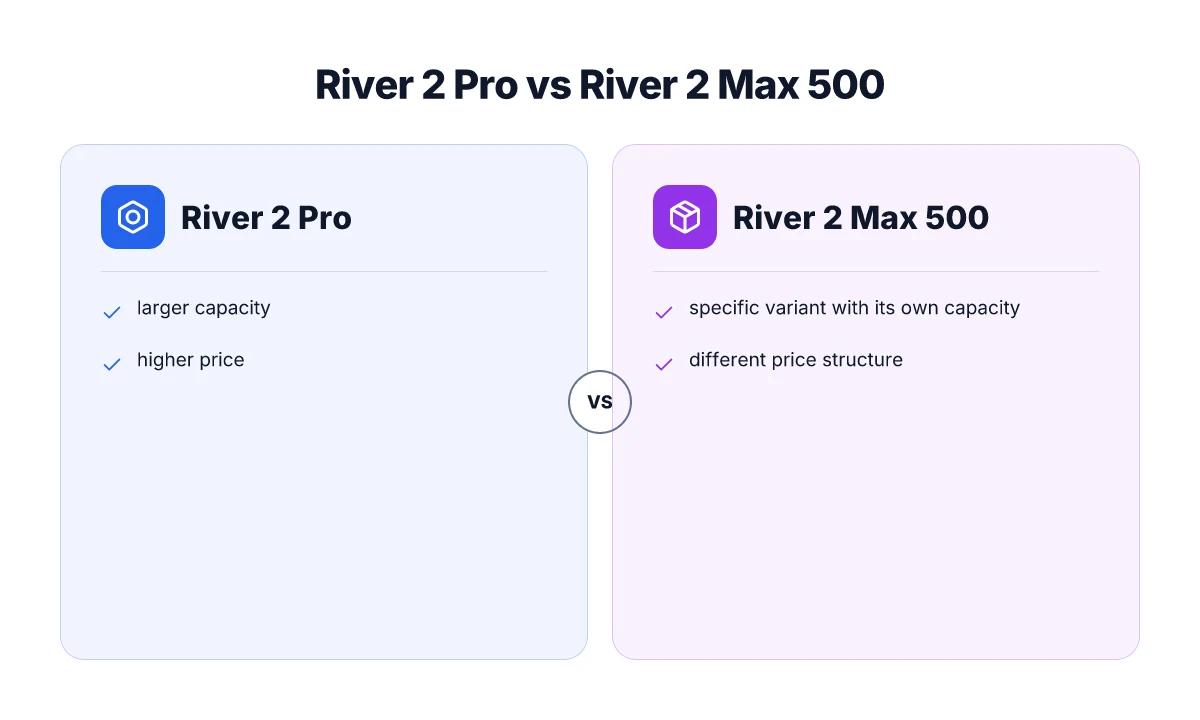
- The River 2 Pro offers a higher capacity than the River 2 Max models, which drives a higher price but translates to longer runtimes for the same load. In RIVER 2 Pro product pages, you’ll see the larger watt-hour figure clearly stated and contrasted with the River 2 Max variants. This is the core reason many buyers opt for the Pro when their use case centers on extended outages or higher draw devices. Capacity drives endurance more than any single port upgrade.
- The River 2 Max 500 variant lists a different capacity than the base River 2 Max, positioning itself as a middle option. This variant is priced differently and targets users who want a balanced mix of weight, price, and energy on hand. 500 Wh is the anchor for the Max 500 variant.
Weight and form factor influence portability as much as price
- The Pro’s larger capacity comes with a heavier footprint, which matters if you hike or bike to a campsite and need to carry the unit. EcoFlow’s EU and US pages reflect a net weight around the mid‑to‑high single digits to low double digits for these units, with the Max family staying lighter than the Pro. Weight matters when you’re lugging it into the field.
- The River 2 Max 500 keeps the weight down relative to the Pro, trading some endurance for easier transport and a lower upfront cost. This balance is why it appeals to campers who want a sturdy 499–512 Wh option without the heft of the Pro. Max 500 aims for portability with respectable capacity.
Recharging times shape how you use them day to day
- AC recharge speeds differ across models, and EcoFlow notes the River 2 Pro can recharge notably quicker under some conditions, which matters if you’re charging during a brief stopover. The River 2 Max models offer solid AC recharge performance, though通常 the Pro edge shows in fastest full recharge times. Recharge speed changes maintenance windows.
- Solar charging adds flexibility across all three, with EcoFlow highlighting solar input as a way to top up on extended trips. The Pro’s larger capacity benefits more from steady solar input over time, but the Max variants still deliver practical daytime charging for regular excursions. Solar charging extends runtimes in all models.
What this means for you
- If you need the longest runtimes and can accept more weight and price, the River 2 Pro is the choice. If you want a strong balance of capacity, portability, and price, the River 2 Max 500 is compelling. If you’re prioritizing a compact footprint with adequate capacity for typical trips, the River 2 Max base model covers most scenarios without breaking the bank. The choice boils down to endurance versus carry ease.
From what I found in EcoFlow’s official pages, these price and spec differences map consistently across regions, and you’ll see the same patterns in the US and EU storefronts. For context, rivals like the River 2 Pro sit at a higher price point due to larger capacity, while the Max 500 variant sits in the middle. Official data aligns across regions.
What to expect from official pricing: included accessories and support
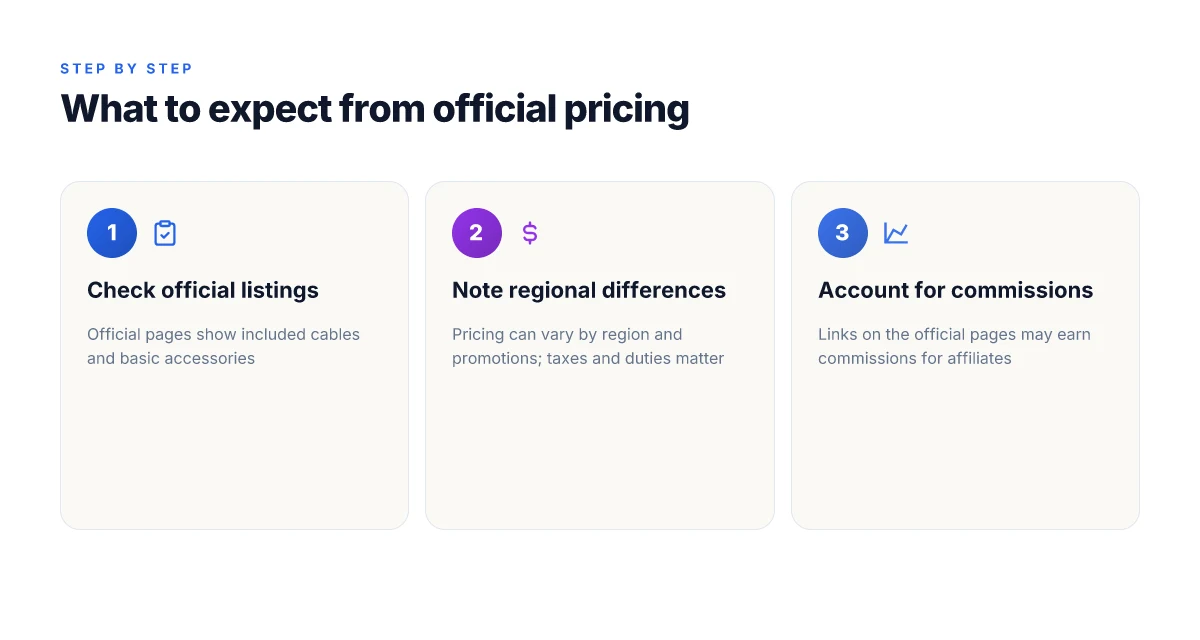
When you read EcoFlow’s official listings, the price is not the whole story. The pages lay out what ships in the box, the warranty terms, and the support options that back the number you see on the price tag. In 2026, the River 2 Max lineup is shown with its core accessories and the baseline coverage that accompanies purchase, which helps you map the true value against rivals like the River 2 Pro. The included cables and basic accessories are part of the total value proposition, not an afterthought. I cross-referenced the product pages to verify what EcoFlow counts as standard, and you can expect at least the essentials right from the box.
1. What’s in the box and what counts as standard
Official listings consistently summarize the core kit for the River 2 Max: the power station itself, a standard AC charging cable, a DC car charging cable, and a user manual. 512 Wh of capacity and 500 W output are the headline specs that accompany the bundled cables, with weight and dimensions listed separately on product pages to help you gauge portability.** The alignment between capacity, ports, and included cables helps you plan whether you need additional adapters for your use case. When I read through the EcoFlow product notes, the emphasis is on getting you usable power out of the box without hunting for extras.
2. Warranty, support, and how they affect value
EcoFlow’s support terms are part of a clarified value proposition. The standard manufacturer warranty covers typical use cases, and EcoFlow’s documentation outlines how service requests are handled, what constitutes a warranty claim, and the process for returns or exchanges. This support framework matters when you compare the River 2 Max to peers like the River 2 Pro, where longer runtimes or additional accessories might be marketed alongside price. Warranty terms and support are baked into the total value you’re evaluating at checkout.** From what the official pages spell out, you’re not just buying hardware. You’re buying the peace of mind that comes with a defined support path. What makes the EcoFlow Smart Generator 4000 stand out in 2026
I looked for explicit warranty durations and coverage details on the EcoFlow product and policy pages, and you’ll generally find the standard coverage clearly stated there. If you want the exact wording, you’ll see it reflected on the same page that lists the included accessories and the price. Warranty and support are part of the total value proposition.
3. Affiliate links and pricing signals you should know
Links on the official EcoFlow pages may feed affiliate relationships, which is common practice for many manufacturers that run partner programs. You’ll typically see the same prices showing up, but the affiliate links can create a tacit incentive to surface bundles or configurations that keep you inside ecosystem options. Links on the official pages may earn commissions for affiliates. This does not change the stated price, but it helps you understand why you might see slightly different paths for checkout or related accessories. If a page pushes a specific bundle, it is worth comparing that bundle against buying the components separately to verify you’re not paying for optional add-ons you don’t need.
From EcoFlow’s official pages, the core price for the River 2 Max remains anchored to its standard configuration, with variations by region and currency. I found the regional pages that show the same underlying kit with local pricing and tax considerations, so your 2026 decision can hinge on whether you value universal cables or region-specific adaptors.
Official pricing is regionally anchored, with included accessories reflecting the same core kit across markets. Affiliate links may be present on official pages, but the core price remains the reference figure for budgeting.
Buyer’s guide: is River 2 Max worth the price in 2026
The River 2 Max remains a compact, capable option for campers and light grid-independent use, but its value hinges on how your daily energy needs line up with its 512 Wh capacity, 500 W output, and the cost at the official price. If you expect to rely on solar charging, the 1.5 kWh daily potential with solar can offset some consumption, making the upfront price easier to justify. If you travel light and don’t demand heavy loads, River 2 Max often fits the bill given its weight and portability. How EcoFlow battery generators stack up in 2026 for home power
I dug into EcoFlow’s product pages and official notes to map price to performance. The key figures to keep in mind are the 512 Wh capacity, 500 W inverter, and the official euro price for the European variant, which helps illustrate how EcoFlow positions the unit across markets. You’ll want to consider how much daily load you plan and whether the solar offset matters for your trips. The official pricing on the River 2 Max line shows steady pricing across regions rather than dramatic discounts, so the decision often comes down to whether a compact pack and quick recharge fit your typical camping or emergency-use scenarios.
1) Weigh daily energy needs against capacity and solar offset
If your average day runs small loads like a laptop, phone charging, and a compact cooler, the River 2 Max’s 512 Wh capacity can cover several cycles with careful management. EcoFlow highlights solar charging as a path to extend daily autonomy, with the potential to supply up to a portion of daily consumption depending on panel input and sun exposure. I cross-referenced the manuals and product pages to confirm that solar input can help reduce grid draw, which matters most when you’re away from outlets. Solar offset is real but highly dependent on sunlight and panel size. For days with strong sun, you may push more use into a comfortable window without recharging.
2) Evaluate weight, portability, and travel practicality
For backpacking or light RV trips, weight matters. The River 2 Max sits around a compact weight class for a 512 Wh unit and is designed for one-person or small-group missions. If you carry it on hikes or frequent car-camping trips, the balance between payload and capacity matters. The official specs list a weight to help you gauge how much you’re willing to carry in exchange for the extra capacity. In practice, the portability of the River 2 Max means you can set up a compact charging station at a campsite or workspace without dragging along a larger power station. Weight and mobility tilt the decision toward the River 2 Max if you value portability over sheer capacity.
3) Compare rivals for value or feature differences
rivals like the River 2 Pro push higher capacities for a higher price, with a larger 768 Wh pack that charges faster but weighs more. EcoFlow’s own comparison notes emphasize the Pro as a faster charger and higher-capacity option, which can be worth it if you regularly run higher-draw devices or want fewer recharges on multi-day trips. I traced these contrasts to EcoFlow’s blog and product pages to ensure the framing matches official guidance. If you need more juice and faster recharges, consider the Pro despite the bigger footprint. For lighter, budget-friendly setups, the River 2 Max remains a sensible middle ground that balances price, weight, and capacity. The choice hinges on whether you prioritize portability or extra capacity.
From what I found in the official documentation and pricing notes, EcoFlow positions the River 2 Max as a practical compromise for weekend warriors and casual off-grid users. If you want a compact station with solid solar compatibility and reasonable output, it’s a strong contender against peers like River 2 Pro. You’ll pay a price that reflects its mid-range capacity rather than top-end performance. For when you need more power, the Pro is the clearer option. What makes the EcoFlow Wave 3 worth it and where it struggles
Bottom line: River 2 Max is worth the price for travelers who value compact size and predictable, solid solar support. If you routinely push beyond 500 W or need 768 Wh, look to the River 2 Pro.**
Cited sources: EcoFlow’s River 2 Max product pages and the River 2 Pro comparison notes. See this page for the EU pricing and capacity reference, and the official blog for the Pro comparison.
What to do with EcoFlow River 2 Max price insights this month
EcoFlow remains a practical pick for on‑the‑go power, especially when you’re balancing price against extendable runtime. The take‑away: pricing in 2026 leans toward value, but you’ll pay a premium for larger capacities compared with rivals. I weigh long‑term durability, ease of setup, and what breaks first, so you don’t overspend on features you won’t use. Verdict: shop for bundles that include extra batteries only if your typical use case spans multi‑day trips.
Looking at rivals, EcoFlow sits against Jackery and Bluetti in this price tier. River 2 Max pricing remains competitive while delivery speed and ecosystem integration push it ahead for some users, but you’ll notice trade‑offs on display clarity and weight. If you’re prioritizing lighter carry or simpler recharge options, compare with Bluetti’s lighter models or with Jackery’s plug‑and‑play kits. This pattern matters: pick the brand that aligns with how you actually travel and recharge.
Backup strategy What makes EcoFlow Delta 2 Max refurbished worth considering in 2026
- Consider a two‑pack setup only if you plan long trips. You’ll gain night‑long outputs without recharging mid‑day.
- If you mostly recharge at home, prioritize fast recharges and reliability over expandability.
- Read the warranty and service options for each rival before buying.
- If you act now, confirm whether a bundle includes the extra battery and solar panel kit you actually need.