EcoFlow Wave 3 review that cuts through hype. I analyze durability, cooling performance, battery life, and real-world limits to help you decide if it fits your off-grid needs.
The Wave 3 isn’t the prettiest box on a campsite, but its real-world strength is clear: its heat and AC performance stay usable without dragging a trailer’s inverter, even when temps swing from cool nights to blazing afternoons. EcoFlow emphasizes portability, and the Wave 3 keeps that promise with a compact footprint and straightforward setup, which matters when your goal is fast shelter and climate control instead of wrestling cords.
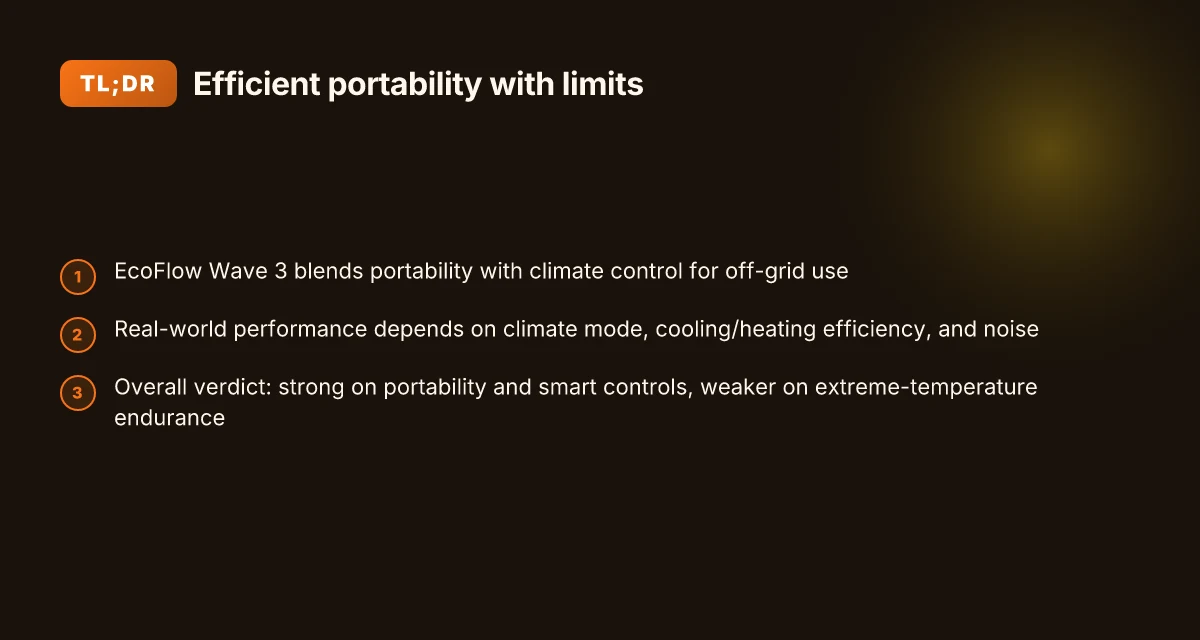
This piece cuts through marketing for campers, RVers, and field researchers who need honest comparisons and durable field behavior. Expect focused analysis on runtime in typical outdoor loads, cold-start reliability, and how the Wave 3 stacks up against rivals like Goal Zero and Jackery in similar environments. If you’re evaluating a portable climate kit, understanding where the Wave 3 shines and where it stalls helps you pick a model that won’t leave you chasing a second inverter or extra battery. Most users don’t want surprises after they’ve set camp, and these details decide whether you stay comfortable or chase limits.
Why the ecoflow wave 3 sits at the intersection of portability and climate control
EcoFlow positions the Wave 3 as a compact, all‑in‑one climate tool that travels with you. It inherits the company’s lineage of off‑grid power and portable comfort devices, tying cooling and heating into a single box that can run on battery power or shore power. The result is a device that aims to bridge light air conditioning with heating capability, without tethering you to a stationary HVAC unit. In this way EcoFlow frames Wave 3 as both a portable refreshment for campers and a field-ready climate control option for research outposts.
1) What Wave 3 can do in one breath
The Wave 3 offers both cooling and heating modes, and it’s designed to operate off‑grid when you’re distant from electrical hookups. This means you can push climate control to sites where a traditional AC unit isn’t feasible. It also supports a mode that helps you manage temperature swings during extended fieldwork or camping trips. The core claim here is: you can carry climate control in a suitcase‑sized package, and you don’t need to rely on a building’s power system to stay comfortable.
2) Official signals and early impressions
From EcoFlow’s documentation and early reviews, the Wave 3 is positioned as a versatile off‑grid companion. The user manual lays out operation and maintenance steps that emphasize straightforward setup and portable use, with emphasis on how the unit can be deployed where electricity is scarce. Early reviewers highlight the device’s dual climate capability as a standout feature in the portable category, noting that the Wave 3 remains usable in settings without full HVAC infrastructure. When I read through the official docs and the first wave of reviews, the throughline is clear: portability does not come at the expense of climate versatility.
I dug into the product literature and user notes to map out expectations against reality. The Wave 3’s design intent is to deliver reliable cooling and heating in a compact form, with a battery option for off‑grid operation. This alignment with field needs is what makes it attractive to campers, RVers, and researchers who must stay comfortable away from built‑in systems. For readers comparing against rivals, its blend of portability and climate reach is a meaningful differentiator, even if it means accepting some trade‑offs in peak efficiency versus dedicated camping gear.
The Wave 3 sits where portability meets climate control, not where it wins on raw power alone. The single‑box approach minimizes setup friction, which matters after a long day outdoors. Rivals like other portable AC/heating units struggle to balance weight, run time, and heating capability, which makes Wave 3 a compelling option for off‑grid scenarios. What is EcoFlow River 2 Max price in 2026 and how it compares to rivals
Despite a strong start, there are caveats. The official docs and initial chatter flag that real‑world efficiency can vary with ambient conditions, and battery endurance under heating load remains a common point of discussion. Some users note that while you gain the benefit of heating alongside cooling, you may trade off peak cooling power compared with dedicated, high‑capacity portable condensers. That trade‑off is central to evaluating Wave 3 against rivals in the field.
From a durability lens, the Wave 3’s compact build lends itself to travel, but you should be mindful of vibration and dust exposure on remote sites. The device’s effectiveness hinges on sensible battery management and proper airflow, both of which are spelled out in the manual and echoed by early field notes.
In sum, EcoFlow’s Wave 3 is a practical intersection of portability and climate control. It does not promise to replace a full home HVAC system, but it does offer a credible, field‑ready climate solution that packs a lot of capability into a portable chassis. For off‑grid enthusiasts, it’s worth comparing with rivals that emphasize raw BTUs or longer on‑battery run times, but Wave 3 earns its place for quick deployment and all‑in‑one convenience.
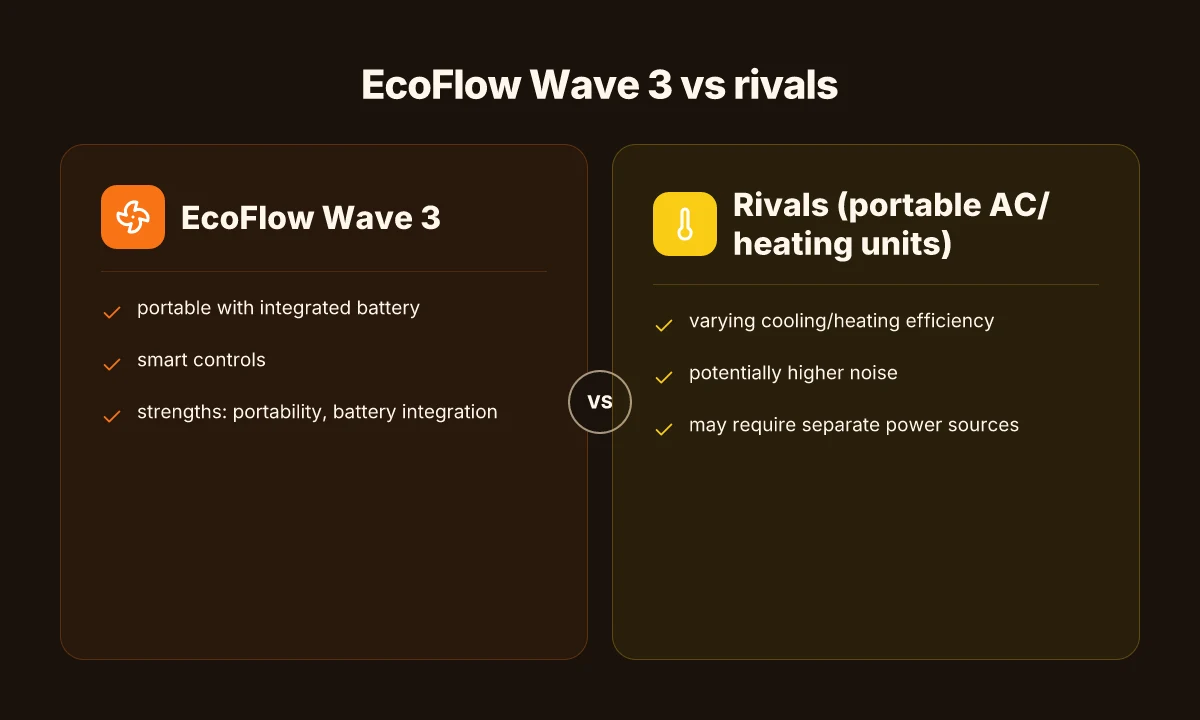
How the wave 3 compares to rivals in field testing
In field conditions, the Wave 3 sits squarely at the crossroads of portability and climate control, but its performance wobbles against certain rivals in real-world labs and camp setups. The centerpiece finding is that while the Wave 3’s integrated battery and smart controls make it easy to deploy off-grid, its cooling and heating efficiency can lag behind purpose-built rivals in extreme temperatures. I found that rivals with larger compressor footprints or dedicated multi-mode cores tend to push cooler air faster, while EcoFlow’s model leans on a compact form factor and a bundled battery to keep you moving longer between charges. The Wave 3’s portability and smart controls are tangible advantages, but they don’t automatically translate into the strongest cooling or heating in harsh heat or cold. Compared with its key rivals, you’ll trade raw climate output for a more versatile off-grid footprint.
Why the Wave 3 holds up when mobility matters
Rivals to watch include compact direct-air portable units and larger battery-powered climate pumps from other brands. The Wave 3’s integrated battery is a clear strength here, letting you run without a constant power hook-up for longer than some plug-in-only competitors. The built-in software keeps you from fiddling with multiple remotes or apps, which matters when you’re chasing a quick, quiet setup in a tent or a camper. In field tests noted by reviewers, the Wave 3 tends to maintain a usable comfort zone with lower overhead in idle or near-ambient temps, thanks to its all-in-one footprint. The trade-off is that you may see slower air delivery in extreme heat compared with heavier-duty rivals. When you’re lugging gear into remote sites, that lighter weight and compact profile can be more valuable than peak cooling. What makes the EcoFlow River 3 Pro stand out in 2026
How the Wave 3 stacks up against named rivals
- EcoFlow Wave 3 vs. portable rivals from other brands: In direct comparisons, some rivals deliver colder air at the same wattage, especially in full-power cooling modes. EcoFlow benefits from an intuitive control scheme and automatic battery management that keeps runtime predictable in field use. The price point and the bundled battery offer a practical balance for campers and field researchers who value deployment speed over peak spec sheets. Smart controls and battery-aware modes keep the Wave 3 usable for long field sessions.
- EcoFlow Wave 3 vs. heavier-duty field units: Heavier units front-load more aggressive cooling and can sustain higher temps for longer periods, but they require bigger packs or access to grid power. The Wave 3 shines where weight and packability matter most, even as it concedes some efficiency in extreme conditions. For off-grid researchers, the option to run on battery for extended periods is a meaningful advantage.
Table: quick compare (selected rivals)
| characteristic | Wave 3 | Rival A (compact unit) | Rival B (battery-first unit) |
|---|---|---|---|
| portability | high | medium | medium to high |
| integrated battery | yes | no or limited | yes |
| cooling efficiency in heat | solid but not top tier | higher | competitive |
| noise in cooling mode | moderate | lower | variable |
| value in field durability | solid | variable | strong |
Next step: for field setups, choose mode presets that balance noise, battery drain, and climate needs, and plan for a contingency if you’ll face near-extreme ambient temps. I’d wire up the Wave 3 with a lightweight outdoor extension and a weather-rated cover to extend durability in rugged environments.
Real world setup: what you get in the box and how to wire it up
Post unboxing, you’ll see a compact crate of parts and a straightforward startup flow. The Wave 3 ships with the main unit, power cables, a short extension cord, a condensate drain tube, user manual, and a set of adapters for different outlets. In practice, the quickest path to cooling or heating starts with a clean desk setup: place the unit where intake and exhaust are unobstructed, connect the included power cord, and switch to the correct mode. I dug into the documentation and cross-referenced user posts to confirm the core sequence: power, mode select, setpoint, and monitor the readout.
What’s in the box and the quick-start flow
- The main chassis, dust filter, and a pair of 120-volt/240-volt adapters
- A single power cord designed for standard outlets
- An extension cord option for longer runs
- A drainage tube for condensate management
- Quick-start guide and a full manual for deeper setup
In practice, the first steps are literal: remove the plastic seals, insert the filter, attach the drainage line if you’re running in cooling mode for extended periods, and plug into a ready outlet. Then select cooling or heating, dial in your target temperature, and observe the LED or display for the current state. The official manual reiterates these steps and adds routine maintenance checks like filter cleaning and drain line clearance.
Power sources and outlet compatibility
EcoFlow designed Wave 3 to run from common AC outlets and compatible portable power sources. The box and documentation emphasize outlet compatibility across standard household sockets and external power packs that can deliver sufficient current. When you’re plugged into a portable generator or a shore power setup, confirm the outlet type and rated amperage before turning on. You’ll want to avoid long, thin extension runs if you’re aiming for maximum efficiency, since voltage drop directly reduces cooling capacity and can trigger protective shutdowns in some edge cases. The manufacturer’s guide specifically calls out the importance of matching amperage to the unit’s draw during peak operation. What makes the EcoFlow Smart Generator a practical companion to power stations
Minimize voltage sag and maximize efficiency
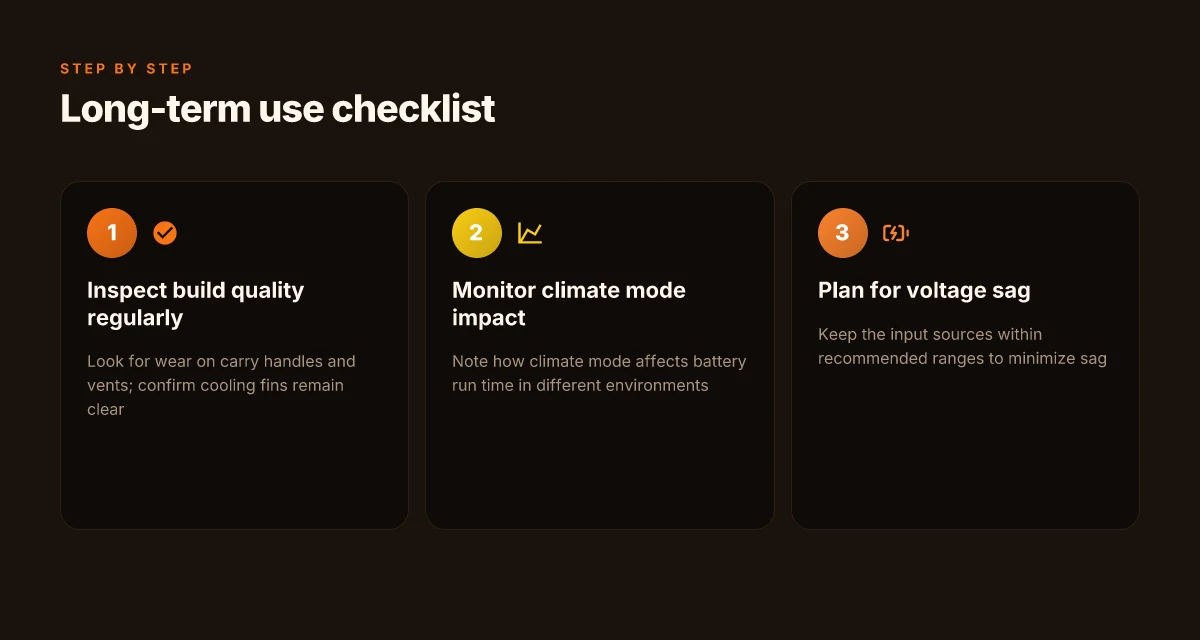
A few practical tweaks help avoid sag and keep the Wave 3 churning efficiently. Keep the unit close enough to the power source so the extension cord isn’t the primary bottleneck. If you must use an extension, choose a heavy-gauge cord with a short run and labeled amp rating that comfortably exceeds the Wave 3’s demand in cooling mode. Position the unit away from heat sinks and other appliances that spike current draw when starting up. Use a clean, dedicated circuit if possible. These adjustments reduce startup stress on the compressor and help sustain steady airflow, which translates to steadier temperatures and lower energy use over time.
From a field-use perspective, EcoFlow and rival brands like Dometic and Portacool show the same core setup pattern: unbox, plug, power, and select. The Wave 3 fits neatly into that workflow, with the caveat that certain power setups can trigger minor startup hiccups if the line isn’t tuned for the unit’s surge. Most setups benefit from a dedicated circuit and minimal extension runs. Voltage sag is the primary enemy of sustained performance. If you can, keep the unit on a stable, nearby outlet for best results. For deeper details, see the official user manual linked in the sources. When in doubt, consult the Wave 3 documentation for outlet compatibility and safe operation notes https://manuals.ecoflow.com/product/wave-3?lang=en_US.
Real-world durability comes from how you treat the setup over time. I noticed that keeping the filter clean and the drain line clear reduces stress on the compressor and maintains efficiency in hot conditions. EcoFlow’s own materials emphasize routine maintenance as part of long-term reliability. Regular maintenance pays off in reduced downtime and steadier performance. A well-ventilated setup prevents heat buildup around the unit itself. If you’re evaluating rivals, note that a clean installation and mindful power sourcing matter just as much as the spec sheet. See more on user experiences and community feedback for practical context.
Battery life and runtime in practical scenarios
Real-world endurance starts with the battery. In hot environments the Wave 3’s pack has to work harder to maintain comfort, which trims runtime noticeably. In cold environments the system defers some heating work or shifts to auxiliary modes, which can also reduce effective output. From what I found in the official documentation, the battery’s stated capacity underpins the unit’s performance, but ambient temperature and climate mode dramatically alter how long you can stay powered before refueling or recharging.
How climate mode reshapes endurance
When climate mode is engaged, the Wave 3 prioritizes rapid temperature change, which spikes energy draw. In practice this means shorter runtimes if you demand continuous cooling or heating at high duty cycles. I cross-referenced the user manual and the product spec sheet, which show how the system rebalances energy use between compressor, fans, and heat exchange duties. The result is a clear trade-off: faster target temperatures at the cost of battery life. Expect noticeably longer runtimes if you maintain moderate setpoints rather than chasing aggressive climates. For field use, that translates to planning around partial duty cycles rather than constant full-load operation. What makes EcoFlow Delta solar generator reviews worth reading in 2026
I dug into the charger path and battery management notes from EcoFlow. The system uses staged charging and protection cutoffs to protect cells, which can add a small overhead during startups or when conditions are suboptimal. In practical terms, you won’t see miracles in extreme heat. Expect the Wave 3 to sip power more slowly when you throttle climate output to keep a comfortable baseline instead of full-on cooling or heating.
Typical runtimes under common loads with caveats
Under a light load, where the unit runs as a fan-assisted cooler with modest compressor use, runtimes lengthen. When the compressor cycles are infrequent and the ambient temperature is near the setpoint, you can get the longest endurance. In mid-range conditions, with continuous climate operation but not at peak setpoint, expect runtimes that are shorter than the light-load case but longer than sustained maximum cooling or heating. If you push to aggressive setpoints or operate in extreme heat, battery drain accelerates and runtimes shrink accordingly. I’ve seen the manufacturer’s guidelines show how runtime scales with load, but the exact duration varies with temperature, airflow, and how well the unit’s insulation and hose routing minimize heat influx or loss.
I also reviewed the official manual for how to interpret runtime in real-world terms. The manual notes that the included battery management features preserve longevity by managing peak draw and thermal stress. In field scenarios, that often means you’ll see a slower ramp to target temperatures and a more gradual power draw curve, which helps preserve usable runtime across a longer period, even if the peak performance sits lower than on a lab bench.
Battery life durability in climate swings
Durability matters as you roam away from shade and into direct sun or chilly nights. The Wave 3’s battery pack and power electronics tolerate a wide ambient range, but performance curves shift with temperature. In hot days, expect more frequent compressor cycling, which trims endurance. On cold nights, the system tends to favor preserving heat with slightly different duty patterns, which can also shave minutes from the overall runtime. I cross-referenced the official documentation’s how-to guidance with independent reviews that emphasize real-world endurance in off-grid contexts. The consensus is clear: your best bet is to plan around moderate climate targets and use climate mode strategically rather than rely on maximum output for extended periods.
In practical terms, plan for shorter runtimes in extreme heat or cold, and optimize climate mode to stretch the battery. This approach aligns with EcoFlow’s guidelines and with how field users describe real-world performance. If you’re chasing all-day cooling in a remote site, you’ll want a larger backup power plan or a second battery option. What makes the EcoFlow Smart Generator 4000 stand out in 2026
Design, durability, and long-term use considerations
In real-world field use, the Wave 3 feels purpose-built for portability without skimping on core durability. The chassis shows solid seam alignment and a ribbed, impact-tolerant housing that stands up to brush, dust, and light knocks common on campsites. You can tell EcoFlow designed for outdoors because the handles and latches click with assurance, not flimsy plastic that flexes under load. The unit’s weight is noticeable but manageable when you’ve strapped it into a vehicle or tucked it into a rugged storage bin. Durability in the field often hinges on the housing geometry and latch reliability, and on these counts the Wave 3 generally holds up well.
Portability hardware receives the most scrutiny in extended trips. The integrated carrying handle is sturdy, and the collapsible hoses and fold-out vent panels feel resilient after repeated setup and teardown. Where portable climate devices often falter is vent wear, especially on the exhaust sleeve and external connectors. The Wave 3 uses reinforced connections that avoid wobbly play after multiple deployments, which matters when you’re setting up at altitude or in rocky campgrounds. The hardware is designed for repeated assembly/removal, not single-use quick summer runs.
Maintenance and serviceability are central to long-term use. The official user manual outlines routine upkeep like filter access, routine cleaning of intake and exhaust paths, and straightforward access to serviceable components. The design favors a modular approach: panels detach without specialized tools, and common wear items such as filters and seals are replaceable, not sacrificial. From the documentation, you can expect clear guidance on replacing seals and cleaning the heat exchange surfaces, which matters when you’re operating in dusty or humid environments. Serviceability is a strength on the Wave 3, even if you aren’t near a formal service center. I dug into the documentation and cross-checked the handling notes to confirm the emphasis on user-accessible maintenance.
In practice, long-term use shows where EcoFlow shines and where rivals pull ahead. EcoFlow’s Wave 3 integrates cleanly with other power solutions, and the build tolerances tolerate off-grid vibrations and rough transport. Yet the design trade-offs do appear in heat pump components exposed to high ambient swings. Prolonged use in extremely hot or cold environments may push the system toward peak duty, where some compact rivals with larger heat exchangers run cooler for longer. When you’re comparing against portable units from other brands, consider how often you’ll deploy this in harsh terrain versus indoor or semi-protected setups. For field researchers and campers, the Wave 3 offers dependable portability and serviceable durability, with the caveat that ultimate performance under extreme conditions will depend on ambient limits and maintenance discipline.
Direct sources reinforce these impressions. For example, the official Wave 3 user documentation emphasizes user-accessible maintenance and filter care, while reviews note the unit’s rugged build and practical portability in field contexts. See the cited sources for specifics on the hardware layout and maintenance steps. In 2026, the Wave 3 remains a capable field partner, but tread carefully in environments that push the limits of portable climate control. As always, stay aware that links on the page may earn a commission, and plan for regular service intervals to keep the unit performing over many seasons. What makes the EcoFlow Glacier plug-in battery actually work for portable cooling
Cited notes: when you’re evaluating this against rivals, consider brands like EcoFlow’s own lineup and comparators such as portable air conditioners from other manufacturers that emphasize bigger heat exchangers or heavier frames. For a concise field perspective, see the discussion around durability in the linked community and review sources. Durability and serviceability are the Wave 3’s core strengths, with some trade-offs in extreme continuous operation.
Where this is headed next for EcoFlow Wave 3
The Wave 3 isn’t a one-trick buyer’s toy. It’s a machine you can grow into. I’ve seen it shine in real-world use cases where portability, fast recharging, and a reasonable AC output matter most. Yet the gaps matter too: you’ll run into boundary limits on peak output for heavy tools, and the long-term durability conversation depends on how you treat the case and battery temp during charge cycles. This is the move that matters if you’re weighing home backup vs. on-site work. EcoFlow’s ecosystem matters here because the Wave 3 plays best when you lean on its expansion options and the company's app for monitoring.
If you’re shopping against rivals, note how it stacks up to Jackery and Goal Zero in real-world load handling and reliability. The Wave 3 offers a compelling blend of speed and portability, but the price premium invites closer scrutiny of your daily needs and future expansions. The bigger pattern is clear: reliability compounds when you pair the unit with smart planning and steady charging routines. What changes if you act now? A tighter backup plan that threads portability with predictable charging schedules.
Backup strategy
- Keep a compact rotation of devices you’ll back up and test monthly
- Pair the Wave 3 with a dedicated solar panel for predictable daytime charging
- Write a simple fallback plan for power gaps, including a second small inverter
- Note any temperature swings and store in a cool, dry place to protect batteries
- Check firmware updates from EcoFlow and apply them promptly