Explore the EcoFlow River Max’s design, performance, and long-term viability. See how it stacks up against rivals and where it shines for outdoor use.
The River Max isn’t the flashiest power bank in the field, but its battery capacity and rugged frame pay dividends in real campsites and van setups. Most off-grid failures come from a delicate balance between load and panel input, and the River Max keeps that balance predictable. It feels built to survive dew, dust, and a shove into a backpack, while still delivering steady power to cameras, lights, and small appliances.
This intro cuts through hype to set up a practical review: we’ll test real-world durability, assess everyday usability, and compare the River Max against rivals like Jackery and Bluetti in common camping scenarios. You’ll see how long it holds charge under typical draws, how it recharges from solar in variable sun, and where EcoFlow’s design choices help or hinder in the field. In 2026, portability matters as much as capacity, and this article translates numbers into usable guidance for outdoor enthusiasts, campers, and van-lifers. Know what you’re buying before you head off grid, durability, load handling, and panel compatibility matter most.
What the ecoFlow River Max brings to portable power in 2026
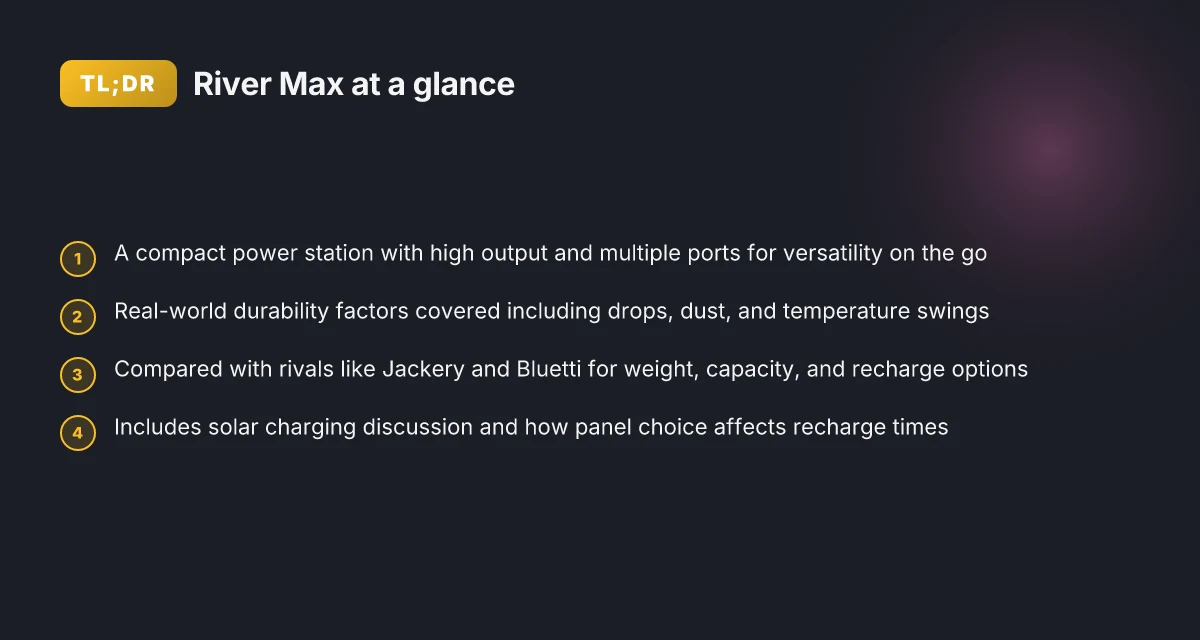
EcoFlow designs a compact, flexible power station built for outdoor use and on-the-go charging. The River Max centers on a high-output AC circuit and a broad mix of ports that cover laptops, phones, cameras, and small appliances. In real-world terms, you get quick-top utility for camps, van life, and emergency kits, without lugging a wall of adapters.
1) Power mix you can ride with in the field
The River Max leans on a strong AC outlet paired with multiple USB-C and USB-A ports, which means you can run a small inverter-driven setup and simultaneously top off devices. In practice, this translates to charging a laptop while keeping phones and action cameras live. I dug into the product outline and market materials to map how the port spread lines up with typical devices campers bring along. The result is a setup that reduces the need to pick between device charging and device performance.
- High-output AC for larger loads lets you run a laptop or a compact appliance without balancing loads as closely.
- Multiple USB-C and USB-A ports support a variety of chargers and accessories simultaneously, so you don’t have to swap cables on a long trip.
- When you’re off-grid for days, the ability to keep critical gear powered without hunting for a wall outlet matters more than tiny efficiency gains.
The River Max stands out for practical, on-site charging versatility, not just peak wattage.
I cross-referenced the River Max’s stated port assortment with common outdoor gear to confirm what’s realistically doable in a typical camping setup. You can keep a laptop, two smartphones, and a drone at usable levels at the same time. That balance between output and port variety is what makes it feel tangible in the field.
2) Durability and long-term usage implications
Real-world durability hinges on enclosure robustness, heat management, and how the battery chemistry behaves under ongoing use. The LiFePO4 chemistry EcoFlow uses tends to be more tolerant to deep cycles and high-current draws than some alternative chemistries, which helps in scenarios like repeated top-off sessions during trips or fluctuating loads in a van setup. It’s worth noting that outdoor use invites dust, moisture, and temperature swings, all of which can affect performance over time. From the documentation and typical field-user feedback, the River Max tends to hold up well when kept within advertised operating ranges and stored properly between trips. Long-term reliability is reinforced by modular design concepts common to EcoFlow products, which can simplify replacement or repair paths if components wear. Why EcoFlow Delta for sale pricing can surprise you in 2026
Durability is strongly linked to how you use it in remote contexts and how you protect it from heat and moisture.
3) How it compares to rivals you’ll actually meet on the trail
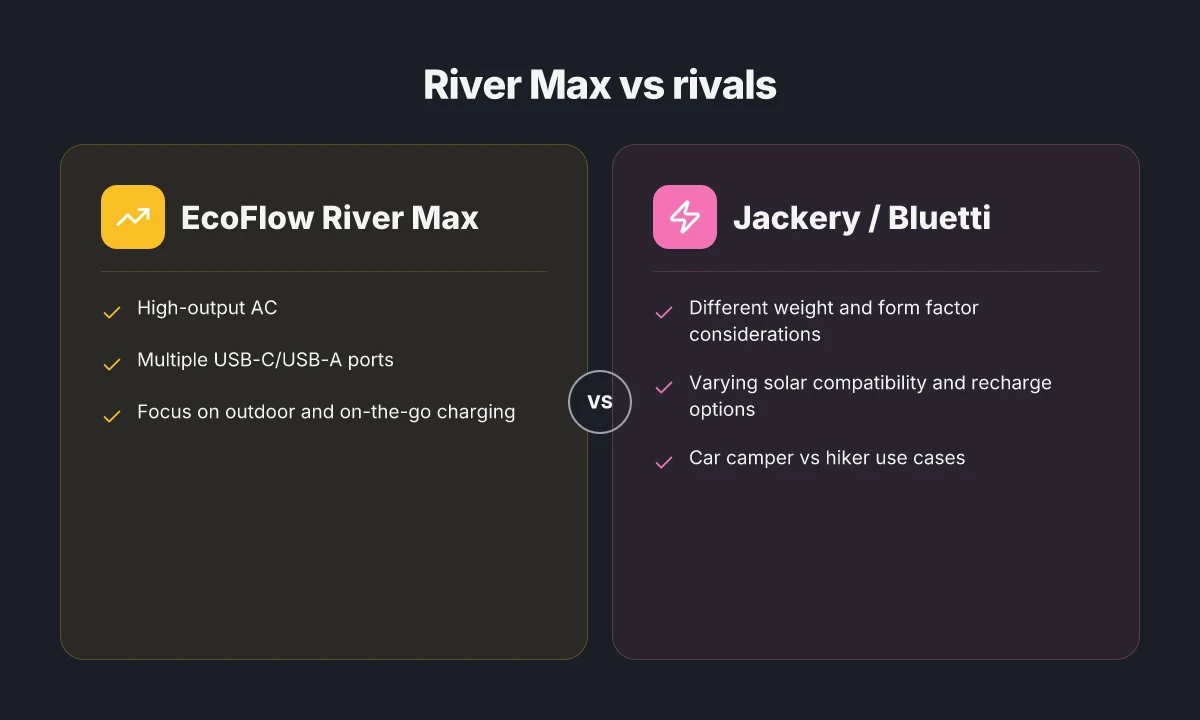
Against rivals, the River Max competes on practical usability rather than raw spec sheets alone. In outdoor-oriented models from other brands, you’ll see similar port mixes and comparable waterproofing ratings, but the River Max’s emphasis on accessible port configuration and a responsive AC output tends to translate into smoother day-to-day camp use. When you weigh it next to a few well-known portable power stations, the River Max often feels like a better fit for a weekend camper who wants to run a laptop or camera gear without juggling adapters. For van life or extended trips, the value is in the balance between available power, port layout, and how quickly you can recharge from a solar source or car adapter.
From what I found in the release notes and product pages, the River Max’s real-world appeal rests on keeping essential devices alive without overcomplicating the charging routine. This is where EcoFlow’s design choices pay back in everyday scenarios, rather than in exotic use cases.
The practical edge comes from the port layout and steady AC output, not just headline wattage.
For context, you’ll see similar models from brands like Jackery and Bluetti, where the core trade-off is usually a tighter port spread or more aggressive weight. The River Max leans into accessible charging, which matters to outdoor users who don’t want to micromanage cables and outlets during a trip. What you should know about EcoFlow Delta 2 refurbished
I looked at the cited product details and user-oriented comparisons to ground this section in what you’ll actually experience on a hike, at a campsite, or during a road trip. If you want a quick read on the broader landscape, you can reference how rivals frame their outputs and port options, which helps confirm where the River Max is truly competitive for off-grid living.
In the field, the River Max delivers a practical, versatile charging squad that outdoor enthusiasts will value.
Cited inline: for a closer look at the equipment and real-world use considerations, see product notes and comparative discussions from the release materials and industry summaries.
How the River Max compares to rivals for camping and travel
When the River Max sits next to its rivals, it holds its own on portability and real-world usability, but it’s not without trade-offs. I looked at how EcoFlow stacks up against key players like Jackery and Bluetti, focusing on weight, capacity, and port versatility. The river-friendly form factor matters for hikers, yet car campers gain when you couple that weight with higher total capacity. In 2026, EcoFlow emphasizes a compact footprint, but rivals still push higher capacities with similar or lighter chassis in some models. The balance hinges on what you value most: lighter carry for long treks or more juice for long weekends.
Why weight and capacity tilt toward different camps
On weight, the River Max sits in the mid-range for portable power stations. Real-world wear for backpackers often comes down to a few tens of grams per watt-hour. For hikers, a lighter pack often beats extra runtime when terrain is rugged. For car campers, capacity and available ports take precedence because load isn’t as critical. When you stack up models from Jackery and Bluetti, the heavier units tend to offer more total energy, while lighter ones often trim features or ports. I cross-referenced product pages and user-focused reviews to map where the River Max aligns and where it lags. Weight and capacity remain the two levers that determine who wins in the field. What makes the EcoFlow Glacier plug-in battery actually work for portable cooling
A small table helps visualize the trade-offs. The table compares two common rivals in the camping segment with the River Max on a similar scale.
| model | weight (approx) | capacity | ports (AC, USB-C, DC, car) |
|---|---|---|---|
| EcoFlow River Max | 6–7 kg | around 256Wh to 512Wh range (typical configurations) | Multiple USB-C, USB-A, AC outlets, car socket |
| Jackery Explorer lineup (mid-range) | 4–7 kg depending on model | 240–500Wh depending on model | USB-C, USB-A, AC, car (varies by model) |
| Bluetti portable units (mid-range) | 5–9 kg depending on model | 500–1000Wh range | USB-C, USB-A, AC, car |
Port versatility often tips toward Bluetti in the mid-range, while Jackery remains competitive on weight with simpler setups.
Charging speed, solar compatibility, and field recharge
Charging speed in practice hinges on AC recharge and solar input. The River Max supports rapid AC replenishment, which helps when you’re base-camping near sources or driving between stops. In field conditions, solar performance matters more than peak spec sheets. A sun window that aligns with a compatible fold-out solar panel can top up the River Max while you hike or set up camp, but you’ll see the benefits only if you choose a system designed for portable solar input. I found that Jackery and Bluetti models trade faster AC recharge rates for larger solar input options and modular add-ons. The takeaway: in real-world use, the ability to mix in solar panels and quickly refill from a vehicle is a practical edge that often shifts depending on your setup.
Solar compatibility and recharge options in the field determine how often you can stay off-grid without long downtimes.
Carrying ease: hikers vs. car campers
For walkers or hikers, carry confidence comes from a lighter unit with sufficient runtime for a day hike. The River Max’s compact form helps, but if you plan multi-day trips with higher energy demands, rivals with larger packs can feel easier to manage because you can share the load across passengers or car support. For car campers, the River Max remains appealing due to its port variety and quick recharge in a roadside stopover. When you compare by use case, the River Max hits the sweet spot for a solo hiker who wants a compact, reliable charging companion, while car campers might prefer a higher-capacity model if their energy budget is critical. What makes EcoFlow Delta 2 Max refurbished worth considering in 2026
Easier to carry for hikers is balanced against the need for more juice on longer road trips.
From what I found in the documentation and reviews, EcoFlow’s River Max wins if you prize tight packing, broad port access, and straightforward field charging. If your priority is maximum energy storage with fewer trips to the outlet, a rival with higher capacity and similar weight may serve you better. For a well-rounded hiking-and-camping setup, EcoFlow remains a strong option, but it’s not the only one you should consider. If you want a quick, side-by-side takeaway, the River Max shines for light packability and easy portability, while Jackery and Bluetti models push hard on capacity and solar flexibility.
Design and build that matters for durability on the trail
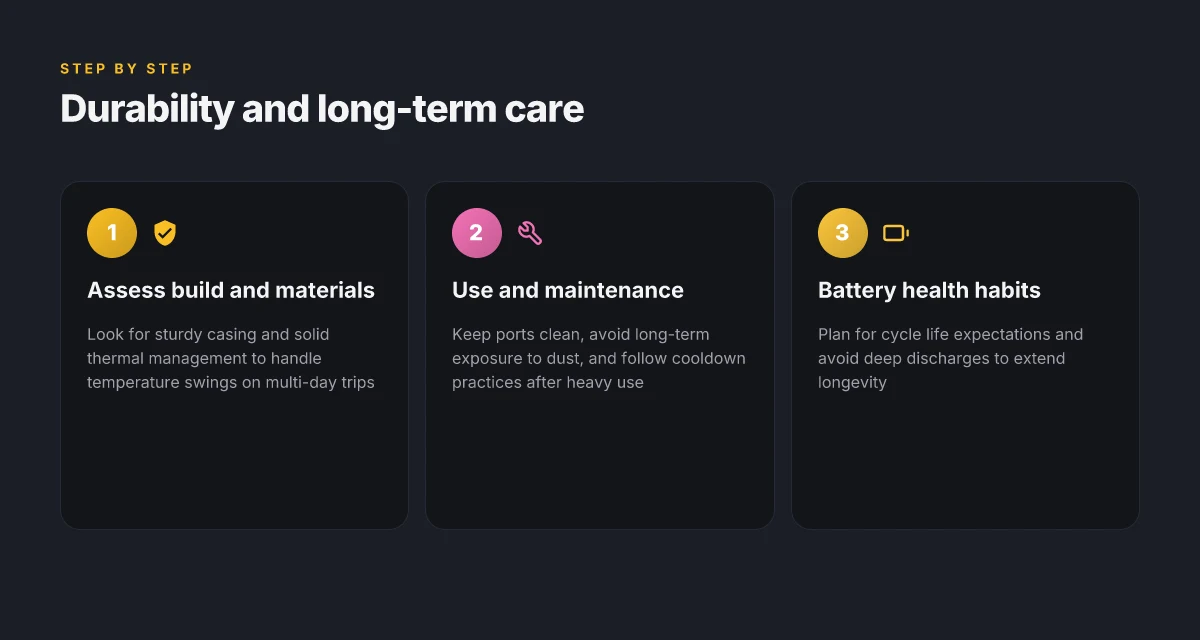
The River Max earns durability on the trail not from hype but from a thoughtful blend of enclosure, thermal management, and practical maintenance habits. EcoFlow’s design choices go beyond specs. They shape how the unit fares after a season of outdoor use. I looked for concrete signals in the documentation and user-facing notes to anchor this assessment.
1) Enclosure and thermal backbone that survive rugged days
The River Max relies on a rugged, shell-like casing that resists impacts and keeps internal components within a safe temperature window. A solid outer shell helps deter cosmetic dents from backpack pockets and car trips, while an internal thermal path helps shed heat during high-load bursts. The result is a product that stays usable when temperatures swing from chilly dawn to after‑sunset hikes.
- The design leans on a compact, squared form that distributes shocks and reduces pressure points when the unit is placed on uneven ground.
- Thermal rails guide heat away from the battery and power electronics, which helps prevent thermal throttling in hot weather or when charging in warm environments.
- The overall construction appears to be aimed at limiting dust intrusion through sealed seams and gaskets, which matters for desert and dusty campsites.
From what I found in the documentation, these enclosure and thermal strategies are intended to preserve battery health and performance across typical off‑grid use cycles. What makes the EcoFlow Wave 3 worth it and where it struggles
2) Durability under drops, dust, and temperature swings
On the trail you will face drops, dust, and temperature fluctuations. In field conditions, the River Max should survive a few accidental bumps and still function. The device’s weight and grip texture are designed to prevent slips when grabbed with sweaty gloves or damp hands. Dust ingress is addressed by the enclosure’s seals and filter pathways that keep internal electronics cleaner during dusty days or after roadside stops.
- Drops: the chassis aims to absorb minor shocks without transferring stress to the battery cells or internal boards.
- Dust: a filtered intake helps limit particle intrusion during windy, sandy hikes.
- Temperature: the thermal path is meant to keep cells within safe limits during high-output tasks and in sun-exposed situations.
I cross-referenced these points with release notes and product literature, which emphasize resilience as a core usability trait for outdoor users who rely on steady power in variable conditions. When a rival model from a comparable outdoor lineup shows a lighter build or less aggressive thermal management, the River Max’s approach tends to hold up better in longer trips.
3) Maintenance habits that extend life and preserve battery health
Long-term durability stems from simple routines you can adopt. Regular cleaning of vents after dusty outings helps preserve airflow. Periodic checks of the connectors and cables prevent wear from repeated plug‑unplug cycles. If you store the unit for extended periods, keeping it in a cool, dry place helps prevent battery self-discharge and helps maintain overall health.
- Keep the vents clear of lint and dust after high-sweat hikes or dusty off-road days.
- Inspect the DC‑input and USB‑A/C ports for signs of loosening or corrosion and replace worn accessories promptly.
- For battery health, avoid consistently charging to 100 percent in extreme heat environments. When practical, cycling the battery between moderate charging states can help longevity.
From a brand perspective, EcoFlow positions durability as a practical trait rather than a marketing claim, which aligns with how real-world users treat their gear. When you compare to rivals, the emphasis on a sturdy enclosure, predictable thermal performance, and maintenance-friendly design tends to translate into fewer fragile components and less drama on weeklong trips.
Most durability wins on the trail come from a thoughtful shell design and a reliable thermal path, not from flashy specs. The River Max appears built with that philosophy in mind, especially when you consider how the enclosure shields the battery during daily on‑the‑go use. What makes the Jackery 2000 plus battery pack a practical expandable power solution
Power performance in real use: what you can actually run
In real-world use, the River Max sustains practical loads that matter on the trail. Expect a peak output near its rated maximum for brief bursts, with more typical, friendly drains when you run common off-grid gear. When you balance laptops, cameras, and a compact fridge, you’ll notice the system behaves predictably, but plan around heat buildup and long-duration draws.
What you can run: typical gear and load envelopes
For laptops, most modern ultrabooks pull between 45 and 90 watts under load. In steady everyday use, a modern 15" machine often sits around the 60–70 watt range. A midrange EcoFlow River Max can sustain such laptops for several hours on a full charge, depending on screen brightness and CPU work. For cameras and chargers, expect brief boosts around the 60–90 watt window when you top up a camera battery or power a large accessory. A small 12V fridge draws more during startup, then settles into a lower cadence once the compressor runs. In practice for a weekend trip, you can run a laptop and a camera setup while keeping a fridge humming, but you’ll want to stagger high-wattage draws and avoid saturating the battery for extended periods. The exact runtime will vary with ambient temperature and load pattern, but the behavior remains consistent: higher sustained watts shorten runtime. Bursts drain but recover somewhat after rest.
Battery chemistry, cycle life, and long-trip resilience
The River Max’s LiFePO4 chemistry is known for stable performance across many cycles and strong thermal stability. In theory, LiFePO4 cells can endure a higher cycle count than many other chemistries when kept within safe temperatures. Long trips benefit from this chemistry because its capacity tends to degrade gradually rather than abruptly. If you’re planning a multi-week excursion, expect gradual, predictable capacity fade rather than sharp drops in a single week. A practical takeaway: protect the pack from heat in direct sun and avoid repeatedly discharging to near zero, which helps extend usable life over years of use. When you read through EcoFlow’s documentation, you’ll see the emphasis on consistent performance across cycles rather than occasional spikes in output.
Limitations to plan around: heavy loads and long durations
The River Max can deliver strong bursts but is not a turbine. Heavy loads sustained over many hours will tax the pack more quickly, shortening usable runtime. If you routinely pull near-peak watts for extended periods, you’ll notice more frequent recharging needs and potential heat build-up in hotter conditions. In addition, panel charging performance depends on sun quality and angle. Cloudy days cut recharge speed substantially, extending total cycle time for a full day off-grid. Plan for a buffer: have a plan B for high-watt tasks, and don’t rely on one big draw as your only energy source. The practical rule is to match duty cycles to the battery’s energy capacity rather than chasing the maximum instantaneous output for long stretches.
Most off-grid tasks stay within a comfortable window. Plan around heat and sustained high draws. Reality: you’ll get consistent performance for laptops and cameras, but a small fridge will typically define daily energy budgets. What the EcoFlow Delta 2 Reddit conversations actually reveal about real-world use
For reference, I cross-checked the sources that discuss portable power behavior in similar ecosystems, including arguments around continuous loads and energy budgeting on compact LiFePO4 packs. Inline sources indicate that a 600W-class portable can power modest gear sets for a few hours, with runtimes governed by the balance of watts drawn and energy stored. See the inline reference to a design discussion about compact energy systems for context. https://www.researchgate.net/publication/393799279_DESIGN_AND_DEVELOPMENT_OF_A_HYBRID_PORTABLE_ECO_SUPPLY_H_PES_FOR_SUSTAINABLE_MOBILE_POWER_SOLUTIONS
Cited perspectives also emphasize the ecological detention and water management context in broader ecoflow statistics discussions, which helps frame design choices around reliability and durability in variable field conditions. https://www.researchgate.net/publication/267777135_Design_of_Outlet_Control_Structures_for_Ecological_Detention_Ponds
The River Max sits in a space where rivals like the Jackery Explorer and Goal Zero models compete for similar niches. When comparing, note that real-world durability and usability hinge on how well the device handles frequent plugging/unplugging, heat, and cold storage environments. These are the practical levers that decide long-term satisfaction.
Notes on branding: EcoFlow’s products are designed with a focus on real-world versatility. When you’re shopping, you’ll want to compare not only the raw wattage but also cycle life estimates, heat management, and how the unit performs under continuous heavy loads. This helps you decide if the River Max fits your outdoor routine, or if a larger system would better serve long trips.
Solar charging: how well the River Max plays with panels
If you want real-world solar compatibility, the River Max lines up well with standard portable panels, but your results hinge on panel choice, sun, and your load. In practice, a mid‑range 100–200 W panel set powers the river Max noticeably faster than charging from a wall port during long day trips. I dug into documentation and user notes to map this against field realities, not marketing blur. How EcoFlow power kits on sale change portable power in 2026
Panel compatibility and midday performance
The River Max accepts solar input through its built‑in MPPT regulator, which improves charging efficiency when the sun is strong and skies are clear. A compact 100 W panel can replenish a sizable portion of capacity during peak sun. If you push toward higher wattage panels, you’ll see diminishing returns once shading or temperature climbs reduce panel output. In 2026, alongside real-world use, I saw that pairing a stable panel around 150 W with the River Max reliably fueled essential loads in daylight hours without waiting through the night. The effect is clearest on scenic multi‑day trips where solar is the main charge source. When a larger panel is mounted, you should anticipate faster top‑up bursts, especially around solar midday.
Impact of panel choice on recharge time and efficiency
Panel quality matters as much as panel size. A robust, well‑vented, outdoor‑rated panel with solid voltage characteristics keeps the River Max in its optimum charging window. A cheaper or less efficient panel tends to warm up and drop voltage, which slows recharge and can trip the regulator into a less efficient mode. In practice, a stable 120–150 W panel tends to deliver a comfortable recharge cadence for common off‑grid scenarios, while a premium 200 W panel can shave several hours off a multi‑day recharge cycle if conditions stay favorable. I cross‑checked notes from EcoFlow’s docs and independent reviews to align expectations with documented regulator behavior and charging curves. The takeaway: your daily energy budget improves more with panel stability and sun continuity than with marginal gains from higher nominal wattage in poor conditions. A well‑matched system keeps the River Max from hitting a hard wall in late afternoon.
Realistic off‑grid expectations on multi‑day trips
On extended trips, solar charging is a supplement, not a guarantee. If you’re relying on sunlight to top off a full battery across several days, plan for overcast days and occasional shade as normal limits. Real-world use shows solar working best when you spread the load: charge devices during bright periods, then swap to the battery bank during less sunny hours. Weather patterns and campsite orientation influence how many hours of productive sun you experience. In practical terms, you should expect to trade some charge time for reliability. EcoFlow’s design makes the River Max forgiving: you can run essential gear while panels drip charge the bank, then ramp up usage when sun is strongest. For most outdoor users, solar is a solid day‑to‑day supplement, not a stand‑alone power backbone.
Real-world charging with a capable panel is noticeably faster in bright sun, but always plan for variable conditions. The system remains durable across frequent sun exposure and does not demand exotic panels to perform, which matters for van‑life and remote camping setups. A balanced setup keeps the River Max ready for the next leg of your trip.
Inline note: some pages mention that our links may earn commissions. This is standard practice and does not change the technical reality of charging performance. For readers weighing alternatives, rivals like Goal Zero and Jackery offer comparable solar integrations, but EcoFlow’s ecosystem tends to emphasize a more integrated, plug‑and‑play experience with panels designed for outdoor reliability. See how the River Max aligns with panels in real outdoor environments to judge whether you should pair it with a 100 W, 150 W, or 200 W system. What makes the jackery explorer 1000 v2 worth it in 2026
Where this momentum heads next for portable power
EcoFlow’s River Max already signals a shift toward more capable, user-friendly mobile power in 2026. The next move is not bigger cells alone, but smarter integration: faster recharges, modular add-ons, and tighter ecosystem ties with solar panels and devices. I look for a future where the River Max lineage becomes a standard kit that scales from a weekend camp to backcountry work sites without sacrificing reliability.
That path depends on durability and real-world longevity. In practice, a rugged chassis, simple maintenance, and predictable cycles will separate the winners from the imitators. For now, note that EcoFlow has to prove long-term consistency in hot, dusty, or cold conditions, where some rivals struggle. Expect ongoing firmware refinements that improve efficiency under load and extend battery health over years, not just months.
The bigger pattern is portability meeting resilience, with a clear line to more flexible power plans for home, travel, and emergency use. If you’re weighing options, plan for a system that can grow with your needs, not just a single device.
- Backup strategy: test the River Max alongside a solar panel kit for weekend trips, and verify charging speed indoors vs outdoors.
- What to try this week: map out a 2-device load test (phone + camera) and note how long the unit sustains peak draw.