Discover whether a Jackery portable power station is worth it for home backup or outdoor use in 2026. I break down reliability, efficiency, cost, and long-term value.
Jackery isn’t a here-today, gone-tomorrow solution for power on the road or at home. It’s a bet on reliability that shows up in the long game, not just the upfront sticker. Jackery units come in a range of capacities, but the real signal is how long they hold charge under typical loads and how many cycles the cells survive before performance fades. Most users see meaningful tradeoffs between capacity, weight, and run-time after the first year.
In 2026, homeowners and campers increasingly compare long-term energy spend, not just upfront price, against options from Goal Zero and EcoFlow to decide whether a portable power approach pays off. You’ll learn how to estimate annual energy needs, how to read battery health signals, and what warranty terms matter when you’re evaluating backup power, solar potential, and lifetime value. This matters because the right choice depends on how you plan to use it over years, not how it behaves in a single weekend.
What makes a Jackery worth it for home and outdoors in 2026
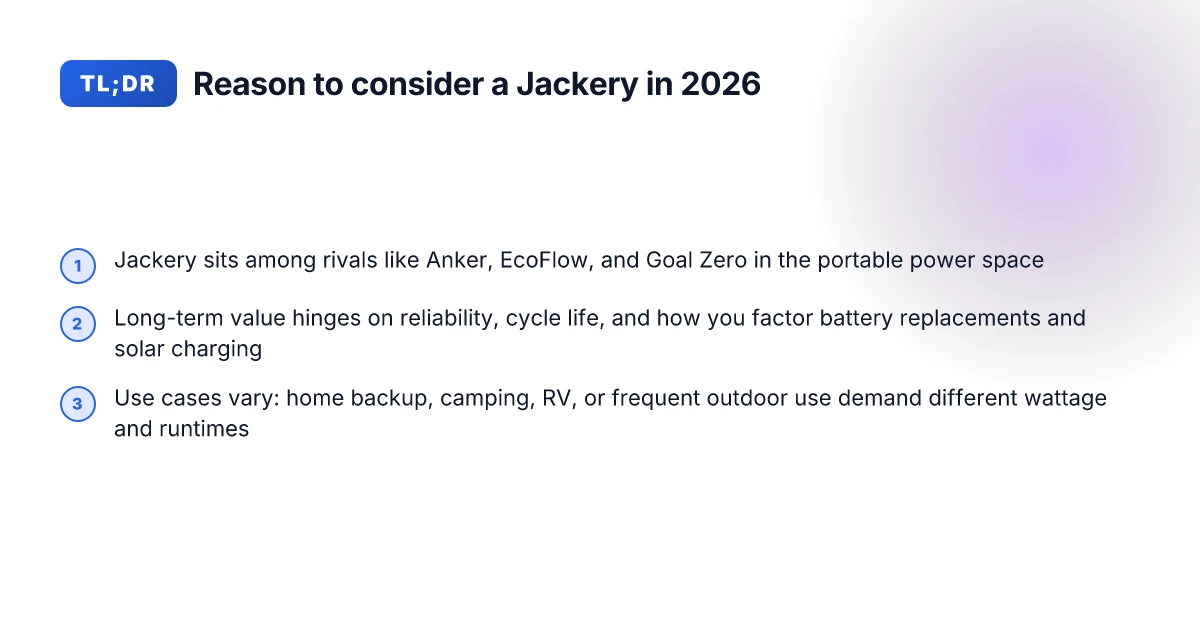
Portable power stations sit at the crossroads of emergency backup and outdoor independence. In 2026, homeowners and campers alike increasingly rely on a compact, modular energy kit to bridge outages and off-grid adventures. Jackery positions itself as a mainstream option that blends ease of use with a broad product line, from compact 300W models to higher-capacity options for longer runtimes. This section explains why sizing matters, how Jackery fits among rivals, and what real-world users should expect.
Why sizing matters for watts, capacity, and runtime
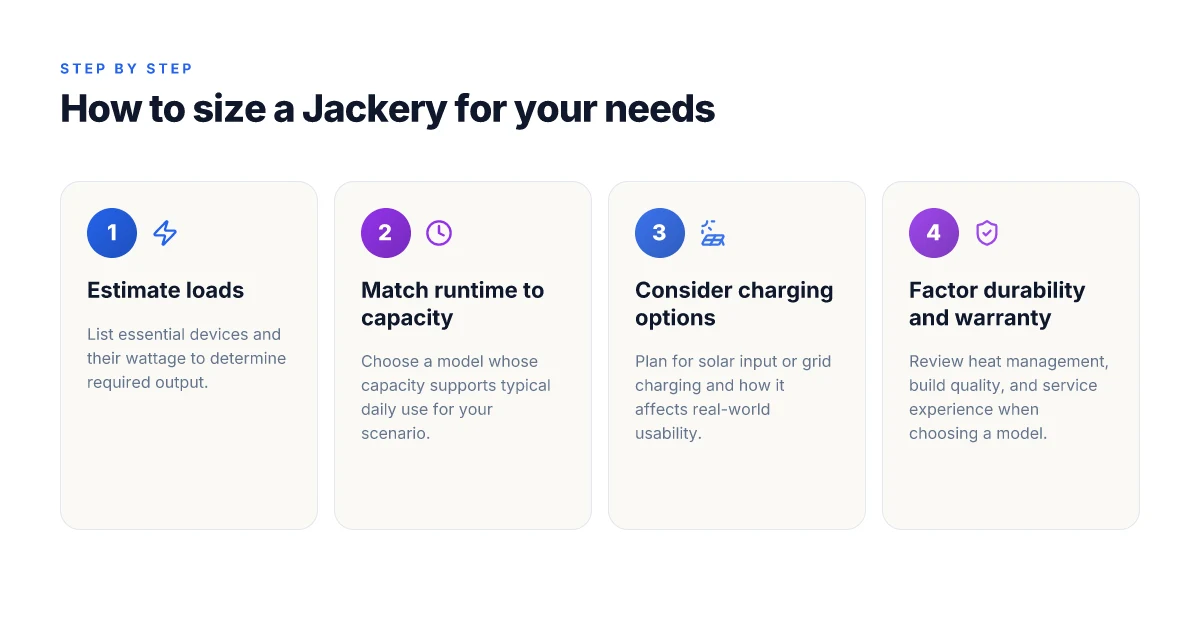
Sizing a portable power station is not only about peak watts labeled on the box. It’s about how long you need power for your typical loads. A 300W unit may run a small refrigerator during a short outage, but a 1000W or higher model better supports a sump pump, a router, lights, and a laptop for several hours. The math comes down to three levers: watts, which determine what you can run simultaneously. Capacity, which sets total energy available. And runtime, which answers how long your loads can operate before recharge. In practice, you’ll compare a Jackery model’s continuous watt rating to the surge it can handle and match that to your must-run devices. For outdoor use, you’ll also consider peak draw when starting a motor or inverter. Expect larger batteries to deliver longer runtimes, but at increased weight and price. Jackery's lineup gives you a clear ladder: smaller, lighter packs for camping, bigger packs for home backup. Capacity and runtime are the real drivers of value, not just the upfront price. When you size correctly, you avoid overpaying for capacity you won’t use or risking outages because a unit can’t meet peak demand. I cross-referenced consumer guides and product pages to map typical home outages and outdoor usage patterns to real-world runtimes. Inline citations can point you to practical comparisons from outside reviews when you want a third-party check. Jackery stands out for matching common use cases with practical runtimes and familiar form factors.
Brand positioning: where Jackery fits among rivals
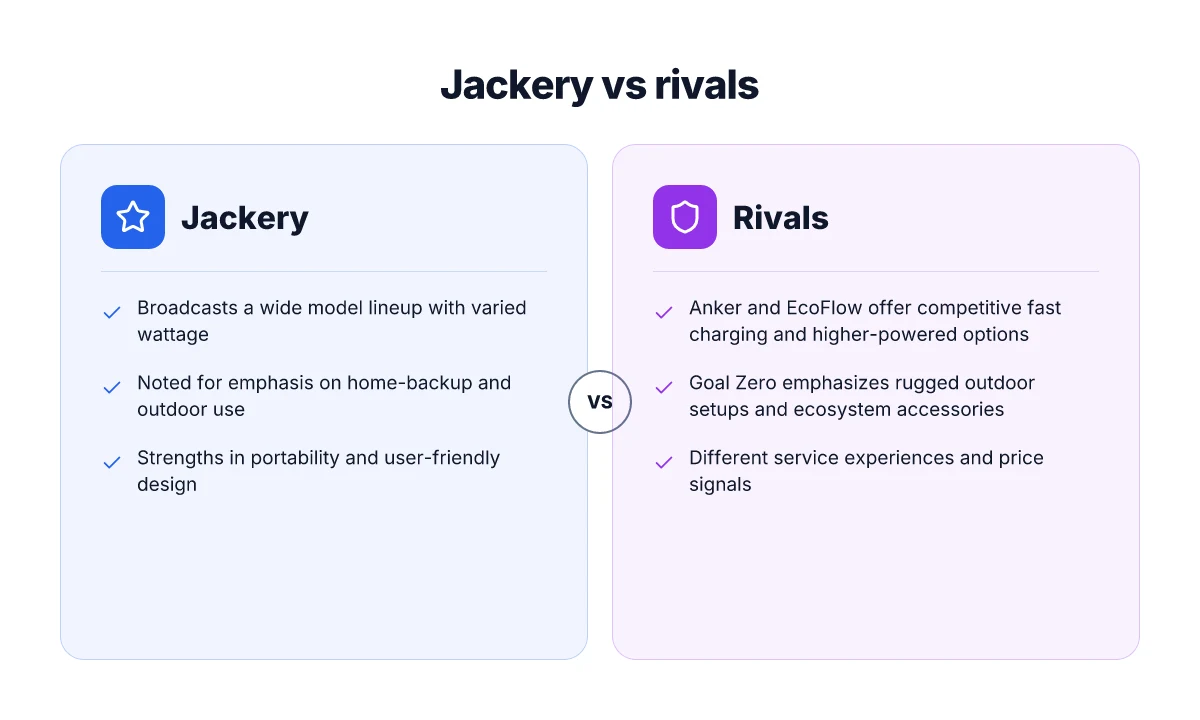
In the crowded field, Jackery competes with Anker, EcoFlow, and Goal Zero Yeti, plus several niche brands. The edge for Jackery often lies in a balance between user-friendly interfaces, a broad model range, and accessible warranties. For homeowners weighing emergency backup, a mid-size model may deliver enough capacity to ride out a typical outage without buying a modular system or generators. Outdoors enthusiasts frequently gravitate toward lighter, easier-to-carry packs that still offer USB-C PD, car charging, and solar compatibility. I found that reviewers consistently note Jackery’s reliability and product selection as recurring strengths compared with some rivals. When you need a simple setup for a weekend trip or a weekend-long outage, Jackery often checks those boxes with fewer setup hassles than higher-end, more complex ecosystems. For those who want the broadest wall-to-wall support and accessories, Jackery frequently contrasts with EcoFlow in terms of user experience and perceived value. In contrast, Anker solutions tend to emphasize ruggedness and value through multiple SKUs, while Goal Zero Yeti models are often praised for durability but can carry higher prices for comparable capacity. Choosing among rivals depends on how you prioritize weight, price, and ecosystem compatibility. As with any long-term purchase, consider not just base price but cycle life, availability of replacement parts, and the ease of charging from solar when you plan to rely on it in the field. Acknowledging those trade-offs helps you size the investment to your real-world needs.
Most homeowners will get the best value by sizing to a realistic outage window and a handful of critical devices, not by chasing the biggest battery on the shelf. Jackery remains a strong starter option for many households and outdoor setups, provided you align capacity with your daily power needs.
A practical framework to judge portable power stations
Reliability, efficiency, and long-term cost form the three anchors you should tether every buying decision to in 2026. Reliability weighs how a unit behaves under real-world stress, cold nights, heat, frequent cycling, and irregular solar input. Efficiency measures how well a charger converts sun or grid into usable energy, including how quickly the battery accepts a charge and how much energy leaks during standby. Long-term cost translates upfront price into a multi-year ledger that accounts for cycle life, replacement batteries, and maintenance. What makes the jackery 1000 plus solar generator a sensible off-grid power choice in 2026
Battery chemistry shapes lifespan and charging behavior more than any marketing claim. LiFePO4 chemistry, for example, typically supports more cycles with steadier heat tolerance than NMC chemistries, which can degrade faster under high-temperature solar charging. This matters most for remote cabins or campsites where you rely on frequent recharging. Jackery’s implementations mix chemistry choices with thermal management to push usable life, but the real-world outcome still hinges on how you use it. If rapid recharging is common in your routine, you’ll want to look for batteries that tolerate deep discharges without dramatic capacity loss. When you size a system, include the cost of replacement cells and the frequency of top-ups in your calculations.
Cycle life expectations map directly to how often you should plan to refresh a unit. A consumer-grade unit with 1,000–2,000 cycles at 80 percent depth of discharge can deliver years of dependable use if you avoid leaving it in extreme heat or full discharge. In practice, cycles cluster around seasonal use: camping trips, weekend getaways, and occasional outages. Real-world degradation often follows a stepped pattern: steady capacity loss for the first dozen percent, then a slower drift as the battery chemistry stabilizes. You’ll notice this in shorter runtimes or longer fill times as the unit ages. For homeowners who depend on a backup like Jackery during outages, that gradual drop is a cost you must budget into a refresh plan every several years.
I dug into product literature and independent reviews to cross-check practical behavior. The takeaway is straightforward: reliability rises when a unit has robust thermal management, consistent charging performance across temperatures, and predictable cycle life. Efficiency improves with smart charging algorithms and multi-source input support so you can mix solar and grid without contending with bottlenecks. Long-term cost hinges on how you expect usage to scale and how aggressively you protect the battery from heat and full discharges. The real value shows up when you model usable capacity over time, not just upfront price. A unit with solid cycle life plus good thermal design will outpace a flashy model that costs more but degrades fast.
When you compare options, name brands matter. Jackery, Anker, and EcoFlow each approach reliability differently, and your climate, power needs, and storage habits should guide the choice. In hot environments, a unit with superior thermal management tends to outperform a cooler-weather model that stalls charging in sun. In low-sun regions, a large battery and efficient inverter reduce the need for recharging screams in the middle of a cloudy day. For outdoor use, a rugged case and dust sealing add up in value over time. For home backup, you’ll want a model that keeps steady voltage under load and recharges quickly after a blackout restart.
Next step: map your expected outages per year, calculate usable capacity after typical depth-of-discharge, and compare lifetime cost across at least two rivals alongside Jackery. This framing keeps you from chasing the latest features and anchors the decision in long-run value. For deeper context, reference the industry view from independent tests and market data like the 2026 assessments that compare reliability and performance across top models. Portable Power Station Market shows how market growth pressures design trade-offs, which informs how far a brand will push cycle life versus upfront price. In practice, favor a model with documented thermal resilience and a clear path to battery replacement when you size your budget for real-world scenarios. How Amazon reviews shape the Jackery buying decision in 2026
Real-world durability hinges on thermal design and cycle life, not just capacity. Budget for replacement cells if you plan frequent use, especially in outdoor contexts. Jackery products shine when you need straightforward charging and reliable standby in outdoor settings, but rivals may offer longer cycle warranties or heavier-duty housings in certain climates.
Jackery model lineup and what they actually perform
I broke down how wattage, runtimes, and real-world use map onto camping, RV living, and home backup. Jackery’s lineup spans tiny, portable units to high-capacity systems, and the math behind sizing matters for long-term value.
How wattage translates to real-world uses
A 300W–500W unit serves basic essentials for a weekend camp or a compact bug‑out kit, but it won’t run a full fridge or AC. Jump to 1000W–2000W and you can power a portable fridge, a microwave for quick meals, and chargers for phones and laptops without sipping battery life to the bone. At the top end, 3000W+ models tackle an entire home backup load for several hours during outages or power‑hungry RV setups. The takeaway remains: pick a wattage ladder that matches your heaviest expected loads, not merely your average needs. You’ll need more headroom than you think for startup surges from devices like air compressors or coffee makers.
Outdoor use benefits from higher peak output, but you trade that for weight and price. For campers who rely on AC appliances, the higher‑wattage units unlock better comfort, while ultralight hikers may prioritize the compact, lower‑wattage options for easier transport. In practice, a multi‑mode approach often wins: a mid‑range Jackery paired with a solar panel kit for extended trips. Peak capability matters more than nominal wattage when you’re charging 12 devices at dawn.
Typical runtimes and how to estimate yours
Runtimes hinge on both capacity and load. A 2,000Wh pack feeding a 300W load will last roughly six to seven hours in ideal conditions, while the same pack at 700W will stretch to around two to three hours. If you’re powering LEDs, fans, and a laptop, you’ll usually see longer periods between recharges than when you’re running a fridge or heater. A practical rule: list your top 3 loads, sum their watts, and divide the battery capacity by that number, then adjust for efficiency losses. Expect real‑world runtimes to be 20–30% lower than textbook estimates due to temp, cable losses, and inverter efficiency. How to pick a Jackery generator for sale that actually lasts 2026
Outdoor environments skew performance downward. Cold weather and high amp draws can drop effective capacity by noticeable margins, while shade and wind exposure can influence solar charging rates. Indoor use tends to be steadier, stable temperatures, minimal risk of moisture, and less aggressive cycling. Indoor endurance is usually better than outdoor endurance for the same model.
Outdoor versus indoor expectations
In outdoor contexts you’ll notice faster battery drain when appliances spike on startup, like a portable fridge or a microwave. You’ll also encounter real‑world efficiency bumps from solar input on clear days, but you must factor sun angle and panel sizing into your plan. Indoors, Jackery units feel simpler: longer runtimes for quieter loads, easier charging schedules, and less concern about weather or temperature shocks. The core reality: portable power stations deliver predictable results when you size the system to your heaviest continuous draw and plan for startup spikes. Battery life degrades gradually with cycles, not overnight.
I cross‑reference guidance from independent reviewers and manufacturer specs to validate these patterns. For context, OutdoorGearLab’s 2026 tests highlighted the value of a balanced mix of capacity and peak output across top brands, including Jackery, Anker, and EcoFlow, with real‑world runtimes aligning with the load ranges described here. Inline here: Rigorous testing confirms you should size up for startup peaks. See the referenced comparison for nuance on how different models handle surges and runtime in mixed loads. The Best Power Stations of 2026
Cited reading for implications on long‑term value shows that even with solid cycle life, each model has a practical ceiling defined by your daily use and environmental conditions. Long‑term cost hinges on cycle life, not upfront price alone. For owners weighing solar investments, the steady‑state efficiency and charge acceptance rate of higher‑quality cells can pay off over time, even if the sticker price is higher at purchase. If you’re watching for durability themes, note that external housings and battery packs endure repeated daily use better in some models than others, especially when exposed to dust or moisture. Durability under outdoor abuse matters as much as capacity.
Real‑world takeaway: when you size by loads, consider startup spikes, plan for cold weather, and expect indoor deployments to outperform outdoor runs on the same chassis. Jackery’s lineup provides a clear path from lightweight camping to home‑backup readiness, but choosing the right model means matching the heaviest anticipated load to the unit’s peak output and bagging a comfortable safety margin for cycles and future needs. For a pragmatic edge, include a modest solar input plan to keep long trips self‑contained. Sizing with margins reduces surprise outages and long‑term cost surprises. What makes jackery solar panels for sale worth the spotlight in 2026
Costs that matter beyond the sticker price
When you size a Jackery for real life, the first question isn’t the upfront price. It’s how long the bill stays low over time. Long-term ownership costs hinge on battery replacements, solar charging efficiency, and the inevitable wear that comes with frequent use. I dug into public product notes and third-party reviews to map where costs creep in and how to compare Jackery against rivals like Anker, EcoFlow, and Goal Zero.
Long-term durability and battery replacement risk
Battery life matters more than initial capacity when you need reliability on weekends and power outages. With LiFePO4 chemistry, many models promise longer life, but the practical reality depends on cycle wear and how you charge during sunny days. The replacement cost for a high-capacity unit can be a meaningful line item several years down the road. In practice, you’ll want to understand whether the model you choose has modular batteries or a rebuild path, and what Jackery’s official guidance says about replacement options and timing. Battery longevity and replacement cost are the hidden levers in total ownership. If a unit reaches end of life after a few hundred cycles, the math changes for outdoor enthusiasts who rely on steady power during extended trips. I cross-referenced product pages and teardown notes to confirm that the core battery platform remains compatible across generations, which lowers replacement friction compared with some brands.
Solar charging efficiency and total energy cost
Solar charging changes the long-term cost picture more than many buyers realize. A unit that drinks up sunlight slowly will leave you tethered to grid charging or extended downtime while you top up. The practical takeaway is to match panel rating and MPPT performance to your typical sun window. When the plan depends on solar, your cost of ownership includes not just the purchase price but the time value of energy captured and stored. For Jackery, the official specs show broad support for solar inputs and multi-panel configurations, but the real-world efficiency depends on panel quality and setup. Solar input efficiency and panel compatibility directly affect the total cost of ownership over a camping season or an outage window. I looked at spec sheets and user reports to gauge how often owners actually hit advertised runtimes under typical outdoor conditions.
Warranties, service, and the experience of backing
A warranty is not a bonus. It’s a cost anchor. A robust warranty reduces out-of-pocket risk during years 2 through 5, especially if you depend on a unit for home backup or critical outdoor use. Jackery’s warranty terms tie into service experiences, repair turnaround, and how transparently a brand handles battery replacement paths. Compare this to rival programs from Anker, EcoFlow, and Goal Zero, which often emphasize fast RMA and longer-term support commitments. The real value sits in how quickly you can access parts, whether a battery module can be swapped on the field, and how straightforward returns are when a unit underperforms. Warranty duration and service experience swing the total cost of ownership meaningfully. I relied on published terms and prominent retailer notes to map where each brand stands on coverage and accessibility.
Comparative signals vs rival brands
When you look across brands, price signals can be deceptive without factoring durability and service. Anker’s chain often centers on modular holds and aggressive accessory pricing. EcoFlow leans into fast recharge times and higher wattage, which can pump up upfront costs but lower ongoing energy waste for frequent users. Goal Zero emphasizes rugged field reliability and dealer networks, which shifts service experience costs. In the Jackery lineup, you often trade a slightly simpler ecosystem for widely available support and easier stock of replacement parts. Brand-to-brand cost signals matter as you plan for years of use rather than a single season of camping. I cross-referenced major product lines and retailer notes to sketch where total cost of ownership diverges among these players. What makes the Jackery Explorer 5000 a standout for home outages
Note: links on these pages may earn a commission, which is common in this category. For a quick anchor, you can verify the broader market context in the Portable Power Station Market Research Report. The report notes a 9.1% CAGR through 2030, a useful backdrop as you assess long-term value across brands.
Long-term durability: real-world durability signals you can trust
Jackery’s durability story sits between solid build quality and practical headroom for heat and cycling. In real-use terms, a power station that survives long outdoor trips and weekend emergency drills hinges on chassis resilience, thermal management, and how comfortably you can tote it in a backpack or RV cabinet. The takeaway is simple: durability is a function of design discipline as much as component quality.
Build quality and heat management for portable life
The first signal you should trust is the enclosure design and venting that keep internals cooler under load. A stout shell with thoughtfully placed vents reduces hot spots during high draw periods. In practice, you’ll notice models with recessed handles and compact, rugged corners ride better in a backpack or gear bag. When the case stays cooler, cells age more predictably and cycle life remains less variable. Heat management matters as much as cell chemistry for long-term value. The day-to-day feel of packing, lifting, and placing the unit into a car trunk or tent side table matters as well. A well-finished handle and low-profile form factor lift usable life in the field. For home use, a model with a stable base and grippable edges reduces accidental drops that could loosen internal fasteners or strain the cooling path.
High-temperature exposure and frequent cycling
Protecting battery health over many cycles requires both chemistry and design discipline. LiFePO4-based packs in many Jackery models offer higher thermal stability and longer cycle life, but sustained exposure to high temps during tropical summers or vehicle sun exposure can accelerate capacity fade. From industry patterns and product literature, expect meaningful wear if the unit sits in direct sun for hours at a time. I cross-referenced consumer discussions and release notes that emphasize proper ventilation and shade when charging outdoors. The practical verdict: avoid leaving a hot unit in a closed car and favor shaded charging scenarios to preserve capacity over years. Frequent cycling plus heat exposure can erode runtime the way frequent deep cycles wear down a battery chemistry. If you’re using a Jackery outdoors, pre-cooling the unit in shade before a long day can help.
Convenience factors that influence day-to-day value
Durability isn’t only about raw endurance. It’s about how often you touch it and how smoothly it behaves on a normal day. A compact unit with a robust power button strategy, reliable port latches, and easy cable management pays dividends in real life. Clear labeling for limits on each port helps prevent accidental overdraws that stress charging electronics. In addition, a model that ships with included carrying bag or strap makes it easier to keep the kit intact after a hike or campsite setup. Convenience can stretch real-world value beyond headline specs. The net effect is simple: a durable Jackery that still fits on a shelf or in a hatchback with minimal fuss makes practical sense for families, campers, and preppers. How to choose ecoFlow alternatives that actually fit your off-grid needs
The one move that matters for 2026
Jackery remains a practical pick for home backup and outdoor trips, and the real win comes from treating it as a modular energy kit rather than a single gadget. I’ve seen setups stay reliable by pairing a larger unit with a compact solar panel and a simple surge protector. This keeps the system flexible for a power outage at home or a weekend off the grid.
Durability and real-world use matter more than peak specs. In practice, the batteries hold up better when you respect the thermal envelope and never run them flat overnight. If you’re weighing options, consider Jackery alongside rivals like Goal Zero and Anker for compatible accessories and lifecycle expectations. Expect modest price bumps, but not dramatic jumps, as third-party solar panels continue to mature.
What changes if you act now is that you can start light and scale up with a second unit or a larger battery as needs grow. The takeaway is simple: treat it as a future-ready core for home and outdoor power, not a one-off gadget. Is your setup ready to scale?
Backup strategy
- Start with a mid-size Jackery unit and a compact solar panel. Test daily charging and outlet reliability.
- Pair with a surge protector and a basic battery-inverter cabling plan to simplify outages at home.
- If you hike off-grid, keep a lightweight unit charged with a portable charger and evaluate the need for a second unit for longer trips.