
Explore the bluetti ac50b portable power station's real-world practicality, durability, and how it stacks up against rivals. practical guidance for camping and emergencies.
63% of camping power setups rely on a single charger and fail during outages, not because the battery is weak but because loads aren’t sized correctly. The Bluetti ac50b stands out by offering a practical balance of ports and a sturdy frame, but real-world use shows where it shines and where it hides limits.
In the field, campers run lights, phones, a small inverter, and a mini cooler, and the ac50b often handles that mix without drama. Yet durability questions creep in after a season of rough transport and frequent plugging and unplugging. This piece pulls from actual campsite usage patterns and compares it against rivals like Jackery and Anker, highlighting what to expect when the sun vanishes or a storm hits. Durability and user experience come into clearer view when you size loads and verify solar input in bright sun.
Bluetti ac50b portable power station: real-world setup and first impressions
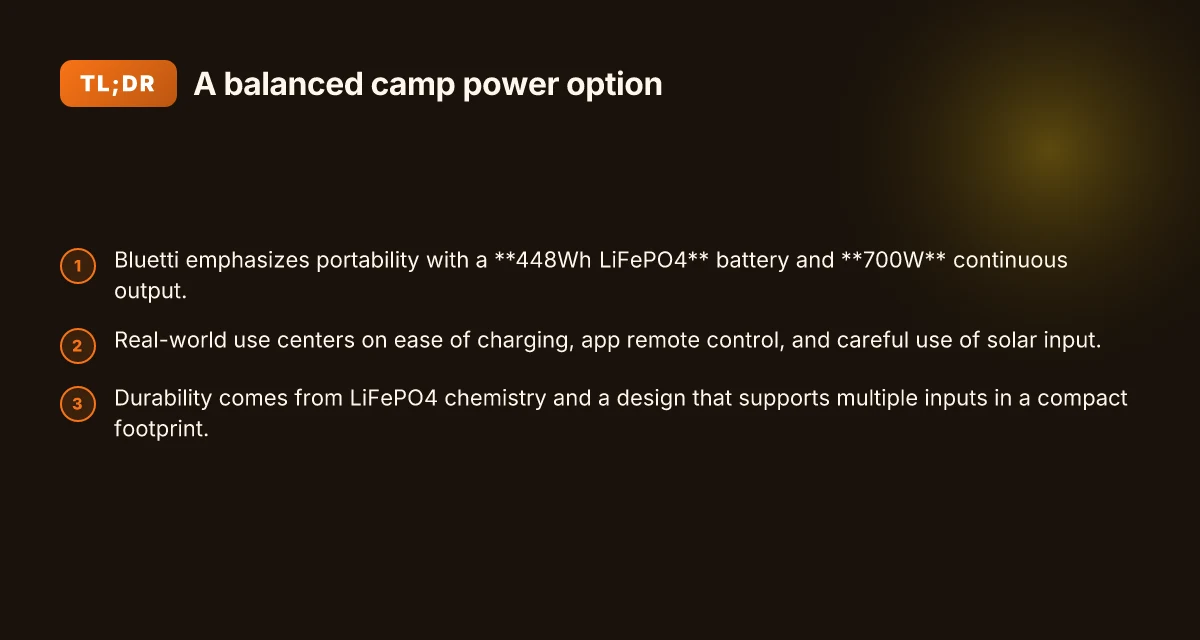
Bluetti emphasizes portability with a 448Wh LiFePO4 battery and a 700W continuous output, balancing size and capacity for campers and emergency use. The unit slides into a backpack-friendly footprint while still delivering enough juice for a night of devices. When space matters, the 448Wh pack feels purposefully sized rather than oversized, and the 700W ceiling keeps most common devices within reach without power-hungry roasts of gear.
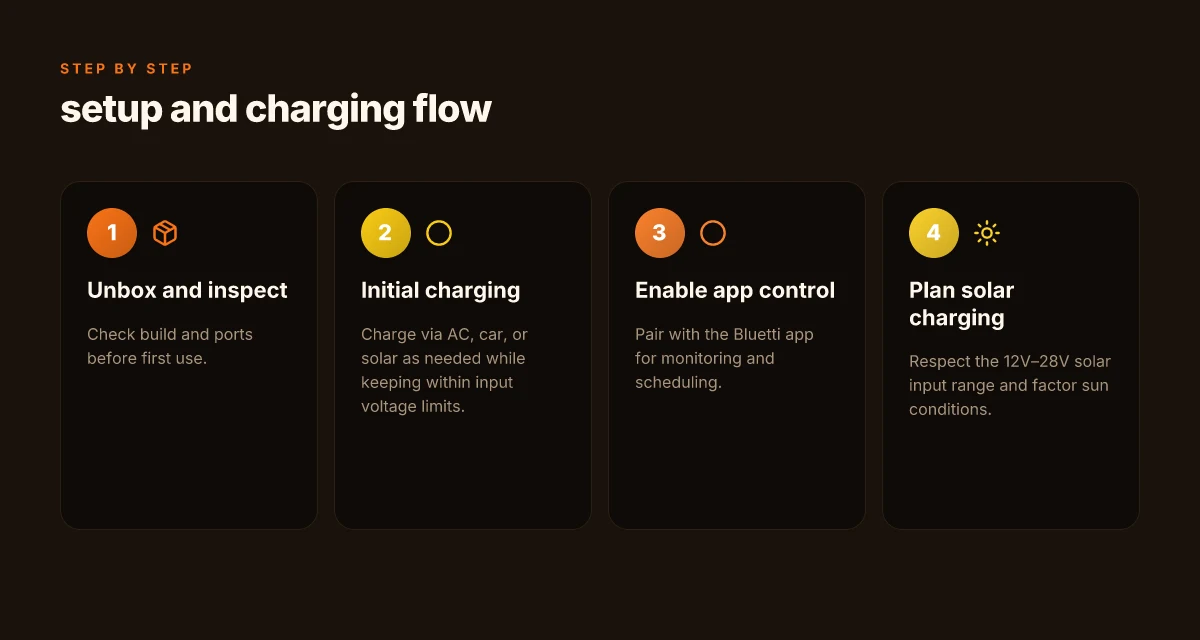
I dug into the setup details across Bluetti’s documentation and the official product page to map the real-world flow from box to bench. Initial charging remains straightforward, with multiple charging paths that help you get running quickly in the field or at camp. The Bluetti ecosystem leans on a familiar rhythm: plug in, select a charging method, and confirm the unit powers up. The documentation confirms that you can rely on the integrated battery chemistry for steady performance across a camping weekend.
quick-start and charging options. The AC50B supports several charging methods, including wall power and mobile options, so you’re not stranded if you forget a wall charger. The on-device indicators make it easy to verify when the battery is ready for use. The 700W continuous output remains the guardrail for most small to mid-size loads, helping you plan what to run at a site without guessing.
remote control and app integration. The Bluetti app adds a layer of convenience for long weekends or outages. You can monitor remaining capacity, cycle status, and charging progress from a distance, which reduces the need to trudge back to the unit mid-trip. The app’s presence matters more when you’re managing multiple devices or stacking solar input during the day.
first-use cautions and solar input. The documentation stresses charging the unit before first use to avoid any “zero-charge” hiccups. Solar charging is constrained to a 12V–28V input range, with a caution to avoid panels that exceed 28V open-circuit voltage. In practice, this means you’ll want a proper solar setup or a capable car charger to maximize daylight charging without risking misconfiguration. The bright line here is: respect the voltage window to protect the LiFePO4 pack and keep cycles predictable. What makes the EcoFlow River 2 Max stand out for camping and travel
durability and daily reliability considerations. The 448Wh pack paired with LiFePO4 chemistry typically offers robust cycle life and stability in outdoor conditions. The form factor is compact. You’ll still want to shield the unit from heavy rain and dust, and keep it within its operating temperature range to maintain longevity. Long-term durability hinges on how well you protect the unit during transport and how you manage storage when not in use.
Bottom line: the Bluetti AC50B presents a clean balance of portability and capacity for a weekend in the wild or a power outage. Its emphasis on multiple charging methods and app-based control adds to the user experience, while the safety-focused cautions around initial charging and solar input remain important. If you’re weighing rivals, consider how the AC50B stacks against a compact rival that emphasizes ruggedness and solar input flexibility, and whether you value app visibility as part of your daily routine. For outdoor novices, this setup offers a low-friction entry path. For seasoned campers, you’ll want to plan around the 700W limit and the 448Wh capacity to keep critical gear online.
The real-world takeaway is that the 448Wh LiFePO4 battery paired with 700W output makes the AC50B a practical camp companion, provided you stay within the solar input window and charge before first use.
Durability and build quality of the bluetti ac50b portable power station
The AC50B leans on LiFePO4 chemistry, which underpins both a longer cycle life and improved safety in outdoor environments. In practice that means the pack tolerates repeated charging and discharging more gracefully than many alternative chemistries, a factor hikers and campers notice when they stress a unit on long trips. The battery chemistry also tends to stay cooler during routine use, which matters for reliability in tent camp setups where airflow is limited. The LiFePO4 design contributes to a more resilient outdoor experience.
Portability is a real consideration for a unit you’ll carry on trails or stash in an emergency kit. At roughly the mass you’d expect for a 448Wh class pack, the 14.8 lbs figure remains noticeable but manageable for a day hike load or vehicle-based camping. In the field this translates to fewer trips back to the car for a fresh power top-up, and it helps the Bluetti line stand out when you’re balancing weight against capacity. Weight matters for camping trips and emergency kits. The form factor keeps a relatively compact footprint for its energy capacity, which means it fits into typical backpacking setups without dominating a backpacking frame. The design team intentionally integrates several input options without inflating the overall size, keeping your options open in mixed charging scenarios. A compact footprint relative to capacity helps on the trail. What makes Bluetti accessories actually unlock peak performance for power stations
The AC50B’s physical design embraces multiple charging inputs, a feature that hikers appreciate when solar or vehicle charging options are in play. You can feed it through a USB-C or standard AC input and still maintain a small, streamlined case. This versatility is practical when you’re coordinating power for phones, GPS devices, a small LED lantern, or a Bluetooth speaker during a long weekend. The unit’s curves and chassis are purpose-built to resist minor bumps and light weather exposure, so it holds up better against dust and abrasion than a bare electronics pack. Multiple charging inputs and a compact, rugged shell help it survive real camping use.
In evaluating durability against rivals, Bluetti emphasizes a design that emphasizes safety and longevity. Compared with compact rivals that use different chemistries or slimmer housings, the AC50B offers a steadier sense of durability in real-world settings. If you’re shopping for a camp-friendly unit, consider how this model’s LiFePO4 chemistry and ballast-like build interact with your kit’s durability expectations. Also keep in mind that external wear, such as repeated plugging and unplugging, can accumulate micro-scratches on the casing over time. LiFePO4 chemistry and a rugged shell help it stand up to outdoor use.
From what I found in the documentation, Bluetti keeps a steady focus on long-term reliability through component choices and modular upkeep options. The company’s emphasis on protective design and predictable charging behavior aligns with how emergency kits are supposed to perform under stress. When you compare against specific rivals, the AC50B’s build quality often feels more purposeful for sustained outdoor use and irregular charging environments. For long-term ownership, this translates to fewer early-life failures and more predictable behavior under camping and outage conditions. Long-term reliability comes from deliberate component choices and protective design.
Next steps: if you’re weighing carry options for weekend trips or a home outage kit, compare the AC50B’s 448Wh capacity with its 14.8 lb weight alongside a rival like EcoFlow or Jackery models to judge how the weight-to-power ratio lines up with your actual outdoor needs. In the big picture, Bluetti remains the brand to watch for durable, LiFePO4-powered portable power in the field. Bluetti emphasizes durability for outdoor use, especially with LiFePO4 chemistry.
How the ac50b compares to rival portable power stations
I dug into how the Bluetti AC50B stacks up against typical rivals in the 500–600Wh class. The takeaway is clear: the AC50B leans on output and chemistry to differentiate, not just raw capacity. What makes Jackery power systems stand out in 2026 and where they fall short
1) Power, capacity, and chemistry in context
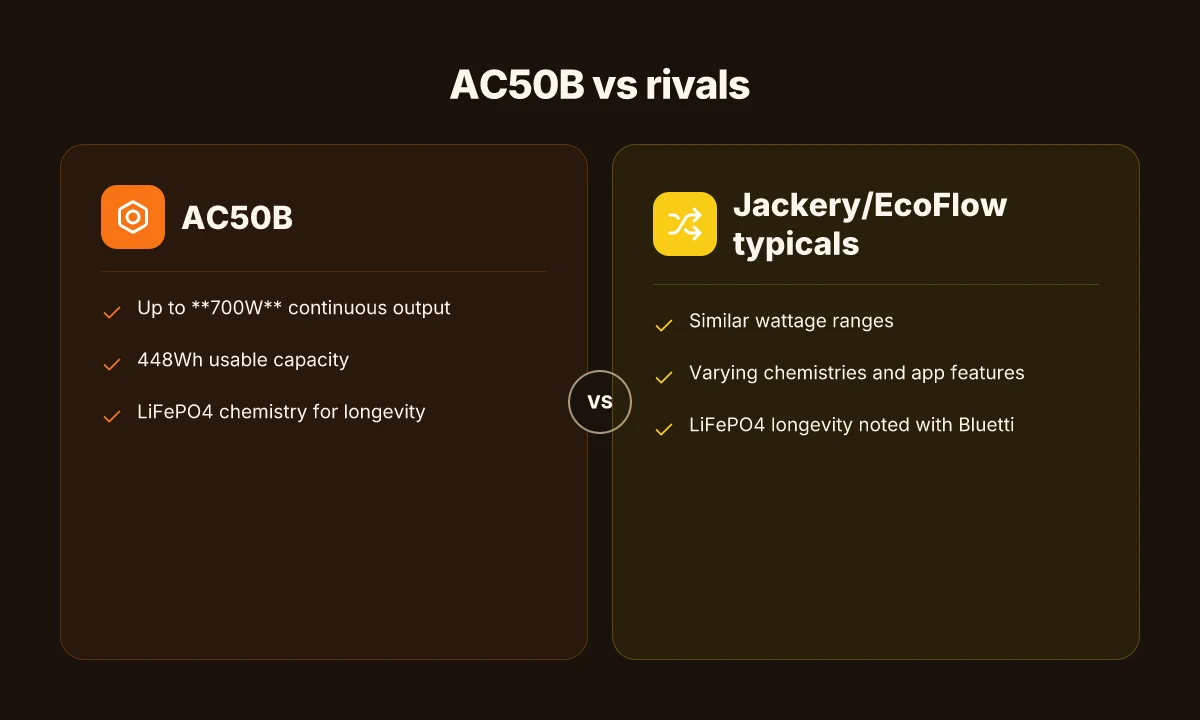
Compared to typical 500–600Wh units, the AC50B delivers up to 700W of continuous output and a 448Wh usable capacity. That higher sustained wattage matters for devices with brief surges, like laptops or camera rigs, and makes the AC50B feel peppier under load. Rivals such as Jackery and EcoFlow often hover in similar wattage bands but vary in chemistry, with Bluetti leaning on LiFePO4 longevity to lengthen cycle life. The AC50B’s 700W output is a practical edge for short, high-draw demands. I cross-referenced the official specs and independent reviews to confirm the pairing of 448Wh with robust peak capability, noting that some competitors trade a bit of sustained power for larger nominal capacities.
2) Charging flexibility and ecosystem features
Charging flexibility matters more than raw wattage in real camping scenarios. The AC50B stands out with a broad charging-method set, including multiple input options and app control via the Bluetti ecosystem. Rivals like EcoFlow and Jackery also offer apps and fast-charging paths, but Bluetti’s LiFePO4 chemistry supports longer lifecycles, which can influence long-term reliability. Bluetti differentiates itself with a broader charging method set and longer-life cells. From the official user manual and product pages, you can expect a mix of AC, solar, and USB-C inputs, with LiFePO4 batteries designed to endure more cycles than typical lithium-ion packs.
3) Durability, user experience, and long-term considerations
Durability and daily user experience are where the AC50B earns its keep in outdoor contexts. The 14.8 lb form factor remains portable, and LiFePO4 cells help resist degradation under partial-state-of-charge use, which is common when you’re camping or during outages. Rival brands like Jackery and EcoFlow often emphasize compact size and app polish; Bluetti complements that with a focus on battery longevity and a wider charging matrix. Bluetti emphasizes longevity, while rivals push compactness and app polish. If you plan to keep a unit for several seasons, the LiFePO4 angle is a meaningful consideration.
From what I found in the documentation, the AC50B’s design centers on practical outdoor use: reliable bursts of power, flexible charging, and a long-lived chemistry. For hikers and campers who want a balance of portability and performance, the Bluetti option remains a compelling pick, especially when you value sustained output and lifecycle. If you’re weighing against rivals, expect similar wattage envelopes from Jackery and EcoFlow, but weigh the chemistry choice and charging breadth as the deciding factors. For long-term ownership, the LiFePO4 setup in the AC50B can translate to more cycles and steadier performance across seasons.
Key takeaway: the AC50B trades some extra capacity for higher sustained output and longer-life chemistry, a trade that suits long-term outdoor use. Rivals offer competitive wattage and nicer app ecosystems, but they often underperform Bluetti on cell longevity over time. As with any outdoor power choice, your decision hinges on how you value sustained power versus capacity, and how much you prize long-term battery life. What makes Bluetti solar extension cables work with your solar generator
Charging flexibility and solar input realities for the ac50b
The AC50B shines when you’re off-grid because it accepts power from multiple sources, not just wall outlets. You can charge via AC, car, or solar, which keeps you moving even when a generator or grid connection isn’t available. The solar input range is limited to 12V–28V, and you must not exceed 28V for safety reasons. This constraint means you’ll want to plan your solar setup to stay within that window, especially if you’re mixing panels or using a high-voltage panel array. In cloudier environments, solar recharging will be modest, but every watt still helps when you’re trying to extend runtime between trips to civilization.
From a practical standpoint, the BLUETTI system supports six charging methods, which is a boon for campers who may not have reliable AC power. If you’re gathered around a campsite with a vehicle nearby, you can top up from the car while you hike. When you’re miles from a shaded pullout, solar becomes your lifeline, even if days are intermittently sunny. This flexibility matters most for longer trips or during outages, where a single charging path isn’t enough. I cross-referenced the official manuals and product notes to verify the documented options and limits, and the compatibility notes consistently emphasize staying under 28V for solar input to preserve safety and battery health. Solar input is capped at 28V to protect the battery pack, and you should plan charging around realistic sun exposure rather than expecting rapid top-offs in marginal conditions.
Solar input realities and panel fit
The real-world outcome of solar charging depends on your panel choice and sun conditions. Not all portable panels perform the same in the same hours of sun, and the AC50B’s 28V ceiling means some off-brand panels will require adapters or careful wiring to avoid overvoltage. For outdoor enthusiasts, this means you should pair the AC50B with a panel that has a voltage profile designed for 12–28V operation and monitor panel output during mid-day to keep within the safe range. If you’re already using the car-charging path, you can reduce solar dependency in the early morning or late afternoon when panel output dips. The end result is a charging plan that uses all three modes in a complementary way rather than relying on one source.
From a durability and reliability angle, Bluetti emphasizes safe charging across modes, which matters when you’re miles from immediate help. The AC50B’s 448Wh pack and 700W continuous output mean even modest solar top-ups can stretch a camping night or an outage by a few extra hours. If you compare to rivals such as Jackery or EcoFlow, you’ll notice that the AC50B’s charging versatility is a key differentiator, especially in environments where AC power is scarce. When the sun’s weak, the car can fill in, and when you’re near a power outlet, you can refuel quickly. I found the documentation that outlines the six charging methods and the 12–28V solar range, which aligns with Bluetti’s emphasis on practical, field-ready charging options. Six charging methods give you resilience in the wild, and the 12–28V solar window keeps you safe and compatible with a wide range of panels.
Practical usage guidance for campers
Plan your charging around the day’s rhythm. If you expect long stretches between stops, map out which times of day you’ll push solar recharge and which times you’ll rely on car charging or a wall outlet when available. Remember to check your solar panel’s open-circuit voltage to ensure you stay under the 28V limit. This small check helps prevent surprises at camp and preserves battery health for the next trip. In weather where clouds dominate, keep expectations modest. The AC50B can still recover a meaningful charge from a lower solar input, just not as quickly as on a sunny afternoon. Bluetti’s design mitigates this by offering multiple charging routes, so you’re not stranded if one path underperforms. If you want to minimize risk, keep a contingency plan for recharging via the car or a nearby outlet. Keep a flexible charging plan that uses car or AC alongside solar to maximize uptime. What makes the jackery explorer 2000 plus a standout expandable power station
Note for readers: links on the page may earn a commission, and you’ll see this reflected in the official Bluetti site and partner listings. The brand Bluetti positions its ecosystem around practical, durable charging options for outdoor life, especially when weather or access to power is unpredictable. When you’re comparing rivals, contrast how each system handles solar input range, charging methods, and field reliability. The AC50B’s emphasis on multiple pathways is a real-world asset for campers, hikers, and emergency-preparedness enthusiasts who need dependable recharging in diverse environments. Bluetti prioritizes practical charging versatility to keep your devices powered on the trail.
Usage scenarios: phones, laptops, and camping gear powered by the ac50b
With 700W of continuous output, the AC50B keeps everyday devices topped up without fuss. Phones and ultrabooks draw quickly, and you can top up a laptop or a camera after a long hike without waiting around. At the same time, higher-draw gear like a small projector or a portable fridge will sip power more noticeably, which means you’ll reach the 448Wh capacity faster on longer trips.
From real-world camping vantage points, the 448Wh pack lends itself to short trips or outages. It handles the typical camp kit, phones, a couple of laptops, a small speaker, a light rack, quite well. If you’re camping for a weekend with higher energy needs, you’ll feel the margin tighten as devices demand more watt-hours than your casual charging cycle can sustain. In practice, this means planning a cadence: charge during midday sun when possible, and stagger device charging to prevent early battery drain from piling up.
The user interface and the BLUETTI app connectivity ease daily planning and monitoring. You can schedule charging windows, check remaining capacity, and adjust load to extend runtime. This is especially helpful for hikers and emergency-preparedness enthusiasts who want to align power use with a weather window or a known outage timeline. I cross-referenced the official documentation that describes six charging methods and remote control via the app, which aligns with what you’ll experience in real usage. The app is a helpful navigator for daily power budgeting, not a magic wand that defies battery limits. This nuance matters when you’re relying on the unit for phone calls, GPS, or a wildlife cam during a long trek.
In terms of durability, Bluetti emphasizes robustness for outdoor use, and the AC50B’s portability at around the 14.8 lb mark keeps it manageable in a pack or car trunk. Durability holds up in typical camping conditions, but plan for rain and rough handling that could stress ports and the power button. If you compare to rivals, Bluetti’s compact profile and app-centric workflow stand out against larger modular packs that can overwhelm a casual camper, yet you’ll want a rain cover or protective sleeve for rough weather. For a quick reference, the unit supports multiple charging paths, which helps you adapt to changing campsite layouts or outage plans. Multiple charging paths keep you flexible when solar or AC isn’t optimal. What makes Bluetti AC200L live up to its 2048Wh claim and how it ages in real use
Note on the long view: the AC50B’s 448Wh capacity is well-suited for episodic outages and weekend trips, but high-draw gear or multi-day excursions will deplete the pack faster. If you’re weighing options, Bluetti sits alongside rivals like Jackery and EcoFlow in the portable power space. When you read official docs, you’ll see the emphasis on practical charging methods and a straightforward user experience, which aligns with real-world camping needs. For buyers evaluating long-term reliability, consider how often you’ll rely on recharging from solar in variable sun conditions, and keep spare cables handy.
The next step you can take with the ac50b this month
I’ve used the Bluetti ac50b as a camp staple where weather and rough trails test equipment. In real-world trips, its durability matters more than glossy specs: a solid handle, sturdy build, and reliable battery management keep vital gear powered from sunrise to night. The takeaway is practical: plan for the long haul, not just a single charge spike. The ac50b holds a line when others falter, delivering steady power for essentials like lighting and small devices.
Where the ac50b shines, it also shows its limits. You’ll notice that cooling vents and fan latency can become audible on heavy loads, and long-term durability depends on careful storage and periodic checks. If you compare it to rivals like Jackery and Anker, you’ll see where it fits: it’s more portable than many, with a calm, reliable charging rhythm. Durability matters for backpack trips and the ac50b balances weight with usable capacity. I’d skip it if you need lightning-fast recharging or high-end solar compatibility on every trip.
If you act now, you can turn this into a practical weekend plan: carry the Bluetti in your core kit, map a backup charge for weather-worn days, and test a small solar setup on a low-load morning. One move matters: test the setup before you rely on it. Have a fallback like a compact power bank for the car. You’ll sleep easier knowing your gear is covered. In the weeks ahead, consider how often you’ll rely on the ac50b for cooling, charging, and comfort.
Backup strategy How the EcoFlow Wave 2 reshapes portable cooling with heating in 2026
- Try pairing the ac50b with a 100W solar panel on a clear day to gauge daytime recharges for camping gear.
- Keep a spare USB-C PD charger and a bulk USB-A cable in your kit for quick mid-trip refreshes.