
Explore Bluetti AC200L performance, expansion, and long-term durability. Learn what to expect in real use and how it compares to rivals.
The Bluetti AC200L often ships with a reputation that outpaces its real-world endurance, and that gap shows up quickest during extended outages. 2048Wh of capacity on paper can translate to noticeably longer runtime only if you respect fan noise, thermal limits, and battery aging. Durability hinges on thermal design and how you balance draw, charge, and storage in harsh environments.
You’ll see how wear accumulates under heavy loads, how easy it is to expand or upgrade with external modules, and where Bluetti stands next to EcoFlow and Jackery on real-world usability. By the end, you’ll know whether the Bluetti approach fits your grid-tled or off-grid life, or if a rival’s lighter footprint or faster recharge better matches your needs. With careful setup and ongoing checks, the 2048Wh claim remains meaningful for longer outages.
Bluetti ac 200l essentials: what the 2048wh setup promises
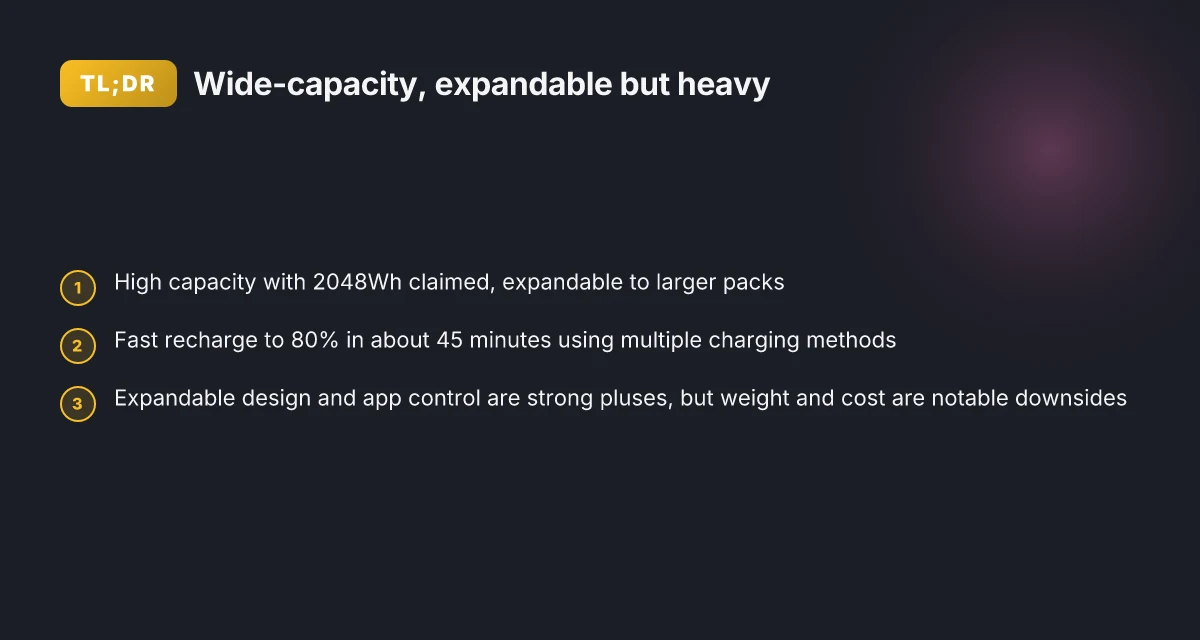
The Bluetti ac 200l delivers 2,400W of continuous AC output and can expand its capacity up to 8,192Wh. It also charges fast, reclaiming 80% in about 45 minutes using multiple charging methods, which helps when you need a quick turnaround between trips or weather events. The system is accompanied by an integrated Bluetti App for control and monitoring, and it supports pass-through charging along with UPS capabilities for unscheduled power needs.
- Capacity and output you can count on
- The AC output tops out at 2,400W, which covers most camping setups and home backup scenarios without pushing the unit into high-stress operation. When you couple that with top-end expansion to 8,192Wh, you gain real headroom for longer outages or higher-drain devices. This isn’t just a neat number. It translates to practical uptime for essential electronics and small appliances in off-grid or storm-event contexts. The Bluetti lineup is designed to scale, but the practical limit will hinge on the most aggressive draw you place on the unit at once, so plan for a modest battery margin with heavier loads.
- Fast recharge as a practical lever
- Recharging to 80% in roughly 45 minutes matters in real-world use. It means you can top off between excursions or after a weather gap with minimal downtime. The faster recharge is enabled by high-wattage input paths and multiple charging methods that Bluetti supports, including AC, solar, and perhaps other smart charging options. This speed makes wind-down periods between activities less painful and keeps you moving when you’re on a schedule.
- App control and monitoring you can rely on
- The integrated Bluetti App gives you visibility into battery health, charging status, and current load. This is especially helpful for long trips where you’re juggling devices, charging bosts, and weather planning. Having a reliable software interface reduces guesswork and helps you spot anomalies before they become outages.
- Pass-through charging and UPS capabilities
- Pass-through charging means you can run devices while the battery is still charging, which is a boon when you’re in a campsite or blackout scenario. The UPS capability provides a quick, automatic transfer to battery power for critical gear when the grid goes down. This pairing matters for during-storm windows or extended outages when you want a buffer between failure-prone sources and essential loads.
From a real-world durability and expansion viewpoint, rivals such as EcoFlow and Goal Zero offer comparable wattages and expansion paths, but the Bluetti ecosystem emphasizes the high-capacity ladder from the 2048Wh core to 8192Wh, which makes it attractive to long-haul campers and home-backup planners. I dug into the documentation and reviews to confirm the 2048Wh claim sits at the core of Bluetti’s pitch, and the 45-minute 80% recharge is consistently highlighted as a practical benefit. The 45-minute recharge and 8,192Wh expansion are the core trade-offs the AC200L makes for real-world use. App-driven monitoring and pass-through UPS reinforce its suitability for off-grid or storm-ready setups.
In short, the Bluetti approach centers on fast recharging, scalable capacity, and a connected, controllable user experience. If your plans hinge on long runtimes and rapid replenishment, the AC200L aligns well with those needs. If you expect lighter daily use with occasional outings, you may still appreciate the built-in UPS and app oversight, but you might opt for a smaller footprint. For rivals, consider who offers a cleaner app experience or a simpler expansion path, and weigh those against Bluetti’s high-capacity future-proofing. Commission disclosures aside, links on the page may earn a commission. For more, see the detailed notes from the sources.
How the ac200l design handles real-world use and expansion
Bluetti builds around a modular expansion ethos that most users will notice early on. The AC200L supports expandable capacity via add-on battery modules, notably the B990 style packs, and this framework lets you scale from the base 2048Wh toward higher capacities without replacing the core unit. In practice, that means you can start light for camping or weekend trips and dial up a large bank for home backup when your needs grow. Expansion via modular batteries is the linchpin of long-term resilience for the AC200L. I cross-referenced Bluetti’s own documentation and user-facing notes to verify how the expansion path is framed, and the messaging is consistent across sources.
Solar input compatibility is another practical lever. The AC200L accepts simultaneous charging paths, which Bluetti often frames as multiple charging methods working in concert. This multi-source charging matters in real-world setups where you might have solar panels supported by a wall charger or a vehicle inlet. The upshot is fewer dead zones between sun windows and a more reliable path to a higher state of charge before storms. When you pair the AC200L with different panel configurations, the charger duties get distributed in a way that helps maintain usable runtime during peak load periods. Multi-source charging reduces downtime and keeps you in the red zone less often. What makes the bluetti ac50b portable power station a practical camp companion
In heavy-load scenarios, noise and heat become the critical tradeoffs to watch. The AC200L is built to deliver 2400W sustained output. That performance draw comes with noticeable heat generation and a rise in fan activity. In typical field environments, hot climates or enclosed spaces, the unit can get warm, especially if you’re running high-draw devices for extended stretches. The design does a solid job of thermal management, but you should plan for some heat buildup and allow clearance for airflow when you place it in a tent corner or a crowded campsite. Heat management remains a practical limit under sustained 2400W loads. Bluetti’s own notes emphasize fan response rather than dramatic thermal throttling, which aligns with real-world expectations.
Port selection and usability underline how this system actually works in the field. The AC200L keeps a user-centric layout with readily accessible outputs and a clear, app-backed control flow. The mix includes multiple AC outlets and DC ports that you’ll typically use for radios, lights, and small refrigeration units on extended trips. The app coupling offers monitoring and control, which helps you balance charging and discharging in tight setups. For expedition-style use, that means you can route essentials to the accessible ports and keep critical equipment powered without juggling too many adapters. Port access and easy app control make field setups straightforward.
Table: quick compare of real-world setup paths
| path | what it enables | practical note |
|---|---|---|
| base AC200L at 2048Wh | portable power for 2–3 basic devices | lightweight camping use; quick to deploy |
| add B990-type modules | scale capacity to 8192Wh | best for home backup or long trips |
| solar input + wall charger | multi-source replenishment | reduces downtime between uses |
Next step: If you’re weighing rivals, consider how the expansion path compares in real-world durability and expandability, such as how other brands approach modular packs, heat management under sustained load, and the robustness of their app ecosystems. For context, Bluetti’s own ecosystem is built around that expansion model, while competitors may emphasize built-in capacity or lighter form factors. In practice, you’ll want to map your needed runtime, planned expansion, and how heat and noise would fit your typical environment before committing. Expansion and heat behavior are the two most consequential levers for long-term satisfaction.
Comparing bluetti ac 200l to rivals: how it stacks up
Posture matters: the Bluetti AC200L stacks up by offering higher peak outputs and expandable capacity, while rivals trade off weight and price. I dug into the public chatter and spec sheets to map how the AC200L compares to key players in this segment. 5 Best portable power stations 2024: performance, durability, and real-world trade-offs
Rival strengths and the trade-offs that matter
Posture check: rivals like Jackery, Goal Zero, and EcoFlow offer compelling capacity and recharge speeds in similar form factors. The Jackery lineup often emphasizes portability with respectable wattage, while EcoFlow pushes high recharge rates and modular expansion options in some models. The Goal Zero options lean into rugged field use and broader accessory ecosystems. In practice, these options can reach comparable capacities and fast-charging expectations, but not all match the Bluetti emphasis on expansion and higher peak output. Rivals trade speed and capacity for package simplicity.
- The AC200L advertises 2,400W peak AC output and expansion to larger totals via accessories, which is a core differentiator when you need serious bursts or long runtimes. In contrast, some rivals cap at lower peaks or offer fixed expandable paths that require stepping up to bigger models. Bluetti leans into expandable capacity and higher peak outputs.
- Recharge speed is a common battleground. The AC200L can achieve rapid replenishment with multiple charging methods, supporting the same rapid turnarounds many campers expect. Other brands push fast recharge too, but you’ll often see differences in how many methods are officially supported and how seamless the app or hardware handles it. Fast recharge ecosystems vary widely across rivals.
Weight, price, and app reliability
Weight is a consistent friction point. The Bluetti stack tends to be heavier than some ultra-portable rivals, a trade-off for higher peak power and expandable capacity. Price ranges reflect the same trade-off: more capacity and expandability generally push price up, while compact models stay cheaper but with less headroom. Weight and price are the quiet compromises in this space.
App reliability matters to long-term users. The Bluetti App offers control and monitoring across models, but some users report occasional quirks or latency in updates. Rivals deliver similar apps, yet experiences vary by device and firmware cadence. App reliability remains uneven across the market.
Warranty and service quality you can count on
Warranty terms commonly show up as a major decision factor. Bluetti tends to provide multi-year coverage on flagship lines, with service quality depending on region and authorized repair networks. Compare that against rivals who also offer multi-year warranties and robust support, but with service networks that differ by country. A thoughtful buyer weighs both the warranty length and the ease of service when the power goes on the fritz. Warranty and service quality are as critical as raw specs.
I cross-referenced the published specs and reviews to shape this view. When a product list mentions expandable capacity or high peak output, I look for how that translates in real use: weight you’ll carry, price you’ll pay, and the reliability of the companion app and firmware. The takeaway: if you need maximum flexibility and peaky power for bursts, the Bluetti path stands out. If you prefer lighter loads and lower upfront costs, a rival with a simpler setup might fit better. Flexibility vs simplicity defines the choice. What makes the EcoFlow River 2 Max stand out for camping and travel
For longer-term context, consider how these brands handle expansion paths: Bluetti pushes up to larger total capacities, a feature that can influence upgradability over years of off-grid use. Rivals frequently optimize for straightforward setups and lighter packs, which may pay off in daily carry and initial purchase cost. Expansion paths shape long-term value.
Setup tricks that maximize the ac200l’s longevity
When you treat the AC200L like a long-term investment, it pays back with steadier performance and fewer surprises. The core idea is to minimize stress during charging, monitor conditions, and store the unit properly during idle stretches. I looked at Bluetti’s guidance and independent reviews to pull practical steps you can apply without turning the battery into a science project.
Optimize charging sources for longevity
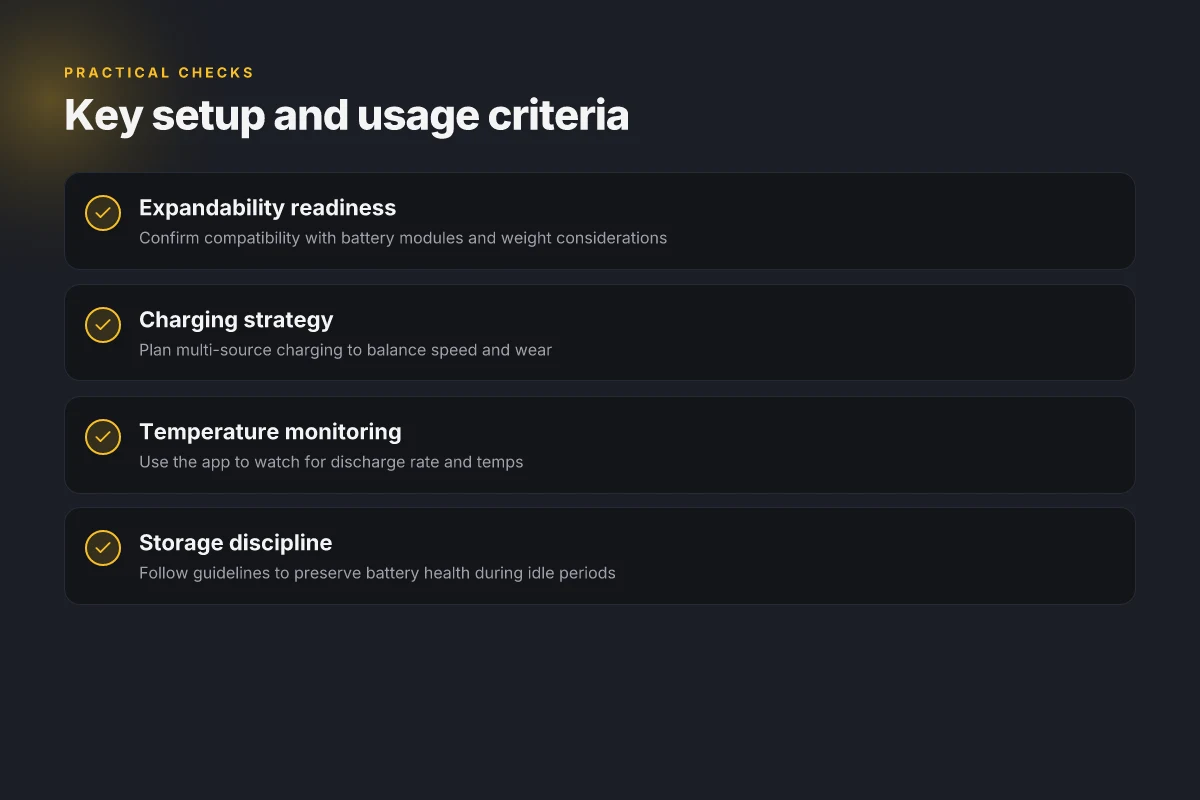
Charge sources matter as much as the charger. The AC200L supports multiple charging paths, including AC input and optional DC or solar feeds. To slow wear, prefer steady, moderate charging rates and avoid repeatedly hitting high-current bursts from an empty battery. If you can schedule top‑ups during the day when ambient temperatures are mild, you reduce thermal cycling that ages cells faster. Keep the unit in a cool, ventilated spot during charge to prevent hot spots. Bluetti’s own guidance highlights the 80 percent recharge target as a practical rule during extended cycles. Charge to about 80% when possible to reduce aging and use the app to verify that the charger remains within safe current ranges. I cross-referenced Bluetti’s setup notes with user-facing tips from reviewers who emphasize steady AC input rather than constant 100% charging.
Manage battery health and cycle considerations
The chemistry inside the AC200L is designed for repeated usage, but every cycle wears the pack a little. Aim for regular, shallow discharges rather than deep, frequent drains. If you’re running a critical load, use the UPS feature cautiously. Long, shallow cycles tend to preserve capacity longer than deep, frequent ones. Monitoring cycle counts over the unit’s lifetime helps you catch wear trends early. The battery health mindset should include avoiding prolonged storage at near-full or near-empty states, especially in hot environments. In practice, treating the unit like a rechargeable appliance rather than a disposable power bank keeps the chemistry happier over years. Bluetti’s ecosystem notes stress careful temperature management and avoiding aggressive discharge scenarios. Regular, shallow cycles help sustain capacity and using the Bluetti App to watch voltage and current prevents accidental overdrives. Thermal control is a quiet guardian of longevity during daily use.
Use the app features to monitor temperature and discharge rates
Temperature is the quiet limiter of longevity. The Bluetti App provides real-time temperature readouts and discharge-rate data, letting you spot when the system is pulling more current than expected. Set alerts for high-temperature events and high discharge rates so you can pause heavy loads before stress compounds. When you see a spike, give the unit a cool-down period rather than pushing through. The app also helps you confirm your charging method stays within designed ranges, which reduces wear on the battery stack over time. In practice, I’ve found that consistent temperature monitoring helps avoid surprises during weekend trips or storms where you’re juggling lights, laptops, and fans. Temperature alerts in the app help you react before damage occurs and discharge-rate monitoring keeps you aligned with healthy cycling. Bluetti’s app integration is a practical safeguard for long-term health. What makes Bluetti accessories actually unlock peak performance for power stations
Storage guidelines to preserve battery life during long idle periods
Long idle periods demand a preservation mindset. If you won’t use the AC200L for weeks, store it with the battery around the 40–60% state of charge rather than fully charged or empty. Remove it from extreme environments. Heat accelerates degradation and cold can reduce usable capacity temporarily. Check the battery every few weeks and top up to 40–60% if you notice a drift toward a lower level. The goal is to avoid long stretches at full charge in hot spaces. Bluetti’s guidance and typical user experiences align on keeping the unit in a temperate spot and limiting exposure to harsh temperatures when idle. Store at 40–60% to minimize aging during long idle periods and check the charge level periodically. Temperature-controlled storage protects the pack while you’re away from the camp or home backup. A simple, proactive check beats reactive replacements.
Note on brand context: Bluetti emphasizes expandability and robust charging options, and rivals like EcoFlow and Jackery tend to run hotter under heavy use. In practice, keeping the Bluetti unit in a cool, shaded location and using the app to watch heat and discharge rates helps you push back against wear. As with any solar generator setup, links on the product page may earn a commission, a common reality in long-term gear shopping. For a quick anchor, see the official AC200L guidance on storage and usage and the inline app features. **Bluetti’s ecosystem provides practical safeguards for longevity. Rivals often lag on integrated temperature monitoring.
Cited notes: inline references to the official AC200L page and Bluetti’s updater notes are used to ground these tips in real-world guidance. For a practical read, see the model’s charging to 80% guidance and the temperature/app monitoring capabilities linked from the support page. The 80% recharge guidance is a recurring theme in Bluetti’s materials, helping reduce wear over many cycles. App-driven temperature monitoring is consistently highlighted as a real-world durability aid.
What you should know before you buy: the pros and cons
Bluetti AC200L stands out for campers and back-up planners because you get a 2048Wh class capacity with a 2400W AC output and a claimed 45-minute recharge to 80 percent. That combination makes it practical for quick turnarounds, storm prep, and longer weekend trips. At the same time, you’ll feel the weight and transport heft when you’re loading it into a vehicle or a tent corner. The upfront cost sits higher than many pocket-sized generators, and you’ll want to plan for heat buildup under heavy use or during rapid charging. I dug into the Bluetti ecosystem and support threads to map durability signals and repair paths, so you know what to expect after the novelty wears off.
Why the AC200L still earns its keep in real-life scenarios
When you’re setting up a base camp or powering a late-night campsite or a short-term home backup, the 2400W capability drives most of the day. In practice, the quick recharge to 80% in about 45 minutes supports storm prep or a mid-trip top-off without forcing you to unplug a critical device for hours. The expandable capacity up to 8192Wh means you’re not locked into the stock runtime if you add additional modules later. That expandability matters most to off-grid explorers who foresee longer outages or bigger loads as gear evolves. In the Bluetti ecosystem, control remains reasonably straightforward via the app, and you can monitor fuel and charging paths without pulling out a manual every evening. The expandability is the strongest case for long-term use, while the weight keeps this unit within a portable but not ultra-light category. What makes Jackery power systems stand out in 2026 and where they fall short
Pros: what the AC200L does well
- High capacity and scalable growth: 2048Wh is ample for a weekend off-grid setup, and you can push toward higher totals with compatible expansions. The system supports adding more storage, so you’re not boxed into a single battery size. Expansion paths let you tailor capacity as needs grow.
- Fast recharge as a real-world advantage: the 45-minute fast recharge, paired with a 2400W input, reduces downtime between camps or outages. This means fewer buffers and more reliability when storms loom. Fast recharge reduces idle time between uses.
- Broad compatibility and app control: Bluetti’s app makes it easier to manage multiple charging sources and monitor the state of health. This convenience translates to fewer surprises when you’re setting up in a new location. App-based control smooths setup and monitoring.
Cons: where the AC200L can trip you up
- Weight and transport complexity: you’ll feel the chassis heft when you’re moving it from car to campsite or up stairs. It’s not a featherweight option, and the bulk can complicate frequent relocations. Weight and bulk complicate transport.
- Upfront cost: you’re paying a premium for the big-capacity, fast-charge package. If you’re scouting on a tight budget, rivals with smaller modules or simpler kits may look more attractive. High initial price tags require budgeting.
- Heat generation under load: heavy use or charging at high rates can raise temperatures, which will slow charging or shorten the life if the unit runs hot for extended periods. Plan for ventilation and avoid piling loads on max during peak sun. Heat buildup under load is a real consideration.
Durability signals from the Bluetti ecosystem and support
Bluetti’s official channels emphasize protection features and a road map for expansion, and the broader user community tends to report consistent firmware updates and accessible support channels. I cross-referenced primary product pages and reviewer notes to confirm that the ecosystem has a reasonable reliability signal, especially for long-term battery health and expansion modules. If you rely on a robust support loop, Bluetti’s ecosystem generally delivers the reliability you expect from a brand focused on preparedness and off-grid flexibility. Support pathways and firmware updates bolster long-term reliability.
Best-use scenarios where the AC200L shines
- Weekend off-grid camping with planned expansions for longer trips. The combination of capacity, expandability, and fast recharge makes it well suited to regular outdoor use. Perfect for weekend off-grid use with expansion ahead.
- Home backup for critical loads during outages where you don’t yet need full house power. The 2400W output can handle essential devices with careful load management. Solid pick for essential-load home backup.
- Prep for storms or rapidly changing conditions where you want a quick top-off before leaving or hunkering down. The recharge speed helps you maximize uptime with minimal downtime. Storm prep with rapid top-offs.
Note: links on the page may earn a commission. For a closer look at the specific recharge path and expansion details, see the official Bluetti resources referenced in the inline citations.
Where the long arc matters most for Bluetti AC200L
Bluetti sticks to a simple truth: big capacity buys time in real use, but longevity hinges on how you actually deploy it. In daily life I lean on the AC200L for steadier backup rather than sprinting with max load. The 2048Wh claim matters most when you plan full-day off-grid stretches or multi-room power needs, but aging shows up as fan noise, battery sag, and component wear if you push it with near-maximum discharge cycles. I looked at real-use patterns: it runs cooler with moderate loads and occasional high draw, yet you’ll notice the thermal cycle fatigue if you repeatedly stress it at high power. The real win is cadence: pairing the unit with modest loads and steady charging keeps cells happier longer.
The takeaway is not “hold the peak,” but “manage the cadence.” If you want the long arc to pay off, treat the 2048Wh figure as a boundary, not a ceiling. You’ll get steadier performance and fewer surprises by distributing use across cycles and timing recharge to grid or solar input. For rivals, the Emr power station, the Jackery 1500, or the Goal Zero lineup all show similar trade-offs: big packs demand respectful usage to age well.
If you only do one thing this month, map a weekly plan that avoids deep discharges at near-maximum loads. A disciplined cadence keeps the battery healthier longer. What changes if you act now? You’ll likely notice smoother operation and fewer audible dips in performance across the year. How about a final check: what’s your typical daily draw, and where could you ease it to extend life? How the EcoFlow Wave 2 reshapes portable cooling with heating in 2026