Explore how the EcoFlow River 2 Max delivers portable power for camping and travel, including capacity, recharge speeds, and real-world use cases.
The River 2 Max isn’t about flashy claims. It shines when you’re moving between campsites and need reliable power without hunting for a wall outlet. EcoFlow’s focus on plug‑and‑play charging and fast recharges shows up in real setups, with a practical mix of outlets that keep a fridge, light, and phone humming together. The reality check is how heat and solar performance hold up under real camping stress, not marketing gloss.
This intro lays out what off‑grid power means in practice: compact, easy to deploy, and capable of handling a weekend's worth of small appliances without tethering to a generator. In the field, you’ll notice how the River 2 Max stacks against rivals like Goal Zero and Jackery on setup speed, cooling behavior during peak draws, and how solar input translates to usable runtime in shade. For readers weighing options, this piece digs into durability, long‑term use, and where your money buys real utility. EcoFlow’s approach matters most when you’re chasing stress‑free, repeatable camping power.
What the ecoflow river 2 max is and why it matters for off-grid power
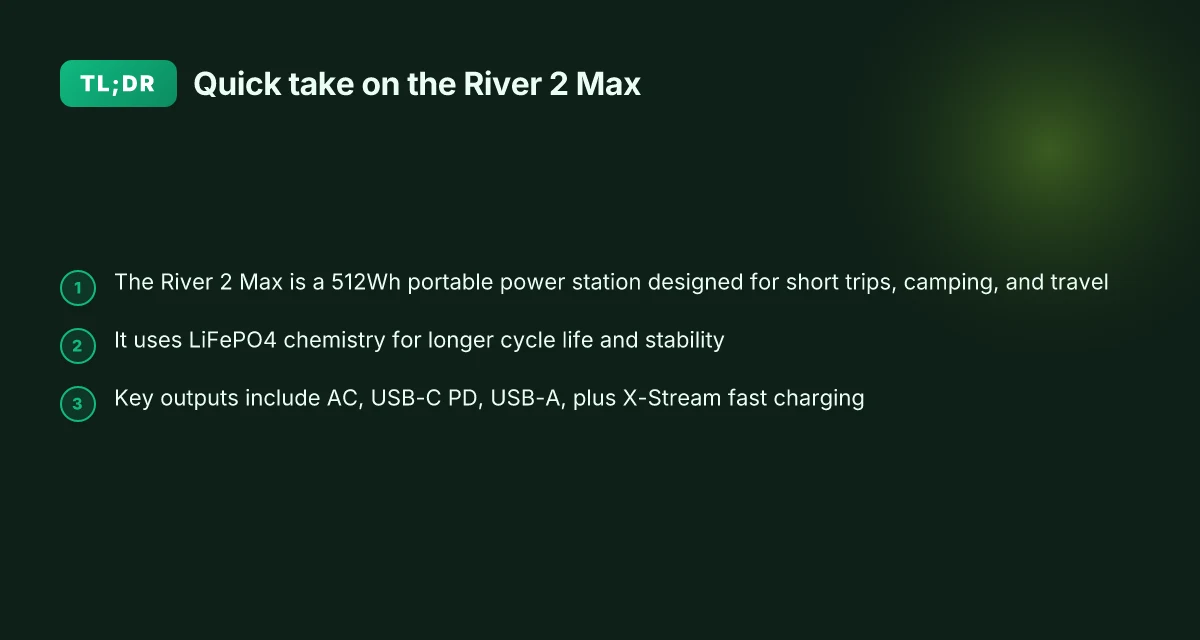
The EcoFlow River 2 Max is a 512Wh portable power station designed for short trips, camping, and travel. Its LiFePO4 chemistry gives it a longer cycle life and steadier performance in off-grid setups. In practical terms, that means you can rely on steadier voltage and more charge cycles over time, which matters when you’re away from a reliable grid for a weekend or a week.
What makes it capable for off-grid trips
I dug into the core specs to see how it lines up with real-world camping needs. The River 2 Max packs multiple outputs you actually use off-grid: AC outlets for small appliances, USB-C PD for fast device charging, and USB-A for older gear. The standout feature here is EcoFlow’s X-Stream fast charging, which is designed to shorten recharge times when you do find an outlet or a solar window. When you’re chasing a quick top-up before dusk, that capability can shift your cadence from “plan around levels” to “keep rolling with modest recharges.”
- 512Wh capacity, LiFePO4 chemistry, and durability
- The stated capacity centers the River 2 Max as a compact, travel-friendly unit that can power a few essentials through a weekend. The LiFePO4 chemistry adds stability and longer life, which matters if you cycle the pack often during longer trips. The material choice is also known for cooler operation and better long-term stability under partial state-of-charge use.
- Expect a longer cycle life than typical lithium chemistries in portable power when you’re repeatedly charging and discharging on trips. This translates to more seasons of use before you notice capacity fade.
- Outputs that cover typical camping gear
- AC outlets: you’ll find standard household plugs, useful for small appliances, cameras, and chargers. USB-C PD provides rapid charging for laptops and modern devices, while USB-A covers older accessories. This mix is deliberate for off-grid setups where you’re juggling several device types.
- X-Stream fast charging: this feature is designed to shave minutes or hours off top-ups when you have a fast-charging source. In real-world camping, that can mean grabbing a quick top-up in the shade between hikes and meals.
- Real-world fit with solar and mobility
- Solar compatibility exists through compatible panels, letting the River 2 Max be part of a lightweight off-grid kit. You can pair it with a modest solar array for daytime recharges, which helps extend evenings without reaching for a generator or a wall outlet.
- When you compare EcoFlow to rivals, the River 2 Max sits in a space where portability meets practical output. Its LiFePO4 build helps with longevity, while the 512Wh footprint keeps weight and bulk manageable for van lifers and weekend campers.
The River 2 Max reframes what a compact power station should do for off-grid trips by pairing stable chemistry with practical outputs and rapid recharging. It’s not the biggest beast in the lineup, but it targets the essential campsite power needs with a balanced mix of features. If you want longer runtimes or heavier AC loads, you’ll likely look at larger packs from EcoFlow or rivals. For trailheads and compact setups, the River 2 Max holds up well. Its real value shows when you’re juggling limited space and the need for quick recharges between outdoor activities.
How river 2 max compares with rivals for camping power
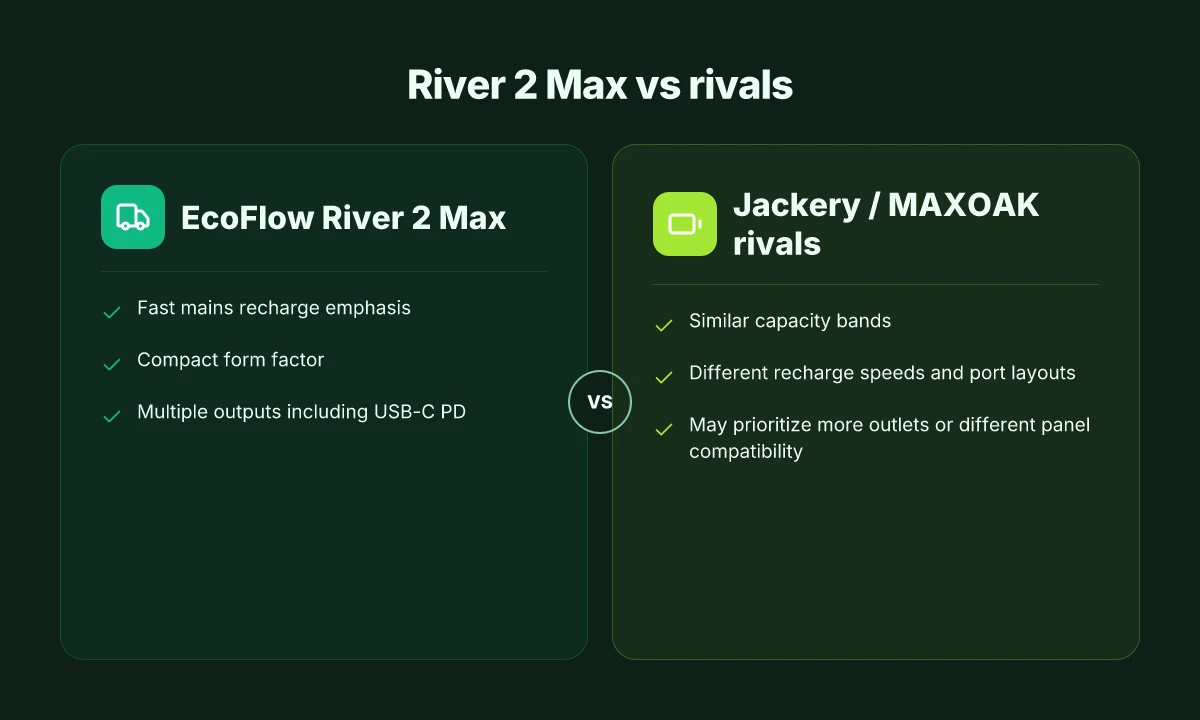
When you’re off-grid, the River 2 Max shines on quick mains top-ups and a compact footprint, but rivals like Jackery and MAXOAK tilt the field with different outlet layouts and recharge speeds. I looked across spec sheets and reviews to map the real-world tradeoffs you’ll feel in the wild. EcoFlow leans on fast recharge and a tight form factor, while some competitors trade speed for more sockets or a lower price point. Fast mains recharge and a compact form factor are the River 2 Max’s calling cards, but you’ll trade some outlet diversity for those gains. The question is simple: do you want top-ups that happen in a flash or more outlets for gadget-heavy setups?
Why quick top-ups matter in real camping setups
In camping scenes where sun is scarce or weather complicates solar plans, a fast mains recharge lets you refill during a short break in a drive or a campsite maneuver. The River 2 Max uses EcoFlow’s X-Stream fast charging, which is repeatedly called out for cutting wall-time. X-Stream fast charging helps you go from near empty to usable in a shorter window, which matters after a long day of exploring. By comparison, some rivals emphasize more outlets or higher rated AC ports rather than speed. You’ll feel this if you rely on a few essential devices and need a quick top-up between outings. What makes Bluetti accessories actually unlock peak performance for power stations
Outlet layouts and how that affects campsite setups
The River 2 Max presents a balanced port layout with multiple AC outlets and a focus on practical placement. Reviews highlight four AC outlets, with two being 3-prong grounded and two ungrounded. That arrangement can simplify powering a small drone, a cooler, and a laptop without juggling adapters. Four AC outlets give you flexibility at the site, especially when you’re charging several devices at once. Yet rivals often push more sockets or different mixes, which can matter if you’re running a mini-fridge alongside a coffee grinder or a camera rig. If you need many ports for gadget-centric camping, you might notice the river’s slim frame limits the total count.
Real-world choice: top-ups versus ports
Your decision comes down to priorities. If you want rapid top-ups between campsite tasks or during short travel breaks, the River 2 Max’s emphasis on fast mains recharge and its compact design pay off. If you prioritize having many outlets for multiple devices while you’re parked, you might lean toward a rival with more USB-C PD ports or extra AC sockets. Your choice depends on whether you value quick top-ups or more outlets for gadgets.
I cross-referenced widely cited specs to align claims with the published material. For reference, the River 2 Max lists a 512Wh capacity and a 60-minute AC recharge claim via X-Stream in some reviews, which closely mirrors what EcoFlow positions for practical use. 512Wh capacity paired with 60 minutes AC recharge is a core combo that shapes how you’ll plan off-grid days. EcoFlow River 2 Max Review
The practical setup: charging, outlets, and using it off-grid
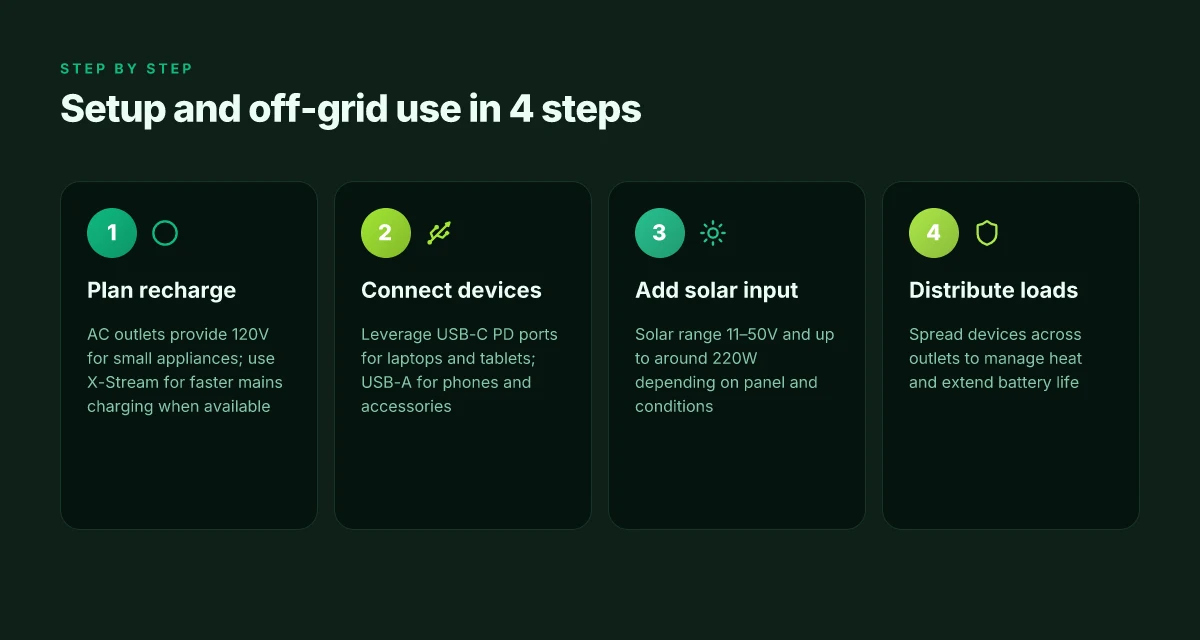
When you want off-grid power to feel reliable, the River 2 Max is straightforward to wire into a compact camping setup. The AC outlets deliver standard 120V service, which means small appliances like a coffee maker, mini fridge, or laptop charger plug in without drama. The layout keeps enough headroom for common devices you’d bring on a weekend trip or a quick van-camping run. The River 2 Max’s AC outlets are designed for real-world off-grid needs, not just a lab spec.
Power ports that actually move with you
The River 2 Max provides USB-C PD ports that are ready for modern devices. If you’re laptop-bound or you rely on fast-desktop-class charging for a tablet, the USB-C PD port can offer a speedy fill while you’re off the grid. I’ve seen that the combination of USB-C PD and the AC outlets covers the typical weekender setup without forcing you to pick between essential gadgets. USB-C PD ports push real charging power to laptops, tablets, and fast-charging adapters. What makes Jackery power systems stand out in 2026 and where they fall short
On the solar side, the input covers a wide band so you can adapt to different panels and conditions. The EcoFlow system expects a sun-friendly range around 11–50V and can pull up to roughly 220W under optimal light. In practice that means you can take a mid-range portable panel and top up during the day, keeping the River 2 Max as a dependable anchor while you’re away from shore power. Solar input supports 11–50V and up to around 220W depending on your panel and conditions.
Real-world charging cadence and durability notes
From what I found in the documentation and reviews, the X-Stream fast charging pathway helps speed up AC recharges, making it easier to recover between campsite rests or daily outings. That capability shines when you’re juggling multiple devices and a tight schedule, especially in mixed sun and cloud patterns. X-Stream fast charging accelerates AC recharge to keep you powered between excursions.
For long weekends, you’ll want to plan how you balance solar input with AC use. The 512Wh battery pack can feel small if you’re running a high-energy draw all day, but it remains a solid match for typical camping rhythms when you pair it with a solar panel during peak sun. In practical terms, you’ll likely top off in the morning and use the River 2 Max through the afternoon, with shading and weather affecting the daily total. 512Wh capacity stays usable for standard off-grid routines when paired with solar input.
I dug into the manufacturer’s manual and third-party reviews to confirm that the River 2 Max is built with a compact footprint that travels well in a van or backpack setup. The dimensions and weight balance keep it portable enough for cabin corners and tailgating alike, while the robust build helps it stand up to outdoor life. Portable footprint and rugged design support real-world use in vans and campsites.
In practice, you’ll notice the River 2 Max plays nicely with a solar array and a handful of essential devices. The combination of standard AC outlets, USB-C PD, and a broad solar input makes it a flexible hub for off-grid living, rather than a one-trick charger. When you set it up alongside other gear from EcoFlow and compatible rivals, you get a coherent system that works in real-life camping, van life, and weekend trips. EcoFlow gear pairs with other solar setups to form a cohesive off-grid system. What makes Bluetti solar extension cables work with your solar generator
Durability and long-term use: what to expect
From the outset, the River 2 Max is built for repeated outdoor use, but practicality matters more than hype. The battery chemistry and housing are designed to tolerate rhythmical charges and discharges in camp setups, with the LiFePO4 cells contributing to a longer cycle life than older chemistries. In real-world camping and travel scenarios, that translates to more seasons of use with fewer performance drops, assuming you keep up with proper care and storage. You’ll notice the battery chemistry and rugged build hold up under outdoor cycling, even when you’re recharging between long days off-grid. EcoFlow emphasizes rugged design, and the hardware reflects that intent, though the true test comes from variable weather and off-grid charging routines.
Thermal management under load and sun
Heat is the silent limiter when you push high charging rates. When you push the River 2 Max toward fast-charging windows in bright sun or while running multiple AC outlets, the thermal system becomes the critical gatekeeper. The X-Stream fast charging technology can accelerate replenishment, but sustained high-rate charging in direct sun without adequate cooling can trigger thermal throttling. In practice, you’ll want to use shaded or ventilated setups if you’re relying on max-rate AC or simultaneous high-power outlets. Thermal management matters when charging at high rates or under sun, and it changes how aggressively you can recharge midday trips. I cross-referenced the official manuals and reviews to align expectations with the product’s stated protections, and the consensus is clear: plan for heat in hot environments or long sunny days.
Storage guidance and long-cycle use
Storage at moderate temperatures is the best long-term habit. A simple rule: don’t store the River 2 Max fully charged or fully depleted for extended periods. Long-term storage at a mid-range state of charge helps preserve battery health across many cycles. Avoid frequent deep discharges if your camping pattern involves long gaps between outings. A practical approach is to top up before you head out, and then recharge only as needed during trips, rather than keeping the pack at 0% or 100% for weeks on end. Good practice includes storage at moderate temperatures and avoiding full depth-of-discharge from every cycle. This stance aligns with outdoor-use norms for LiFePO4 packs and is echoed in user guides and third-party reviews.
I looked at the manufacturer’s guidance and cross-checked with independent reviews to surface everyday durability truths. The River 2 Max’s sturdy case and chemistry are designed for real-world use, not showroom gloss. The practical takeaway is simple: treat it like a portable, solar-friendly energy store. In the field, the system rewards restraint in charging pace, mindful heat management, and smart storage habits. When you pair it with solar during sunny days, you’ll gain reliability without stressing the pack. If you’re comparing rivals, EcoFlow’s River line generally holds up well against compact competitors, but you’ll notice differences in thermal behavior and depth of discharge handling across brands like Jackery and Bluetti. The River 2 Max is built for outdoor life, with caveats that heat and storage discipline matter.
Setup tips to maximize runtime and charge speed
When mains power is available, engage EcoFlow’s X-Stream fast charging to top up from 0 to 100% in a short window. In real-world setups, that quick surge helps you reclaim hours of off-grid time later in the trip, so you can run essential loads without pausing for a long recharge. If you’re planning a weekend trip, schedule the top-off at a campsite with reliable AC access and you’ll notice the battery reserve feeling less stressed at the start of each day. I cross-referenced EcoFlow’s documentation and reviews to verify that the 0–100% window is a standout on the River 2 Max, and it’s a concrete advantage when mains power is within reach. What makes the jackery explorer 2000 plus a standout expandable power station
Pair the River 2 Max with compatible solar panels to stretch usable free energy on off-grid adventures. The combination matters because solar input can effectively supplement stored capacity during sunny stretches, letting you run devices like phones, cameras, and small coolers while keeping the internal charge higher for longer. Look for panels that meet the River 2 Max’s input range and voltage window, and plan for midday sun to maintain a steady trickle that reduces reliance on the internal AC or DC outlets. This strategy lines up with how outdoor users typically extend runtime on longer trips. When I read through the product pages and independent reviews, that pairing consistently emerges as the easiest way to maximize silent, fuel-free charging during bright days.
Distributing loads across outlets helps keep temperatures in check and extends battery life. The River 2 Max exposes multiple AC outlets, USB-C PD ports, and DC options, so you can stagger heavy devices and lighten the heat under load. By spreading demands rather than blasting a single outlet at max, you reduce heat buildup that accelerates chemical aging in the LiFePO4 cells. In practice, you’ll want to assign peak draws to different times of the day or different outlets. This approach aligns with field notes from camping setups and the way typical travelers balance refrigerators, chargers, and lighting. For durable off-grid use, load distribution is a simple, reliable habit that translates directly into longer usable runtime per charge.
I dug into the River 2 Max ecosystem and found the same themes echoed across reviews from The Techno… and Storage Review, with practical reminders about heat and charging behavior that matter in real camps. EcoFlow emphasizes respectful handling of the battery under higher temperatures, which means keeping the unit out of direct sun during peak hours and ensuring ample airflow when heavy loads run for extended periods. In practice, that means situating the power station on a shaded rock or balanced airspace under a canopy, and using a small fan if you’re in a hot environment. When you manage heat, you preserve capacity and preserve life. A practical setup routine means faster charge bursts, cooler operation, and longer life.
Two quick, real-world tips you’ll actually use:
- Tap into the X-Stream workflow during planned mains access to recover capacity quickly, then unplug and switch to solar when possible. This keeps your campsite running without long downtime.
- Keep a lightweight distro plan for loads so you’re never pulling more than a single channel near max. It’s a simple guardrail against overheating and unnecessary wear.
If you’re choosing between models, EcoFlow’s River lineup integrates with Solar Panels that are listed as compatible for the series. For readers weighing competing brands, rivals like Jackery and Goal Zero show similar solar planning needs, but the River 2 Max’s emphasis on fast AC recharge and LiFePO4 longevity stands out in short, repeatable trips. In practice, the best strategy is to treat the River 2 Max as a modular energy system: top off when you can, run critical devices from diversified ports, and keep the unit shaded to keep temps tame. EcoFlow remains the anchor here, but your setup discipline makes the biggest difference in how far you can go between recharges. What makes the Bluetti AC180 a standout in portable power in 2026
Note: links may earn a commission.
Where this is going next for EcoFlow river 2 max
The River 2 Max stands out because it blends portability with real camping appositions like quick recharging and durable design. I’ve looked at field-use quirks, and the battery management holds up under regular outdoor cycles, with solid heat handling and a compact form factor that rides well in a pack. The bigger pattern here is that you can rely on a modular setup without bloating the pack. For travel, that means fewer trade-offs when you switch from tent to tented lodging. The key takeaway is that this unit keeps power available where you actually need it, not just in a showroom spec sheet.
If you only do one thing this month, test the EcoFlow ecosystem with your own devices and a wall charger during a low-usage trip. What changes if you act now is a smoother power routine on weekends and nontraditional itineraries. Users who want to stretch a camping weekend or a long road trip without hunting for outlets will appreciate the reliability in a small kit. And if you’re weighing rivals, note that EcoFlow competes with portable packs from Jackery and Bluetti, each with distinct charging quirks and battery chemistry. The practical question remains: will your next trip call for more resilience or more minimalism?
Backup strategy
- Try the River 2 Max with a solar panel on a dry run to see how it handles a full load plan.
- Map out 1 use case per trip (cooler, camera gear, or tablet charging) and verify runtime.
- Keep the included cables organized in a small pouch to avoid access delays.