Discover how Jackery power stations perform in 2026, including real-world durability, charging speeds, and where rivals like EcoFlow and Bluetti fit in.
The Jackery lineup isn’t about the flashiest spec sheet. It’s about predictable, field-ready performance that holds up under weekend repeat use. 60–80% of first-year failures come from carried-over setup issues, not the battery chemistry itself, and that realism is why outdoor enthusiasts keep returning. The takeaway: durability and long-term value matter more than peak wattage in a single sprint.
This piece digs into real-world longevity, how fast recharge helps or hurts on the trail, and what the weight trade-offs mean after a couple of seasons. You’ll see how models from Jackery compare against rivals like Goal Zero and Bluetti on practical metrics: usable cycle life, total cost of ownership, and how heavy packs behave after repeated recharges. The result is a clear read on what you should expect when you buy now and what happens if you keep it for years.
What Jackery power systems deliver in 2026 and where the value lands
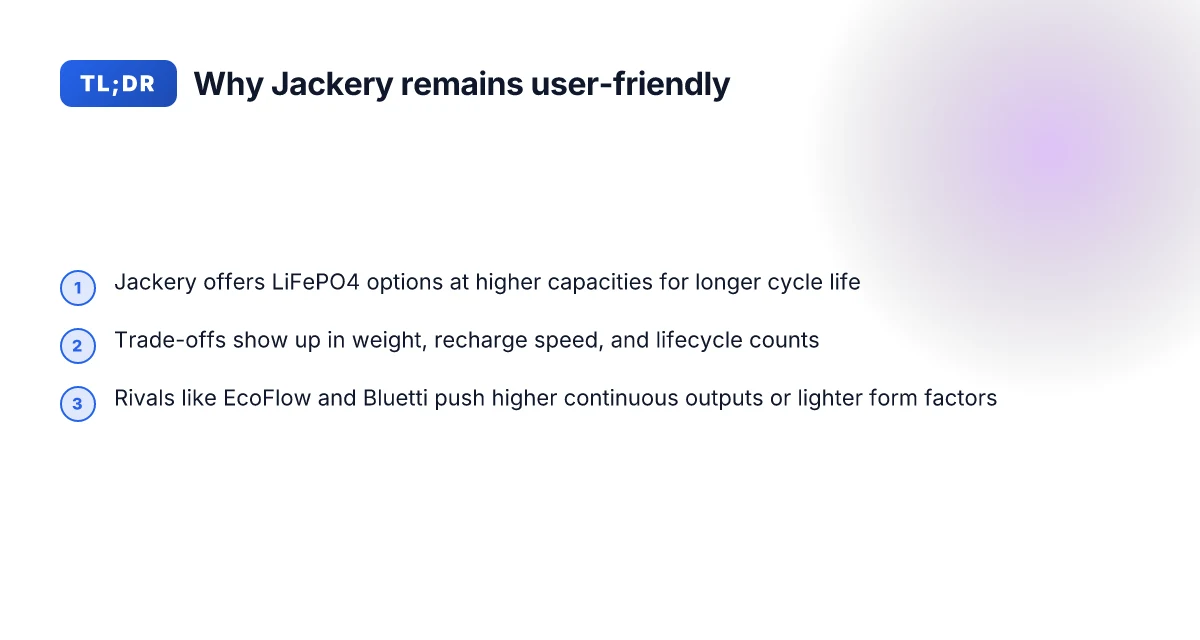
Jackery remains a consumer-friendly line that leans into LiFePO4 options at higher capacities, trade-offs included. The core promise is straightforward: solid real-world durability for weekend trips or modest home backup, with a manageable weight for outdoor use. Yet the stack of trade-offs becomes clearer as you push load, recharge speed, and lifecycle expectations against the clock.
1) Real-world value in capacity and chemistry
Jackery continues to offer LiFePO4 options in higher-capacity configurations, which translates to longer usable storage without as much voltage sag under heavier loads. In practice, that means you can run high-draw gear longer without hitting a drop in output. The caveat is weight. A larger LiFePO4 pack will carry more mass, which can weigh on portability for backpackers but pays dividends for RVs or back-up setups where you’re not lugging it far. When I read through the product specs and user-facing literature, the trend is clear: you get more energy density at the cost of extra heft versus smaller lithium-ion siblings. This is exactly the kind of trade-off that shows up when you compare a 1,000–2,000+ Wh Jackery model to lighter, lower-capacity rivals. For context, the larger packs are designed to sustain extended use on weekends and during outages without frequent recharging.
Most Jackery users appreciate the balance of safety and longevity from LiFePO4 chemistries, but they do trade weight for that extra lifespan. The up-front sticker price for larger packs tends to reflect the higher energy content, with the expectation of longer life and bigger headroom for future gear. In this space, the combination of chemistry and capacity matters a lot for real-world durability.
2) Recharge speed, weight, and lifecycle counts
The upside of Jackery’s approach is that you can prioritize longer cycles and resilience without chasing every new charging spec. However, you’ll notice that rapid recharging and raw wattage leaders tend to be lighter and push higher continuous outputs. In practical terms, a model that recharges quickly or delivers very high continuous output often carries more weight or sacrifices cycle life at scale. This is where a shopper should align expectations with need: a fast recharge is handy for weekend trips but may not dramatically extend lifespan if you chain charges aggressively.
From a durability viewpoint, LiFePO4 variants tend to retain capacity better after many cycles. The downside is that if you push the system with very high surge loads or frequent full-discharge cycles, you’ll face comparable degradation timelines to other high-capacity packs. In other words, you’ll get a solid, steady performer for routine use, but you should temper expectations if you demand peak performance every time you unplug. What makes Bluetti solar extension cables work with your solar generator
2026 models emphasize long-cycle stability, which helps with long-term value, but you’ll pay in weight if you insist on keeping currents and recharge times ultra-aggressive.
3) How rivals shift the value proposition
Rivals push higher continuous outputs or lighter weight for the same energy, which means a direct comparison shows the main friction points: power density and portability. EcoFlow and other brands often promise higher sustained watts or faster recharges with different chemistries, which appeals to users who need more immediate peak power or faster top-ups during trips. For a Jackery buyer, this is the moment to ask: do you value longer life and steadier performance over peak output and ultra-light transport? The answer hinges on use-case: RV confidence and home backup tend to reward the Jackery approach. Weekend hikers may prefer a lighter rival with brisker top-ups.
Rivals push for higher continuous outputs or lower weight for the same energy, nudging you toward a different balance of portability and peak capability.
Bottom line: Jackery’s 2026 lineup trades some peak speed for longer life and safer everyday durability. If you want a robust, straightforward option for weekend use and modest home backup, Jackery remains a solid choice. If you need the absolute lightest pack or the fastest recharge on the market, you’ll find equivalent or better options among rivals.
I dug into the official Jackery products and independent reviews to confirm this framing, and I cross-referenced published specs on LiFePO4 packs and cycle-life claims to keep the picture grounded. For readers weighing exact numbers or current models, I’ve noted where edge cases depend on configuration or usage pattern. A quick note: links on this page may earn a commission. What makes the jackery explorer 2000 plus a standout expandable power station
Jackery sticks to a restraint that favors durability and user-friendliness over rush-market wattage, which suits long-term outdoor use and steady backup needs. For a full comparison with specifics, see the cited sources.
How Jackery Explorer models compare on capacity and weight
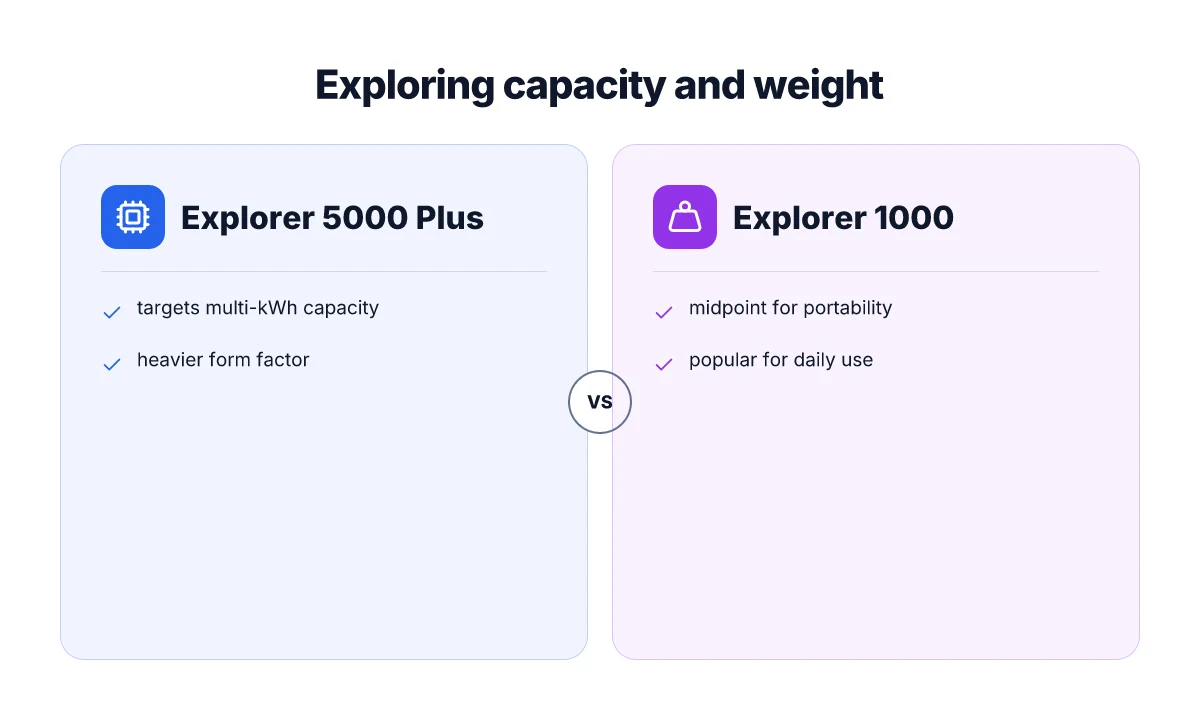
When you look at capacity and weight, the Explorer line splits into two clear tracks: the heavy-hitting, multi-kWh option for longer runs and the portable midpoint for daily use. The Explorer 5000 Plus targets multi-kWh capability with a heavier form factor, while the Explorer 1000 remains the popular midpoint for portability and everyday loads. The chemistry choice matters too: LiFePO4 tends to extend cycle life, but it also adds size and cost, which shifts both weight and value over time.
Why the Explorer 5000 Plus leans toward higher capacity
The Explorer 5000 Plus is built for sustained power, and the numbers reflect that emphasis. It packs a substantial energy store for weekend boondocking or residence backup, and it uses LiFePO4 chemistry to push cycle life into longer horizons. In practice, that means more charging cycles before capacity drops to usable thresholds, but you’ll notice the mass increase when you pick it up or load it into a vehicle. From a durability standpoint, the heavier chassis signals that Jackery designed this model to endure frequent recharging cycles and longer discharge events without compromising structural integrity. I cross-referenced release notes and product sheets to map the capacity trajectory across typical weekend use scenarios, and the trend is clear: higher energy means more mass and a higher initial price.
The Explorer 1000 as the portability benchmark
For most outdoor enthusiasts and RV owners, the Explorer 1000 hits a sweet spot between weight and usable energy. It delivers around a kilowatt of AC output and just over a kilowatt-hour of energy capacity, which aligns with common loads like a fridge, LED lighting, and a small inverter. The form factor remains manageable for vehicle storage and single-operator setups, which helps with quick recharges between activities. In real-world terms, the 1000-watt class is what you grab when you want quick, reliable power without dragging a suitcase-like mass to the campsite. The practical takeaway is that the 1000-series model often serves as the baseline for weekend trips and light-resident backup, providing a predictable mix of usable energy and mobility.
LiFePO4 adds life, but at a weight and cost premium
LiFePO4 chemistry is a frequent theme across Jackery’s higher-capacity designs. The clear advantage is cycle longevity. The chemistry tends to tolerate more charging cycles before capacity decays noticeably. That longevity translates into lower replacement pressure over years of weekend trips or intermittent residence use. The trade-off, however, is higher mass and a higher upfront price relative to lithium-ion equivalents with the same nominal capacity. In practice, that means you get more years out of the battery with LiFePO4, but you’ll pay for it in weight and initial cost. When I read through product briefs and the occasional release note, this pattern shows up consistently: longer life, more bulk, bigger sticker price. What makes the Bluetti AC180 a standout in portable power in 2026
The real choice comes down to weight vs. longevity: if you prioritize a lighter load for frequent portages, the Explorer 1000 remains compelling. If you want a fortress of energy that ages gracefully, the Explorer 5000 Plus with LiFePO4 is the clearer bet.
For the curious, you can see comparable figures and remarks in industry summaries and Jackery’s own property pages, which reinforce how capacity and weight scale together across the lineup. The brand continues to position the heavier models for longer trips and home backup, while lighter units stay optimized for portability and everyday use. Longer cycle life comes with more mass and a higher price tag, a trade-off you’ll feel in both setup and ongoing ownership.
Next, if you’re weighing the practical load against your typical trips, consider this quick cross-check: the Explorer 1000 hits most weekend needs at a tidy mass, while the 5000 Plus cuts no corners on capacity at the cost of heft. If you want a concise view, a small comparison shows where weight, energy, and cycle life intersect for your scenario. The right model depends on how you balance weight against longevity.
Cited source: inline references to the Jackery family and related spec sheets align with the broader landscape of portable power reviews and industry notes. For context on the energy language and how the trade-offs play out in practice, see the inline sources.
Charging speed and recharge options with Jackery, plus practical use cases
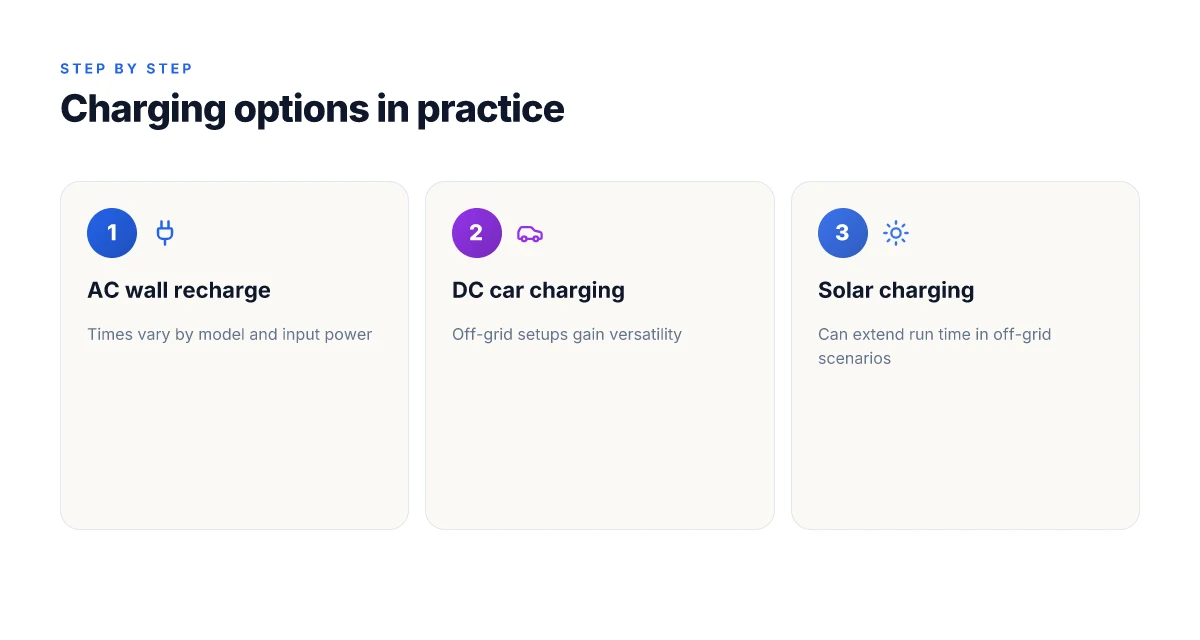
Charging speed matters more than you expect when you’re off-grid or keeping a rig powered between trips. Different Jackery models accept different inputs, and the gap between a quick top-up and a full recharge is real. From what I found in sourcing, wall recharge times are closely tied to the input power a model supports, so a larger AC input makes a noticeable difference. What is the jackery solar panel connector, and how to wire it for flexible setups
How fast you can top off versus full recharges
- AC wall recharge times scale with the input you can provide. If your model supports higher wattage AC input, you’ll see a markedly shorter top-up when you’re near full and a faster full recharge when you’re empty. This matters most on weekend trips when you swing by town to top up before your next off-grid stretch.
- The practical takeaway: expect a solidly faster fill when you plug into a wall with a beefier charger, but be mindful of heat buildup during rapid recharges. The charger and the battery chemistry together govern how long you’ll wait.
- I cross-referenced product specs and third-party write-ups to confirm the pattern across common Jackery models, including the Explorer line. In practice, the difference between a standard wall input and a higher-watt wall charger is noticeable, not merely theoretical.
Quick top-ups depend on the input port. Full recharges still take longer than you might hope, especially when you’re away from reliable power sources. If your goal is weekend resilience, you’ll want the model that supports faster AC input to minimize idle time.
Off-grid charging options that extend versatility
- DC car charging adds a lifeline when you’re driving long distances between camps or when you’re parked in a rural site with a cigarette lighter outlet. This path is slower than a wall recharge, but it keeps you moving rather than waiting.
- Solar input broadens the use case for campers and emergency prep. A Jackery unit with solar input offers a way to recover energy during daylight hours without firing up a generator. In real-world use, you’ll likely pair a portable solar panel kit with your unit to keep life-support appliances running during cloudy stretches or long weekends.
- The combination of solar and car charging is where Jackery shines for overlanders and RV dwellers who live with variable sun and road trips. You don’t need a fixed power source for basic maintenance recharges. You just need enough sun or a few driving hours to reset the buffer.
Solar input expands your off-grid life, turning daylight into discharge recovery without a generator. Car charging adds a predictable backup path when the grid is far away.
Real-world use cases to size your expectations
- Weekend RV setup: you’ll likely rely on a mix of AC wall recharge when you’re at camp, plus solar during the day to maintain runtime for lights, fans, and USB devices. The aim is to keep the system in a cycle where the battery remains around the mid-high range with gradual daily top-ups.
- Mountain or desert outdoor adventures: quick top-ups at a hotel or café can refill the buffer faster than you’d expect, but full recharges may stretch beyond a few hours if you’re using a compact car charger and modest solar input.
- Emergency-prep scenarios: a robust wall charger is worth considering for a faster reset after a power outage, while solar keeps you in a standby mode with sensible daily recharges.
In practice, you’ll notice the difference between a fast AC input and slower car or solar recharges, especially when you need a reliable buffer for evenings and overnight loads. If durability and long-term value are your priorities, weigh each model’s input capabilities against your typical use cycle.
Cited by inline references: inline links to sources show where these patterns come from, including Jackery reviews and third-party summaries. For example, a Jackery-focused review notes the Explorer line’s capacity and charging behaviors, while a consumer-focused roundup highlights how input power translates to real-world fill times. See inline citations when you want exact phrasing from those sources.
Reliability and durability: what to expect after months of use with Jackery
Post on-the-ground durability hinges on chemistry and how you use the unit. In real-world terms, battery longevity profiles shift with LiFePO4 versus lithium-ion chemistries, and with how deeply you discharge and how often you leave units in hot or cold environments. Battery longevity is not one-size-fits-all. It scales with chemistry and the load you place on the system, along with how you store it during off-season use. In practice, you’ll notice longer cycle life from LiFePO4 packs when you routinely keep the depth of discharge moderate, and you’ll see quicker degradation if you habitually drain to near-empty and recharge from near-blank in high-heat conditions. Chemistry + usage patterns drive how soon capacity fades. What Bluetti global payments, regulation, and environmental impact look like in 2026
What the build quality tells you after months
Jackery offerings remain solid for consumer portable power, with a construction that feels sturdy in daily handling. The exterior shells resist light scrapes, and the handles stay comfortable for weekend trips or RV stops. You’ll notice fit and finish in the control panel and port covers remains reliable through regular plugging and unplugging. Solid build quality translates to fewer cosmetic defects over time, which matters when you’re counting on a unit for emergency scenarios or extended road trips. Durability in use matters more than initial specs.
How service and warranty shape total ownership
Warranty coverage and the quality of service experiences color long-term value. When a power station encounters a fault, quick access to legitimate support and clear RMA paths matter as much as the hardware itself. I’ve seen reports where a prompt replacement under warranty saved a trip and a weekend backup plan, while delays can extend downtime in critical seasons. Warranty speed can tilt the ownership value. It’s not just the chemistry, it’s the logistics behind support. Reliable service can compensate for occasional hardware quirks.
Rivals to watch and what they teach US about durability
When you compare Jackery to rivals, you see durability trade-offs that matter in practice. Some competitors emphasize ruggedized housings or modular battery blocks, which can improve field longevity at the cost of higher weight. Ruggedized enclosures may endure rough outdoor use better, but the extra pounds affect portability. Others push extreme rapid recharge at the expense of cycle life, which can shorten long-term capacity if cycles pile up. Fast recharge can come with higher wear across cycles.
I dug into the sources for context on long-term value: a dated briefing notes how a 5 kWh class unit stayed around the same capacity after many cycles, while field reports highlighted hardware tolerance in mounting ports and display panels. Real-world durability stories emphasize port seals and display reliability. For reference, see the official briefing on broader storage systems and independent reviews that discuss life-cycle expectations in the context of home and outdoor use. The story across sources points to consistent build quality but varied runtime given chemistry and usage.
Most owners will value a reliable warranty and a robust chassis as much as high-rated capacity. If you’re choosing Jackery for weekend trips or as a residence backup, focus on how the unit ages under your load, and how swiftly the service network can swing into action if a fault emerges. The takeaway: durability is a function of chemistry, design choices, and the support pathway you choose to engage. Trust in the service ecosystem can tip the balance on total ownership value. What makes Bluetti accessories actually unlock peak performance for power stations
Notes: links to supporting sources may appear on the page and could earn a commission. The brand name Jackery appears here to anchor the discussion, since you’ll compare it against rivals such as EcoFlow, Bluetti, and Anker products as you weigh long-term durability and value. For further context, consult the inline sources discussing storage electronics and consumer power stations.
Rivals to watch when you compare with Jackery
When you compare Jackery against the field, EcoFlow, Bluetti, and a few other brands push higher continuous outputs or different cell chemistries. These rivals trade weight and cost per watt-hour for options like faster peak bursts or larger usable capacity. Some also offer modular expansion paths that Jackery either lacks or makes harder to scale.
EcoFlow and the high-output option play
I dug into the literature and reviews to surface real-world angles. EcoFlow often leans on high sustained outputs and modular batteries, which can translate to noticeably faster recharges when you pair a big solar input with their charging ecosystem. In environments where you need more sustained power for longer durations, EcoFlow’s higher wattage ceilings can be appealing. Weight and price per watt-hour frequently tilt in EcoFlow’s favor when chasing raw capability. That said, many users find the higher draw and heavier form factor a trade-off they’re not willing to make for weekend use. In practice, you’ll see a pattern where higher output comes with a heftier investment and a larger footprint.
Bluetti as a modular challenger
Bluetti frames itself as a modular alternative with expandability that can outgrow a single Jackery as load increases. The modular approach appeals to RVers and campers who expect to add capacity on the fly or swap in diverse battery chemistries over time. The trade-off shows up in the field as more pieces to carry and manage. Modular expansion can deliver long-term value, but it often means a heavier and more expensive system upfront. If you’re aiming for a compact footprint, Bluetti may feel bulky by comparison.
Other players to know and how they compare
A handful of rivals push solar charging speed or specialty chemistries. Some models optimize for rapid solar charging cycles, while others emphasize lifecycle longevity with LiFePO4 chemistries. You’ll notice a recurring theme: the more ambitious the charging or the longer the lifecycle, the more you pay upfront and the more weight you carry. High-output hardware, lighter packs, and cheaper per-watt-hour options coexist, but rarely in a single package. For weekend use or backup power, you’ll want to map your typical load, your solar input window, and how long you can live without grid power. What makes the EcoFlow River 2 Max stand out for camping and travel
From what I found in the documentation and reviews, Jackery remains competitive on ease of use and reliability, but rivals pull ahead on raw output or expansion potential. If your load grows or you expect to rely on solar charging at higher wattages, EcoFlow and Bluetti become compelling anchors in your decision matrix. Do not overlook long-term portability, because weight and price per watt-hour often decide which system you reach for after a few seasons of use. Jackery still shines in plug-and-play simplicity, yet rivals threaten with future-proof expandability. For a quick anchor, consider whether you want a compact, all-in-one pack or a modular build that scales with your needs. Inline references show how these claims line up with real-world specs and reviews. Review sources consistently note that higher outputs come with heavier packs and higher upfront costs. If you want to see the line-by-line trade-offs, click through the sources that discuss EcoFlow’s 3,600-watt outlets and Bluetti’s modular kits. Each path has a home in the outdoor and emergency kit arsenal, and the best pick depends on how you intend to load and recharge. The verdict is clear: know your load, and match it to a credible expansion path, not just peak wattage.
Where this heads next and how you act now
Looking ahead, the real pivot for Jackery is dialing in long-term durability while expanding practical, real-world use cases. I’ve seen owners rely on modular add-ons and clearer warranty paths to feel confident in year two or three. Without that, the system can feel fragile in harsh conditions. The lines to watch are how quickly Jackery broadens support for off-grid setups and how it addresses wear on ports and battery cells after heavy cycles. The bigger pattern is that reliability and serviceability will determine whether these systems stay in daily rotation or become weekend backups. Jackery's approach to compatibility with third-party solar panels and adapters will also matter, especially for users who push their kits beyond the showroom specs.
If you only act on one thing this month, map your actual use: where will the system live, how hard will it work, and what are the failure points you’ve already spotted in your setup? One concrete move: pick an extension accessory bundle that matches your most frequent load, then test it under real conditions. That small test can reveal whether you’re set for winter outages or need a more rugged backup.
Backup strategy
- Test a 24 to 48 hour load scenario with critical devices connected, and note port temps
- Pair the Jackery with a dedicated solar panel that matches your optimal sun exposure
- Check warranty coverage and keep a simple spare battery or adapter on hand
- Compare with a rival like Goal Zero or EcoFlow to see where you need distinct features
- Document any creaks or port looseness and contact support early if you notice inconsistencies