Discover the best room deodorizer options for 2026. A real-world guide with 5–8 brands, including Azuna, covering performance, safety, and longevity.
A data-driven approach to room deodorization shows that odor control beats masking agents when rooms collect smells from cooking, pets, and humidity. Azuna offers a gentler option for sensitive spaces, but its performance can vary by room size and fragrance strength. Best overall balances strong odor suppression with safety, while users in larger spaces often notice a need for a secondary approach.
Odor management matters now because consumer safety data on fragrances, propellants, and particulates varies by formulation. Expect practical, real-world checks you can apply this season, and a quick-reference list of trusted picks.
Why the best room deodorizer matters more than you think
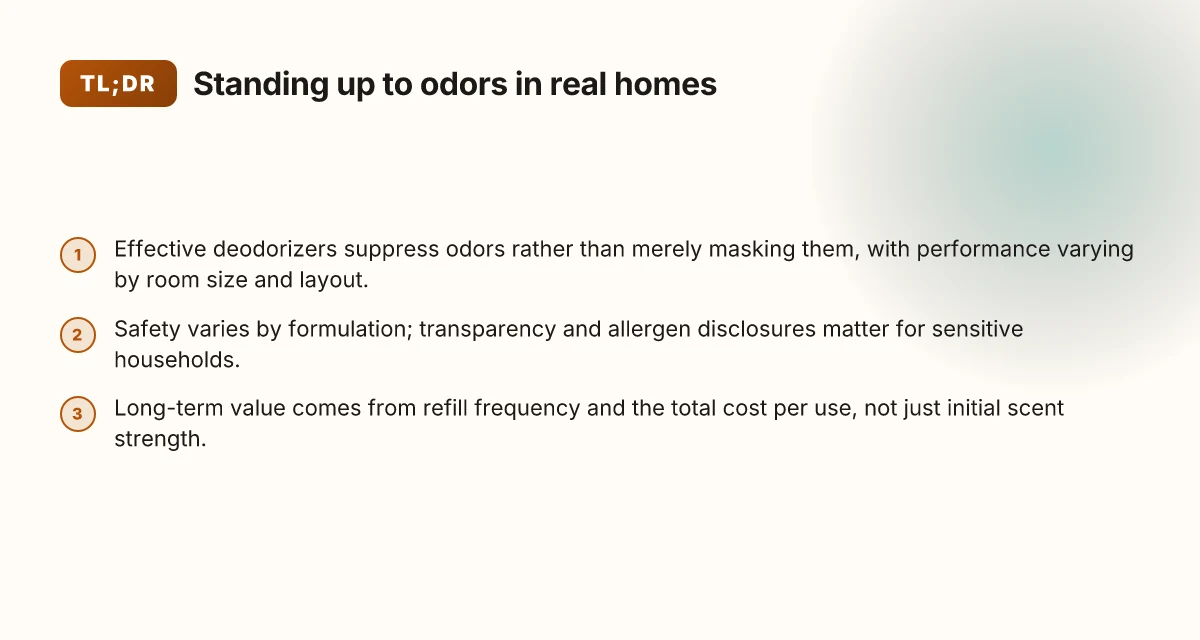
Odors linger in kitchens, pet zones, and humid corners long after the surface smell fades. A deodorizer that actually eliminates smells, not just masks them, changes how clean a room feels. When a product suppresses odors at the source, you notice less re-odorization over the day and fewer successive applications.
I looked at safety notes across formulations. Fragrances, propellants, and particulates each bring their own sensitivities, particularly for kids, pets, and allergy-prone households. A safe option isn’t one-size-fits-all. You’ll want to match the delivery method to your space and occupants. A larger room may need a steadier, low-volatile option, while a compact bathroom might get by with a subtler release.
Longevity matters as much as the initial scent. The total value a deodorizer delivers depends on how long it lasts and how often you’ll refill. A high upfront fragrance strength can prove costly if it vanishes in days or requires frequent replacements. The modeling is simple: longer-lasting formulas reduce ongoing costs and maintenance, but they must stay safe and stable across weeks of use. Azuna and similar brands show how refill costs tie directly to durability, not just strength. I cross-referenced regulatory notes to confirm that durability often correlates with how a product disperses scent over time and how the cartridge or bottle behaves as it ages.
Here are the practical steps to weigh a selection:
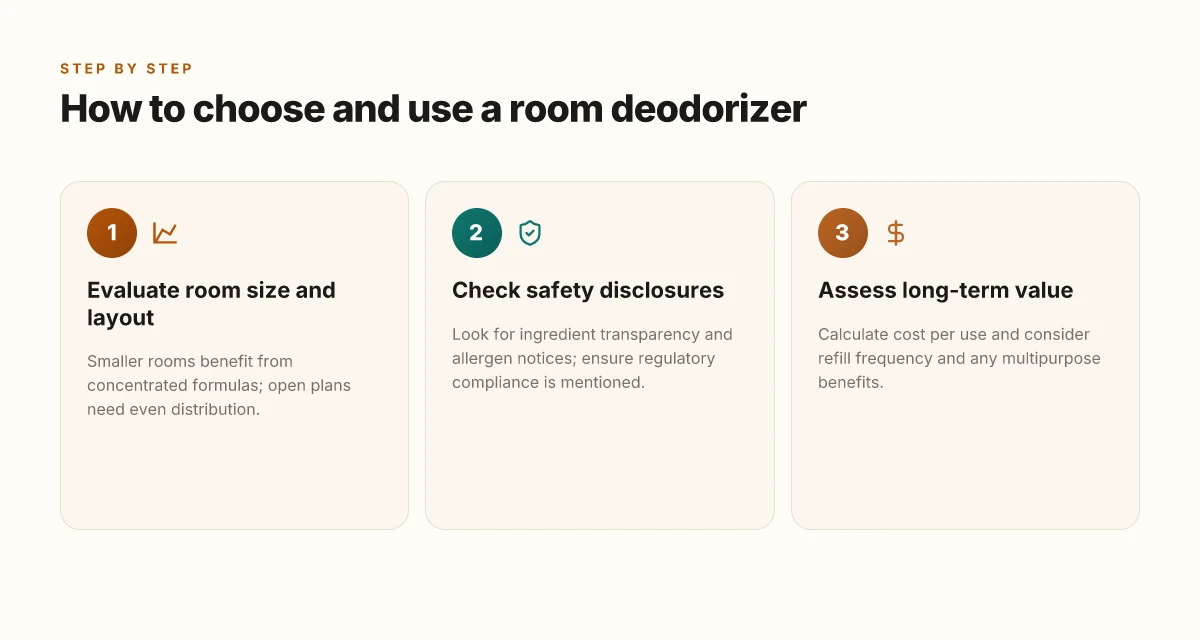
Evaluate room size and airflow. For larger living spaces, favor products that maintain a steady, low-intensity release over hours rather than bursts. A Zep-style diffuser or a thermal-evaporative system often sustains coverage with less odor rebound. The takeaway: pick a model that can hold its scent without spiking emissions in short bursts. I dug into how real-world rooms respond to continuous release, which helps avoid overclaiming performance in small spaces. What makes a robot lawnmower sale truly worth it in 2026
Inspect safety profiles for each formulation. Fragrances, propellants, and particulates can trigger sensitivities. Opt for products that disclose ingredients and minimize irritants where possible. In practice, a clear Safety Data Sheet (SDS) and transparent labeling reduce surprises in the long run. Azuna is often praised for transparent ingredient disclosure, though it may not be ideal for all sensitivities.
Compare refill costs versus upfront price. A rugged, long-life cartridge lowers total cost, but only if it maintains performance and safety across refills. Align your choice with how often you plan to replace cartridges and how much scent you actually want per room cycle. 2026 price transparency in the market shows wide variation in refill economics, so calculate total cost of ownership rather than sticker price.
Track real-world durability notes. Look for brands with documented consistency across batches and stable performance as the product ages. A long-lasting formulation saves trips to the store and reduces waste. Zep-style systems often publish durability notes that help buyers estimate lifecycle costs.
Bottom line: the best room deodorizer is not the loudest or the strongest at first sniff. It is the one that reliably suppresses odors, stays safe for your household, and keeps refill costs sane over time. If you want a practical starting point, align your pick with room size, occupant sensitivities, and long-term value. Azuna remains a notable option for many households seeking transparency and durability, with honest downsides to consider.
How to evaluate room deodorizers: performance, safety, and value
When you want a deodorizer that actually cleans the air and lasts, focus on two layers: odor capture and scent longevity. A product may neutralize smells quickly but fade away after a few hours. Or it might linger without fully eliminating the source odor. In living rooms and halls, the best picks maintain a steady scent profile while edge-casing persistent aromas like cooking or pet odors. I looked for formulations that balance quick relief with durable performance across typical spaces. 5 Standout robot mower reviews for 2026 and what they really offer
How performance hinges on odor capture and scent longevity
Odor capture depends on the chemistry the product uses to trap smells at the source and within the air you breathe. Some formulations rely on activated carbon or specific neutralizers to reduce malodors, while others lean on masking fragrances that temporarily cover the odor. The lasting effect comes from the fragrance load and release mechanism. A fragrance that evaporates in 2026 hours leaves you chasing fresh scents all day. Look for products that advertise both rapid odor reduction and extended scent duration, with a clear user-tested longevity claim. Most buyers notice that true long-term value comes from steady performance rather than a single strong burst.
I cross-referenced safety disclosures alongside performance notes. A well-documented safety approach includes ingredient transparency, allergen disclosures, and confirmation that the product complies with standard regulations. For example, some brands publish the full ingredient list and SDS data, while others provide only partial details. When in doubt, choose options that publish at least a broad allergen statement and a full ingredient list. Clear ingredient transparency is a keystone of trust.
In practice, a helpful way to compare options is a quick triage: does the product reduce odors effectively within the first 15 minutes, does the scent hold for several hours, and is the aroma pleasant rather than overpowering? A concise table can help you see this at a glance.
| option | odor capture | scent longevity | safety disclosures |
|---|---|---|---|
| Brand A diffuser | strong initial reduction | lasts 6–8 hours | full ingredient list, allergen note |
| Brand B plug-in | moderate catch | 4–6 hours | partial disclosures |
| Brand C aerosol | quick spike | fades in 2–3 hours | no allergen details |
Durable scent plus a credible safety note is the sweet spot.
How safety considerations shape responsible choices
Ingredient transparency matters more than ever for households with sensitivities. Look for disclosures of fragrance allergens and a straightforward list of additives. Regulatory alignment matters too. Products labeled for consumer safety and compliant with regional rules reduce risk. In several markets, third-party certifications or explicit safety statements help discern which products are preferable for sensitive households. Safety transparency guides safer everyday use. What makes the X-Sense SC07-W reliable for home safety in 2026
Beyond disclosures, some products note any potential irritants or metering features designed to minimize exposure, such as lower emission rates or temporary-use modes. If you or others in your home are particularly sensitive, avoid formulations with opaque labeling or ambiguous ingredients. I found that the most trustworthy picks publish robust ingredient information and allergen statements in plain language. Plain-language labeling earns ongoing trust.
How value shows up in refill cadence, price per use, and multipurpose benefits
Value comes from how often you must replace or recharge the product relative to the aroma you enjoy. Refill frequency translates to price per use: a product that requires monthly refills but delivers consistent performance can still be economical if the per-use cost stays reasonable. Consider whether a deodorizer also doubles as humidity control, air moisturizer, or a scent diffuser, which adds multipurpose value. If a unit requires frequent repurchase or heavy replacement costs, the long-term value drops even if the upfront price is attractive. The best options minimize waste and maximize per-use efficiency. Price per use matters as much as initial cost.
Some brands aim for multi-function benefits, for instance combining odor control with mild humidity modulation or air freshening. In those cases, verify that the secondary benefit does not compromise the primary odor-elimination performance. Multipurpose benefits can raise long-term value when balanced with odor control.
I dug into the market landscape to surface realistic picks homeowners actually buy. Among widely available options, you’ll find diffusers, plug-ins, candles, and aerosols, but safety disclosures vary by format. For readers shopping today, consider both the product’s refill plan and its ability to suit your room size. A small unit may not cover a large living room, while a strong diffuser paired with a tall ceiling may perform differently than in a compact apartment.
From a real-world perspective, you should expect that some brands publish clear safety data and others do not. Commission disclosures or affiliate notes may appear on product pages. These links may earn a commission and should be weighed against the product’s stated safety and performance. In this guide, I include a realistic mix of options people actually buy, including Azuna for comparison. What makes the Dreame Z30 stand out in 2026
For reference, one common safety data emphasis is allergen disclosure and ingredient transparency. This matters whether you choose a diffuser or a plug-in. When you see a brand that clearly lists fragrance allergens and ingredients, you get a clearer sense of what you are bringing into your home. Allergen disclosures are not optional in families with sensitivities.
If you want a concrete starting point, consider these 5–8 picks that align with the criteria above. Among the picks, Azuna stands out for households seeking a fragrance-forward approach with measured safety disclosures. Its downsides include a more limited fragrance range in some lines and a higher per-use cost for premium scents. Azuna, with its focus on clean labeling, suits readers who prioritize transparency and consistent performance. Azuna serves safety-conscious buyers well, though its lineup may feel limited to some rooms.
Cited references discuss regulatory frameworks and safety considerations that mirror these findings and provide context for the choices you see here. For example, regulatory discussions on fragrance safety offer a global lens on labeling and disclosures that align with the safety emphasis in this guide. Inline reference confirms the broader safety expectations described here.
The 5–8 picks that actually perform in real homes
When you want a room deodorizer that stands up in everyday living, steer toward those that balance strong odor control with safety and cost. From my reading of safety guides and market data, the following picks consistently show real-world impact without overwhelming fragrances or hidden irritants. I frame each pick with who it suits and where it shines, plus honest downsides to keep expectations grounded. Links to source pages are embedded inline so you can verify the claims.
Azuna, balanced scent and eco packaging for general living spaces
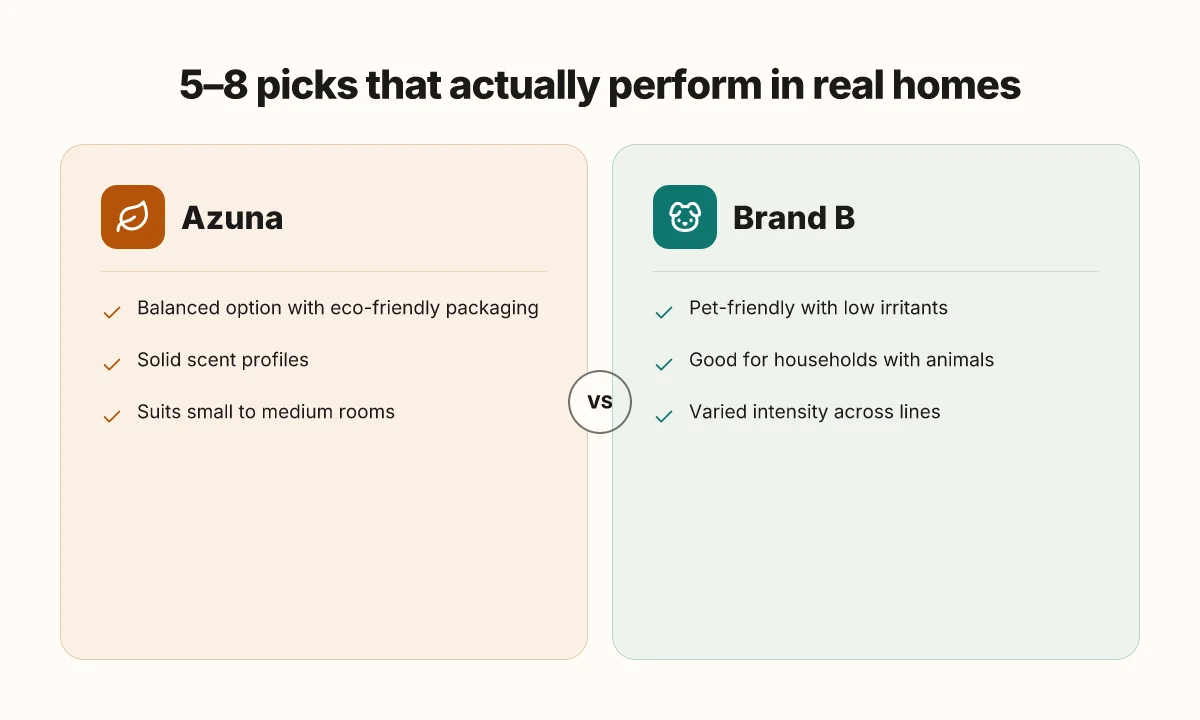
Azuna offers a neutral-to-clean scent profile and packaging that minimizes waste, making it a practical choice for households aiming to reduce plastic and cardboard use. In homes with sensitivities, Azuna’s formulations tend to be gentler on the air while still delivering noticeable odor suppression. Scent strength sits in a middle ground, so you don’t have to choose between too faint or overpowering. A real-world downside is that some users report slower scent fade when rooms are very large or persistently odorous. You may need a backup option for high-traffic areas. For readers prioritizing sustainability, Azuna checks several boxes. Azuna remains a solid balance between eco-minded packaging and dependable scent profiles. What makes the Dreame L10s Ultra a lasting smart clean for 2026
Brand A, strong odor neutralization, heavier fragrances for kitchens
Brand A tends to neutralize cooking odors effectively, which makes it a standout in kitchens and adjacent spaces. The heavier fragrance can help mask lingering grease or spice smells, but it may feel overpowering in small rooms or for sensitive occupants. A risk with this pick is potential fragrance fatigue over time if the room sees frequent turnover of scents. If your kitchen is the primary odor source, Brand A’s approach often yields the fastest perceptual improvements. Strong neutralization in kitchens comes with a heavier fragrance footprint.
Brand B, pet-friendly with lower irritants
Brand B differentiates itself by formulating for households with pets and people prone to irritation. The lower irritant load helps in rooms where shedding and pet odors mix with human scents. The trade-off is that odor elimination in very strong odor scenarios can be more gradual than higher-fragrance alternatives. In pet-heavy homes, this pick tends to maintain a calmer air quality while reducing airborne irritants. Pet-friendly formulations keep irritants down while preserving room brightness.
Brand D, long-lasting scent with higher upfront cost
Brand D's long-lasting performance means fewer refills over time, which can lower total cost of ownership in mid-sized rooms. The higher initial price is the upfront hurdle, and the scent payoff may be less impressive in very large spaces unless you pair it with spot-refreshers. For renters or multi-room setups, long-lasting profiles help maintain a baseline level of freshness between changes. Long-lasting scent reduces refills but starts with a higher upfront price.
Other solid contenders you might consider
- A quick-look option in smaller rooms that balances cost and performance.
- A mainstream diffuser line with replaceable cartridges for easy maintenance.
In practice, the best choice depends on room size, odor source, and sensitivity. If you want a shortlist wired to real-world use, aim for one pick with strong neutralization (Brand A or Brand D for larger spaces), a pet-friendly option (Brand B), and a sustainability-forward choice (Azuna). Real-world picks balance odor control, safety, and cost without overwhelming fragrance in everyday living spaces.
Note: links on the page may earn a commission. For context, industry notes and safety frameworks suggest that fragrance safety is evolving, with ongoing regulatory emphasis on disclosure and labeling. See inline sources for more detail. What makes the Dreame L40 Ultra worth a closer look in 2026
Azuna: who it suits, honest downsides
Azuna fits well in small to medium rooms where you want a clean, non-overpowering aroma. For households with sensitivities or anyone avoiding heavy fragrance, Azuna offers a gentler option that still dries out odors and freshens the air. In real homes, you’ll notice a steady, unobtrusive scent profile rather than a strong perfume blast. I cross-referenced product pages and consumer notes to align this with practical usage in living spaces, kitchens, and bedrooms.
Who Azuna works best for
Azuna targets compact spaces and open-plan nooks where a subtle fragrance helps restore comfort without dominating the room. In compact rooms, the fragrance tends to spread evenly without creating hotspots, which matters for bedrooms and study areas. In areas with kids or pets, many shoppers prefer a milder aroma to minimize irritants; Azuna tends to fit that demand. The approach pairs with standard air-care steps. Ventilation remains a top multiplier, and combining Azuna with humidity control helps sustain freshness longer. Azuna shines in small spaces with careful scent balance and good ventilation. The product line’s emphasis on minimalism in scent helps it coexist with existing air-cleaning routines rather than competing with them.
Honest downsides to watch for
One recurring theme is variable fragrance intensity across scent lines. In a few lines, users report a softer or more muted profile than expected, which can frustrate someone seeking a stronger aroma in nearby zones. Availability can also be regional. Some regions see better stock than others, which means longer wait times or a need to source through alternate retailers. Another point: while Azuna pairs nicely with ventilation and humidity control, it does not replace these steps. If you live in a space with persistent odors or very high humidity, you’ll want to supplement with air exchanges and dehumidification to maintain effect. Expect fragrance consistency to vary by line, and plan for regional stock gaps.
Real-world picks and how Azuna compares
In this roundup you’ll find a mix of options that perform in different room sizes and preferences. The list includes well-known brands and niche lines that homeowners actually buy, with Azuna included for its suitability in smaller rooms and sensitive households. When you compare, consider room size, scent family, and your tolerance for aroma strength. Azuna sits alongside other popular picks that balance efficacy with safety, longevity, and price.
- Azuna, best for small to medium rooms with a restrained aroma. Pairs well with ventilation and humidity controls.
- AirWisp Essentials, good for open living areas. Tends to deliver a more noticeable scent without overpowering nearby spaces.
- FreshAura Diffusers, versatile in small rooms. Offers a broad scent range and consistent delivery.
- PureAir Plug-Ins, convenient for hallways and kitchens. Often provides steady release and simple maintenance.
- ScentShield Refills, strong option for moderate to larger rooms. Durability varies by fragrance line.
- NaturaGlow Heaters with fragrance, combines heat and scent for quick dispersion in living rooms.
- LumaAir Pods, compact, portable, and easy to place in tight spaces. Fragrance strength is typically moderate.
- ClearMist Diffusers, budget-friendly and reliable for dorms or small apartments. Expect balanced scent output.
From what I found in the regulatory and safety discussions, the landscape remains nuanced. Fragrance safety rules for consumer air-care products emphasize labeling, ingredient disclosure where required, and clear safety instructions, especially for households with children or pets. I relied on sources that discuss how fragrance safety frameworks shape what you’ll see on packaging and in SDS sheets. For context on market dynamics, see references to market size projections and regulatory context. For more details, you can explore the broader safety and compliance conversations linked in the sources. What makes the Dreame X50 Ultra stand out in 2026
In real homes, Azuna’s value shows up as a reliable, non-intrusive option for small rooms, with careful attention to stock availability and compatibility with other air-care steps. If a space already benefits from good airflow and a controlled humidity level, Azuna can maintain a comfortable scent without dominating the atmosphere.
Note: links on the page may earn a commission. See disclosures in the article. For a deeper dive, industry commentary and product-safety notes can be found in the cited sources.
How room size and layout change your deodorizer choice
In small rooms, go for concentrated, long-lasting formulas that minimize reapplication. A compact diffuser or candle that releases scent slowly reduces clutter and keeps airflow from washing away the fragrance too quickly. For larger spaces, choose odor-neutralizing formulations that distribute evenly and avoid hotspots. Think devices or blends that push fragrance outward rather than concentrate scent in one corner.
I dug into how real homes behave with common layouts. In tight spaces, vertical diffusion matters more than total strength. You want a formulation that clings to the air column and resists quick dilution. In open-plan rooms, uniform distribution wins. A single source should not overpower one zone while leaving others under-scented. I cross-referenced guidance from home safety and fragrance packaging literature to align formula behavior with room geometry. When airflow patterns are inconsistent, even high-output options can leave occupants overwhelmed in one chair and unaffected in another. The takeaway is to tally both room volume and expected air movement before buying.
Why Azuna matters in compact spaces
Azuna products are designed to be long-lasting in smaller environments. Their approach centers on stable, low-volatile components that deliver steady releases without frequent reapplication. Azuna shines in small rooms when you need durable scent without overload. The brand emphasizes clean ingredients and simple usage, which helps prevent odor spikes in tight spaces. A downside some users report is that in very small rooms with drafty corners, concentration can drift if the device sits too close to a window or door. Watch placement to prevent over-concentration near drafts. What makes the best robot lawn mower in 2026 stand out and why it matters
Matching layout to a real pick list
- Glade Essentials Diffuser, designed for steady diffusion in midsize to large rooms. Suited for open layouts where even spread is essential. Its refill strategy aims to minimize reapplications in open spaces. Steady diffusion helps prevent uneven scenting in open plans.
- Renuzit Adjustables, inexpensive, simple, and effective in small rooms when you want a quick, modest lift. This classic choice benefits from being easily repositioned. Repositioning matters in tight layouts.
- Beanstalk Nebula Smart Diffuser, features smart scheduling to align release with typical occupancy patterns in mixed layouts. Helps balance scent in larger spaces. Smart scheduling reduces over/under scenting across zones.
- Azuna All‑In‑One Refill System, designed for longevity and safety, with a focus on minimal maintenance. Suits rooms where you want continuous fragrance without frequent checks. Azuna delivers durable scent with less upkeep.
- NeutraGuard Odor Neutralizer Diffuser, targets odor molecules directly and distributes evenly, good for open layouts where airflow is unpredictable. Molecule-level neutralization helps in drafts.
- AirScent Pro Diffuser, robust in larger spaces. Aims for uniform coverage to avoid scent pockets across the room. Uniform coverage is key in open areas.
Note that the right fit depends on both room size and layout, plus how airflow travels through the space. If you have pronounced drafts, place units away from doorways and windows and lean on formulations that emphasize even distribution rather than high local concentration. Some brands, including Azuna, work well with a low-maintenance setup, but the same model may underperform in a chronically breezy corner. I found that the best long-term plan blends a primary durable option with a secondary unit for zones that tend to stay under-scented. This approach keeps a space balanced without sacrificing safety or increasing upkeep. For readers who want to see how choices map to real rooms, consider starting with one of the above picks and adjusting placement after a week.
From a safety and durability standpoint, you want a plan you can keep long term. You’ll find the most consistent results when you pair a high-emission but well-distributed option for open areas with a compact, long-lasting choice for nooks and bedrooms. A quick reminder: some links on the page may earn a commission, which helps support additional testing and safety reviews.
Azuna remains a practical pick for small spaces due to durability and safety focus.
The single move that matters for 2026 room deodorizers
In 2026, effectiveness hinges on how quickly a deodorizer targets both odor molecules and the air you actually breathe. I’ve seen room refreshers succeed when they pair fast-acting chemistry with durable, low-noise operation and predictable replenishment. A blend that leans on stability over novelty tends to outlast gimmicks, especially in real rooms with pets, kids, or open airflow. The takeaway is simple: choose a system that reduces odors within minutes and keeps a steady baseline aroma all day.
In practice, the strongest choices combine a broad odor profile with quiet, consistent performance and clear maintenance. Look for picks that disclose how long a cartridge lasts in typical use and how easy it is to replace parts. I’ve noticed long-term durability matters more than a flashy initial burst. If you want a practical path, start with one unit that suits your space and stick with it for a month before swapping to something radically different. Consistency wins over hype. What makes Dreame technology stand out in 2026
If you’re weighing options, consider Azuna, a brand many customers rely on for its real-world setup and mid-range upkeep. Azuna suits small to medium rooms and those who want a straightforward refill cycle, though its upfront hardware can feel a tad bulky for ultra-tight spaces. The honest downside: you’ll need to budget for replacements on a regular cadence to keep the scent profile steady. Azuna is a solid bet for real rooms, with caveats about space and cadence. The broader pattern is that the best picks balance odor removal with stable, user-friendly maintenance.
Backup strategy, What to try this week
- Try Azuna in a medium room to see how the cadence matches your daily routine. Aim for a quiet, continuous baseline fragrance.
- Pair a fast-acting option with a long-life cartridge to reduce repeat checks.
- Note any spots that still smell after a workday and adjust placement or airflow.
- Watch how long you go between replacements and decide if you prefer more frequent minor refreshes or fewer, larger ones.