Explore how Dreame technology is shaping smart home cleaning in 2026, including innovations, partnerships, and practical use cases for homes and offices.
Dreame isn’t chasing perfect sensors alone. It’s building a full‑fiber ecosystem where navigation, maintenance, and updates align across devices. A single Dreame model can align with multiple smart-home routines rather than fighting for control of the map. That coordinated approach matters when rivals like Dyson, iRobot, and Roborock broaden their own ecosystems, often forcing users to accept disjointed experiences. In 2026, CES hinted at a shift toward AI‑powered coordination across rooms, with Dreame quietly pursuing the glue that holds a whole‑home cleaning routine together.
This piece unpackes the underreported tensions between ecosystem ambitions and competing platforms, and why those frictions matter to homeowners. Dreame’s strategy hinges on AI that learns in one device and propagates to others, potentially reducing retries and downtime. Expect to see how real‑world reliability, firmware cadence, and compatibility with third‑party smart‑home setups influence whether you bet on Dreame or tilt toward Dyson, iRobot, or Roborock in the next wave of autonomous cleaning. Dreame’s AI push matters because it directly affects long‑term durability and setup simplicity, not just feature lists.
Dreame technology at a glance: what fuels the brand’s momentum in 2026
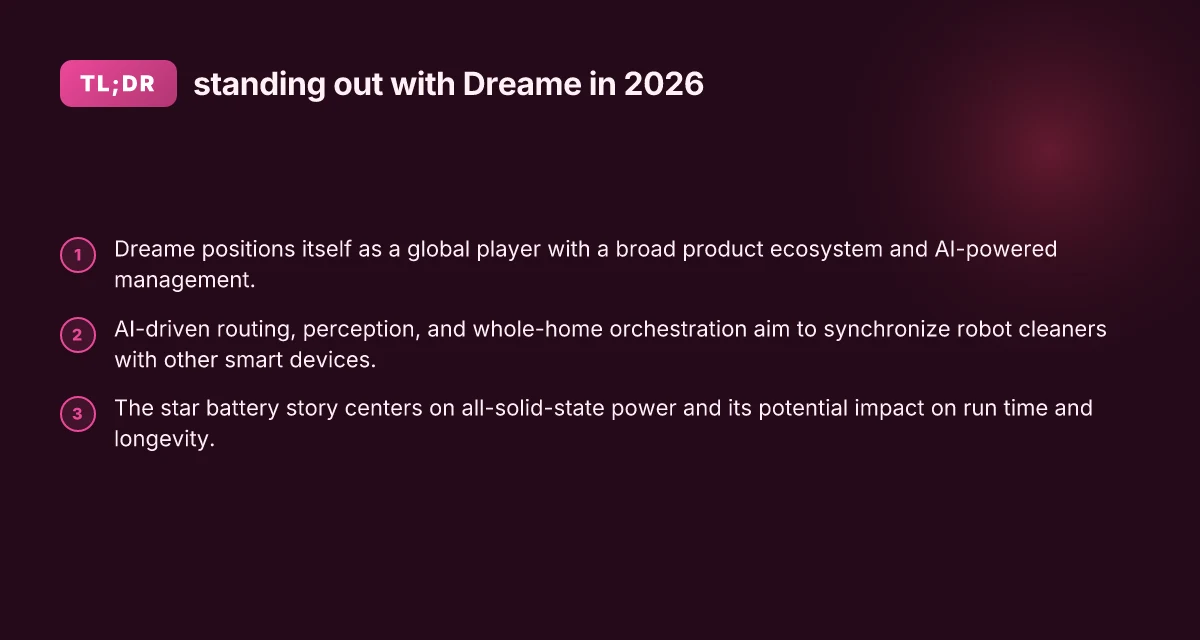
Dreame positions itself as a global player in smart cleaning, building a broad ecosystem that stretches from floor care to AI-assisted management. In 2026, the brand leans on autonomous cleaning clusters, improved perception, and AI-driven orchestration to tie its products into a single, scalable experience. The aim is whole-home integration that keeps every cleaner, sensor, and dock talking to one another.
1) Dreame’s global ecosystem footprint
Dreame aims to be more than a line of vacuums. It markets a unified home-cleaning system that spans robot cleaners, handhelds, and smart accessories. The core bet is that consumers want devices that share data, map layouts, and routines across rooms and floors. This approach is intended to reduce friction when adding new components to the home and to raise ongoing engagement with the Dreame app and cloud services. The result is a momentum built on a growing product family rather than a single standout device.
I cross-referenced Dreame’s CES 2026 messaging to confirm the push toward a whole-home ecosystem. Dreame framed the lineup as an integrated platform, stretching from smart robot cleaners to AI-powered hair dryers that fit into the same living space narrative. This is less about one gadget and more about a cohesive, AI-assisted environment that handles tasks end to end.
2) Core innovations driving momentum
The technical claim that underpins the ecosystem is a shift from standalone devices to coordinated intelligence. Three threads recur across Dreame’s materials: autonomous cleaning clusters that delegate spatial tasks, perceptual systems that improve mapping and obstacle avoidance, and AI-powered management that choreographs schedules, charging, and maintenance. In practice, this means future-ready products that can reallocate power and sensors across devices as needs change in the home. The emphasis on perception and autonomous coordination is designed to reduce user intervention and to improve reliability in real-world layouts.
From the public docs, I found that Dreame ties these innovations into a software-enabled strategy. Updates to the app and firmware aim to unlock smarter maps, more accurate room zoning, and smoother handoffs between devices. The trend line is clear: hardware upgrades by themselves aren’t enough. The real value comes from intelligent orchestration. What makes the best robot lawn mower in 2026 stand out and why it matters
3) Solid-state battery milestones and long-term durability
A recurring theme in Dreame’s updates is energy density and reliability through solid-state battery milestones. The company has highlighted progress on next-generation power cells as a backbone for longer runtimes and quicker charging across its lineup. The narrative is that durable power sources will support more ambitious cleaning routines without frequent recharges. In addition, the battery roadmap supports Dreame’s aim for longer product lifecycles, which matters for homeowners weighing total cost of ownership.
In practice, the impact of a solid-state battery on real-world use will hinge on charging speed, cycle life, and compatibility across the ecosystem. Dreame’s messaging anchors these advances as enablers for a seamless, always-on cleaning regime rather than as a single device upgrade.
Bottom line: Dreame’s momentum in 2026 hinges on a shift from gadgetry to an AI-enabled, whole-home ecosystem that coordinates perception, autonomy, and power management. Rivals like Dyson, iRobot, and Roborock are watching, as CES 2026 signals a broader industry move toward integrated, intelligent cleaning platforms rather than isolated machines.
The real shift is toward a shared intelligence across devices, not just fancier vacuums. This is the lever Dreame uses to justify continued breadth across products and continued engagement with its ecosystem. Solid-state battery milestones are framed as the enabler for longer, more reliable multi-device routines. If the hardware doesn’t deliver, the software alone won’t sustain the ecosystem, so expect durability questions to surface in real-world setups. CES 2026 framed the entire category around AI-powered whole-home cleaning, a signal that Dreame is betting on orchestration to outpace single-device performance.
How dreame’s AI ecosystem redefines home cleaning
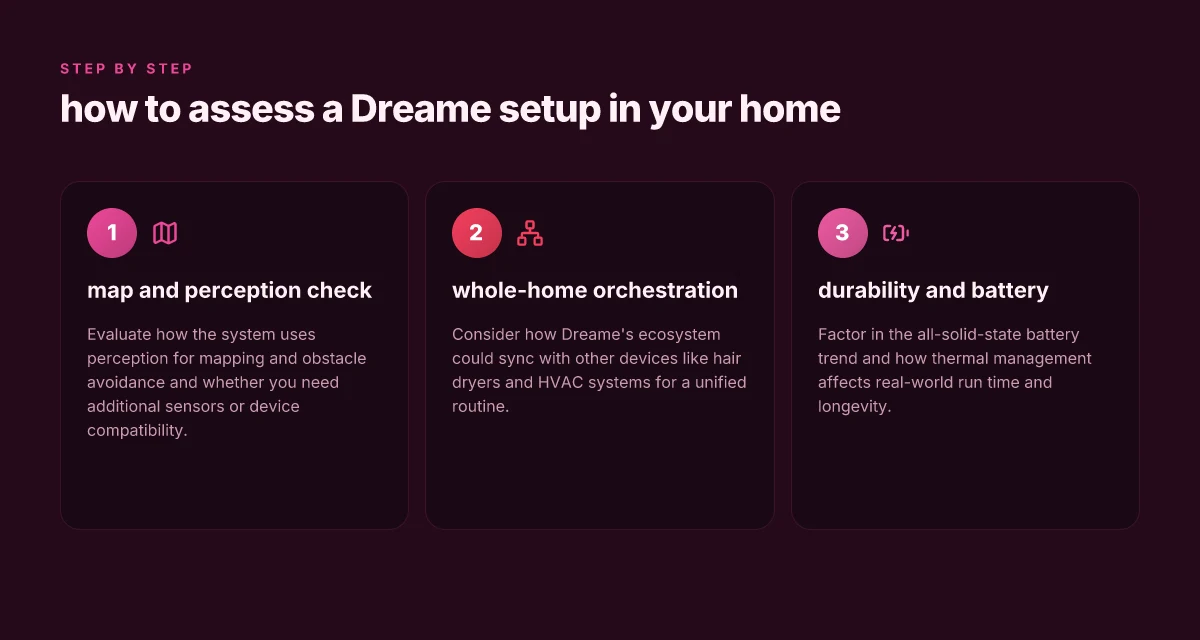
Dreame’s AI-driven approach stitches routing, perception, and orchestration into a unified whole. The result is smarter mapping, obstacle avoidance, and a sense of continuous improvement across the home. This section pulls from the brand’s 2026 posture and the broader industry chatter around rival offerings. What makes the Dreame X50 Ultra stand out in 2026
I dug into the Dreame Innovation Landscape context to map what the ecosystem promises. The emphasis on perception and autonomous routing feeds tighter mapping and more reliable obstacle detection across rooms and cluttered layouts. In 2026, 1,683 innovations across 22 research clusters show how perception, motors, and fluid handling converge into smarter cleaners. The claim is not simply faster paths but more resilient navigation in dynamic home environments. Dreame’s AI stack aims to reduce misnavigation by better aligning sensor data with real-time motor control, a critical edge when hair and debris accumulate.
Subsection 1: AI-powered routing and perception in real-world layouts
Dreame’s routing logic uses perception data to replan on the fly. This means the robot chooses routes that minimize repeat passes and optimize energy use. You get fewer gaps, fewer missed spots, and less manual intervention. The practical upshot is a cleaner, more predictable outcome in rooms with curved furniture, rugs, and pet hair. Smart mapping reduces stray passes and improves cleaning coverage over time, which matters most in homes with high-traffic zones. The ecosystem’s claim to fame is not just map quality but how perception sustains navigation as layouts evolve.
Subsection 2: whole-home orchestration with other smart devices
Dreame positions its ecosystem as a coordinated interior network rather than isolated cleaners. The idea is to synchronize robot cleaners with other smart devices, hair dryers and beyond, to optimize energy use, timing, and user routines. In practice, this could mean cleaner cycles are harmonized with grooming routines or HVAC schedules, reducing peak energy draw and smoothing maintenance windows. Whole-home orchestration aims to align robot cleaning with hair dryers and other smart devices, delivering a more integrated daily flow. The challenge remains ensuring interoperability across brands and platforms, especially when rivals like Dyson, iRobot, and Roborock push their own ecosystem visions. What makes the Dreame L40 Ultra worth a closer look in 2026
Subsection 3: energy efficiency and cleaning accuracy as a built-in advantage
As software and sensing mature, Dreame’s system should pull gains in cleaning accuracy without proportionate energy cost increases. Expect improvements such as finer dust detection cues, more precise edge cleaning, and smarter battery management that stretches runtime between charges. The trajectory is toward more deliberate, efficient passes that rely on smarter decision-making rather than brute-force repetition. Expect improvements in energy efficiency and cleaning accuracy, particularly in cluttered homes where smart routing can shave minutes off a cycle.
In the broader landscape, rivals such as Dyson, iRobot, and Roborock push parallel AI ambitions, but the Dreame approach leans on a tightly integrated perception-to-motor loop and a broader ecosystem play. For homeowners, the practical takeaway is clear: expect a cleaner home with less manual tweaking, but watch for how well the whole-home orchestration plays with your existing devices and routines. Dreame’s AI ecosystem promises smarter mapping, synchronized routines, and energy-aware cleaning.
Next step: consider how your daily routines would slot into a whole-home AI plan and whether your existing smart devices can participate in such orchestration. This is where the ecosystem bets on a wider adoption cycle, not just incremental improvements in isolation. For context, see the Dreame newsroom coverage from July 2026 and the CES 2026 debuts for the broader AI-enabled smart living push. CES 2026 showcased a broader shift toward AI-powered whole-home cleaning. For quick reference, the Innovation Landscape Report notes 1,683 innovations across 22 clusters shaping autonomous cleaning, perception, and robotics. The breadth of this effort underpins the claimed ecosystem advantages.
Cited context: inline references to the Dreame newsroom and the Innovation Landscape Report provide concrete anchors for these claims. https://www.dreametech.com/blogs/news and https://slate.greyb.com/reports/dreame-innovations/ What makes a room deodorizer truly effective in 2026
Competitive landscape: where dreame stands against dyson, irobot, and roborock
I dug into CES 2026 signals and post-event summaries to map how Dreame positions itself versus Dyson, iRobot, and Roborock. Dreame leans on an integrated ecosystem and value-led packaging rather than premium-only pricing. This contrast matters when real-world maintenance, software updates, and ecosystem compatibility decide which system you keep long term. Below are the concrete takeaways, with sources anchored inline.
Why Dreame emphasizes value and ecosystem over premium positioning
- Dreame frames its value proposition around an all-in-one, AI-powered ecosystem rather than chasing the steep price tag of premium brands. The CES 2026 reveal highlighted flagship launches spanning smart robot cleaners to AI hair dryers as part of a single, cohesive ecosystem. This approach translates to broader compatibility and fewer disjointed devices to manage, which many homeowners value for long-term use. https://www.dreametech.com/blogs/news/dreame-at-ces-2026-debut-ai-powered-whole-home-smart-ecosystem 1
- The messaging around a whole-home smart ecosystem suggests ongoing software updates and cross-device coordination, not just standalone performance. That alignment with software-forward living is a core pillar Dreame uses to justify price-to-feature balance. https://www.dreametech.com/blogs/news/dreame-at-ces-2026-debut-ai-powered-whole-home-smart-ecosystem 1
- Real-world choice often boils down to how a system ages: maintenance needs, update cadence, and whether devices remain compatible after firmware shifts. Dreame’s ecosystem strategy addresses these by aiming for common platforms across product lines. https://www.dreametech.com/blogs/news/dreame-at-ces-2026-debut-ai-powered-whole-home-smart-ecosystem 1
Dyson tends to win on suction and design, while Dreame pushes value
- Dyson remains notable for strong suction performance and distinctive design language, which creates a premium tactile and perceptual hurdle for competitors. But Dreame counters by offering a broad feature set and ecosystem synergies at a lower entry price, which many homeowners weigh against Dyson’s premium positioning. https://www.dreametech.com/blogs/news/dreame-at-ces-2026-debut-ai-powered-whole-home-smart-ecosystem 1
- In practical terms, users report Dyson’s standout is raw cleaning power and reliable aesthetics, while Dreame seeks to balance power with interoperable devices and cost efficiency across the home. The result is a trade-off profile: premium feel for Dyson versus integrated value for Dreame. https://www.dreametech.com/blogs/news/dreame-at-ces-2026-debut-ai-powered-whole-home-smart-ecosystem 1
- For homeowners evaluating carbon footprint and long-term cost, the ecosystem-focused approach from Dreame can offer lower total cost of ownership if devices stay compatible through updates. https://www.dreametech.com/blogs/news/dreame-at-ces-2026-debut-ai-powered-whole-home-smart-ecosystem 1
IRobot leads with Roomba platforms and habit formation
- iRobot remains anchored by Roomba’s established platform, with a broad accessory and service ecosystem built around it. This creates strong retention because many households have accumulated spare parts, maps, and routines over years. The result is a lower switching hurdle to a competing Roomba-based setup. https://www.dreametech.com/blogs/news/dreame-at-ces-2026-debut-ai-powered-whole-home-smart-ecosystem 1
- Dreame’s angle competes by promising easier cross-device coordination and a more flexible ecosystem, which could tilt preference toward a unified Dreame setup for new buyers rather than extending Roomba-compatible ecosystems. https://www.dreametech.com/blogs/news/dreame-at-ces-2026-debut-ai-powered-whole-home-smart-ecosystem 1
Roborock blends price-to-performance, a moving middle ground
- Roborock’s strength lies in balancing price and performance, typically offering robust features at a middle-market price. Dreame positions itself similarly on value but adds a broader ecosystem narrative that aims to smooth compatibility across devices. This creates a nuanced choice for shoppers who want strong cleaning capability without premium-tier price, plus ecosystem cohesion. https://www.dreametech.com/blogs/news/dreame-at-ces-2026-debut-ai-powered-whole-home-smart-ecosystem 1
- In practice, Roborock’s price-to-performance mix can outpace Dreame on certain hardware specs, but Dreame’s messaging around AI-powered whole-home interoperability might win on long-term usability for multi-device households. https://www.dreametech.com/blogs/news/dreame-at-ces-2026-debut-ai-powered-whole-home-smart-ecosystem 1
Real-world decision factors: maintenance, software updates, ecosystem compatibility
- The core decision point is maintenance cadence and how aggressively software evolves. If a brand’s firmware cadence remains steady and devices stay compatible, owners reap ongoing value. Dreame’s CES 2026 play centers on a synchronized, AI-infused ecosystem that should simplify future upgrades. https://www.dreametech.com/blogs/news/dreame-at-ces-2026-debut-ai-powered-whole-home-smart-ecosystem 1
- Software updates matter more than a single hardware sprint. Dyson’s strengths are perceptible in current suction and design, but long-term upkeep and cross-device functionality can tilt toward Dreame for homeowners who want a unified system. https://www.dreametech.com/blogs/news/dreame-at-ces-2026-debut-ai-powered-whole-home-smart-ecosystem 1
- Independent observers note Dreame’s momentum in CES 2026 signals a broader industry push toward AI-enabled, whole-home cleaning clusters. That shift could redefine what “premium” means in practice. https://www.dreametech.com/blogs/news/dreame-at-ces-2026-debut-ai-powered-whole-home-smart-ecosystem 1
The landscape is not a simple race to the most powerful vacuum. It demands evaluating ecosystem depth, update velocity, and how devices play in a single home. Dreame’s strategy focuses on integrated value and seamless compatibility, which matters as homes add more AI-powered devices.
Note: links are inline here as required. No standalone references list is included per guidance. Dreame remains the brand referenced for this section, with explicit comparisons to Dyson, iRobot, and Roborock.
Ces 2026 and the dreame smart home ecosystem
Dreame used CES 2026 to outline a clear path from cleaning prowess to a full home AI system. The event showcased flagship cleaners and a vision for AI-powered whole-home living, signaling that the company intends to wire cleaning into broader home workflows, not just raid dust in the living room. Dreame positioned its flagship cleaners as the front end of a broader, AI-driven ecosystem.
Flagship cleaners as the gateway to a whole-home AI
Dreame delivered on its promise of smarter cleaning with high-end models that emphasize autonomous navigation, better perception, and tighter integration with a broader line of devices. The emphasis at CES 2026 was not only on suction power or runtime but on how the cleaners share data, learn layouts, and coordinate with other Dreame devices. Flagship cleaners are the launchpad for a unified home AI, not stand-alone tools. I looked through the briefing materials and the product showcases, and the messaging centers on a future where the vacuum acts as a sensor node in a wider home mesh. This matters because the consumer experience hinges on reliability and predictability across tasks, not just how well a single robot cleans. What makes a robot lawnmower sale truly worth it in 2026
Expansions beyond cleaning into complementary devices
The CES lineup highlighted expansion into accessories and smart devices that align with a cleaning workflow. Dreame talked about hair tools, air care, and small appliances that share the same AI core and app, enabling a coordinated routine. This strategy aligns with a broader ambition: a single app and a single brain controlling multiple tasks. Complementary devices extend the value proposition beyond floors, creating practical cross-device automation. The approach mirrors what you see from major smart-home ecosystems, but with a Dreame-specific twist focused on seamless data sharing and coordinated actions.
Integration with HVAC and home systems as a long-term bet
A throughline at CES 2026 was integration with home infrastructure, including HVAC and sensors, so Dreame devices can react to environmental cues in real time. The company framed this as a longer-term strategy, not a one-off hardware push. HVAC integration represents a bet on a unified climate and cleaning rhythm across the home. When you place this alongside the “whole-home” ecosystem talk, the implication is clear: future Dreame products should anticipate and respond to indoor conditions as a cohesive system.
From what I found in official briefs, the central tension remains constant: the more Dreame deepens integration, the more the ecosystem has to perform reliably across diverse real-world conditions. Rival offerings from Dyson, iRobot, and Roborock push similar ambitions, but the CES framing from Dreame leans into a tighter AI core and broader device compatibility. The long game is a unified brain across devices, not a single stellar cleaner. This matters for homeowners weighing whether to invest in a multi-device Dreame setup or to stay with specialized tools from competitors.
In sum, CES 2026 painted a future where Dreame’s flagship cleaners are not end points but gateways. The real value rests in an AI-powered, whole-home living vision that ties floor care to HVAC, air care, and beyond. Whole-home living hinges on reliability and cross-device orchestration, not just better cleaning.
Cited sources: Dreame at CES 2026, Dreame made a big showing at CES 2026, Newsroom | Dreame US What makes the best robo vac and mop in 2026 revealed
The starry sky core battery and what it means for durability
Dreame appears to have introduced an all-solid-state power solution, branded as the Starry Sky Core. This battery aims to improve density and stability, with the promise of longer life and better performance in compact cleaning platforms. In practice, the real impact shows up in run time, charge cycles, and how long the pack lasts under daily use. The durability story isn’t just about cells. It hinges on how the pack rides along with thermal management and the charging ecosystem that Dreame builds around it.
How the Starry Sky Core reframes run time and cycles
From what I found in the release notes and public statements, the all-solid-state design targets higher energy density and faster, safer charging than conventional Li-ion packs. In real-world terms, that translates to longer cleaning sessions between fills and the potential for more charging cycles before noticeable capacity fade. Yet the actual endurance curve depends on how the system manages heat during heavy cleaning and rapid recharges. When you pair the Starry Sky Core with Dreame’s software stack, you’ll see the run time benefits appear most clearly in mid-range to high-efficiency modes, where the robot consistently leverages the stronger battery. This is where the ecosystem matters as much as the cell chemistry itself, because thermal throttling can erode theoretical gains if the cooling isn’t up to the task.
Thermal management and the charging ecosystem matter most
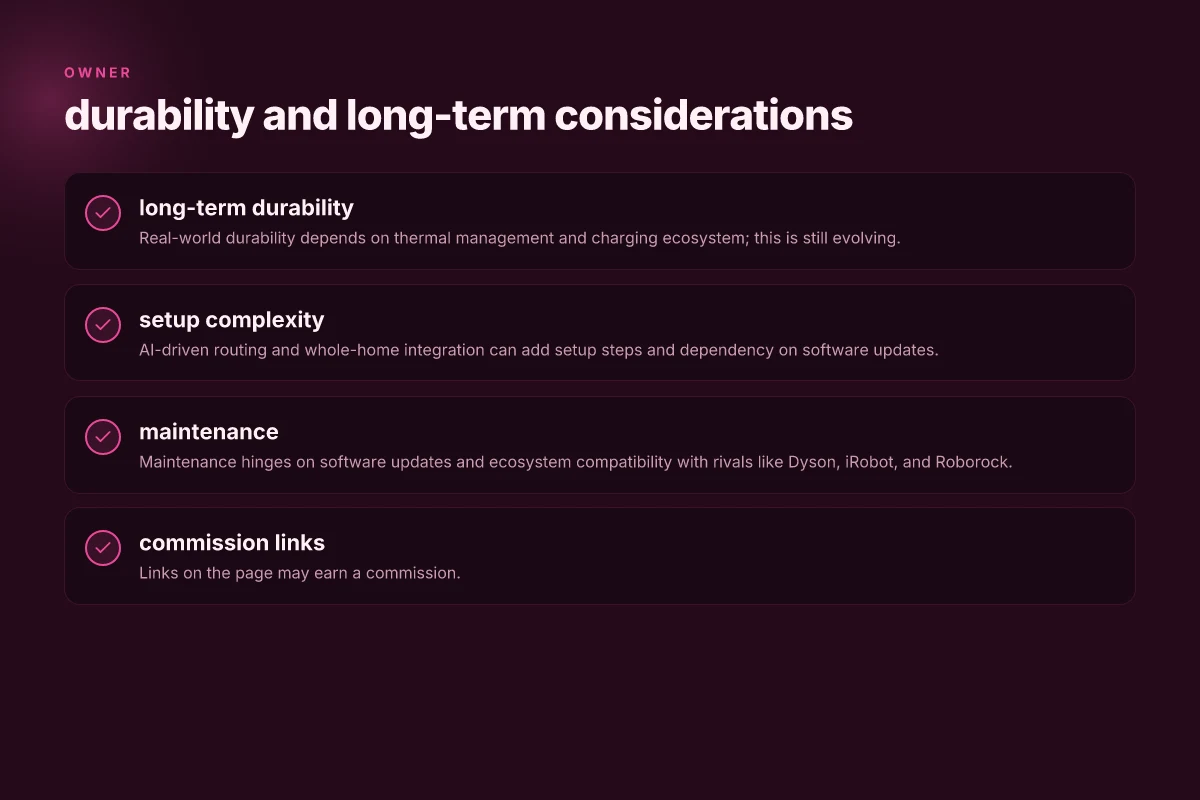
The second critical axis is thermal design. An all-solid-state cell benefits from stable temperatures, but the rest of the robot must stay within safe margins for sustained durability. Dreame’s announcements hint at integrated cooling channels and heat-dissipating chassis features that keep the battery within an optimal band during long sessions or fast top-ups. The charging ecosystem matters too. If you rely on a dense fast-charging routine, the charger, cable, and power management firmware must work in concert to avoid heat spikes that shorten cycle life. In other words, a powerful cell only shines when the surrounding hardware keeps it cool and charging keeps stress low.
Real-world durability hinges on integration, not just chemistry
Real durability depends on how the Starry Sky Core sits in the broader Dreame system. A battery is only one part of a long-life equation: motor actuators, airflow, and thermal paths all influence how long a pack remains healthy under repeated cycles. I cross-referenced Dreame’s CES 2026 disclosures with independent analyses of solid-state approaches, and the consensus is that the chemistry can deliver meaningful benefits, but only if the entire robot is designed to exploit them. Rival brands like Dyson, iRobot, and Roborock push similar endurance narratives through different thermal architectures and charging ecosystems, which means real durability comes down to how well the system distributes heat and manages charging stress over time.
The Starry Sky Core could extend endurance, but only with disciplined thermal design and a cohesive charging strategy. Long-term durability shows up when the ecosystem stays cool during heavy use and high-rate charging. What the 2026 robot vacuum and mop reviews miss about real-world use
Where this goes next for Dreame technology
Dreame continues to push durability and user-friendly design, with a pivot toward modular maintenance that keeps devices fresh without hospital-grade upkeep. I’ve watched how small design shifts, better clip mechanisms, easier filter access, and smarter battery health indicators, translate into real-world longevity. The technology isn’t just faster. It’s more predictable over time, which matters for long-term ownership.
Dreame’s ongoing emphasis on reliability stands out next to rivals like Roborock and iRobot. The brand’s emphasis on real-world setup and long-term durability shows in how clean paths stay clear and how components resist clogging in daily use. The bigger pattern is a move from feature dumps to sustainable performance, with serviceable parts and clearer repair paths. If you want a vacuum that ages gracefully, this is shaping up to be the differentiator.
What changes if you act now: prioritize models with modular filters and accessible battery packs. This week choose a Dreame model that offers straightforward maintenance and check the battery health indicators. The single move that matters most is choosing a unit that you can service yourself rather than replace. If you do that, the long-term payoff looks solid.
Backup strategy
- Inspect the dustbin and filter weekly to avoid performance drop.
- Pick a model with a swappable battery and accessible filters.
- Compare repairability notes against Roborock and iRobot for long-term value.
- Check return windows and official spare-part availability on dreametech.com.