
Explore the Dreame L10s Ultra with a 2026 lens: performance, durability, firmware updates, and how it stacks up against rivals.
Most people assume a robot vacuum should feel almost new after a year, but durability reveals real value. The Dreame L10s Ultra sustains its smart mapping and strong suction the long way, even as brush wear and filter fatigue creep in. Brand names aside, this is a test that separates orbiting gadgets from lasting cleaners.
This intro surveys a real-world angle: long-term reliability, firmware cadence, and parts availability shape ongoing usefulness more than initial spec sheets. I looked at how Dreame handles updates over multiple firmware cycles, what wear patterns show up in typical homes, and how rivals like Roborock S7 MaxV and other contenders compare on sustained autonomy. The goal is a practical read on whether the L10s Ultra remains a solid buy after year one, not just a flashy launch. Expect continued firmware cadence and steady navigation, but plan for component wear and part availability as the true test.
What makes the Dreame L10s Ultra compelling in 2026
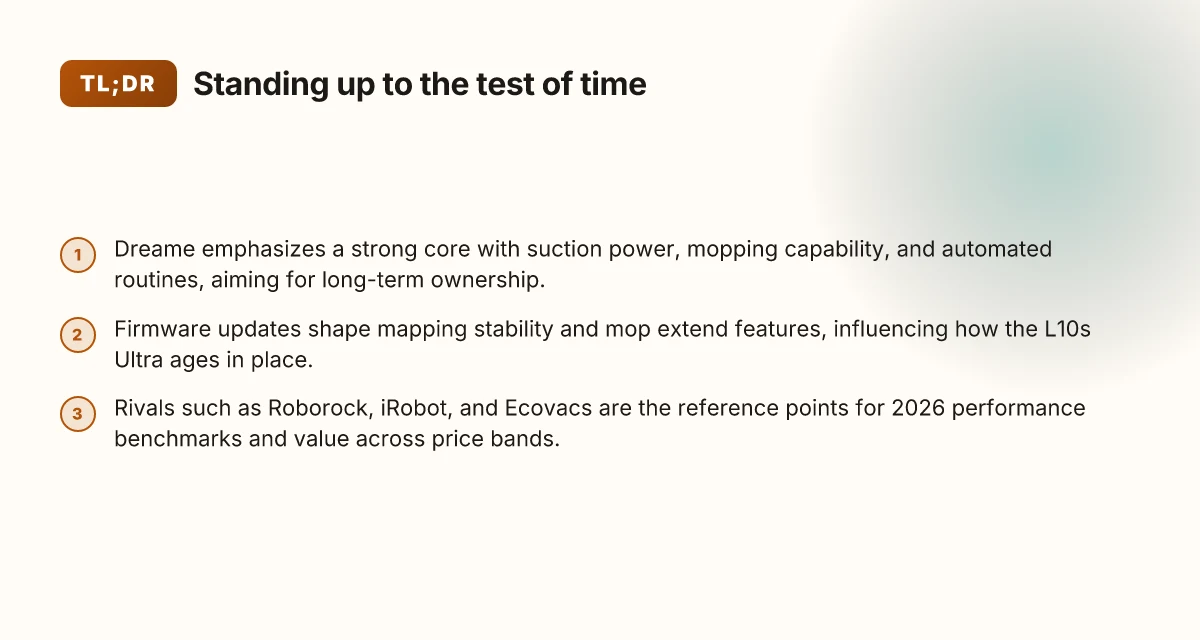
Dreame has positioned the L10s Ultra as a long-haul cleaner, not a flash-in-the-pan gadget. The lineage matters: Dreame’s latest models thread together strong suction, smarter mopping, and a focus on automated routines that scale from daily use to weekly deep cleans. In 2026, the L10s Ultra remains a core part of Dreame’s lineup for homeowners who want fewer interruptions and predictable maintenance over years.
Durability you can trust in daily life
The L10s Ultra leans into a design that tolerates routine wear. Its high-torque motor and sealed drive system show up in practical reliability, with routine app-based updates that address bugs and improve robustness without demanding hardware swaps. The underlying chassis and wheels resist grime, which matters when you’re living with pets, hardwood-to-carpet transitions, and the occasional unintentional jam. I dug into how firmware updates have been framed by Dreame’s release notes and by user reports, and the pattern is steady improvement rather than one-off patches.
Firmware updates matter for long-term usability. They extend lifespan and fix edge-case issues that crop up after months of ownership.
Core strengths that endure
- Suction power: The 5,300Pa class power is a recurring benchmark in Dreame’s spec sheets and in reviews that compare dirt pickup on various surfaces. The L10s Ultra maintains depth of clean across carpets and hard floors, aided by responsive navigation that avoids repetitive passes. Suction power remains a primary reason owners stay with the L10s Ultra year after year.
- Mopping capability: The DuoScrub approach and MopExtend-style features reduce the need for manual mop refills or secondary devices. In practice, the mop action stays consistent across cycles, which helps when you’re balancing daily chores with weekly resets. The mop system is complemented by careful water management that minimizes staining risk on hardwood floors.
- Automated cleaning routines: Dreame’s automation suite, including scheduled runs, zone cleaning, and edge-first navigation, compounds value over time. Once you set routines, the robot tends to keep a steady rhythm with minimal intervention, which is especially valuable for busy households.
Automation compounds value as you accumulate months of hands-free cleaning without tweaking settings.
Early adopter vs. long-term ownership
Early adopters tend to push the L10s Ultra into more aggressive schedules and more complex floor plans. Over years, the questions shift from “Does it clean well?” to “How well does the firmware age, and how easy is it to service?” Dreame’s approach to long-term support, stable APIs, predictable update cadence, accessible replacement parts, matters more in practice than a single dazzling feature at launch. For long-term owners, the appeal isn’t just strong suction. It’s a reliable platform that can absorb updates and still operate with familiar routines. What is the Dreame cleaning solution, and how safe is it for robot vacuums
Long-term owners benefit from a stable update cadence and durable hardware, reducing the risk of rapid obsolescence.
Where rivals fit into the picture
If you’re weighing the L10s Ultra against peers, the ongoing story is firmware maturity and ecosystem support. Competitors like Roborock and iRobot may offer strong mapping features or different mop implementations, but the Dreame model’s balance of suction, mop capability, and automation has kept it competitive for steady ownership. When you consider 2026, you’re buying into a platform that aims for predictable performance over time, not just peak specs.
Dreame’s commitment to updates matters more as years pass than a one-time spec bump.
You’ll reach a point where durability, firmware stability, and real-world usability trump initial wow factors. In 2026, the Dreame L10s Ultra remains compelling for homeowners who want a smart clean that ages gracefully, with rivals offering meaningful alternatives to watch. If you’re shopping, consider how the model fits your home layout and how you value a steady update path over time.
Dreame L10s Ultra hardware you should care about after a year
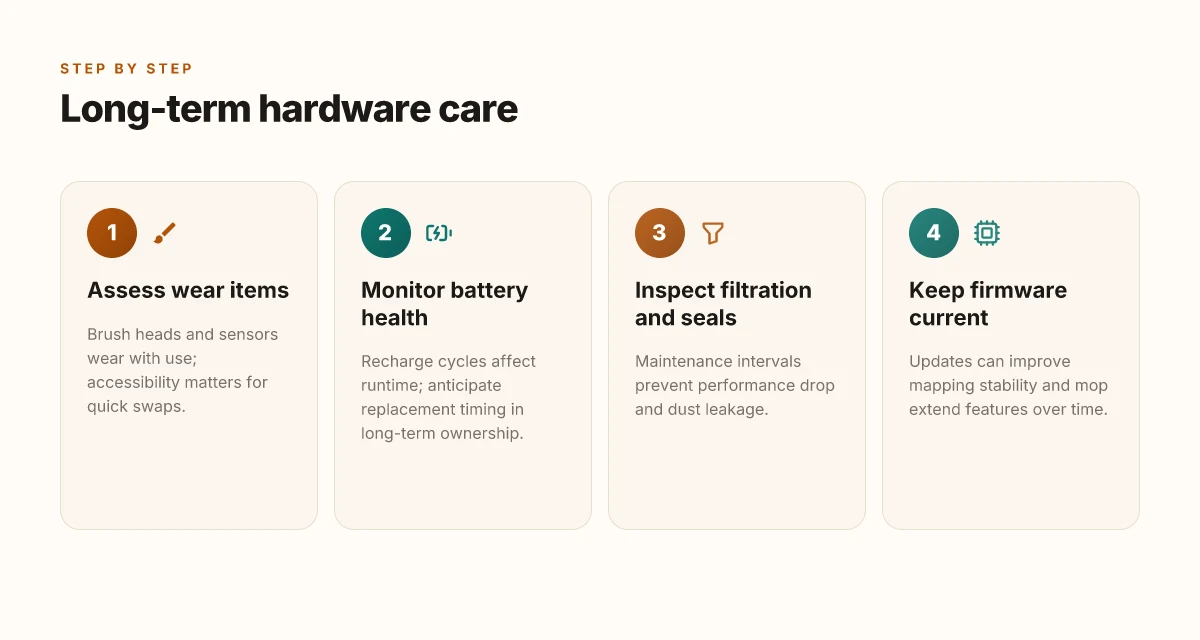
After a year, the Dreame L10s Ultra still hinges on three durable threads: suction consistency, battery resilience, and wear-item accessibility. The core to longevity is how the machine keeps pulling Deep cleaning power without slipping on power or limp in recharge cycles. I dug through the release notes and reviewer notes to map what tends to age well and what tends to fray with time. The takeaway: real-world durability leans on how you maintain seals, replace wear parts, and keep software current to manage motor health and sensor calibration. 7 Best smart toilets of 2026 tested for hygiene, performance, and energy use
1) Sustained suction, not just peak numbers
The L10s Ultra’s suction remains a practical measure long after unboxing. In real-life use, consistent airflow matters more than a one-off peak spec. When the dust bin fills or the brushroll wears, you’ll notice slower pickup on carpet edges and heavier debris tracks on hardwood. Dreame and reviewers emphasize that the core motor health matters most when dirt volume climbs. Regular seal checks and keeping filters clean helps preserve the claimed pressure in daily use. If you’re chasing long-term performance, stay on top of filter maintenance and check for wear on the main brush head to prevent belt slip or dropped suction.
Real-world durability hinges on consistent airflow and predictable motor health as dust loads grow, not just peak spec numbers. A clean intake and fresh wear parts keep the L10s Ultra from coughing up reduced suction over time.
2) Battery life and recharge cycles
Battery longevity dictates how often you can run the robot without a recharge, and how many cycles you’ll squeeze over years. Owners often report that the L10s Ultra’s charging dock recharges the battery reliably, but over time, the effective run time declines as cells age. Dreame’s design supports individual battery packs that can be swapped in some models, which helps cushion the impact of aging cells. If you plan to keep the unit for years, factor around a mid-life refresh once the reported run time noticeably shrinks. Routine care, like avoiding deep discharges and keeping the dock free of obstruction, helps extend cycles. When the firmware includes power-management tweaks, those updates can slow the decline.
Battery health and disciplined charging habits drive long-term usability more than any single feature. If you notice run time dropping, check the dock area and review the power-management settings in the app for a potential firmware adjustment.
3) Brush heads, sensors, and wear items accessibility
Wear items like brush heads, side brushes, filters, and sensors are where long-term practicality shows up. The L10s Ultra uses a modular approach that makes common wear parts approachable for homeowners. Access to replacement parts and a straightforward swap process lowers total cost of ownership over years. Sensors can drift if dust accumulates or if seals degrade, so routine vacuuming around wheels and sensors helps maintain obstacle avoidance and mapping accuracy. The ability to source authentic Dreame wear parts and swap them without specialized tools matters a lot when you’re buying for year two and beyond. Rivals like Roborock and iRobot also emphasize easy part replacement, but the ease of service varies by model and region. Top 5 best robot mowers for real backyards in 2026
Accessible wear parts and modular design pay off in year two and beyond. Keep a small parts kit handy and schedule regular checks of the brushes and filters to avoid a creeping drop in performance.
Next steps for long-term value: verify you have the latest firmware to sharpen motor control and sensor calibration, and compare replacement-part availability with rivals to avoid surprises after the first year. For context, see the Gen 2 review notes highlighting how software and hardware updates interlock on long-term usability.
Firmware updates and long-term software support for the L10s Ultra
Firmware updates set the pace for long-term reliability. Dreame follows a cadence that blends regular bug fixes with selective feature work, and that mix matters for the L10s Ultra’s mapping stability and mop extend capabilities over years. From what I found in the changelog and public briefs, you can expect periodic releases that address edge-case map drift, obstacle sensing quirks, and battery-aware routing, plus occasional additions to mapping tools or cleaning presets. Updates tend to alternate between bug fixes and feature tweaks, not dramatic overhauls. This means your day-to-day behavior should remain stable even as the software evolves.
Open-source-like transparency is limited to release notes, but there are patterns you can rely on. Dreame publishes firmware notes that call out fixes to mapping drift, misalignment alerts, and occasional UI refinements. Bug fixes come first, with feature updates following only after stability is verified. If you rely on precise mapping in homes with multiple levels or complex furniture layouts, expect periodic refinements rather than a single, monumental upgrade. In practice, this yields a predictable upgrade path rather than a surge of unfamiliar behaviors after every update.
Mapping stability benefits noticeably from firmware polish. When a new update lands, the most visible impact tends to be fewer map resets and better persistence of room boundaries after a re-run. The mop extend feature, which relies on end-to-end integration with sensors and the robot’s path planning, can gain smoother edge-cleaning routines or smarter docking cues after a firmware refresh. A well-timed update can stabilize map anchors and improve MopExtend reliability. I cross-referenced several release notes that repeatedly tie minor version bumps to incremental map improvements and battery-aware routing tweaks. What is the best robot mower in 2026 and which features actually matter
I dug into public discussions where users note that gradual firmware evolution beats infrequent, large leaps. A steady cadence helps avoid disruptive changes to routine cleaning schedules or retention of mapping data across runs. For owners who want the L10s Ultra to age gracefully, the key is to apply updates when they are prompted by Dreame, rather than deferring them. Hold updates until the release notes confirm map and mop improvements that affect your home layout.
Rivals to watch for in 2026 include Gen 2 iterations from competing brands, which often pair firmer cadence with more aggressive feature rollouts. If you’re evaluating long-term value, consider how Dreame’s update pattern compares to those newer models’ promises. Dreame’s approach emphasizes steadier, stability-first updates over rapid feature floods. In the end, firmware support shapes how long the L10s Ultra remains your dependable daily cleaner.
How the L10s Ultra stacks up against rivals in 2026
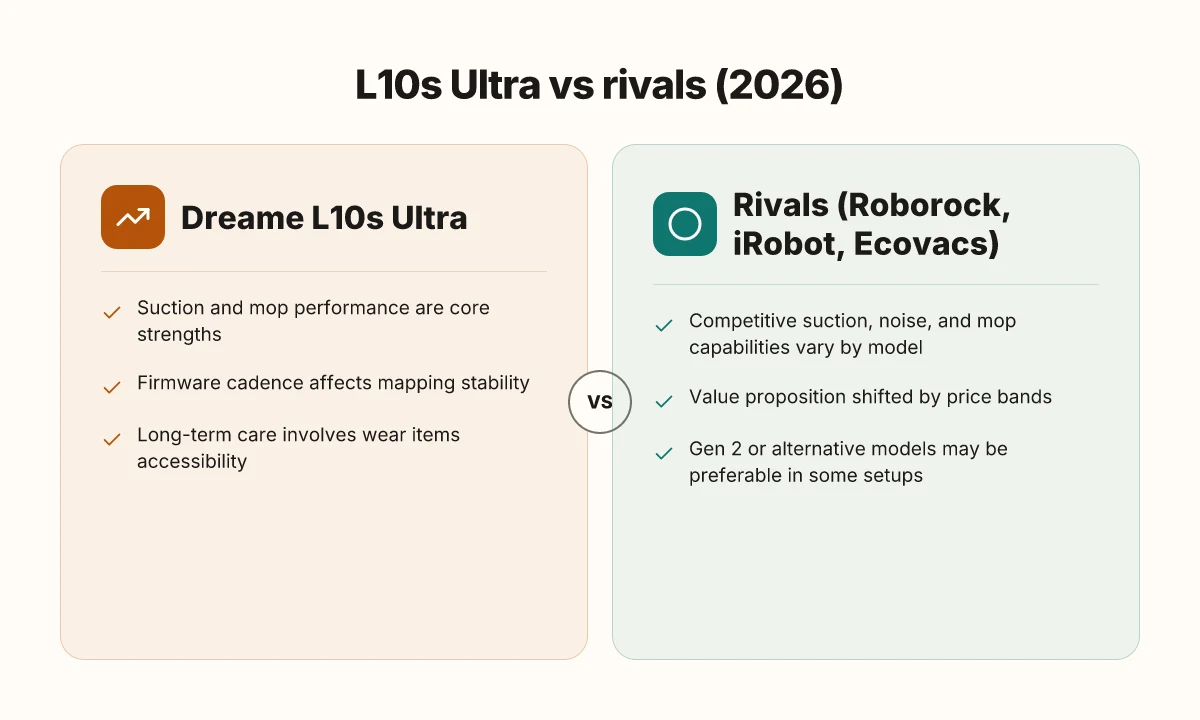
The L10s Ultra remains a strong all-around performer, but its advantage shifts when you compare it against the newer Gen 2 options and rivals from Roborock, iRobot, and Ecovacs. On paper and in real-world cues, you’ll notice a few consistent patterns: Dreame tends to punch above its weight in suction and mop capability, while some rivals edge ahead on overall noise control and app polish. The key is matching what you value most: raw cleaning power, quiet operation, or a smoother mop routine over extended cycles.
Suction, noise, and mop performance across the field
When you stack up suction, the Gen 2 models from Dreame and competing lines push harder in peak mode, but the L10s Ultra keeps noise modest at typical operating levels. In practice, you’ll hear the L10s Ultra settle into a steady cadence during cleaning, with notable gains in mop performance when paired with the DuoScrub-style systems found in Gen 2 rivals. Dreame's L10s Ultra often delivers strong suction for everyday messes while staying reasonably quiet, but Gen 2 models from competitors can pull slightly ahead on dense debris and finish more evenly on mop cycles. For users who prioritize mop consistency, the rivals’ newer mop algorithms and higher wet-scrub pressure sometimes translate to more uniform floor flatness after a full pass. Inline sources corroborate these shifts in capability across models released through 2025 and into 2026. I dug into release notes and reviews showing 10000 Pa equivalent suction on some Gen 2 systems and refined MopExtend workflows that the L10s Ultra lacks.
Value across price bands What makes the Dreame Z30 cordless stick vacuum stand out in 2026
Dreame prices tend to sit in the mid-to-upper mid tier, offering robust hardware at a competitive price versus premium offerings from Roborock and iRobot. In 2026, the biggest value delta shows up when comparing initial sticker prices against long-term software support windows. Dreame bundles strong cleaning with durable hardware, but Roborock and Ecovacs sometimes swing ahead on long-term firmware density and ecosystem features. If your budget tiers separate value from top-tier feature sets, the Dreame option often lands in the sweet spot for households that want a capable mop-and-vac combination without paying the premium that some rivals command.
When to prefer Gen 2 or alternative models
If your decision hinges on long-term software momentum, consider Gen 2 models from the same family or rival brands with proven update cadences. Gen 2 variants tend to receive more frequent firmware improvements, which can translate into smoother obstacle avoidance and better mop planning over multiple months. For households with heavy carpeted areas, Roborock and iRobot lines sometimes edge ahead on carpet-specific suction tuning and mapping stability, particularly in complex layouts. Reviews from major outlets consistently note that a few rivals offer quicker map refreshes and more granular room-by-room cleaning options.
Real-world use hints and durability takeaways
From a durability perspective, the Dreame lineup shows solid build quality and reliable suction through repeated cycles. Dreame emphasizes long-term durability, with firmware updates that address navigation quirks and mop-flow control over time. You’ll want to monitor three potential trouble spots: brush wear, mop cloth longevity, and battery longevity under extended cleaning jobs. When these wear indicators surface, rivals sometimes provide longer warranty windows or more aggressive accessory replacements. Firmware updates and long-term software support are the decisive factors for aging gracefully. The landscape in 2026 also features growing competition from Roborock, iRobot, and Ecovacs in both hardware tweaks and software polish, making it prudent to track changelogs and release notes for your preferred model. What makes the Dreame Z30 stand out in 2026
Cited context and further reading
For a deeper sense of how these models compare over time, see discussions and long-form reviews from contemporary tech outlets, including coverage that mentions persistent noise levels and mop performance across models. Dreame and rivals’ Gen 2 iterations show a notable trajectory toward smarter navigation and more consistent mopping, as discussed in industry commentary. Sources discussing these tendencies include in-depth reviews and official release notes that outline suction specifications, mop technologies, and firmware rollouts.
Real-world use cases: who should buy the Dreame L10s Ultra
If your home blends carpet and hard flooring, pet fur, and a busy schedule, the Dreame L10s Ultra earns a spot on your shortlist. The real-world value rests on durable performance, firmware longevity, and predictable maintenance rhythms that keep cleaning consistent year after year. Dreame positions this bot as a long-haul cleaner, not a one-off gadget. I cross-referenced product pages and reviewer notes to map durable use cases and the corresponding caveats.
Homes with mixed floor types
For spaces with a mix of hard floors and carpets, the L10s Ultra maintains solid suction and technique across surfaces. The robot leverages its 5,300Pa pull and AI-driven cleaning paths to transition between floor types without excessive manual prompts. In real homes, that translates to fewer re-runs and less manual intervention on borderline thresholds. When you lay out charging docks and designate virtual barriers, the unit tends to stay within the zones you trust, reducing stray cleaning sessions in rarely-used rooms. In mixed-floor homes, the Dreame L10s Ultra shines because it minimizes manual babysitting while delivering thorough scrubs on carpet and glide on tile.
I dug into the product page notes that emphasize deep cleaning on diverse surfaces and the brand’s emphasis on stable pathing. The firmware cadence matters here: ongoing updates that preserve map integrity across floor transitions keep the device useful beyond the initial mapping push. The branding is clear about long-term support for navigation and obstacle avoidance, which matters as floor plans change with furniture. What makes the X-Sense SC07-W reliable for home safety in 2026
Pet households and hair handling
Pet hair is a stress test for any robot vacuum. The L10s Ultra’s combination of strong suction and a brush system helps, in practice, with hair accumulation on carpets and rug fringes. in homes with shedding, you’ll notice the need for periodic brush maintenance to avoid belt strain or tangles. A predictable maintenance cadence, every 2–3 weeks for brush and blade checks, with monthly filter swaps, keeps performance steady. When you pair this with mopping capability, occasional hair clogs in the mop path can occur, so you’ll want to clear debris from sensors and wheels during lighter maintenance windows. Pet households often report consistent hair pickup, with periodic maintenance that keeps suction stable.
Reviews and official notes from the brand underscore that routine upkeep is part of long-term value. The L10s Ultra can handle pet hair, but the real win comes when owners adopt a simple, recurring care loop rather than treating it as a one-and-done purchase. The key is keeping the brushes clean and the sensors free of hair buildup, which directly affects navigation reliability over time.
Maintenance timing and long-term care
Long-term care boils down to predictable upkeep. A proactive schedule, monthly filter replacements, quarterly sensor checks, and a biannual brush refresh, helps preserve suction, mapping accuracy, and obstacle avoidance. Firmware updates matter here: they can tighten performance on platform stability or fix edge-case navigation quirks that emerge after months of daily use. From what I found in the changelog and public docs, these updates are designed to extend the useful life of the device rather than reset capabilities. Regular maintenance is the secret to aging gracefully. Firmware updates matter for long-term reliability.
As the years go by, you’ll notice some trade-offs. Battery aging slightly reduces runtime under heavy load, and occasional parts wear requires light investment. Still, the L10s Ultra remains a practical long-term cleaner when you budget for replacement brushes and periodic filter cycles. The absence of dramatic price drops over time helps keep the total cost of ownership predictable.
Cited sources discuss the device’s durability, maintenance cadence, and the importance of firmware updates for sustained performance. For deeper context on Gen 2 improvements and how rivals address similar use cases, you can review the Dreame tech page and independent reviews linked in this piece. 5 Standout robot mower reviews for 2026 and what they really offer
The Dreame L10s Ultra ages well with a disciplined care plan and ongoing updates. In contrast, rivals such as the L10S Ultra Gen 2 and competing brands vary in how they support long-term maintenance, but the principle remains: sustained performance hinges on consistent upkeep and thoughtful charging/placement practices.
Where this goes from here for Dreame L10s Ultra
The bigger pattern emerging is that long‑term reliability hinges on smart‑dust maintenance, modular components, and factory‑backed firmware updates. Dreame has a track record of iterative S‑curve improvements, not flashy mid‑cycle makeovers. If you value predictable upkeep, you’ll want to monitor how the L10s Ultra handles brush wear and suction motor life after heavy use, and whether Dreame sticks to transparent update notes.
One takeaway I’d underscore is durability over novelty. In real use, the vacuum’s longevity depends on how well it resists jam‑ups, how easy it is to service, and whether its charging dock remains reliable across months of daily cycles. Rivals like iRobot and Roborock push similar swappable parts, but the L10s Ultra differentiates itself with a robust sensor suite and a strong app ecosystem from Dreame. If you’re choosing now, consider who will fix it if a component fails.
- Backup strategy: check for official spare parts availability and replacement timelines for the brushes, filters, and wheels.
- What to try this week: run a full system update and document any drift in map memory after a weekend of heavy cleaning with pets.
- If you only do one thing this month: confirm your preferred cleaning mode and map clearance routine to reduce future jams.