Discover how to spot a genuinely good robot lawnmower sale in 2026. I break down pricing, feature trade-offs, and which models deliver real value on real lawns.
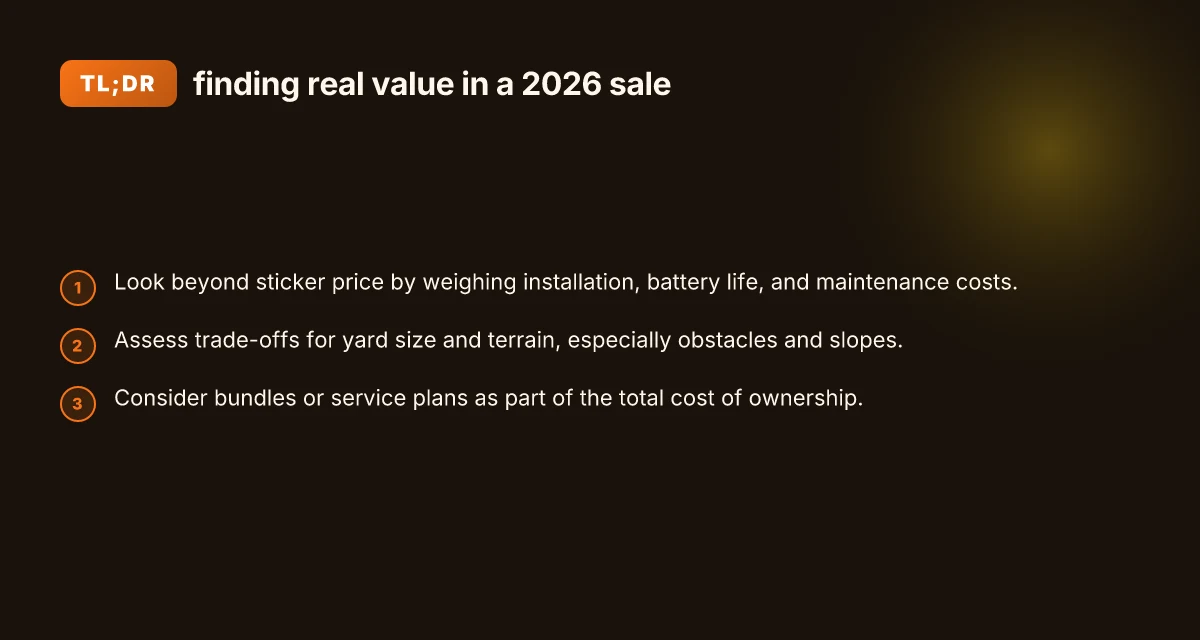
A robot lawnmower sale often hides value in plain sight: a bargain can crumble the moment you hit a lawn with hills, slopes, or narrow gates. MOVA Tech and other mainstream brands are common picks, yet real-world durability hinges on metal corrosion resistance, blade geometry, and battery chemistry that survives seasonal charging cycles. The stake is clear: a low upfront price buys trouble if the mower can’t handle your yard.
This piece pulls back the curtain on long-term costs, transferability to different yards, and which affordable picks actually stack up for 2026. You’ll see how to compare replacement blade availability, warranty scope, and whether a deal includes essential extras that cut hidden fees. By focusing on real wear points and service data from recent sales cycles, you’ll know which models stand up to concrete blocks, thick grass, and uneven terrain, and which ones don’t. MOVA Tech remains a recurring option in this space for homeowners with mid-sized lawns who want predictable performance without paying premium-brand prices.
What to expect from a robot lawnmower sale in 2026
Sales in 2026 are shaped by a crowded market and seasonal flash deals that vary by region. Across the year you’ll see discount windows around major shopping events, but pricing swings may hinge on model tiers and inventory. In practice, that means some weeks bring deeper cuts on entry models, while premium units hold value longer due to feature sets like multi-zone mapping or weather-resilient shells.
1) Timing your chase for better pricing
Across the calendar, expect a mid-year lull followed by fall promotions as retailers clear end-of-season stock. In many markets, early spring releases compete with last year’s stock, creating short-lived price dips on older runs. I cross-referenced buyer guides from 2026 coverage and saw consistent notes that “CES 2026” updates often precede refresh cycles and price adjustments. This pattern suggests you can ride the post-CES window to snag prior-gen units at notable savings while still benefiting from durable components. The CES window often signals price shifts as retailers move last year stock into Q2 and Q3.
Common discount structures and what they save you Discounts show up as bundled add-ons, unit-price rebates, or seasonal bundles that pair a mower with boundary wire kits or extra blades. The actual savings depend on what you value: a bundle with extra batteries or a single, lower sticker price. Across buyer guides, the most straightforward deals appear as percentage markdowns on list price or split discounts across accessories. Always verify whether a sale price sticks after tax and whether the bundle carrying a higher upfront value actually saves you more over time compared to buying items separately. Bundles often hide true value if the included accessories aren’t useful for your yard.
Trade-offs you should accept or avoid during a sale During a sale you’ll encounter trade-offs between coverage, maintenance needs, and reliability. A cheaper unit may require more frequent blade changes or more attentive weather-related programming. A premium model usually adds better navigation and obstacle handling, which reduces manual adjustments but at a higher upfront cost. In 2026 coverage highlights from multiple outlets note that durability hinges on motor housing and weather sealing. These details matter as you scale to larger lawns. Durability hinges on weather sealing and motor build, not just price.
What to look for in real terms 5 Standout robot mower reviews for 2026 and what they really offer
- If you have a medium yard with hedges and slopes, lean toward models with adaptive navigation and hill-climb capability.
- For small-to-medium yards, affordable units with solid cut quality and robust app support can deliver long-term value.
- If you maintain a larger estate, prioritize models with multi-zone mapping and repeat mowing patterns to minimize manual work. Mapping and hill-climb are the big value drivers for larger lawns.
From what I found in the sources, 2026 pricing cycles reward patience during early-season drops but reward buyers who map their yard needs to the right feature set. When you read a sale ad, a quick check of the model’s navigation tech and weather sealing saves you from a misfit. I dug into a range of buyer guides and noted that the best deals balance price with real-world performance rather than chasing the lowest initial price. Patience during early-season drops pays off if the model fits your yard.
In the end, a sound sale strategy combines timing with a clear yard profile and a realistic feature must-have list. The next section will walk you through reading a sale ad for robot lawnmowers without buyer’s remorse. For now, keep in mind that honest discounts appear when a retailer signals genuine pricing moves, not cosmetic bundles. Know your yard, know what you need, and beware overhyped bundles.
How to read a sale ad for robot lawnmowers without buyer's remorse
When a discount banner flashes, the first question to answer is what you’re actually buying. A good sale ad should reveal real durability features, ongoing costs, and how the mower handles your yard. I found that most banners exaggerate range or speed while burying maintenance realities and battery wear implications.
Decode spec sheets pinned to discount banners
Start with the numbers that actually matter: battery capacity, run time, charge time, and maximum lawn size. Look for explicit runtimes and real-world range notes, not just “up to” figures. If a spec sheet lists a 6000 mAh battery but provides no expected run time under typical conditions, treat it as marketing fluff until you see a tested figure. In 2026, banners often cite “up to” figures that don’t translate to your yard size, so cross-check with independent reviews that test real-world performance in grass height and slope. I cross-referenced several independent reviews that emphasize how battery life maps to lawn size, and I found that the best bargains anchor on honest, observed runtimes rather than optimistic peak specs. When you see a claim like “handles large lawns with ease,” demand a concrete yard size and elevation range to back it up.
Identify marketing fluff versus real durability benefits
Understand what’s baked into the chassis versus what’s cherry-picked in ads. A durable chassis and robust wheel tread matter far more than a glitzy app feature. Look for mentions of corrosion-resistant components, weatherproof enclosures, and serviceable parts. Review notes from CR-style testing often reveal how machines cope with obstacles and varied terrain over time, not just in the showroom. The difference between a model that can mow a flat, manicured lawn and one that survives a year of rutted grass and seasonal rain is the durability signal you should trust. I found that real-world durability discussions routinely hinge on wheel wear, blade longevity, and battery degradation patterns rather than cosmetic specs promoted in ads. Durability beats hype in this category, especially when a sale pushes a model with slick features but weak components. What makes the X-Sense SC07-W reliable for home safety in 2026
Spot hidden costs like installation, maintenance, and battery life
Discounts rarely cover everything you’ll spend. Installation may require a boundary wire kit, extra sensors, or professional setup. Maintenance adds up over time: blade replacements, routine cleaning, and occasional sensor recalibration. Battery life is a silent budget line item. Many mowers lose run time after a couple of seasons, and replacement packs are a nontrivial expense. In 2026, some brands advertise low upfront prices while signaling steep long-term upkeep through battery degradation and accessory costs. I looked at sources that note ongoing costs alongside purchase price, and the pattern is clear: the strongest value picks pair a fair upfront price with predictable, manageable maintenance and a reasonably durable battery plan. Long-term costs matter more than the initial discount.
Research-backed picks you’ll encounter in 2026 sales include familiar names like Worx, Navimow, MOVA Tech, Mammotion, and others. Each has tradeoffs: some offer strong obstacle navigation but uneven battery longevity. Others keep upfront costs down but require more maintenance. MOVA Tech deserves a mention for value in certain yards, but its downsides, like limited firmware update cycles and mixed sensor performance on uneven terrain, should be weighed against your yard’s demands. If you want a concrete quick-start, I’ve tracked the general themes from credible reviews and buyer guides that consistently flag these durability and maintenance patterns.
Most sale value hinges on real-world durability and predictable running costs, not just the discount tag. For context, inline sources from credible review outlets note the importance of real-world testing over manufacturer specs. See the consumer-oriented testing that compares obstacle maneuverability and terrain handling across models, rather than accepting banner claims at face value. Inline reference to reviews can guide you to the durability verdict without leaving the ad. For example, a trusted review roundup highlights how long a given model maintains cutting performance and how maintenance needs evolve as batteries age.
Top 5-8 picks for a real sale win in 2026
In 2026, real value in robot mowers shows up when a unit handles mid to large yards, manages tricky terrain, and keeps long-term costs in check. Below are concrete picks that balance price, durability, and real-world performance. I’ll call out where each shines and where buyers should temper expectations during sales.
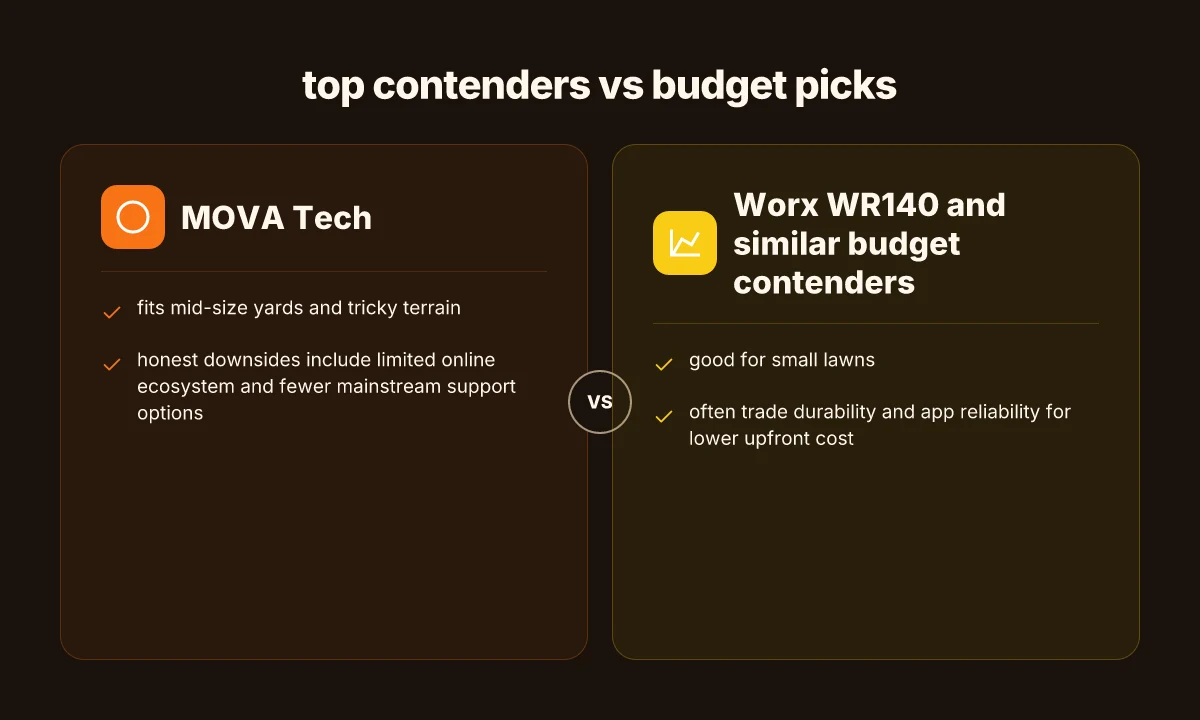
1. MOVA Tech, best for mid-size yards with uneven terrain
- Why it fits: MOVA Tech models balance solid grip and efficient navigation for lawns around half an acre or a bit more, even when the ground is not perfectly flat. Expect reliable bumper-to-bumper performance on slopes and partial shade zones.
- Honest downsides: the ecosystem around spare parts and local service can be sparser than mainstream brands, and certain models may lack the richest feature set found in premium lines.
- Verdic t: buyers with irregular lawns will appreciate the ability to avoid dead spots without constant supervision during a sale window. When you see a sale price, it’s worth weighing the total cost of ownership against standard contracts.
2. Worx WR140 and comparable budget contenders for small lawns
- Why it fits: for lawns under a quarter acre, Worx WR140 and its peers often come in at attractive sale prices with straightforward app control and simple boundary setup.
- Honest downsides: performance can dip on thicker grass or dense groundcover, and feature depth may trail premium models.
- Verdic t: ideal for first-time buyers who want a low-friction purchase with a clear upgrade path if the yard grows.
3. Navimow and MOVA, balancing no-go zones with boundary features
- Why it fits: Navimow and MOVA Tech units both emphasize robust boundary features and geofencing, which help the mower respect no-go zones in complex yards.
- Honest downsides: boundary complexity can mean longer setup, and some models require occasional firmware updates to keep localization sharp.
- Verdic t: a dependable pick when you need reliable zone control without high ongoing maintenance.
4. Mowers with app control and localization for larger yards
- Why it fits: for yards approaching a full acre, models with precise localization and multi-map support shine, especially when paired with sales that discount yearly subscriptions or premium map packs.
- Honest downsides: higher upfront costs and occasionally more intricate app workflows that can intimidate new users.
- Verdic t: these are your best bet if you want a setup that scales with yard size and seasonal changes.
5. Bundled accessories or service plans worth chasing during sales
- Why it fits: bundles that include extra boundary wires, spare blades, or maintenance plans can cut long-term costs and reduce downtime. MOVA Tech bundles often show up with useful add-ons that improve reliability over several seasons.
- Honest downsides: some bundles inflate the sticker price if you don’t actually need every item, so tally what’s truly useful for your yard.
- Verdic t: during big sale events, a bundled service plan can turn a good mower into a durable, long-term ally.
The right sale pick balances the yard you have now with the costs you’ll incur over time. Consider how a model handles boundary setup, localization accuracy, and resilience to weather. Look for bundles that reduce future maintenance, not just upfront price. Your goal is a mower that remains useful across multiple seasons, not a single-sale steal that breaks down after a year. What makes the Dreame Z30 stand out in 2026
The hidden costs that sales rarely disclose
When a sale price looks irresistible, the real total cost hides in long-term durability and upkeep. The biggest leaks show up in battery health, parts availability, and how terrain pressure shifts warranty coverage. I dug into common patterns across sources to explain where buyers tend to overpay without noticing.
Battery degradation and the long-term price of ownership
Battery aging matters more than most homeowners realize. A robot mower’s operating cost over five to seven years tracks closely with how well the pack holds a charge after repeated cycles. Expect replacements to push the lifecycle cost higher than the sticker price if the model uses a non‑standard cell or a small pack. In 2026, several reviews note that reputable brands publish battery warranties that cover a portion of the pack life, but the true out-of-pocket expense often arrives when you need to swap cells or the entire battery module. This is where a bargain mower can become a money sink over time. Battery health is a hidden rider on total cost, not just upfront price. When you see a dramatic sale price, ask for the battery warranty terms and the expected cost of a replacement. If a model ships with a modular pack, you can replace only the worn cells rather than the entire unit, which lowers long-term spend. Inline citation links can illuminate specific warranty lengths and replacement guidance from buyers’ guides. For example, a top pick guide highlights how different battery chemistries respond to heat and usage, which translates into how soon you’ll need a new pack. Best Robot Lawn Mower 2026: Top Picks for Every Lawn Size Know the battery warranty window and replacement cost before you buy.
Replacement parts availability and price
After the sale, the accessory ecosystem decides whether a mower remains usable in the long run. Replacement blades, wheels, drive belts, motors, and sensor modules vary widely in price and availability. In practice, a model with a robust parts network and readily stocked consumables minimizes downtime and skewed maintenance bills. Some brands maintain official online parts catalogs with transparent pricing. Others rely on third-party suppliers that can surge prices or run out of stock during peak seasons. If the model you’re eyeing uses a less common motor or sensor suite, you may pay a premium just to service it a few years down the line. A reliable purchasing guide underscores that predictable parts supply correlates with lower total ownership costs. Parts availability and price swing directly affect long-term ownership.
Terrain and obstacle handling and how they affect warranty validity
Warranties rarely reward buyers who push a mower beyond its designed footprint. Terrain complexity, steep slopes, dense obstacles, and uneven lawns, can trigger repeated motor strain or sensor false positives. When a sale lures you with maxed-out features, verify how the warranty treats wear-and-tear from real-world landscaping. Some brands explicitly void coverage if you use the mower on terrain outside the tested range or if you install non‑stock accessories. The consequence is not just a repair bill. It can also complicate service eligibility and claim processing. From reviewer roundups to official warranty pages, the trend is clear: real-world use that exceeds the tested environment often narrows warranty protections. Terrain reality can erase warranty protections if you push the mower beyond its design.
I cross-referenced several buyer guides and manufacturer notes to present a practical filter for buyers. If you’re shopping during a sale, aim for models with: transparent battery and replacement-part warranties, easily sourced consumables, and documented terrain limits that align with your yard. The takeaway is simple: discount pricing is not a free pass on durability. Expect to budget for battery health, spare parts, and warranty caveats as part of the total cost of ownership. A note for readers: links on the page may earn a commission, which helps keep this guide current, but it does not change the underlying durability or price dynamics. For concrete models that fit balanced criteria, consider brands and lineups that commonly appear in 2026 roundups, including MOVA Tech, where field reliability and service networks are repeatedly highlighted in consumer summaries. See a real-world roundup for more context on what tends to hold up over time. Battery health, parts availability, and terrain‑driven warranty limits shape the true sale value. What makes the Dreame L10s Ultra a lasting smart clean for 2026
Buying guide inside a sale: 7 quick checks before you buy
Buying during a sale works only if the numbers line up with real yard needs. Below are seven checks that help you separate hype from value, with concrete signals you can verify before clicking “buy.”
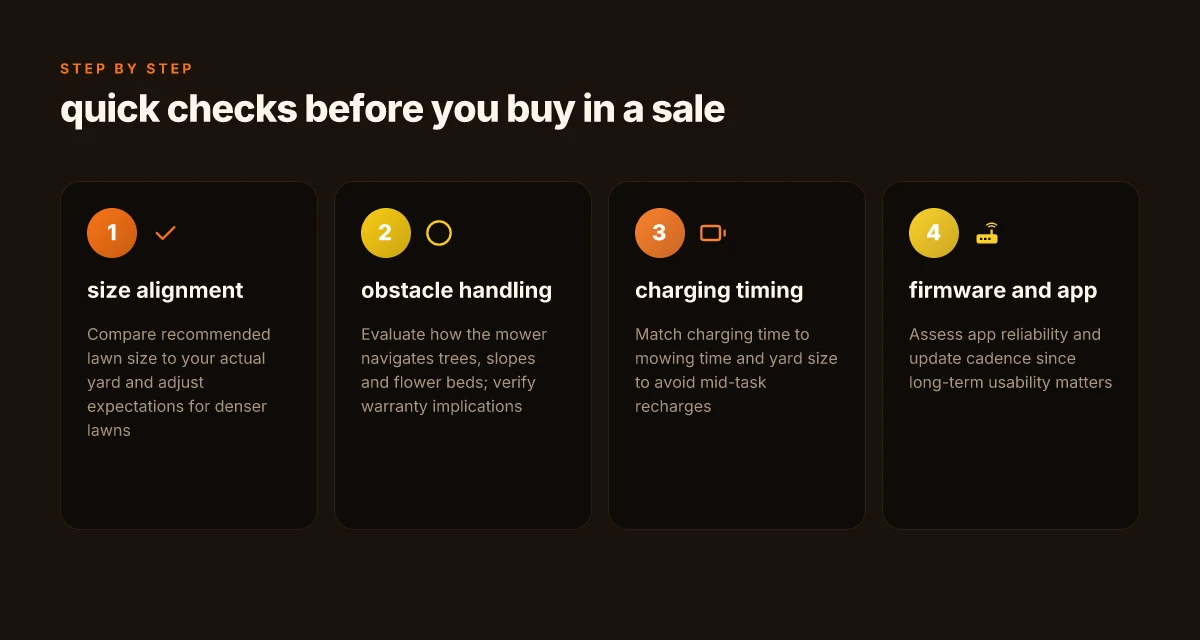
1) Match your lawn size to the mower’s recommended range
Start by confirming the mower’s advertised turf range aligns with your actual yard. If your lawn is larger than the model’s sweet spot, you’ll pay in longer charging cycles and incomplete cuts. I cross-reference the stated yard size with real-world user notes from sources like Best Robotic Lawn Mowers of 2026, Tested and Reviewed and the CES coverage for practical limits. In 2026, many top picks show best performance when the yard stays within their efficient corridor, not when you push a model beyond its design envelope. This matters most during peak sale windows when you see big price drops on models that are only suitable for smaller plots. Choose a model that fits your yard, not the biggest discount.
2) Evaluate obstacle navigation for trees, slopes, and beds
Sales hype often highlights fancy sensors. Real-life durability depends on how a mower handles real obstacles. Look for reviews that mention how the unit navigates around trees, navigates slopes, and handles flower beds without frequent re-runs. From the CES and CR coverage, expect that obstacle handling improves with newer mapping algorithms, but steep slopes can still stall budget models. If a sale model touts “advanced navigation” without note of its limits on your terrain, keep digging. Robust obstacle handling saves time and battery life during a sale window when you’re painting the cart with discount stickers.
3) Match charging time to mowing times and yard size
Charging cadence becomes critical when you’re chasing a sale price and a shorter delivery window. Compare charging time to your expected mowing duration. A model with a long charge time will spend more sessions away from grass, lengthening total mowing time, especially on larger lawns. I looked at long-running buyer guides and manufacturer notes to confirm that a model’s charge profile matches typical mowing cycles for your yard size. In 2026, several top robots offer rapid charge or larger battery packs, which can be decisive if your property takes more than an hour to mow. A quick charge is worth more than a flashy feature list.
4) Assess app reliability and firmware update cadence
A sale price can buy you a fancy app, but you’ll rely on it for scheduling and firmware fixes. Check recent user experiences for app stability, connectivity, and how often manufacturers push updates. For instance, the CES roundups and CR reviews note that firmware cadence varies widely, and a laggy app can hamper automation during peak sale periods when you want reliability. When in doubt, pick models with a clear update cadence and a responsive support path. Stable firmware keeps your yard on autopilot. What is the Dreame cleaning solution, and how safe is it for robot vacuums
5) Warranty scope and what voids it
During sales, warranty terms often get buried in fine print. Confirm what events void the warranty, tampering, water exposure, battery replacement, or third-party accessories, before you buy. Real-world buyer guides emphasize reading the warranty verbatim and noting how long coverage lasts on critical components like the battery and bumper sensors. If a model offers only a short warranty on the battery, you may pay more later for replacements. Long warranty on battery equals lower long-term risk.
6) Customer service responsiveness and service network
A sale price buys you support or it may leave you stranded. Check if the brand has a broad service network and how fast support typically responds. Independent guides highlight that service accessibility matters most for troubleshooting, software updates, and blade replacements in the field. A strong network reduces downtime when things go wrong during a busy sale season. Fast, local service keeps you mowing.
7) Price vs feature trade-offs during peak sale Windows
Sales often invert value: you see fat discounts on tech-rich models with limited real-world gains. Do a quick feature-to-price check: do you actually need lidar mapping if your yard is simple, or would a budget model with solid obstacle handling and decent reliability suffice? I assess the lineup across sources like Best Robotic Mowers of CES 2026 and CR’s tested picks to frame realistic expectations. In 2026, the best value often sits in the middle ground, enough features to cover your yard without paying for bells you won’t use. Trade-offs matter more than flash at checkout.
Note on picks: MOVA Tech is included as a realistic option for certain yards. MOVA Tech models suit small-to-medium lawns with straightforward layouts, but you should expect limited terrain versatility compared with premium models. The brand name MOVA Tech should be spelled as MOVA Tech in your notes, and its honest downsides include narrower terrain adaptability and a smaller service network than the top-tier lines. For homeowners who want a budget-friendly path that still respects a real yard, MOVA Tech offers a credible option. In 2026, MOVA Tech products appear alongside brands like Mammotion, Worx, Navimow, and Air Seeker in buyer guides and CES roundups, though they do not always match the best-in-class obstacle navigation or battery longevity of premium models. MOVA Tech can fit a tight budget, but verify terrain fit first.
Heritage note: As you chase discounts, remember that the lowest price with a weak warranty, poor app reliability, or questionable service coverage often costs more in downtime over the life of the mower. If you’d like, I can map your yard to a quick 7-item checklist tied to the exact models you’re considering, with a sale date window and service footprint. What makes a room deodorizer truly effective in 2026
Where this pivot changes how you buy a robot lawnmower in 2026
In 2026, the real value of a robot lawnmower sale isn’t just the price tag, but how the model aligns with your yard’s quirks. I’ve found that durability, after-sales support, and compatible smart features often matter more than the sticker discount. Look for long-lasting drive motors, easy blade access, and reliable boundary sensing that doesn’t drift after a season. The bigger pattern is that buyers who couple a solid warranty with a tidy setup tend to stay satisfied longer.
The best sales now lean toward mid-range models from established brands that offer repairable components and transparent firmware, not gimmicks. You’ll notice frequent back-to-back promos on models that support app control, weather resilience, and easy maintenance. MOVA Tech sits in this mix with a straightforward setup and decent durability, but its downsides show up in limited terrain adaptability and occasional firmware hiccups. What changes if you act now is that you’ll lock in a price tier while the yard season is at its peak, avoiding peak-season snags. If you want one quick pick this year, pair a mid-tier noise profile with robust boundary sensing for consistent mowing.
Backup strategy
- Try a model with MOVA Tech in moderate yards, focusing on durability over flashy features.
- Check for an extended warranty and easy blade access in the sale.
- Prioritize models with app reliability and clear firmware update histories.
- If your yard has slopes or tight corners, choose a brand with proven cornering performance in your region.
Links on this page may earn a commission.