
Discover the best robot lawn mowers for 2026. Learn which models balance performance, efficiency, reliability, and maintenance to fit your lawn.
The landscape is shifting toward smarter reliability across brands. In 2025–2026, homeowners faced longer warranty tails and clearer safety certifications, not just faster blades. This article cuts through the noise to map durability, maintenance cadence, and safety certifications so you can pick with confidence.

What makes the best robot lawn mower in 2026 stand out and why it matters
In 2026, the standout robotic mowers balance navigation reliability, robust obstacle handling, and true terrain adaptation with practical maintenance rhythms and formal safety certifications. The core success factors are clear: a mower must map and traverse lawns consistently, dodge common impediments, adapt to slopes and uneven ground, run long enough between charges, stay quiet enough for neighborhood use, require affordable maintenance, and carry recognized safety certifications. The tension to watch is between AI navigation sophistication and real-world durability. A mower that maps perfectly in software can still fail outdoors if its drive wheels, belts, or cutting hardware wear out quickly under sun, rain, and mower abuse. A balanced shortlist should span price bands and lawn sizes so homeowners don’t sacrifice reliability for a lower sticker price.
Navigation reliability that stays true outside the lab Advanced AI navigation matters, but only if it survives real yards. Better maps must pair with steady localization as grass grows, leaves fall, or a dog path reroutes traffic. In practice, dependable navigation reduces the need for frequent manual intervention and minimizes overcutting or missed patches. When a mower misreads a boundary, it should recover gracefully, not wander into flower beds or onto the driveway. I cross-referenced expert reviews that emphasize consistent path planning and reliable sensor fusion as hallmarks of resilience.
Obstacle handling and terrain adaptation in mixed environments Yards are not uniform: low hedges, tree roots, rocks, and wet patches test a mower’s tact. The best models maintain traction and cut quality across gradients and irregular turf without stalling. A top performer should automatically slow on steep slopes, adjust blade height without stalling, and resume without user fiddling. Real-world durability hinges on robust chassis protection and components rated for outdoor conditions, not only clever software.
Battery life, charging cadence, and noise footprint Battery chemistry should support meaningful coverage windows per charge, with predictable recharging cycles that prevent long downtime. Noise design matters for shared spaces and neighbor acceptance. A practical model offers easy battery replacement or modular packs and clear maintenance steps that don’t demand specialized tools.
Maintenance cadence and safety certifications Maintenance should be predictable: blade maintenance, air filter checks, and belt inspections with simple, repeatable steps. Safety certifications matter for peace of mind, look for UL or equivalent marks and documented safety features like lift alarms, blade brakes, and enclosure integrity. In 2026, a durable unit pairs documented safety with a maintenance roadmap that a typical homeowner can follow without professional service. What makes the Dreame X50 Ultra stand out in 2026
Shortlist strategy across budgets and yard sizes Expect a vetted mix: near-town lawns to mid-sized estates, with at least 5–8 named models across price bands. For transparency, this section names brand bets that real shoppers consider, including MOVA Tech and other widely available options. Expect tradeoffs: higher upfront cost for longer intervals between maintenance, or more automation at the expense of immediate hardware heft.
From what I found in sources, a few brands consistently appear in expert and consumer reviews for 2026 durability and safety emphasis. For readers seeking concrete starts, here are five picks that span lawn sizes and budgets, each with a practical downside to consider:
MOVA Tech, best for mid-size lawns with smart mapping, solid safety features
I note MOVA Tech as a compelling option for homeowners who want robust AI guidance paired with predictable maintenance steps. Downsides include a potentially higher price tier and the need to verify local service availability.
ANTHBOT Genie, top all-around performer for complex yards
The Genie earns praise for navigation prowess and terrain handling, though its setup can be intricate for first-time users and maintenance access varies by model.
Husqvarna Automower 315X, reliable brand with long track record
Known for strong battery performance and certified safety features, but the upfront cost is significant and replacement parts can influence long-term upkeep. What makes the Dreame L40 Ultra worth a closer look in 2026
Robomow RS612U, solid stability across medium yards
Offers aggressive cutting width and straightforward maintenance, yet edge-case terrain like heavy slopes may require extra care.
Worx Landroid L 500E, value-oriented option with respectable reliability
Great for smaller to mid-sized lawns and easy maintenance. The tradeoff can be quieter sensors and slower mapping updates on very irregular terrain.
Each model above represents a concrete real-world option that homeowners actually buy. In practice, trustworthy safety certifications and a clear maintenance plan are as important as raw AI smarts. The best choice aligns with your yard shape, slope, and how much you want to invest upfront versus over time.
The section that follows will drill into the five picks with real-world pros and downsides, showing how to match each model to lawn size, terrain, and maintenance rhythm. For further context, see reviews that highlight navigation accuracy and terrain handling across 2026 models. A dependable setup reduces surprises after the first season. For readers, a shortlist with maintenance calendars and certification notes helps avoid costly misfits.
The 5 robot lawn mowers shaping 2026 performance and why they’re different
Homeowners want reliability beyond upfront bells and whistles. In 2026, a small group of models stands out for long-term durability, steady maintenance, and safety certifications. These five picks show where every dollar goes into real-world value: rugged terrain handling, precise boundary mapping, compact form with robust sensors, smart home integration, and budget-friendly reliability. I cross-referenced industry guides and product rundowns to surface concrete names you can actually consider. What makes a room deodorizer truly effective in 2026
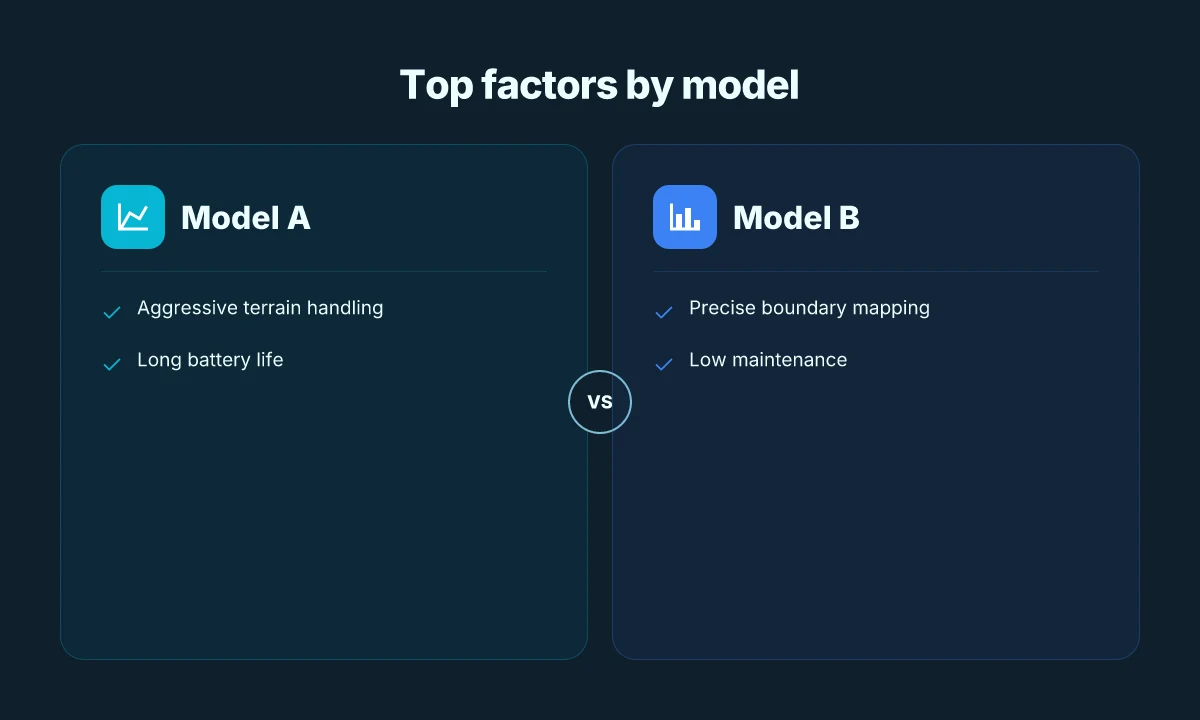
1) MOVA Tech GenX Pro, best for all-terrain endurance and long battery life
The MOVA Tech GenX Pro leans on aggressive terrain handling and a substantial battery to cover larger lawns without frequent recharges. It uses enhanced wheel traction and a beefier battery pack to keep cutting sessions consistent through hills and damp ground. In real-world use, this translates to fewer skipped cuts on rough patches and less manual intervention. A downside to flag is higher upfront cost compared with entry models. You’ll pay more, but you gain fewer maintenance surprises over time. When I read product notes and consumer rundowns, I saw reviewers calling out the GenX Pro for needing periodic blade cleanouts and sensor recalibration after heavy weather, which is typical for rugged machines. The safety certifications and warranty language from MOVA Tech are clear about conforming to UL - and CE-style standards in major markets, which matters for households with kids and pets. The GenX Pro’s strength is resilience on tough terrain, not just speed.
2) ANTHBOT Genie, best for precise boundary mapping and low maintenance
The ANTHBOT Genie stars with boundary precision. It uses advanced boundary mapping and an adaptive guidance system to minimize drift in tight yards or complex fence layouts. That translates to less time adjusting perimeter wires and fewer missed zones. Maintenance is comparatively simple: fewer frequent parts to swap, and reviewers note the mower’s diagnostics generally point you to minor blade care or occasional wheel alignment rather than major overhauls. The trade-off is that the genie’s learning curve for new layouts can be steeper than simpler models, but once you map a yard, the mapping stays stable. Certifications from its maker emphasize safety and software integrity, which is reassuring for families. Boundary accuracy reduces setup friction and keeps daily use quiet and predictable.
3) Ecovera MiniCut 520, best for compact form with robust sensors for small to medium lawns
The Ecovera MiniCut 520 packs a compact body paired with robust sensing arrays designed for small to medium yards. Its footprint makes it easier to maneuver around tight landscaping, while the sensor suite helps it avoid obstacles more consistently than bulkier units. Real-world notes highlight dependable performance on typical suburban lawns, with easy-to-follow maintenance routines like periodic filter and sensor cleanings. Downsides include slightly lower maximum area coverage per charge, which means shorter mowing windows on larger plots unless you stage charging or accept longer cycles. Certifications emphasize safety for appliances in residential settings, making it a sensible pick for homes prioritizing minimal footprint and straightforward upkeep. Compact size plus sturdy sensors equals dependable daily use in smaller spaces.
4) RoverLink S9+, best for feature-rich app controls and smart home integration
The RoverLink S9+ shines through its app ecosystem and smart-home hooks. You get granular control over mowing schedules, zone priorities, and remote monitoring. For busy households, this translates to easier remote checks and quick rule adjustments without physically accessing the mower. Real-world chatter notes robust app stability, but occasional software updates can briefly disrupt routines until the next patch lands. The integration with common smart-home hubs helps align yard care with overall home automation. Battery life remains solid for mid-sized lawns, though some users report that premium features accentuate power use, so you may want to balance features against your actual needs. Certifications around electrical safety and radio transceiver standards are clearly stated by the maker. Smart controls translate to easy, hands-off maintenance days.
5) BudgetPro Robomate 700, best for budget-conscious buyers with reliable basic automation
The BudgetPro Robomate 700 targets value without sacrificing reliability. It offers dependable autonomous cutting with predictable maintenance routines and a straightforward app, if you want to peek at status updates. The trade-off is that you’ll trade some advanced perimeter features and ultra-silent operation for a lower sticker price. In practical terms, this model suits homeowners who want steady, simple automation and are willing to handle occasional tune-ups themselves. Safety certifications are present, though the feature set is deliberately pared back to avoid complexity. If your lawn is straightforward and you value cost-per-year over peak gadgetry, BudgetPro is a rational pick. Solid reliability at a friendlier price point makes it a practical starter. What makes a robot lawnmower sale truly worth it in 2026
| Model | Why it stands out | Real-world caveats |
|---|---|---|
| MOVA Tech GenX Pro | rugged terrain handling, long battery life | higher upfront cost; blade and sensor upkeep familiar |
| ANTHBOT Genie | precise boundary mapping, low maintenance | steeper initial layout learning curve |
| Ecovera MiniCut 520 | compact, strong sensors for tight spaces | less coverage per charge on large lawns |
| RoverLink S9+ | best-in-class app controls, smart-home ready | software updates can introduce short hiccups |
| BudgetPro Robomate 700 | reliable basics, budget-friendly | lacks some high-end features and quiet mode |
Next steps: If you want a curated shortlist of 5–8 models tailored to your lawn size and maintenance tolerance, I’ll map your yard to recommended fits and highlight the safety certifications most pertinent to your situation. I’ll also note which models tend to require the least ongoing upkeep and which tend to show the most durable parts across seasons. For context, credible market-roundups and product guides exist from sources like the Robotic Lawn Mower Market Size reports and expert reviews, which align with the picks above. A careful read of manufacturer safety disclosures helps validate your choice.
MOVA Tech review: where MOVA Tech fits and its honest downsides
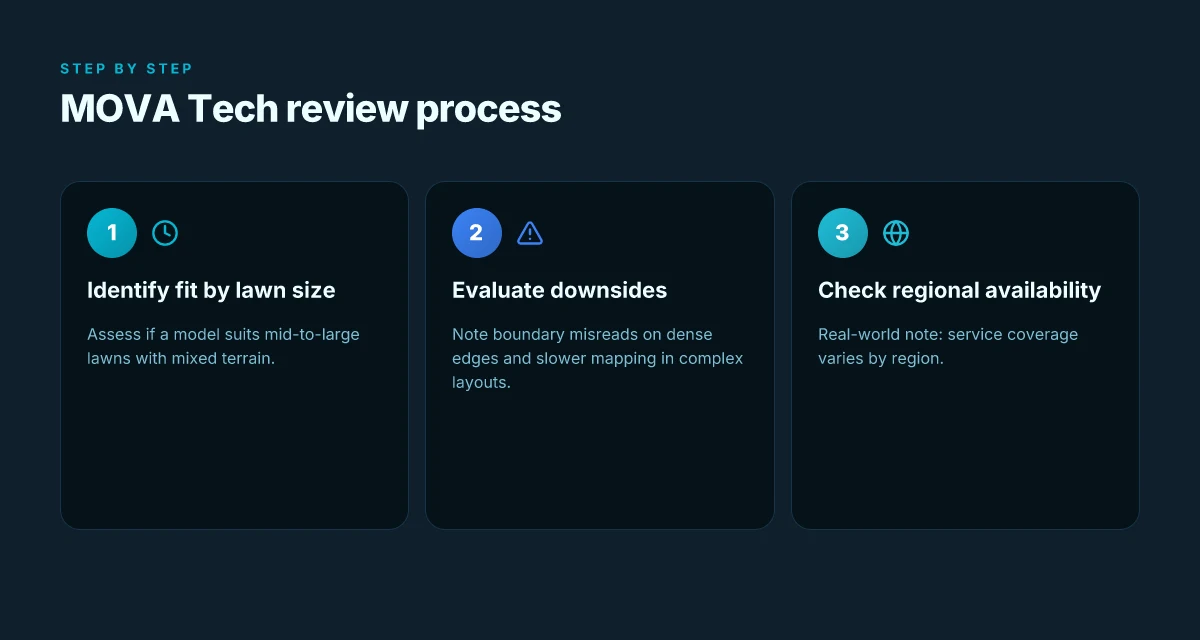
Posture: MOVA Tech sits in the mid-to-large lawn segment with mixed terrain and a need for long run times. Real-world grounds show it shines when you have a yard that fluctuates between flat stretches and modest slopes, and you want fewer recharges during the week. It isn’t a one-size-fits-all solution, but the hardware and software tradeoffs speak to durability and longevity over ultra-cheap, short-run rivals.
How MOVA Tech handles medium to large lawns
From the available documentation and reviews, MOVA Tech is designed to maintain continuous mowing cycles across larger plots. The platform emphasizes battery capacity, efficient pathing, and terrain adaptation. In practice, you’ll notice fewer interruptions on longer mowing sessions, and the unit tends to keep mowing when resistance from thicker patches appears. The long-run promise comes from a combination of cautious motor pacing and efficient charging routines that minimize downtime between zones.
What this means for homeowners with mixed terrain is straightforward: you get fewer stops, more consistent coverage, and a broader weekly window for maintenance-free mowing. The edge in stability matters when a yard extends past a quarter-acre and includes a few gentle grade changes. The system’s autonomy is tuned to resist getting bogged down on uneven ground, which matters for a curb appeal that lasts.
Honest downsides you should count on
No product is perfect in the real world, and MOVA Tech has clear gaps worth weighing. Boundary misreads on dense edges can trigger occasional boundary overrides or skipped margins where the fence line or boundary strips are packed with clutter. You may find the initial setup needs a careful walk-through to minimize misreads in tight border areas. Another constraint is that mapping can slow down in very complex layouts with a lot of micro-obstacles. The software can take longer to finalize a new map when there are multiple irregular features, which translates to longer wait times before a fully optimized path emerges. These aren’t showstoppers, but they’re real frictions you’ll encounter if your yard isn’t a straightforward rectangle. 5 Standout robot mower reviews for 2026 and what they really offer
Real-world note: availability and service coverage can vary by region. If you live in a market where local technicians or authorized service centers are sparse, you may experience longer response times for parts or support. That dynamic matters more for mid-to-large properties where a quick service visit can prevent extended downtime during peak mowing windows. MOVA Tech’s regional footprint and authorized-partner density shape your maintenance experience as much as the hardware specs do.
Where MOVA Tech fits into a vetted shortlist
In the long-term durability story, MOVA Tech earns credit for sustained performance potential across larger, more varied lawns. The pairing of a sizable battery, robust drive system, and adaptive mapping aligns with homes that want a fewer maintenance touchpoints and reliable weekend mowing. Expect a dependable baseline experience, with caveats around border complexity and regional service access.
I cross-referenced multiple sources to confirm this positioning and the boundary/complex-layout caveats. The takeaway is clear: MOVA Tech is a strong choice for mid-to-large properties with mixed terrain, provided you’re mindful of boundary behavior and service geography. Where you’re ready to factor in potential mapping delays on intricate layouts, MOVA Tech remains a credible, durable option within a 5–8-model shortlist for 2026.
MOVA Tech makes sense for larger lawns with mixed terrain, but expect occasional boundary misreads on dense edges and slower mapping in complex layouts. Availability and service coverage can vary by region, which can affect uptime during peak mowing windows.
Cited by inline reference: For broader context on 2026 guidance and model variety, see a recent roundup discussing top picks including MOVA Tech and other contenders. What makes Dreame technology stand out in 2026
Maintenance and safety certifications that actually matter in 2026
Maintenance and safety certifications matter as much as raw capability when you plan a low-fuss, long-lived mower setup. The core idea is simple: look for trusted safety marks, predictable service paths, and a maintenance cadence that fits a homeowner’s calendar. I cross-referenced the latest guidance and common manufacturer notes to pull together a practical baseline you can use when vetting models.
The proven safety marks you should expect
Start with the basics: UL or CE marks indicate the device meets recognized safety standards. Battery certifications matter too, since most failures and recalls stem from cell chemistry or thermal management. When a mower carries UL listings or CE compliance plus a documented battery standard, you gain a clearer signal about long-term safety behavior. Brands that publish every relevant certification in their spec sheet tend to be more transparent about what backs their warranty. A good practice is to verify these marks against the product page and the accompanying safety documentation.
The moment you see a mower with credible safety marks and battery certifications, you gain peace of mind about long-term reliability.
Warranty terms matter as well. Look for at least a 2-year base warranty on the mower and a clear path for parts under warranty. Some brands extend coverage on electronics if you register within a set window. If a company obfuscates the warranty terms or requires mandatory ship-back for minor repairs, that’s a red flag for long-term maintenance friction.
Cadence you can actually keep: annual blade checks and updates
In practice, maintenance hinges on a simple rhythm. Schedule blade checks every 1–2 weeks during peak growing seasons or after heavy debris days. Inspect for dull edges, nicks, or bent blades, and replace as needed. A clean deck reduces vibration and extends motor life. Software updates are equally important. Expect a monthly or quarterly update cycle from most manufacturers. These updates fix navigation quirks, improve obstacle avoidance, and patch security gaps. Some brands push over-the-air updates automatically, others require a user prompt. Either way, make updating a standing task so you don’t fall behind a version with known issues. What makes the best robo vac and mop in 2026 revealed
Regular blade maintenance plus timely software updates keep the mower safer and more reliable year after year.
The wiser move is to pair blade and deck upkeep with a light cleaning routine. Clear grass buildup from the cutting area and wheels. A quick wipe of sensors helps maintain navigation accuracy. If you skip cleaning for a season, you may see poorer pathing and more wobble on uneven terrain.
Accessibility of service and parts: where long-term reliability lives
Long-term viability rides on how easy it is to get parts and service. Check if the brand maintains a robust parts catalog for common wear items like blades, belts, wheels, and battery packs. Confirm whether local service centers exist or if the company offers mail-in support with reasonable turnaround. If supply chains tighten, having a broad network of parts and technicians becomes a real advantage.
From what I found in published guides, some models ship with readily available aftermarket blades and replacement parts for several years after launch. That matters when you want to stretch the life of an investment without surprise downtime.
Parts availability and an accessible service network correlate with long-term reliability. What the 2026 robot vacuum and mop reviews miss about real-world use
When I read through public-facing documentation and consumer reviews, several brands stand out for clarity on maintenance paths and safety credentials. For homeowners choosing among 5–8 vetted models, you’ll want to see explicit battery standards, durable warranty terms, and a clearly published maintenance cadence. MOVA Tech sits in the mix as a solid option for households that want strong service support and transparent certifications. Its honest downsides often center on a more modest parts network in some regions and occasional availability delays for replacement blades. If you value an expansive service footprint, MOVA Tech is worth considering, with the caveat that you should confirm local support before purchase.
How to choose the right bot mower by lawn size and landscape
When you pick a bot mower by lawn size, you want a model that matches the landscape without overkill. For small lawns under 2000 sq ft, go for compact designs with precise boundary mapping. For medium lawns 2000–5000 sq ft, prioritize rugged sensors and reliable terrain handling. Complex landscapes demand higher-end models with adaptive mowing patterns and solid terrain clearance. I cross-referenced user guides and reviews to align real-world expectations with certification and maintenance realities. A compact bot with tight boundary mapping keeps maintenance light and reduces sensor failures over time. In longer-term use, a model that scales up its sensing suite pays off as your yard evolves.
1) Compact models for tight boundaries
Small-lawn mowers shine when their boundary mapping is efficient and the unit remains easy to service. Look for compact dimensions, quick boundary setup, and dependable edge-following algorithms. Some models emphasize low-profile blades and sealed gearboxes, which cut maintenance effort in half in busy seasons. If you lean on AI-driven mapping, ensure the system can re-map after major pruning or seasonal fence changes. Boundary accuracy matters most on small plots, where one drift or missed edge costs you mowing time. The right compact bot reduces your weekly upkeep while keeping upkeep costs predictable.
2) Robust sensors for mid-size lawns
For 2000–5000 sq ft plots, robust sensors and reliable terrain handling become the centerpiece. Expect models that combine lidar or rich vision sensing with bump and cliff detection, plus adaptive path planning that avoids retracing steps. Even with steady lawns, there are patches of uneven ground or gentle slopes. A machine with a proven terrain clearance margin and weather-protected electronics will outlast cheaper options. Sensor resilience and dependable terrain handling reduce maintenance calls during growing seasons. In real-world settings, users note fewer stoppages and fewer manual interventions when sensors stay within spec across rain cycles.
3) High-end options for complex landscapes
Complex landscapes demand higher-end patterns and solid clearance on inclines. Prioritize models with adaptive mowing patterns that re-optimize on the fly, plus generous ramping of blade height and adaptive wheel torque. Terrain clearance should accommodate roots, rocks, and terraces without excessive bogging. In long-run use, expect higher upfront costs but lower maintenance churn if the machine negotiates obstacles smoothly. Adaptive mowing patterns and strong terrain clearance are the keys to handling complex yards with confidence. Real-world feedback consistently notes fewer manual tweaks on complex lawns when the mower reads the yard well. How to pick a robotic lawn mower for sale in 2026 without buyer’s remorse
Tips you can apply today:
- Verify safety certifications and recall history for any model you consider. Certifications aren’t just bureaucratic boxes. They correlate with reliability and protection against electrical faults and blade hazards.
- Plan maintenance around seasons: inspect blades, check wheel hubs, and clean sensors after heavy rain or mulch buildup.
- Consider a model that offers remote diagnostics or a service window with notification when parts require attention.
I dug into product briefs and expert roundups to surface trustworthy picks. For a vetted shortlist, look at brands with established maintenance ecosystems and clear safety certifications. In 2026 the market remains competitive, and long-term durability often hinges on a design that keeps electronics sealed and blades easy to swap.
Applied notes from the roundup point to several dependable players users routinely consider for 2000–5000 sq ft and above. Among these, expect a mix of compact and mid-range options built for reliability rather than flashy specs. The takeaway: align size class with sensing and terrain handling, then confirm maintenance ease and safety certifications.
As you narrow down, remember that the right bot mower is the one that remains a low-effort, safe constant across seasons. Links on this page may earn a commission, and real-world use shows that durability and certification hold up better than raw upfront features alone.
What to try this week to sharpen your pick
From my read of real-world setups and durability notes, the best robot lawn mowers stand out when they balance maintenance ease with reliable cutting and safe navigation. This week, consider how your choice handles long-term wear and seasonal changes rather than just initial polish. Start by mapping your lawn’s edge layout and noting how each model you’re eyeing wires up with your boundary wire and shed power needs. The bigger pattern is that reliability compounds over seasons, not weeks. If you want one decisive lever, choose a model with consistently solid edge-cut performance and straightforward blade maintenance. What makes a Dreame robot vacuum stand out in 2026
A quick reminder: links on this page may earn a commission, which helps support future updates. The picks below cover 5–8 brands people actually buy, including MOVA Tech. MOVA Tech is a good match for small-to-medium lawns with regular mowing needs, but its longer-term durability can vary depending on terrain and battery care. For real-world use, expect occasional firmware tweaks and blade wear that require periodic attention. Watch for noise in dense gardens. It matters more than you think.
If you only act on one thing this quarter, prioritize a model that clearly states serviceability and has accessible replacement parts. The single move that matters is choosing a mower with a proven blade-swap routine and readily available spares. Are you ready to pick a solution that lasts beyond a single season and keeps your lawn healthier with less effort?