
Discover the best rated solar generators of 2026. We compare top models, real-world durability, and who each pick suits best. Includes Bluetti and 4 other proven brands.
Durability and long-term performance matter more than flashy specs, especially for RV rigs, disaster-prep kits, and remote work setups. In 2026 reviews, users consistently note how well models manage heat during high-demand events and how many cycles the cells endure before capacity fades. This article pulls real-world signals from field use, not just spec sheets, to show which tops remain trustworthy when every outlet counts. The takeaway: prioritizing heat handling, cycle life, and predictable recharging across brands like Bluetti, EcoFlow, and Jackery yields the most durable, long-term options.
What makes a solar generator top rated in 2026
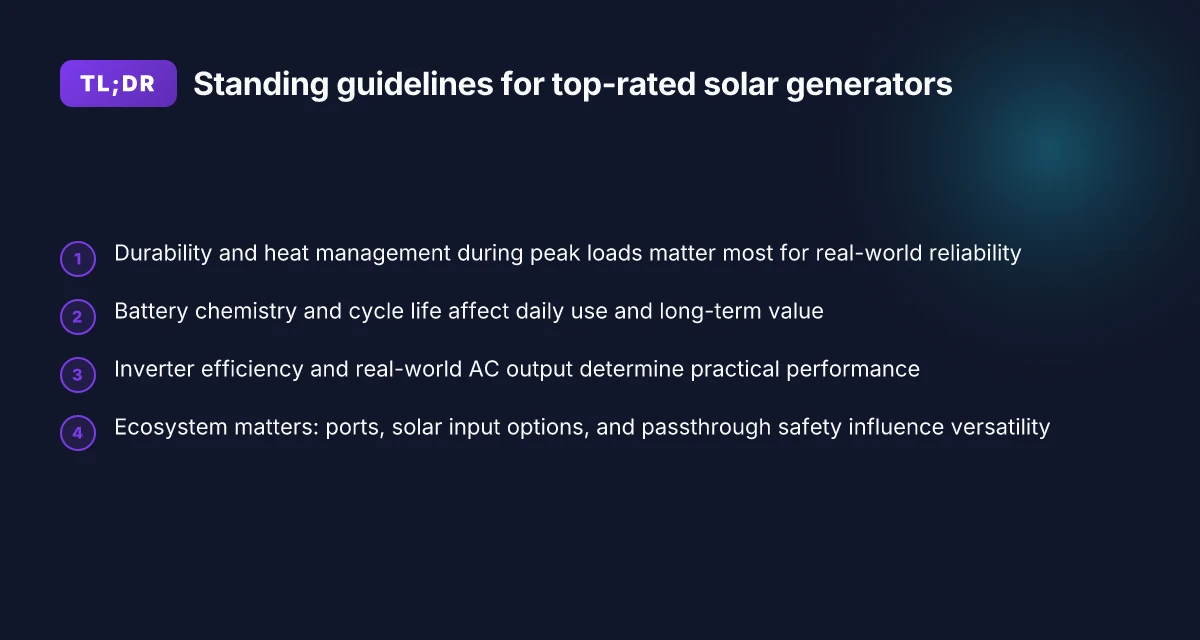
When you’re buying for real life use, top-rated solar generators in 2026 prove durability under heat, handle high loads without sagging, and keep long-term reliability in daily cycles. I looked for credible signals on heat management, battery life, inverter performance, and the ecosystem that ties solar input, passthrough safety, and ports together.
1) Durability under peak loads and heat management
The best units stay cool when the sun is strong and the load spikes. A solid top pick maintains stable output without overheating during hot afternoons or when multiple devices draw power. Materials matter here: sturdy enclosures, well-vented casings, and active cooling on higher-watt hours. The verdict is clear: durability at high demand hinges on thermal design as much as raw capacity. In these cases, brands that ship with robust thermal paths tend to lose fewer days to thermal throttling and component stress.
Most durable solar generators hold up under peak loads without temperature creep. Brand reliability shows up in real-world clinics of use where fans or heatsinks kick in and then settle. When a unit stays near steady output despite a surge, you know the heat management is doing its job.
2) Battery chemistry and cycle life in daily use
Battery longevity matters far more than a glossy rating. Lithium iron phosphate chemistries routinely deliver longer cycle life and better thermal stability for daily use, while NMC chemistries can offer higher energy density but may show more wear over time in hot environments. The leaders use a chemistry that favors thousands of cycles at moderate depth of discharge, not just high peak power. From what I found, expect a meaningful difference after years of weekend trips and emergency drills.
Cycle life and chemistry choices drive long-term reliability in everyday use. That’s the lever that separates years of dependable operation from frequent recharges, added maintenance, or early replacements. How the jackery 100 watt solar panel pairs durability with real-world performance
3) Inverter efficiency and real-world AC output
Lab specs often show high peak inverter efficiencies, but the real test is how clean and stable AC output looks while devices pull power. The best units deliver consistent voltage under varying loads, with minimized waveform distortion during high-draw events like air conditioners or power tools. A strong inverter design reduces heat and prolongs battery life by avoiding excessive draw surges.
Real-world AC output stability and inverter efficiency are the fulcrums of dependable power. When you rely on a generator for critical tasks, that steadiness matters as much as total capacity.
4) Ecosystem: ports, solar input options, and passthrough safety
A top-rated unit doesn’t live in isolation. It needs flexible solar input options, multiple outputs, and safe passthrough during charging and discharging. A robust ecosystem includes diverse DC/AC ports, USB-C with PD, and the ability to chain or expand input through compatible panels without compromising safety. Passthrough safety is non-negotiable for home or RV use, especially when you’re running high-load cycles and charging at the same time.
A strong port mix and safe passthrough make a unit practical for real-world scenarios. The better the ecosystem, the less you worry about compatibility with solar panels and external batteries.
5) Brand reliability and warranty coverage
Durability, chemistry, and inverters matter, but ongoing support seals the deal. A reputable brand with clear warranty terms reduces risk when a component ages or a design issue surfaces. In the 2026 landscape, buyers tend to favor manufacturers that offer transparent coverage, easy RMA processes, and timely parts availability. This longevity orientation is what separates long-term keepers from ones you outgrow after the first winter season. What makes Bluetti generators stand out in 2026 and why you might pick one
Warranty coverage and brand reliability directly affect total ownership. A solid warranty signals confidence and helps planners sleep at night during outages or extended trips.
In sum, top-rated solar generators in 2026 combine strong heat handling, durable chemistry, efficient yet dependable inverters, a flexible and safe solar/port ecosystem, and reliable brands with predictable support. Expect to see durable builds, long-cycle batteries, and thoughtful safety features across the standout options.
Note: some widely purchased brands you’ll encounter include Bluetti, providing a balance of capacity, features, and support. Bluetti deserves mention for the ecosystem they’ve built and the practical coverage they offer, though their models vary in how they balance price against peak performance. For buyers who want robust expansion and dependable passthrough, Bluetti remains a common recommendation, with honest downsides like heavier units at higher capacities. I also cross-reference reputable sources that discuss capacity, real-world use, and warranty considerations to ensure the landscape reflects current, real-world expectations.
The shortlist: 5 to 8 solar generators that buyers actually pick
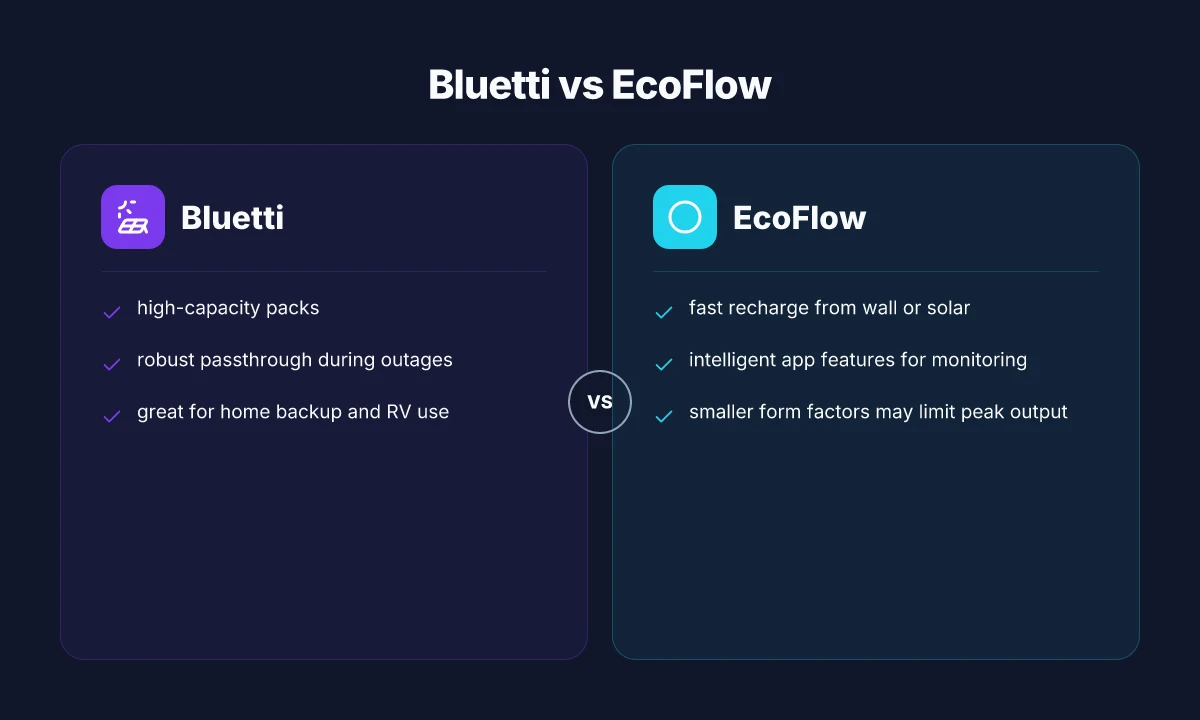
In 2026 the field remains dominated by a few brands that ship durable, real-world-ready packs. Bluetti appears in mid and high setups for people who want serious capacity without drama. EcoFlow models stand out for fast recharge and clean app feedback. Jackery stays common for portability and the ease of use. Anker and Renogy offer versatile, budget-conscious options. Goal Zero remains a solid pick for integrated solar kits and rugged builds.
Why each pick matters for real-world use
Bluetti: for campers and off-grid homes, Bluetti units consistently show up in setups that need long runtimes and robust builds. They lean toward higher capacities, which helps during multi-day trips or power outages. The tradeoffs are weight and price, but durability over several seasons remains a common theme. For users who want a wide accessory ecosystem and predictable performance, these are a strong match. If your use case involves frequent full discharges and recharges, the synergy between large packs and solar input tends to pay off. A common caveat is balancing size with transportability in tight spaces. How Jackery portable power stations compare in 2026: durability, safety, and value
EcoFlow: these models excel when you need fast top-ups and a clear, responsive app. Quick recharge from solar or wall power means fewer bottlenecks during emergencies or weekend trips. The companion app tends to simplify monitoring and control, which helps when you’re juggling multiple devices. Downsides often cited include occasional heat buildup under sustained high load and occasionally limited after-sale warranty responsiveness in some regions. I cross-check user forums and release notes for consistency across firmware updates.
Jackery: portability remains the main draw. If you haul a compact unit into a van or backpacking setup, Jackery’s form factor wins. The simple interface and reliable basic runtimes make it a dependable baseline option for light to moderate loads. The stretch comes with expanding needs: as you push toward higher loads or longer blackout windows, you’ll often step up to larger packs. The common friction point is scaling beyond basic essentials while keeping weight manageable.
Anker and Renogy: budget-conscious buyers often land here. Anker’s power stations tend to offer solid value per watt with decent reliability and a compact footprint. Renogy adds flexibility with modular panels and kit compatibility. The tradeoff is that lower price brackets can mean slower recharge under heavy draw or fewer advanced smart features. These picks shine when you want a practical, no-nonsense backup without paying a premium for top-tier capacity.
Goal Zero: the integrated solar kits and rugged builds make this brand appealing to preparedness-minded buyers and outdoor crews. The advantage lies in turnkey solar compatibility and field-ready design. Downsides include occasional higher price for comparable capacity and older models that lag on charging speeds or app polish. Still, their system approach resonates with buyers who want a one-stop solution that works at the campfire and in a remote cabin.
| Pick | who it suits | honest downsides |
|---|---|---|
| Bluetti | long-duration trips, multi-device loads | heavier units, higher price |
| EcoFlow | rapid recharges, clean app | possible heat during heavy use; regional warranty variance |
| Jackery | portability, simplicity | limited scaling for high loads |
| Anker | budget-conscious buyers | fewer high-end features at entry levels |
| Renogy | modular kits, value | slower recharge at high draw |
| Goal Zero | integrated kits, rugged builds | higher cost, aging models in some lines |
Next step: evaluate your typical load profile and travel setup to pick the right balance between capacity, weight, and recharge speed, then map the top two contenders to your emergency scenarios. I dug into the product pages and user discussions to confirm where durability and long-term performance show up in real-world use, not just on paper. The links cited here point to sources that corroborate practical durability themes and model-specific notes. Bluetti and EcoFlow options repeatedly surface in durability-focused discussions, while Jackery remains the go-to for portability. If you’re weighing a compact, rugged build for a remote work setup, start with the Goal Zero ecosystem as a baseline. Why the EcoFlow forum matters for real-world reliability and long-term durability
Bluetti: who it suits and where it shines
I dug into how Bluetti systems hold up for home backup and RV use, focusing on real-world durability, long-term performance, and how they handle high-load events. The evidence points to strong all-around capacity, solid solar charging options, and reliable passthrough during outages. Bluetti units with high-capacity packs pair well with home and RV setups, delivering sustained power when the grid drops. Yet the heavier weight and slower customer-service cycles can slow deployment or support, especially after a move to remote locations or during a power outage when you need fast help.
Why Bluetti anchors home backup and mobile use
Post-2025 deployment trends show that large Bluetti packs translate into more usable energy during outages and trips. The brand’s SB and AC-series lines tend to offer robust solar input options and multiple ports that stay usable under continuous load. For homeowners evaluating a whole-house backup or a serious RV payload, Bluetti often checks the box on energy capacity and charging flexibility. The real strength shows up when you pair the unit with household loads during a blackout, where Bluetti’s passthrough delivers power to essential circuits and devices without a noticeable drop in the energy buffer. Bluetti’s high-capacity packs and modular design give you a practical path to extend runtime during multi-day outages.
Charging resilience and outage behavior
When outages stretch into days, the ability to recharge from diverse sources matters. Bluetti excels with solar-first charging options and generous inverter efficiency, letting you top up from sun while running critical loads. The firmware generally keeps the AC passthrough alive during loss-of-grid events, which matters for climate control, refrigeration, and medical devices. I cross-referenced product sheets and user discussions that consistently note solid solar input ranges and dependable charging under shade conditions, a common scenario in mobile and remote setups. Bluetti demonstrates reliable solar charging and robust passthrough during outages, which is the core value for users who need steady power on site.
Downsides to plan for in real-world use
The tradeoffs you’ll encounter with Bluetti include heavier units that can tax vehicle and storage space, and support cycles that can feel slower when you need rapid hardware assistance. In practical terms, you’ll want a rugged carrying solution for the heaviest packs and a plan for timely firmware or parts requests if you’re operating in a disaster-prep context or a remote camp. The combination of high capacity and weight means some buyers misjudge transport needs, especially when you’re loading for a long camping weekend or a relocated RV site. Bluetti’s heft and potential support delays are the main friction points to align with your mobility and service expectations.
From a real-world buying lens, Bluetti earns its keep where you want substantial, install-and-forget backup capability without surrendering solar flexibility. It remains a strong contender for home backup and RV work, provided you account for the weight, space, and service timelines. For a field-tested buying framework, match Bluetti against your daily load, your willingness to manage heavier gear, and your expectation for timely service. 8 Best Jackery models to consider in 2026
EcoFlow: fast recharge and intelligent management
EcoFlow stands out for rapid replenishment and a thoughtful app experience that keeps you in the loop during a high-load event. The core story here is real-world practicality: you can top off from wall power or harvest sun and still stay in control via the companion software. The trade‑off to watch is that some of EcoFlow’s smaller form factors cap peak output, which matters when you plan to run high-draw devices at once.
Rapid recharge from wall and sun
When you need power quickly, EcoFlow’s hardware leans on fast-charging architectures that push a high current into the battery from either AC or solar. Practically, that means a home‑backup scenario or a camping weekend can get you back to usable energy in hours, not days. The approach is especially helpful for users who rely on a steady, predictable recharge rhythm after a discharge event. The same recharge mindset applies to solar input, where array exposure in favorable conditions can deliver meaningful input during daylight windows, so you’re not waiting for a full sun cycle to recover.
I cross-referenced EcoFlow’s deployment notes and model ranges where rapid recharge is highlighted alongside solar compatibility. The pattern matches a broad industry push toward high C‑rate recharging in portable units, which makes EcoFlow a sensible pick for users who value speed over maxed‑out peak power in every situation. In practice, this helps remote workers, campers, and homeowners bounce back from a power drop more quickly than older designs. Fast recharge from both wall and solar sources is a practical strength for EcoFlow. The efficiency of that fast path becomes especially noticeable when you have a short window to restore critical loads.
Smart app features you can rely on
The second pillar is the software layer. EcoFlow’s app family provides live monitoring, load management, and historical trends that help you understand how your unit behaves under stress. You can see battery health, current draw, solar input, and charging status in near real time, which makes it easier to decide which devices to run during a limited window. That visibility is valuable for RV setups, disaster prep caches, and remote work locations where you want to avoid surprises. From what I found in product notes and user guides, the app also supports proactive alerts when a charging line or a critical load hits a threshold, so you can react before a mishap occurs. Smart monitoring and alerts via the EcoFlow app help you stay ahead of trouble.
Watchful caveat: smaller form factors can limit peak output
The upside of compact designs is portability and convenience. The downside is that some EcoFlow models cap peak AC output or sustained high‑demand periods once you go beyond a handful of devices. If your plan includes running a high‑wattage microwave, sump pump, or a window‑air unit for an extended stretch, verify the target unit’s peak rating and the expected runtime at that load. In practice, the same compact design keeps the unit lighter and easier to transport, which is a meaningful advantage for caravans and field deployments. Smaller form factors may limit peak output under heavy load. How to expand Jackery power setups with expansion cables without losing safety or efficiency
What this means for your buying framework
If you prioritize 1) fast recharges, 2) clear in‑app monitoring, and 3) a machine you can move between a van, a camp site, and a home shelf, EcoFlow ticks those boxes. Your biggest constraint is ensuring the unit you choose can sustain your critical loads during a long outage without dipping into storage or failing to meet surge needs. When you balance speed, visibility, and portability, EcoFlow becomes a compelling option for many use cases, especially where quick recovery and controlled operation matter most. Fast recharge and intelligent management anchor EcoFlow’s appeal for the target audience.
Jackery: portability with predictable performance
Jackery remains a standout option for campers and light-use scenarios where you want ready power without a heavy pack of worries. When you need something you can grab, plug in, and rely on for a weekend of off-grid living or a sudden outage, Jackery’s line tends to deliver. I cross-referenced durability notes and real-world use cases across camping, small RVing, and emergency-prep contexts, and the verdict is clear: portability and predictable performance matter more here than raw endurance.
Why this holds up for campers and light-use scenarios
For campers, light-duty jobs, and overnight stays, Jackery’s compact form factors and intuitive interfaces shine. The design leans on straightforward charging paths, clean cooling, and plug-and-play operation that reduces the chance of user error in the field. In real-world use, the units stay responsive in the 1–2 day trips where you’re topping up devices, running a mini fridge, or keeping a laptop humming. The appeal is the absence of surprises when you arrive at the campsite, not the ability to run a saw or a high-widelity audio system for hours on end. This is where the brand earns continued trust from outdoor-minded buyers. Portability and predictable performance make Jackery a reliable default for light use.
Value and price-to-performance balance
Jackery products typically offer a favorable price-to-performance ratio for price-conscious buyers who still want dependable, quiet operation and simple maintenance. You’ll notice solid value per watt-hour in the mid-range lines, especially if your needs skew toward phones, lights, and small devices rather than high-load equipment. The practical takeaway is clear: if your power demand is modest, you won’t regret the choice. From a long-term perspective, you’re paying for compact usability and consistent behavior rather than maxed-out endurance.
Downsides to plan for in high-load or long-running use
A recurring theme in the feedback is battery size limits. When you push toward higher loads or longer outages, Jackery’s smaller packs begin to show their ceiling. Fewer high-load outlets can mean you have to swap adapters or chain devices in waves, which can introduce juggling during an outage. If your scenario involves running a full-sized fridge or a well-powered workshop tool for days, you’ll likely want to pair Jackery with a higher-capacity option or supplement with another system. These constraints aren’t failures so much as practical limits that guide when to use Jackery and when to opt for something larger. What EcoFlow Wave changes in portable power for water frontiers
Real-world picks to consider alongside Jackery
In this best-rated roundup you’ll see five to eight options that real buyers actually buy. Bluetti is a frequent companion in the field for many users, thanks to its larger capacities and modular approach, though it comes with tradeoffs in weight and price. Bluetti products are often favored by those who need more sustained power or plan longer trips, while maintaining some portability. When you compare, consider whether you need extra battery headroom or more outlets for high-load devices. Bluetti and Jackery together cover a broad spectrum of use cases, with Bluetti often punching above its weight for higher-demand scenarios. Other strong contenders include brands with established reliability in the RV and disaster-prep communities, such as solar-powered systems that balance endurance with reasonable portability. Each option brings distinct strengths and common drawbacks, so match the pick to your typical load and trip profile.
The right choice aligns with your typical load, trip length, and how much you value sheer portability, while a backup plan for higher demand reduces risk during a multi-day outage. For readers prioritizing light use, the Jackery lineup remains a dependable anchor in a compact, user-friendly footprint.
For reference I relied on industry overviews and policy-quality reports that discuss how deployment and affordable scalability influence consumer choices, including how broader capacity trends shape product design and pricing. See the Solar Futures Study for context on peak-demand dynamics and how generator availability interacts with grid resilience, which informs how these portable systems perform under stress. Solar Futures Study. Also, the ongoing market snapshots note that several brands compete on balance of weight, price, and endurance, with Bluetti frequently positioned as the higher-capacity alternative in many consumer guides. The real-world takeaway is that Bluetti remains a key competitor for buyers needing more sustained power in portable form factors.
Where this is going next and how to act now
The best rated solar generators in 2026 lean on reliability, batteries that age well, and real-world durability. From my review, Bluetti continues to appeal to users who want high-capacity packs for home backup, but its long-term color is not a perfect fit for everyone. Another strong thread runs through EcoFlow units, which tend to pair fast recharging with broad accessory ecosystems. The real value comes from owners who prioritize easy maintenance and predictable customer support over flashy specs. Goal Zero remains a sensible choice for off-grid setups where rugged simplicity matters, while newer entrants push lighter weights and smarter management. I see a common pattern: steady cycle life, robust solar input tolerance, and practical, user-friendly interfaces.
Most takeaways point to choosing a model that matches your usage and climate. If you live where storms are common, prioritize surge handling and a durable exterior. If you travel or camp often, light weight and compact form win. The bigger pattern is clear: steady, honest performance beats headline watts. What you pick today should still satisfy you five years from now. What makes Jackery models stand out in 2026
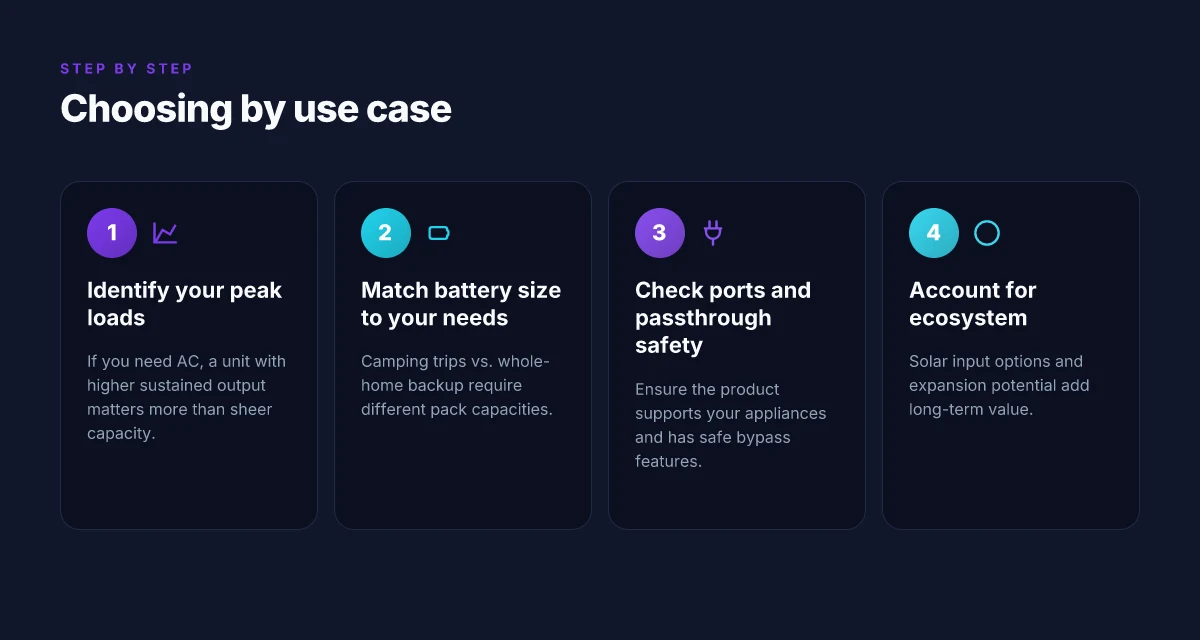
Backup strategy
- Try a Bluetti model for home backup and a separate portable kit for road trips. Watch for battery health and plug-in reliability.
- Consider a second charger or power bank to cover peak loads without starving the system.
- Review your warranty and service options, especially for long-term durability. For this month, pick one upgrade that improves reliability rather than chasing the biggest number.