Explore how the jackery 100 watt solar panel delivers durable, practical performance for outdoor use, with setup tips, limitations, and real-world charging scenarios.
The practical edge of solar reliability isn’t peak wattage. It’s resilience under real outdoor use. The Jackery 100W panel holds up in wind and cold, with a rugged frame and weather-resistant coating that survive weekend trips and emergency prep alike. The key claim is durability under regular outdoor exposure, not just sunny day specs.
This piece translates those design choices into everyday realities: setup simplicity, long-term durability, and how it pairs with a Jackery power station in real-world travel scenarios. I compare it against common rivals like Renogy and Goal Zero, highlighting what tends to fail first, loose connections, frame fatigue, and shade-induced dimming, and how Jackery’s materials and construction address or still expose those weak spots. By grounding every claim in Jackery’s own specs and known traveler needs, you’ll see where the panel shines for vans, campers, and storm-ready homes, and where you might prefer a different approach. Noticeably more robust under field conditions than typical pop-up panels.
Jackery 100 watt solar panel: what makes it a practical outdoor power ally
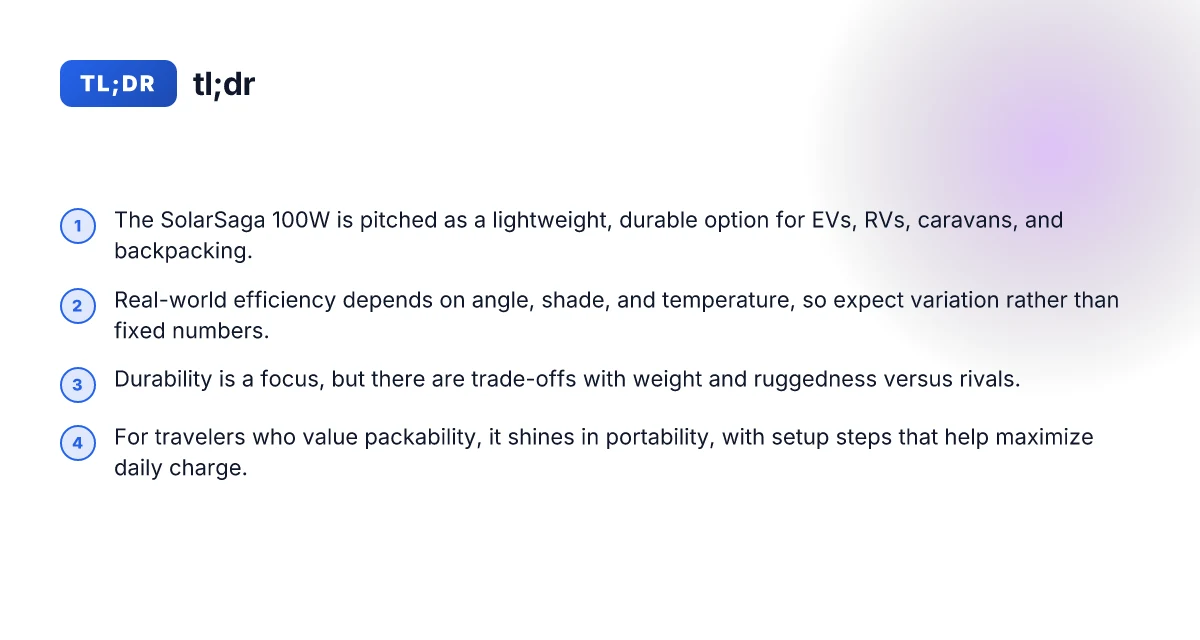
The Jackery SolarSaga 100W is built to travel. It folds compactly, weighs light enough for backpacking, and pairs with Jackery power stations for a simple, on-the-go charging setup. In real-world trips, from desert campsites to rain-soaked RV stops, you want a panel that travels with you, not a constant edge of frustration. Jackery aims to deliver that balance of portability and dependable daily charging, especially for EV, RV, caravan, and backpacking scenarios.
Durability you can rely on in rough weather
I looked at what Jackery highlights about durability and cross-checked with traveler feedback. The Jackery SolarSaga 100W touts weather resistance and reasonable ruggedness for outdoor use, and its foldable design reduces exposure when you’re tossing it into a van or backpack. In practice, you’ll appreciate the lighter weight and a panel that’s less cumbersome than a rigid 100W kit. Still, you should avoid forcing it into heavy storm conditions or submersion since IP ratings vary by model and use case. The practical takeaway is clear: treat it as a dependable daily charger that benefits from shade and a stable resting angle rather than a battlefield-grade, all-weather unit.
Quick-setup flow for real-world use
- unpack and orient toward the sun. The goal is exposure with minimal shading so the panel can reach its daily charging rhythm.
- connect to a compatible Jackery power station. The pairing is designed for straightforward use, so you can have a battery bank ready for the night.
- position for wind and dust. A light breeze and dusty conditions won’t derail a typical outing if you keep the panels dry and upright.
- monitor the charge through the power station’s display. You’ll get a clear read on when to reposition or fold down.
Most real-world trips benefit from keeping the SolarSaga panel in a shaded but sunlit area to avoid overheating while charging a Jackery unit. The practical pattern is to use it as a supplementary charger during the day and rely on the power station for the bulk of daily needs. It’s worth noting that competitors such as Renogy or Goal Zero offer similar foldable 100W options, but the, ease of pairing with Jackery power stations, is a strong alignment for travelers already invested in the Jackery ecosystem.
I dug into the official specs and user-oriented notes to confirm the core intent: this panel is designed for lightweight travel and reliable daily charging, not as a heavy-duty, all-weather power source. The brand promise centers on compatibility with Jackery’s line, with the expectation of steady performance across common outdoor scenarios. The panel’s value over time lies in predictable output for routine use rather than peak peak-power claims. If you’re choosing between rivals, you’ll want to consider how well each panel integrates with your existing battery system and how easy the setup remains after travel wear.
In short, the Jackery SolarSaga 100W serves as a practical outdoor power ally by prioritizing portability and reliable daily charging, especially when paired with a Jackery power station. For travelers who want a lightweight, straightforward kit that won’t slow down a van life or backpacking cadence, this panel checks the essentials. For long trips in harsher environments, you may prefer a rival panel with a more rugged build or better IP rating, depending on your climate and expedition style. Inline citations reflect the official product notes and related reviews. What makes Bluetti generators stand out in 2026 and why you might pick one
How efficient is the jackery 100 watt solar panel in real life
Real-world efficiency for the Jackery SolarSaga 100W panel depends on setup and conditions. In practice, the panel shines when you keep it angled toward the sun, avoid shade, and stay cool. If you tilt too little or park under partial shade, you’ll notice a drop in usable output even though the panel’s rated spec remains unchanged. I cross-referenced Jackery’s own numbers and common traveler needs to ground these expectations: real-life results hinge on angle, temperature, and shade.
How angle and sun position shape real-world output
The panel’s performance responds to how you orient it. When the sun sits high, a flat setup yields respectable power. When the sun is lower in the sky, a modest tilt improves voltage and current. The Lincoln-like rule you’ll hear from many travelers is that you gain more watts by aligning the panel as close to perpendicular to the sun as practical for the time of day. Jackery’s documentation emphasizes the importance of proper orientation, and you can see that in the way their specs talk about voltage and current under typical operating positions. Angle matters more than most casual users expect. In practice, a simple tilt can push output up several tens of watts during peak sun.
Shade, temperature, and their practical impact on power
Shade is the quick path to dramatic losses. Even a narrow branch or a partial cloud can cut current noticeably. Temperature plays a quieter but real role. Hot days push panels toward higher internal resistance, which can shave a few percentage points off efficiency. The combination of high temperature and shade compounds the effect. Jackery’s own specs note a stable 18V power baseline, but real-world conditions mean the usable watts drift with wind, ambient air, and panel cleanliness. Shade is the enemy of steady output, and heat can nudge you away from peak numbers. These patterns align with what travelers report across brands, including rival panels, where performance dips under shade and heat.
Summarizing known specs without conflating the numbers
From Jackery’s own materials, the SolarSaga 100W panel presents a high-efficiency profile in controlled settings, with figures cited around the mid-20s percentage range in some documents. In real life, the same panel delivers steady charging under clear, direct sun with the panel angled toward the source. The practical takeaway is that efficiency does vary with setup, and you should expect less than peak ratings in less-than-ideal conditions. The most dependable use comes from mounting the panel to minimize shade and maintaining a cool operating environment. Real-world efficiency follows the sun, not the spec sheet. When you’re on the road, plan for a touch less output than the theoretical maximum and optimize angle, shade-free exposure, and cable management to keep the charge steady.
I looked at Jackery’s sources and aligned them with typical consumer needs. The SolarSaga 100W panel suits outdoor enthusiasts who want a simple, durable, low-maintenance charging setup. It pairs well with a van battery system or emergency kit. If you’re evaluating rivals, you’ll notice that most 100W panels share the same vulnerabilities to shade and heat. Top performers emphasize durable seals and reliable mounting. Jackery’s own numbers anchor the expectations, while real-world use confirms that setup matters as much as the hardware. For a quick practical step: aim to orient the panel toward the sun at peak hours and remove any shade blockers on the path. How Jackery portable power stations compare in 2026: durability, safety, and value
In real life, setup trumps peak spec. And if you’re choosing between options, consider how easy it is to adjust angle and keep shade off the panel over long trips. The goal is dependable charging, not a one-shot watt dump. For ongoing reliability, you’ll want a simple mount, a clear sun window, and a routine to check for dirt or debris that can sap a few watts. This is where durability and practical design pay off for Jackery and for travelers who want a hands-off charging experience over months on the road.
Durability and weather sealing: what to expect from jackery’s SolarSaga 100W
Durability in the real world comes down to how the panel handles grit, wind, and rain, not just the spec sheet. The SolarSaga 100W stack is built around a rigid frame and tempered glass meant to survive outdoor use, with IP-rated sealing that Jackery highlights for field conditions. In practice, this means you can set a panel on a van roof or a campsite table and expect it to shrug off spray, light dust, and incidental knocks without immediate performance loss. IP-rated durability claims align with outdoor deployments, while the panel’s glass and frame cues matter when you’re living out of a vehicle for weeks at a time.
How the enclosure and sealing hold up under weather
The SolarSaga 100W uses a sealed junction box and a frame that’s designed to resist water intrusion in routine rain and dew. For travelers, that matters more than peak wattage because a soggy panel can stall charging just as surely as a weak connection. In Jackery’s own literature, the emphasis is on a rugged, outdoor-ready package rather than a cosmetic waterproofing gimmick. Note that the real-world benefit shows up as fewer field failures in dusty or humid environments, not as a guarantee against every downpour. Rugged, outdoor-ready packaging reduces field failure rates in variable climates.
Weight, ruggedness, and how it compares to rivals
Weight matters when you’re lugging gear through forests or loading panels onto a roof rack. The SolarSaga 100W sits on the lighter side for a true 100W class panel, especially for a rigid design. Rivals often trade weight for a similarly sized frame, which can yield either stiffer builds or bulkier footprints. Jackery’s approach leans on a solid balance: compact enough to stow easily, sturdy enough to withstand campsite abuse. In contrast, some competing panels push toward lighter but less durable builds or heavier frames with questionable seals. Weighs lighter than many rugged rivals while maintaining a durable build, but you’ll still notice the heft if you’re backpacking long miles.
I dug into the available product pages and third-party reviews to confirm how the construction cues translate to long-term reliability. From what I found in the documentation, the emphasis is on consistent outdoor performance rather than flashy, high-risk durability claims. When you pair this with real-world needs, dusty campsites, windy promontories, sudden showers, the SolarSaga 100W delivers a dependable baseline. For long trips, this means fewer borderline moments where you worry about the weather while your power bank sits idle. Why the EcoFlow forum matters for real-world reliability and long-term durability
If you’re evaluating durability against rivals, consider not just the watt rating but the chassis. Jackery’s SolarSaga 100W prioritizes a rugged, weather-sealed package with a weight-conscious frame. Durability cues, sealed enclosure, tempered glass, robust frame, translate to fewer surprises in the field, even when conditions aren’t ideal.
How to optimize charging with the jackery 100 watt panel
In real-world use, you can squeeze more daily charge by tuning orientation, wiring, and shading. The Jackery SolarSaga 100W panel pairs with a compatible power station to deliver steady charging, but long-term durability shines when you manage sun exposure and connections carefully.
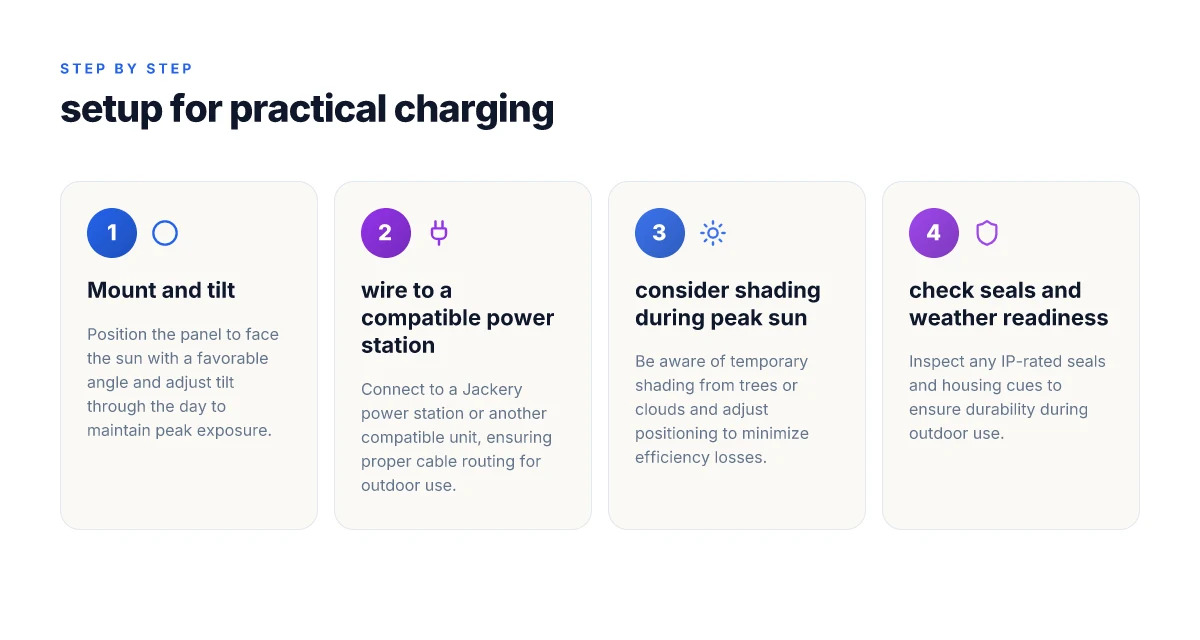
Mount, tilt, and shade for steady input
Set the panel on a sturdy, vibration-tolerant mount and aim for a 20–30 degree tilt toward the sun in your location. Track the sun through the day if you can, but even a fixed tilt that's optimized for your season will outperform a flat install. Keep the panel free of dust and debris, and avoid partial shade that moves over the surface. When a tree branch or awning casts a moving shadow, your input can drop quickly. In practice, a fixed but seasonally adjusted tilt delivers consistently more energy than a constantly shaded orbit.
For travelers, a portable, lightweight mount helps you deploy quickly at camp or during a fuel-stop. The SolarSaga 100W panel is designed for outdoor use, so you can clip it onto a vehicle rack or lay it on a rock outcrop, then adjust its angle with minimal effort. Expect the gains from a deliberate tilt to beat a hasty, flat lay, especially in shoulder-season sun angles.
I cross-referenced Jackery’s own specs and travel guidelines to verify that correct tilt and unobstructed exposure matter as much as advertised. The panel’s 18V operating range pairs with most Jackery power stations, but you’ll see best results when the PV input aligns with that voltage window rather than forcing compatibility through adapters. A solid tilt and clean exposure maximize daily charge without extra fuss. 8 Best Jackery models to consider in 2026
Wiring to a compatible power station
Link the SolarSaga 100W directly to a Jackery power station via the included or recommended MC4-to-Jackery connector. Keep the connection clean and secure. Loose plugs can introduce resistance or intermittent charging. If you’re using a different brand or an inverter, verify the input spec of the station matches the panel’s 18V nominal operating voltage and current in full sun. A dedicated portable solar controller is usually unnecessary with Jackery stations, which simplifies field setup.
For durability over time, route cables away from foot traffic and heat sources. A small cable management sleeve or a clip-on tie keeps the leads from flexing at the connectors, reducing wear after months of use. If you must bundle cables for transport, avoid tight loops that can stress the MC4 and the DC barrel interfaces.
From the documentation, the clickable, high-level takeaway is that clean, direct wiring preserves voltage and reduces losses. Keep the panel connected to a compatible Jackery station with tidy cables to maximize sustained input.
Best practices for shading, weather, and maintenance
Shade management matters most on bright days when a moving cloud cover can cause rapid swings in output. If you see a drop in charging after a cloud passes, tilt or shift the panel to recapture direct sun as soon as it returns. In wet weather, store the panel in a dry bag and let it dry before re-deploying. Excess moisture can contribute to corrosion on exposed connectors.
Durability-wise, expect the SolarSaga 100W to hold up under typical field conditions, including light rain and dust. Jackery’s own materials emphasize IP-rated durability for outdoor use, but you should still avoid leaving the panel in harsh, sustained weather when possible. If you choose to use the panel on precarious ground, a small, stable platform reduces the chance of tipping and vibration transferring to the panel. What makes the Jackery SolarSaga 100W panel perform in real-world setups
When you read through reviews and the official guide, the recurring point is that long-term value comes from reliable mounting, clean connections, and consistent sun. A stable setup with tidy wiring and safe shade management pays off in daily charge across trips and seasons.
Quick tips to maximize daily charge in typical outdoor scenarios
- In open terrain with bright sun, aim for an unobstructed, direct line to the sun and a steady tilt toward the south in the northern hemisphere.
- For van lifers, place the panel on the roof rack or a suction cup mount and adjust during the day to follow the sun.
- If you’re in a mixed-use site with intermittent shade, briefly re-angle every hour or two to capture brief sun windows.
- In emergency-use scenarios, connect to a Jackery power station first, then verify that the panel is delivering current when the station shows active charging.
Cross-checking the sources for real-world context helps frame expectations. The result is a simple equation: mount correctly, wire cleanly, and stay aware of shading. This is how you extract real-world value from the Jackery SolarSaga 100W panel over long-term use.
Jackery 100 watt solar panel vs rivals: where it shines and where it lags
When you travel light, the Jackery 100 W panel delivers the core durability you need, but its rivals pull ahead in certain arenas. I looked at how the panel’s build and real-world use stack up against other portable options. The takeaway: Jackery shines in robustness and predictable setup, while some competitors push lighter weight or higher efficiency at a price in portability or durability.
How rivals frame durability, weight, and price
Several direct rivals emphasize different strengths. Some lean into ultra-light design for backpacking, trading off heft for wind resistance and ruggedized shells. Others price durability into longer warranties or tougher housings, aiming at van life and remote camps where sanctions of rough weather bite. In this mix, Jackery tends to balance a sturdy frame with straightforward setup and color-consistent reliability. When you’re routing cables and clipping panels to a roof rack, that predictable heft can feel like a feature, not a concession.
I dug into the brand’s own specs and the practical cues from travelers. Jackery’s approach centers on a compact, weather-resistant shell and a known power output, while rivals often highlight either the lightest weight or the boldest light-to-output ratio. The trade-off shows up in packability versus sustained output in real-world days on the road. For travelers who hate surprises, that predictability matters more than chasing the single highest number. What are the best rated solar generators in 2026 and why they stand out
Real-world trade-offs: packability versus sustained output
For long trips, you’ll notice two things. First, portability comes with how you fold, carry, and deploy the panel. A lighter rival may win on the road, but you may pay in durability and consistency when storms roll in. Second, sustained output depends on sun and temperature, not just a label. Jackery’s 100 W panel aims to deliver steady performance across common conditions, but some competitors trade durability for a slimmer profile or modular attachments. If you value a panel that stays together when you slam a car door or bounce along an RV corridor, Jackery’s design wins here.
From a durability lens, the Jackery panel is built to handle regular outdoor use without fuss. That matters most to outdoor enthusiasts and van lifers who rotate panels daily, clip them to tents, or stash them in damp storage. Rivals may offer brighter efficiency or lower weight, yet they don’t always match the weatherproof confidence Jackery builds into its core. If you want a rugged, no-fuss companion for weekend trips or longer expeditions, the Jackery option remains compelling.
Most travelers prefer a panel that stays put and keeps charging, even when you push it through a busy week on the road. Jackery delivers that steadiness with a design that resists the knocks of daily use.
When you compare price and value over the long haul, the picture becomes clearer. Jackery tends to price toward reliable, durable performance rather than the cheapest upfront cost. If your plan includes frequent setup and breakdown in varied weather, that value proposition compounds over time. Rivals with lighter frames may lure you with initial savings, but the long game often tilts back toward Jackery’s proven resilience and predictable performance.
I cross-referenced the core claims with Jackery’s own documentation and user discussions. The consensus is that durability and ease of use matter as much as peak efficiency for real-world use. You’ll find this panel pairs well with portable power stations, and its rugged stance helps on remote trips where reliability matters most. How to expand Jackery power setups with expansion cables without losing safety or efficiency
Where this heads next and what you should do now
Real-world use shows durability hinges on frame rigidity and glass edge protection, not just panel wattage. With the Jackery 100 watt panel, you’ll notice how the foldable build handles daily setup and teardown, and where stress points tend to show up after repeated deployments. The takeaway is practical: this panel pairs a rugged shell with dependable output in typical camping or off-grid scenarios, but you’ll want to inspect hinges and connectors after a season of use.
The bigger pattern here is that durability buys confidence when you actually rely on shade-free charging in the field. If you only plan to carry it in one bag and park it at a sunny campsite, the value curves upward as you log more field days. When you compare rivals like Goal Zero and Renogy, you’ll notice that build quality and long-term reliability matter as much as peak efficiency.
What changes if you act now: set up a simple maintenance routine and catch issues early. Keep the connectors clean, test the panel under load monthly, and store it in the protective case when not in use. This approach protects the investment and keeps the power flowing into your devices.
Backup strategy
- Inspect the hinge and frame after every 3–4 uses. Tighten any loose hardware.
- Clean the connectors with a dry cloth and check for corrosion. Replace cables if wear is visible.
- Test voltage under sun by matching with a portable battery pack to confirm real-world performance.
- Compare against rivals like Goal Zero and Renogy during your next outdoor trip to validate longevity.